

14 Fruit Trees You Should Plant This Fall In Your Backyard

When you're at the grocery store, choosing fruits that are at peak ripeness can be a little tricky. Even when you know the red flags to look for when buying fruit — like browning pineapple leaves — there's still a chance that you get a dud. One way to ensure that you always get ripe fruit in season is to grow it yourself. So, if you have space in your backyard, why not plant some fruit trees this fall?
From apples to lemons and cherries to figs, there are more than a dozen types of fruits that you may grow and harvest on your own property. Generally, these trees are well-suited for the early fall planting season, which ends around six weeks before the first hard frost in your area. The season's moderate temperatures and frequent rainfall benefit root growth and stabilization before winter's cold temperatures set in, and the roots can continue growing through winter for a strong spring start. You can further improve your trees' survival chances by adding a few inches of mulch around each base.
Keep in mind, though, that not all fruit trees flourish in certain USDA Plant Hardiness Zones, so check which zone you live in before ordering a sapling. You could also head to a local nursery for a selection of plants that grow well in your area. In either case, Daily Meal has curated a list of 14 fruit trees that are suited for fall planting, along with some care tips you should know for each.
Apple
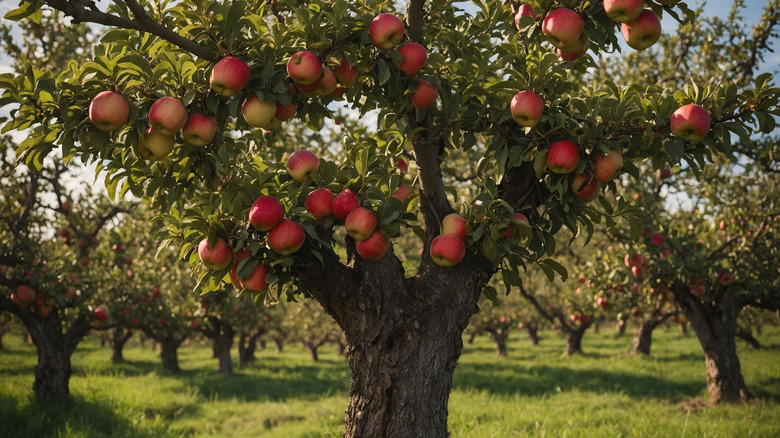
There are many types of apples out there with different uses. While most varieties found in orchards are related to the wild species that have been around for thousands of years, they don't all thrive in the same hardiness zones. Cortland and Honeycrisp are good options. Thanks to their winter hardiness, they can grow in Zones 3 to 8 and 4 to 9, respectively — that's almost anywhere in the U.S. Meanwhile, Granny Smith apples are more suited for Zones 6 to 9.
Since apple trees can grow as wide as 25 feet, give them plenty of space away from other trees. They'll need at least eight hours of full sun per day for robust fruit production. Also, apple trees prefer moist soil with pH levels between 5.0 and 6.8, and you may need to give them up to 2 inches of water every week (depending on rainfall) until they mature.
Pruning the first developing flowers in late winter or early spring after planting in fall will help establish the trees faster. After that, you won't need to do any more pruning. Just be aware that it'll likely be three to five years before you can harvest fruit from your tree.
Lemon
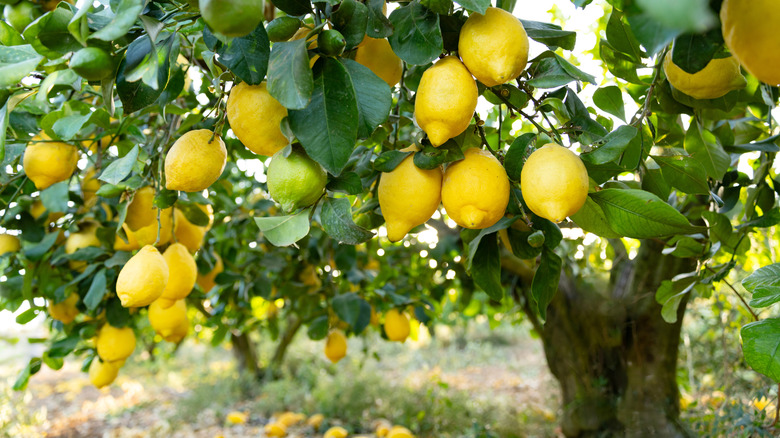
There are many varieties of lemons out there — including Meyer and Lisbon — and you can ever regrow this food from kitchen scraps. The saplings and roots, however, prefer climates with warm to hot summers and mild winters, so they grow best in Hardiness Zones 9 to 11. Lemon trees can flourish in Zone 8 climates, but you'll need to protect them from cold snaps below 32 degrees Fahrenheit, as these can damage the plants.
Make sure you plant your lemon sapling at least 12 feet away from structures and other trees, as well as in a spot that gets six to eight hours of full sunlight every day. Also, the soil must have a pH level between 5.5 and 6.5, and it should be moist, but not soggy. For the first four weeks after planting, water the soil two or three times per week, preferably in the mornings. After that period, watering once a week should be sufficient when there hasn't been enough rainfall.
While lemon trees can take seven to 15 years to grow from seeds and start producing fruit, saplings only require three to five years. You may need to prune unproductive branches after each harvest and do a bit of additional pruning throughout the year.
Pear
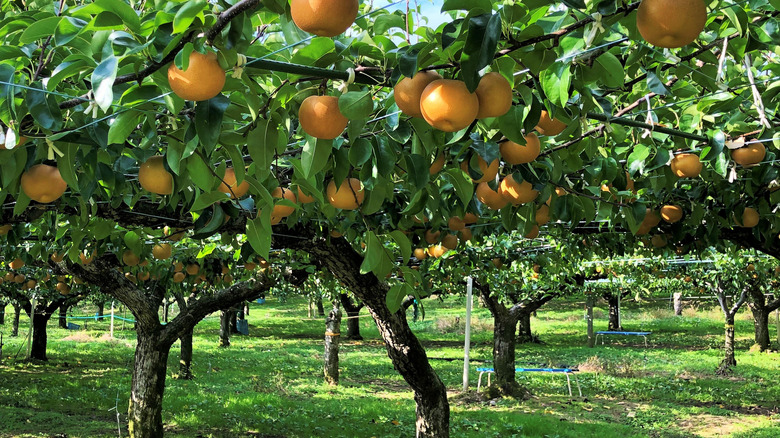
Like apple trees, pear trees have been around for thousands of years and, depending on the species, thrive in a wide range of hardiness zones. Some of the best varieties for colder climates in Zones 3 to 5 include Golden Spice and Summercrisp, while the best species for warm climates in Zones 5 to 9 include Honeysweet and Olympic.
When growing pear trees, though, remember to plant two, as most pear species can't pollinate on their own. Instead, they rely on one another to cross-pollinate, so plant two pear trees within 100 feet of each other for fertilization and a good harvest. Since they can grow up to 30 feet wide, you should also leave ample space in between.
These trees need at least six hours of sun per day and nutrient-rich soil with a pH level between 6.0 and 7.0. Newly planted trees will need about 5 gallons of water one to three times a week, depending on rainfall in your area. After they're established, they only need 1 inch of rainfall every 10 days. Some pruning and training are required to facilitate strong branches and quality fruit. Also keep in mind that pear trees take three to 10 years to produce, but once they do, you'll have an abundance of this overlooked ingredient, which is great for fruit pies.
Cherry
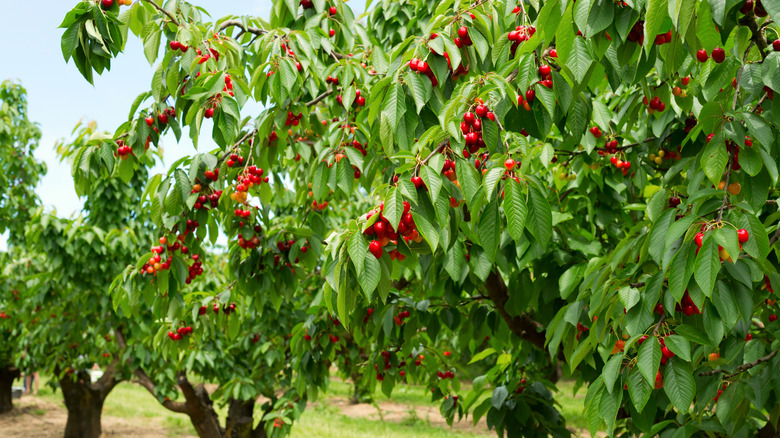
The cherry tree is sort of like the Goldilocks of fruit trees: The climate can't be too cold or too hot — it has to be just right. Generally, trees that produce sweet cherries prefer climates in Zones 5 and 6, while those that bear sour cherries can thrive in Zones 5 to 8.
Cherry trees can grow up to 30 feet wide, so plant yours in a spot where it'll have plenty of room to branch out while getting full sun. The soil's pH level should fall between 6.3 and 7.2 for sweet cherries and between 6.0 and 7.0 for sour cherries. After planting, thoroughly soak the soil with about 1 gallon of water. Continue watering your cherry tree if your area gets less than 1 inch of rain every 10 days. You'll also have to do some pruning here and there for shaping, stimulation, and survival. In fact, some cherry trees won't bear fruit, let alone grow, if they aren't pruned.
While you can grow a cherry tree from a pit, your first harvest will come faster if you start with a sapling. Sweet cherry trees require four to seven years to produce their first harvest, while sour cherry trees only need three to five years. If your sapling is large enough when you plant it, though, you could have at least a few fruits the following summer.
Orange
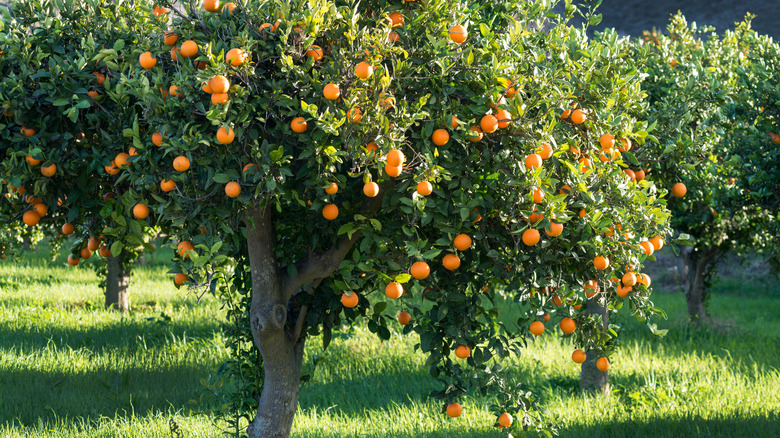
Since oranges are citrus fruits like lemons, they share certain planting and growing needs. So, if you'd rather grow than try to pick out the ripest, juiciest oranges at the store, you'll need to live in a moderately warm climate. These fruit trees grow best in yards that are located in Hardiness Zones 9 to 11, which is why Florida is known for its oranges and other citrus fruits.
Also like lemons, orange trees require soil with a pH level between 5.5 and 6.5 and spots where they get six to eight hours of sun per day. They also need deep watering once a week without sufficient rainfall (think 1 inch per week), and mornings are the optimal time to do it. Pruning isn't necessary to maintain your trees' shape, but it's helpful for good light, airflow, and fruit production.
Where orange trees differ from lemons is their need for space: They require at least 15 feet, but maybe up to 30 depending on the variety. They start bearing fruit at three to five years old, although some species can take up to eight years.
Peach
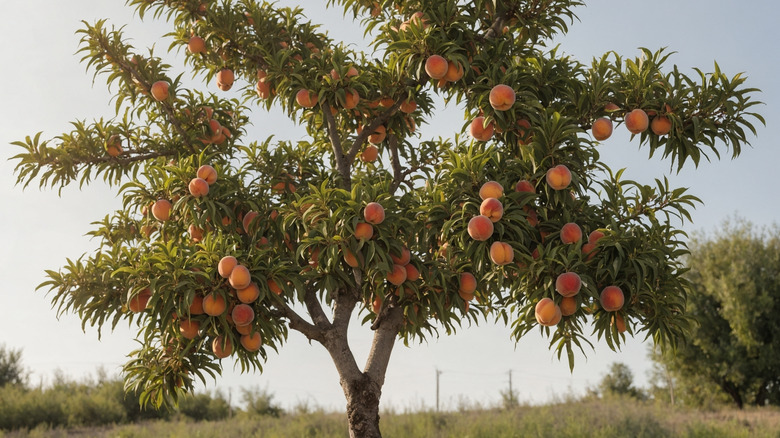
Peach trees make great backyard plants because they're easy to care for, and because there are plenty of ways to use this fruit. They thrive in Hardiness Zones 5 to 9, a range that encompasses most of the U.S. Unfortunately, they aren't as cold-hardy as some other fruits, but they can survive the cold if you plant them early enough in fall (ideally September) and add a layer of mulch.
For the most part, a standard peach tree needs 20 feet of wide space to branch out. Some types, however, only need 3 feet, while others can grow up to 30 feet wide. Plant yours in nutrient-rich soil with a pH between 6.0 and 7.0 where the tree can get full sunlight.
After planting in fall, soak the soil deeply; then, give your tree 1 inch of water per week, and apply some fertilizer for a boost during the spring growing season. Pruning is important, too, for disease prevention and healthy fruit production. With regular maintenance and care, peach trees are the fastest-growing fruit trees you can add to your garden, bearing fruit in just two to four years.
Nectarine
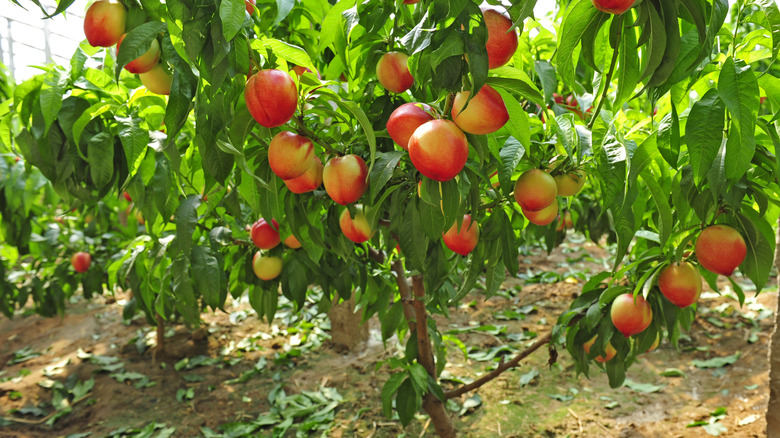
While there are clear differences between peaches and nectarines — peaches, for example, have fuzzy skin while nectarines are smooth — growing these fruits in your backyard is very similar. Nectarines thrive in Zones 5 to 9, grow as wide as 20 feet, need six to eight hours of sun each day, and prefer soil with a pH level between 6.0 and 7.0.
Thoroughly soak your newly planted tree and give it water when it hasn't rained in your area for 10 days. Pruning is also just as important for nectarine trees as it is for peach trees. With proper care and maintenance, you'll get to enjoy the fruits of your labor in just two to four years.
Plum
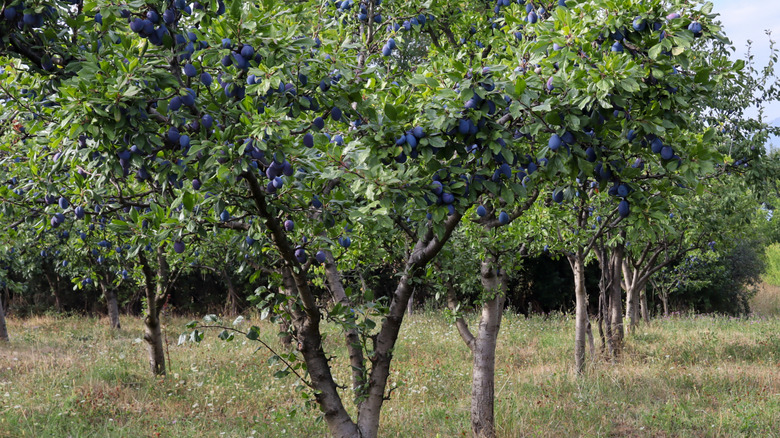
Growing and caring for plum trees is similar to peach and nectarine trees. They require spacing of about 20 feet apart, full sun, and a soil pH of 6.0 to 7.0. Soak the soil thoroughly after planting, then water them during summer dry spells. Regular pruning is also important for their health.
One way that plum trees differ from other stone fruit trees is in their hardiness. While most plum species grow well in Zones 5 to 9, American hybrids can grow as far north as Zone 4 and some varieties as far south as Zone 10. They generally produce fruit in three to six years.
The biggest difference, however, is that some species can't self-pollinate, so you may need to plant a second tree. If you want to grow Asian plums, for example, cross-pollinate a Satsuma with a Nadia Plum-Cherry or Shiro. For the best results with European plums, plant one Imperial Epineuse and one Seneca. You may also get a better harvest if you cross-pollinate plum trees that are only partially self-fertile.
Apricot
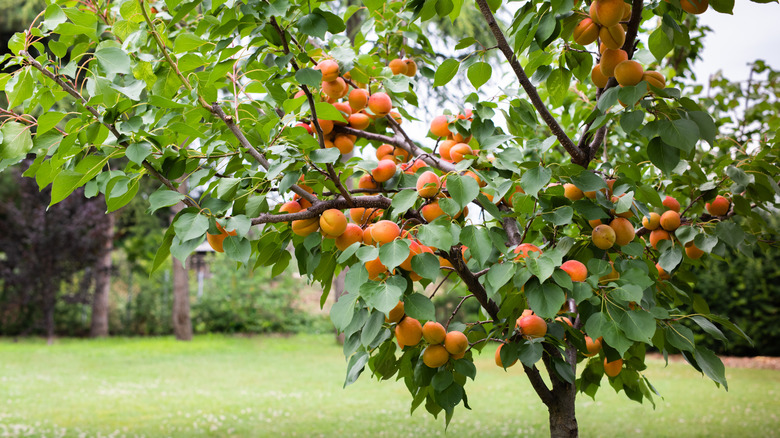
At first glance, it's easy to confuse apricots and peaches. They both have fuzzy skin and a similar color and aroma when they're ripe, but the difference between peaches and apricots is that the former are juicier and sweeter than the latter. These fruit trees have the same water requirements of 1 inch of rainfall (or manual watering) per 10 days, as well as similar pruning requirements for healthy tree growth and fruit production.
There are also some small differences to consider when planting these trees in the fall. First of all, apricot trees are a little more cold-hardy, thriving in Zones 4 to 9 (as opposed to Zones 5 to 9 for their counterpart) as long as there's plenty of time for the roots to get established before the first winter frost. Second, they only expand up to 15 feet rather than 20 feet. Third, while peach trees can produce fruit in just two to four years, apricot trees can take up to five years. Finally, the apricot harvest period (May to early July) is a little shorter than the peach harvest season (May to mid August).
Fig
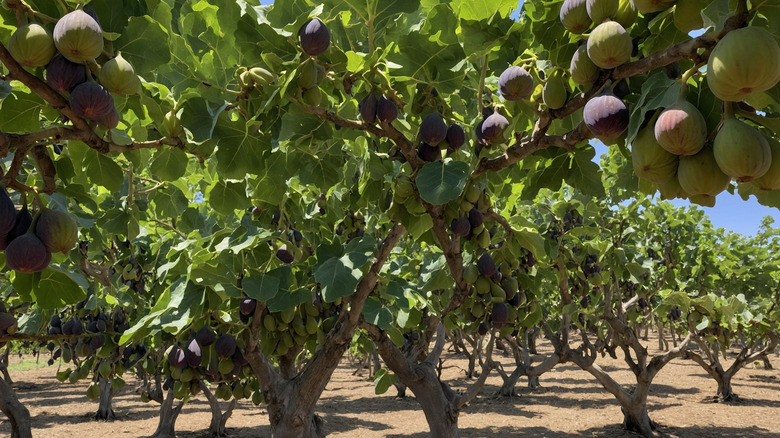
Gardeners and nurseries typically recommend planting fig trees in the spring, but you can plant them in the fall as long as your area has mild winters and temperatures over 30 degrees Fahrenheit. That's why most varieties prefer Zones 8 to 11. However, some species can tolerate Zone 7 with proper protection from the cold, while others — like the Chicago Hardy — can grow in Zone 6.
Leave the right amount of space between your fig trees and any structures or other plants. This distance will depend on the variety you choose, as these trees can grow anywhere between 15 and 30 feet wide. Fig trees can also thrive in partial shade but will produce more (and better) fruit with at least seven hours of sun per day. They like slightly acidic soil with a pH between 5.5 and 6.5.
Water newly planted saplings thoroughly. Afterward, you'll only need to water them during dry spells of 10 to 14 days without rain. With proper care and pruning, you can expect to harvest quality fruit from your fig tree in three to five years.
Pawpaw
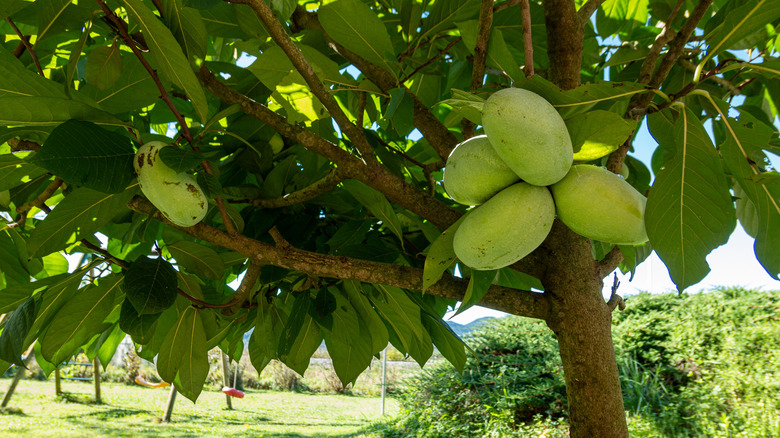
Not to be confused with the nickname for "grandpa" that's popular in some Central and Southern states, pawpaw trees are native to the Eastern U.S. They can grow in Hardiness Zones 5 to 9 and do well whether you plant them in spring or fall. Pawpaw trees also have flexible growing needs. They can tolerate light shade or direct sunlight, don't mind soil with a pH level ranging from 5.5 to 7.0, and can thrive from regular watering (particularly for the first two years). You don't need to prune them, either, unless you want to keep them looking extra tidy.
Just be aware that if you plant a solo pawpaw tree in your backyard, it won't be able to self-pollinate. To amend this, plant another genetically different pawpaw tree nearby. Establish them 15 to 25 feet apart, depending on how wide your chosen varieties will branch out. Typically, pawpaw trees start bearing fruit in six or seven years. If you're wondering what pawpaw fruit is and how it tastes, just imagine eating a banana-mango hybrid with the texture of an avocado.
Persimmon

Persimmons may be a luxury fall grocery item worth the splurge, but growing your own is even more fruitful (pun intended). While American persimmon varieties are cold-hardy and can grow in Zones 4 to 9, their Asian counterparts don't handle the cold as well and do best in Zones 7 to 10. They prefer to get at least eight hours of direct sunlight every day but can tolerate partial shade.
When you're planting an Asian persimmon variety, keep it 15 to 20 feet from structures and other trees. American varieties, however, need 30 to 50 feet in between, as some of them can grow up to 65 feet tall. The soil should also have a pH of 6.0 to 7.0, and you should water the ground around it regularly to encourage quality fruit. While pruning may not be necessary, especially in the beginning, some trimming can improve the tree's structure as it gets older. You'll start seeing ripe persimmons on the tree in just three to four years.
Jujube
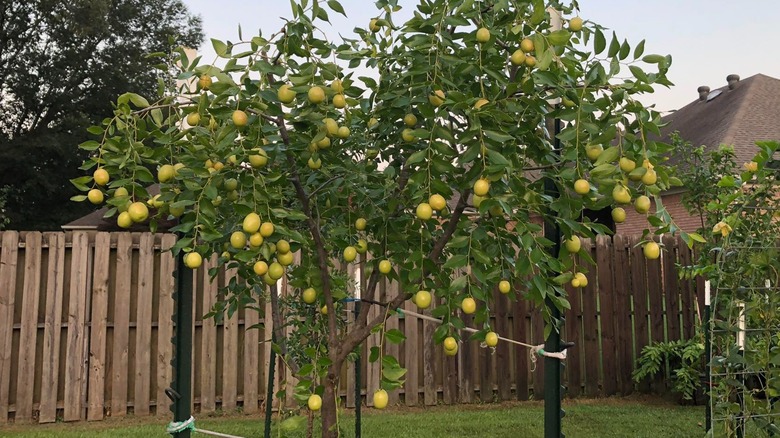
If you're wondering what jujube fruit is and what it tastes like, it's the product of trees that grew across the Mediterranean region at least three millennia ago and are now very common in China. The fruit turns from green to reddish-brown when ripe and tastes sweet with a chewy texture, much like dates.
Fortunately for novice gardeners, jujube trees might be some of the easiest and most flexible fruit plants to grow. They thrive in Zones 6 to 10, but some have been known to survive in Zone 5. They aren't picky about soil, either, as they enjoy pH levels ranging from 4.5 to 8. While established trees can survive a drought, it's wise to water them — ideally in the morning — if the top 2 to 3 inches of soil around their bases are dry.
Jujube trees are particular about a few things, though. For instance, they need 15 to 25 feet of space to expand, prefer at least eight hours of sunlight, and don't like excessive shade. These plants also require some pruning throughout their lives, mostly while they're still maturing. In three to four years after planting your sapling, you'll start seeing jujube fruits.
Olive

Like fig trees, olive trees are particular about their climate, preferring Zones 8 to 11 — although some varieties can survive Zone 7. Because of that, you should only plant them in the fall if your area remains above 30 degrees Fahrenheit during the winter. Also, depending on the variety, your olive trees will need up to 30 feet of space between structures and other trees in your yard.
Olive trees generally enjoy six to eight hours of sun per day in slightly acidic soil with a pH between 5.5 and 6.5. Fortunately, watering is easy, as these trees are drought-resistant. Saplings and young trees will need deep watering once or twice during the spring and summer growing seasons, depending on how much rainfall you get. Mature olive trees can go as long as four weeks without watering. With proper care and pruning to boost production, they can start bearing fruit in four to five years.
Keep in mind, though, that you'll need to process your olives before eating, as they'll be too bitter right off the tree. Try curing them in a brine for two to four months. Just keep in mind that using reactive materials — like aluminum, cast iron, and copper — is a mistake you should avoid when making homemade olives because they can add a metallic flavor. Instead, use nonreactive materials, like ceramic, glass, stainless steel, and enamel-coated metals.