

11 Old-School Kitchen Appliance Brands That Still Exist Today
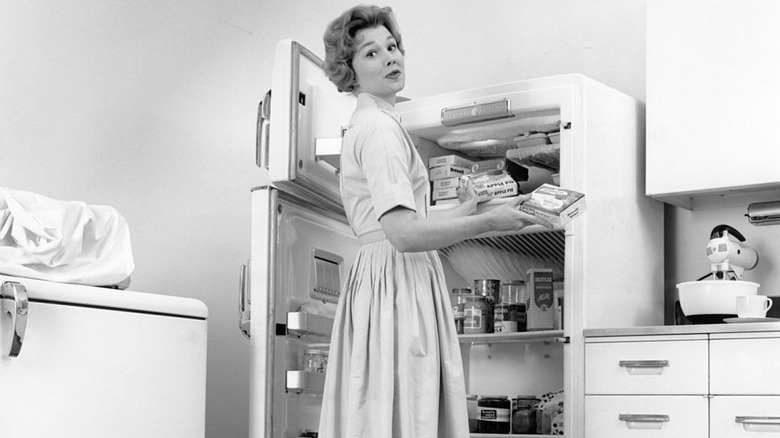
Kitchen appliances have come a long way from the days where food was cooked over an open flame and stored in the ground to keep it cold. We have a lot of smart people to thank for making kitchens part of the home in a way that not only functions well, but looks good, too.
There are several companies that have been working hard to invent, perfect, and distribute household appliances that have changed the face of cooking as we know it — some that date as far back as the 1800s. You may know brands like Maytag and GE, but there are many more that shaped the way we cook and eat at home, and they're still making their mark on the home-cooking landscape today.
While some brands have sold to larger parent companies and the products may look different (and some retro kitchen appliances have even vanished completely),we've researched 11 old-school kitchen appliance brands that still exist today, digging through company archives and historic facts to learn the origins of each. Let's take a look at their legacies to learn more about how they've survived the test of time, innovation, and technological shifts.
KitchenAid
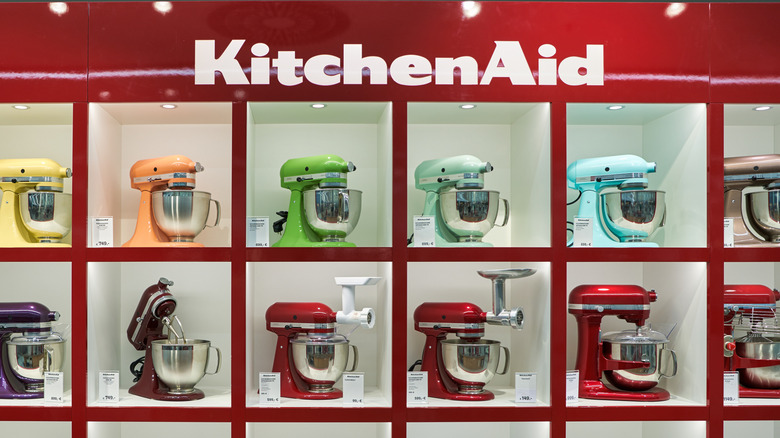
Ever wonder how KitchenAid got its name? The KitchenAid brand dates back to 1919 with its claim to fame: the Model H-5 stand mixer. An executive's wife called it, "the best kitchen aid," and from there, a legacy was born, and that legacy is still an iconic part of kitchenware today.
The development of the recognizable mixer silhouette happened in 1937 when the Model "K" was launched. During that same year, KitchenAid released its first electric coffee mill, reinforcing the innovation and creativity of the brand and its products. By 1949, KitchenAid released its first home dishwasher, which was unlike any other on the market. This appliance came in a fun pink color, too, and that playful nature is something we still see in KitchenAid products today.
Speaking of color, 1955 set the stage for the legendary brand image with the release of KitchenAid's famous assortment of stand mixer colors. From here, a tried and true legacy was established, as you can head to any home appliance store today and pick up a mixer of your choice. You can also grab an array of other KitchenAid products, such as coffee makers, food processors, kettles, toasters, and so much more. Mix and match colors or pick a favorite and keep your kitchen one streamlined tone. From form to function, this old-school brand learned how to adapt and survive with the times.
Hamilton Beach
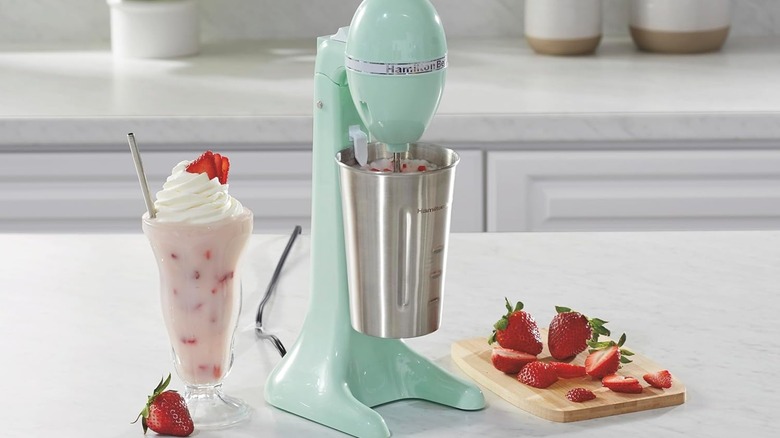
To most, Hamilton Beach might feel like a newer company with its innovative products and sleek designs, but this old-school name has been around since 1910. It was founded by L.H. Hamilton and Chester Beach when Beach used his knowledge of commercial electric motors to create a lightweight universal motor for household appliances and led to the creation of the Hamilton Beach Manufacturing Company. The brand's drink mixer became one of its signature appliances — one that still wears its iconic Art Deco design. If you're lucky, you can find vintage versions on sites like eBay and Facebook marketplace. They go for a pretty penny, too.
While Beach and Hamilton were doing their thing, a company called Proctor & Schwartz, Inc. was founded in 1920, with the silent toaster leading its innovative charge. In 1990, the two iconic companies merged to create one of the largest producers of small kitchen appliances in the US, which is a huge reason why Hamilton Beach is still thriving.
In 1995, the company expanded internationally, offering an array of products you can still buy today. From blenders and coffee makers to air fryers and slow cookers, Hamilton Beach has a wide range to choose from and decades of experience to prove its quality — where retro design meets modern innovation.
Frigidaire
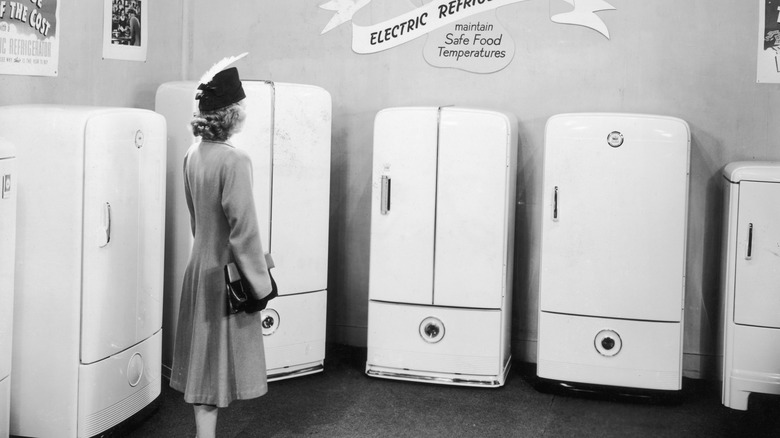
Founded in 1916 as the Guardian Refrigerator Company, Frigidaire made a name for itself before it even had its iconic branding. In 1918, the company introduced the first self-contained electric refrigerator, which opened the door (pun intended) for customers to preserve food for long periods of time at home. Seriously, where would we be without this invention? With the company's success, it changed its name to Frigidaire in 1919, a name that everyone knows when it comes to the best refrigerators on the market. Did you know this brand's name is where we got the term "fridge?" When people say Frigidaire truly changed the kitchen appliance game, it did — through product and language.
Around this time, the brand also became a part of the General Motors family, which would set up its legacy for decades to come. Up until 1979, Frigidaire, as a division of GM, produced everything from washers, dryers, ranges, and air conditioners, until it became a part of the Electrolux Group in 1986.
While the company may have shifted, the quality and innovation of its products hasn't, showcased by its massive success in the kitchen appliance market today. The company doesn't even run commercials anymore, which tells you everything you need to know about its legacy. Frigidaire continues to sell kitchen appliances like its famed refrigerators, along with laundry machines, air conditioners, and many more home appliances.
Oster
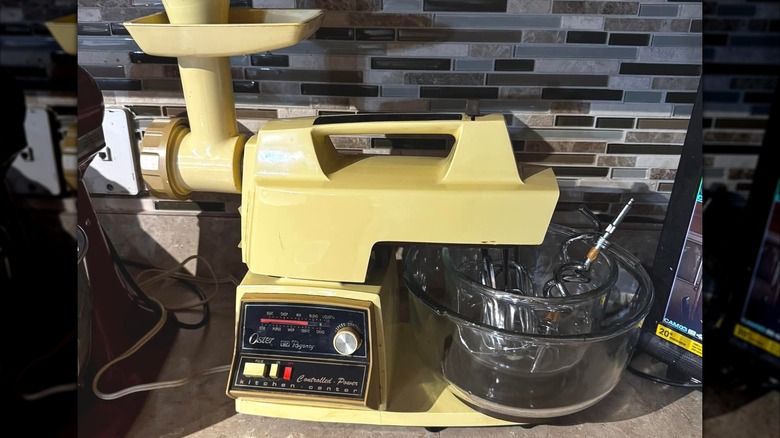
We don't think of barbers when we think of kitchen appliances, but this next brand is a bit different than the rest. John Oster's company began in 1924 by way of hand-operated hair clippers. While not kitchen equipment, it was this innovative product that helped him and his team found the John Oster Manufacturing Company.
While the company was perfecting his portable motor-driven clippers, it was also expanding its work into the home appliance market. In 1946, Oster bought the Stevens Electric Company, and with it came its brand new liquefier blender. This item paved the way for the company's first blender, which shifted its view from personal care items to home kitchen appliances.
In the 1950s, the brand expanded beyond the U.S. when it introduced the Osterizer blender. Because of its massive success in Latin America, the company continued growing with items like mixers, waffle makers, and juice extractors. Now you'll find air fryers, toasters, countertop ovens, and more within its catalog, along with decades of experience to ensure you love your kitchen appliances with every use.
West Bend
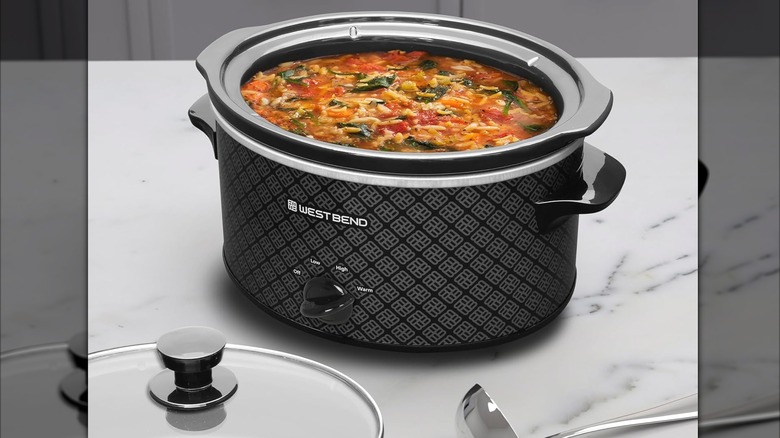
The West Bend brand was founded in Wisconsin in 1911, producing aluminum cookware before expanding its catalog to the kitchen appliances we know and love today. The Waterless Cooker was its golden goose when it came to the company's marketing direction and kitchenware as such — think old-school Crockpot vibes. The company even patented the name Waterless Cooker and owned exclusive rights via various court battles, which helped it continue to expand.
But the real shift happened with the release of the first automatic percolator in 1950, which quickly became a staple in households across the country before diverting to a retro appliance that time ultimately forgot.
The brand kept up its creative pace, and you can still see that hustle today. West Bend offers everything from popcorn machines, slow cookers, bread makers, toaster ovens, air fryers, and juicers, along with major appliances like microwaves, fridges, and freezers. West Bend is famous for its retro-style appliances you can get at Home Depot. These kitchen tools infuse your space with vintage charm, plus all the utilitarian function of a modern appliance.
Hotpoint
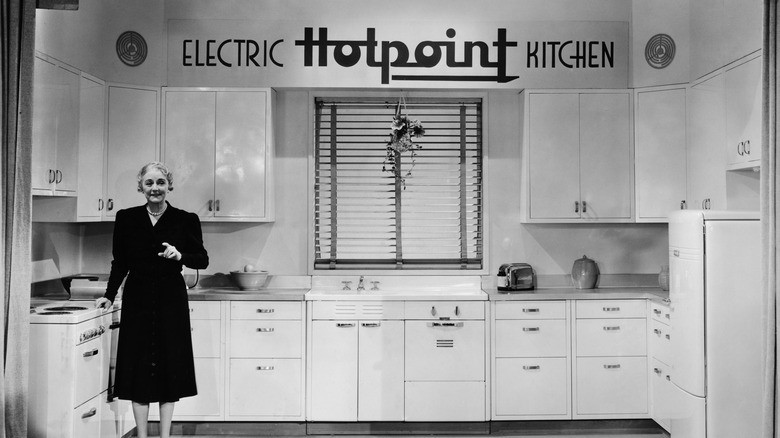
Hotpoint traces its roots to Earl Richardson's electric iron in 1903, his streamlined version of the clunky electric iron patented in 1882. His version was lighter and more versatile, allowing users to press the fabric around buttonholes and pleats, which is exactly where the Hotpoint (a literal hot point) name came from. A small shift in design led to the irons we use today.
With his financial success, Richardson sold his iron patent and bought land in the Mohave Desert where he founded a town called Adelanto. His goal was to create a planned community and sell plots to war vets. During this time, a former journalist named George A. Hughes was in the process of developing the first electric range. While it wasn't perfect, his invention revolutionized household cooking, and the two would become a match made in kitchens.
In 1918, Richardson and Hughes made kitchen appliances under the General Electric name to create a powerhouse in the market. They developed a wealth of "firsts," such as the first fully enameled electric range in 1924 and the first electric moistureless clothes dryer in 1950. Today, you can find an array of items under this brand, including refrigerators, freezers, cooking products, dishwashers, and much more.
Amana
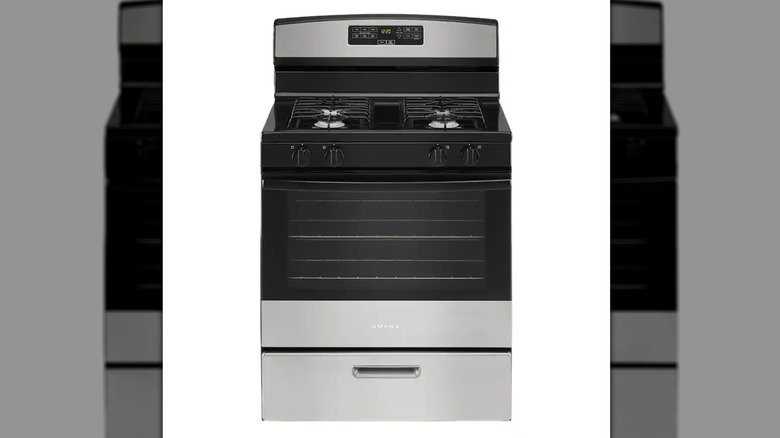
In 1934, George Foerstner founded the Amana company in Middle Amana, Iowa, using his life's savings to do it. His claim to fame was the first DeepFreeze upright freezer for the home, which debuted in 1947. In 1949, the company introduced the first side-by-side refrigerator, a novel design at the time featuring a refrigerator and freezer in one unit with two separate doors — a design we still use today. Unlike a lot of other brands, Amana used celebrity advertising to help sell its products. Bob Hope, Groucho Marx, and Gary Cooper were among some of the big names repping Amana.
The firsts kept coming. In 1957, Amana was the first company to patent a self-defrost refrigerator and release a bottom-freezer refrigerator, but the biggest win was the consumer Radarange microwave in 1967. "Game-changer" doesn't begin to cover this massive shift in kitchen appliances.
While there are more firsts to showcase, especially with the brand expanding into laundry appliances, you can see from these touchpoints alone how impactful the Amana name was — and still is. Amana offers ranges, dishwashers, microwaves, and more to stock your kitchen entirely with quintessential Midwestern craftsmanship.
Maytag
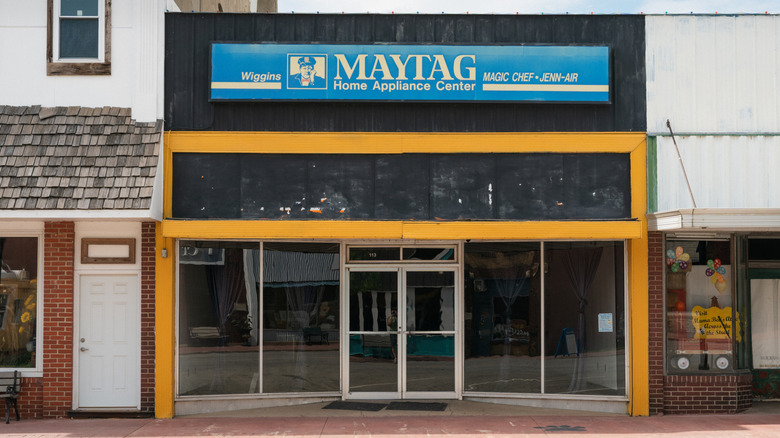
Everyone knows the Maytag name thanks to its dedication to quality and service, but the company's roots date to 1893, when Frederick Louis Maytag and three partners established a farm-equipment company in Newton, Iowa. What started in nature shifted to household appliances when they created the first washer in 1907 — Maytag ensured his version was more efficient than the rest. From here, Maytag shifted out of farm equipment when his son took over. He remained focused on washing machines, but added items such as butter churns and meat grinders.
In the 1940s, Maytag's grandson took over the company, helping with wartime efforts but returning to washing machines shortly after. Around 1946, everything changed. Maytag started its own line of ranges and refrigerators, with some other smaller appliances, too. In 1967, the brand came up with an iconic marketing idea in the form of the lonely Maytag repairman. The joke: The Maytag products were so good, they never broke down, which meant there was no need to call for help. One ad features a repairman with his feet up in the shop while a voiceover declares, "Not all Maytag repairmen are this lonely, but we're trying."
With a catalog of well-made appliances, the Jenn-Air Corporation bought Maytag in 1982, but the Maytag name was still there — and still is. The brand's current lineup includes refrigerators, dishwashers, ranges, microwaves, and more, expanding its line and quality with the Jenn-Air reach and Magic Chef names, and now the Whirlpool Corporation since 2006.
Bertazzoni
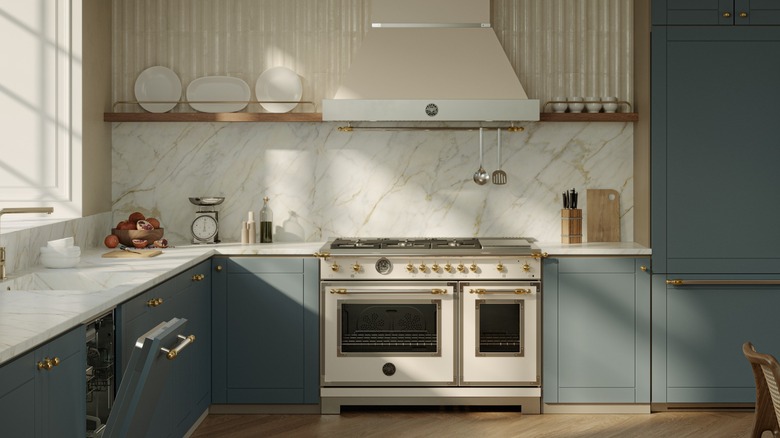
Unlike most of the other brands on this list, Bertazzoni's origin starts in 1882 in Guastalla, Italy, where Francesco Bertazzoni and his son Antonio began building wood-burning cooking stoves with inspiration from cheesemakers and a railroad. Yeah, really. The family got its start building cheese scales for cheese wheels. Bertazzoni took the idea from wood burning stoves on local trains passing through his town, converting the idea into a household item that would change the area and the world.
The family opened its first factory near Guastalla's railway station — the inspiration for the product — in 1909. The early stoves not only supplied cooking heat, but hot water and room heating, too. In the 1920s, the family opened a new factory and started mass-producing stoves.
By the 1950s, the brand was producing gas-powered ovens, but they also focused on aesthetics when other brands weren't. The family got their color inspiration through everything from fruits and vegetables in the garden to bold automotive paint from Italian brands like Ferrari. You won't find many other kitchen appliances looking quite so chic. Today, they are still a family business, with its sixth generation involved. They are also still making ranges, which include built-in ovens, induction cooktops, refrigerators, dishwashers, and ventilation appliances.
General Electric (GE)
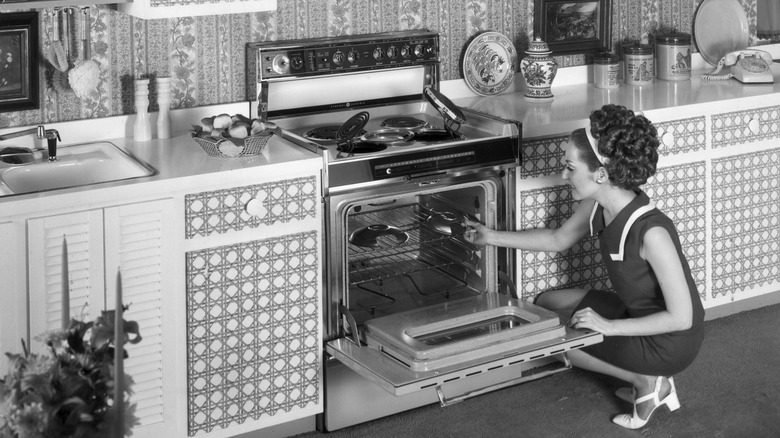
General Electric, aka GE, got its start in 1892, and since that start, the company has touched an array of markets, including kitchen appliances. In 1907, GE manufactured everything needed for a well-stocked kitchen, including large appliances, like an electric range that was novel for the time. The brand also created smaller appliances designed for home countertop use. Between 1911 and 1927, GE released a refrigeration system, range, electrical dishwasher, and two unique refrigerators.
But that early success didn't stop. In the years that followed, GE moved on to air conditioning units, double range stoves, and its P-7 self-cleaning oven. The days of scrubbing on your knees ended and changed not only how we cook but how we clean. The company also became known for its mix-and-match products which created a way to decorate any kitchen — a big selling point at the time. And in-door refrigerator ice makers? Yeah, that was an invention from GE, too, another first to add to its epic list of innovations. From the Lazy Susan fridge to clock radios, the company was mastering all angles.
Innovation drives success, and GE's success follows the company today. Did you know that GE appliances are found in over half of U.S. homes? GE is still a top appliance brand, featuring refrigerators, cooking appliances, dishwashers, and other products.
Gaggenau
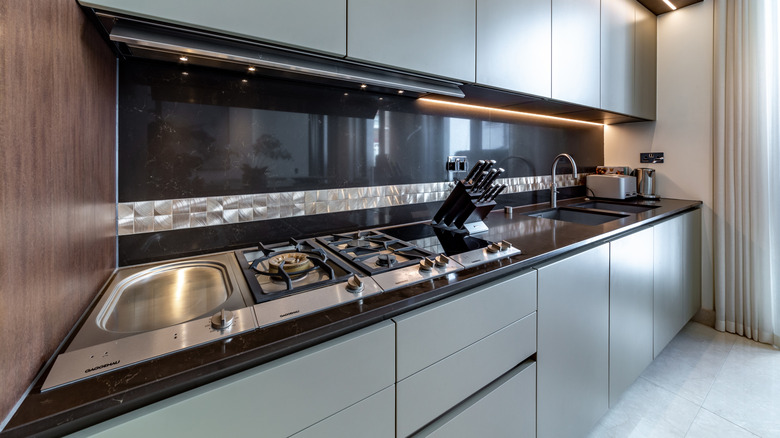
Last but certainly not least is a brand many may not know with a story that dates back to 1683 — the oldest legacy in the bunch. Margrave Ludwig Wilhelm von Baden established an ironworks plant in Gaggenau, Germany, and from here, kitchen history would be made. Like Maytag, Gaggenau's focus was farming equipment, but over time, the brand grew. In 1880, Gaggenau, an enamel specialist, developed an enamel that would eventually be used to create the brand's legendary stoves.
Shortly after the turn of the 20th century, with the changing of the times, the company started producing bicycles and gas-fired stoves (as opposed to coal-fired) until Dr. Otto von Blanquet took over in 1931. From here, the sole focus was stoves, and that objective has continued to this day. In 1956, the brand created the first built-in, eye-level oven with a separate cooktop — a popular style for modern kitchens today. With a solid product base, the company turned to aesthetics, honoring the Bauhaus art school as its design base.
Today, Gaggenau remains an active luxury kitchen appliance brand, offering ovens, combi-steam ovens, cooktops, refrigeration, wine cabinets, dishwashers, and built-in espresso machines — all of which are sleek and chic. From cleaning systems to slimmer products, Gaggenau is still thriving while keeping up with the times.