

7 Types Of Cookware To Avoid Buying For An Induction Stove
We may receive a commission on purchases made from links.
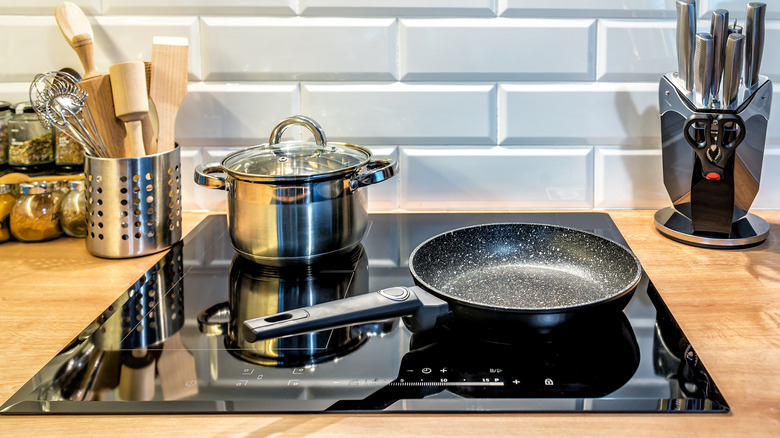
Similar in appearance to an electric cooktop, an induction stove is an attractive alternative. Along with having precise temperature controls, it heats cookware through electromagnetic fields rather than direct contact with the heating element. The result is significantly faster heating and improved safety because the cooktop itself doesn't get as hot as other stovetops, reducing the risk of burns and making clean-up easier. However, the downside is that non-magnetic pots and pans won't work on an induction hob.
Using the wrong pots and pans is a common mistake people make when cooking on an induction cooktop. Since induction relies on electromagnetic fields for heating, you should avoid glass, stoneware, ceramic, pure aluminum, some stainless steel, and pure copper cookware that aren't made with magnetic metals. You should also avoid using pots and pans that have round bottoms, like certain woks. In this case, it's often the shape of the material that's the issue rather than a lack of magnetism, because the induction process requires full contact to work well. The list below offers a quick look into each of these non-induction-compatible cookware.
However, keep in mind that these types of pots and pans aren't always a hard skip. There are exceptions where hybrid cookware is created with one of these materials and some kind of ferromagnetic base to allow for electromagnetic heating, which is often stated in the product description or manual. If you're unsure whether or not a pot or pan in your collection is compatible with your induction hob, see if a magnet sticks to the bottom. If it doesn't stick, then that piece of cookware simply won't heat up when you put it on the cooktop.
Glass
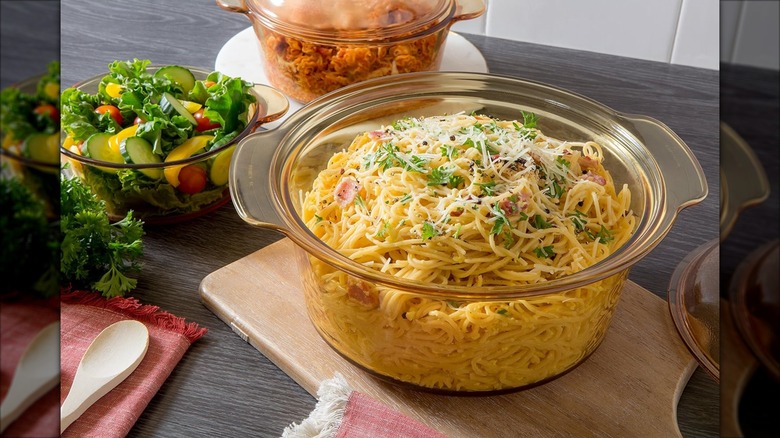
The durable, eco-friendly, and non-toxic characteristics of glass pots and pans are why they're so appealing. However, it's advisable to think twice before using glass cookware on any stove. Although some tempered glass cookware is specifically made to be used on electric and gas ranges, it's not the best heat-conducting material. When it comes to induction hobs, though, non-hybrid glassware simply won't work because the material isn't an electrical conductor either. If you're set on using glass cookware, though, you could try an induction adapter, such as the one from Bialetti on Amazon.
Traditional stoneware
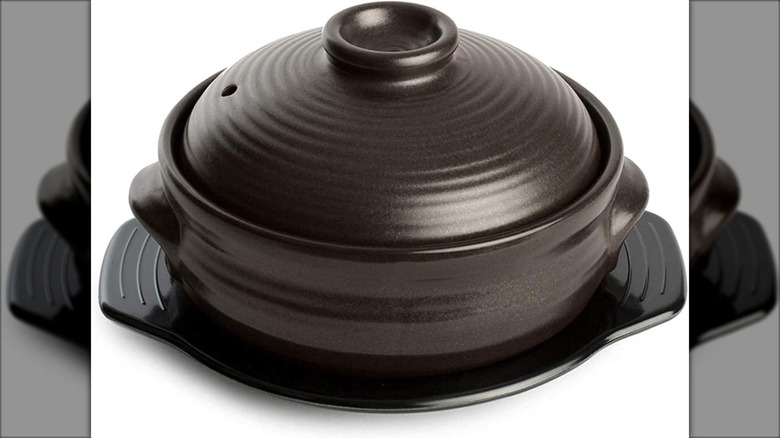
Traditional stoneware pots and pans are alluring for a few reasons. They're made of low-porosity clay that's fired in kilns at really high temperatures, making them less susceptible to chipping and breaking than other ceramics. And, they have a natural, rustic aesthetic that looks nice with many kitchen designs. Since traditional stoneware is mainly made with clay and doesn't contain a ferromagnetic metal like iron or steel, it won't work on an induction cooktop. The only way stoneware will work is if it's fitted with a magnetic base, like the pan from Sensarte on Amazon.
Ceramic
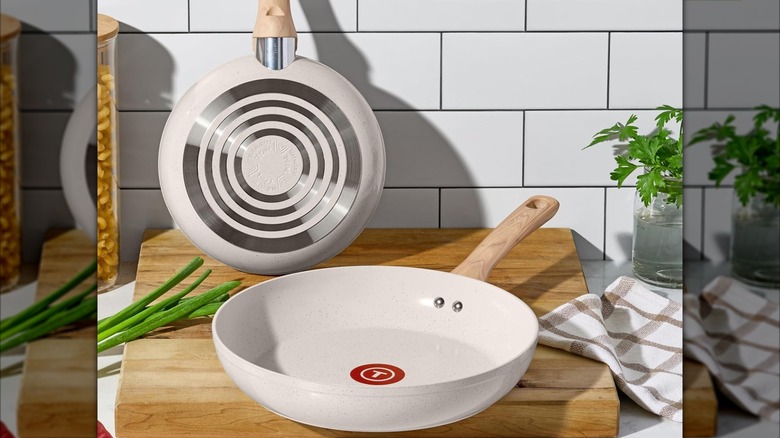
Although ceramic encompasses stoneware, Daily Meal is including it separately because the construction is slightly different. It can be made with more porous clay and other ingredients — such as nylon fibers, paper pulp, and sand. Also, ferromagnetic materials aren't commonly added, and it isn't fired in a kiln at as high a temperature as stoneware. Because of that, you won't be able to use conventional ceramic on an induction stovetop. Hybrid options are available, though, such as this NutriChef set on Amazon.
Plain aluminum
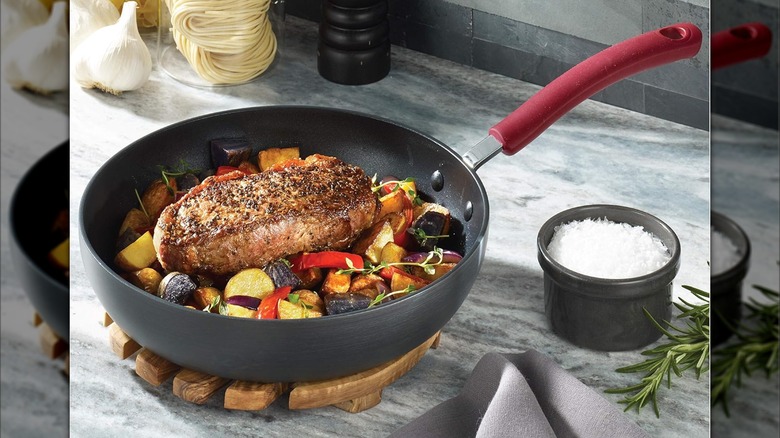
Along with being affordable and lightweight, aluminum pots and pans are a popular choice for cooking because they're highly conductive. Hard-anodized varieties are also very durable and resist scratches. Unfortunately, plain aluminum cookware is not ferromagnetic like iron or steel. If you want aluminum cooking utensils that are compatible with an induction hob, the bottoms of the pots and pans need a ferromagnetic coating or plating, like the Crock-Pot Northvale cast aluminum Dutch oven on Amazon.
Non-magnetic stainless steel
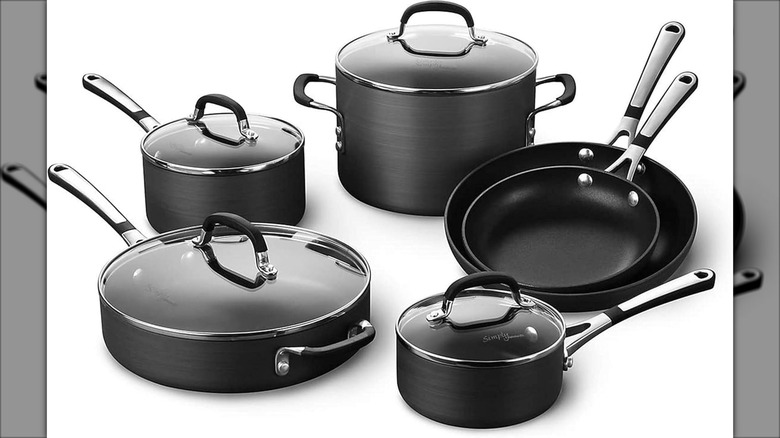
One of the mistakes to avoid with stainless steel cookware is assuming that all of them are the same. Actually, there is a range of grades that indicate how much nickel is added to the cladding. For instance, the highest grade of 18/10 signifies a high chromium-to-nickel ratio, which increases the durability but diminishes the magnetism of the pots and pans. That's because nickel blocks the magnetic field. However, high-quality stainless steel cookware often has low amounts of nickel, if any, such as the T-Fal Pro Tri-Ply set on Amazon.
Pure copper
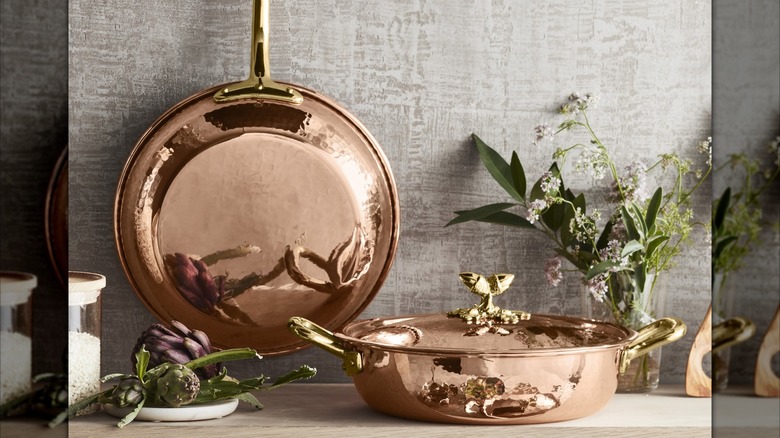
Julia Child only used these bougie pans to cook with, which she discussed in "Mastering the Art of French Cooking, Volume 1: A Cookbook." Plus, Martha Stewart has her own collection and uses Wright's Copper Cream as an affordable way to keep her copper cookware shiny. It's clear that neither of these women is using an induction cooktop when they use their copper pots and pans because this material is not ferromagnetic. Instead, it's diamagnetic, which repels magnetic fields like those required for induction heating. For that reason, you can only use copper cookware equipped with a ferromagnetic base, such as the CopperBond collection by Hestan.
Uneven cookware
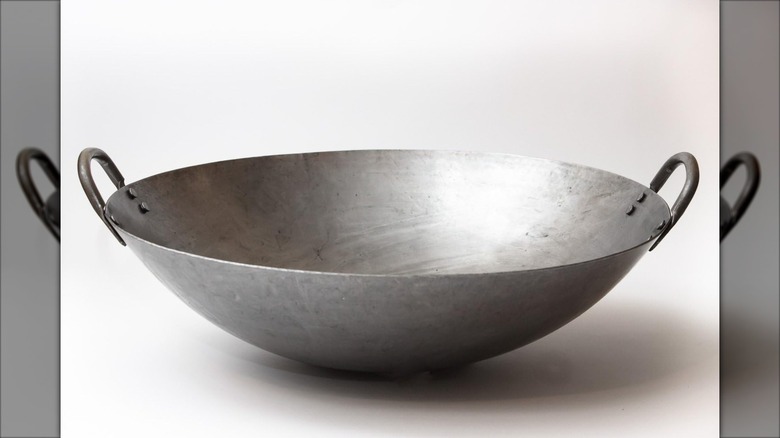
For an induction cooktop to work properly, it needs to have full contact with the magnetic surface of your pots and pans. Cookware that is curved on the bottom, such as the wok pictured above, doesn't allow for that, leading to insufficient heating and potential damage to the stove surface. That's why buying a flat-bottomed wok is your best bet and the only type of wok you should use on an induction stove. Plus, it offers balance and stability while you cook. Just make sure that at least the bottom is also magnetic, like the Circulon A1 Series on Amazon.