

3 Best Kitchen Countertop Materials And 2 To Skip
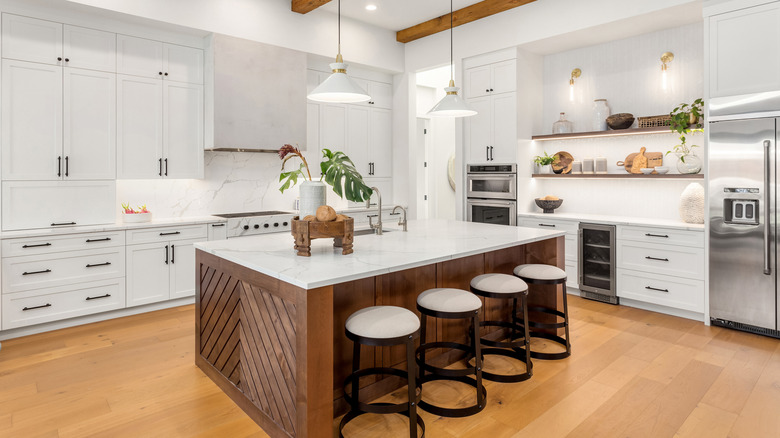
When you first look at the materials available for kitchen countertops, the wide range of options can be overwhelming. Making an informed decision requires understanding the pros and cons of each material and weighing those against the price. For instance, just because a countertop material is the most expensive doesn't mean that it's the most durable or easy to maintain. To help you get started, Daily Meal has determined which kitchen countertop materials are the best and the worst.
Opinions vary a little here and there, but among the many materials you can choose from for countertops, quartz, granite, and laminate are the most ideal. The best part is that these types of kitchen countertops are available for different budgets — from pricey to super affordable. On the other hand, it appears that tile and concrete are among the worst options. Despite their moderate cost, there are many reasons to skip installing these materials in your kitchen. Let's take a closer look at why each of these kitchen countertop materials are the best and worst.
Get: Quartz
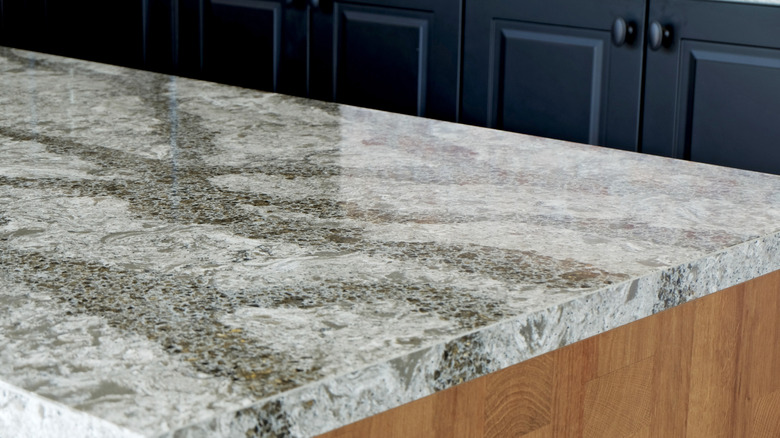
If you're looking for the highest quality material for your kitchen countertop and have the budget, quartz is the one, according to Proslit Tile & Stone CEO and owner Irakli Khizanishvili. He told Daily Meal that quartz, an engineered stone that emerged in the 1970s, is the best type of stone to choose for your kitchen countertop.
Since the ground stone and resin composition of quartz is harder than granite and marble, it's more durable and doesn't nick or scratch as easily. Also, quartz isn't porous like marble, so it resists bacteria and stains. Applying a sealant only enhances that characteristic, but it's not necessary, making quartz one of the lowest-maintenance materials for kitchen countertops. The material is easy to clean as well, only requiring some mild soap and a non-abrasive cloth or sponge. In addition to these performance benefits, it comes in an array of design options, from solid colors to patterns — some of which incorporate metallic flecks and recycled glass.
Despite all of that, there are a couple of cons to installing quartz countertops in the kitchen. One of the biggest drawbacks is the high price tag. There's no other way to put it: Quartz countertops are among the most expensive. Although, it's worth noting that they're still cheaper than real marble. Another caveat is that it's not impervious to heat. If you put a very hot pot or baking dish directly on a quartz countertop, it can discolor the material. That's easy to avoid, though, with pot holders or cooling racks.
Skip: Tile
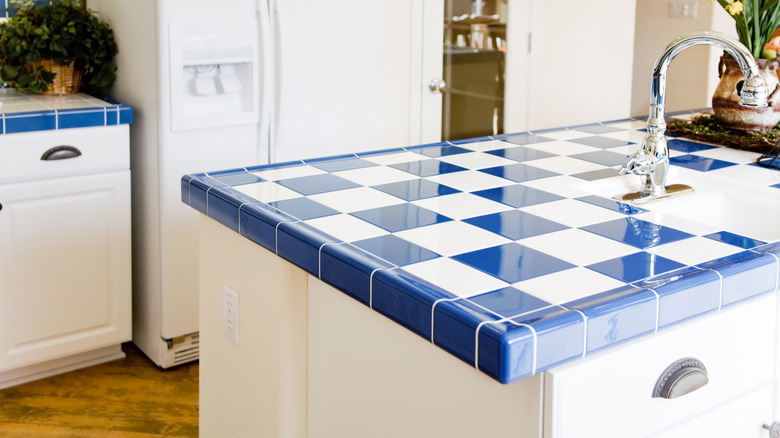
Traditionally used for kitchen backsplash, tiles became a popular option for countertops in the '70s and '80s. It's a cheaper alternative to ceramic and composite materials and extremely easy to customize with eye-catching shapes, colors, patterns, and finishes that add texture to the space. While porcelain tile countertops may be one of the kitchen trends from the '90s that are making a comeback, they're actually one of the worst options because of the hygiene risk and maintenance required.
Even when you choose highly robust tiles to withstand the intense wear and tear that a countertop is subjected to, they create an uneven surface that's more difficult to simply wipe clean. That's because of the grout used in between each tile, and that material is susceptible to bacteria and stains because of its porous nature. Natural stone tiles are also porous, so using both porous materials together is like creating a science experiment in your kitchen. To prevent bacterial growth, the grout grooves and tiles have to be cleaned thoroughly and resealed on a regular basis. These measures, however, may not be enough to prevent staining, even when you use stain-repelling products. It's the same reason you should never choose white grout for the kitchen tiles in your backsplash.
While you could opt for porcelain tiles because they require less maintenance, the material makes imperfections and chips easier to see. Furthermore, tiles aren't as durable as composite kitchen countertop materials. They're generally thinner and more brittle, so they can chip if something heavy accidentally falls on them or you set down a pan or pot too hard.
Get: Granite
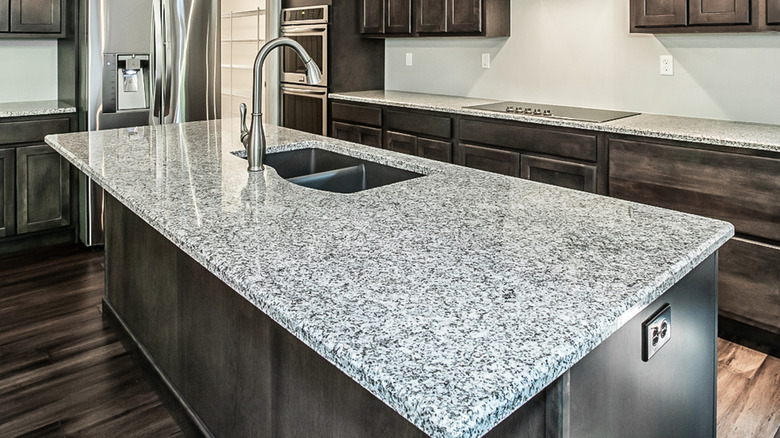
Mined from quarries across the globe and then cut and polished, granite has only been a popular kitchen countertop material since the '90s. That's when the cost of the stone fell far enough to make it more affordable to homeowners, and it didn't take long for it to become the top choice for luxury renovations. Now, it's considered the gold standard and the most popular natural stone material for countertops.
Two of the best things about granite countertops are that they're 100% natural stone and each one is unique with slight variations in color and patterns. In fact, the color of each slab depends on where in the world it forms, so its tones can range from earthy and red to green and blue. Another benefit is that granite is very durable and difficult to scratch with kitchen utensils. On top of that, installing this countertop material doesn't cost as much as quartz on average but can still increase the value of your home.
There's one major thing you need to know before putting granite counters in your kitchen, though: They require regular maintenance. Since the stone is porous, it can stain from food, oil, and wine spills. That's why maintaining the sealant is so important. Fortunately, Irakli Khizanishvili provided Daily Meal with some expert-approved tips for keeping granite as good as new. These include not cleaning it with harsh chemicals and letting acidic juices sit on it. Instead, Khizanishvili recommends "using a pH-neutral cleaner specifically formulated for stone surfaces" and "regularly [resealing] your countertops to protect them from stains and etching."
Skip: Concrete
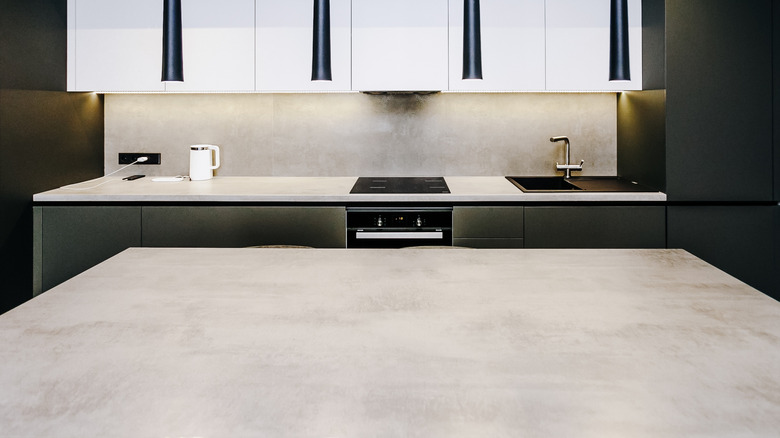
Through the 2010s, concrete became a popular kitchen countertop material because of its rustic appeal. It has a rough, textured finish that adds an architectural, handmade element and unique character to the space. Especially versatile, concrete countertops are part of a trend that leans into the use of authentic, raw materials rather than the perfectly polished norm. However, the bacterial risk and constant maintenance necessary make it one of the worst options for everyday cooks.
Concrete is a porous material that's easy to stain, even when it's sealed properly. Spills have to be wiped up very quickly and, no matter how fast you do it, liquids like coffee, oil, and red wine can still leave their mark behind. Your countertop will likely not look the same after your first meal prep. And anything that gets into the material can encourage the growth of bacteria, so daily cleaning is essential. You can wax the surface every month for an extra layer of protection, but you will also need to reseal the concrete at least once a year to fill the pores and prevent food and liquid from getting in. Despite its strength, the countertop can crack over time as your home naturally settles.
In addition to these issues, the initial installation is comparable to that of granite because, while the material itself is cheap, it's labor intensive to form and pour. Additionally, the structure of your cabinets may need to be strengthened to accommodate the heavy weight. Such a complex installation makes concrete countertops a better fit for a professional to handle rather than a DIYer. And along with professional labor, there's the long-term cost of maintenance to consider.
Get: Laminate
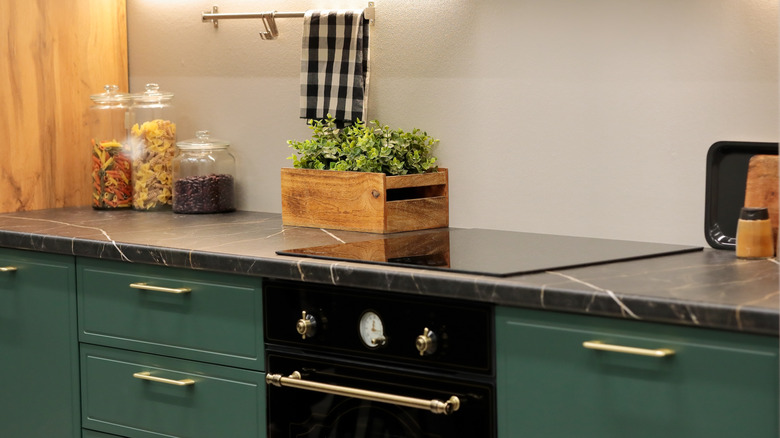
It's understandable that laminate might not be viewed as one of the best kitchen countertop materials. Often made from laminated layers of paper and plastic onto chip board or particleboard, this retro kitchen countertop material got especially popular after World War II because of its affordability and low-maintenance characteristics. By the '80s and '90s, homeowners were turning their heads toward newer technologies, especially since laminate had earned a bad reputation for succumbing to heat and water damage that would cause irreparable delamination. But that reputation has been changing over the years thanks to modern technologies.
Today, the manufacturing practices and adhesives used to create laminate kitchen countertops have made them much more durable. Consumer Reports even tested this material from various brands and found that it resists heat and stains and stands up well to impacts. As long as the installation is done well with adequate moisture barriers along the seams, laminate can withstand wet conditions too. Another benefit is that it has become more pleasing to the eye and is available in a variety of colors and patterns, some with decorative edging. Plus, you can't beat the prices; they're a fraction of the cost of granite and quartz countertops.
The only real caveat with laminate kitchen countertops in the current market is that they're easy to scratch with a knife. Rather than cutting directly on your countertop, you have to use a cutting board to protect the laminate surface. Although, it's always best to use a proper cutting board no matter what kind of countertop material you have to avoid damaging your knives.