

9 Common Customer Complaints About Keurig Coffee Machines
In the late 2000s and early 2010s, a Keurig coffee maker was the popular, buzzy gadget on the market. This small kitchen appliance promised convenience in a cup with single-use, disposable coffee pods. These pods created cups, mugs, or to-go thermos flasks of hot java with the push of a button, making the rigamarole of setting up a drip coffee pot seem almost archaic in the process. Keurig coffee was fast, easy, and felt like getting a cup of joe on "The Jetsons."
In the late 2000s boom, Keurig machines were everywhere: Break rooms, hotel rooms, AirBnBs, conference rooms, libraries, music venues, even your local Jiffy Lube. The beverage brewing company has produced several different machine models over the years, from downscale mini options to coffee makers with milk frother attachments to brewers that can do single-use pods and regular drip coffee. K-Cups also come in a wide variety of flavors, thanks to corporate collaborations (with Starbucks and Dunkin') and Keurig's parent company, Keurig Dr. Pepper, creating pods based on brands under its ownership, like The Original Donut Shop and Green Mountain Coffee Roasters, and even the discontinued Cambell's soup K-cups.
Still, these bells and whistles haven't managed to drown out negative online discourse about Keurig, and complaints seem to be as varied as they are plentiful. Keurig machines and the coffee they brew have become divisive subjects in the caffeine community. For the Keurig critics, they often return to one of these nine pain points as reasons for why they ditched their pod brewer and picked up one of the many Keurig alternatives on the market instead.
Electrical failures are common and difficult to troubleshoot
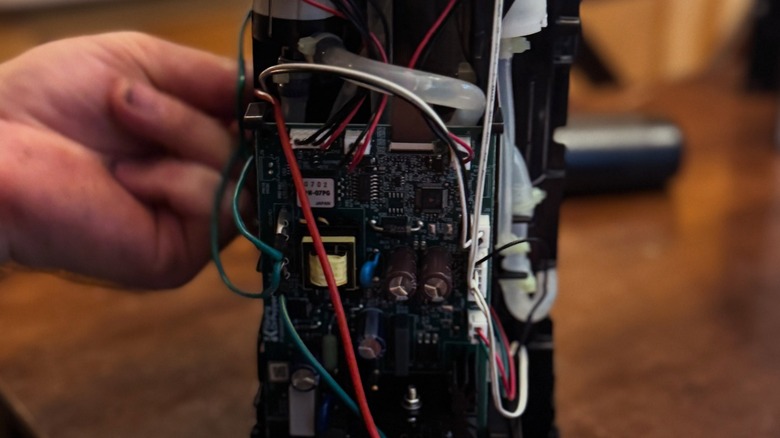
One of the most common customer complaints about Keurig coffee makers is electrical failure, and these malfunctions manifest in different ways. Sometimes, the coffee maker won't brew, while other times, it won't turn on at all. Symptoms can potentially indicate which electrical component isn't working, but that isn't always a foolproof troubleshooting method. And unfortunately, there are a lot of electrical parts that could be the cause of your grief.
In one brewing machine alone, there are multiple pumps, switches, chips, thermostats, fuses, LED units, an LCD panel, circuit board components, wires, wire connectors, and a power cord. While it is possible to disassemble a brewing machine and fix faulty parts yourself, including fuses, this kind of repair can be challenging. For some users, it might be impossible.
Some unlucky customers have complained about their Keurig machines not working right out of the box. Among those who have gotten their machines to work, many users have reported short lifespans, and there's also anecdotal evidence that newer Keurig models might be less reliable than older models. One former Keurig owner offered some blunt advice for dealing with recurring electrical issues in their Keurig on Facebook, saying, "We disconnected ours and went back to a real coffee pot. Done."
Polymer components fail and replacements are hard to find
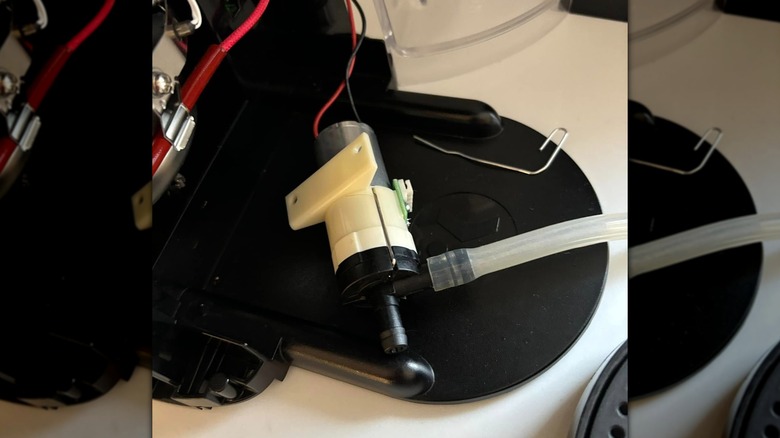
A lot of customers have complaints about the polymer components in Keurig machines — the small plastic and silicone pieces located inside the machine. These can fail at any point in the coffee maker's lifespan, and like their electrical counterparts, troubleshooting the exact polymer piece responsible for a malfunction can be difficult. Symptoms like leaks and failure to brew can point the user in the direction of the issue, but it's not a guarantee.
Some Keurig customers have reported issues with a plastic double-tee connector that failed and caused their machine to leak water. In other cases, leaks were caused by faulty silicone receivers that needed to be re-greased to reseal the connection. Other potential plastic or silicone pieces that could cause the machine to malfunction include gaskets, O-rings, and the plastic pipework that runs throughout the internal brewing mechanism.
Once you get past the initial challenge of troubleshooting your problem, the next hurdle is figuring out how to fix it. Repairing it at home can be difficult for some, and that's assuming you're able to source the correct part. One commenter on Facebook said the company wouldn't send them the part they needed, writing, "Keurig refuses to send me [the] rubber gasket KF86. With out that seal, coffee grounds come out of the pod and are all over the machine and in the coffee cup. It's a 5cent piece."
Needles require frequent, finicky cleaning
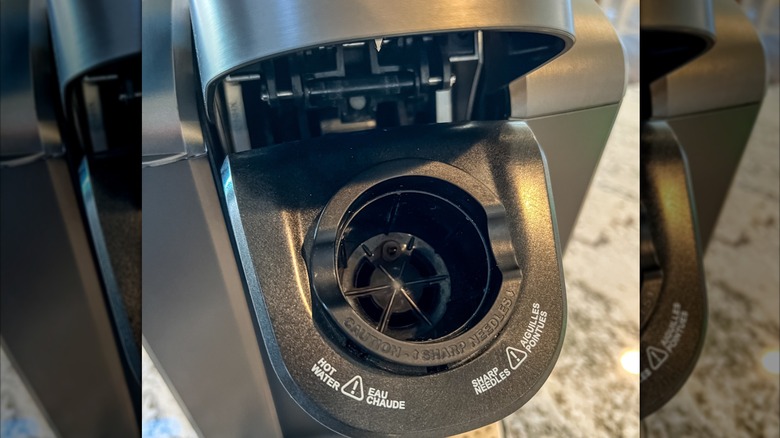
The electrical and polymer-based parts of a Keurig might occasionally fail, but generally speaking, they're not designed to be regularly maintained or replaced. Other parts of the coffee maker, however, do require consistent upkeep. All Keurig machines have an exit needle and an entrance needle. The entrance needle punctures the top of the Keurig pod, and the exit needle punctures the bottom. Coffee grounds can get lodged in both, clogging the system and resulting in inconsistent brewing. Regular cleaning helps prevent this issue.
Unfortunately, many customers don't realize this about their Keurig machine until something starts going wrong. Common signs of malfunctioning needles include hissing when you lift the lid, excessive damage to the pod beyond the usual puncture, brewing a few drops of water only, and power shut-offs.
Needles are enclosed in tubes inside small plastic pieces. To clean a Keurig needle, you need to disassemble the plastic pieces and use a pin to poke out any coffee particles from the tubes. Both needles are sharp, so it's important to be careful while handling them.
Machines can become hot spots for mold
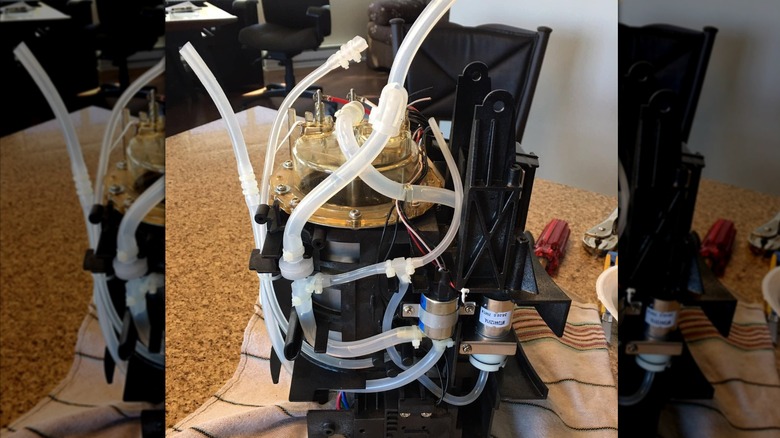
Any appliance that contains water, whether it's a Keurig, drip coffee machine, tea kettle, or humidifier, requires regular cleaning to avoid bacteria and mold build-up in the appliance's wet internal environment. Complaints of excessive mold in Keurig machines are common but difficult to verify as a non-user issue, since it's impossible to confirm each customer's cleaning routine. But that hasn't stopped users from sharing their stomach-turning experiences with their Keurig machine online.
Some of these unlucky individuals had seemingly sufficient cleaning routines and still saw signs of mold. Customers most often find mold in the plastic tubing that carries water from the external reservoir to the brewing mechanism. Some have also found evidence of mold along the edges of plastic components and inside inaccessible internal water reservoirs.
While some customers discovered mold while opening their Keurig machines for other reasons, some customers went searching for it after experiencing gastrointestinal distress. In fact, there have been so many reports of GI symptoms in correlation with Keurig use that some communities have dubbed it "Keurig sickness." These cases often involve someone experiencing GI distress, opening their Keurig machine, and finding evidence of mold and bacteria, like slimy surfaces and discoloration. To try and avoid this, you might find it helpful to know that Alka-Seltzer works very well to clean a coffee machine.
The environmental impacts of coffee pod waste are hard to ignore
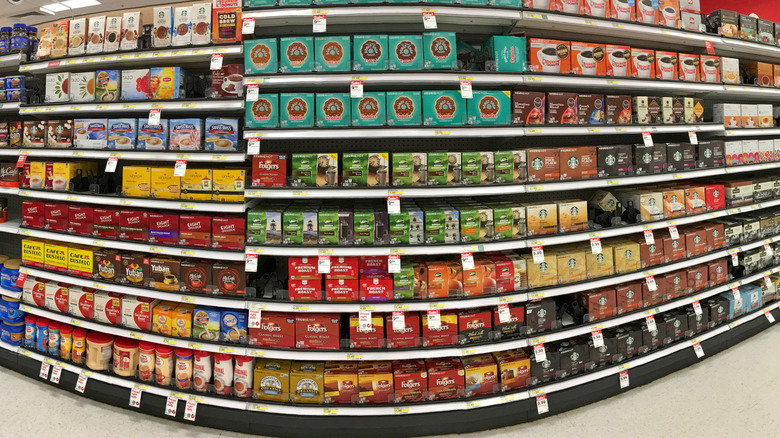
Keurig released its first coffee brewing machine in the late 1990s. Over the decades since, environmental scientists have gathered compelling evidence that coffee pod waste is harming the planet. For some customers, that unsustainability is hard to ignore.
One of the most attention-grabbing statistics about Keurig's environmental impact came to light in the mid-2010s, when news reports said that the discarded K-Cups in landfills, when placed side by side, could stretch around the entire planet ten times. People haven't stopped buying, using, and throwing away K-Cups since then — the company didn't make plans to ditch K-cups until 2024 — so it's safe to say the problem remains. Waste management workers have reported the pervasiveness of K-pod waste as well. Even John Sylvan, the man who invented the K-Cup, has expressed remorse over his discovery. Speaking to CBC News in 2015, Sylvan admitted he didn't use K-Cups in his own home and was surprised that other people still did. Sylvan sold his stake and left the Keurig company in 1997.
Keurig has since tried to address environmental sustainability, but hasn't always been successful. In 2022, the company paid $10 million in a class-action settlement after a plaintiff sued Keurig Green Mountain for false claims of K-Cup recyclability.
Eco-friendlier options aren't always reliable substitutes
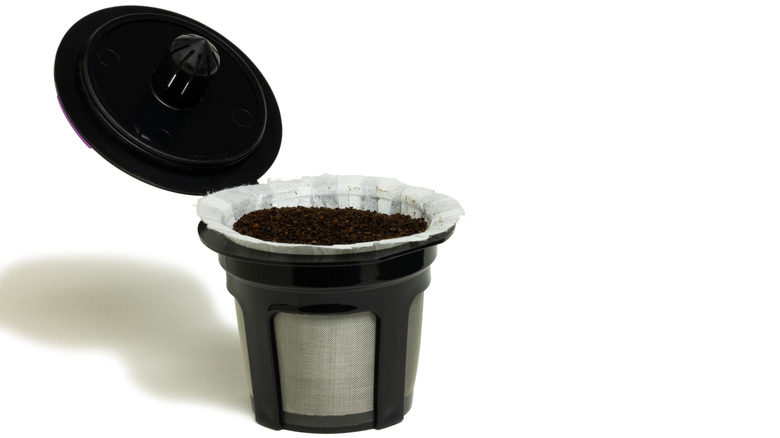
Making truly sustainable choices as a consumer is next to impossible in modern society, and at the end of the day, convenience is convenience. Many Keurig customers who want to keep their single-use coffee makers have tried to lessen their environmental impact by switching to reusable pods. Customers fill their reusable filter with ground coffee, then insert it into the Keurig machine like a regular pod. When they're done brewing, they can remove the filter, wash it, and repeat.
While a good idea in theory, reusable coffee pods have left many users feeling frustrated and uncaffeinated, with common customer complaints centering around drink quality. People report that the coffee is often weak and contains a thick slurry of wet grounds in the bottom of each cup. For some customers, this is a recurring issue regardless of whether they use a plastic or a stainless steel reusable filter.
For many java lovers, one of Keurig's strongest selling points is the speed and convenience of single-use pods. If reusable pods need to be filled, washed, and dried, then the Keurig begins to lose some level of convenience. As one Reddit user reported, "The reusable cup was a huge pain in the a** to clean, dry, and refill. After about a week, I just went back to using my French press."
Many don't enjoy the flavor of pod coffee
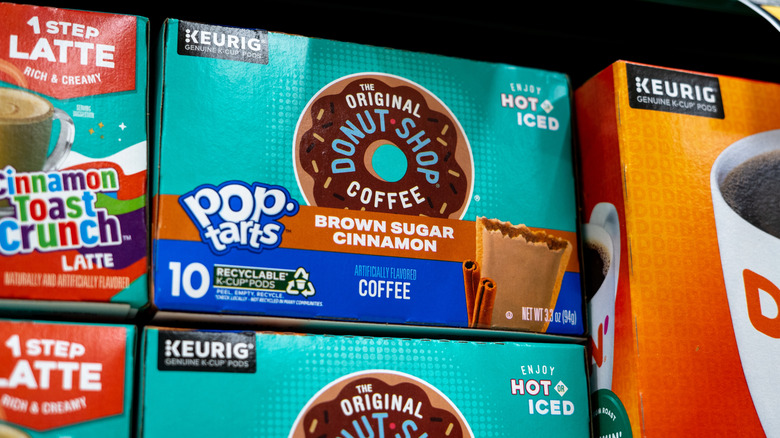
For some ex-Keurig customers, their biggest problem isn't the machine. It's the coffee. And while flavor is largely subjective and dependent on the person, the sheer volume of flavor complaints alone is worth noting. Cleaning the machine doesn't seem to be a surefire solution, either. As one Reddit user noted, "I got a Keurig for Christmas. It tasted like plastic. After having it [thoroughly] cleaned out with a cleaning solution, it still has a weird taste."
Words like "plastic," "artificial," and "chemical" often pop up when coffee drinkers describe the flavor of Keurig coffee. One ex-Keurig user on Facebook described the single-use pod coffee as tasting flat. "Is it just me or do most K-cups taste kind of the same?" they wrote. "I got tired of pods ... so I tried a small-batch one recently and honestly couldn't go back." Others agreed, with one noting, "Life got better when I stopped drinking out of plastic and started doing pour overs."
For whatever it's worth, some users were able to improve the flavor of their Keurig coffee with a deep clean, by adjusting the temperature, or by using filtered water. But when that doesn't work, getting a whole cup down can be a challenge. As a brutally honest YouTube review said, "This coffee is bitter; it's acidic in a bad way. Overall, it just tastes poorly constructed. It tastes old. It just tastes bad."
Not everyone considers their Keurig to be a money-saver
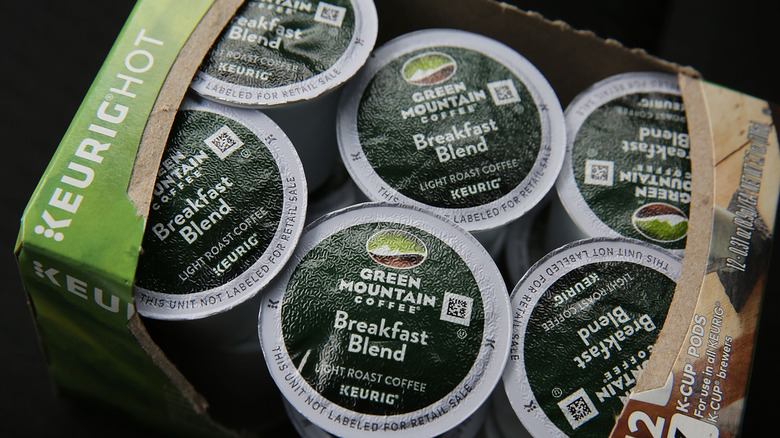
A major selling point that's converted many Keurig owners over the years is the idea that drinking coffee one pod at a time is cheaper than brewing it by the pot. After the initial expense of buying a Keurig machine, that is — Keurig machines are famously expensive. The cheapest Keurig models can cost over $50, which is notably more expensive than the cheapest drip coffee machines. But depending on how much coffee you drink, buying a Keurig might actually cost you more money in the long run.
We found one scientifically minded coffee drinker on Facebook who decided to put a dollar amount to their daily caffeine consumption, saying, "I saw my chance to test just how much more economical the grounds are." Rather than buy a 30-pack of Keurig pods for $15.99, which would produce 30 cups of coffee, this customer opted for a $15.99 tub of ground coffee. After 20 days of this coffee experiment, they had already made 57 cups of coffee with their coffee grounds, nearly double what they could've made with Keurig.
Heavy coffee drinkers who use a Keurig might find themselves spending hundreds of dollars more on their caffeine fix per year — for those who prioritize convenience and speed, that might be worth it. Light coffee drinkers, on the other hand, are more likely to see savings, as disposable pods let the occasional coffee drinker enjoy their brews one cup at a time, instead of buying an entire tub of ground coffee.
Customer service isn't always helpful
In a worst-case scenario, you might buy a Keurig, you run into a problem with it, and have to call customer service for help. In a perfect world, a customer service representative would be able to talk you through your problem and reach a solution, even if that means replacing a faulty machine. Many Keurig customers, however, have reported the opposite experience, describing the customer service as nightmarish.
Unfortunately, that doesn't seem to be an uncommon experience. One Reddit user complained about this, saying, "This company is the absolute WORST ever! They make promise after promise but there is rarely any follow through to make good on the promises." Another added, "They used to have amazing customer service in the early 2010's ... now it's a horror-show."
Hundreds of customers have reported official complaints with the Better Business Bureau about Keurig. At the time of this writing, over 400 formal complaints have been documented by the BBB over the past three years. Many cite slow response times and unhelpful customer service interactions.