

10 Tricky Foods To Make In Stainless Steel Cookware
We may receive a commission on purchases made from links.
Most of us belong to one of two very definite schools of thought when it comes to cookware ... either swearing by nonstick, or refusing to use anything that's not stainless steel. If you're part of this last group, you should be aware that there are some mistakes to avoid with stainless steel cookware.
One such mistake is trying to prepare tricky foods without carrying out the appropriate research first. Acidic food, dairy, and even candy are not as straightforward as other foodstuffs and can lead to a ruined recipe and ruined cookware.
We reached out to two experts to help us answer the most important questions: Which are the tricky foods to make in stainless steel cookware, and what's the best way to avoid unpleasant surprises? Cookbook author David Joachim, who is co-author of the award-winning reference book, "The Science of Good Food" and editorial director of the barbecue science website, AmazingRibs.com, along with Dr. Brian Quoc Le, founder and CEO at Mendocino Food Consulting, are in agreement: Some items may be more difficult than others, but if you go in prepared you should expect smooth sailing. Here are the 10 foods that take a little more skill to get right in stainless steel cookware, and what the experts say is really going on.
Tomato sauce
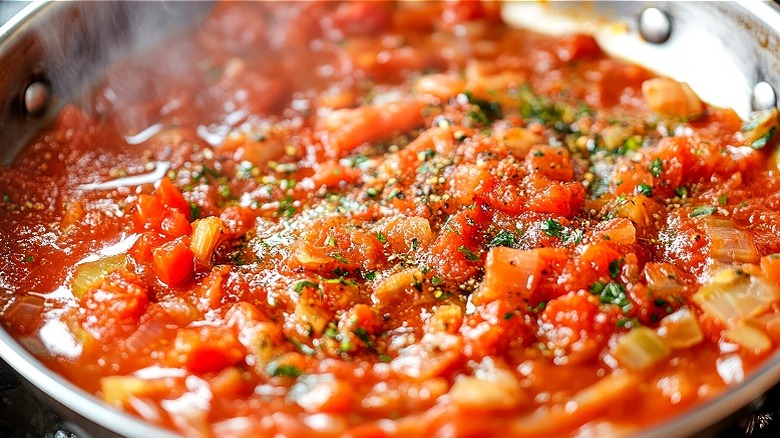
Who'd have thought that one of the commonest mistakes to make when preparing tomato sauce is using your old, scratched stainless steel pan? Now this – contrary to popular opinion – is not because the acid in the tomato will react with the steel, or even create a reaction that will impact the taste. "True, food-grade stainless steel is fairly impervious to most food acids. However, lower-quality stainless steel can be affected by the citric acid in tomatoes and vinegar-rich sauces," says Dr. Brian Quoc Le, founder of Mendocino Food Consulting. He acknowledges that very small quantities of iron or chromium can, in fact, leach off a tomato sauce reduction. However, you're unlikely to taste the difference, unless you are blessed with particularly sensitive taste buds.
David Joachim, author and editorial director of the barbecue science website AmazingRibs.com, adds that even if such leaching occurs, it's unlikely to be significant enough to measure. He refers to a 2013 study that found measurable leaching only when tomato sauce was simmered for six to 20 hours. "For typical home cooking of less than one hour to a couple of hours, stainless steel pans with a cooking surface of 18/10 steel remain among the safest and most chemically stable cookware materials available," he assures us. So what's the tricky part here? The real risk factor, Dr. Quoc Le explains, is when your stainless steel cookware is scratched, as the sauce will stick to the micro-grooves.
Red wine reductions
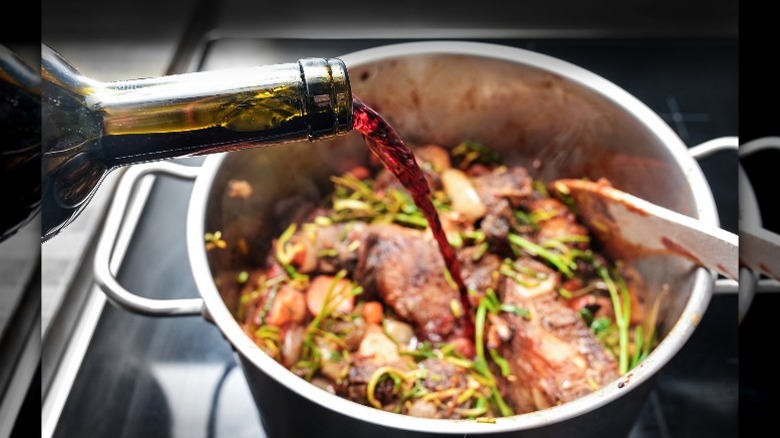
Red wine reductions suffer from the same bad reputation as tomato-based sauces when talking stainless steel cookware. Again, it's the acidity that's likely to blame for the bad press, with home cooks often wondering whether this will react with their favorite cookware. However, Mendocino Food Consulting's Dr. Brian Quoc Le is quick to put our minds at rest. As with tomato sauce, trace leaching is very minor and unlikely to be detectable. "For the most part, there isn't going to be a noticeable difference in high-quality stainless steel cookware."
If you think that you're picking up a change in flavor, author David Joachim says that this is most likely due to concentration through evaporation. "Flavors concentrate as water evaporates. And the mixture thickens to a more pleasing texture," he says, adding that it's this process that gives added flavor to reductions. "The evidence suggests that most reductions do not produce a metallic taste from stainless steel, as opposed to other cookware metals."
Once again, the trickiness of the process arises from scratched pans, rather than altered flavors. Dr. Quoc Le explains the science behind it, saying that this is not because scratches equal corrosion or leaching, but rather because they remove the protective layering that allows for smooth cooking. He advises avoiding wine sauces in this case.
Vinegar-based sauces
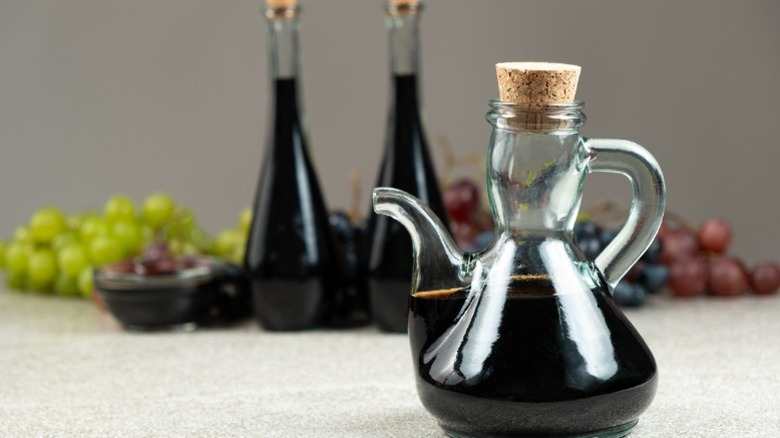
We've got a third highly acidic culprit on our list of tricky foods to make in stainless steel cookware — vinegar-based sauces. Dr. Brian Quoc Le, founder and CEO at Mendocino Food Consulting, says that vinegar's acid is the other ingredient (alongside tomato) that can affect lower-quality steel, and it's specifically one to avoid on a scratched pan. "It's less about the cooking time and temperature and more about how the stainless steel is handled after cooking, whether it's washed immediately or left to rust while in the sink, for example."
David Joachim, co-author of the award-winning reference book, "The Science of Good Food," says that vinegar falls under his general answer on culinary acids — no dramatic reaction under normal cooking conditions, with any measurable leaching confined to extreme, multi-hour worst-case scenarios. "It is possible for an ingredient's acid to slowly increase the leaching of trace amounts of nickel and chromium, particularly from brand-new stainless steel cookware or during multi-hour simmering."
Salted pasta
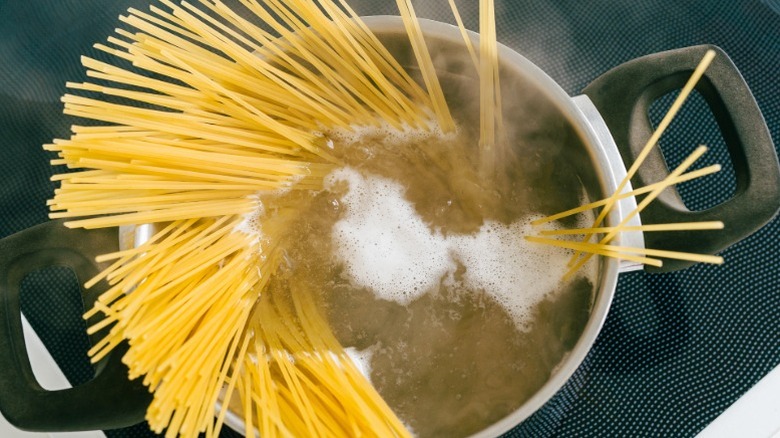
Dr. Brian Quoc Le of Mendocino Food Consulting says that salt itself isn't a major concern when using high-quality stainless steel cookware. That said, undissolved salt sitting in cold water can concentrate over time and wear through the protective chromium oxide layer. Moreover, pitted or lower-quality steel is more vulnerable in boiling water. Both conditions can result in rusty pots, unless you're careful. "Cold water can leave salt undissolved on the bottom of the cookware, where the salt concentration increases over time. The high salt concentration can cause the chromium oxide layer that protects the stainless steel to wear through," he elaborates.
Happily, the fix is a simple one in this case. Food author David Joachim's advice is simply to boil water before salting it. This does the trick by avoiding the localized high-chloride spots that create corrosion. "Boiling water first creates convection currents that keep the salt moving, so the chloride disperses throughout the water rather than sitting on the metal." If you're thinking of skipping the salt part entirely, don't. There is a reason why it's so important to properly salt your pasta water, and if you omit this step your pasta just won't taste as great.
Eggs
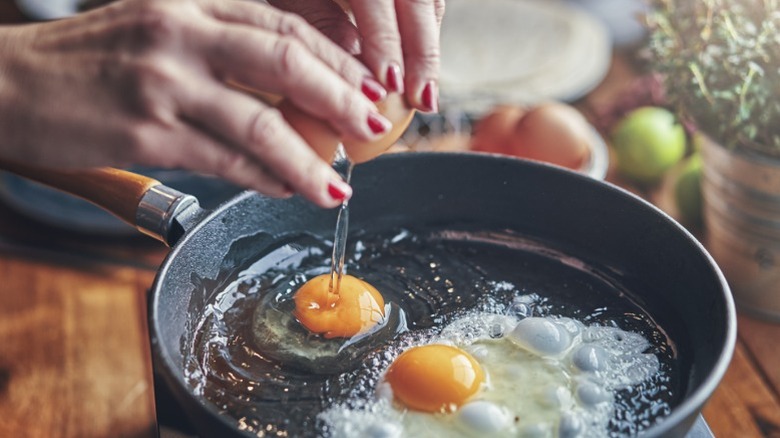
Is there a better way to start the day than with a perfectly fried egg and hash potatoes? Just be careful before whipping out your stainless steel frying pan, because there are plenty of pitfalls to be aware of. Food scientist Dr. Brian Quoc Le says that eggs are a genuine beginner's trap because of cysteine, a sulfur-containing amino acid in eggs that bonds strongly to the iron and chromium in stainless steel. In fact, this is enough of an issue for him to avoid mixing egg dishes and stainless steel altogether: "I refuse to make most egg dishes because of the problem of stickiness on the pan."
David Joachim, food author and editorial director of AmazingRibs.com, sheds more light on what exactly is happening here. The cookbook author describes how eggs stick to the pan when it is too cold, which means that adjusting your technique could fix the problem. He suggests preheating the dry pan until water beads and skitters. This usually happens at about 380 degrees Fahrenheit. Add fat, and only then add the eggs. He says, "Fat is your friend here. Also, the higher temperature of the pan surface causes rapid protein denaturation so the eggs release more quickly and easily from the metal."
Caramel and other candy
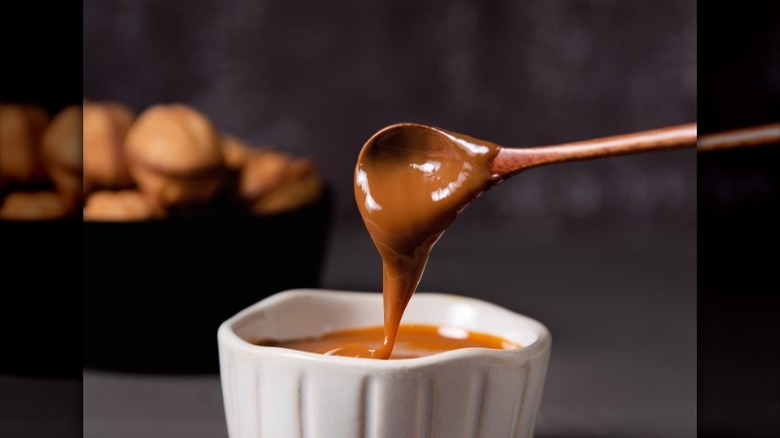
Caramel isn't the easiest of candies to make at home. There are so many potential pitfalls with homemade caramel – one danger is that it ends up being either too sticky or too grainy. Add the perils of using stainless steel cookware, and the process becomes a hundred times trickier. Dr. Brian Quoc Le, Mendocino Food Consulting, clarifies that this is not because sugary foods like candy and caramel chemically damage stainless steel. "Cleanup is the main pain point," he says, adding that damage only occurs if the cookware is being scratched with a metal utensil, thus exposing the raw metal underneath the surface.
For food author David Joachim, "The Science of Good Food," stainless steel is actually a preferred material for candy and caramel because it tolerates high heat and doesn't react with sugar. There is a risk of burning sugar above the 390-degree mark, which results in carbonized polymers that become hard and stick to the surface. This is particularly true if — you guessed it — your cookware is scratched.
Once again, there is a fix to the problem: Simmer some water in the pan to make the sticky bits liquid again. Joachim says, "If it's really stubborn, add some baking soda to the water and the alkaline will help break things down."
Jams
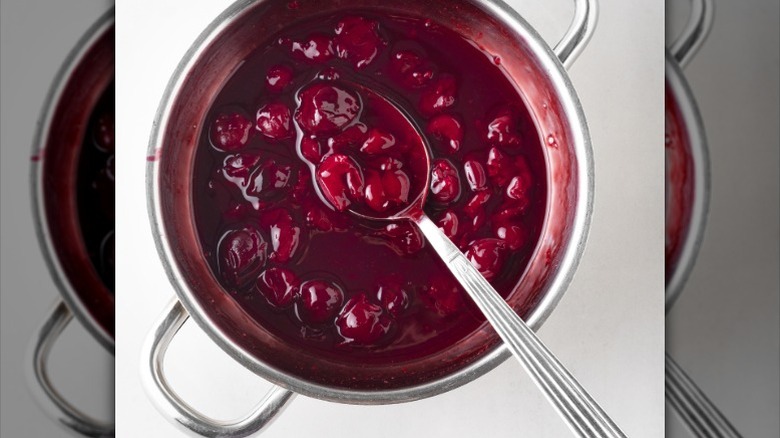
Homemade jam can be a real pain to make. With so many excellent store-bought jams available, many of you will probably be thinking there's no point going through all that hassle. That may be true, but there's a lot to be said for the pleasure of enjoying a batch of freshly made jam that was prepared right in your kitchen, especially if you're using fruits from your own garden. However, should you decide to use your stainless steel cookware for this purpose, you may end up getting more hassle than you bargained for.
Dr. Brian Quoc Le, founder and CEO at Mendocino Food Consulting, explains that jams fall into the same category as candy and caramel, with cleanup potentially becoming a whole sticky nightmare. David Joachim, food author and editorial director of AmazingRibs.com, says he follows the same protocol as with candy and caramel here. If you get burnt sugar residue hardening onto the surface of your pan, a good simmer-and-scrub should do the trick.
Fish
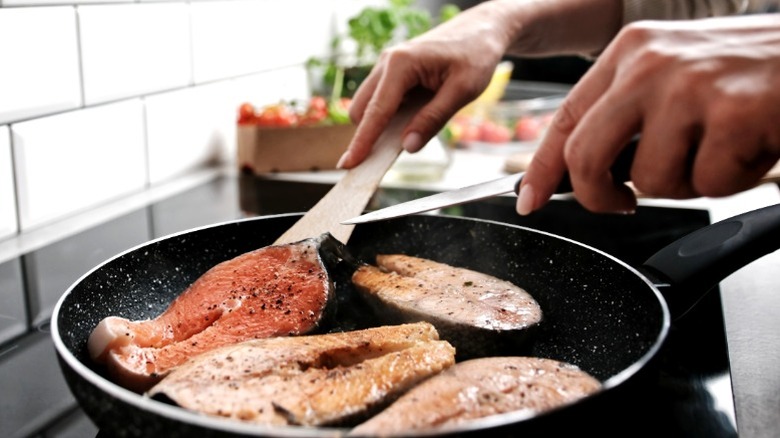
Some people swear by stainless steel pans to achieve the best pan-seared fish, mostly because it results in a crispier crust. Others disagree, saying that their fish ended up unevenly cooked. While this isn't necessarily accurate, author David Joachim says the omega-3 fats in fish go through an oxidizing process when heated. This produces compounds like hexanal that people often mistake for a metallic taste from the pan itself.
In other words, using stainless steel cookware to prepare fish is tricky. Is it worth your time and effort to get it right? That depends. While Joachim doesn't refuse to use stainless steel outright, he says, "I usually reach for cast iron or carbon steel for searing meats and fish." We're with him here. Cast iron retains the heat beautifully, so you're not going to have a problem with your fish cooking unevenly. That said, if you have a brand new cast-iron skillet, you may want to hold off cooking flaky fish in it until it develops a nonstick patina with use.
Cornbread and frittatas
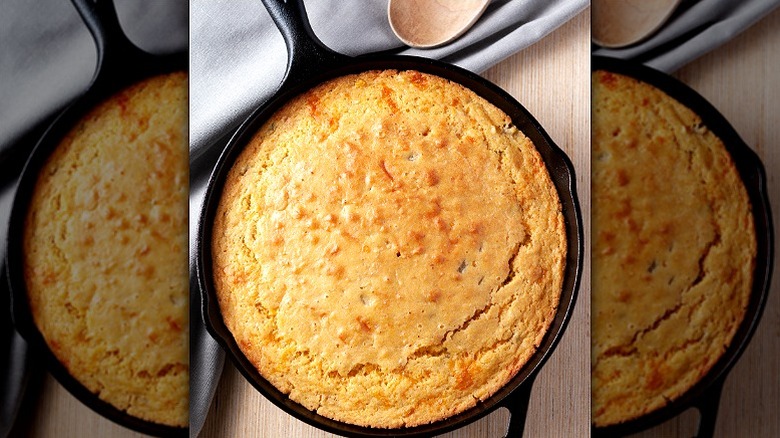
There are some foodstuffs that, no matter what your skill level, are just simpler to avoid using stainless steel for them. David Joachim, co-author of the award-winning reference book, "The Science of Good Food," lists frittatas and cornbread as two particularly strong examples. Even here, cast iron is likely to be your friend. In fact, we have a particular cast-iron cornbread recipe that yields the most deliciously moist cornbread.
What if you don't have a cast-iron skillet handy and no intention of buying one? This doesn't mean you have to give up on homemade frittatas and cornbread, but you'll need to exercise a touch more care during the cooking process. So, if you're looking at baking cornbread in a stainless steel pan, the one rule of thumb is to make sure you preheat cookware before pouring in the batter, preferably up to 400 degrees Fahrenheit. This helps the cornbread form a crisp bottom which, in turn, stops your cornbread from sticking to the pan.
Seared meats
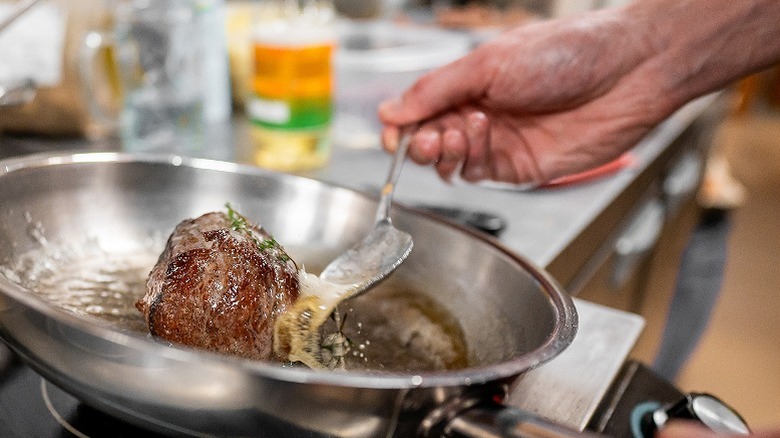
What about the metal taste you sometimes get when searing meat in stainless steel? Once again, if you think the cookware is responsible for this altered taste, you may be assigning blame to the wrong reason. Food author David Joachim says this is likely to be the result of the beef's natural iron content, rather than the material of your pan.
This doesn't necessarily mean that stainless steel is the best, or easiest, cookware for you to cook a good cut of steak. Just like with fish, Joachim says he prefers cast iron or carbon steel over stainless for searing meats. He's not alone. Using cast iron is the preferred method used by steakhouses so as to achieve a crispy steak crust. The material is purposely built to tolerate high temperatures, so your steak will cook nice and even. As always, you'll need to make sure that you preheat the cast-iron skillet beforehand. Failure to do so remains one of the biggest mistakes that can ruin your cast-iron dinner.