

12 Underrated Ingredients To Add To Baked Beans
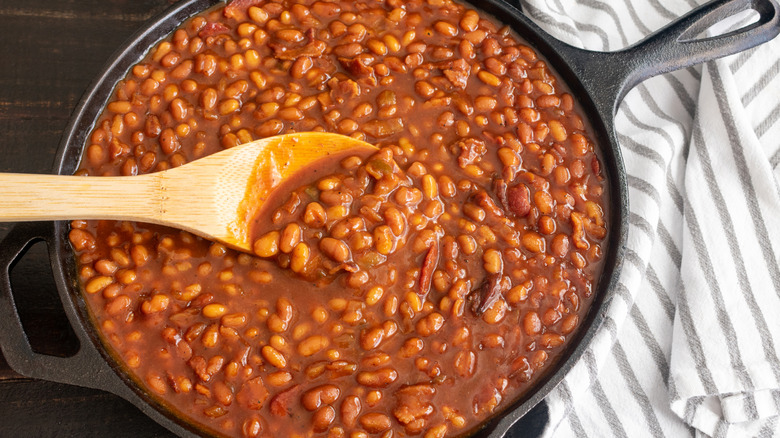
Baked beans are a sweet and savory side dish generally made with navy beans, which sit in a smooth sauce of varying thickness. You can make easy baked beans from scratch, but they take quite some time. Alternatively, you can save time by buying one of the best canned baked bean brands. No matter which base you start with, you don't have to eat baked beans exactly the way they are. There are a few underrated ingredients you can add to the dish to elevate the taste, visual aesthetics, and texture.
I'm a big proponent of adding extra (and often unexpected) things to dishes to create something entirely new, especially when that dish is a convenient pre-made option. During more than 15 years spent actively working in the food industry and roughly three decades of cooking at home, I've regularly utilized this simple technique to upgrade store-bought queso or upgrade sweet potato pie, for example. Today, I'm going to be offering you 12 excellent suggestions of underrated ingredients you haven't thought of adding to baked beans — beyond the standard brown sugar, mustard, ketchup, and bacon.
Most of the ideas below have been tried and tested by yours truly, but a few were found online through various sources. Ready to discover which underrated ingredients you should be adding to your next pot of baked beans? Let's get into it.
1. Fresh apple slices
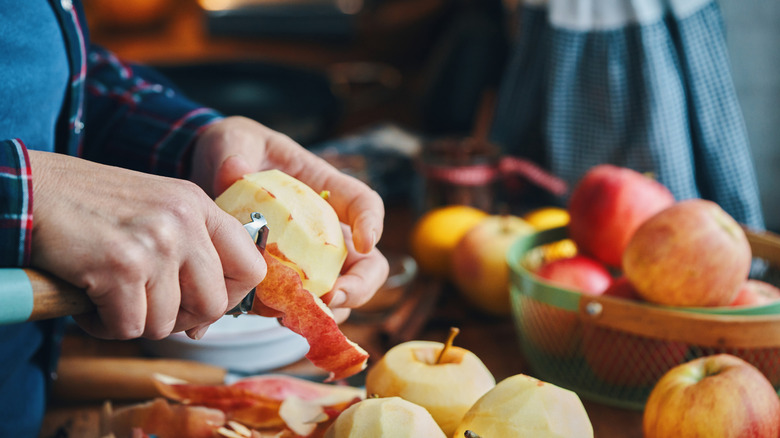
This was one of those experiments I undertook that had my family a bit hesitant. But once I tempted them to eat it, they loved it just as much as I thought they would. The sharp sweetness of the apples pairs beautifully with the deep sugary taste of brown sugar or maple baked bean varieties. Plus, the soft crunch of the slices adds appealing textural interest, while also enhancing visual aesthetics.
Start by washing and peeling your apples. I've used Red Delicious and Gala apples, but the sweet and tangy bite of Granny Smith has excellent potential if you're looking for something a bit more tart. Slice each apple a little bit thinner than you might for standard snacking, and drop it into the baked beans near the end of the cooking process — they need about 10 minutes to simmer. I used roughly 1 cup of apples for 6 cups of prepared baked beans, but you can customize as you like.
Like the idea of apples, but don't want something as substantial as slices in your beans? Dice your fresh apples instead, which will provide the same results, but with slightly altered visual aesthetics and an overall more blended end result.
2. Cheesesteak meat
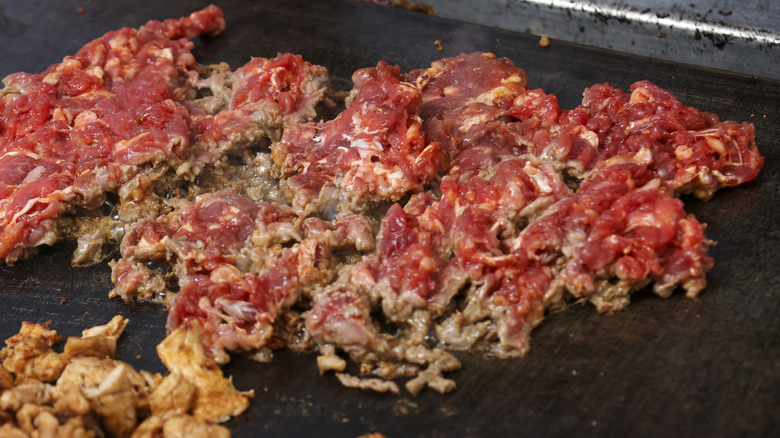
In my personal experiences, bacon is the most common type of meat people (and companies) add to baked beans — this is understandable, since bacon pairs with baked beans like peanut butter goes with jelly. It just makes sense. But, if you're looking to switch things up, skip bacon and add cheesesteak meat instead. This will add an intense savoriness and mild saltiness that helps shift your beans away from sweet and more towards savory.
There are two ways to do this. First, you can buy pre-sliced cheesesteak meat from the store, and then simply slice it into roughly uniform strips. Second, you can buy ribeye and carefully slice or shred it into thin pieces after generously seasoning it to your preferences. For cheesesteak meat seasonings, I recommend a blend of salt, pepper, garlic powder, and onion powder.
Regardless of which method you choose for securing your cheesesteak meat, you'll want to start by cooking it in the bottom of your pot. Once cooked through, carefully drain the grease, and then add your baked beans. If you want to veer even further towards savory, add a pinch of standard table salt to the beans, which will help marry the umami flavors together.
3. Buttermilk biscuit topping with cheddar cheese
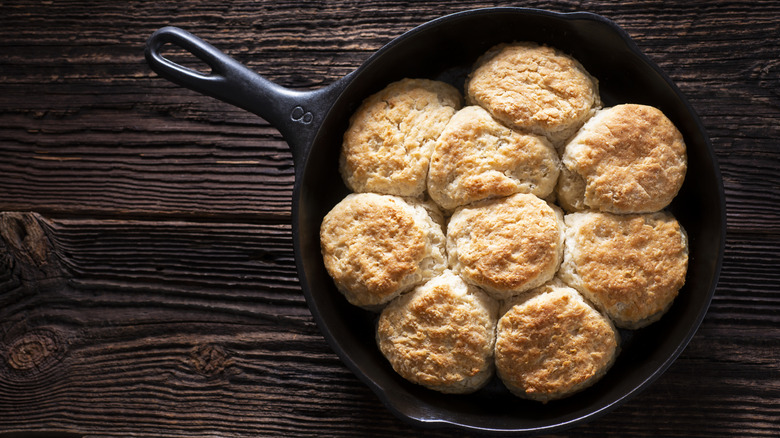
This beloved multi-ingredient option isn't my own. It's something my step-mom made for me growing up, which I used to beg for because it was so delicious and filling. Basically, the addition of a buttermilk biscuit and cheddar cheese topping turns your pot of baked beans into a full-blown casserole that's sweet, savory, and starchy, with defined creamy, salty notes.
Start by dumping a can of pre-cooked baked beans into the bottom of an ungreased casserole dish. If you're using homemade baked beans, you'll need to cook them on the stovetop first. I prefer using the best canned biscuits for this, but you can make buttermilk biscuits from scratch if you like — either way, carefully plop these on top of your beans. Bake in the oven until the biscuits have about 5 minutes left. Pull from the oven, and generously top with cheddar cheese. Place back in the oven and finish cooking before pulling the dish out. I recommend allowing the "casserole" to sit for at least 5 minutes before serving.
If you want to turn this into a filling, delicious, full meal fit to feed your family, combine the baked beans with your favorite meat. Ground beef, bacon, cheesesteak meat, or even smoked sausage are all excellent options.
4. Cabbage
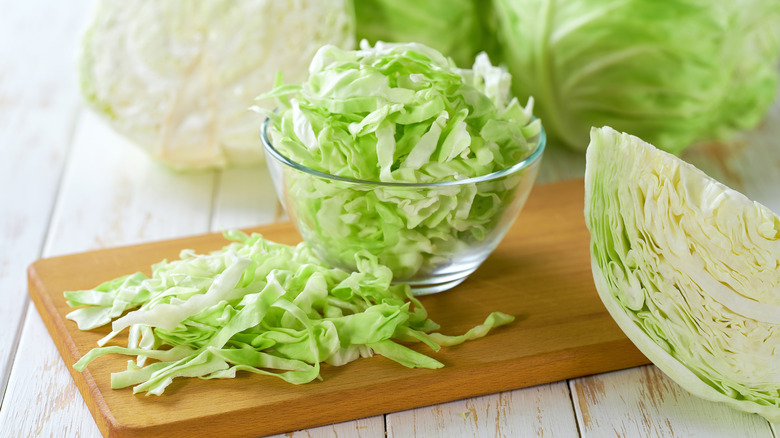
This is one of the recommendations that doesn't come from my personal experience, but instead was suggested by someone on Reddit — and honestly, I'm a little upset that I didn't think about it. I'm a huge fan of cabbage, and one of my favorite dishes to make is colcannon. Needless to say, this is at the top of my must-try list for future pots of baked beans.
The addition of cabbage not only adds a bit of crunch and a pop of color, but also some solid nutrients without altering the flavor much. One cup of cabbage adds a bit of fiber and protein, as well as at least 10% of your daily requirements of vitamin K, vitamin C, and folate.
Slice your cabbage uniformly into thin pieces, and then cut those in half length-wise so they're no longer than your hand. Once your baked beans are about three-quarters of the way done, stir the cabbage into your baked beans, cover, and finish cooking. Just remember that adding cabbage too early could result in it becoming mushy. If you want it to be a bit crunchier, add it even closer to the end.
5. Horseradish
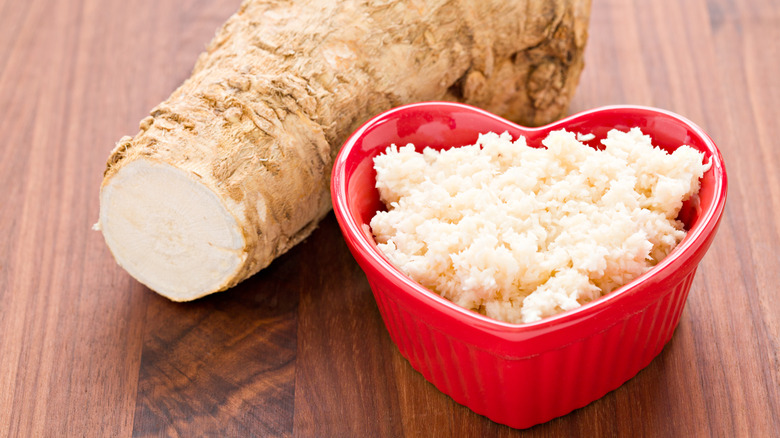
Horseradish is an ingredient that won't alter the appearance of your baked beans, but will definitely switch up the taste. Horseradish has a sinus-clearing heat and intense tangy punch that mellows a bit when combined with your beans. How strong or subtle these notes are will depend on how much horseradish you add.
Adding horseradish takes zero preparation. Simply purchase a jar of freshly grated horseradish from your local grocery store and add it to your pot based on personal preferences. Keep in mind this isn't prepared horseradish sauce, and I don't recommend those store-bought options here. You can also grate horseradish yourself if you have the time and desire.
The more horseradish you add, the tangier and spicier your baked beans will become, so use caution at first — you can always add more, but you can't take any out. For me, I like a moderate kick, so I add roughly 1 teaspoon of horseradish per cup of baked beans.
6. Hot honey
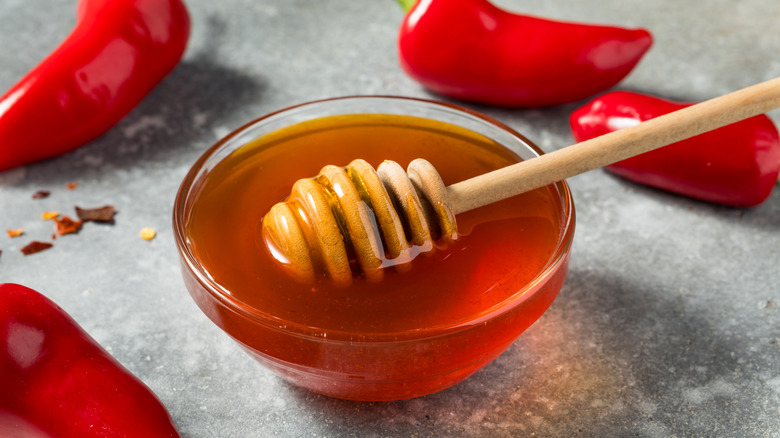
Is there anything hot honey doesn't instantly elevate? Considering there are countless ways to cook with hot honey, I think the answer is a resounding "no." For this use, the honey melds into the natural sweetness of the baked beans, elevating it slightly. The hot aspect simply elevates the spice in a way that complements the baked beans' natural flavor profile instead of overwhelming it.
Add your hot honey in the middle of cooking your baked beans, so it has a chance to incorporate without being overwhelmed by your dish's other flavor notes. Hot honey can be potent, so use caution when adding it. I recommend starting with half as much as you think you'll want, and slowly building the sweet heat from there. For me, I like a robust sweetness and moderate heat, so 1 tablespoon of hot honey per cup of prepared baked beans is my standard.
I especially love serving hot honey baked beans with cornbread. When making a meal with this option, honey-glazed ham, baked sweet potatoes, and roasted corn are also fantastic pairings.
7. Dill pickles
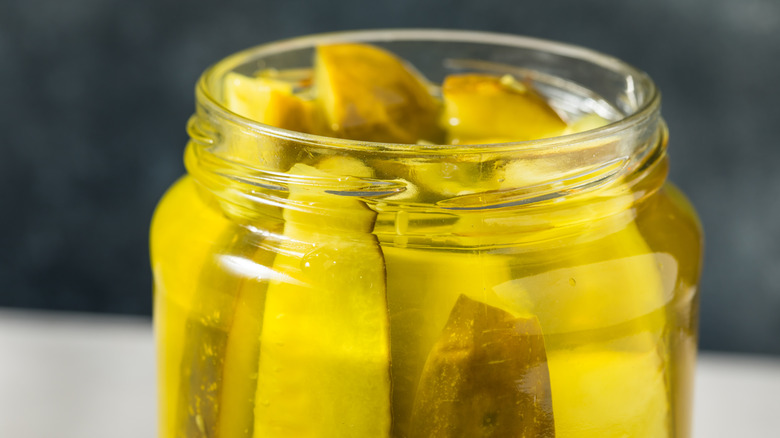
Here is the second of three underrated ingredient additions that I haven't personally tried and tested, brought to us courtesy of Reddit. But, being an avid lover of dill pickles, I can absolutely see the draw. The vinegar in dill pickles will help balance the sweetness of the brown sugar or maple in your baked beans, so if you're looking to veer into savory territory, this is another excellent option. As an added bonus, the pickles will add a decent bite of tang with a satisfying crunch that creates textural complexity against the overwhelmingly soft, medium-weight mouthfeel of plain baked beans.
For the best results, start with the best store-bought dill pickles you can get your hands on. I recommend opting for Vlasic Kosher Dill Spears, Vlasic Zesty Dill Spears, or Mt. Olive Polish Dill Spears. Take each spear and slice it in half length-wise before thinly dicing in the opposite direction to create bite-sized pieces. As with most things on this list, the amount you add is highly customizable. My recommendation is to start with a ratio of 1 cup of diced pickles to 6 cups of prepared baked beans — you can increase from there to match your preferences. Add about three-quarters through the cooking process, so the pickles warm and incorporate, but don't fall apart.
8. Grilled pineapple chunks
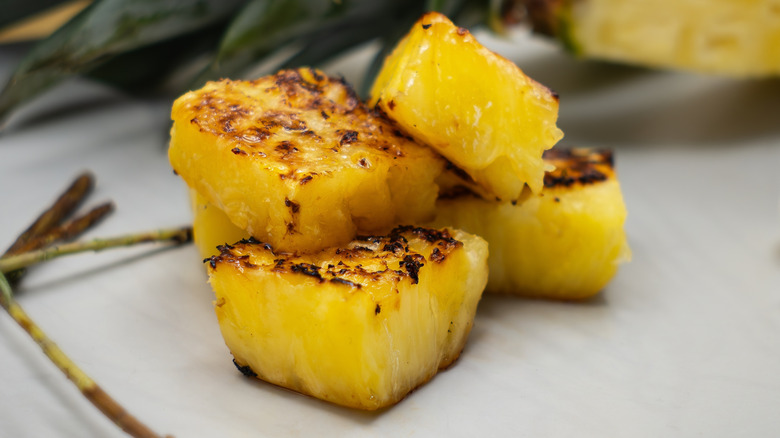
One thing you may begin to notice from this list is that baked beans pair excellently with a variety of fruits. Here, grilled pineapple chunks add a burst of citrusy sweetness with a mild to moderate tang and a subtle smoky flavor. The vivid coloring also contrasts nicely against the darker brown of the beans, while adding a bit of textural interest — which, as you can guess, I adore in my dishes.
You can use fresh or canned pineapple chunks, based on what you prefer or what you have on hand. If opting for fresh, cut the pineapple into bite-sized chunks. Take whichever option you're using and either grill them on a grill or char them a little in a frying pan with a small amount of butter. Either option will add a bit of smoky char, but the grill works best, if possible.
Once charred, mix into your pot of baked beans about 5 minutes before it's done. You want to add near the end so the pineapple doesn't turn to mush or absorb too much of your sauce. You can customize how much pineapple you add, but I like to use 1 cup of pineapple chunks for every 4 or 5 cups of prepared baked beans, depending on how I'm feeling.
9. Spanish chorizo
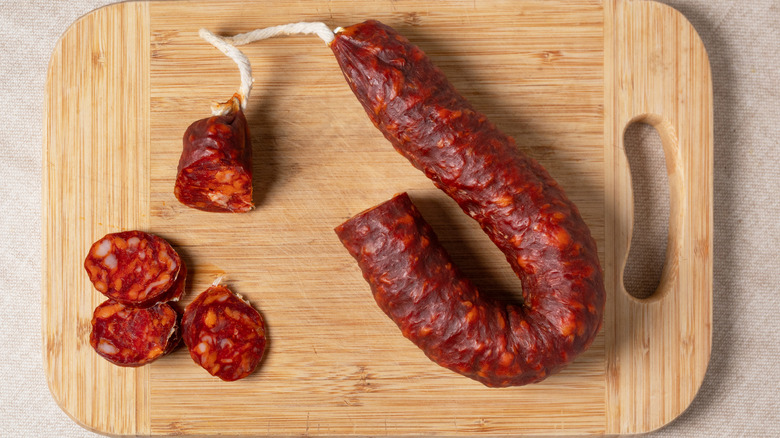
This is the final idea that I found elsewhere, on a recipe site. For this idea, we're talking about Spanish chorizo, which is a cured, smoky sausage heavily seasoned with paprika. This is different from Mexican chorizo, which is ground sausage heavily seasoned with things like chiles and vinegar. If you only have the latter, this will also pair well with baked beans in a pinch, but provide results different from what we discuss here. Spanish chorizo will add layers of smoky, salty, umami flavors to the already complex sweet and savory beans. The slices add substance to the dish and break up the visual monotony of your beans.
Some Spanish chorizo comes pre-cut, but others come in a long log that you'll need to cut yourself — in which case, you'll want to cut into slices about ¼-inch to ½-inch thick. Throw your chorizo into the pot at the same time you add the beans, as this will not only warm the pre-cooked meat, but will also give the flavors time to meld. I recommend adding about 1 cup of sliced chorizo to 4 cups of prepared baked beans.
10. Crushed red pepper flakes
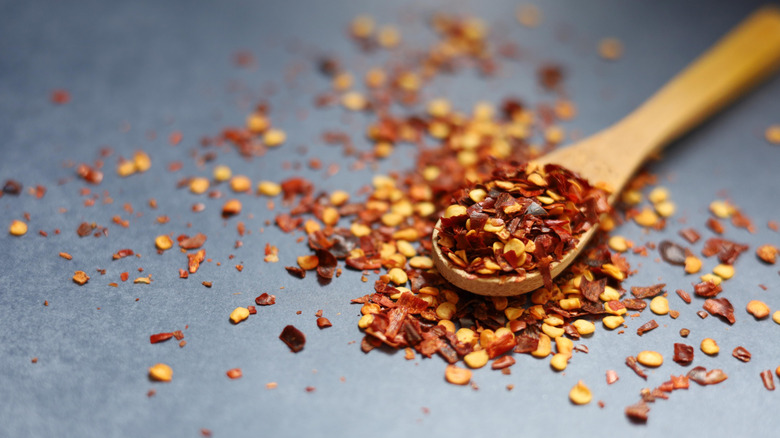
Crushed red pepper flakes are perhaps the easiest underrated ingredient to add to your baked beans on this list. Best of all, most people already have a container of these sitting in their spice cabinet — and, if you don't, this is one of several seasonings I recommend everyone have in their pantry if they appreciate a little heat in their food.
Simply add your desired amount of crushed red pepper flakes into the pot of baked beans near the beginning of the cooking process. Ideally, these (and other spices) will be added just as the beans become warm, so they have time to incorporate. I personally avoid adding spices at the beginning of cooking because some larger spices, like these or various green herbs, tend to burn if they get stuck on the bottom of the pot.
If you're looking for a mild kick of spice to complement the sweetness of your baked beans, add ½ teaspoon of red pepper flakes for every 4 cups of prepared baked beans. For an intense heat-forward flavor profile that won't entirely overwhelm your beans, add 1 ½ teaspoons per 4 cups of prepared baked beans.
11. Cherry pie filling
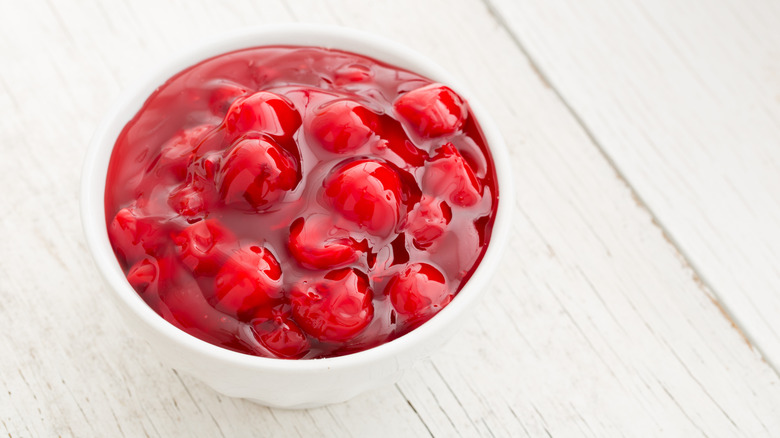
Joining our fruity recommendations of fresh apple slices and grilled pineapple chunks is cherry pie filling. A can of this delicious sweet stuff will thicken the texture of your baked beans slightly, while adding a refreshing burst of sweet berry flavor. Of course, the beautiful pops of red create a subtle contrast against the overwhelmingly brown dish.
Dump your filling into your pot of baked beans as soon as they're warm (but not yet hot). Thoroughly combine and allow to cook on medium-low heat for at least 10 minutes to marry the flavors together. One small can of cherry filling is perfect if you get one large can of baked beans. But, if you can only find those giant family-sized cans of filling, combine them with two or three large cans of baked beans, depending on how sweet you're looking for the dish to be.
One thing to keep in mind is that cherry pie filling is intensely sweet. When it's paired with the already sweetened baked beans, it melds into an even more robust sweetness. That means this isn't the tip for you if you're looking for baked beans veering towards the savory side of things. That aside, it also means it's perfect for complementing other sweet dishes, like brown sugar glazed carrots, sweet potato casserole, or creamed corn.
12. Smoked salt
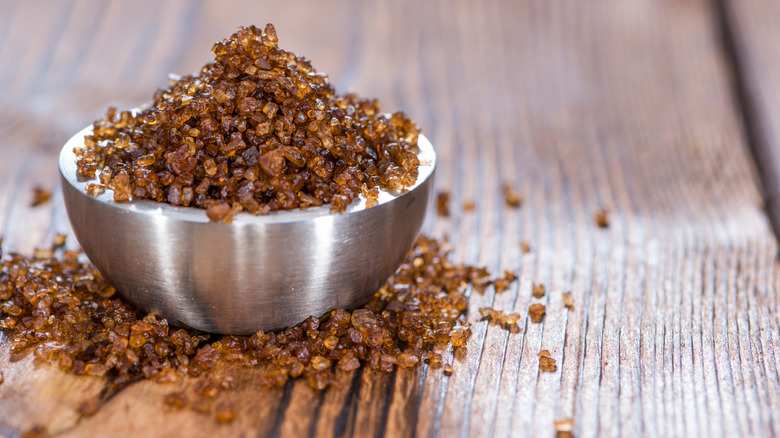
Smoked salt is created by taking sea salt or flake salt and smoking it for hours or days using wood. The type of wood used in this process can affect the flavor of the salt. You may find that smoked salt comes at a significantly higher price tag than traditional table salt, and the reason for this extends beyond the long creation process — this unique seasoning has a very intense smoky flavor profile where a little goes a long way. It's very easy to overdo it here. But that intense smoky flavor will make your baked beans taste grilled, and help them pair better with other grilled foods.
Start with a pot of baked beans that are nearly done cooking. Add a little sprinkle of smoked salt and stir thoroughly. Let the pot sit for a minute so the salt has a chance to incorporate and taste. If it doesn't quite have the salty, smoky flavor you're looking for yet, add another pinch and repeat the process. Continue this until you've reached your desired smokiness.
Consider pairing smoked salt baked beans with hamburgers, hot dogs, barbecue ribs, steaks, or anything else you might typically cook on a grill. Excellent pairings for additional sides include a range of traditional grilling sides, like coleslaw, cornbread, elote, or macaroni and cheese.