

12 Foods Sailors Ate Back In The Day

From pirates to explorers, merchant mariners to navy sailors, seafarers throughout history have endured some notoriously bad cuisine. Foods stored in ships' holds were limited to relatively shelf-stable items that could withstand humid conditions for months at a time. However, there was no guarantee that such foods would last in these unseemly conditions; consuming rancid, spoiled, or weevil-infested goods was often the only alternative to not eating at all. Most sailors did not regularly get to consume fresh foods, and very little by way of produce. Before the invention of canned food in the 19th century, they were often at risk of malnutrition, without access to a balanced diet.
There's a lot of detailed historical documentation on what many sailors would have eaten on a daily, weekly, or even monthly basis, thanks to navy ledgers of official rations. Our list includes some of these official navy staples, which were systematic and repetitive, but we'll also look at the less regimented cuisine eaten by pirates and smugglers, which might have seen a bit more variety through their underhanded ways. In any and all cases, typical dishes for seafarers included an array of unusual combinations, often concocted from whatever was available. Spanning as far back as the 1200s and into the early 20th century, here is a list of typical foods sailors from all walks of life ate back in the day, whether they enjoyed these staples or not.
Ship's biscuit
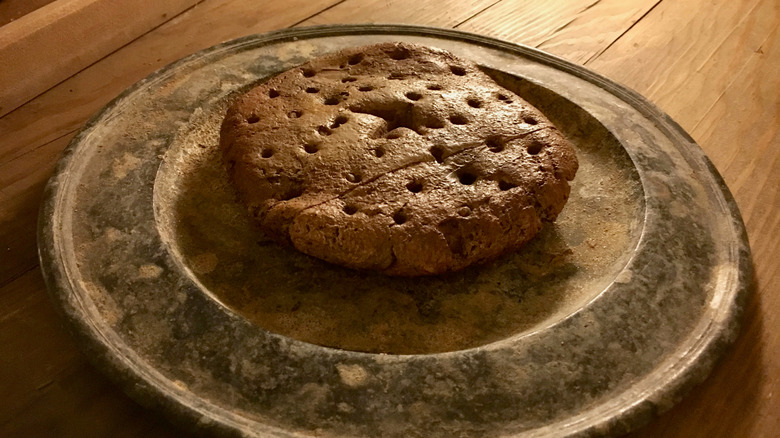
An essential item among sailors' provisions back in the day, ship's biscuits were, like much of the food consumed at sea, more about practicality than taste. Made from flour and water, these thin, hard, cracker-like biscuits were baked on land before being stocked for sailors' provisions. They were notoriously so difficult to chew that they needed to be soaked, typically in soup or beer, before they could be consumed. Served mainly as a shelf-stable source of calories, these biscuits' texture is what earned them the nickname of hardtack. The characteristic holes on top of these biscuits were part of the baking method that ensured all moisture got released, allowing them to last longer. Typically, ship's biscuits could remain edible for months at a time.
Throughout the 18th century, these biscuits were an official provision of the Royal Navy. Sailors were allotted one pound of biscuit to accompany their gallon of beer ration for the day. Though packable and able to last a long time, ships' biscuits were still subject to spoilage in the unventilated ships' holds where they were kept in barrels. Despite occasional mildew or weevils, these were still consumed even when not in their best state. By the mid-1800s, these hard biscuits were gradually phased out. In the early 20th century, ships had advanced enough to bake fresh, soft bread onboard — something that sailors two centuries prior could never have imagined.
Peas
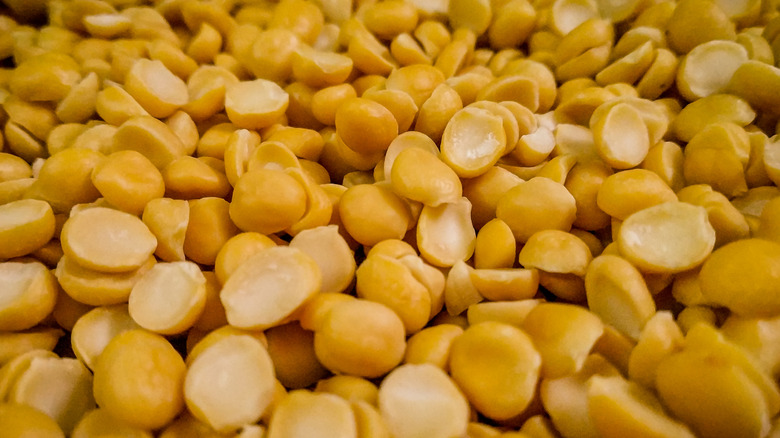
Because food had to last sailors for months before they could stock up on more provisions, vegetables were a minimal part of meals at sea. Being limited to shelf-stable foods meant that fresh veggies were out of the question. Peas were the only vegetable ships carried, as these could be dried and easily stored in bulk, and split peas may have been more common among sailors' provisions, as these were faster to cook. Typically, these peas would be boiled into a gruel or stew.
As part of the Royal Navy rations in the 1700s, sailors might have eaten an entire pint of peas on days that these were served. Peas remained a fixture in U.S. Navy sailors' provisions in the 19th century as well, before navy beans became the common legume in American sailors' diets. Though a good choice for long-term storage, peas weren't always as resistant to rot as sailors might have liked to believe. Damp conditions, or simply passing through changing weather while at sea, might result in barrels of spoiled peas for an unlucky crew. With the introduction of canned goods in the early 19th century, however, a greater variety of preserved vegetables eventually became available to sailors.
Salt pork
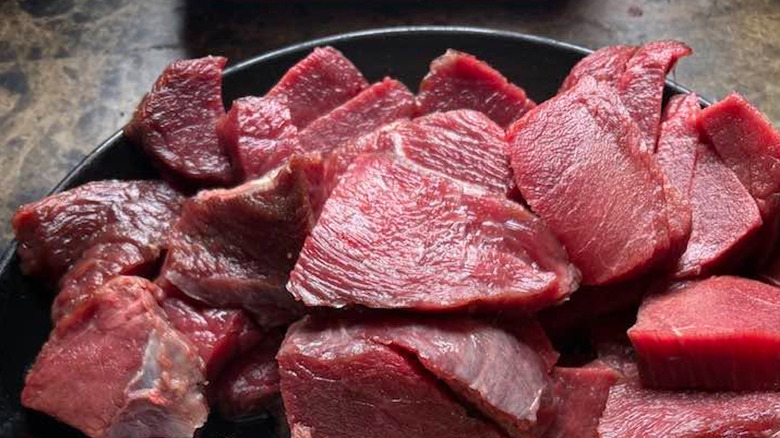
Before a challenge from Napoleon led to the invention of canned food in the early 1800s, salting was one of the most common ways to preserve food, especially for meat. Salt pork was a common protein source for sailors in the 1700s, and producing it involved immense quantities of, unsurprisingly, salt. In addition to this being added during the initial preparation, pieces of salt pork were packed in a barrel between layers of salt — at least half a pound per pound of meat — to preserve the pork for months at a time. The result was effective, as this drew liquid out of the meat so that it wouldn't spoil as quickly. But this made the pork, understandably, very salty. It needed to be boiled later to make it edible.
During the 18th century, sailors in the Royal Navy were allotted one pound of salt pork every few days, together with other protein sources. Though salted meat wasn't a fully nutritionally balanced diet on its own, sailors were so fond of it that they wouldn't dream of sacrificing their allotted rations for something more nutritious. Because the meat had to be cooked in liquid to become palatable, salt pork was often transformed into soups or stews, and guaranteed to be savory. Once a necessity for sailors' provisions, this staple gradually fell out of fashion in later centuries as preservation techniques improved.
Small beer
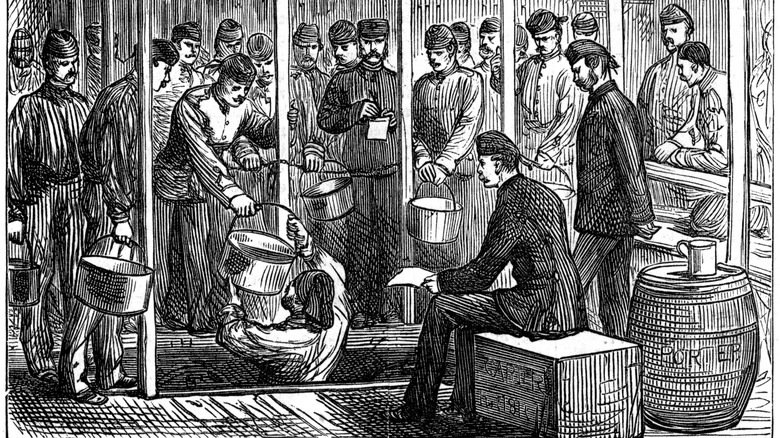
One of the more surprising rations for sailors in the Royal Navy was the daily beer allotment, as each man was permitted up to a gallon of beer per day. This might seem like a staggering amount of alcohol, but the drink in question was known as "small beer." This form had a very low alcohol content, which often hovered around a mere one percent, making it much less potent than the beer we're familiar with today. It was also the sailors' beverage of choice because it was often safer and more palatable than water. Fresh water, which would also have been stored in barrels, tended to go stale or slimy if left in unventilated ship holds. Because it was fermented, beer was less susceptible to the climate fluctuations that ships passed through while navigating various coasts.
While it certainly served to quench sailors' thirst, beer also provided a bit of supplemental nutrition. Beer contains B vitamins, but more importantly, carbs. High in calories, it helped fortify sailors during long days of toiling physical activity. Throughout the 18th century, it was considered a sort of health drink and believed to combat scurvy, a form of malnutrition common among sailors because of their limited access to fresh food and a balanced diet.
Butter and cheese
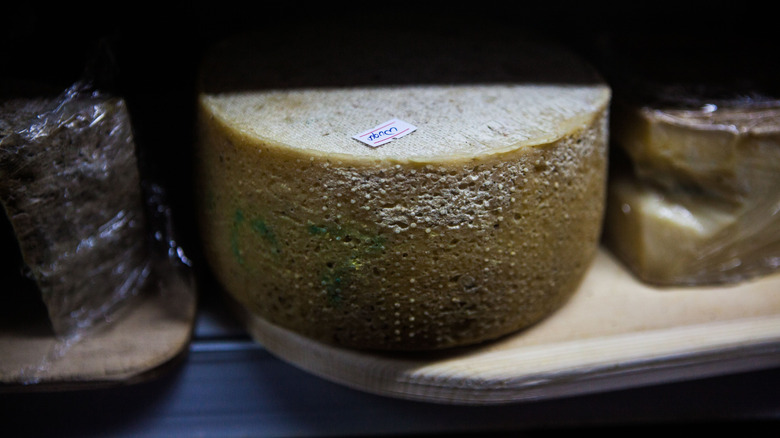
Among the more surprising foods that appeared among sailors' rations were butter and cheese, served a few times per week. While not typically shelf-stable foods, these dairy products were diligently preserved to prolong their shelf life. Butter on ships, like meat, was also typically prepared and stored with salt, which in theory might have enabled it to keep for months at a time. In reality, though, this was not often the case. Nevertheless, navies purchased butter in massive quantities for sailors' provisions — ships could go through nearly three thousand pounds of butter in a year. If ever it went rancid, it could at least still be useful for greasing gears or riggings above deck.
Cheese was something kept on hand in even larger quantities, and dates back to the 1200s as something kept among English ship provisions. Until the mid-18th century, Suffolk cheese was the dominant variety consumed by England's navy. With lots of salt and little moisture, it could last a long time, but being made from skim milk, it wasn't a cheese known for its quality. Suffolk cheese had a reputation for being hard, dry, and hard to digest. It may have kept well for months, but for most sailors, that was this cheese's only positive attribute. After centuries of grievances from sailors who did not enjoy this staple, it was eventually phased out in favor of Cheshire cheese, and then other, more palatable and well-known varieties, such as Cheddar.
Salt beef
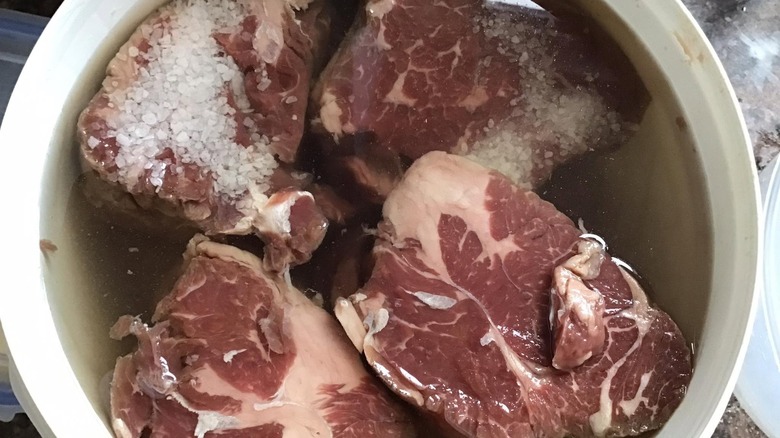
Beef was another common protein source available to ships' crews back in the day. Like pork, it was preserved with salt, and from the 1500s through 1700s, this was an essential ration for sailors on ships across Europe. To keep it preserved, vast quantities of salt were necessary, but unlike salt pork's preparation process, salt beef was prepared using brine.
Kept in this solution (which was salty enough to make an egg float), beef could generally be preserved for a few months. While it might not go completely rancid during that time, it also probably wasn't in its prime, either. The amount of salt that went into this preservation process meant that salt beef, like salt pork, needed to be heavily boiled in fresh water to make it palatable enough to serve. From there, it could be worked into a soup or stew, or enjoyed on its own. Salt beef was among sailors' preferred foods while out at sea — something which might speak more to the unsavoriness of everything else than any of this beef's inherent merits. It would be eaten on alternating days when salt pork was not on the menu, offering a bit of variety as a protein option.
Plum duff
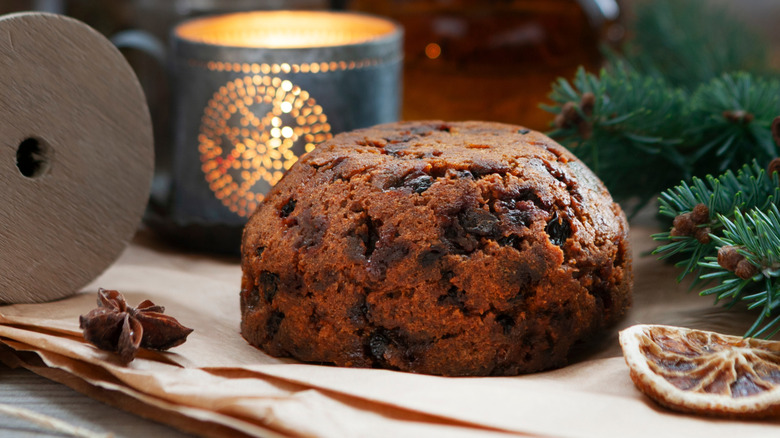
While salty food was prevalent aboard sailing ships throughout much of sailing history, sweet things were a lot harder to come by. Plum duff was a special occasion treat that sailors could prepare from the provisions they had on hand. It was likely prepared infrequently, and is recorded as having been a holiday dessert. But no matter what time of year it might have been served, this was likely a welcome change from all the heavily salted food that typically made up a sailor's diet.
Funnily enough, plum duff (a type of pudding) has absolutely nothing to do with plums. A variant on traditional British plum pudding, this boiled dessert is also similar to one of many classic Canadian delicacies, known as figgy duff. Popular in Newfoundland and Labrador, figgy duff also comes from a region with a long-standing sailing tradition. The recipe's primary ingredients, as with plum duff, include flour, water, sugar, and raisins, which are mixed together and then boiled. The result is chewy on the outside, but almost cake-like on the inside. For sweet-starved sailors, this pudding was sure to have been a decadent treat. Plum duff remained a sweet, if occasional, staple among sailing crews into the 20th century.
Salamagundi
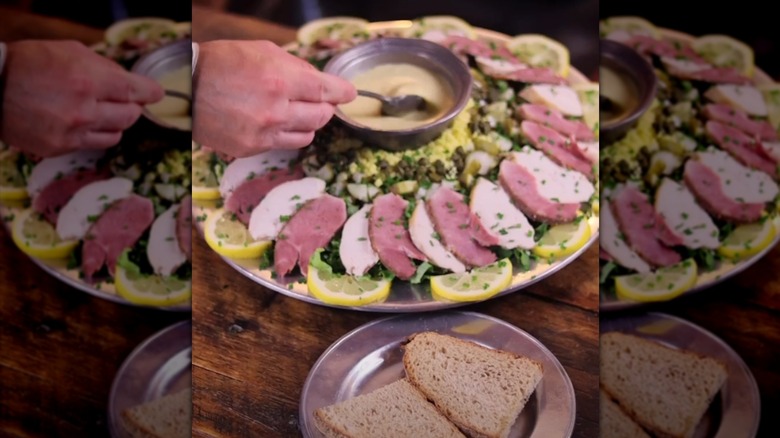
Though the name might sound like it belongs to something that requires a lot of preparation, salamagundi is essentially just a composed salad. The name is likely of French origin, but was common as pirate fare in major port cities across the globe, and was made with whatever was available. The salad generally included fruits, vegetables, and sliced meats or fish piled up in an artful configuration on a platter. This pirate-era charcuterie board was infinitely adaptable to the ingredients available in the port cities crews passed through.
Compared to the dried peas left to the Royal Navy, pirate fare like salamagundi sounds a lot more appetizing and even well-balanced. It might not always have been on the menu, depending on what resources were available, but it was a creative way to make a meal out of whatever was on hand, and even better, to eat it in style.
Burgoo
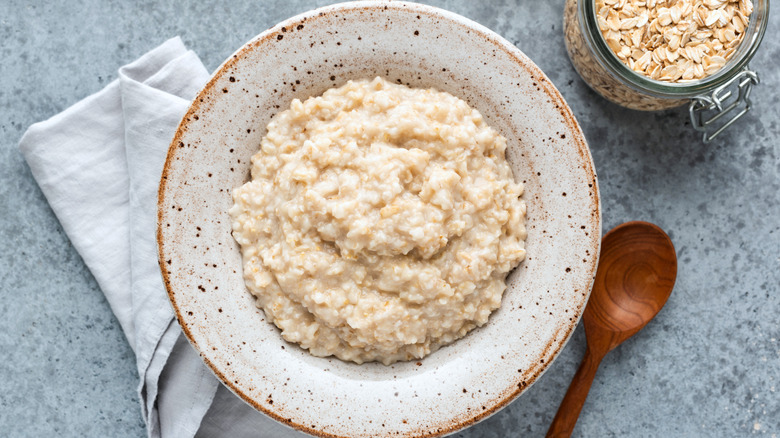
Burgoo is a curious name in itself, but also unusual because it refers to two entirely separate dishes. While it might be better known today as a meat stew popular in the American South (especially in Kentucky), the same name was first used for a completely different dish, which was regularly served to sailors during the 18th century.
Sailors' burgoo was essentially a bowl of porridge. Not all porridge is oatmeal, but in the case of sailors' cuisine, the two were one and the same. Made with oats, butter, and sugar, and possibly flavored further with molasses if there was any on hand, this dish was another rare sailors' food that wasn't heavily salted. Consequently, though it might not sound glamorous, burgoo was probably a welcome taste of something a little on the sweeter side.
This was a staple for French and Scottish sailors, as well as those belonging to the British Navy, and later the U.S. Navy. Interestingly, between 1733 and the mid 1800s, when U.S. Navy crews unwittingly helped create ramen, oatmeal among ships' crews replaced a ration that would otherwise have been designated for fish. It seems like a strange switch, but after all that salt beef and pork, oatmeal might still have sounded better than dried seafood anyway.
Slumguillion
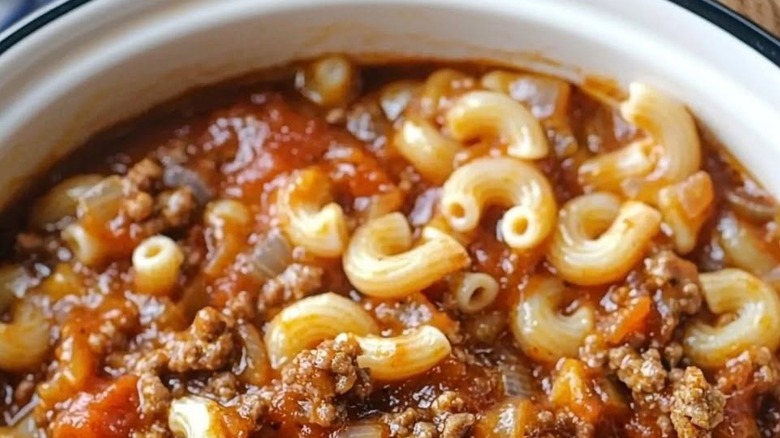
With boiling as the only means of cooking food on a ship up until the 19th century, it's no surprise that soups and stews were a common part of sailors' diets. Without a diverse array of ingredients at their disposal, sailor stews were hodgepodge assortments, and a dish known as slumguillion was no exception. The ingredient list was minimal — at its most basic, this concoction was just hardtack and meat boiled together. Before the 19th century, this would have been hardtack and salt beef or pork. Later on, though, canned meats provided an even quicker way to a similar result.
The name slumguillion itself is also a term used to describe sludgy refuse from whaling or mining industries. This might have been the inspiration behind the stew's name, as the finished recipe probably looked pretty unappetizing. There likely wasn't much to beautify or diversify this recipe, but it remained infinitely adaptable if ever there was something else available to mix into it. Today, a dish by the same name has resurfaced as something surprisingly tasty to have come out of essential Depression-era cuisine as a resourceful one-pot meal. Ground meat, macaroni noodles, and canned tomatoes make up the primary ingredients for this more recent dish by the same name, which is probably much tastier than the original sailors' fare.
Lobscouse
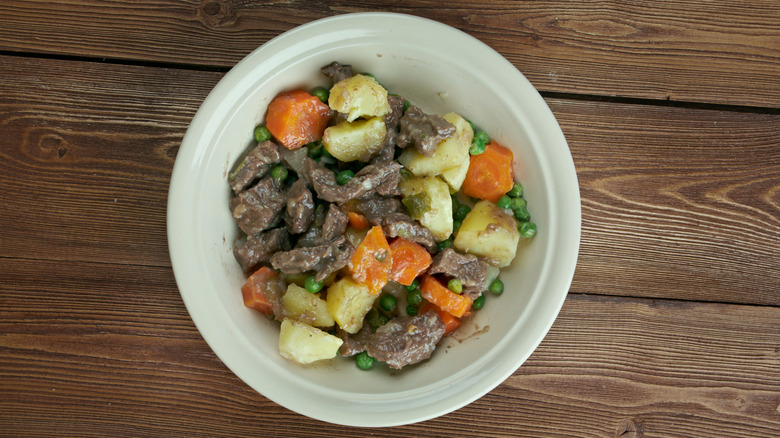
Among the more hearty stews available for sailors on well-supplied ships was a dish known as lobscouse. With the earliest records dating back to the early 1700s, this was popular fare for sailors hailing from the U.K., and eventually, similar variations spread to Scandinavian ports. Under each nation's jurisdiction, the stew has a different but similar name: Lapskaus in Norway, skipperlabskovs in Denmark, lapskojs in Sweden — the list goes on. Hearty and nutritious, the truest version of this dish could only be prepared if there were vegetables on hand.
Different accounts have described two versions of this stew. One from the late 18th century suggests that this was typically prepared with salt beef, hardtack, onions, and pepper, making it similar to (but slightly more sophisticated than) slumguillion. A second, heartier recipe popularized around the same time sounds much more appetizing. Typically consisting of carrots, potatoes, onions, and beef, this version of lobscouse stew is the one that transcended borders. A hearty stew of meat and vegetables sounds fit for anyone with an appetite, and was sure to be well-received after a long day on deck.
Local fare

While it was necessary to have a stock of provisions, sailors from all walks of life could occasionally enjoy some fresher foods to supplement their grim rations when they had the chance to sail into port. Depending on where they were headed, they would have sampled seasonal produce in places around the world whenever the occasion might arise — a far cry from their dried goods.
In addition to picking up different provisions in port cities around the globe, there was also the opportunity to hunt and scavenge for whatever local flora and fauna were present when sailors reached dry land. Pirates were especially adventurous in sampling unfamiliar foods from various corners of the world. There are records of crews trying locusts, flamingos, and sea lions, as well as enjoying a boost of nutrition from ostrich eggs.
Any stray birds that happened to fly overhead at sea were also fair game, and crews also caught fish to supplement their food provisions. Fish weren't the only things they caught, though, and they often consumed large creatures such as turtles, porpoises, and even sharks. With good food being scarce, sailors didn't miss the opportunity to catch and consume anything that was edible. A fresh catch was likely enjoyed a great deal more than the repetitive cycle of ship's rations.