

11 Old-School Ice Cream Flavors That Were Popular In The '70s
Ice cream has been a crowd-pleaser for centuries, and over the years, our continued love for this cold treat has inspired endless possibilities for new flavors. The 1970s were a decade when lots of innovations changed the public's taste for ice cream, when some of the most iconic flavors we know today first made an appearance. Many of these new and newly popularized varieties came about thanks to the ice cream chain Baskin-Robbins, which enjoyed great popularity during this decade.
As with other popular desserts from the 1970s, ice cream tastes have changed since then, but the sweet tooths of the '70s had a hankering for specific flavors, some of which became trends that didn't last past the decade. Flavor profiles for ice cream in this era often leaned towards earthy, nutty varieties. Contrastingly, other favorites were vividly-colored, candy-inspired flavors. Some of these retro choices have become timeless classics, others remain regionally specific, and still more have all but disappeared. Spanning preferences from the United Kingdom, the United States, and Canada, here is a list of 11 old-school ice cream flavors that were popular during the 1970s.
1. Mint chocolate chip
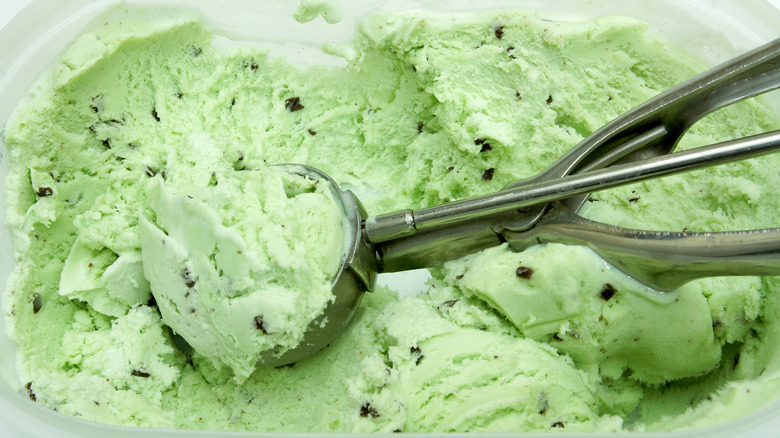
Mint chip was on the original line-up of Baskin-Robbins flavors when the now-renowned ice cream chain first opened in 1945. However, it was seemingly popularized more than once, and one story explains how this refreshing ice cream flavor ended up as a classic choice in the 1970s.
A culinary contest was held in 1973, to select a unique ice cream flavor in honor of the royal wedding between Princess Anne and Captain Mark Phillips. The outstanding flavor among all the contestants was culinary student Marilyn Ricketts' mint ice cream, dotted with chocolate chips. Originally known as Mint Royale, royal associations might have been what got Americans across the pond enthusiastic to dig into this flavor, which hadn't gotten much hype before. Mint chocolate chip thus became one of the most emblematic ice cream flavors of the decade.
Many variations have come about since the '70s, with chocolate chips or chocolate chunks or, in Baskin-Robbins' case, streaks of liquid chocolate mixed into the mint ice cream to harden once frozen. All speak to a successful flavor combo that still remains a favorite among many ice cream lovers today.
2. Rum raisin
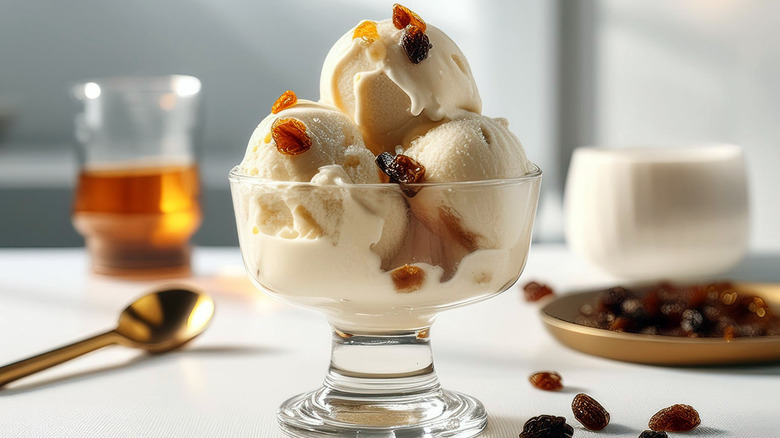
Rum raisin is another retro ice cream favorite that was at its height in the 1970s. But the flavor dates back much further, having first made an appearance in the 1930s. Consisting of vanilla ice cream swirled with rum-soaked raisins, it might have had special appeal, arriving on the heels of the Prohibition era, flaunting another way that newly re-legalized booze could be used.
Flash forward a few decades, and rum and raisin as a combination in desserts was something that had a moment in the '70s, largely in the U.K. The British chocolate brand Cadbury released a very popular dark chocolate bar in 1970, known as Old Jamaica, which was filled with rum-flavored raisins. The chocolate's popularity reflected a renewed hankering for this boozy flavor, which certainly must have contributed to rum raisin ice cream's popularity during this decade. Unlike the chocolate, which fell out of favor, rum raisin ice cream enjoyed continued popularity elsewhere once Häagen-Dazs introduced its version to the U.S. in the 1980s. From there, the flavor became something of a cult favorite, which has contributed to its retro associations today.
3. Butter brickle
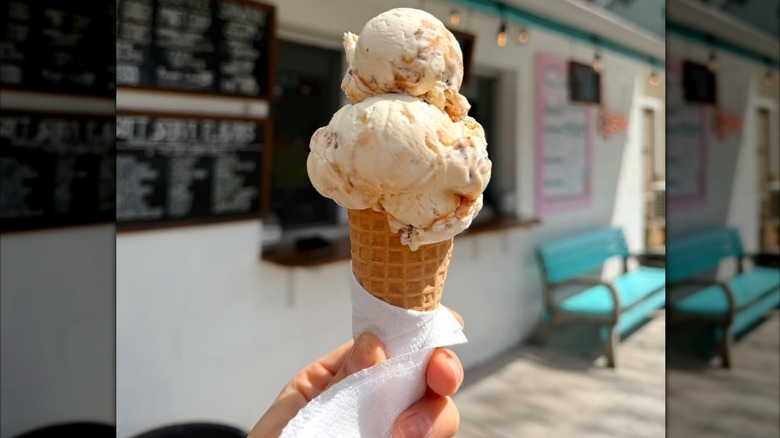
A flavor that doesn't show up so often anymore, butter brickle was a favorite ice cream choice throughout much of the 20th century and well into the 1970s. But the flavor was a candy before it had any ties to ice cream. Popularized in the 1920s, butter brickle was a toffee-textured, butterscotch-adjacent confection invented in South Dakota, attributed to the Fenn Bros. Ice Cream and Candy Company based in Sioux Falls. Chewy and creamy all at once, it was destined to be a crowd pleaser.
With notes of brown sugar and butter, this treat soon eclipsed regular toffee in popularity. Mixing butter brickle in ice cream was an enterprising idea that may have first appeared in Nebraska in the '20s. Soon afterward, Fenn Bros. also began manufacturing this ice cream flavoring along with its butter brickle candy. Still enjoyed through the '70s, the wane in this ice cream flavor's popularity after this decade might coincide with the formula being sold to bigger names in confectionery. Fenn Bros. closed for business in the '70s, selling the butter brickle candy recipe to Leaf, Inc., manufacturer of Heath bars, which was later acquired by Hershey. Today, butter brickle ice cream is much rarer than it once was. Though it's among the retro ice cream flavors hard to find in stores, it still makes the occasional appearance in ice cream parlors.
4. Heavenly hash
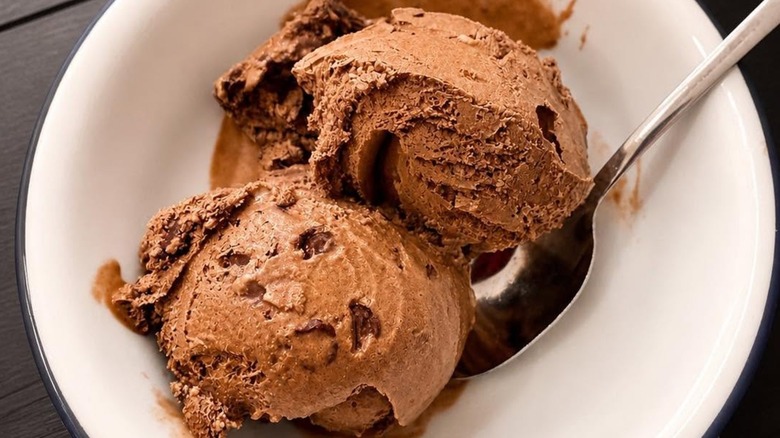
Heavenly hash was a candy for a long time before it ever became an ice cream flavor. Introduced by the New Orleans-based Elmer Candy Corporation in the 1920s, this confection had a marshmallow and almond center coated in chocolate. The term has since come to be the moniker for treats that specifically combine chocolate chunks, marshmallows, and roasted almonds. These flavors have been used to make candies, puddings, and variations on ambrosia salad, but are best known as ingredients mixed into ice cream. Swirled into a base of chocolate ice cream, this version of heavenly hash was all the rage in the 1970s.
Maybe this flavor was something that simply appealed more to taste buds at the height of the disco era, as its popularity waned after the '70s, and it's now nearly non-existent. Essentially a subtle variation on the more recognizable rocky road ice cream, heavenly hash's main difference is that it typically includes swirls of marshmallow mixed in with the chocolate ice cream, rather than the separate mini marshmallows mixed into rocky road. It may be a subtle distinction, but perhaps one that's made all the difference in defining the flavor whose popularity would remain firmly rooted in the 1970s.
5. Blue moon
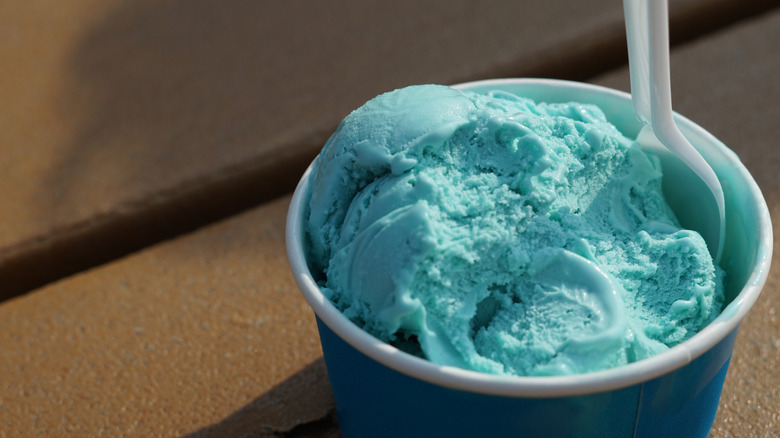
As mysterious as it is delicious, blue moon is a retro ice cream flavor that's still thriving in specific parts of the Midwest, where it originated. Hard to find outside of Wisconsin, Michigan, and parts of Indiana and Illinois, the details of this creamy, electric blue flavor's inception and ingredient list both remain up for speculation. One story attributes blue moon's invention to Bill Sidon, a flavor chemist for Milwaukee-based Petran Products, who presumably invented it in the 1950s after he moved to the U.S. from Austria. Trademark documentation, however, suggests that this flavor dates all the way back to 1938, and thus would have had to be invented by someone else.
The debate over who created this flavor and when is only half of the battle in understanding this unique ice cream, since no one can say what the flavor of blue moon actually is. It has been compared to bubblegum, cotton candy, or Froot Loops by those who might find their taste buds influenced by the unusual blue color. Others have distinctly described a fruitier bent to the flavor profile. No two tasters come away with the same conclusion, which only adds to blue moon ice cream's mystique. While it was around before, this ice cream enjoyed enough heightened popularity in the 1970s that Petran Products attempted to trademark blue moon's flavor in 1977. Today, the recipe remains a closely-guarded secret, a Midwestern cult classic, and a persistent mystery.
6. Tiger tail
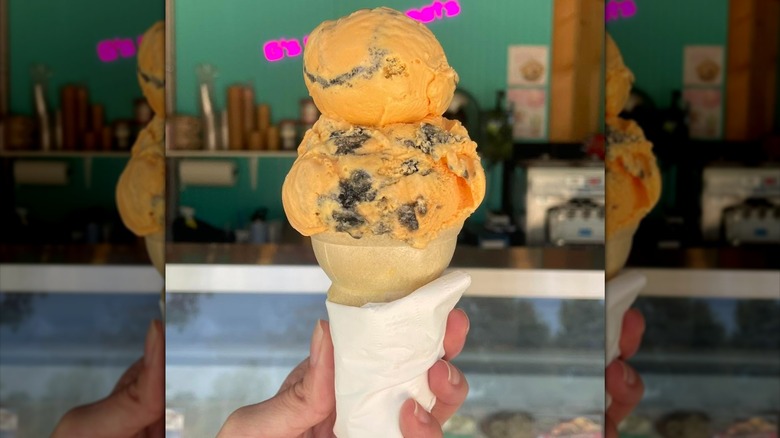
Getting its start in soda fountains across Canada in the 1950s, tiger tail is another mysterious ice cream flavor that became a favorite by the 1970s. Its exact origins have not been pinpointed, but its peak popularity waned after the '70s, though it can still be found in grocery stores and Canadian Baskin-Robbins franchises. Apparently, it's not a favorite or a bestseller by any means, but it persists in stores because the die-hard fans of this flavor protest loudly anytime there's ever the slightest threat of taking it out of circulation.
The flavor consists of creamy, orange-flavored ice cream mixed with veins or swirls of black licorice. Together, these colors create some eye-catching tiger stripes. The combination might sound unusual to anyone who's never tried it, especially for the inclusion of black licorice, which is already a divisive flavor on its own. But tiger tail is a more harmonious mixture than skeptics might think. Alas, perhaps that no one else has developed a taste for it, tiger tail remains almost impossible to find anywhere outside of Canada today. Nevertheless, this unique ice cream is among the Canadian comfort foods worth trying when the right occasion arises.
7. Tutti frutti
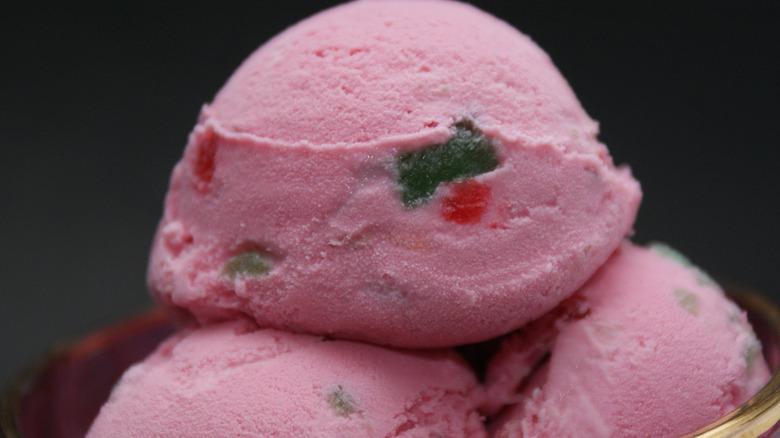
The term tutti frutti once referred to something entirely different from the brightly colored bits of fruit mixed into puddings, cakes, and ice cream that we recognize today. Before, tutti frutti was a catch-all term for fruit preserved in alcohol, a preservation technique that was essential in an era before home refrigeration. As another means of keeping fruit on hand during winter months, besides opting for jams and jellies, these jars of sweetened mixed fruits in brandy were often used as condiments for meats or cakes.
While this practice fell out of fashion around the time of Prohibition, when the essential preserving ingredient became hard to get hold of, there was a revival for canning brandied fruits in the 1970s. Referred to more often during this decade as "friendship fruit," these preserved, fermented fruits were something people shared amongst each other. Friends offered scoops of their fruit base to help others start their own jars, similar to how home-brewed kombucha has become a shareable practice today.
With brandied fruits on the rise during this era, it's no wonder that another form of tutti frutti evolved into one of the decade's preferred ice cream flavors. The variety popular in the '70s included colorful bits of candied fruit mixed in with ice cream. Though the recipe has been around since the 19th century, tutti frutti ice cream's resurgence in the 1970s further emphasized a widespread adoption of boozy and fruity among the decade's preferred flavor profiles.
8. Bubblegum
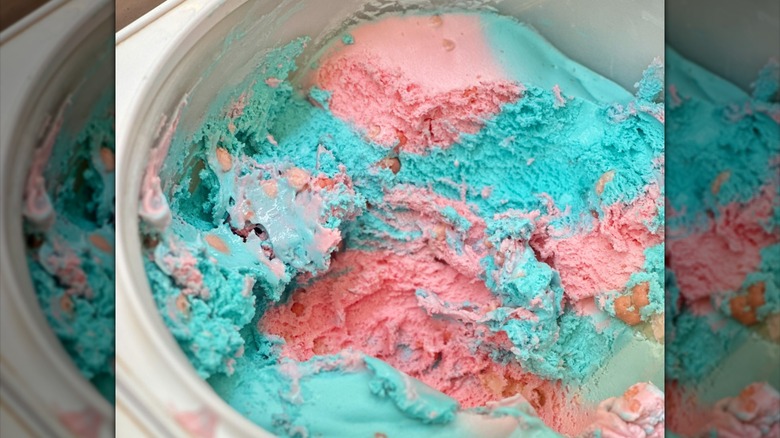
Bubblegum was another defining ice cream flavor of the 1970s. Though it's difficult to pin down bubblegum's exact flavor, the fruity and reliably sweet side made it well-suited to mixing with something creamy. Pink bubblegum was released in 1970 as a new addition to Baskin-Robbins' growing selection of flavors. It consisted of vanilla ice cream dyed pink, flavored with bubblegum, and speckled with pieces of real gum to add further novelty to the treat. Understandably, this flavor's bright color made it stand out, and those who grew up in the '70s look back on it fondly. A popular thing many kids did during this era was to eat around the pieces of bubblegum and then save them to chew afterward.
As this flavor's popularity increased throughout the decade, other ice cream manufacturers played around with how to entice consumers. Beyond Baskin-Robbins' pink variation, fans of this flavor also enjoy the blue bubblegum ice cream, speckled with pink pieces, available in other old-school ice cream parlors. Some variations on this flavor might not have gum pieces mixed in, while others might be dyed a combination of both blue and pink. Today, the flavor is not as easy to find as it once was, its popularity having peaked in the 1970s and maintained nostalgic retro associations ever since.
9. Butter pecan
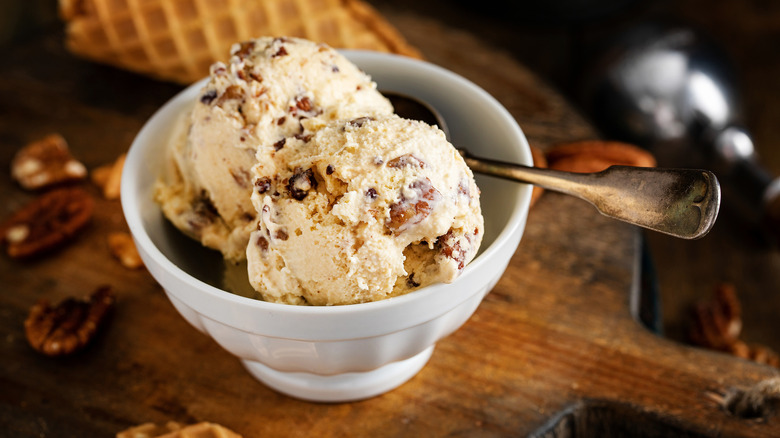
Though it started gaining mainstream popularity in the mid-20th century, butter pecan ice cream dates back further. The unconfirmed lore suggests that this flavor combination was born out of restrictions faced by Black Americans in the Jim Crow South. In any case, the flavor was popularized in the South, where pecans were grown in abundance. Native to this region of the U.S., pecans were a prime ingredient in Southern cooking that has brought us all manner of sweet delights. With pecan pie as a definitive seasonal dessert for fall and winter in the region, pecan ice cream was an innovative use of the same flavors that could combat summertime heat.
Butter pecan ice cream's caramelized nuttiness made it an easy sell to other regions of the U.S. in the following decades, and by the 1960s, it was among the most popular in the country. In the 1970s, it had become such a fixture among mainstream ice cream flavors that it became widely available from store-bought ice cream brands. Butter pecan also enjoyed popularity at the White House during this decade as President Gerald Ford's favorite ice cream flavor. While serving as president from 1974 to 1977, Ford enjoyed a serving of butter pecan ice cream practically every night.
10. Pralines 'n cream
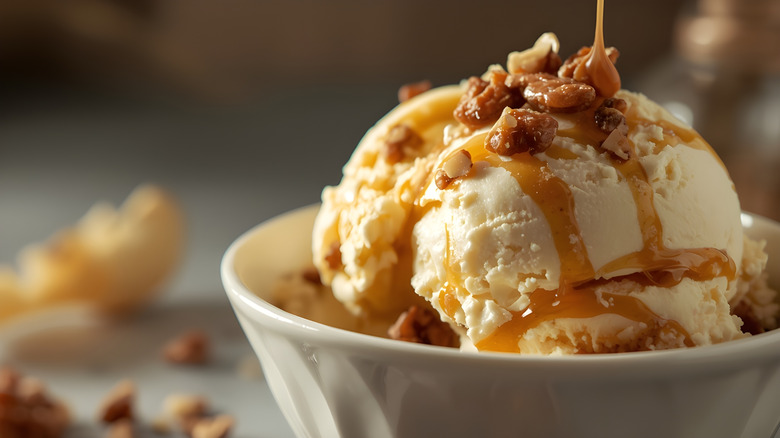
Another flavor that was first introduced by Baskin-Robbins, pralines 'n cream was born out of an epiphany. After trying pralines brought home from a trip to New Orleans, Irv and Irma Robbins, of the ice cream empire, recognized the treat's potential as an ice cream ingredient. Though originally hailing from France and made with almonds, pralines were reimagined in Louisiana. Here they were made with pecans, a nut local to the region, instead. After mixing pecans with sugar, butter, and cream, the end result is a chewy cluster. Chopped up and mixed into vanilla ice cream, with a swirl of caramel, pralines were an instant hit with ice cream lovers. Though similar, there are still notable differences between praline and butter pecan ice cream, with the former being distinctly sweeter and the latter retaining its distinct nuttiness.
Baskin-Robbins released pralines 'n cream as a Flavor of the Month in 1970, and it was such a success that the public protested when stores ran out of their limited stock. Fans of the flavor from across the country bombarded the ice cream chain with petitions while local newspapers furthered the cause, in hopes of bringing pralines 'n cream back. Baskin-Robbins had no choice but to turn pralines 'n cream into a perennial flavor amongst their lineup, where it remains today.
11. Black walnut
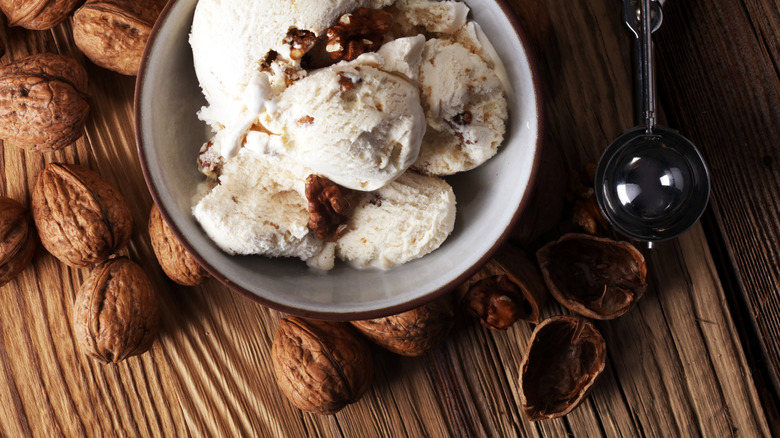
Contributing to an overall preference for nutty flavors, black walnut was another ice cream favorite in the 1970s. Hailing from the South and Midwest, this flavor was popularized as an ice cream add-in in these regions, where black walnuts grew. It remained regionally popular enough to become one of Baskin-Robbins' original flavors when the brand first got its start in the 1940s.
By the 1970s, black walnut ice cream was also a fixture in grocery store freezer aisles, and many popular brands had their own take on this flavor. But the taste for black walnut has waned since then, and popular ice cream brands such as Häagen-Dazs have since opted to discontinue it. Though black walnut ice cream has become harder to find, it's still generally available at grocery retailers and in certain creameries in the South and Midwest. Its scarcity only contributes to the nostalgia fans can taste in its unique nutty flavor.