

11 Popular Restaurant Chains Facing Major Financial Trouble In 2026

It's a tough time to run a restaurant. It's no big secret that the last few years have been incredibly difficult for the industry, with a combination of rising rents, supply issues, precarious finances, and cautious customer behavior making life difficult for the people who operate eateries. Furthermore, although we've seen these factors severely impact independent and smaller-scale restaurants, even big chains aren't escaping unscathed. Some of the largest restaurant chains out there are feeling the pinch, and even legacy brands that have previously felt untouchable are now fighting for their lives.
In a lot of cases this year, this financial strain has shown itself by restaurant chains closing stores and streamlining unit numbers, in a bid to get back into the green. Elsewhere, it's been seen more severely through bankruptcy and buyouts. In some situations, restaurants have had to make the unfortunate decision to close up shop entirely, now unable to pull themselves back from the brink. From Pizza Hut to Hooters, Bar Louie to Bertucci's, here are the chains that are really struggling.
Hooters
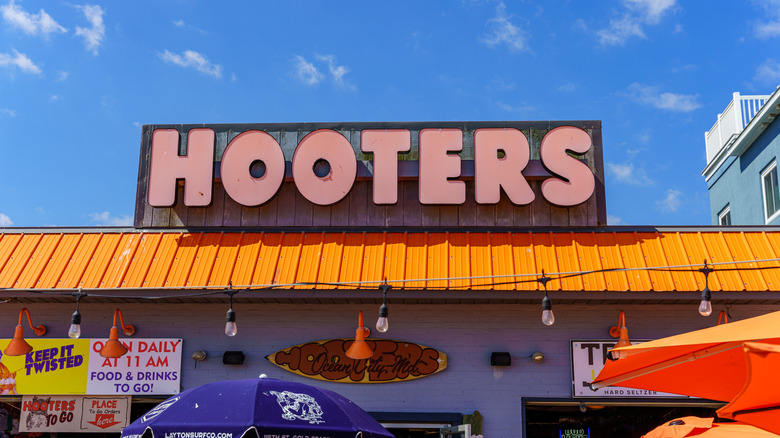
Hooters has had a rough few years, and it's not over yet. Back in 2025, the controversial restaurant chain was on the edge of bankruptcy, and subsequently filed for it, doing so with more than a third of a billion dollars' worth of debt under its belt. It simultaneously announced that it was selling all of its company-owned restaurants. Hooters had been hit by a combination of difficult economic factors, and more broadly by a change in customer tastes, with its business model and focus on its service staff and how they dress now feeling outdated and not in step with modern times.
A bankruptcy claim can sometimes allow restaurants to refocus, but sadly, that doesn't seem to have been the case here. As of early 2026, it has had to close a string of restaurants, including in New York, Texas, and Georgia. This is all despite an effort to revive the brand and make it more family-friendly, which Hooters estimates is its best route back to a healthy balance sheet and a thriving business. Given its continued closures, this doesn't seem to be working out — and we wouldn't be surprised if Hooters struggles on throughout the rest of the year.
Noodles & Company
Sometimes, when restaurant chains start shedding units, it can be a sign that they're taking action to correct course — but that doesn't mean that they're not struggling in the first place. This is what we're currently seeing with Noodles & Company, a chain that doesn't currently look as though it's in any risk of disappearing entirely, but is definitely aware of the financial pressure it's under. Noodles & Company spent much of 2025 reducing its footprint, with the chain closing 42 restaurants that year. At the start of 2026, it announced that it was closing even more units. It had previously stated that it was going to close 12 to 17 locations throughout the year, but it subsequently told customers and investors that in actuality, around 30 to 35 would be closing.
This has been a positive move for the chain, with Noodles & Company seeing increased traffic and spend in the stores that now remain. This renewed appeal has also been aided by a menu overhaul, which customers have seemingly warmed to. That said, Noodles & Company has been operating at a net loss for several fiscal years now, and it'll likely need to turn things around a little more before anyone can say that it's truly back in business.
Salad & Go
A few years ago, Salad & Go seemed to be thriving. The speedy salad concept had doubled its store count in just two years, and when it opened a central kitchen unit in Texas in 2024, it looked as though it was laying claim to the state, with said production facility being able to support the operations of 500 restaurants. As of the end of 2025 and start of 2026, though, things look as though they've changed. In September 2025, Salad & Go announced that it was closing 41 units across Oklahoma and Texas, including in Houston, Austin, and San Antonio, indicating a huge slowdown in its current growth trajectory.
This news was followed just a few months later by word that Salad & Go had left both states entirely. The restaurant stated that this move was taken to focus once more on its core markets of Arizona and Nevada, and it clearly represents a realignment for the chain. However, given how swiftly it's been moving, it's hard to get past the sense that it potentially overstretched itself — and now, it's having to climb down.
Bar Louie
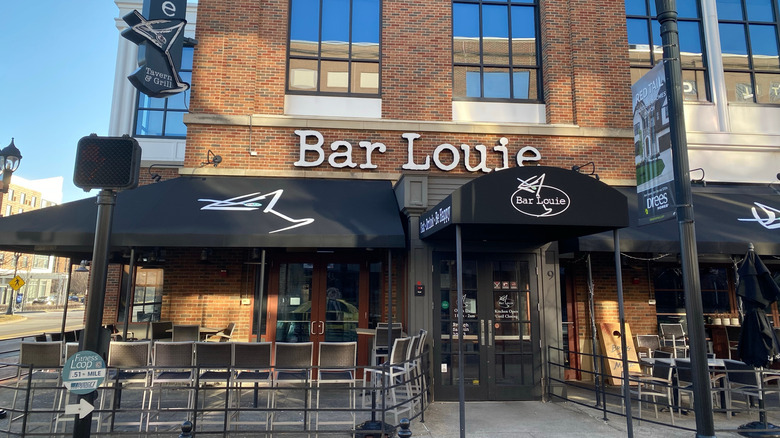
There's no denying that Bar Louie is in trouble. In early 2025, the beloved gastropub chain was in hot water, and eventually filed for bankruptcy for the second time. It first did so in January 2020, before being hit by the effects of the COVID-19 pandemic, causing it to close dozens of its units. By the time it filed for bankruptcy a second time, it had almost a hundred fewer locations than it had five years prior — and in the run-up to its bankruptcy, it was hurriedly closing further restaurants.
Its situation didn't look much rosier as 2025 closed out, and 2026 was ushered in. Bar Louie spent the end of 2025 closing more locations, and in October, it was purchased by Sun Holdings. This could be perceived as a positive move for the chain, given that Sun Holdings also operates a portfolio that has several major restaurant brands like Burger King and Popeyes — but it's worth stating that the buyout came with a significant amount of unresolved debt, and as of yet, we haven't seen any positive news come as a result of it. It remains to be seen how Bar Louie will fare for the rest of 2026.
The Rock Wood-Fired Pizza
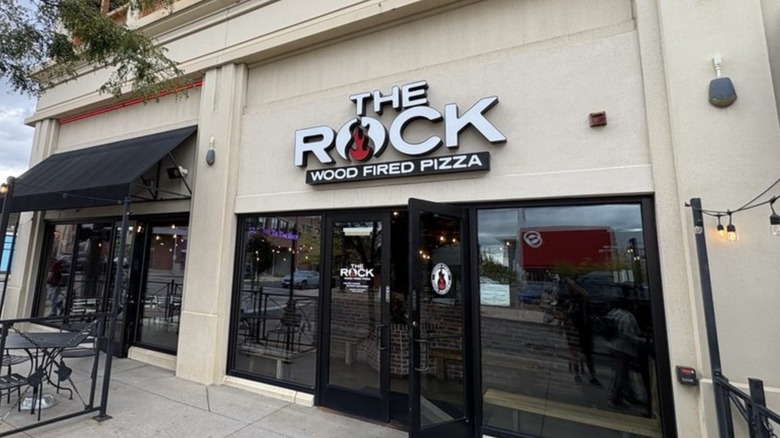
The Rock Wood-Fired Pizza has never been the biggest chain out there, but there was a time when it was seriously on the up. In the mid-2010s, it reached its peak, garnering more than 20 locations, having climbed to that position since first opening three decades before. Come the end of 2025, though, it looked like a shadow of its former self. Following a period of decline and several years of declining sales (with 2024 seeing them drop by almost 26%), it made the decision to close all but one of its physical locations in Washington, leaving it with two units in total, one pickup-only.
These closures followed earlier closures the year before, when The Rock Wood-Fired Pizza shuttered eight of its stores. As well as declining sales, the restaurant concept was a victim of higher rents and costs for its food, and it simply couldn't keep up. While closing the majority of its restaurants might allow it to balance the books, it's unlikely to see a significant turnaround any time soon.
Bertucci's
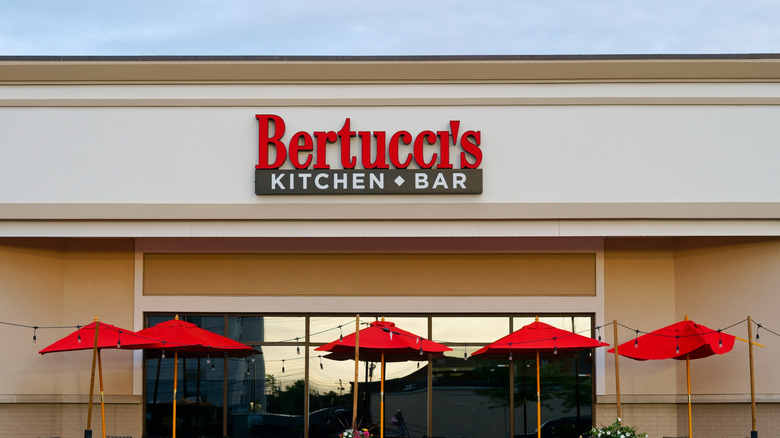
It's probably tough to be a Bertucci's employee right now — and it's probably been tough for a while. The restaurant chain has seen more financial chaos and stress than most in the last decade, having filed for bankruptcy three times in seven years. Its last filing was in April 2025, and shortly before, it closed eight of its stores, leaving it with 15 units.
This is a serious shrinking of its restaurant stock, with Bertucci's having 56 locations just seven years before. Sadly, things didn't stop there. Throughout the rest of 2025, Bertucci's continued to close more stores, with its bankruptcy claim seemingly not enough to stop the tide. As of the time of writing this article, it has a dozen restaurants remaining. There is hope within Bertucci's that its fast-casual concept, Pronto, might help it regain some financial stability — and it may well also jump ship entirely on its original concept and shift to a fully fast-casual model. That's still unclear, but what is clear is that this place is struggling.
Pieology
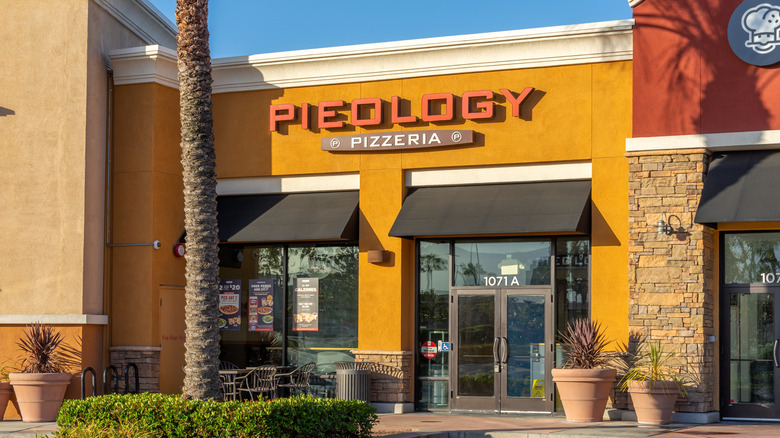
Pieology is a good example of a restaurant chain with a rapid rise, and an even more rapid fall. Founded in 2011, this pizza concept is known for its Subway-like approach, in which you can choose the toppings for your 'za and have it baked in minutes. This arguably contributed to its quick success. By 2019, it had 125 units, but shortly after this, it started to see a downturn. Cut to five years later, and it had 103 locations, and just a year later, it had 45, and the California-based pizza chain was filing for bankruptcy.
The widespread closures Pieology made throughout 2025 were part of an attempt to stave off the bankruptcy claim, but ultimately, it couldn't acquire enough capital to stop it. A few months later, and Pieology is still in big trouble: In April 2026, it announced that it would be closing all of its units in Hawai'i, exiting the market entirely. These closures also caused almost 60 job losses. It doesn't look like it'll be able to turn its fortunes around any time soon.
Abuelo's
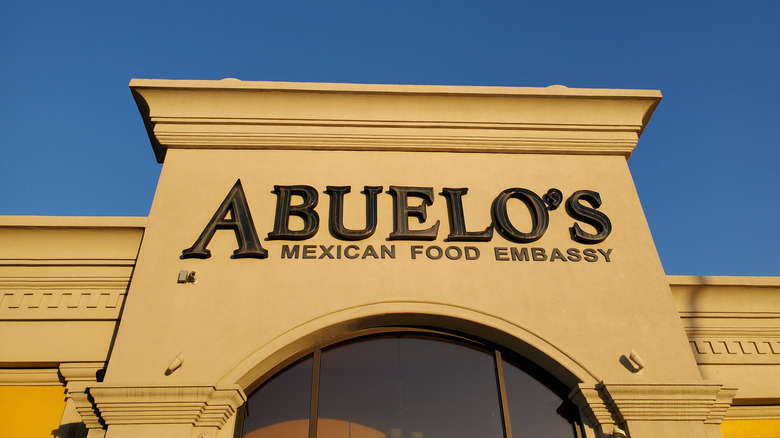
Like many other restaurant chains, the last few years have been very difficult for Abuelo's — and also like many others, the end of 2025 was especially bleak. In September 2025, the Mexican restaurant chain filed for bankruptcy, stating that declining sales and rising costs were partly causes of its decision. The bankruptcy claim followed several years of sluggishness for Abuelo's, with sales down by approximately 15% for 2023 to 2024. It's a pretty big fall from grace for the restaurant, which once had almost three dozen units. As of the end of 2025, it was left with just 16.
As part of Abuelo's bankruptcy claim, it also stated that it had significant debts and liabilities, and it seems as though it's been trying to address these throughout 2026. In March, it filed a potential reorganization plan, which would wipe out any value for current investors. This would potentially put it in a better financial position, but it's undeniable that it would also leave it in a diminished state. It's unlikely to be able to pull away from the brink throughout the rest of 2026, and if anything, further closures are more likely, as it seeks to get itself back on its feet.
Pizza Hut
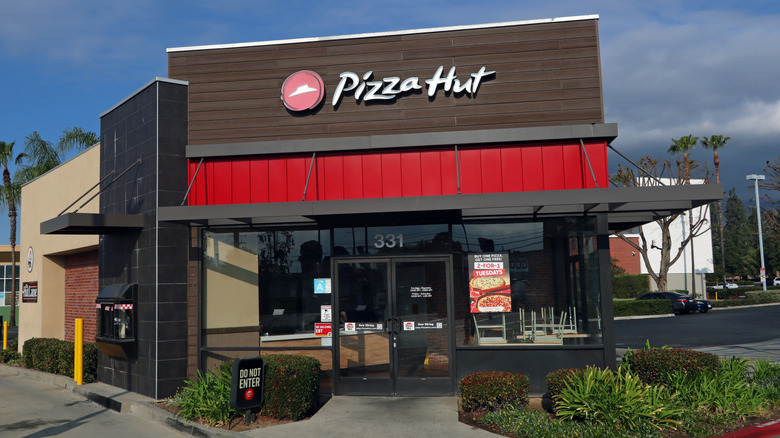
It might come as a shock that Pizza Hut is in trouble. On the surface, the chain feels as prominent and dominant as ever. However, a peek under the hood reveals that the pizza restaurant is facing some serious shockwaves, and while it may not be in danger of closing any time soon, it's definitely not in the best state it could be. The start of 2026 saw Yum Brands, the company that owns Pizza Hut, announce that it would be closing 250 underperforming locations across the U.S. through the first half of the year. These locations account for approximately 3% of its footprint in the country – and even more of them have started to disappear as the year has ticked on.
This might seem like an insignificant number of units, given Pizza Hut's size, but it's worth noting that it's been struggling for a while with diminishing sales. In late 2025, Yum Brands even explored a potential sale of the brand, acknowledging its business and financial challenges. None of these signs look especially good for Pizza Hut, which faces stiff competition from the likes of Domino's and Papa Johns, and with a decreasing physical presence, it's hard to see how the rest of the year will deliver good things for the brand.
Bahama Breeze
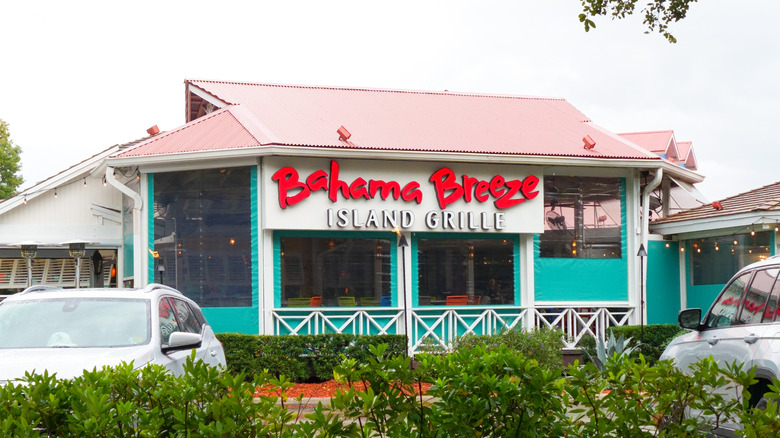
While some restaurants face an uncertain future, Bahama Breeze's path is very clear. Sadly, though, it's not a path that ends anywhere good. Once upon a time, Bahama Breeze was a modestly successful concept in the Darden Restaurants portfolio, but a successful one nonetheless: Founded in 1996, it had dozens of units by the start of the 2010s, with a particularly strong foothold in Florida. Over time, though, it started to lose its appeal, and by the middle of the 2020s, it was on its last legs.
Then, in February 2026, Darden delivered the final blow: Bahama Breeze was to close for good. A statement on the Darden website said that "the Bahama Breeze brand, and its 28 locations, were no longer a strategic priority." Ouch. Darden announced that it would be permanently shutting down half of its locations, with the other half converted into different restaurants in its portfolio. The closures took place in early April, and the conversions will be undertaken over the next 12 to 18 months. As such, 2026 will see the slow vanishing of this brand, and if Darden is speedy about it, it may disappear entirely by the time the year's out.
Pie Five
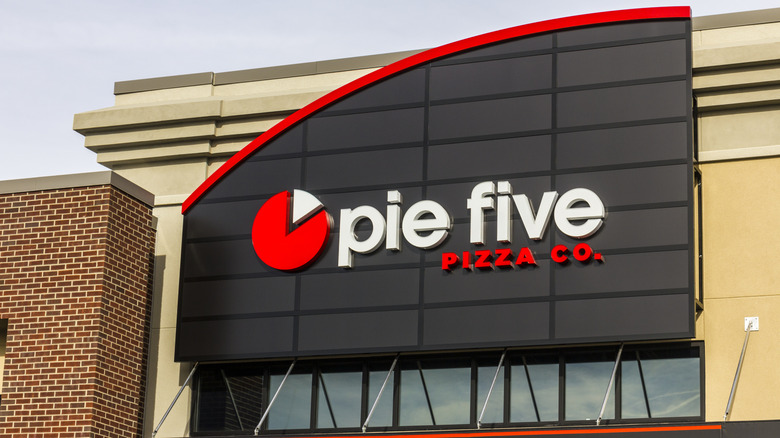
The drive for innovation in the food world can make or break a business. If you want an example of that, check out Pie Five. The pizza chain arrived with some big ideas about how it could change up this most evergreen of foods, going big on the freshness of its toppings, your ability to customize your pies, and the speed at which they could be on the table. The problem, though, was that it was doing so at the same time as other pizza chains turned up on the scene, like Pieology, Blaze Pizza, and MOD – and all of these had the same idea.
As a consequence, Pie Five didn't feel especially innovative, and in the last couple of years, you can tell by its unit count and sales figures. It's faced ever-decreasing returns, and it finished fiscal 2025 with just 17 units, down from 84 eight years prior. As of 2026, there doesn't seem to be a lot of positive news coming out about it, and further moves by the company, like a recent withdrawal from Uber Eats due to high fees, have given the sense that its finances aren't in the best shape. It may well just be going through an extended contraction period, but there's not a lot to be excited by in Pie Five's current situation.