

9 Tricks For Shopping At Aldi On A Budget
Aldi is a popular grocery store that focuses almost entirely on selling its own private label goods. This approach allows the chain to provide high-quality products at low prices, and many people find themselves in awe of the vast selection of goods provided. Looking for spicy snacks at Aldi to fulfill your heat craving? Or how about tasty Greek foods that bring the flavors of the Mediterranean right to your table? Aldi has products to fill these needs and more, which is why it's one of my favorite places to shop. But while the variety is nice, it's the low prices that really draw me in. Although Aldi's prices are significantly lower than those of most of its competitors, there's still room to save more.
If savings is at the top of your priority list when you do your weekly grocery shopping (like it is on mine), then Aldi is the place to be. But, this goes beyond already low prices — through a little research, planning, and shopper's ingenuity, you can save even more than it appears at first glance. Here, I'll share nine of my personal favorite tricks for shopping at Aldi on a budget to help you stretch every dollar without sacrificing your favorites.
Fill your shopping cart with the cheapest items

The best way to stretch a budget is to focus on individual items that cost less than $5 — or, in some rare but appreciated cases, less than a dollar. Once you've focused on these cheapest items, you can carefully select more expensive items to round out your cart.
Of course, it's understandable if you're thinking that sticking with items below $5 will severely limit what you can buy. And, if you were shopping at any other store, that might be true. But it's not even close to accurate at Aldi. For example, some of the best Aldi freezer finds under $5 include pancakes, frozen vegetables, potstickers, breakfast sausage, and corn dogs. You can round this out with a few gotta-have-it finds that can save you money, like tomatoes, croissants, Italian bread, or soups. This is only a small selection of the many products you can find for less than five bucks. I personally rotate through these cheapest items as a foundation for my week's meals to keep my household menu fresh.
Opt for Aldi private-label items over name-brand options
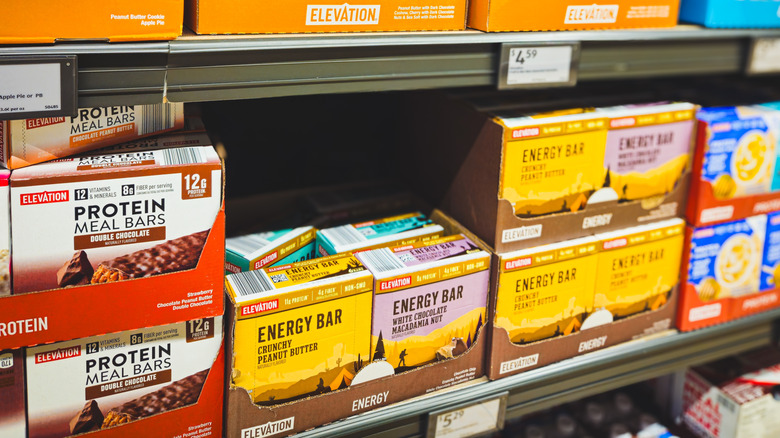
Aldi does have a few name-brand options available, although they're mostly on a rotating, limited-edition basis. Often, you'll find the name brand products under "Special Finds." That being said, most of the store is made up of private-label products — and sticking to those will be your best bet for saving money. It's not even guaranteed that those big name options will be cheaper at Aldi than at other major supermarket chains. In fact, I've found that these products are actually more expensive at Aldi than at Walmart or Shoprite.
Thankfully, this trick doesn't mean you have to miss out on your favorite things. There are countless Aldi dupes that are cheaper than the name brand but just as good, in my opinion. For example, you'll find well-liked dupes of Jimmy Dean breakfast sandwiches, Biscoff cookies, Goldfish crackers, Simply Orange juice, and so much more. Often, the names and design on the Aldi boxes makes it obvious which brand and product they're replicating. Other times, it may take a little research or trial and error to uncover new favorites.
Create a realistic shopping list ahead of time

You can't save money if you buy too much food and then waste it — which is exactly what happens when you head to the store without any plan. You'll impulsively purchase items that look good at the time, eyeballing the amounts, and probably end up with a cart that's way too full for your family's eating habits. Don't feel bad, because I've fallen victim to it, too. Thankfully, this can be avoided with a little planning and self-control.
The first step to doing this is to carefully plan out your meals and snacks for the week, while being realistic. It may be a good idea to plan these around the week's current sales for the best savings, but even if you don't do that, being realistic and comprehensive are the most important things. If you have a sweet tooth, make sure to account for that on your list. Only purchase as much fresh produce as you can eat before it goes bad, and supplement the rest with frozen options.
It helps to have a grocery budget in mind before planning your shopping list. But, if you have a little wiggle room, plan for stocking up on good sales that week. Stocking up should only be done for things you can freeze or that will remain shelf stable. But plan for this, and don't go off the list under any circumstances.
Plan your weekly meals around Aldi's deals
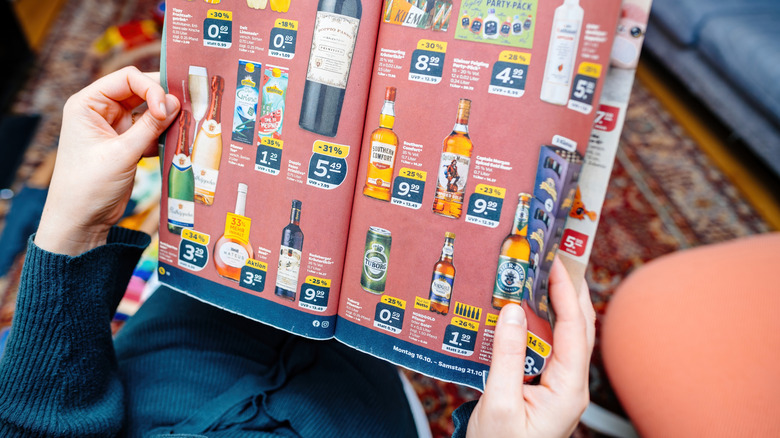
Like most supermarkets, Aldi publishes weekly ads to showcase its best deals. These deals rotate every week and will almost always include a significant discount on at least one meat and one fresh produce item. For example, this week at my Aldi in Vineland, New Jersey, the antibiotic-free thin-sliced chicken breasts, baby spinach, and organic zucchini are all on sale. This is just to give you an idea of the deals you might expect, but isn't a guarantee these items are on sale at your local store this week (or ever).
I mentioned this briefly in the section above, but it bears explaining in more depth here: Planning your weekly meals around the current deals helps you save significantly. It could also help you tread outside your comfort zone to keep your household's menu new and exciting. Using the same Aldi weekly ad example as before, you might plan a few unique chicken-based meals, since the breasts are on sale. One night, you could do lemon pepper chicken, and another you might do barbecue. You could create a pot of homestyle chicken soup, or a unique soup incorporating both the spinach and zucchini for a particularly savory, earthy dish.
Skip the Aldi Finds impulse buys
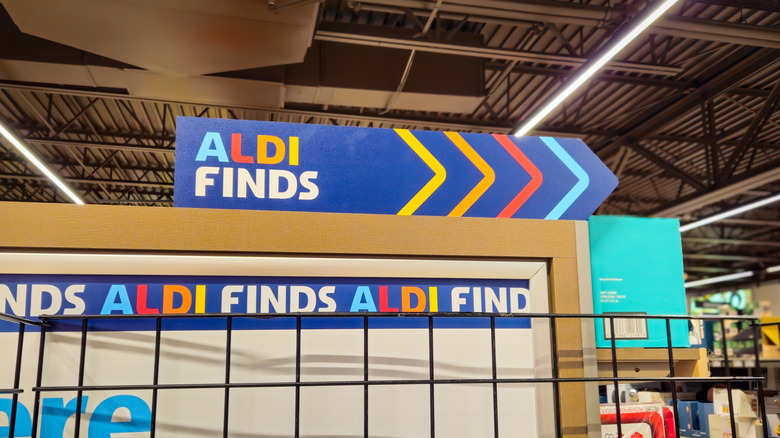
The Aldi Finds section is a budget's worst nightmare, containing mostly furniture, accessories, toys, and similar items. These are only available for a short time, with a very limited stock, and typically offered at a steep discount compared to what you may pay at other retailers. That may all sound fantastic, but there's one hard fact you have to face: All of these items are totally unnecessary. Unless you're looking for a very specific item that you actually need, the Aldi Finds section can devastate a grocery budget and completely ruin the sanctity of the shopping list you wrote ahead of time.
The issue is that the aisle is designed to tempt you into an impulse purchase. So, the best option is to simply avoid the aisle altogether. Actually, I've always found that the easiest way to avoid any impulse buys (including unplanned food purchases) is to only go down the aisles that contain foods on your shopping list. If you aren't planning on any packaged snacks, skip that aisle. If you don't need a specific non-food item, skip the Aldi Finds and save yourself the money.
Stock up on produce and freeze it for later
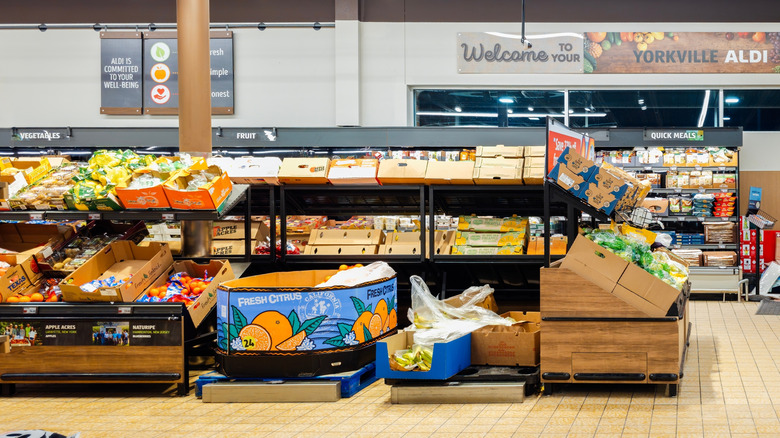
Produce can get really expensive, but it's such a vital part of anyone's diet. At my house, we eat as many fresh fruits and vegetables as we can, both raw and incorporated into the dishes I cook for my family. But, I've learned three important things during my time shopping at Aldi: First, the produce is cheaper than anywhere else I shop. Second, stocking up on that produce when it's on sale and freezing it for later has led to even more cost savings. Third, a vacuum sealer is your best friend.
If you don't already have a vacuum sealer, I highly recommend getting one, since it more than pays for itself in the long run. I use the Mesliese Vacuum Sealer at home, which you can use with a wide range of bags in varying sizes. It's simple to use, easy to keep clean, and keeps my Aldi produce from spoiling.
Before you head out on your shopping trip, check your store for great produce deals. Sometimes these are in the papers, but other times items are discounted because Aldi needs to move them before they go bad. Focus on foods that freeze well, like onions, peppers, green beans, berries, and bananas. When these go on sale, buy extra and freeze the rest after vacuum sealing so they keep for months or even years.
Purchase cheap frozen vegetables to stretch your meals
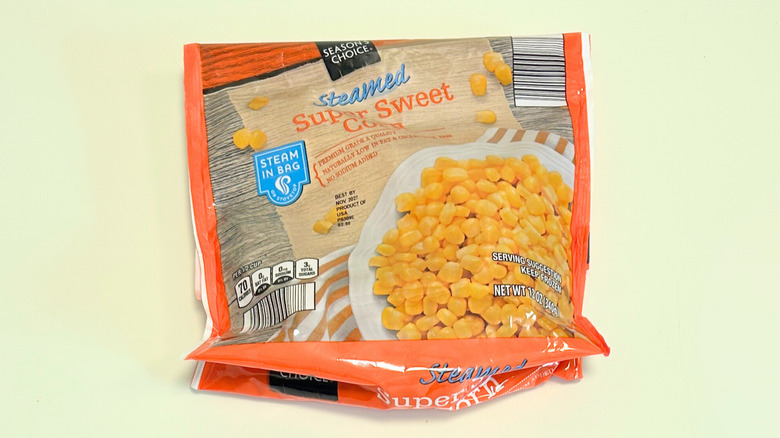
During the weeks where my budget was really tight (including those years I was a single mom on a single income), frozen vegetables were my best friend. You can buy bags of frozen vegetables for next to nothing, with many Aldi options ranging between $0.99 and $2 per bag. Plus, there are few foods as versatile. Thanks to this versatility, frozen vegetables can be used to stretch your meals to feed another person or two without spending much extra. Or, you can use slightly less of your meal's more expensive ingredients by substituting in frozen vegetables for sheer cost savings.
I always keep at least a handful of cheap frozen veggies in my freezer — and Aldi is my go-to place when I need to stock back up. You can dump a bag into soups, stews, casseroles, stir-fries, and so much more. I love dumping a cheap bag of corn and carrots into nearly any soup or stew I make. Frozen green beans are my favorite for casseroles, while broccoli is my favorite for stir-fries.
Grab small portions of high-quality cheese for cheap
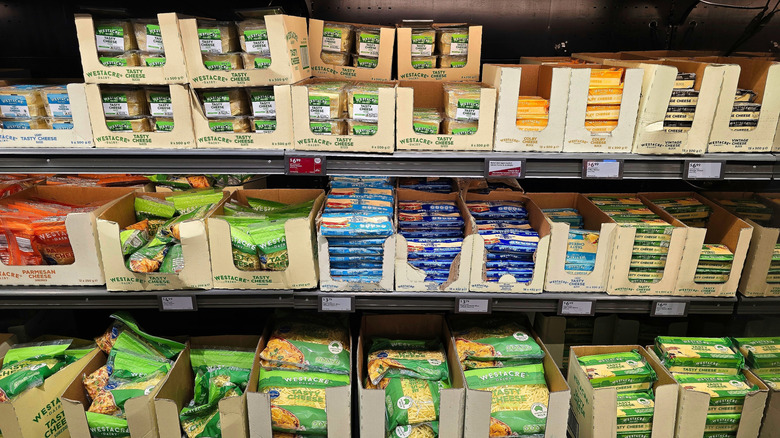
I don't know about you, but I am a huge cheese enthusiast — in fact, Aldi is the only place I shop for cheese. It offers high-quality cheeses in small portions for lower prices than other stores, including some varieties that are hard to find elsewhere. My favorites are Aldi's Emporium Selection cheeses, which run the gambit from traditional feta to cranberry cinnamon chèvre and beyond.
The prices of these dairy products will also fit snuggly into your shopping budget, where they can help expand the taste profiles of your meals or provide something indulgent to snack on. I try to always pick up a bag of Emporium Selection Specialty Shredded Gouda because, at just $2.99 a bag, it's one of my favorites for macaroni and cheese. The Happy Farms Deli Sliced Medium Cheddar is only $1.65, and it makes for excellent grilled ham and cheese sandwiches for lunch. Oh, and the Happy Farms Mozzarella String Cheese is one of my children's favorite snacks, and a bag costs only $3.45, but lasts a full week.
Honestly, I'd shop at Aldi for the cheese alone. Since I use so much of it, switching to buying it at Aldi instead of Shoprite (my previous preference) has saved me a small fortune over the long run. Plus, thanks to the reasonable portions, I don't end up wasting anything, which also helps my budget.
Bulk up your pantry with cheap foods like beans, rice, and pasta
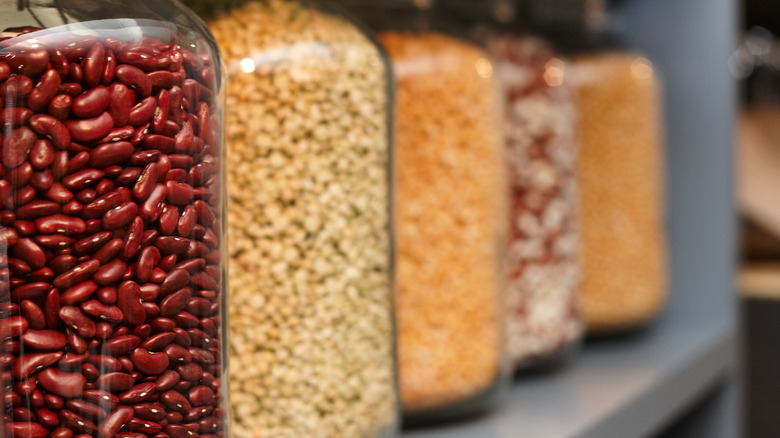
When the budget is really tight, your best option is to bulk up your pantry with cheap but filling foods. Beans, rice, and pasta are always great choices since they cost little, are filling, and can be used in countless ways, preventing you from getting bored of them. While this tip is true at every store, it's especially true at Aldi, where these pantry essentials cost less than at other retailers. Plus, there's a wide variety of options to keep things fresh.
For less than $1 each, you can get cans of cannellini, Great Northern, black, dark red kidney, or refried beans. The Dakota's Pride Brown Sugar and Hickory Baked Beans are only $2.09, and I think they taste almost as good as Bush's — grab two cans and use some leftover hot dogs to make beanie weenies for four people.
You can get 16-ounce boxes of Reggano pasta for less than $1 in various shapes, including rotini, farfalle, and penne, among others. Use these to fill out your week's menu with affordable meals like American goulash and spaghetti with meatballs, or pair with sauces like alfredo, Bolognese, pesto, and carbonara. Round this out with a 5-pound bag of jasmine rice that's good for around 50 servings at just $6.75. You can use it in chicken soup, jambalaya, fried rice, or chicken and rice — all made with ingredients you can get at Aldi for cheap.