

9 Red Flags You Should Never Ignore At A Bakery
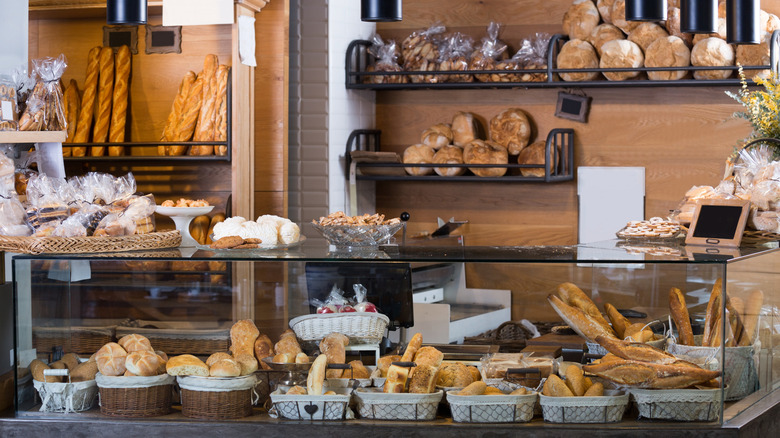
The lingering aroma of freshly baked goods — and general ambiance of a bakery — can be enticing enough to make anyone walk in and splurge on a bunch of baked goodies. Some folks prefer getting their fix from grocery stores while others like the experience an artisanal bakery offers. The expectations that customers have from artisanal bakeries are pretty high, since they sell items for steep prices. But does every high-end bakery live up to those expectations? Unfortunately, no.
As a pastry chef who has worked at several bakeries for more than five years, I can tell you that, while most artisanal bakeries go above and beyond to make sure customers are satisfied, some stores are full of red flags. Red flags at smaller bakeries can be subtle and easy to miss, unlike red flags at a grocery store bakery which can be more obvious. Luckily, you won't have to face unsatisfactory experiences anymore, because I'll be discussing what to watch out for at bakeries — and you'll know as soon as you walk in if it's a place worth your time and money.
There's a stale smell in the bakery

One of the best things about visiting a bakery for me is the aroma of freshly baked goods. It's unmissable and adds to the whole experience of picking out baked items. That said, if you ever walk into a bakery and are instantly hit with a lingering stale smell that just won't go away, it's time to run out. A stale or off smell is a red flag as it could mean many things. First, baked goods (especially good-quality ones) are made with lots of fat and sugar, both of which give them that appealing aroma, among other ingredients. So, if you're hit with an off-putting smell, it could be a sign that the bakery is using low-quality products or at least skimping on them.
Besides that, it could also mean they aren't baking fresh products every single day because if something is freshly baked, it will surely make the whole place smell amazing. Lastly, even if we give the bakery the benefit of the doubt with these two factors, a stale smell is still a red flag as it could mean they have a poor ventilation system and haven't done anything to fix it. A bad ventilation system can spoil baked goods quickly, so that's definitely not a good sign. In some cases, bakeries could be using foods that make their kitchen smell bad along with the front of the house area, but those ingredients usually have a nuanced aroma that you can recognize easily. If the stench is just of stale baked goods, it's best to go elsewhere.
The baked goods look dry and dull
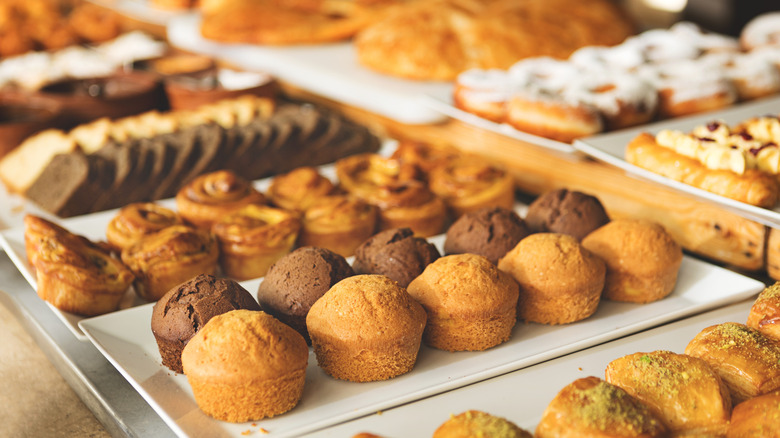
As noted, artisanal bakeries use a lot of fat and sugar to make their baked goods. These two ingredients, besides giving the baked goods a lovely aroma, also make them look glossy and appealing. Considering that, if a bakery has really dry and dull looking baked goods, that's a red flag, as they are definitely not using the right amount of these ingredients, or are using low-quality ones. Moreover, dry and dull baked goods are also a clear sign of them being stale. So, you'll never know if the item you're looking at was baked a day or even a couple of days earlier, and that isn't something you'd want.
It's worth knowing that most bakeries follow a proper schedule when it comes to rotating their baked goods, and they usually replace old ones when they start looking even slightly dry or dull. However, some bakeries are so bent on selling each item that they don't replace the products even if they look dull and/or stale. This means they don't care much about their customers or product, so why should you bother spending money there? The only nuance in this whole thing is when it comes to cakes, as many bakeries layer cakes to get rid of their dryness to some extent. But if the frosting looks pale or dull, don't bother buying even a cake from that bakery.
The bakery has a large stock of unsold items at closing hours
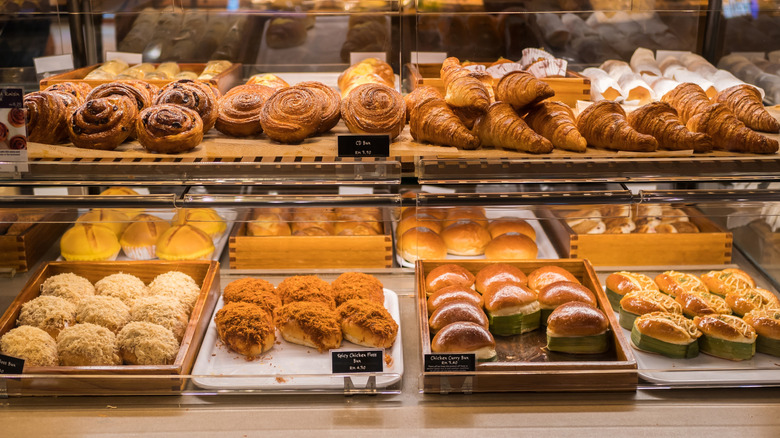
Whenever you visit a bakery during closing hours, you'd likely go with the expectation that most of their items will be sold out. That's a given, especially if a bakery is well known for some of their products. However, if the bakery still has a large stock of unsold items right before they are about to close, that's a red flag you definitely shouldn't ignore. A full stock at closing time could be an indication that something about that bakery is fishy, which is likely why no one has bought their products.
Plus, most bakeries plan their production for the day based on the average number of customers they'll be serving. So, a large stock of leftover items at the end of the day could also mean they are baking everything a day earlier and stocking it up, which is also not a positive sign. Most good bakeries are super particular about getting rid of unsold items at the end of the day by donating them (in fact, that's what usually happens to unsold grocery store bakery items, too). So they might even encourage you not to buy something if they believe it isn't fresh enough. But subpar bakeries will do the complete opposite and push you to buy something out of the unsold items, even if they aren't fresh. Given all these factors, it's wise to go elsewhere in such situations, or at least check the bakery's online reviews before buying anything.
They haven't mentioned basic information about any of the baked goods
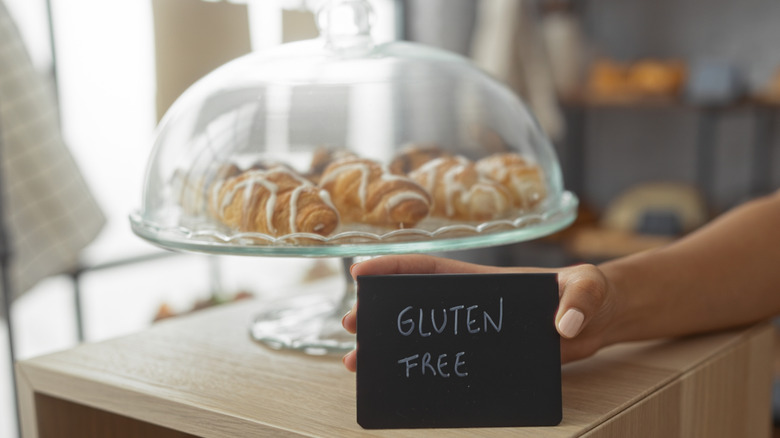
Imagine being highly allergic to an ingredient that's often used in baked products, and then going to a bakery and realizing they haven't listed that ingredient as an allergen on the packaging of any items. That's bound to put you off, as it should, because bakeries not listing allergens isn't a good sign.
Bakeries are also supposed to mention the nutritional information of each product and the ingredients that go into it, either on the packaging or at the display, or in the menu if they have one. A bakery not doing so is a major red flag for many reasons. It could mean they are using questionable ingredients in their products, or a bunch of preservatives, which is something you wouldn't expect from a bakery that claims to sell artisanal goods. Not listing out nutritional information shows that the bakery doesn't care about customers who are health conscious and are looking to make better choices when buying baked goods.
Any credible bakery will want to be transparent about these things with their customers, as they know that's the only way to gain their trust and make them come back again. So, if a bakery doesn't bother to mention this sort of information, there's something off about the way they work. Either way, it's best to walk out.
Pests, rodents, and poor hygiene
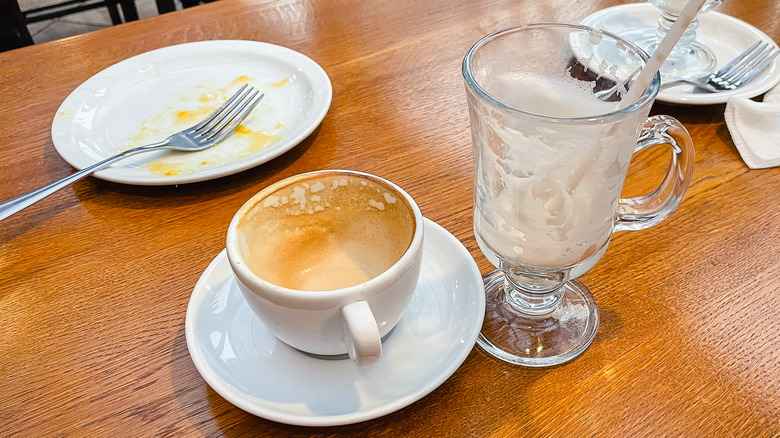
One of the most basic things you'd expect out of any food establishment — not just a bakery — is for it to be clean and hygienic. So, if you notice a bakery has unclean areas, sticky tables, overfilled trash bins, or just get an overall unhygienic vibe from the place, it's ideal to go elsewhere. All these factors clearly show that the bakery is nonchalant about one of the most basic aspects that customers easily notice. In fact, even if customers don't notice, maintaining hygiene is mandatory for food establishments.
You should also keep an eye out for pests like fruit flies, cockroaches and, of course, rodents in the bakery as these are all notorious for spreading foodborne illnesses. It's worth knowing that bakeries can mitigate these problems by hiring a professional pest control crew, or just keep things clean and wash their fruits well — which is a simple cleaning tip to keep pesky fruit flies out. Considering the impact these pests could have and how easy it is to get rid of them, if a bakery still cannot be bothered to do something about this, it's likely they don't care much about their product or the customers they serve.
Other than checking if a bakery is clean or not, it's also important to notice if the staff follows basic hygiene practices. If employees aren't wearing gloves or hairnets, touch all the baked goods with their bare hands, and handle money and food with the same hands, you should avoid this bakery.
There's condensation inside the display case
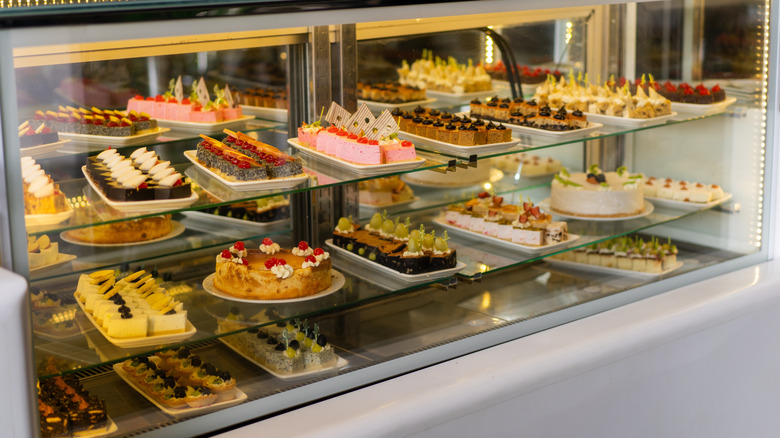
This red flag can be easy to miss, but it's definitely not worth ignoring once you spot it. Condensation inside the display case is a lot more problematic than you'd imagine. I'll tell you why it's a red flag, but first, it's important you understand how these cases work.
Display cases aren't meant for just displaying baked goods and desserts. They have built-in temperature and humidity control just like any refrigerator, and they help bakeries keep their treats fresh for a long time. Condensation inside the case is a bad sign, as it could mean one of many things, like the bakery isn't cooling their products down properly before placing them in. It could also indicate the display case isn't working properly, but they are still using it instead of getting it repaired, which isn't acceptable. It's basically the same as using a refrigerator even though it has broken down, which makes no sense.
Besides these factors, condensation is also a bad sign as it can spoil baked goods a lot faster, even if the case is working properly. This is because condensation is essentially moisture, and excess moisture becomes a breeding ground for mold and leads to quicker spoilage. Since no one would want to eat baked goods that are stored in a questionable display case — given all the issues it could lead to — you should look at this as a red flag.
The products look identical to each other or almost too perfect
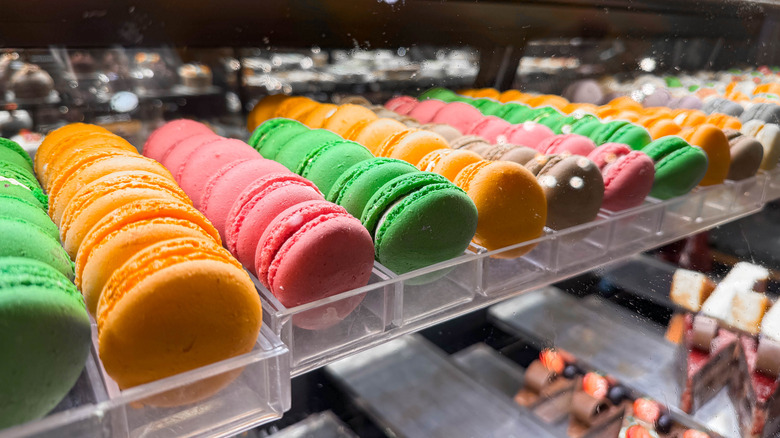
Artisanal bakeries are known for making handmade products — and when it comes to handmade items, it's very likely they will not look too identical to each other. So, if a bakery claims to serve artisanal goods, but they have a range of products that look too similar or almost too perfect, that's a clear red flag. By products looking identical, I don't mean different types of items looking like each other, but a stock of a single item looking the same. For instance, if all the cinnamon rolls in the display case look the same and strangely flawless, that's not a good sign.
This is because when something is handmade, there's always room for error. If we take cinnamon rolls as an example again, I'm not saying that each one lined up in the display case would be a different size. But if they are rolled and decorated by hand by a baker, it's very likely that each roll will have slight nuances, like the amount of icing on each could differ and the way each one has puffed up during baking will also vary slightly. If the items look too similar and perfect, the bakery could be mass-producing them in their own kitchen using machines, or even worse, they could be outsourcing. And honestly, in such instances, you could simply buy baked goods from a grocery store, as they are at least cheaper and aren't potentially hiding the fact that the items are mass-produced.
The staff doesn't know much about their products
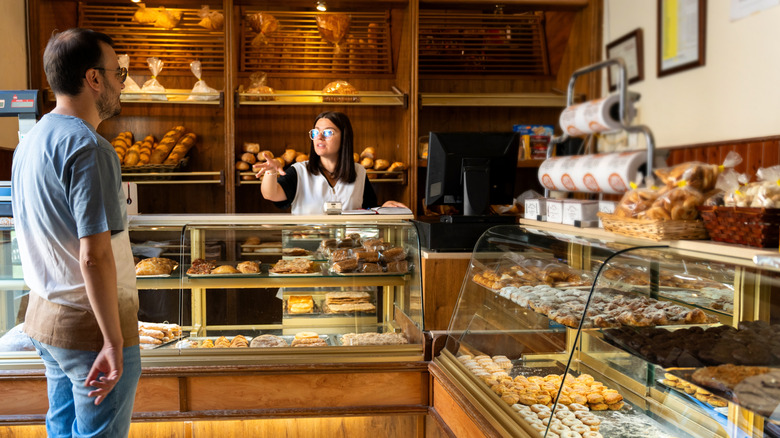
As a customer, you'd expect that the staff at a bakery will have some basic knowledge about the baked items, like the ingredients used and how often each item is baked. The employees knowing these things also helps when you're confused about what you want, as they can inform you based on your preferences. Imagine, however, walking into a bakery not knowing what you want and hoping one of the employees will help you decide ... but they don't have much to offer in the way of knowledge about their products. This is a major red flag.
Yes, it's plausible that it's a new employee still learning the ropes. However, if several staff members don't have basic knowledge about their goods, something about that bakery isn't right. It could mean the staff is too nonchalant about their offerings, which is concerning. Of course, this is also a reflection of management, and might be an indication they don't want their employees to know about certain low-quality ingredients. Whatever the reason, if the staff is clueless, you're better off spending your money elsewhere.
The baked items taste artificial
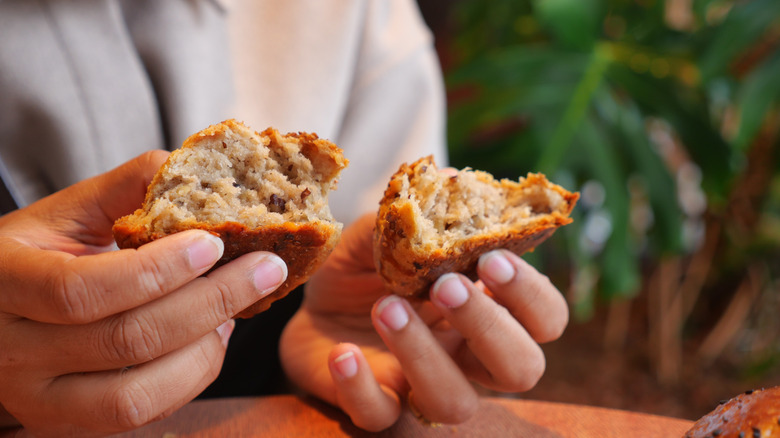
Sometimes, everything at a bakery could look perfect, without any red flags previously mentioned. Imagine, however, biting into one of the items and getting a strong, lingering artificial flavor. That's a red flag, because freshly made baked goods — especially those from artisanal bakeries — should taste natural.
If baked items have an artificial flavor, it could easily mean they're packed with artificial flavorings or even preservatives. While subtle artificial flavors are okay — many bakeries use essences instead of natural flavor extracts — a strong chemical-like taste can be a sign that they are using too much artificial flavoring to mask low-quality ingredients. Artificial flavorings can also mask a product's staleness.
Similarly, if the cakes or cupcakes have a synthetic or "off" flavor, that's a sign the bakery uses premixes to prepare them instead of from scratch. All in all, a strong chemical aftertaste is a red flag the bakery isn't following the best practices with their baked goods.