

Old-School Wedding Foods We Rarely See Anymore
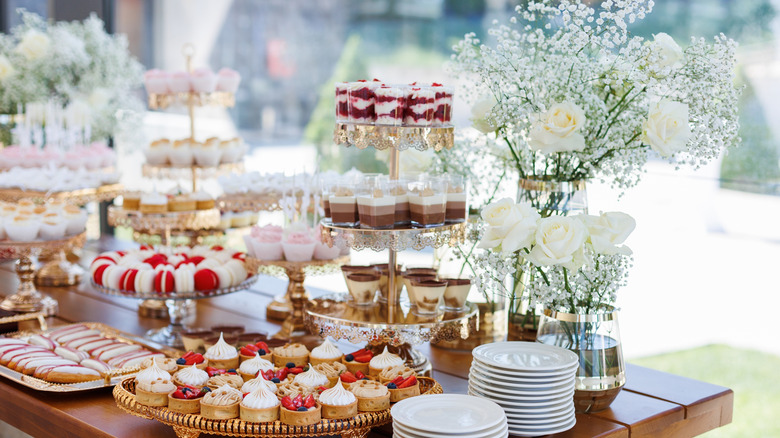
Weddings, and the food served at them, have always reflected wider trends in society. Meals that scream luxury one decade can be cheap staples the next, and traditional dishes that use ingredients we just don't eat much anymore often fall out of rotation at weddings. This is part of what shapes wedding trends across history, although these days, TikTok and coverage of lavish celebrity weddings probably play their part too.
Today, we usually expect a sit-down dinner, an open bar or maybe signature couples' cocktails, and, if we're lucky, a selection of late-night snacks to keep up our energy as we dance into the wee hours. These are all relatively modern expectations, however. As late as the mid-20th century, some weddings were held so early that the wedding breakfast was genuinely a breakfast, and at a DIY reception on a budget, guests might have been fed with nothing more than finger sandwiches and nibbles. While these events don't have to break the bank, it seems that food has become increasingly important as other traditions have faded into the background a little, offering a chance to show off who you are as a couple and really give your guests a good time. Still, we can always learn something from the past, including the history of wedding food.
Jellies
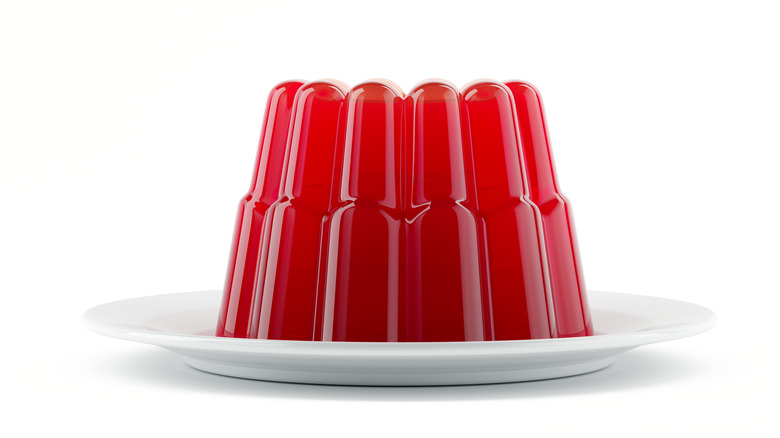
JELL-O is for kids' parties and frat parties these days, but that hasn't always been the case. Over its history, jelly has been the height of sophistication more than once, served at cocktail parties, weddings, and royal feasts alike. Aspic (savory meat-based jelly) was a well-used ingredient way back in the Middle Ages, though mostly to preserve food. By the 17th and 18th centuries, though, the rich had cottoned on to its possibilities. European courts like that of Louis XVI aimed to wow visitors with fantastic gelatinous creations, aided by the invention of the jelly mold around the same time.
According to an 1830s etiquette guide, cold jellies were expected at weddings. And a variety of intricate, molded jellies were served at royal weddings in the Victorian era. By the late 19th century, they had become a little more accessible; an 1889 listing of wedding breakfast menus and prices posted on Reddit includes fruit jellies, wine jellies, prawns served in aspic, galantine of veal, and more.
Jelly really hit the mainstream when the first powdered gelatin went on sale, making a previously time-consuming, expensive ingredient accessible and opening up jelly as a celebratory food for everyone. Then came World War One and World War Two, and as jelly (or, in the US, the now-popular JELL-O) was important for stretching dessert further, it became a part of America's post-war food revolution. Once refrigerators became affordable, however, the ubiquity of JELL-O dishes eroded their reputation, and the wobbly dessert began its slow slide off wedding breakfast tables.
Grapefruit starters
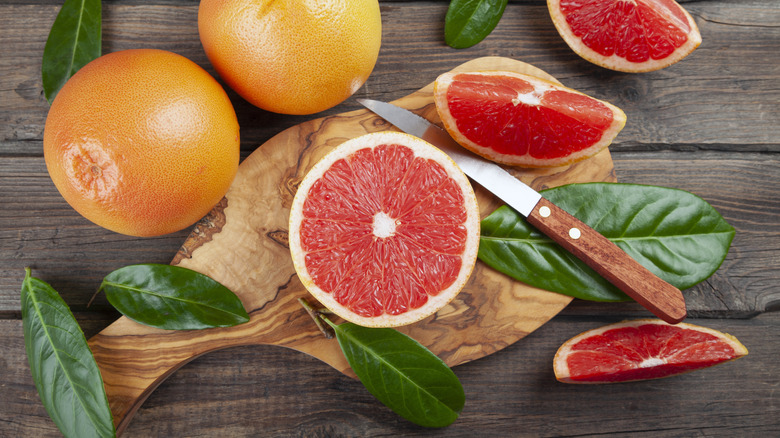
Although broiled grapefruit is considered a dessert these days, something similar was regularly served as a starter or salad component in the early-to-mid 20th century. Wedding menus were no exception to this trend; the bitter citrus was often the first thing guests were served. Looking at old wedding menus, however, it's a little tough to work out exactly how it was prepared. One menu from the 1940s, which was posted on Reddit by the bride and groom's grandchild, lists "Grapefruit Surprise" as a starter, while another, from twenty-six years earlier, lists "Grape Fruit Cocktail." It's not unlikely that the latter of these grapefruit dishes was entirely savory, given the timing of these weddings.
Adding salt to a grapefruit instead of sugar was popularized in the U.S. during the First World War and pushed again during the second. Initially, it was a way to save on rationed sugar, but during the 1940s, it also helped citrus growers sell more domestic fruit. Weirdly, the combination actually works. The salt restricts bitterness and lets the underlying sweetness of grapefruits shine. It would still be pretty difficult to eat a halved grapefruit elegantly at a formal event, but perhaps those early- and mid-century wedding menu planners were onto something? There are plenty of modern ways to use grapefruit. It works very well in combination with salt in cocktails, including the salty dog. This is one of many delicious vintage cocktails currently making a comeback and a favorite of everyone's dream dinner party host, Martha Stewart.
Queen olives
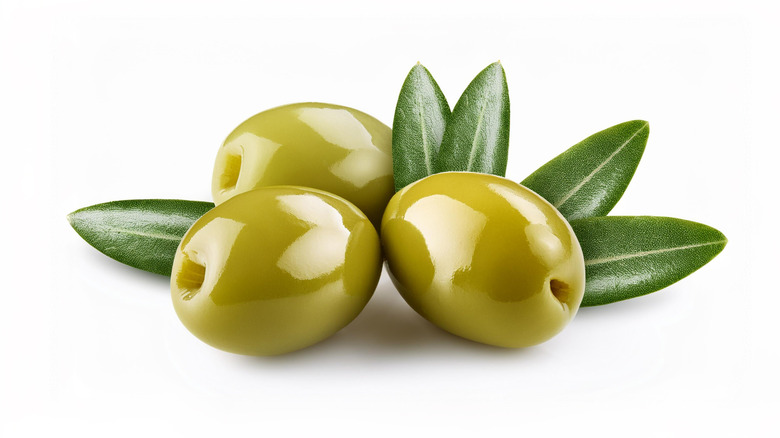
Olive have become pretty standard fare in the U.S. in the last few decades. This may have something to do with the popularity of the Mediteranian Diet in the '80s and '90s, along with growing access to imported and exotic food changing our tastes. As recently as the late '60s, however, the cured fruits were notable enough not only to be served at weddings, but to be listed on wedding menus, with queen olives apparently coming with enough name-recognition that they were specified on a 1950s menu. Also known as Gordal olives, this variety is large, meaty, a little sweet, and perfect for stuffing. Queen olives make a delicious snack, and just like currently popular castalvetrano olives, they don't have the bitterness of some other readily available olive varieties, which is probably why they got a special shout-out.
Of course, you might still see olives at a wedding. They're a standard cocktail snack, and could also be part of a meal or served as tapenade with a snack course. The big difference is, we probably wouldn't put them on our menus. Many of us might not even remember eating them if you asked us a couple of days later! Clearly, olives were a bit more special back in the day, and the little extras, like pickles, almonds, and even celery sticks were considered important enough to include on a menu card. It makes sense for the interwar generation, doesn't it? They wanted us to finish everything on our plates, and they wanted their wedding guests to know exactly how much they'd pushed the boat out for their big day, down to the last olive pit.
Vol-au-vents
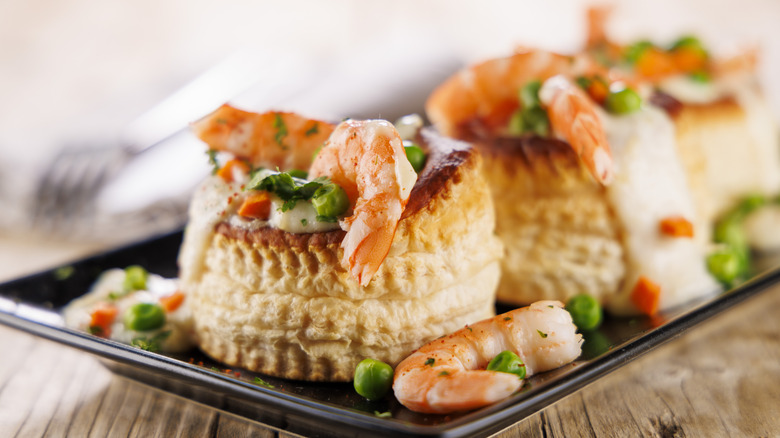
Invented in France in the 1800s, vol-au-vents were a luxury food for many years. The light puff pastry took expertise to make, and cutting the middle out to make space for fillings was fiddly. Like many of the foods on this list, vol-au-vents became popular at celebrations like weddings when they became available to the general public. In this case, pre-made puff pastry hit the market in the '60s, and so began vol-au-vent fever. They might not be listed specifically on this 1967 menu posted on Reddit, but it's very likely they'd be included in those hors d'oeuvres.
Vol-au-vents have made something of a comeback in the last few years, so we may see them on wedding menus again soon. You can fill them with anything your heart desires, sweet or savory, so they're extremely versatile. They were probably stuffed with Cheez Whiz and just-about defrosted shrimp back in the '70s, but today you could use seasonal vegetables, your favorite local cheeses, high-quality smoked fish, and more. Sweet vol-au-vents would make a great addition to cocktail hour, too, offering something unexpected on those silver trays. As they're often designed to be eaten in one bite, the little pastries can be enjoyed on the dance floor as well, making them a good choice for that midnight snack table.
Kishka
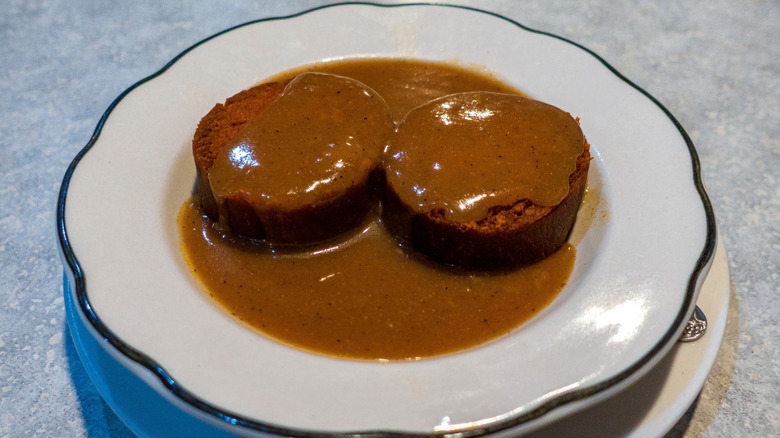
Kishka (also known as stuffed derma) is a traditional Jewish food made from beef intestine stuffed with chicken fat and vegetables. It's similar to Scotland's haggis or England's and Ireland's white pudding but less well-known among many groups. Kishka hasn't disappeared by any means, but it doesn't suit modern tastes particularly well. It appeared on a few of the historical wedding menus we looked at, including this one for the 1950 wedding of a Redditor's grandparents in Philadelphia and another for a 1940 New York wedding.
More recently, however, Kishka seems to be less popular in the U.S. (which is hardly surprising, given that its Scottish cousin, haggis, is one of many historically popular meats that are banned in America today). All is not lost for lovers of stuffed derma, however. You can get the dish at a few modern delis, and there are even recipes for vegetarian versions out there. So, if you want to see a triumphant return for this traditional, kosher take on sausage, there's nothing stopping you from adding it to your own wedding menu.
Party Pinwheels and other finger food
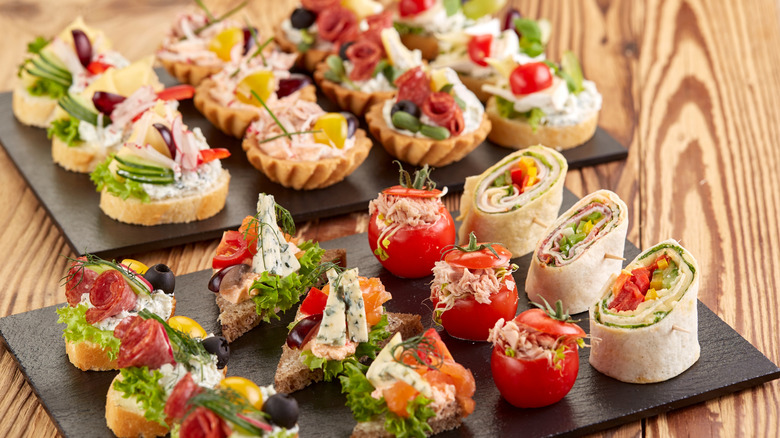
Party Pinwheels were an invention of everyone's favorite chef, Oscar Mayer, creator of the Weinermobile and a surprisingly terrible cheese-stuffed hotdog. While the deli-meat pinwheels don't sound bad, they read more like an after-school snack than a party appetizer. Essentially, a pinwheel is just ham and cream cheese rolled up and cut into disks, each of which has a pinwheel design.
Other recipes in this vein include bacon-wrapped olives (cooked, obviously) and pickles stuffed with Braunschweiger sausage. These were foods that could be eaten with toothpicks, which was a strong theme of wedding food (and party food in general) from the 1910s to the 1980s, when pickles, olives, and various other tiny nibbles appeared on pretty much every menu.
This 1985 wedding menu price list from a New Jersey hotel, posted in r/VintageMenus, catches the end of this trend perfectly. Their cocktail hour offerings scream kid's birthday party, including delicacies like mini franks, pizza squares, and melon balls. They might not be wedding-appropriate now, but kitschy finger food like party pinwheels and tiny sausages would make a great addition to a retro cocktail hour or a '60s- or '70s-themed costume party.
Tongue
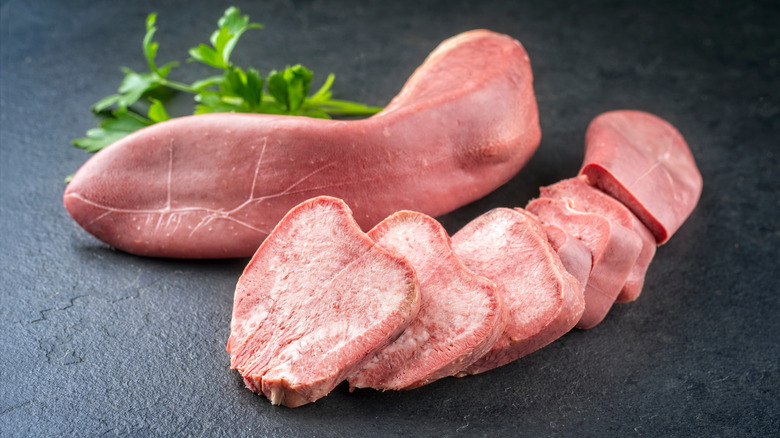
That 1830s etiquette book tells the reader that a normal wedding breakfast should include tongues. Back when everyone had a local butcher, tongue was a popular cut in the U.S., U.K., and many other countries where it's now rarely eaten. It was even eaten as part of Thanksgiving dinner for a while.
Tongue also appeared in many vintage wedding meals, including the 1914 menu of a Redditor's great-grandparents and a 1937 menu kept from the honeymoon of another Reddit user's grandparents. This may have been its last gasp of popularity as a meat for celebratory meals, but it had a good run. Ox tongue is listed on the 1880s London price list from r/VintageMenus, and the dish appeared as a side on Queen Victoria's 1857 anniversary dinner menu.
It's also notable that several of the menus we looked at included other organ meats, from sweetbreads to chicken livers. This demonstrates a difference between American tastes then and now; offal just isn't eaten much in the U.S. today. If you have a taco truck at your wedding, however, you might just end up serving tongue, as tacos de lengua are a very popular Mexican food.
Foie gras, pâtés, and meaty terrines
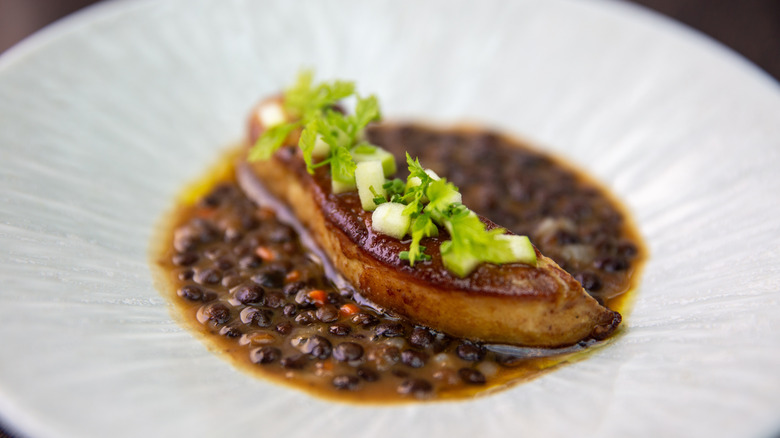
Terrines, pâtés (including foie gras), and savory mousses are similar enough that the terms might be used interchangeably on wedding menus, particularly when one name or another has been more en vogue over the years. They were certainly enjoyed by the upper classes at weddings and other similar celebrations during the 19th and 20th centuries; Queen Victoria was served wild boar and ham mousse at one of her wedding anniversaries, while the menu for an 1857 Chicago wedding posted on r/VintageMenus lists pâtés mélangé among a huge selection of complex starters.
Pâtés, foie gras, and savory mousses are still eaten today, but many couples likely think they're too divisive to be served on a wedding menu, particularly with the questions around the ethics of foie gras. Easier to sell options that fill the same space in a long, complex meal, or perhaps work as an addition to a cheese board, include veggie pâtés made with mushrooms, or a simple salmon mousse that provides a creative use for canned fish.
Fruit salad starters served in fruit
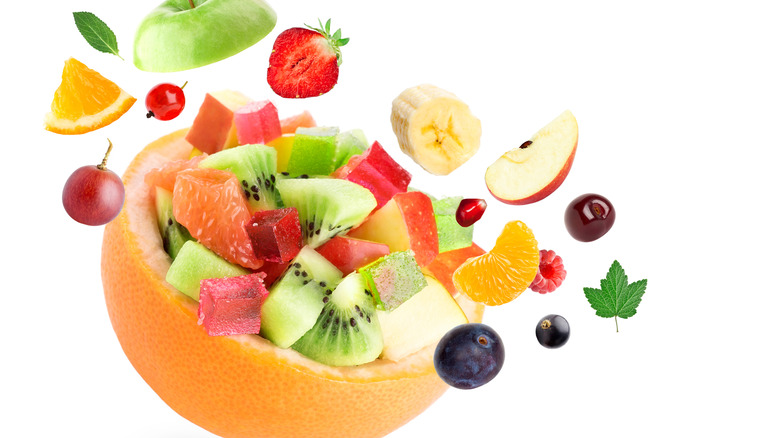
Hollowed-out fruits filled with other kinds of fruit were an essential part of any celebration for a while, as ordinary people reveled in their ability to access something that had previously been a status symbol for the upper classes. A fruit salad (or fruit cocktail) being served in a natural bowl may or may not have come out of a tin, but that didn't matter, because putting it in another fruit made it into a fantastic party dish, and, at times, a serious wedding dish.
Fresh fruit cocktail served in half a pineapple was available as an appetizer in 1985 New Jersey, while earlier menus list fruit cups and fruit salads without specifying a vessel. It's possible that the over-the-top serving suggestion became an essential part of festive fruit salads as simple fruit cups became more available, but fresh fruit as a starter was a standard wedding choice for decades. These days, you might get some melon and prosciutto before your main, but a full fruit salad served in a pineapple would be a real conversation starter at any table.
Classic fruit cake (for wedding cakes)
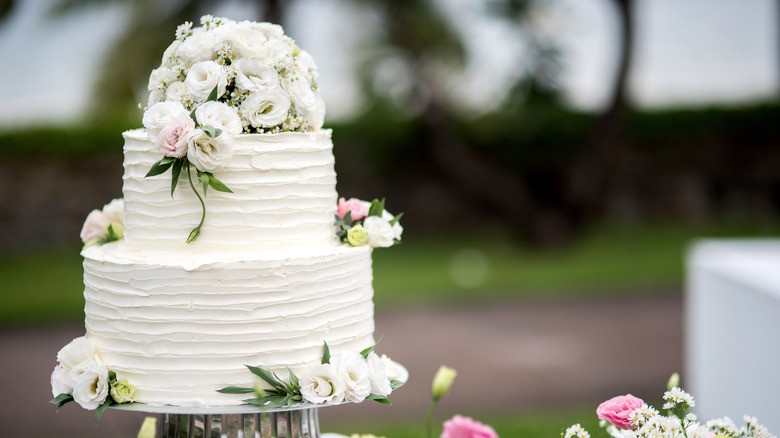
Wedding cakes have a long history, probably starting with the Romans, who would break a cake over the bride's head. While that particular tradition faded, others took its place, and by the 18th century, European wedding cakes were almost always either fruit or plum cake. This custom spread to the U.S. and continued for many years. However, tastes began changing in the mid-20th century. These days, American wedding cake flavors are an important point of discussion for most people planning such an event, and what can be served as a cake is very much up for discussion.
In the British Isles, though, many couples still choose the same dense, boozy fruitcake usually served at Christmas. Even if the rest of the cake is less traditional, some people include a top tier of fruitcake, as there's a tradition of freezing this layer until the christening of their first child. At this point, they're expected to eat it. As fruitcake is already aged and full of preserved ingredients, it tends to last a lot better than sponge or chocolate cake.