

11 Vintage Meals And Desserts That Started With Whatever Was In The Pantry

Canned foods owe their existence to a challenge from Napoleon, and since the early 19th century, these have evolved from military consumption into daily civilian use. Since then, there have been many moments in history when households came to rely on pantry staples. Boxed, canned, and jarred foods that were prepared in industrial quantities and readily available to consumers became important game changers in times of food shortages, such as during the Depression of the 1930s and the periods of rationing that affected the Home Front during both World Wars. Since the 1950s, however, pantry foods have become more associated with convenience than necessity and have entirely reimagined how home cooks prepare meals on a daily basis.
Convenience pantry foods have further enabled home cooks to embrace creativity. These have contributed to a variety of dishes that wouldn't be possible without the inclusion of such shelf-stable innovations. Consequently, there are many vintage recipes that have become retro classics due to their preparation with pantry staples. Some have lived on as mainstream recipes, while others retain a distinctly nostalgic association of days gone by. Whether you're looking for cooking inspiration with a vintage flair or seeking insight into what can be made from what's left in the cupboard, here are 11 vintage dishes and desserts with recipes that build off of what's already in the pantry.
Tuna noodle casserole
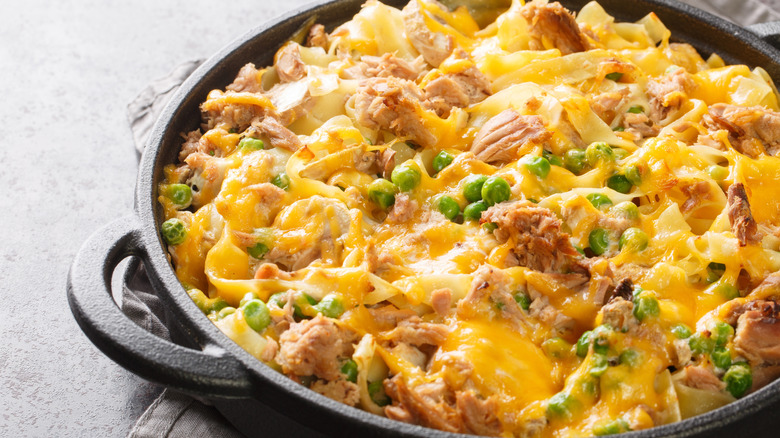
Though it had its heyday in the 1950s, the tuna noodle casserole first appeared in 1930 as a recipe in Sunset Magazine. It consisted of noodles, canned tuna, mushrooms, and a cream sauce with a cheese topping. Originally served in the Pacific Northwest, this dish didn't reach wider acclaim until 1934, when Campbell's launched its condensed cream of mushroom soup. This ingredient made tuna noodle casserole uniquely suited to the ultimate form of convenience cooking. Simply substituting a can of this soup concentrate eliminated the need to prepare fresh mushrooms or a more elaborate cream sauce. As a result, tuna noodle casserole evolved into an easy dish with ingredients that could all be kept on hand in the pantry.
Campbell's embraced the concept and continues to promote this casserole as a classic. Describing its recipe as the "original dump and bake dinner," the soup company promoted tuna noodle as a poster child of convenience cooking. The recipe has continued to evolve slightly, but not by much. Popular variations since the 1950s include the addition of green peas and breadcrumbs sprinkled on top. The tuna noodle casserole has since fallen out of touch with its PNW origins and become more associated with the Midwest. But it remains something practical and ready to whip up from the pantry shelf. We even have our own classic tuna noodle casserole recipe, but the beauty of this dish lies in its adaptability. Dress it up or down for the same hearty, nostalgic comfort food.
Corned beef hash
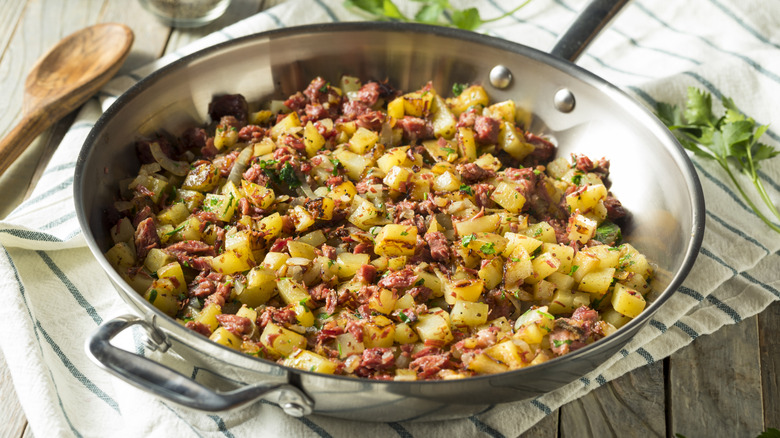
Corned beef is a dish with fascinating origins, dating back to 17th-century Ireland, when cattle laws and import regulations left the country with an unusually plentiful supply of beef and affordable salt. Combining these two things together to preserve the beef, this Irish method became known as corned beef because of the size of the salt they used. Rather than small crystals, they had large pieces as big as corn kernels, leading to the possibly confusing moniker, as there is no actual corn in corned beef.
Corned beef preserved in tins was available in the early 19th century, thanks to new preservation methods that enabled food to be stored in sealed tin cans without spoiling. There's much to say about the merits of canned corned beef, but despite its ready availability as a convenience food, it wasn't particularly sought after with gusto until WWII, when the U.S. government was seeking convenient food sources to include in soldiers' rations. This was when canned corned beef became more commonly used amongst the civilian population as well, since this era saw a decrease in the availability of fresh meat. Tinned corned beef, however, was consumed in a new form — the corned beef hash. A mixture of onions, potatoes, and corned beef in a tin or can, this combination of items stocked in the larder stretched a meat ration much further, making for a savory meal that could be enjoyed anytime, either for breakfast, lunch, or dinner.
Three-bean salad
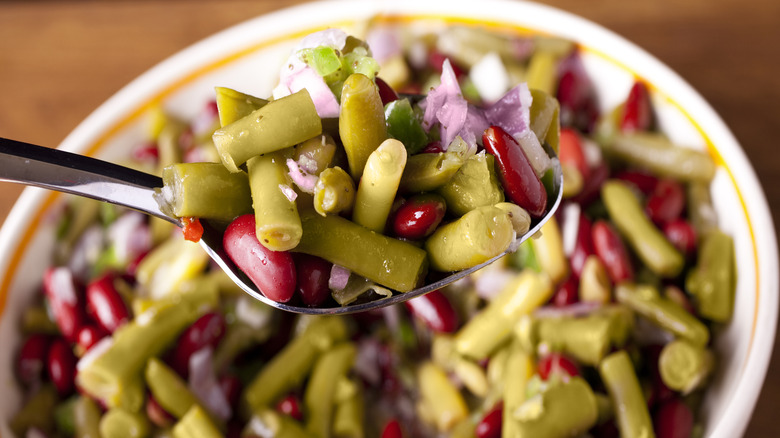
Infinitely adaptable, the three-bean salad is a meal that consists entirely of pantry ingredients and was a popular staple at salad bars, barbeques, and picnic spreads in the 1950s. While it has been dressed up even further in more recent years with recipes that suggest blanching fresh green beans or adding in all kinds of other chopped goodies, the classic three-bean salad was thrown together in the name of convenience. In its purest form, the combination calls for green beans, wax beans, and kidney beans, and the mixture gets left to marinate in a vinaigrette dressing. Adding chopped onions or peppers is a common addition to spruce the beans up slightly, but the beans themselves can simply be popped out of a can.
Prepared in minutes, the three-bean salad is something nutritious enough to function as a main course in addition to being a tangy side dish. On hot summer nights, a plate of this specialty goes a long way, as the beans are packed with enough vegetable protein to be a no-cook meal unto themselves. Furthermore, though it has a traditional recipe, the three-bean salad is well-suited to variations. While it can be easily built upon to become more elaborate, a new version could be as simple as switching out which type of beans make up the trinity. Canned garbanzo beans are a common addition, often used to replace wax beans if these prove difficult to find.
Hoover stew
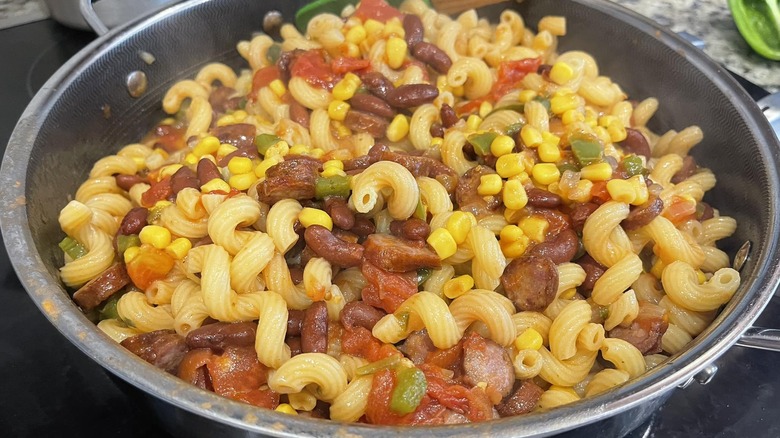
A recipe born out of hard times in the United States during the 1930s, Hoover stew was one of the foods that made their mark during the Great Depression. Named for President Herbert Hoover, it was not an homage to the national leader of the era, but more a reference to the government's difficulty providing for its people during such hard times. With fresh meat and vegetables relatively difficult to get a hold of and nearly impossible for those struggling through the Depression to afford, this stew made the most of what was more accessible to the majority of the American population at the time: pantry ingredients, especially canned foods. Made of relatively cheap and accessible pantry staples, the Hoover stew was something that got many families through the Depression. The classic recipe calls for macaroni noodles, sliced hot dogs, canned corn, and canned tomatoes, all of which got stewed together into a concoction that was somewhat nutritious for a hard-times meal.
Resourceful and effective at filling people up, Hoover stew was adaptable to infinite variations, depending on what was available. One-pot meals such as this were not so sought after or relied upon once the country clamored its way out of the Depression and thus have fallen out of favor as mainstream meals. But conveniently assembled with things that may already be in the pantry, Hoover stew might make for an intriguing meal idea when inspiration is running low.
Tomato soup cake
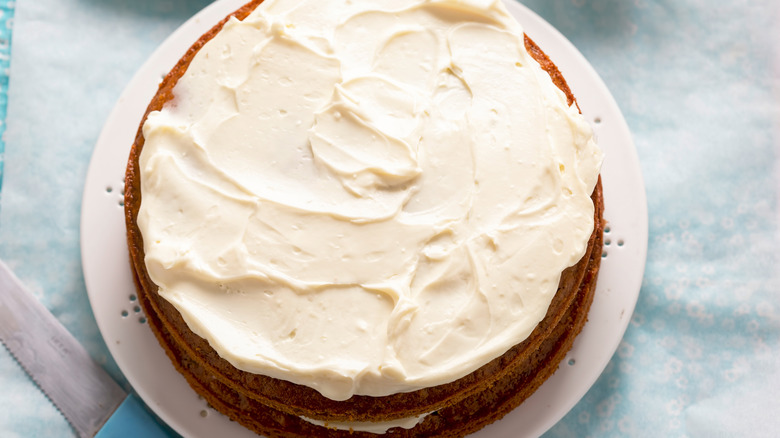
The title might sound a bit unsavory, and the final result for a tomato soup cake does feature tomato soup. But it does not have the slightest trace of tomato flavor. Also known as "Mystery Cake" in various recipes aimed at deterring suspicious consumers, the resulting flavor is more of a mild spice cake, enhanced by the addition of cinnamon, cloves, and perhaps a bit of allspice.
Though the recipe dates back to 1922, the tomato soup cake became more a dessert that proved useful in the following decade. When the Depression left a lot of foods inaccessible, canned goods became a major source of sustenance that remained affordable and plentiful — among these, canned soup. Tomato soup concentrate had been a popular pantry staple since the late 19th century, and resourceful home cooks recognized the potential for using its acidity as a rising agent. Embraced by households across America, the tomato soup cake was also formally endorsed by Campbell's in the 1940s, with an original recipe it hasn't changed since. Appearing mid-century as a Bundt cake, fruitcake, or most popularly as a layer cake served with cream cheese frosting, the tomato soup cake may be a recipe that evokes another time, but its simple and surprisingly tasty effectiveness certainly merits a comeback.
Frito pie
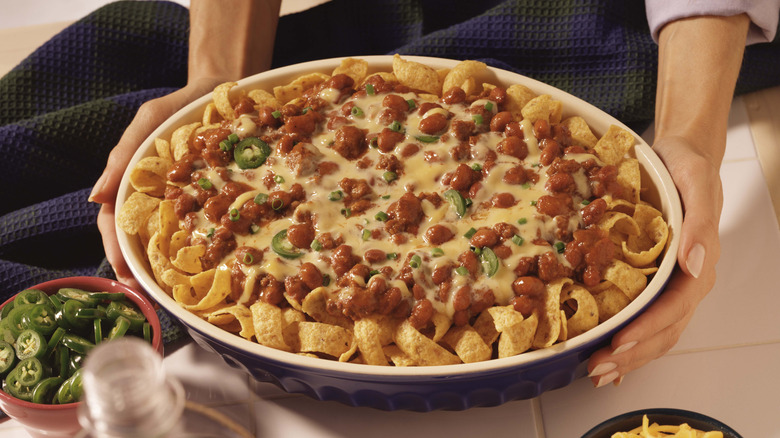
Frito pie has its origins in the Southwestern U.S., though where specifically has long been up for debate. In its original, purest form, Frito pie consisted of a bag of Fritos filled with a scoop of chili and some shredded cheese, served in a paper boat to be eaten either with fingers or a fork. While New Mexico claims this was a Santa Fe concoction from the 1960s, Texas has its own lore suggesting the concept can be traced back to 1930s San Antonio. There, Daisy Doolin, the mother of Fritos' inventor, may have come up with the combination. Wherever it first originated, the dish made for a popular mid-century concession snack and was often served at sporting events.
But Frito pie is something anyone can prepare at home. Depending on what's on hand, this dish can be as simple or sophisticated as ingredients allow. Using a bed of Fritos for a blank canvas, this "pie" can be easily prepared with canned chili from the pantry or topped with chili made from scratch to level up this comfort food. Additions can be numerous and nacho-adjacent, and many may also come from the pantry, such as canned beans, canned corn, jarred olives, or canned green chilis. The whole assembly can be finished off with a topping of chopped onions, shredded cheese, and perhaps a dollop of some sour cream as the finishing touch. The end result: a textural marvel with flavors that can't be beat.
Salmon croquettes
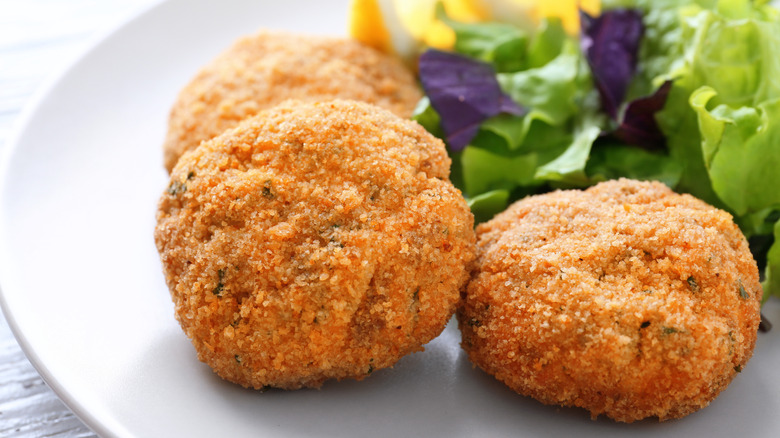
Also known more colloquially as salmon patties, these croquettes are a miracle of pantry staples. With the primary ingredients consisting of canned salmon and crushed crackers, they've been a popular snack or meal in the South since the 1930s. Funnily enough, salmon are not a species native to the South. At the time, these cold-water fish largely came from Alaska. But as for how Alaskan salmon became a daily staple in the South, the link is closely associated with the Depression.
With less access to a variety of foods, Southerners' overreliance on corn for sustenance led to many people suffering from a vitamin B deficiency. This prompted the U.S. government to take action, and its solution was to make salmon, a food high in vitamin B3, easily and cheaply available in the South. The new availability of this food formerly associated with luxury led to a slew of recipes making the most out of canned salmon, and salmon croquettes are the most enduring. Today, the dish comes with a vintage flair but is still popular in all its variations. A highly adaptable meal, typical recipes mix canned salmon with either cracker crumbs, bread crumbs, or chunks of bread, depending on what's available. Some recipes include chopped onion, and others suggest gravy as a sauce, but all assert that these patties must be fried up to a golden crisp.
Desperation pie
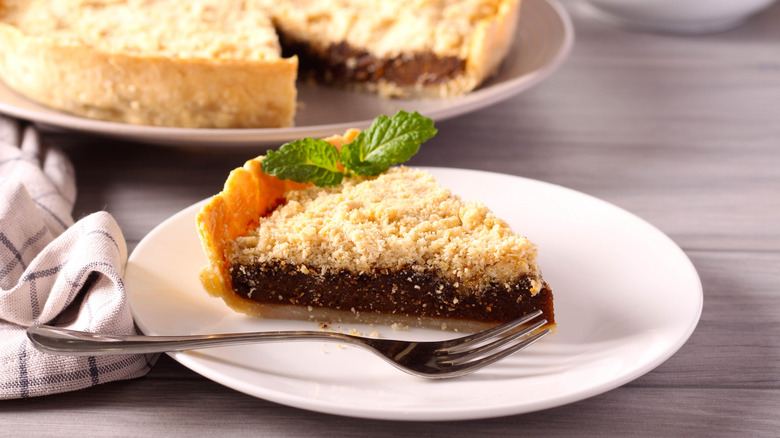
As more of an umbrella term, desperation pie refers to any of the numerous make-do pie recipes concocted out of resourcefulness during food shortages, largely in the 20th century. With some recipes dating back to WWI, others popularized during the Depression, and still more revived during WWII rationing, these recipes have fallen out of favor without scarcity driving their creation, but they remain resourceful uses for pantry staples.
Among the many desperation pies is shoofly pie, a Pennsylvania Dutch specialty made with molasses. Another hard times favorite was water pie, which is actually quite tasty, making magic out of a mixture of a little flour, sugar, and butter. Sprite pie was another similar variation, adding a bit of extra sweetness by replacing water with Sprite. Vinegar pie was a slight step up, with the added acidic vinegar making a tolerable replacement for lemon pie when no citrus was on hand. Mock apple pie created a convincing substitute filling with an innovative use of crushed Ritz crackers. The Depression era even saw the creation of a watermelon rind pie, popularized in the South to keep all edible food scraps from getting wasted. While these may not be go-to recipes anymore, they made the most of hard times in the past and would be a worthy recipe to endeavor if the pantry only has a few of the necessaries when a craving strikes.
Johnny Marzetti casserole
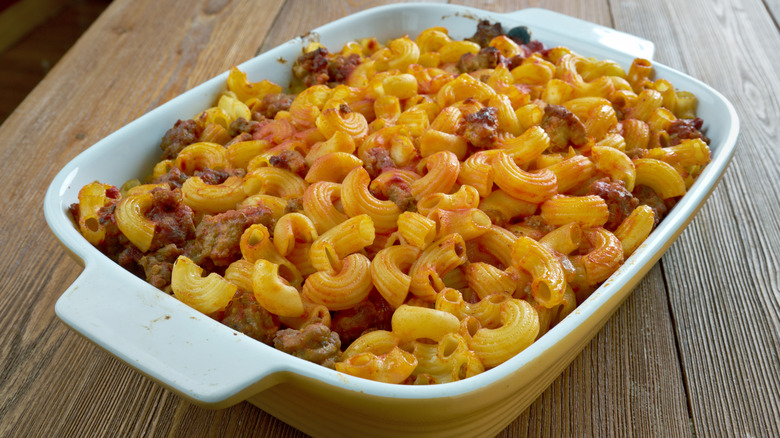
Another miracle of non-perishables, the Johnny Marzetti casserole is a classic from Columbus, Ohio with mythic origins but timeless flavor. There isn't precise information on who the casserole's namesake was, nor how exactly he might have been tied to the recipe. Local lore suggests the original Johnny Marzetti might have been a family member connected to a Marzetti Italian restaurant in the city in the late 19th century or perhaps a restaurateur with numerous operations dating back even earlier. Whoever he was, Johnny Marzetti's casserole became available across the city and, in the 20th century, was a local favorite in restaurants, diners, deli counters, and especially lunches in school cafeterias. A timeless local staple, the casserole was well-loved for its simplicity. Though it isn't something well-known outside of the Columbus area, it still maintains associations as a cult favorite in town.
In its classic form, the Johnny Marzetti casserole's ingredient list starts with macaroni and a can of red sauce from the pantry. These then get mixed with ground beef and topped with cheese. Other vegetables might get added in when time or resources allow, and the whole assembly gets baked together in a casserole dish and then served up in large squares a bit like lasagna. With its peak popularity culminating in the 1950s, this casserole does have a nostalgic flair. While not consumed quite so regularly anymore, Johnny Marzetti's convenient tastiness merits testing well beyond state lines.
Succotash
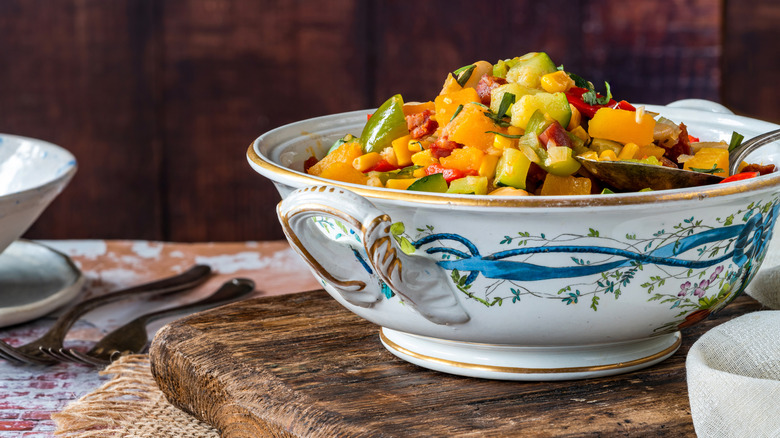
With its origins in Native American cuisine, succotash comes from the Wampanoag word "msíckquatash," which was a Wampanoag staple served frequently in the region that has since become New England. It was likely among the dishes served at the first Thanksgiving shared with English colonists in 1621. In its original form, this hearty vegetarian meal consisted of a mixture of corn and cranberry beans, and it could be served as a side dish or enjoyed on its own. Today, the cranberry beans are commonly replaced with lima beans.
Though it came from New England, succotash found great popularity in the Midwest in the 19th century and maintains an association with this region of the U.S. today. In 1870s Chicago, it was even available pre-prepared in cans, though the mixture could just as easily be prepared from a combination of canned beans and corn. Succotash didn't enjoy mainstream popularity until the 20th century, however, when mass food shortages struck the country. Navigating World Wars and the Depression, this dish provided a hearty, nourishing meal while making use of ingredients that easily maneuvered their way around rationing. Recipe adaptations have gone on to vary, and accordingly with the seasons, succotash can be more of a salad or a stew. The original concept of sweet corn and beans can be prepared with fresh ingredients in summer or from canned veggies on stock in the pantry year-round. Other more elaborate versions have commonly added potatoes, peppers, tomatoes, okra, and sometimes meat (commonly salt pork).
Pineapple upside down cake
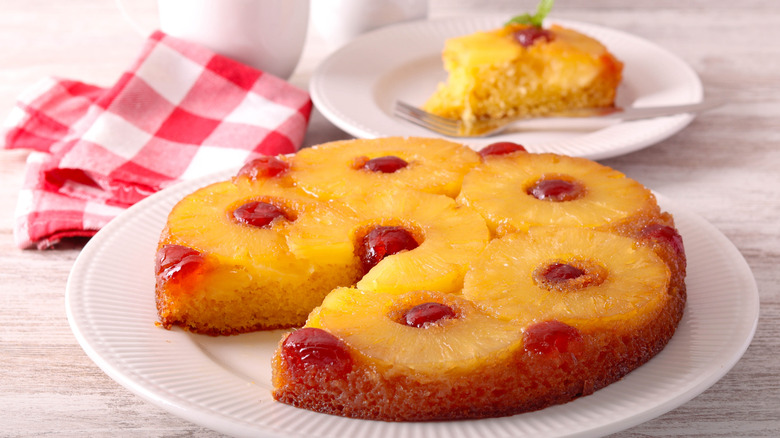
Another dessert that can be made entirely from the pantry stock, the pineapple upside down cake is a treat dating back to the 1920s. Defined by rings of canned pineapple and the maraschino cherries that went in the center, this cake made use of two canned fruits, which became popular and widely consumed in this decade. Where the original recipe came from is somewhat up for debate, as the pineapple upside down cake's popularity has competitive origins. The recipe really took off after 1925 when the Hawaiian Pineapple Company, which would later become Dole, placed ads in women's magazines asking for creative uses for canned pineapple. Though one winner was decided amongst them, there were 2,500 pineapple upside down cake recipes submitted to the contest, suggesting that this was a known and popular dessert at that time.
With its recognizable pattern of pineapple rings and bright, red cherries, the pineapple upside cake had a renaissance in the 1950s, following the trend of convenience foods. The fact that this cake could be whipped up with ingredients exclusively proffered from canned or jarred pantry items fit in well with the mid-century, postwar mentality of convenience and efficiency. Now with vintage associations, this cake isn't something that appears so often, but it's ripe for a comeback. The pineapple upside down cake's convenienience and colorful burst of sweetness is worthy of a return to potlucks, picnics, tea parties, and family dinners, or simply an easy-to-whip-up treat — just beacuse.