

10 Unique Types Of Pears And How To Use Them
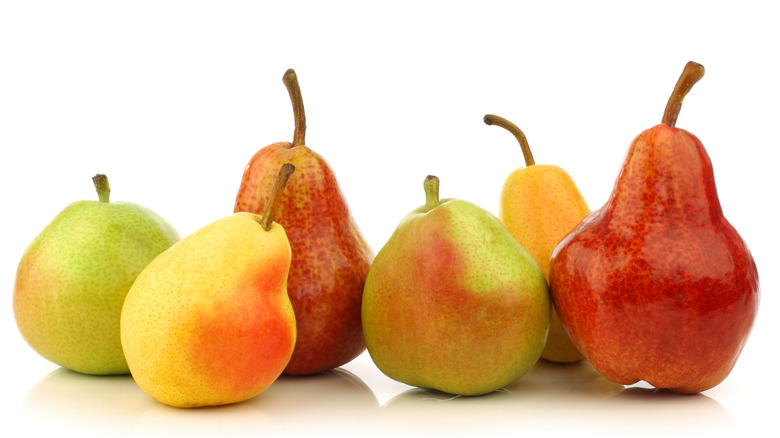
It's hard to compete with America's most readily available fruit, but that's precisely what pears do when they go head-to-head with apples each year. Due to their similar growing conditions, harvest times, and nutritional benefits, the two fruits (which are close relatives, as they both belong to the Rosaceae family) are often coupled and compared. Given apples' ubiquity in autumn, pears are often seen as secondary — but they really shouldn't be.
It's true that pears are trickier to cultivate and transport than apples, and thus less widely grown and marketed in the U.S. Pears are also less uniform in shape, and many have a thin skin that easily bruises, which can deter consumers. They have specific ripening requirements (don't put unripe pears in the fridge!) and trees take longer to fruit, but anyone who's ever bitten into a perfectly ripe pear will tell you that it was absolutely worth the wait.
A great pear can be bright green, or red, or amber-colored. It can be soft and sweet, or crisp and refreshing. It can be eaten fresh, or baked into outstanding fruit pies. It can even go savory, like in fried pears with roasted red onions and crispy Puy lentils, and (fun fact!) it'll provide you with more dietary fiber than any apple could. When chosen and prepared correctly, pears offer more complexity and versatility than other fruits, as evidenced by these 10 unique types of pears. Here's how to use them for maximum deliciousness, this fall and beyond.
1. Bartlett
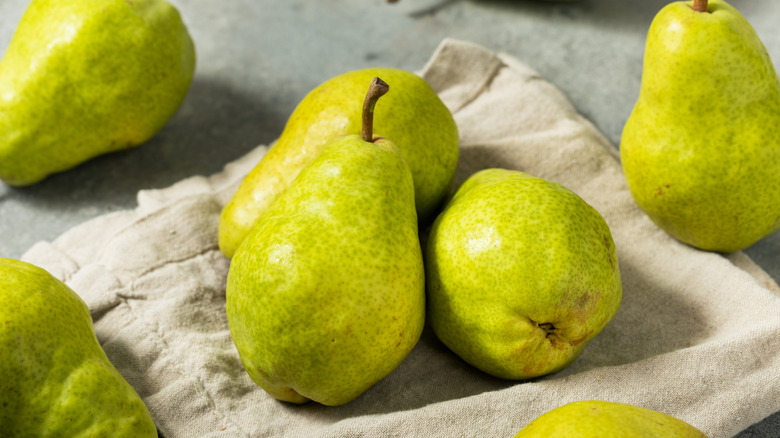
Called the Williams pear in other parts of the world, the Bartlett is our most commonly eaten variety. It was brought to the U.S. from Europe around 1799, and adapted quickly to growing conditions in Massachusetts. Today, it remains known for its distinctly "pear-like" characteristics: a fruity aroma, a rounded bell shape, and a harvest time of late August to early September, with Bartlett pears typically available through much of winter.
The Bartletts in grocery stores are most often a glossy green (unless they are Red Bartletts, different only in color) but they will ripen to a yellow hue at room temperature. Contrary to popular belief, there is no "right" time to enjoy them. It really depends on your personal preference. If you want your pear to be crunchy and tart, go ahead and eat it while it's still green. If you're looking for a softer texture and deeper, sweeter flavor, wait until the skin has yellowed and gives a little when pressed. Keep in mind, though, that an overripe Bartlett will eventually turn gritty.
Bartletts are the pear traditionally used in canning recipes, like this one for pears in ginger syrup, and are known to stand up particularly well to processing. They make fantastic sauces, preserves, and dried snacks, but are not typically recommended for baking as high heat will turn them to mush.
2. Bosc
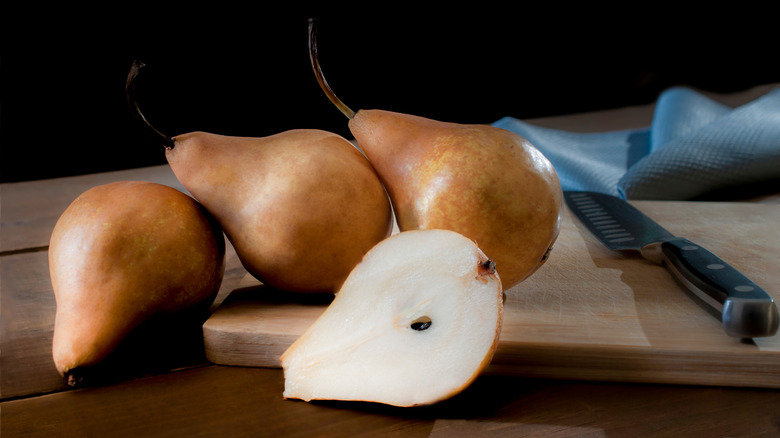
The Bosc is a later-season variety, known as a winter pear. It's typically in grocery stores from September through May, and easy to recognize for its bronze color and iconic shape. Bosc pears have rounded bell bottoms and slim necks, and their skin is russeted by a naturally occurring phenomenon that roughens and darkens the skin of the fruit, adding a unique layer to the texture and flavor, as well as a prolonged shelf life.
Bosc pears sweeten earlier in the ripening process and, compared to early summer varieties, they're exceptionally hardy. Their thicker skin protects a firm (yet still tender and juicy) flesh that can withstand temperature changes without losing its shape. The flavor of Bosc is sweet and pear-like, but also complex, with woodsy and honey notes.
While Boscs can be enjoyed fresh, their russetting does create a controversial eating experience. Whether or not you like the mouthfeel of the thickened skin, you'll surely agree that Bosc pears are excellent baked and poached, especially in the fall, when their subtly spicy notes are enhanced by the classic flavors of the season. Chai-poached pears make an elegant holiday dessert out of Boscs, as do baked pears in red wine and port wine glaze.
3. Forelle
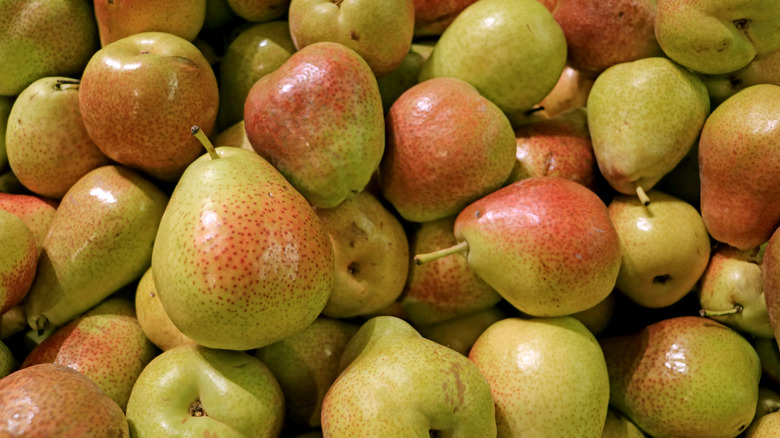
The word forelle means "trout" in German — a namesake that might seem odd, until you see the fruit for yourself. Forelle pears have a pretty, speckled skin that does, indeed, look a little bit like a trout's scales. The blush-colored pattern becomes more pronounced as the pears ripen, and the skin turns from green to golden-yellow. The effect is quite startling, especially given the diminutive dimensions of Forelles. Their compact size makes them an easy fruit to enjoy on the go, and the crisp, juicy flesh is delicious fresh. However, they're not often used in recipes for the same reason: They're small, so you'll need more of them.
If you're looking to go beyond simple snacking, consider Forelles for your next cheese or charcuterie board. Their colorful appearance makes them an attractive addition to any spread, and the fruit remains firm when ripe, so they're easy to slice for sharing. The sweet-tart flavor pairs well with salty ingredients like cured meats and aged cheese, making for a surprising treat. Unlike more common pear varieties, Forelles remain unfamiliar to many. Find this petite heirloom variety in stores from October through January, and enjoy introducing your guests to a new favorite fruit.
4. Concorde
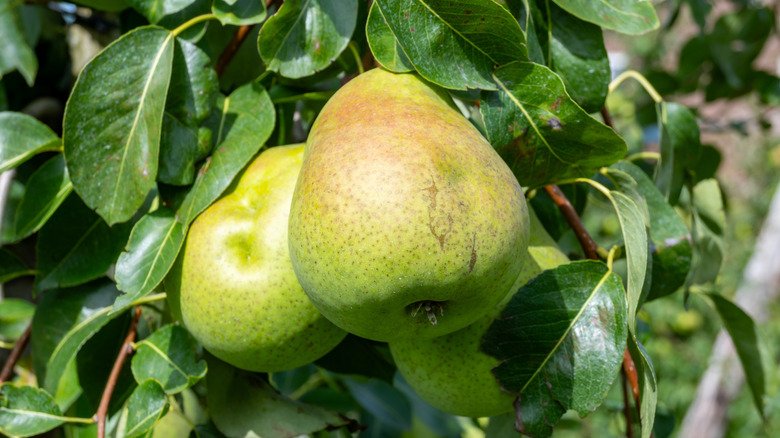
The Concorde pear is a hybrid cultivated to combine the best of other varieties — namely, the hardiness of Conference, and the elegant sweetness of Doyenne du Comice. It's easy to grow and slow to brown, and its dense, firm flesh holds up well to processing and storing. The flavor is decidedly sweet, with notes of creamy vanilla, so Concorde pears are most often used in dessert preparations, both raw and cooked.
Despite its many positive attributes, the Concorde pear is harder to find than other varieties. This is probably due to low awareness, both of the variety and the russetting that leaves its green skin uneven in color. The latter is a naturally occurring phenomenon that does not harm the fruit, but it does alter the appearance in a way that causes both consumers and suppliers to pause. As the public becomes more educated on (and rightly enamored with) pears, varieties like Concorde are growing more popular, and crops are increasing accordingly. Concordes from the Pacific Northwest (where most American pears are grown) are usually available starting in the fall, and sold out by December. Get them while you can, and use them as you would Bosc in delicious fall fruit desserts.
5. D'Anjou
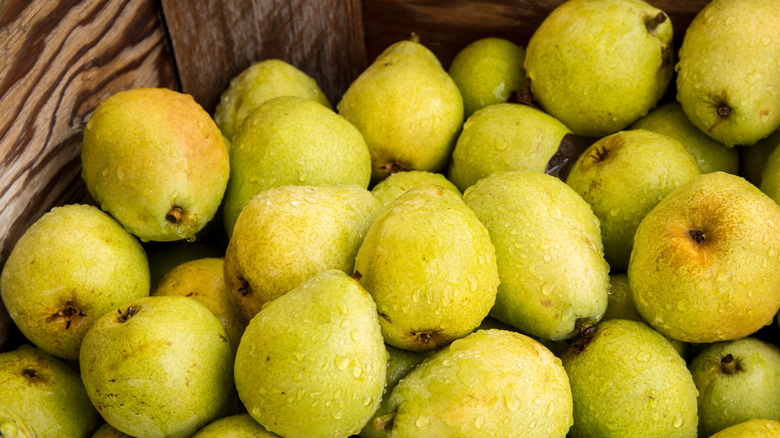
D'Anjou (often shortened to Anjou) is the crispy, crunchy counterpart to soft, sweet Bartlett, and not far behind on the list of America's favorite pears. They're originally from Belgium, named for the growing region in the Loire Valley of France, and now also cultivated in the Pacific Northwest. D'Anjous come in both Green and Red varieties, which taste pretty much the same, and both are remarkably available to enjoy for most of the year (roughly from September to June or July.) Their exceptionally long shelf life makes them popular among chefs, as does their general reliability and versatility.
Hailed as an all-purpose pear, with its pleasantly crisp texture and balanced flavor, D'Anjou can be enjoyed in a number of ways. It's a great snacking pear, alone or paired with cheese, and its firmness holds up well to sautéing, poaching, and baking. It would be the perfect variety to use when experimenting with grilling pears, and would also be excellent in cranberry pear chutney. Don't feel like cooking at all? Simply grab a ripe D'Anjou pear and take a juicy bite — or pop a handful of pear-flavored jelly beans into your mouth. Jelly Belly's signature Juicy Pear flavor is reportedly made with D'Anjous.
6. Comice
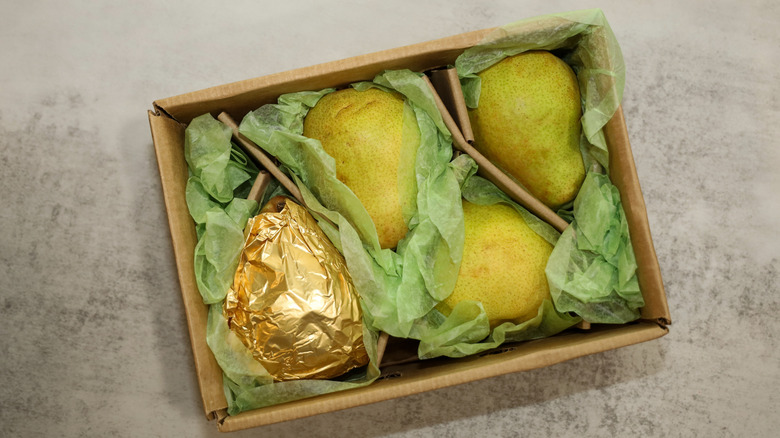
Famous for being the foil-wrapped fruit in Harry & David gift baskets, Comice pears are sometimes called "Christmas pears," though their full name is Doyenné du Comice. They have a reputation for being both fancy and finicky, with a luxuriously creamy flesh that can easily bruise once the fruit is ripe, and the skin has changed from bright green to slightly yellow. Handle Comice pears with care, and you'll be handsomely rewarded.
Along with its exceptionally sweet, buttery flavor and smooth, succulent texture, Comice stands out for its size. These pears are noticeably larger than other varieties, which feels appropriate, given that they're often more expensive. Comice pears are typically found prominently displayed around the holidays, especially in specialty markets, but they can be available in grocery stores as early as September and as late as February, depending on your location.
If you're lucky enough to get your hands on some Comices, don't bother processing or cooking them. These aren't pears to freeze for later, either. They're far too juicy to be tampered with, and are instead best enjoyed freshly sliced, served on their own, or paired with an equally decadent and soft cheese, like Camembert or Brie.
7. Seckel
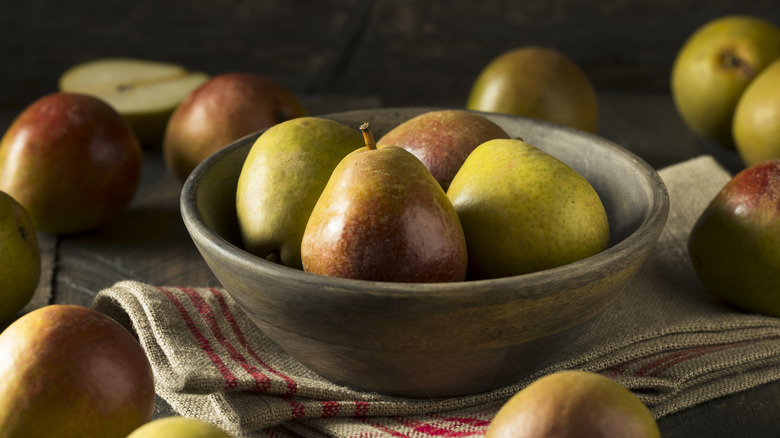
Seckels are probably the smallest commercially grown pear on the market today, and for that reason, they're easily overlooked, or dismissed as not fully grown. However, if you're able to see past their miniature size, you'll remember that good things really do come in small packages.
Measuring about two inches tall, with a skin that varies from olive green to deep maroon, the Seckel pear is cute. It's also tasty, with a concentrated pear flavor so sweet that it's been given the nickname, "sugar pear." Its texture is super creamy, almost meltingly so, and its fruity aroma features a distinct spicy note sure to make mouths water. Additionally, Seckels are a solid choice for the home gardener, as they grow prolifically on trees that are partially self-fertile.
The snack-sized Seckel isn't great for processing, purely because its tiny proportions would make that a hassle. Instead, it's best enjoyed in the ways it's uniquely well suited to: as a delightful edible garnish, canned whole to make beautiful gifts, and tucked into a lunchbox to be eaten (in just a few bites!) on the go.
8. Starkrimson
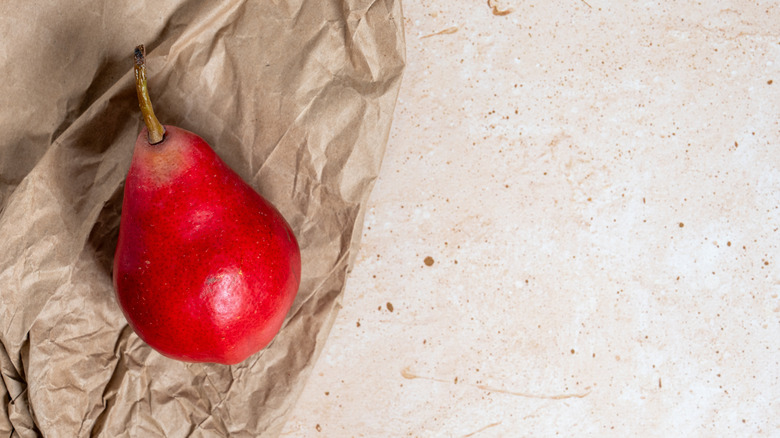
Named for Stark Brothers Nursery (who first discovered this pretty pear in the 1950s) and the brilliant red hue that sets them apart, Starkrimson pears make a splash on the plate. Their striking color, smooth texture, and mild, juicy sweetness make them a great pear for summertime snacking (the Starkrimson harvest begins in August) and for dressing up salads, both savory and sweet.
Along with their beautiful shade of red, Starkrimson pears are easily identified by their stems, which tend to be thicker and stockier than other varieties'. They're grown widely around the Pacific Northwest, and commonly available in many grocery stores, where they're often labeled as Red Pears. While they can be used in cooked preparations, and their mildly sweet flavor works well in desserts, this all-purpose pear is preferred raw and sliced, served in ways that allow the brilliant, jewel-toned skin to shine. Once you've had a stunning Starkrimson pear salad with leafy greens, strong cheese, and candied nuts, you won't want to go back to using ordinary green pears. To make the most of your bounty, store ripe Starkrimsons in the fridge for up to three weeks. At room temperature, they've only got a few days before they become overripe.
9. Happi
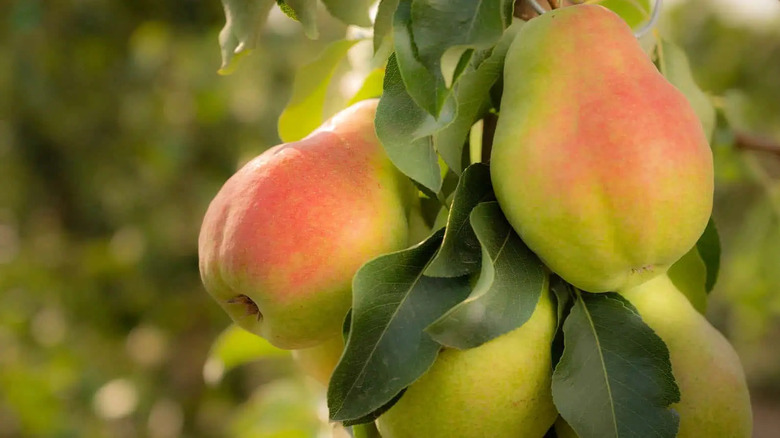
It's not often that we get a new pear on the market, so Happi is a happy surprise. It's a proprietary variety from Stemilt orchards in Washington State, developed over time to solve several pear-growing and -eating problems. For one thing, Happi pears are grown vertically on trellises, allowing the farmers to have more control over the harvest. Their trees are naturally resistant to common pests and, once Happi pears are picked, they boast a longer shelf life and better durability than other varieties. In an industry grappling with unique challenges in production and transportation, Happi pears are a welcome addition. If you're someone who avoids pears because of their textural imperfections or inconsistent quality, these might just change your mind.
Take a bite of this new pear, and you'll be impressed by its flavor and texture, and the fact that you no longer have to choose between them: Happi is at once sweet and zesty, crisp and juicy, offering the best of both worlds. The riper it is, the sweeter a Happi pear will taste, but you'll also notice citrusy and even tropical notes. A greener Happi will be more on the crunchy side, while a yellow pear with a pronounced blush will be softer and juicier.
While Happi is categorized as an all-purposed pear, and can be used in cooked preparations, it really shines when it's raw. Slice one and add it to a cheeseboard or salad to enjoy a new pear-eating experience.
10. 20th Century
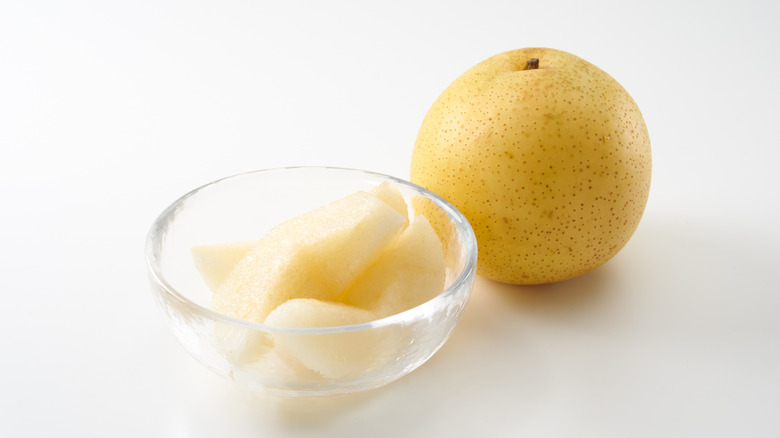
Of the many Asian pear varieties, 20th Century (or Nijisseiki) has become the most popular stateside, for growing at home and also purchasing from grocery stores, where the fruit's apple-like shape is commonly found encased in styrofoam netting. This packaging is not merely for presentation — the golden skin of the 20th Century pear is particularly delicate, so producers take great pains to protect it.
Bite into this unique pear variety at peak ripeness, and you'll be struck by how juicy it is. The riper a 20th Century is, the darker its golden yellow skin will be, and the sweeter its refreshing, almost floral flavor. With a distinct tartness as well as vanilla and butterscotch notes, this pear has a well-balanced flavor profile. Give one to someone who says they don't like pears, and see if the 20th Century doesn't change their mind.
In general, Asian pears are best eaten fresh, as their high water content forces them to lose their shape when exposed to heat. That doesn't mean that 20th Century pears are never used in cooked preparations. In fact, in Asian countries, puréed or grated 20th Century pears are a common ingredient in Bulgogi recipes, as well as other savory sauces and marinades.