

Stop Making These Common Mistakes At Seafood Buffets
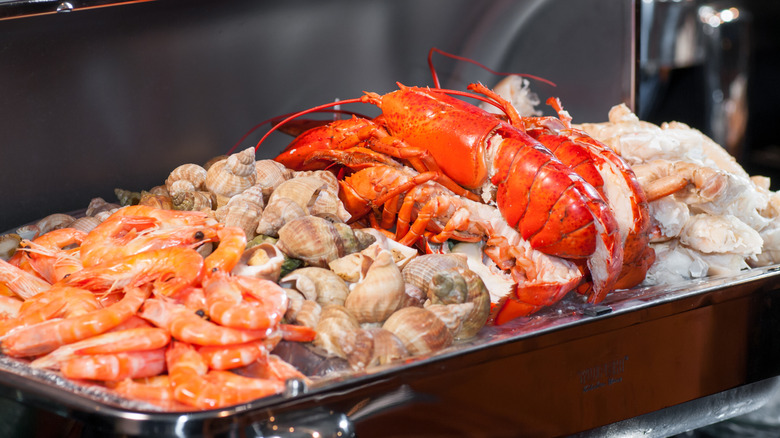
There's something special about seafood buffets. With a smorgasbord of fresh, vibrant seafood and fish dishes that offer a bountiful selection of items for a set price, including options that can typically be incredibly expensive when ordered on their own, a good seafood buffet can be incredible. Generally speaking, they also have a slightly lighter-touch feel than other buffets, and a certain level of class you might not find in broader versions of the same dining style. They demand a kind of elegance from their diners. So you'd better make sure you're getting things right.
Like any buffet, conducting yourself at a seafood buffet is essential to both get the best experience and ensure you're not ruining it for others. However, with buffets that specialize in ocean-sourced produce, there are also some specific rules you should follow, and mistakes you shouldn't make. Seafood buffets usually have raw items that can be hazardous if not examined correctly, as well as pricier, harder-to-find dishes which can quickly be a source of stress. Their pricing structure can also be different than other all-you-can-eat offers, and if you fail to figure out exactly which dining session you're taking part in, you can quickly be disappointed. Next time you head out for a seafood dinner, keep these things in mind.
Taking all the crab legs
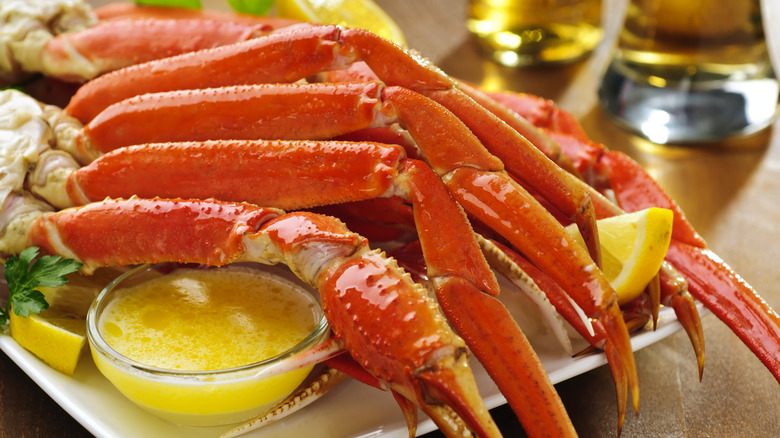
We know, we know — the crab legs are the main event at a seafood buffet. This dish can often be a big draw for customers. Many might otherwise not be able to justify ordering them due to their high price, and cooking crab legs at home might not be an option. So it's probably no surprise the crab station can often be a busy place, particularly if you're paying a higher cost at a buffet that only serves them on certain nights. Remember, though, that rushing to the crab tray when they're restocked and piling your plate high isn't going to win you any new friends, and it may even result in conflict. We wish this was an exaggeration, but it's not: Fights over crab legs at seafood buffets are depressingly common, with people loading up their plates at the expense of others' experiences.
While we understand the appeal of crab legs at a buffet, we also know you'd probably rather avoid a fistfight. Remember, moderation is key, and everyone's eating from the same tray. Only take as many crab legs as you can handle, to ensure other customers get their turn. It's a buffet — there will always be some more coming, and you can always ask the staff when they'll next be restocked, so you don't miss out on the next round.
Using the same serving utensils and plates for different types of seafood
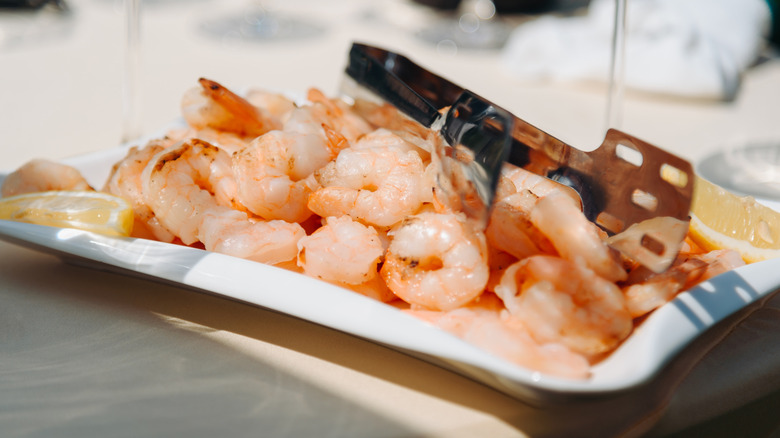
Seafood buffets typically contain more raw items than non-seafood ones, like oysters and clams (and while ceviche is technically cooked, it counts here too). When these are mixed in with cooked foods, they can present unique cross-contamination risks. While cooked foods will generally have had any bacterial or infection risk eliminated by heat, raw seafood naturally won't have gone through the same process. While seafood buffets work hard to ensure their food is as safe as possible, you can never be 100% sure. As such, when raw seafood comes into contact with cooked seafood, things can quickly become dangerous.
Because of this, minimizing cross-contamination wherever possible as a customer is essential, and you should use separate utensils and plates for different food types. Using utensils for both raw and cooked foods can spread bacteria from one to the other, and spooning new items onto an old plate may do the same. Remember, too, it might not be the food that's contaminated; if you're unwell, you may be inadvertently causing others to become ill after your mouth comes into contact with your fork and then your plate. Every time you've finished with a plate of food, make sure you grab a fresh one, and don't mix serving utensils between dishes.
Assuming raw seafood is safe, just because it's on ice
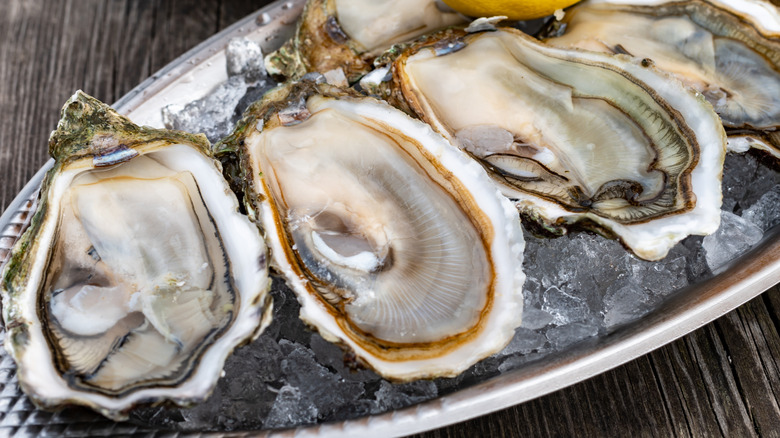
One of the main draws of seafood buffets is often their raw food stations. These areas, which may contain fresh oysters, sushi, and sashimi, can represent the epitome of class and fine dining. They're often artfully displayed on ice, both for aesthetic appeal and to keep the food chilled. However, appearance isn't everything. Raw seafood should be kept cold, but ice alone may not guarantee it's sufficiently chilled to avoid contamination, particularly if that ice has started to melt. Oysters should stay below 40 degrees Fahrenheit until served, and it might be prudent to check the display to see if there's a temperature gauge. Oh, and if it isn't on ice, you should run a mile: That's a major buffet red flag.
It's worth remembering, though, that seafood being sufficiently chilled doesn't mean it will be safe. Oysters can still carry pathogens like Vibrio bacteria, which may cause serious illness. Troublingly, oysters with Vibrio bacteria look and smell the same as non-contaminated ones, which is why some health bodies assert the only safe way to consume them is by cooking them.
Other seafood items, however, may look or smell different when past their prime or unsafe, and so it's important to rely on your senses at a seafood buffet. Stay aware of any sour or ammonia smells coming from the fish or seafood, as well as noticeably slimy or gray appearances. Trust your instincts.
Forgetting how to eat different types of seafood
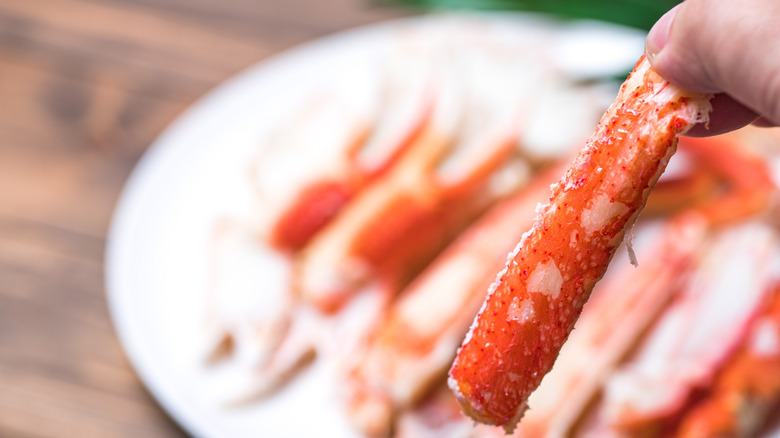
Seafood buffets are an opportunity to try a load of things you might not normally eat, but you want to make sure you get your money's worth, right? If you're spending top dollar on a buffet loaded up with lobster and Dungeness and king crab, failing to make the most of the experience by eating them properly will leave you feeling cheated. Conversely, if you're going to a seafood buffet for the first time, not doing your research ahead of time might cause you to feel adrift and play it safe, missing the best of what's on offer.
Before you head out to the buffet for the night, make sure you do a little research on items you may not have eaten before, and how to consume them properly. Take oysters, for example: You shouldn't swallow them whole, but instead chew them lightly a few times to release their full flavor. Crab legs, meanwhile, require a certain amount of dexterity to get all the meat out, and you may walk straight past the crab crackers and crab picks needed to get to all of their goodness. Same goes for lobster, too. Oh, and don't be afraid to get messy with seafood. It's all part of the fun.
Taking more seafood than you can handle — and eating it too quickly
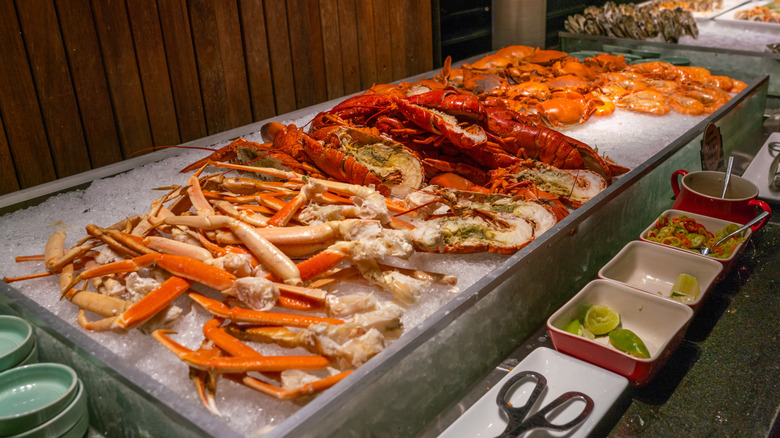
Seafood buffets aren't that different from regular buffets, and it's easy to get carried away. When you have a huge selection of all the seafood you've ever dreamed of in front of you, it's tempting to load up your plate with way too much, and start eating as quickly as possible. The problem, though, is this can do two things: It can ruin your overall experience, and it can contribute to wastage of some fairly expensive food. At a seafood buffet specifically, loading your plate with way too much can cause disparate dishes to mingle unpleasantly, with delicate raw seafood sitting next to strongly flavored cooked options, creating clashes.
The solution? Take it slow. With each trip, pick up just a few items, and give yourself time to eat them, so you can fully enjoy the craft in every dish and the unique flavors of each type of seafood. A good tip is to use smaller salad plates instead of the standard-sized ones, as this will create limits on how much food you can get every time. Consequently, you'll avoid overeating, which can make the rest of your night very uncomfortable.
Forgetting that price can often dictate quality
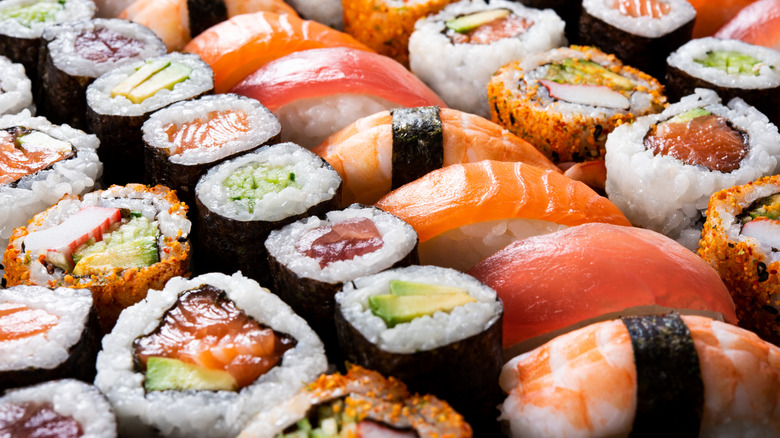
Of all the seafood buffet red flags out there, price might be one of the biggest. Some types of seafood may be cheaper than others, but a suspiciously low overall cost at a seafood buffet can either mean the selection is going to be poor, or that the food's quality won't be up to scratch. The difference between cheap, inferior-quality seafood and the more expensive good stuff is vast, and at a buffet, the former is immediately noticeable. What's more, a lot of the time, it's hard to cook cheap seafood in a way that makes it more palatable, because the food's success relies on its freshness and delicacy. Drowning it in heavy sauces will just make everything worse.
Additionally, it's worth remembering that when you opt for cheap seafood, you may well be funding a larger ecosystem of unfair wages and worker exploitation. While it's hard to identify the exact origins of every type of seafood at a large, sprawling buffet, as a general rule of thumb, the more expensive it is, the better it will be. You don't have to go for the priciest seafood buffets out there, but these aren't the kinds of places where you should be skimping on cost.
Assuming everything's included in the base price
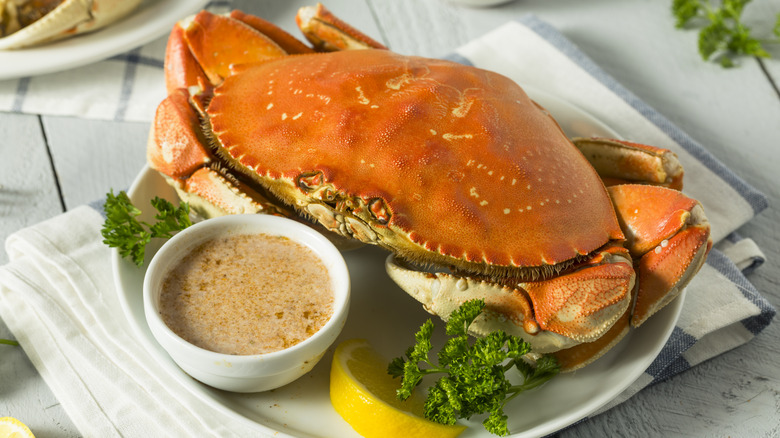
Seafood buffets (and regular buffets with specific seafood options) can operate slightly differently to non-seafood-focused ones. Because the star attraction of these eateries can often be specific types of crab legs or lobster, they may only be available if you're willing to pay a higher price. From the restaurant's perspective, this makes sense: It costs way more for them to buy certain ingredients and types of seafood, and customers will naturally eat more of them, so they need to ensure they're not making a loss.
The problem for customers, though, is these add-ons can sometimes be difficult to spot. As a result, a buffet may be advertising Dungeness or snow crab legs, and you may assume it's all included — before realizing you have to pay a lot more for access. Because of this, it's best to do your research beforehand to be completely certain what you get for the base price, and whether you need to pay more for add-ons. Bear in mind, too, the price difference between regular seafood buffets and ones with rarer ingredients can be high. At Crab House NYC, for example, adult diners will pay $90 for a standard buffet, and $125 for the lobster buffet.
Not knowing which days serve which seafood
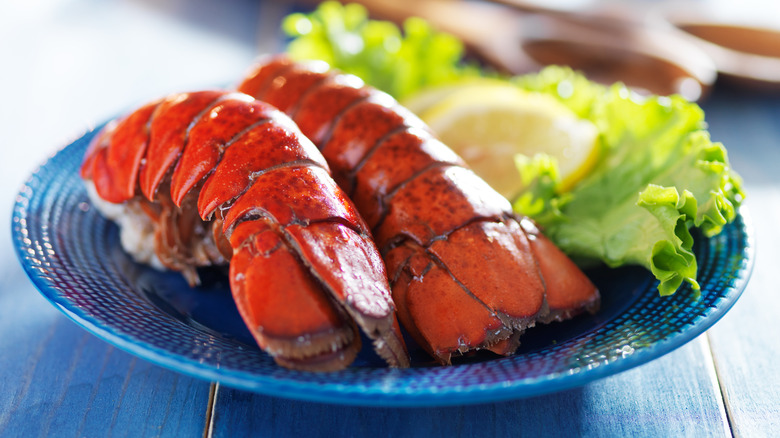
Seafood buffets are built slightly differently to other restaurants. Barring daily specials and food shortages, you can generally assume most eateries will serve what's on their menu seven days a week. At seafood buffets, however, certain items may only be served on certain days. This may be for supply reasons, to ensure their food is as fresh as possible, or it could be to drive traffic on specific days.
Either way, though, you shouldn't assume the dishes you want will automatically be there on the day you're visiting, particularly if you're excited about fancier items like lobster or crab legs. It's therefore important to double-check the kind of buffet that will be running when you're planning on being there, and if you'll get everything you're looking for. Plus, remember that certain non-seafood buffets may switch to being seafood-specific on certain nights, so this can also work in the opposite direction — you may be excited about having access to different kinds of meats, only to find the tables are covered in sashimi and grilled salmon.
Assuming you can take some seafood home
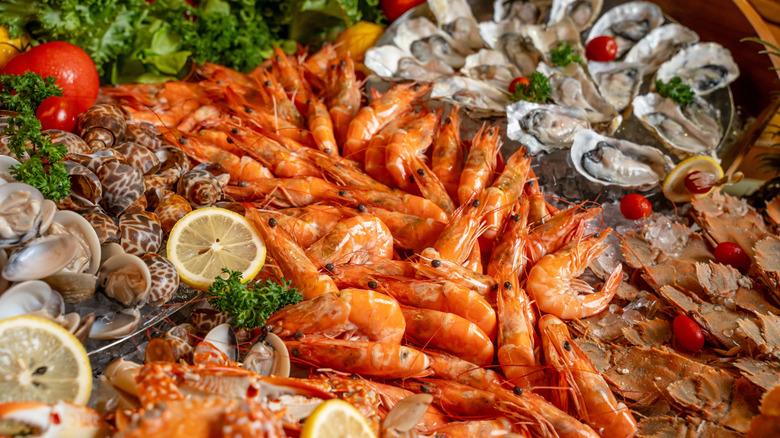
Seafood buffets are, in theory, unlimited — but you should remember that this only applies within the establishment's walls. Other restaurants may permit you to take your leftovers home, but at seafood buffets (and regular buffets), it's a serious faux pas. Many seafood buffets will specifically state in their terms of service that you can't remove food from the restaurant, or wastage charges may apply for leftovers, implying you can't take them home. Despite this, some people still think it's acceptable to do so, and perhaps worse, bring their own containers to siphon food into and out of the door.
Doing this is a quick way not only to irritate the buffet staff, but also to get a red mark next to your name. The whole point of buffets is you can eat as much as you want, but that doesn't extend to additional meals beyond the slot you've paid for. Furthermore, leftover seafood can often be significantly worse than when it's fresh, so you're probably not going to enjoy it as much if you did take it home (and, at worst, it could make you sick). Don't cause a problem for everyone; just leave it on your plate.
Filling up on carbs and cheap sides
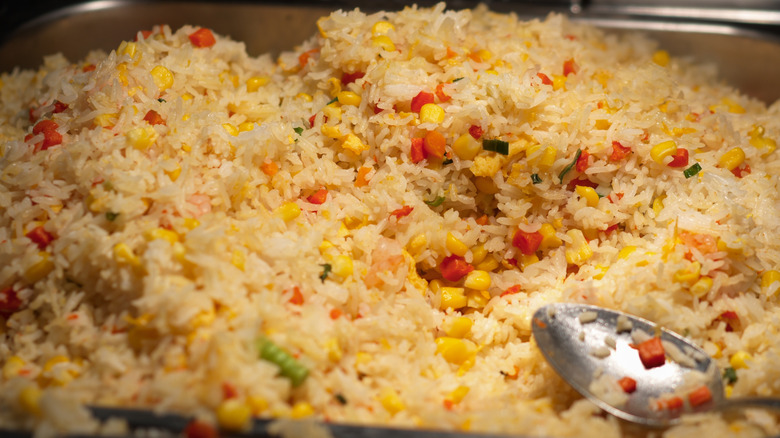
Bread, rice, pasta, noodles: They're all items buffet owners love. Why? Because they can stop customers from eating too much of the other stuff. Basic carb dishes are generally way less expensive than fancier seafood items, and as such, buffets can put these front and center, so you fill up your plate and your stomach before you eat too much shrimp, sushi, or lobster. When you do this, though, you can come away feeling like you didn't get what you paid for, and lamenting the fact you had no room in your belly to try the crab legs you were dreaming of.
The solution? Come to them last. When you enter a seafood buffet, prioritize the most expensive items first, and avoid carbs as much as possible before you've had your fill of the former. If you do want some rice or mashed potatoes to go with your meal, only add a little to your plate at a time, so they don't dominate. The same goes for cheaper, non-seafood sides like vegetable dishes and salads. They may be nice, but they can take up much-needed plate real estate. These are secondary items, and you should remember what you came for in the first place.
Not doing a walkthrough of the buffet before diving in
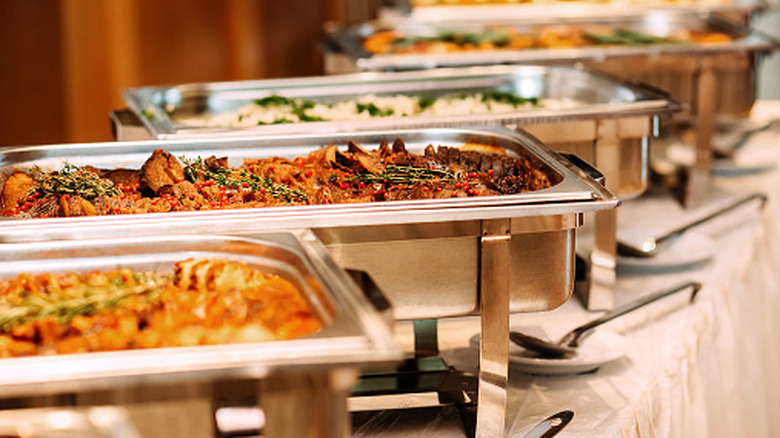
We all know the drill at a buffet: Once we're seated, we put in our drink orders, look at our companions, and promptly stand straight back up to grab our first plate. Before you start loading up your dishes with food, though, you should take a beat to look at everything available.
Seafood buffets can be overwhelming places with dozens of separate stations, and if you're not careful, you'll miss half of them by starting at the beginning and having a full plate by the fifth tray you arrive at. Doing this can also mean you miss fancier, more expensive items like crab legs or lobster, which may be intentionally tucked away at the back to prevent everyone from getting there first.
Many pricier seafood buffets may also have cooking stations or freshly prepared sushi, which offers you more bang for your buck and a better eating experience. Patience is a virtue, and the few minutes you take to do a brief walkthrough may be the difference between a subpar meal and an exceptional one.