

9 Signs You May Need A New Refrigerator

Refrigerators are one of those household fixtures nobody really thinks about most of the time. You store your favorite unsalted butters for baking and the sweet tea you crave on a hot summer's day inside to keep them cool, but there's really nothing to it otherwise — until something goes wrong. When a refrigerator malfunctions, it can be a disaster for a variety of reasons, not least of which is the potential to cost you significantly. You may well find yourself wondering if a faulty refrigerator necessarily has to mean buying a whole new unit.
Having a properly running fridge is crucial for many reasons. Maintaining the right temperature prevents foodborne illnesses that make your family sick. Fridges also generally keep your food good for longer, which protects the (ever-growing) financial investment of weekly food shopping. But not every issue necessarily requires a complete replacement. Sometimes there's an easy fix for problems you have with your refrigerator, like replacing the seal around the door. So how do you know when it's actually time to throw in the towel and buy a new one? Here are nine signs that repairs won't cut it and you need a new refrigerator.
1. It's Nearing (Or Already Past) It's Average Usable Lifespan

The older your refrigerator is, the more likely you'll need to replace it rather than repair it. That's because your fridge is more likely to have additional (or repeat) problems as it gets older, and the parts that keep it running naturally wear down. Per the United States Department of Energy, the average lifetime of a standard-sized refrigerator is 14.3 years, although the usable lifespan of any appliance will depend on several considerations, including the brand.
The good news is, if you've recently purchased a new fridge or have one currently running fine, there are a few things you can do to help protect that investment. Cleaning your door gaskets, condenser coils, and vents at regular intervals throughout the year is a great start. Being careful not to overload your refrigerator is another step that seems small but can make a big difference. Whenever possible, preventing an issue from arising is much easier and more cost-effective than trying to fix it once it happens. If a minor issue does arise, though, be sure to get it repaired promptly.
2. Your Repair Bill Is More Than Half The Value of Your Fridge

Regardless of age, any major repair bill that exceeds roughly half the value of your fridge warrants a replacement instead. At that point, even a few small repairs down the road can tip the scales to where you end up paying more on repairs than the fridge is worth. This is a consideration many professionals quote when it comes to all major appliances.
While it sounds straightforward, there is some nuance to consider when using this formula to answer the repair versus replacement debate, the biggest of which is depreciation. Every major appliance you own will drop in value each year you own it, and although the number can vary, insurance company guidelines place it at roughly 6.7% a year. There are tools online to help you determine a refrigerator's actual value, based on age, and that number is the one you'll use to consider repair bill costs versus new units. For example, your refrigerator might have cost $5,000 brand new, but after five years it may only be worth around $3,500, so any repair over $1,750 isn't worth fixing.
3. Frost is building up inside the unit consistently
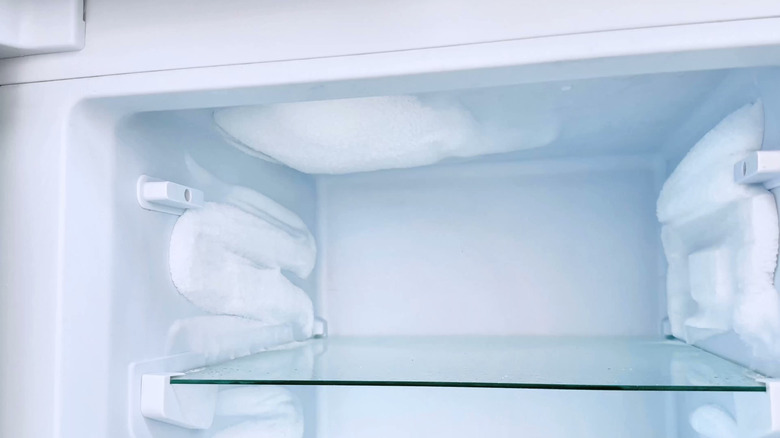
A little frost inside your side-by-side, top, or bottom-attached freezer is considered normal for some models, and isn't cause for concern if it's a small amount or happens once in a blue moon. Even a little occasional frost buildup inside the refrigerator can be normal. But seeing excessive frost anywhere or watching it build up somewhere it never has (especially along the back panel) is a warning sign that something is wrong.
Defrost-system issues and airflow problems are potential culprits which may warrant a replacement on older models, as well as some newer ones. These can be expensive problems to fix, and there's no guarantee the issues won't present themselves again, especially as a fridge ages. On the other hand, frost buildup might also be a door seal problem, which is a fairly affordable fix (and sometimes even an easy DIY for someone with a bit of knowledge). Check the door gasket to see if it's dirty or broken. If it is, you may have found the easy solution. Otherwise, chances are higher that frost buildup is a signal that you need a new appliance.
4. It's Not Maintaining A Proper Temperature
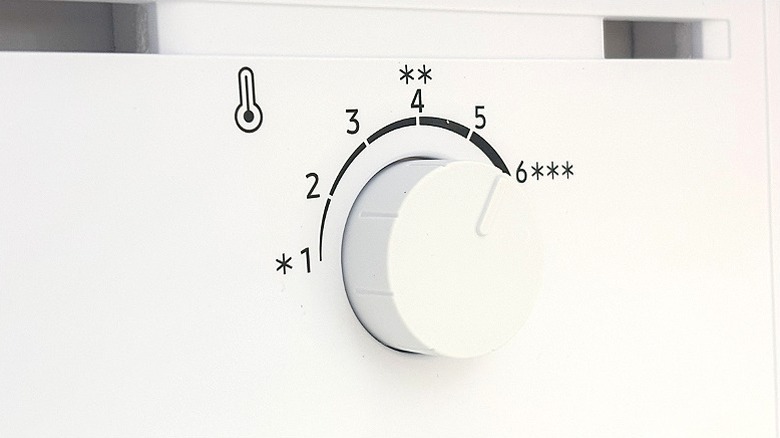
The correct temperature for most refrigerators is below 40 degrees Fahrenheit, because this is where food is safest from bacterial growth and spoilage. A refrigerator that isn't maintaining the proper temperature can lead to many issues, with the most notable being spoiled food. Not only does this increase the risk of foodborne illness, but it can also lead to a lot of wasted money when you have to throw things away to stay safe. With groceries costing more than ever as the years go by, the last thing you want to do is throw away that gallon of your favorite milk or those dozen eggs.
As always, one of the first things you should do is check the door seal to see if it's damaged or dirty. If you notice either issue, replace or clean it, as appropriate. An overloaded fridge or an appliance that was accidentally turned off could also be solvable issues. Unfortunately, there are many reasons improper temperature might mean you'll need to buy a brand new fridge. For example, there might be a problem with the refrigeration system, the thermostat, or the circuit board, all of which can end up being large, costly problems for which replacement is the only feasible option.
5. You Notice A Refrigerant Leak

Refrigerant is the silent hero behind your appliance's cooling process. You might also hear it referred to as coolant or freon (although freon is a brand name for one type of refrigerant, which newer fridge models no longer use). Regardless of what's used, refrigerant leaks are dangerous and can expose your household to toxic chemicals. While this may be a fixable problem in newer, high-end models, older or cheaper fridges with refrigerant leaks will almost always need to be replaced, based on the 50% repair bill rule of thumb.
While seeing liquid pool up beneath or around the fridge is the most obvious sign of a leak, some symptoms are much more subtle. A fridge that isn't acting the way it should (staying cold and keeping food fresh) could be a warning when paired with a few more specific things. A noticeable chemical smell that may be sweet, musty, or metallic warrants an immediate call to a repair tech.
Even worse, you may begin to notice physical symptoms in yourself, your family, or your pets. If your fridge hasn't been running properly and anyone in your family suddenly comes down with symptoms like vomiting, diarrhea, nausea, irregular heartbeat, difficulty breathing, headaches, throat swelling, or vision loss, vacate your home immediately and seek medical attention. Before re-entering the home, you should have a professional check for refrigerant leaks (and, if you have a propane refrigerator, other potential culprits like carbon monoxide or natural gas poisoning).
6. The Compressor is Constantly Running or Cycling Rapidly
The sound of your fridge quietly doing its job quickly becomes a background sound in your home that you don't pay much mind to. It blends with the noises of washing machines running, dishwashers hitting the rinse cycle, and the quiet hum of steadily running electricity all over your home. But when the quiet sound of your fridge suddenly does something it doesn't usually do, you hone in on it right away, perhaps without even consciously realizing it. And the likely culprit of that disruption of sound (aside from whole-house power outages) is an improperly cycling compressor, whether that means running without stopping or rapidly cycling between on and off.
Some causes of incorrect compressor cycling are relatively benign and easily fixable. The door may have been left open too long, there may be too much food in the fridge, or the thermostat may have been set too low. It's also possible there may be excess dust on the condenser coils. But, more concerningly, the compressor may be faulty, or there could be a refrigerant problem, including a leak. These last issues are generally expensive fixes where it makes more sense to replace your refrigerator rather than shell out the money on repair.
7. The Fridge Makes Strange Noises
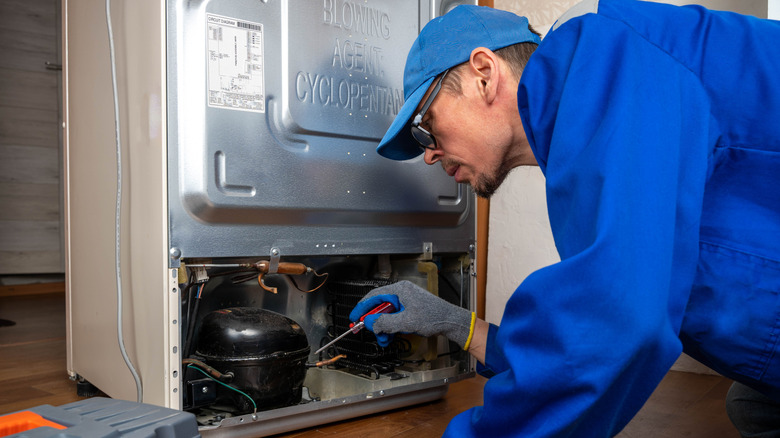
Strange noises go far beyond the improper cycling you might subconsciously pick up on. In fact, the noises can be much more obvious and immediately alarming — grinding, clicking, buzzing, squeaking, rattling, and knocking are all indicators that something has gone wrong. An increase in your refrigerator's "normal" noises could also be a warning sign, whether that's a constant running sound or simply normal running sounds that have gotten louder over time. Keep in mind, though, that strange noises can be caused by a slew of problems, and because of this, it's probably best to call for repairs rather than try to diagnose it yourself.
Since there are so many issues potentially responsible for strange noises, you'll have to look at the cause to determine if you need a new fridge. You can always use the repair bill formula, but if you called a professional to assist, you could ask them for their opinion instead. Appliance professionals can not only help repair your unit, but can also offer practical, up-to-date guidance on choosing a new unit, if you need one.
8. Condensation Builds Up On the Exterior

Condensation building up on the exterior of your unit might look like it's sweating or may resemble the dew on your car's windshield in the mornings. No matter what it looks like, though, there should never be any moisture building up on the outside of your refrigerator, so this always indicates a problem. Like most other signs, there are a few simple potential fixes to try before resigning yourself to purchasing a whole new unit.
Again, that door gasket could be a culprit — particularly if the condensation is building up close to the door seal. As you can probably tell by now, gaskets frequently get worn out as your fridge ages, and are a potential cause of a vast range of problems. But condensation buildup is most often caused by larger issues signaling your appliance is working too hard or isn't able to work hard enough. If that's the case, it may be time to start shopping for a new refrigerator.
9. The Condenser is Running Too Hot

The condenser is one of the most important parts of your refrigerator, and it will always naturally produce a little bit of heat. If you place your hand near the back of your unit, you'll likely feel some warmth. While that's normal, any excessive heat is not. If you place your hand on the sides of the fridge, does it feel truly hot to the touch? That's a warning of a serious issue. Other potential signs that a condenser is running too hot are a burning smell, flickering lights in your kitchen, or circuit breakers that keep tripping.
A too-hot condenser often warrants a replacement fridge, but the most serious concern is that it's also a serious hazard. A faulty fridge can absolutely catch fire, which places your home and family at risk of injury or even death. If you notice these problems, you should either call for repairs as soon as possible to get some guidance, or, in a worst-case scenario, unplug your fridge immediately to reduce the risk of fire and replace the unit.
10. Your Refrigerator Is Covered Under A Warranty or Manufacturer Recall
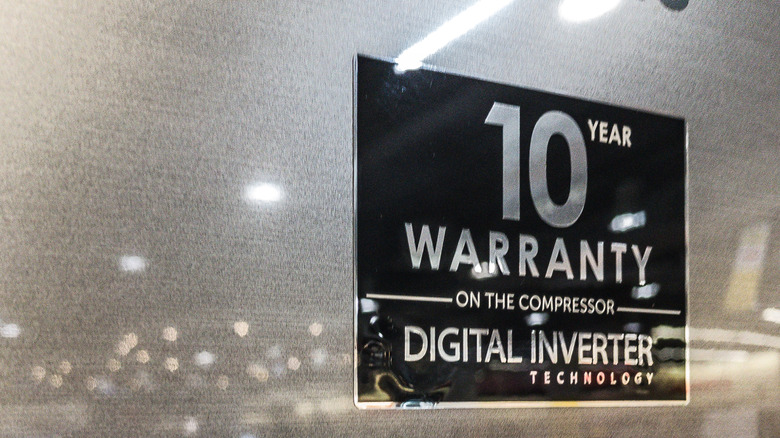
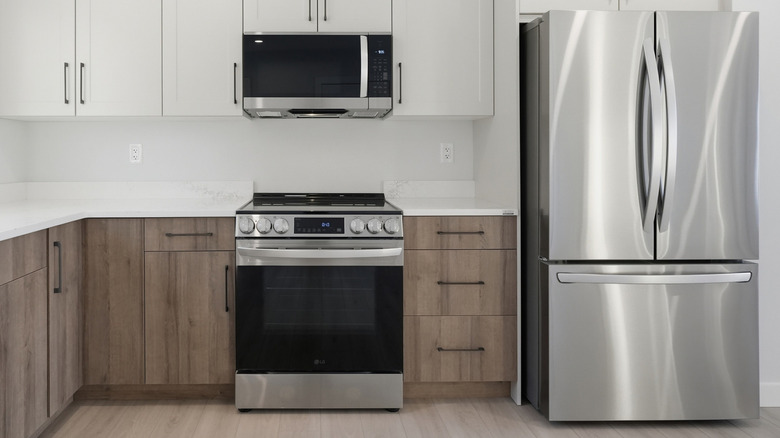
Having a unit that's covered under a warranty or manufacturer recall doesn't always warrant a replacement of your fridge, but it bears mentioning in this list because it might. Even when it doesn't mean a replacement is necessary, it's something you should check every time a relatively new unit begins malfunctioning or stops working entirely. Before you shell out hundreds or thousands of dollars on repairs or replacement, check the warranty and search for recalls. You may not realize it, but recalls happen all of the time. For instance, LG recalled half a million stoves in 2025, and more than two million Cosori air fryers were recalled in 2023.
Sometimes, the problem may be that a single fridge was built with a faulty part or became damaged during shipping, whether to the store or to your home. Defective appliances like this may not be immediately obvious until they've been running for a while. Other times, entire batches or models of refrigerators may have been designed with a fault that didn't show up until in the homes of customers. In the first instance, your warranty might provide a free repair or replacement unit. In the second, you may be able to apply for repairs or a replacement through a form, phone number, or website provided in the manufacturer recall notice.