

12 Ways You're Ruining Chicken Noodle Soup (And How To Save It)
We may receive a commission on purchases made from links.
Chicken noodle soup is a classic comfort dish people reach for when they're sick or the weather gets cold. While heating up a bowl of the best canned chicken noodle soup is a quick and easy way to cure your craving, no store-bought varieties can compare to the homemade version. Thankfully, making this soup from scratch is relatively simple and straightforward once you understand a few basic tricks and techniques. If your soup making efforts have left you with mushy noodles, weak broth, little flavor, or a dish that's otherwise ruined, you're far from alone.
There was a time when I also struggled with making perfect chicken noodle soup from scratch. But during my more than 15 years in the food industry and nearly three decades of home cooking, I've successfully mastered the nuances of this comforting dish — to the point where it's a regular supper request in my house as soon as the temperature begins to drop. And you can learn from my extensive trial, error, solution, and experience today to begin crafting big pots of homemade deliciousness yourself. Here are 13 ways you're ruining chicken noodle soup, with expert advice on how you can save it.
You're adhering too strictly to tradition
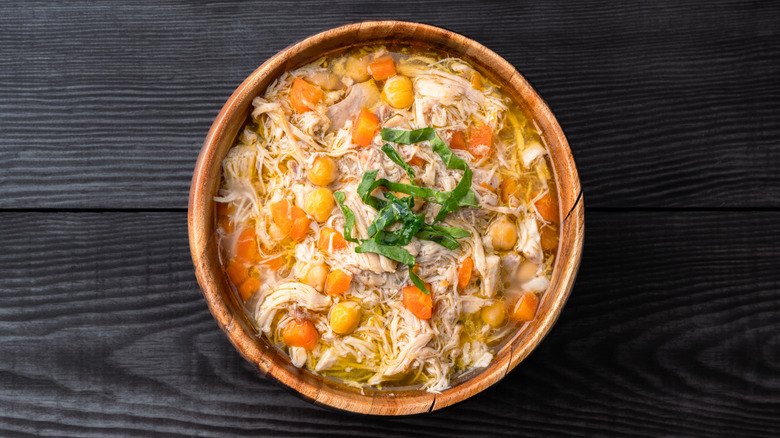
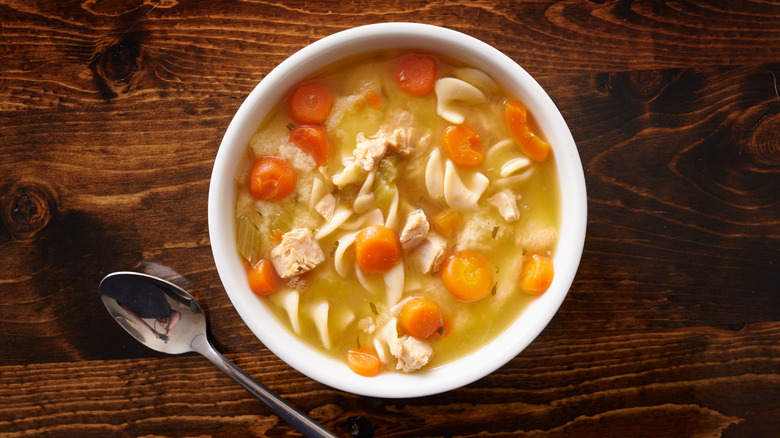
When you hear the words "chicken noodle soup," there's probably a very specific recipe that comes to mind. For most people, this is homestyle chicken noodle soup, which is your basic rendition of flavorful broth, thick noodles, chicken, and a mirepoix. Or it might be something similar, but with thinner noodles and a different vegetable or two. But this is far from the only recipe that falls under the surprisingly wide chicken noodle soup umbrella.
Getting creative with a signature family recipe is a great way to fall in love with chicken noodle soup all over again. Every family recipe is unique. Each generation has switched something small or added something different to make it uniquely theirs while holding strong to the parts of the family recipe they like best. For example, Emeril Lagasse upgrades his chicken noodle soup with mushrooms, while other people may prefer a spicy ginger version of chicken noodle that brings Asian fusion flavors to the old-fashioned comfort meal.
My favorite way to make the dish starts with skipping the celery because I'm not a fan. I prefer to use rice noodles instead of egg or wheat noodles, and I always top my bowls with a combination of earthy and citrus flavors. Long story short? Don't feel confined to tradition. Feel free to experiment with your recipe because you may find something you enjoy significantly more.
You're forgetting to sauté aromatics
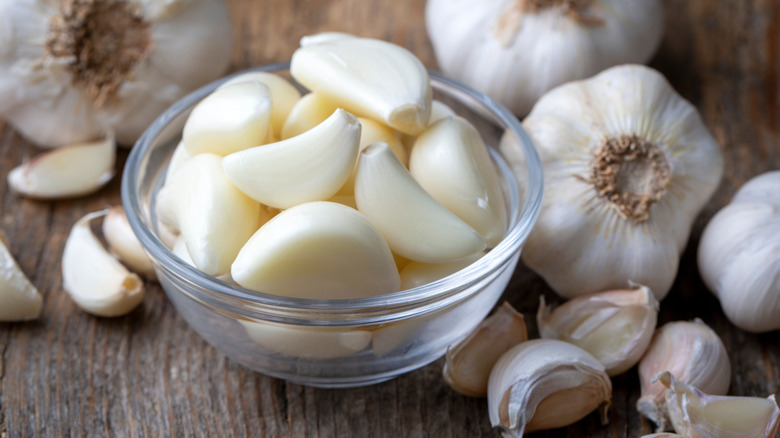
Aromatics are fragrant vegetables, herbs, and spices used to create a deep, flavorful base to various dishes. For classic chicken noodle soup, this will most often be a standard mirepoix consisting of carrots, celery, and onions. But it can also include a wide vareity of other aromatics — garlic, leeks, and shallots are just a few examples. Sautéing aromatics releases their full flavor and reduces any bitterness or bite they might have. This is especially true when it comes to onions; they're generally sharp and pungent when raw, but sautéing them releases sweet notes and reduces that sharp pungency.
Use a combination of high-quality, store-bought butter and cooking oil in the bottom of the pan. Let it heat up slightly before dumping your aromatics inside. Remember to add your aromatics in the right combination to prevent burning. Garlic should always be added last, and everything else should be added from the toughest to the most delicate.
For example, my initial aromatics include white onion, carrots, green onions, and garlic. I add the carrots first and allow them to cook for two to three minutes before adding the white onion. Once the carrots have begun to soften and the onion is starting to become translucent, I add the green onions, followed a minute later by the garlic. Once I've added the garlic, I only let it go one to two minutes, stirring constantly, before moving on to the next step.
You aren't adding extra fats early (and often)
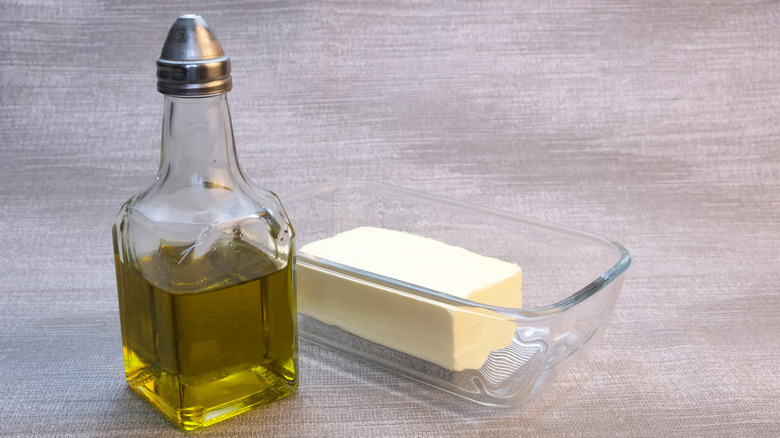
Fats are crucial for all types of culinary arts, including cooking and baking. They impart more flavor, provide a better texture, and play an integral role by interacting with other compounds in your food. Soup is no exception to this hard-and-fast rule. If you want a rich chicken noodle soup bursting with savory, earthy flavors, you need to be adding extra fats early and often.
There are a few ways to do this with your homemade chicken noodle soup. Your meat and broth will likely contribute, but you shouldn't rely on them exclusively for your fat content. To take it a step further, I suggest using butter. In addition to the butter added when sautéing your aromatics, I recommend adding a pat or two of butter at the very end of the cooking process — after everything else, but before adding your acid. This creates a silkier texture effortlessly and enhances your soup's other flavors.
If you'd prefer something creamier rather than silky, add a bit of heavy cream at the very end. But be careful to fully incorporate your cream through tempering or it will curdle. Tempering involves adding small amounts of the hot soup to the cold cream in a separate dish, stirring consistently until it reaches roughly the same temperature. Other options for adding extra fats include rendered chicken fat, bacon grease, or olive oil.
You're starting your broth with plain water
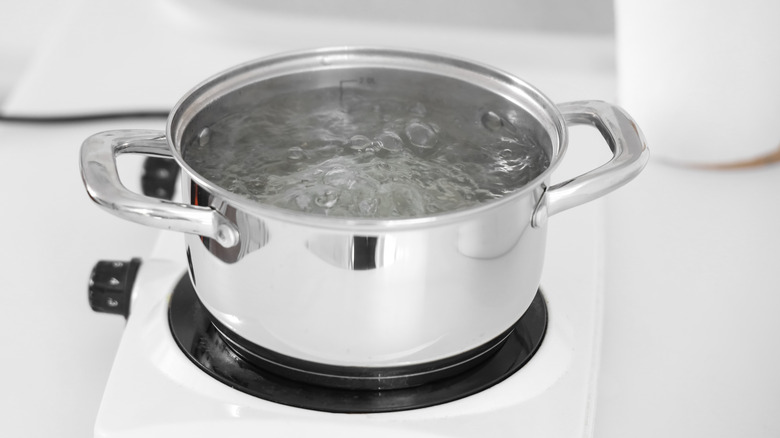
If you're using plain water to start your broth, you'll never end up with the robust flavoring you're hoping for. Even boiling your chicken in the pot of water won't infuse enough flavor. This is one of the most common ways I see people ruining chicken noodle soup. Thankfully, there's a very easy fix for this.
I'm all for boiling your chicken in the soup pot because it does impart essential flavors and allows the broken down fats or tendons to remain in your final dish. But instead of water, I suggest using a combination of either 50% stock and 50% water or 75% broth and 25% water. Stock generally has a more condensed flavor, so a little less is needed. Obviously, the best option is fresh chicken stock or broth, but if you don't have that, vegetable stock or bone broth will do in a pinch. Technically, you can use bouillon instead, but I find this can make the soup overly salty, overwhelmingly chicken flavored with no undertones, or even artificial tasting if the bouillon isn't high quality.
Dump your chosen combination of liquids into the pot, right over the sautéed aromatics so these flavors immediately begin infusing. Then drop your chicken into the pot to boil until the meat is fully cooked. You can chop your chicken into smaller pieces ahead of time, but I prefer to drop the whole chicken pieces in and shred it after it's cooked.
You're only using chicken breast
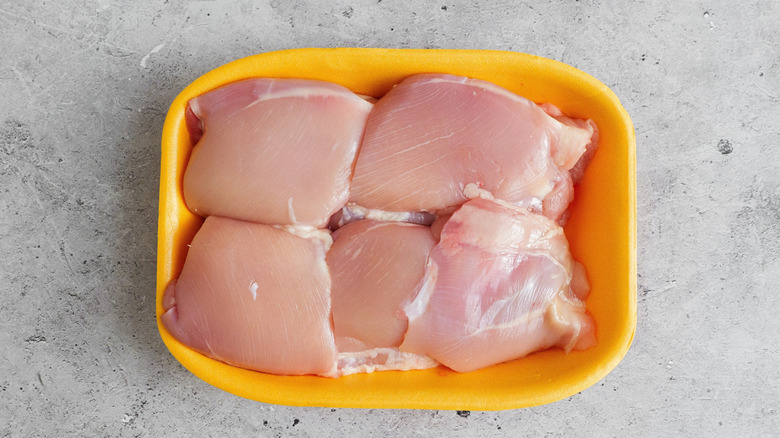
Chicken breasts can be an excellent choice in certain dishes and are incredibly useful when you're trying to reduce calories or fat in your diet — especially if you buy the boneless, skinless variety. But in hearty dishes like chicken noodle soup, chicken thighs are infinitely better than breasts. Why? Chicken thighs are fattier and contain more connective tissue. As they cook, the tissue breaks down and the fats break part, infusing more flavor into your soup. An added bonus is that chicken thighs are usually cheaper than breasts, driving the total cost of your meal down or allowing you to splurge on other high quality ingredients.
If you want to reap the benefits of using chicken thighs but would like the dish to stay on the leaner side, you can use a combination of meat cuts. Using 50% each of thighs and breast meat will moderately improve the taste and texture of your chicken noodle soup without introducing quite as much fat or calories.
You're adding all the vegetables at once
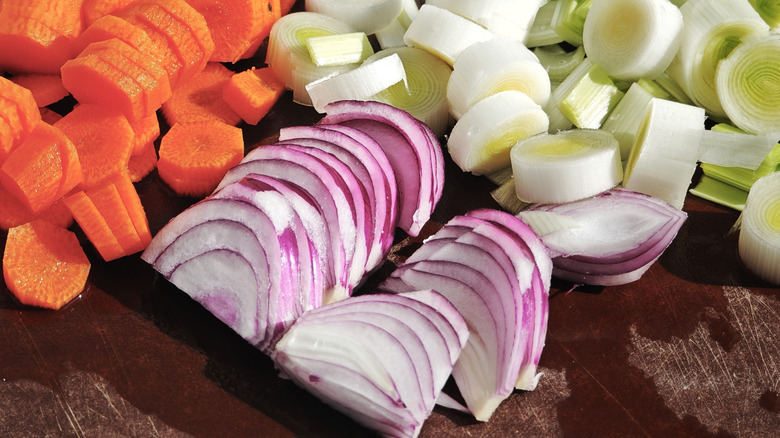
Most chicken noodle soup recipes contain at least one, if not many, vegetables — and this is after the aromatics that are sautéed in the beginning. A few common veggies that are often included in chicken noodle soup are peas, carrots, mushrooms, leeks, corn, green beans, spinach, collard greens, cabbage, potatoes, turnips, and parsnips. The problem is that many people dump all their vegetables in at one time without a second thought. This results in a disaster of a soup where some things are still hard and others are mushy.
There's a specific way to add veggies to soup. Like with sautéing, you need to add vegetables in by hardness level. For example, if your recipe includes carrots, mushrooms, and thinly shredded cabbage, you'd add the carrots in as soon as the chicken is done cooking. These will take the longest to cook by far. Once the carrots have begun to soften, you'd add the cabbage and the mushrooms, which will both take a short time to soften.
You aren't layering your seasonings
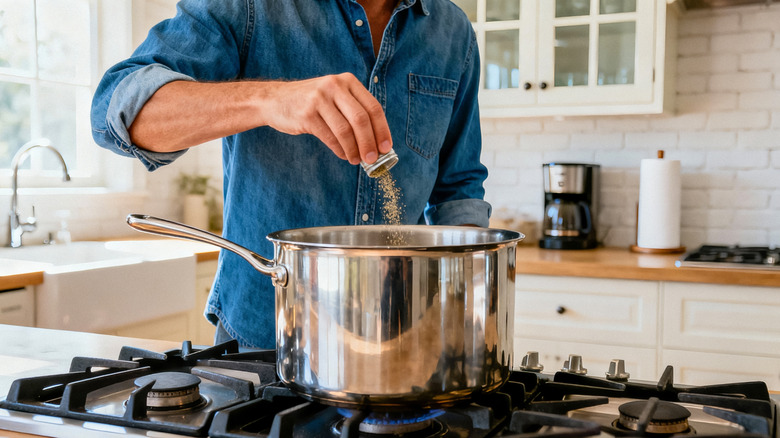
If you're just throwing in your seasonings at the very end, either after the vegetables are added or right before serving, your chicken noodle soup will never come out perfect. To be most impactful to your final taste without being overbearing, your chicken noodle soup's seasonings must be layered throughout the cooking process. In fact, there are three distinct times you should be seasoning your soup — when you add the stock, when you're adding the cooked chicken back in, and at the very end.
Each chicken noodle soup recipe will use different seasonings, but I have some recommendations for a standard traditional pot. First, add salt and pepper at the same time as you pour in your stock and add the raw chicken. If you didn't include garlic in your aromatics, use a bit of powdered garlic at this point, too. When you're ready to add the cooked chicken back into the pot, season the meat directly with salt, pepper, onion powder, and garlic powder. Finally, finish the soup at the very end with any combination of parsley, oregano, rosemary, and thyme, adding salt and pepper to taste. Even if you don't use those exact seasonings, this is a good example of how to successfully layer them.
You're skipping an acid (or adding it too early)
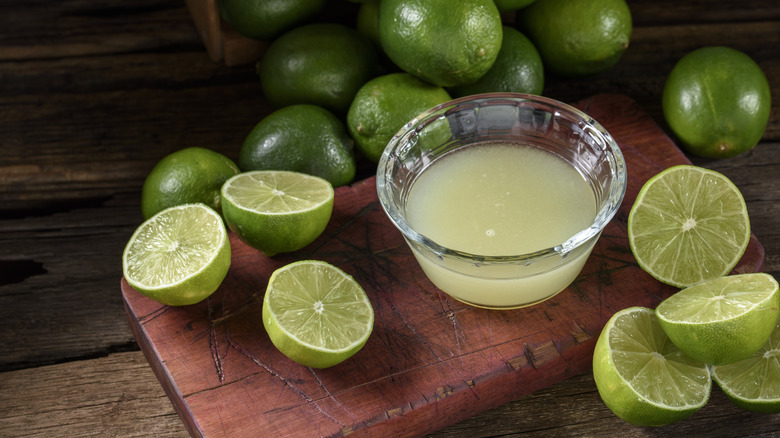
Skipping an acid or adding it so early it doesn't matter is probably the single most likely way you're not getting the most out of your chicken soup. It's easy to overlook and may not seem important if you don't understand the roles of different foods. But acids help cut through the fat (and any resulting greasiness) so it doesn't become overwhelming, while also introducing bright notes into the dish's flavor profile. Those bright notes accentuate the natural savory tones of your soup and add a pleasing aroma.
Acids are delicate, so adding them too early will cause the helpful citrus or vinegar notes to disintegrate. And that means you shouldn't have bothered adding them at all. Instead, you can add them to your pot after you've turned off the heat and removed it from the burner. Or you can add the acid straight into the bowls you prepare for serving — which is my personal preference.
There are several acids you could choose to use. Many people use lemon juice, but I've found that limes bring more brightness to dull soup. Orange juice also works well in some recipes, especially those containing ginger, since the spicy-sweet herb complements orange so well. Apple cider vinegar and distilled white vinegar are also common options.
You aren't skimming the top of the soup
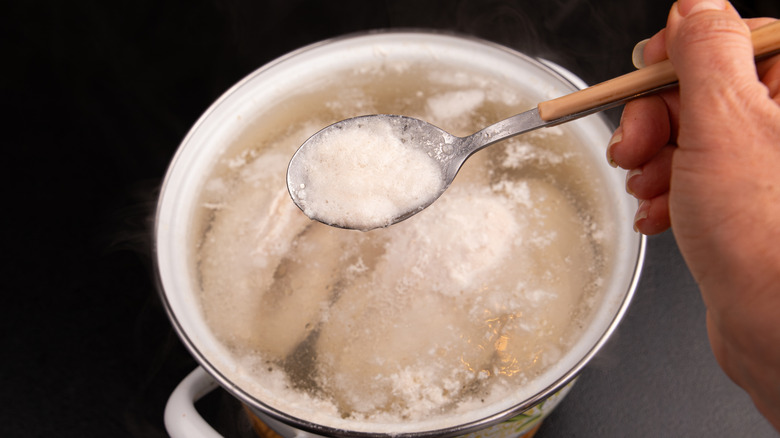
Homemade chicken noodle soup will develop a film at the top of the pot as it cooks. This may look like foam along the edges of your pot or even like a thin layer of clear plastic has been draped across the middle of your soup. This is completely normal, and you actually want this to show up, since it's a mixture of rendered fat and proteins from the meat and vegetables. But just because you want it to make an appearance doesn't mean you want it to stay.
Periodically, you'll want to skim this film or foam off the top of your pot. Doing so ensures the soup stays clear instead of cloudy, which is aesthetically more pleasing. It also makes certain nobody gets large clumps of it in their bowl, which can feel texturally strange. Although a ladle or any kind of mesh spoon will work, a dedicated fat skimmer is most efficient at this. If you don't already have one, this Fat Skimmer Spoon from Temchy is an excellent, highly rated choice under $10. If there are final bits that are challenging to get out, stir them into the rest of the pot instead of leaving them on top.
You aren't allowing it to simmer long enough
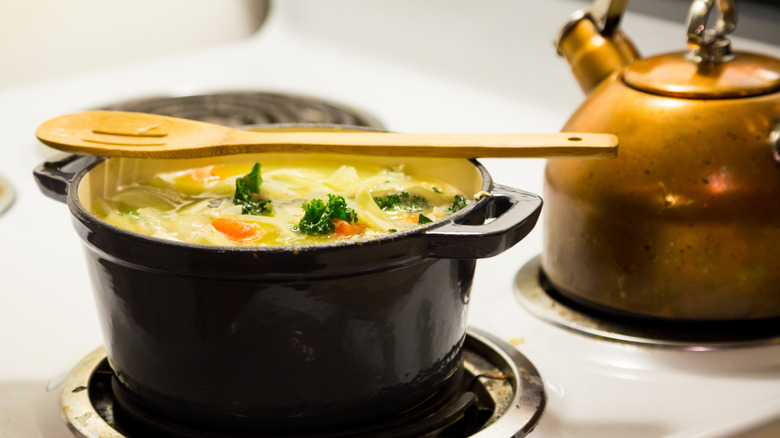
Your soup needs time to simmer to ensure all the individual flavors of the aromatics, meat, and vegetables infuse into the broth. This is what gives chicken noodle soup its herbaceous, savory flavor profile. Remember this is a low simmer, not a rapid boil, and you want to time it properly so you aren't turning your vegetables into mush.
I like to do most of my simmering before adding the vegetables, to limit the chances that they'll overcook. Once my pot reaches a rapid boil while cooking the chicken, I turn it to a low simmer for 30 to 60 minutes, depending on how big the pot is and how much chicken I've included. From that point, I keep it at a simmer with the lid on after adding my seasonings and vegetables. This takes everything a bit longer to soften properly, but that actually works in your favor — it allows the vegetables to essentially steep in the water longer without compromising their texture integrity.
You're cooking the noodles in the broth
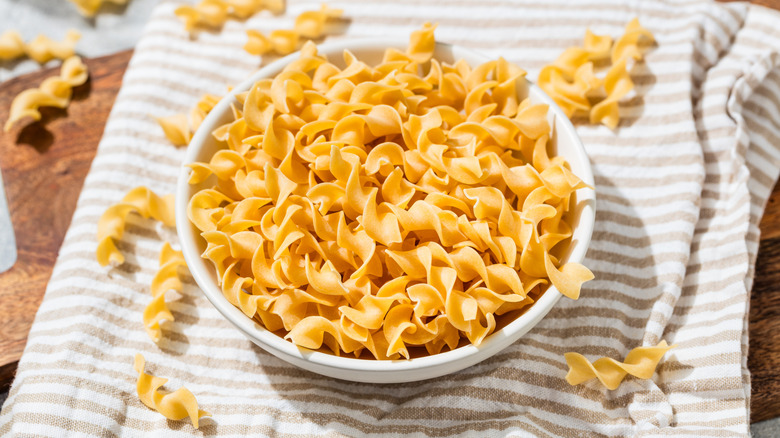
Cooking the noodles in the broth is tied with not adding an acid for the most frequent way I've seen otherwise delicious chicken noodle soup absolutely ruined. No matter if you're using traditional wheat pasta, egg noodles, or rice noodles, cooking them directly in your pot of soup will make them more likely to become soggy, mushy, and downright gross. Canned soups can do this because they add preservatives to prevent pasta from getting too soft, but you can't (and shouldn't) do that.
What you want to do instead is cook the noodles in a separate pot of heavily salted water. Once softened to your preference, drain them and rinse under cold water to remove excess starch. Add noodles to the individual bowls before topping with your soup. This must-use trick works for similar soups that incorporate grains, like creamy chicken and wild rice, traditional ramen, or pasta e fagioli. If making a rice-based soup, the only difference is that you'll cook the rice as normal (without any draining necessary) and then add it to the bottom of each bowl.
You're skipping flavorful garnishes
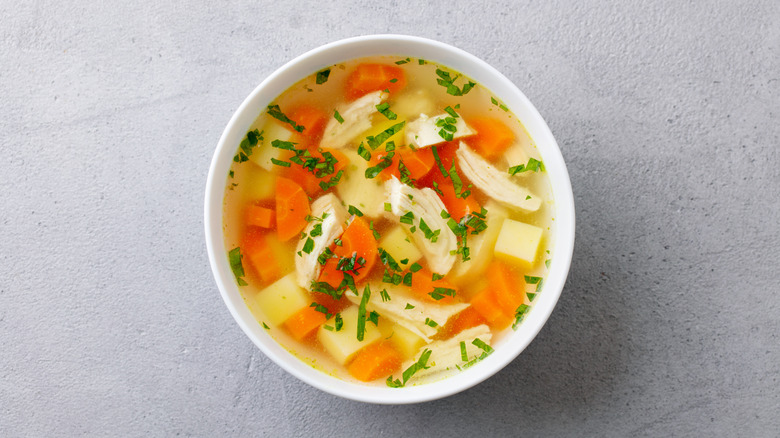
It's easy to pop the noodles into the bottom of your bowl, top with the broth containing chicken and vegetables, and call it a day. But utilizing flavorful garnishes can elevate your ordinary bowl of chicken noodle soup into something that tastes (and looks) professional. And you don't need a lot of anything to make a big difference — a little goes a long way.
There are as many garnish options as there are chicken noodle soup recipes. My personal go-to is fresh cilantro because it has an herbal, citrusy flavor that brings together the acid and vegetables nicely. Other herbs you could use include fresh dill, parsley, oregano, or chives. A tiny dollop of sour cream or Greek yogurt on top can add a nice contrast of color alongside a bit of creamy tang. Thinly diced onion, a pinch of microgreens, croutons, crispy fried onions, or a soft-boiled egg are also good choices.