

11 Shuttered Restaurant Chains Boomers Seriously Miss
Throughout the years, there have been hundreds of different fast food chains — and not all of them have stood the test of time. Ever since the inception of this service style, business owners have attempted to put their own spin on things, with virtually every cuisine under the sun adapted for speedy cooking and delivery to customers. Given the highly competitive nature of fast food, though, it's little surprise that massive chains haven't been able to retain their edge, particularly in a market that appears to be increasingly focused on younger customers and their tastes.
People still remember their lost favorites, though. Like the rest of us, the older generation grew up with their own fast food chains, where they adopted their trademark boomer dining habits and cultivated their tastes — and like the rest of us, they can recall the flavors of those lost menu items as though they were cooked yesterday. From former titans like Howard Johnson's to more regionally prominent chains like Royal Castle, these restaurants still evoke fond memories now. They may not be on the brink of a comeback any time soon, but they live on in plenty of people's hearts.
Howard Johnson's
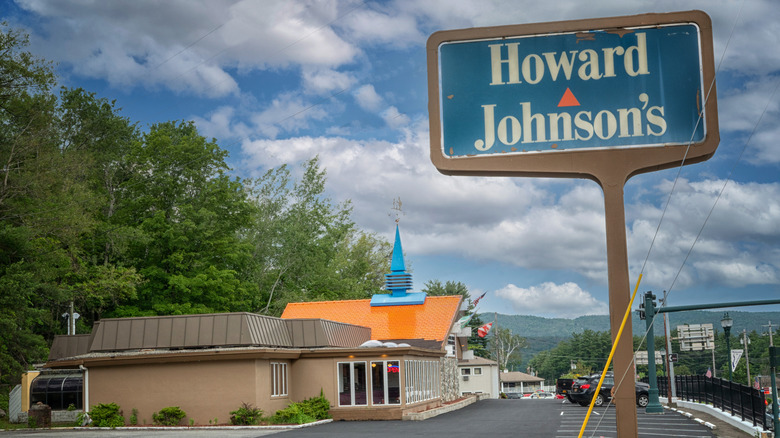
Before McDonald's, KFC, and Burger King, there was Howard Johnson's. This fast food chain was the first American restaurant concept to pioneer service and franchising at a massive scale, and for almost a century, it served countless customers a steady supply of burgers, fries, chicken, pot pies, and plenty of other favorites on its diverse menu. Howard Johnson's began life as a combination convenience and drug store that also sold ice cream — and when the latter revealed itself as being HoJo's claim to fame, the founder (whom the chain was named after) began to scale up. By the 1930s, Johnson was selling the rights to the name and his ice cream recipes to franchisees, and the chain subsequently began to both grow exponentially and morph into a full-service restaurant.
At one point, Howard Johnson's was America's biggest chain, with over 1,000 restaurants. But as is so often the case, a combination of the business changing hands and more nimble competitors caused it to lose its spark. By the mid-1990s, there were around 100 restaurants left; now, there are none. Today, though, boomers still remember it well, highlighting menu items like its fish fry, hash browns, and, of course, its famous ice cream as much-missed favorites.
Farrell's Ice Cream Parlor
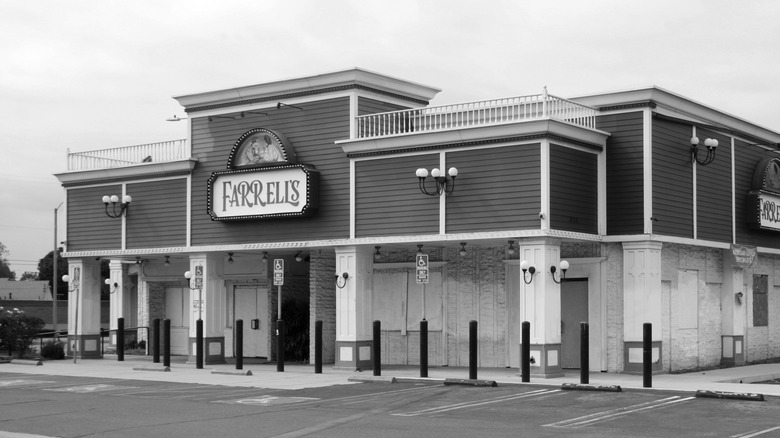
The classic American ice cream parlor may not be totally gone, but it's definitely less prominent in today's restaurant landscape than it once was. That's partly down to the loss of Farrell's Ice Cream Parlor, a chain that once had over 130 shops at the height of its popularity. Born in the 1960s, Farrell's was modeled on classic New York parlors, and while ice cream was obviously the main event, it also served burgers, sandwiches, and other menu options.
It also leaned heavily into theatricality: Among some of its quirks were singing waiters and a mammoth 50-scoop sundae known as "The Zoo," which was wheeled to customers' tables on a stretcher, with sirens screeching in the background. It was perhaps this fanfare that made it such a popular birthday party destination among boomers, as well as a fun first date spot. That flair, though, is now sadly long-gone. The sole remaining Farrell's location in Brea, California, closed in 2019, leaving both a gap in the market for old-fashioned chain restaurant fun and a sense of longing in people's hearts.
Beefsteak Charlie's
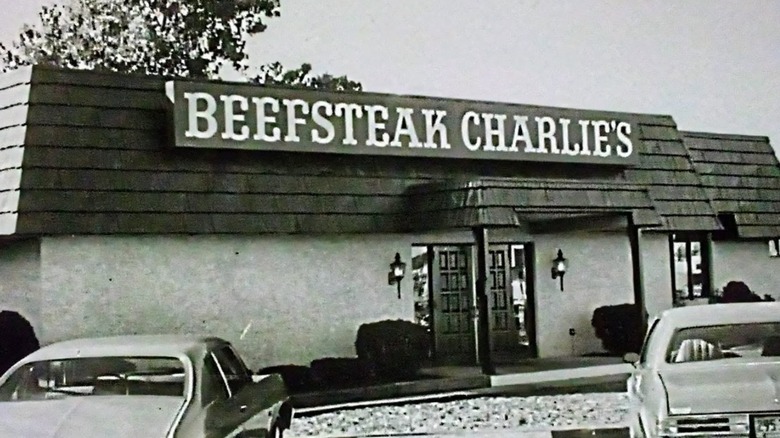
Beefsteak Charlie's has a longer history than most chains — although it took a very long time to morph into a multi-restaurant success story. The concept first started life in 1910 as a solo restaurant in New York City and changed hands after several decades of operation, emerging as a go-to destination for jazz aficionados. It wasn't until the 1970s that restaurateur Larry Ellmann began renaming the locations of his own chain, Steak & Brew, to Beefsteak Charlie's, apparently inspired by the legendary spot in New York. Given that there was no trademark on the Beefsteak Charlie's name, Ellmann's was able to proceed. The chain subsequently ballooned in scale thanks to its affordable all-you-can-eat format and famous salad bar.
It's these features former patrons remember well. A former staple in urban areas, Beefsteak Charlie's was the site of many business lunches, dinners, and celebrations during the '70s and '80s. And its apparently lax approach to checking IDs meant it was an appealing choice for customers of non-legal drinking age wanting to sneak their first beers. Now, though, Beefsteak Charlie's is no more, and all we have are the memories.
Red Barn
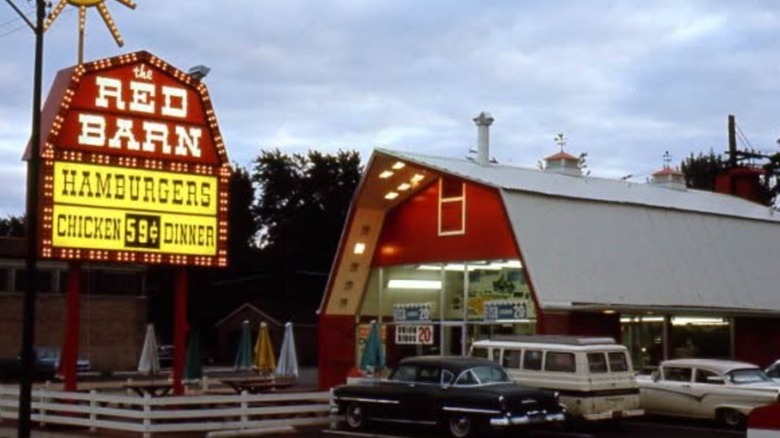
The 1960s were an especially fruitful time for popular burger chains, and Red Barn was one of the most distinctive around. Although it never reached the size of some of its heftier competitors, its barn-themed buildings and sandwiches gave it an idiosyncratic quality and a charm that kept it alive and kicking for almost 60 years. Although Red Barn was primarily a burger restaurant, it also pioneered the salad bar and served fried chicken, fish sandwiches, and a wealth of sides.
Unfortunately, though, Red Barn struggled throughout the 1980s, and by the end of the decade, a large chunk of its restaurants had closed. Its striking buildings were often converted into different businesses, but its food gradually disappeared. The last Red Barn closed just before the COVID-19 pandemic hit in full force in March 2020, but it's not been forgotten. A Facebook group dedicated to the chain's memory has, at the time of writing this article, approximately 9,600 members who regularly share stories about visiting it throughout the years.
Royal Castle
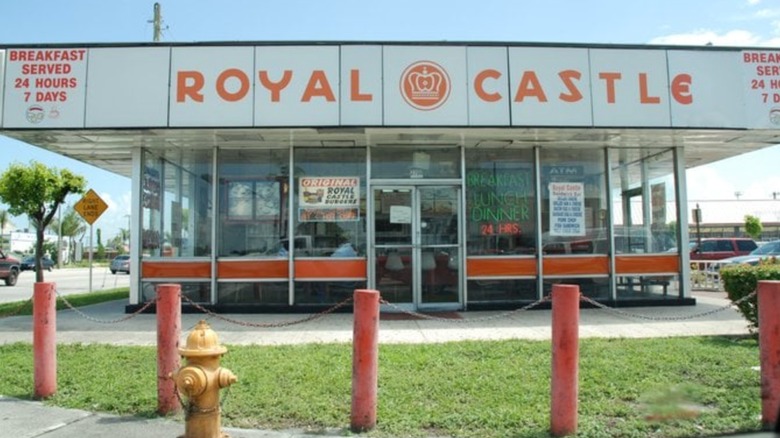
Burger King and White Castle are far from the only sandwich chains with regal connotations. For almost 90 years, there was also Royal Castle, a Florida-based chain that was founded in Miami in 1938. Like White Castle, Royal Castle specialized in sliders, which came topped with onions and pickles. It was also known for serving Birch Beer, a root beer-like drink originally made with birch sap, and for its griddle-fried breakfasts.
Royal Castle's affordability was a key selling point for its customers. Back in the day, you could get a sandwich for just three cents, and its lower prices made it a hot destination for teens and young adults throughout the mid-20th century and beyond. At one point, Royal Castle had hundreds of locations across Florida — but eventually it started to dwindle in the 1970s due to financial pressures. The final Royal Castle location stayed in operation for decades beyond that, but closed in 2025. It's been immortalized in cinema, though: Royal Castle appeared both in 1964's "Goldfinger" and 2016's "Moonlight," a testament to its iconic status in Floridian culture.
Mr. Steak
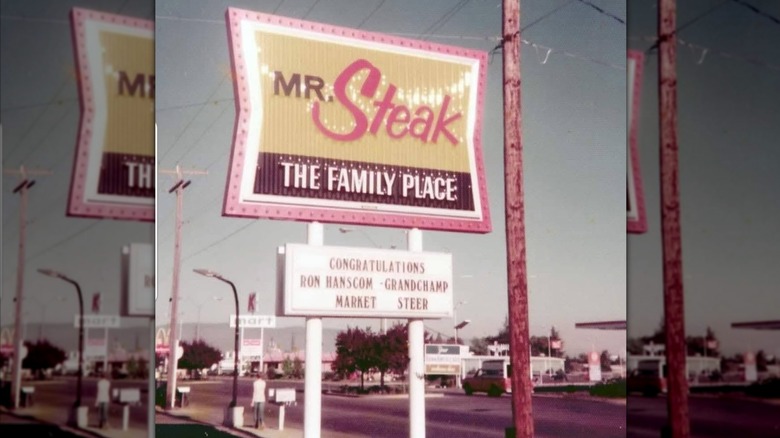
If you look at the most popular steakhouse chains today, there's one name notably missing: Mr. Steak. Four decades ago, that wouldn't have been the case. Mr. Steak was founded in Colorado Springs in 1962, but it quickly grew both throughout the Midwest and across the country. It eventually reached a unit count of almost 300 restaurants, with its growth fuelled largely by its affordable steak dinners and sticking to the classics — think sirloins, baked potatoes, and green salads.
Mr. Steak was the kind of place you'd go to when you wanted a fancier meal, but not one that would completely blow your budget. It was also a restaurant that catered to the whole family; people remember eating there as a kid with their parents or grandparents, with the variety it offered ensuring everyone could find something they wanted. Unfortunately, that variety started to distance the restaurant from its original mission, and its menu started to balloon in an attempt to match the options dished up by competitors. Financial pressures eventually caught up with the chain, which began to shrink in the late 1980s following a bankruptcy claim, and the final location closed in 2009.
Lums
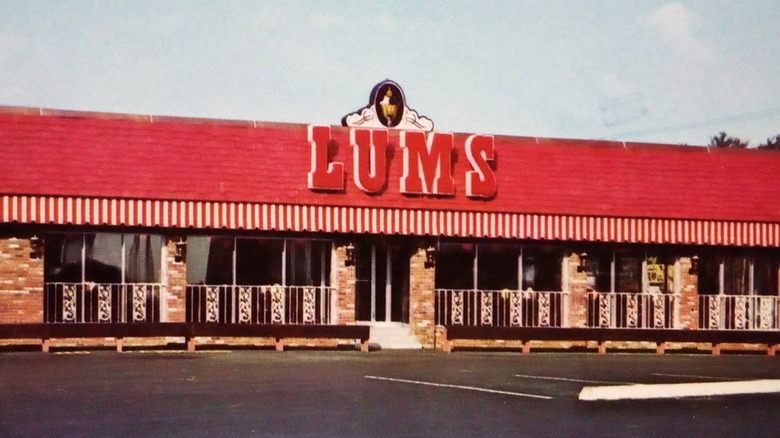
The heyday of chain diners has arguably passed, and back in the 1960s and '70s, one of them was doing things its own way. That place was Lums, a Miami-born chain that started as a hot dog stand before reaching around 400 locations. Lums was famous for a couple of items, including its Ollieburger (a seasoned sandwich), but it was arguably best-known for its beer-cooked hot dogs. These hot dogs remain an especially fond memory for plenty of people who dined there throughout the years — not least because, as one person said on Reddit, "I thought I was getting an underage buzz."
This playfulness around its menu items, as well as its generally innovative and forward-thinking nature, gave Lums a unique feel among more traditional coffee-and-eggs diners (although it definitely did those, too). Eventually, the company was big and lucrative enough to become publicly listed. The Perlman brothers who ran and expanded the franchise set their sights on other hospitality ventures too, purchasing Caesars Palace in Las Vegas. Lums, meanwhile, was sold to a Swiss holding company and subsequently went bankrupt, with the chain shedding units. The last remaining restaurant was located in Omaha, Nebraska, and it closed in 2017.
Burger Chef
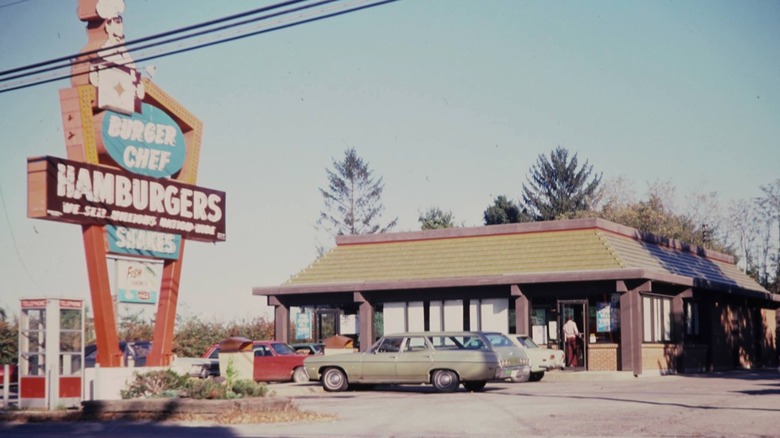
Throughout the 1960s, McDonald's wasn't the only growing burger chain on the block. There was also Burger Chef — which, at one point, was almost as big. Burger Chef was founded in 1958, and its name's similarity to Burger King wasn't unintentional. The idea was that it would represent a classier version of the royally named chain, and that intention, plus its combo meal (a first at the time), set it up for success. Cut to about a decade later, and it had over 1,000 restaurants, with another 200 or so by 1971.
It's little wonder, therefore, that many boomers remember it well. For some, it was the go-to burger chain of the time, with a condiment and toppings bar that gave it a sense of generosity and abundance. It was such a fixture of the '60s that it was even featured heavily across multiple episodes of "Mad Men." It's pretty amazing, therefore, that the chain disappeared almost as quickly as it popped up. Burger Chef was sold to Hardee's in the early 1980s, and by that point, it had lost almost half of its restaurants. In 1996, its final location was converted into another business, and it was gone for good.
Casa Gallardo
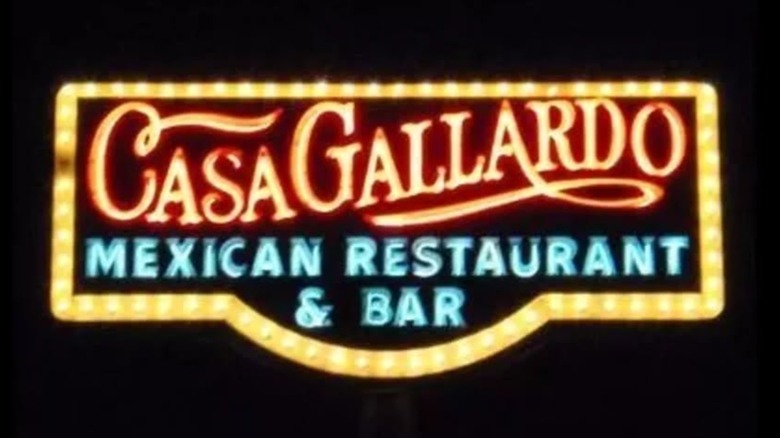
There are plenty of Mexican restaurant chains across the U.S. these days, but back in the 1970s, that was a different story. Casa Gallardo sought to change that. The restaurant was founded in St. Louis by Ramon Gallardo, who had moved to the city 15 years prior and worked his way up in the local hospitality scene. When he opened his own restaurant, Gallardo made sure it was as authentic as possible, driving fixtures and decorations from Mexico himself. The menu, meanwhile, was extensive but specific. That specificity is remembered in great detail by former customers, who have shared affectionate stories about dining at its original location, with Gallardo's wife greeting people at the door.
Casa Gallardo was such a hit that it was purchased by General Mills four years after it first opened, and it quickly gained dozens of locations. Just five years later, though, and facing competition from other growing chains like Chi-Chi's, General Mills sold the chain to W. R. Grace. Over the years, it changed hands several more times before its final four locations were closed in 2012.
Kenny Rogers Roasters
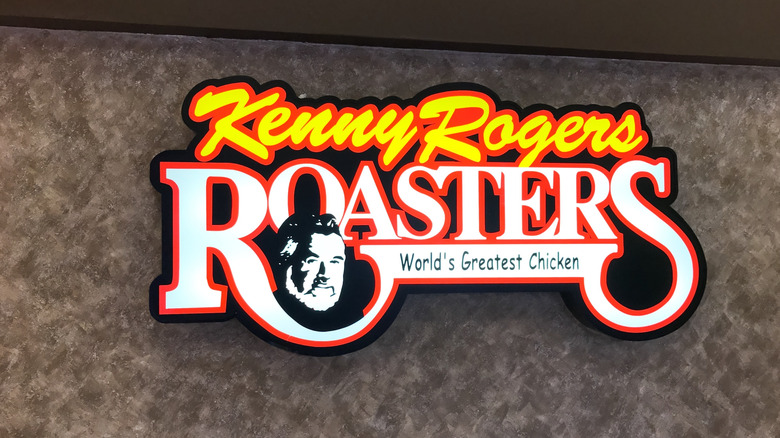
Sometimes restaurant chains end up getting a second life elsewhere, perhaps unexpectedly. That's the case with Kenny Rogers Roasters, a '90s restaurant chain that may now be closed in the United States, but which still has a large presence across Asia and the Middle East. In the U.S., though, its rise was swift, and its fall almost as quick. Kenny Rogers Roasters started life when the country music star joined forces with former Kentucky governor John Young Brown Jr., who's perhaps better-known for buying KFC from Harland Sanders and turning it into the behemoth that it is today.
Brown Jr. achieved similar success with Kenny Rogers Roasters. Within just a few years, the franchise had over 350 restaurants, attracting fans for its juicy roast chicken. However, just seven years after it was founded, the business couldn't keep up with its own expansion pace and filed for bankruptcy. It was bought by Nathan's Famous, and under its new ownership, its unit count shrunk rapidly, with the restaurant eventually disappearing in America. This once-beloved chain, which people now remember visiting with their parents, was gone — on home turf, anyway.
Valle's Steak House
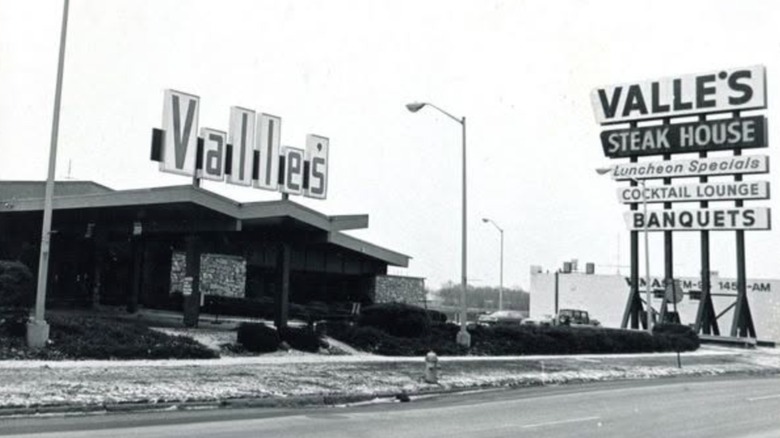
Back in the day, if you wanted a super-sized dining experience, Valle's Steak House was the place to go. This steakhouse chain was founded in 1933, and its original location was a small 12-seat café. But owner Donald Valle clearly had greater ambitions than that. When its expansion started, its restaurants ballooned in their physical proportions. Eventually, the biggest Valle's Steak Houses could seat up to 1,200 customers, and the amount of beef it needed was so large that it eventually purchased its own Wyoming-based ranch.
The restaurant didn't skimp on quality, though. Nowadays, boomers recall eating lobster in its mega-sized dining halls, which were fancy enough for people to host their wedding rehearsal dinners. Unfortunately, it couldn't sustain its enormous proportions for long. Although it had 32 locations at its peak, the countless customers that walked through its doors couldn't offset a combination of over-expansion pressures and inheritance tax burdens following Donald Valle's death, and it began to suffer. In 2000, Valle's Steak House closed its doors for the final time.