

13 Common Customer Complaints About Le Creuset Cookware
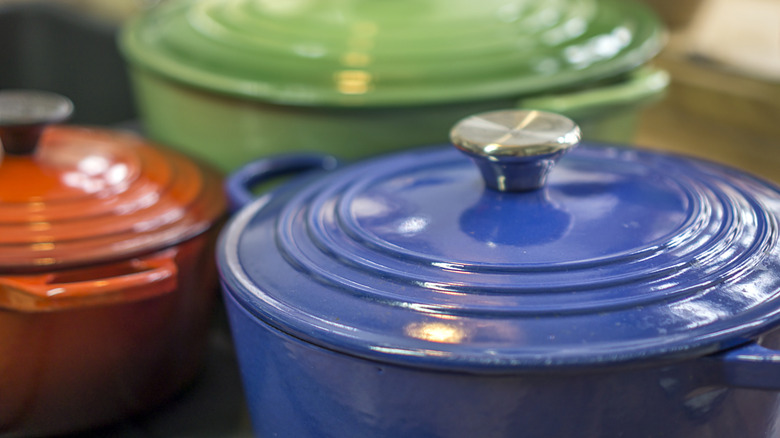
If you want quality cookware, you can do a lot worse than Le Creuset. For more than a century, the French brand has been creating Dutch ovens, pans, skillets, soup pots, braisers, salt and pepper mills, and pretty much everything you need for a fully stocked kitchen, and has managed to do so while retaining its premium feel and a passionate customer base. For many people, Le Creuset cookware pieces aren't necessarily everyday essentials, but collector's items — there's even some rare Le Creuset colors to look for at thrift stores. If you're lucky, even these vintage pieces will last a lifetime.
However, no brand is safe from scrutiny in this day and age, and according to its customers, Le Creuset is far from perfect. The cookware giant may be renowned for creating durable pots and pans, but a lot of people have been left questioning just how well-made they are and have reported issues you might not expect from such a pricey name. Le Creuset has also come under fire from its customers for its customer service and packaging, both aspects that affect the overall experience of buying its items and trusting its brand. In this article, we'll break down some of the more common customer complaints about this venerable cookware maker.
The enamel can become damaged more easily than expected
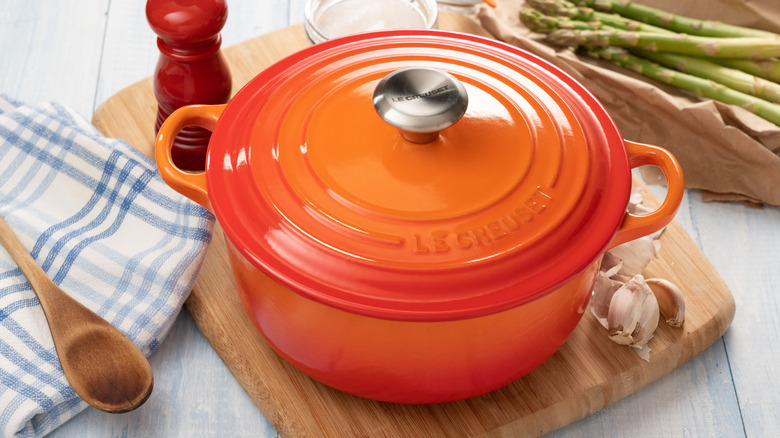
All of Le Creuset's cast-iron cookware and many of its other items come with an enamel coating, and this coating is crucial to its success. The enamel layer on top of the metal makes its pots more durable and easier to clean. It also means they don't need to be pre-seasoned before using them for the first time, like regular cast iron. Given that this enamel layer is such a key feature of Le Creuset cookware, you would expect it to be as tough as the iron underneath.
Unfortunately, customers have repeatedly found that's not the case. Damaged, chipped, or cracked enamel is a common complaint from Le Creuset users, with some people stating that their pots have become damaged within weeks of purchasing them. Crazing can be another issue, which happens when a web of short, thin cracks appear across the base of pots. These issues can render the pots unsafe for use. While cracks and crazing can occur as a result of thermal shock, customers have refuted that they've treated their cookware poorly, instead pointing to build quality issues and questioning whether the pots are as premium as everyone says. The good news, though, is Le Creuset will replace cracked or damaged pots for free, provided they meet the required warranty criteria.
It's too expensive
It probably shouldn't come as a shock to anyone that Le Creuset sits on the pricier end of the scale. The cookware brand is known for being way more expensive than others, with its standard, new Dutch ovens starting at around $200 to $250, and with limited-edition or more specialized options costing way more. The idea, of course, is that Le Creuset items will last you way longer than flimsier, cheaper alternatives (even though Costco has a popular, affordable Le Creuset Dutch oven dupe), and they're worth the price you pay. There's a reason they're passed down from generation to generation, after all.
Sadly, though, not all customers agree Le Creuset is worth forking out for. Instead, many people say the brand has become slightly overrated and overhyped, and that its current prices reflect this. For a lot of home cooks, its range is just too expensive, and they can't quite compute why so many folks splash a significant chunk of their paychecks on them — especially when they've found that other, lesser-known brands actually perform just as well. Having said this, many people do offer the counterpoint that you get what you pay for, and due to the level of craftsmanship that goes into making this cookware, and the impressive warranty, it's worth it.
Food always sticks to the bottom of the pans
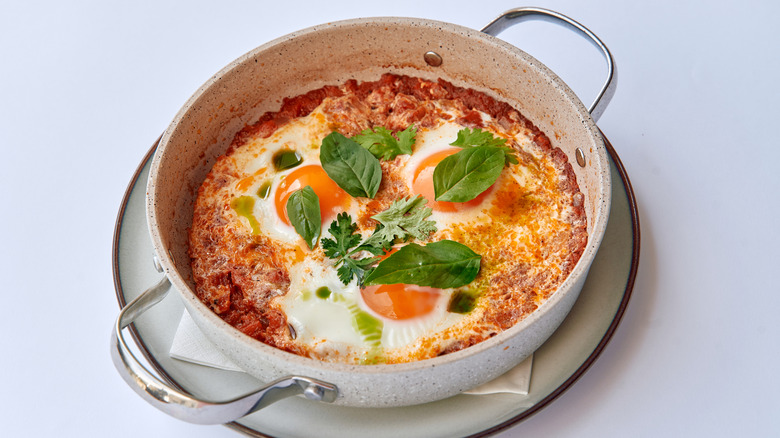
Let's just get this one out of the way: Le Creuset's enamel-coated, cast iron pans are not non-stick, and anyone who's expecting them to be will be disappointed. However, the enamel coating that comes on each one is designed, as Le Creuset itself says, to "[resist] staining and sticking to make cooking and clean-up even easier." The super-smooth, shiny surface may not have the same resistance as a Teflon-coated pan, but in theory, you shouldn't have any trouble stirring or flipping your food or removing residue, if used correctly.
So why do so many customers have trouble with doing just that? Countless Le Creuset users have complained that pretty much everything they cook in their pans sticks to the bottom of them, no matter what they do. People find that even when they use a good amount of fat, their food ends up adhered to the bottom. Le Creuset states that overheating its pans can be a common cause of food sticking. Cast iron comes up to temperature way more slowly than other materials, and preheating cast iron too fast can cause hot spots, leading to your proteins or vegetables attaching themselves to the enamel. Enamel cast iron also doesn't build up a layer of seasoning that prevents sticking the way traditional cast iron does. Some, though, have become too frustrated with trying to find the right balance and have given up on their Le Creuset entirely.
Its non-stick pans aren't particularly impressive
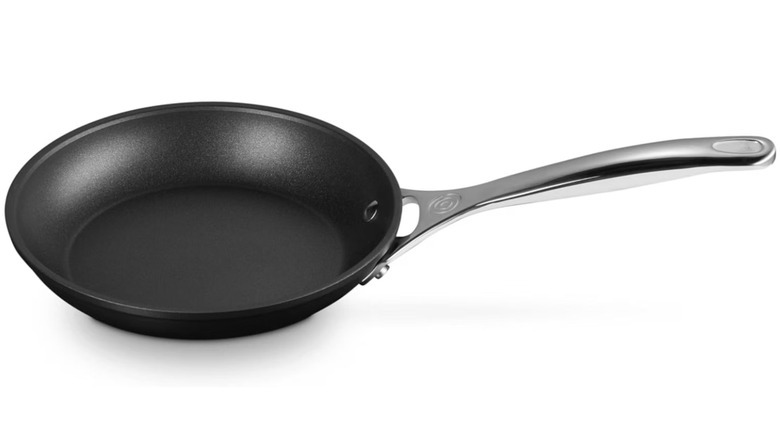
Le Creuset may have made its name through selling timeless cast iron Dutch ovens, but it's very much a modern brand — and it has the cookware to show for it. The French cookware producer makes a classic stainless-steel nonstick frying pan, which is currently sold online for a whopping $185. The company also has a line of nonstick baking sheets and other nonstick items. For the price point, you'd expect these nonstick cookware products to be pretty flawless, and certainly better than the cheaper, arguably flimsier pans and sheets you'd find at the likes of TJ Maxx or Walmart.
Unfortunately, customers don't think that's the case. Instead, its nonstick cookware has been heavily criticized for its seeming lack of durability. People have stated their nonstick Le Creuset pans have only lasted a couple of years, sometimes even just a few months, before they've deteriorated to the point where they need to be disposed of. The nonstick coating Le Creuset uses is just as temperamental and scratchable as other brands, and apart from their premium look, there's nothing that really sets them apart. Ultimately, a lot of customers feel they're just not worth the cost.
The lifetime warranty can be inconsistent
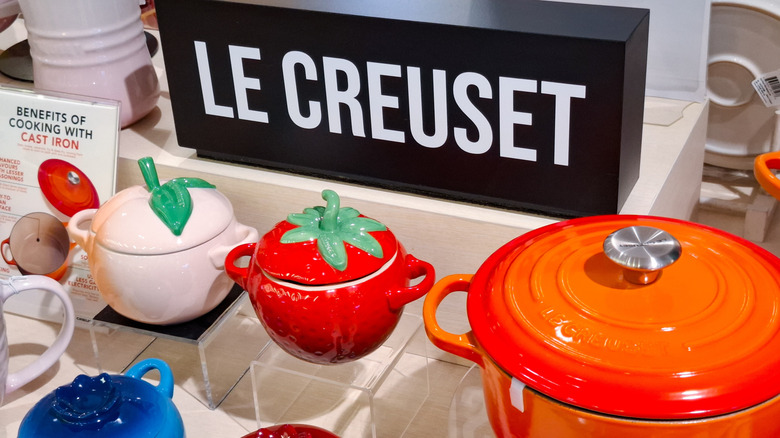
Le Creuset boasts a lifetime warranty for many of its products, which should, in theory, give you peace of mind in your purchase. As long as you follow the cooking instructions that come with your pots, pans, or utensils, and only use your cookware for domestic applications, the company promises to replace your defective item at no extra cost to you. A lot of customers have reported Le Creuset is indeed true to its word, and when they've needed to use the warranty, the company honors it.
Other people, though, haven't had as much luck. Many customers have said they've had trouble getting the company to replace cookware they say is faulty and has been used per Le Creuset's guidelines. Instead, they've been told Le Creuset will not replace the item, or else have been offered discounts on replacements, which they feel don't adequately cover the issue. The problem with having the lifetime warranty honored is it can be down to the individual representative assessing the item to decide whether it qualifies, and this can lead to inconsistencies and the image of double standards.
Le Creuset cookware is incredibly heavy
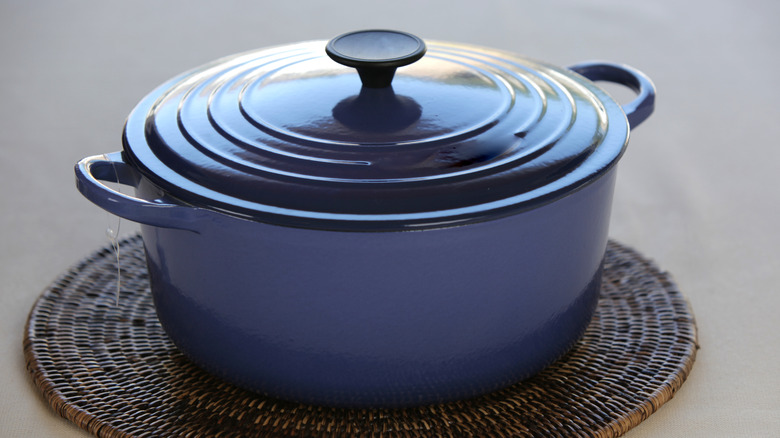
Some customer complaints about products may not necessarily be the fault of the companies making them — but they're complaints nonetheless, and when enough people are saying them, they're worth mentioning. One such complaint is about the weight of Le Creuset cookware. Plenty of customers have expressed its pieces are just way too heavy to be used regularly, particularly for cooks with injuries or who can't lift heavier objects. This has led some people to write off Le Creuset cookware as impractical, and others to question whether they really need to be that heavy in the first place.
The answer to why Le Creuset products are so heavy lies, of course, in the materials used. The line's most famous cookware is made of cast iron, and this base can mean its standard Dutch ovens weigh in at well over 10 pounds, with some larger models being even heavier. It should be said, though, that other manufacturers make even heavier pots — and if you're spending all that money, you'd probably rather have something sturdy that feels like it justifies the cost, right?
The knobs and handles can be easily damaged
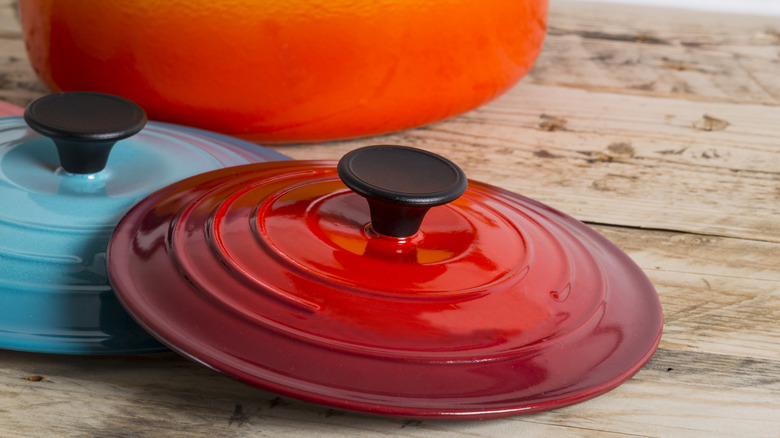
You know those beautiful knobs and handles that come with your pricey Le Creuset cookware? Well, it turns out they may not be as sturdy as the Dutch ovens or roasting dishes — far from it, in fact. One of the main complaints about Le Creuset concerns its attachments, with the knobs, handles, and grips of both its more expensive items and its cheaper utensils often deteriorating long before the rest of the item is on its way out. The knobs can break or shatter without any prior warning, while the handles on the pots can display less exacting craftsmanship than the vessel itself.
Sometimes, this deterioration can happen way more quickly than you'd think. One person on Reddit complained their Le Creuset spatula's handle had lost all of its shine after a single use, and turned from gleaming to grubby. Naturally, no cookware company will get it right 100% of the time, and there are bound to be defects from time to time — but the temperamental nature of these handles (which, in the case of its Dutch ovens, can be plastic) somewhat contradicts the brand's premium feel.
The kettles can be temperamental
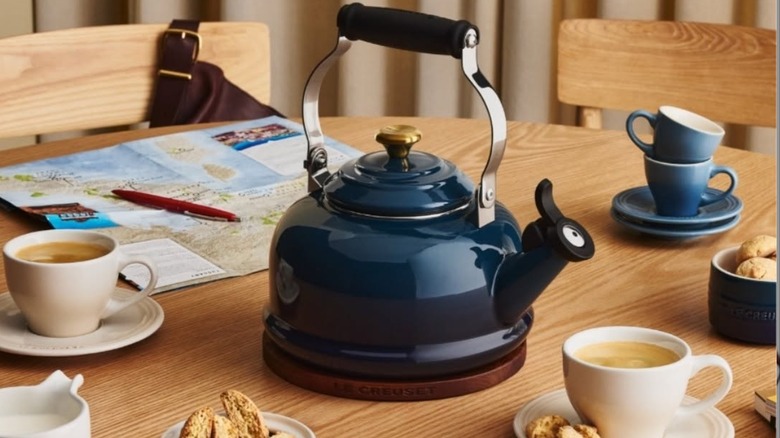
Le Creuset kettles are undeniably beautiful to look at. With their classic design, stovetop function, and whistle nozzles, they feel as though they've come from a bygone era — but with the inimitable color scheme and feel of the contemporary brand. It's just a shame some of them don't seem to have the build quality of Le Creuset's other products. Customers frequently complain its kettles, which are typically pricey, wear down pretty quickly, displaying water damage or even falling apart. "LC kettles rust big time," said one person on Reddit. "They're cute, but they are substantially lower quality than most of the rest of their lines." Rusty water is kind of the last thing you want in a calming cup of tea, so it's no surprise this is an issue.
Other people have pointed out that the kettles suffer from bad designs, which render them impractical. A lot of customers have become frustrated with how leaky their kettles are, with water spilling and dribbling down the spout when they're pouring it out, despite not overfilling or overheating it. This isn't just irritating, either; it's also a safety concern.
Le Creuset's quality has gone downhill
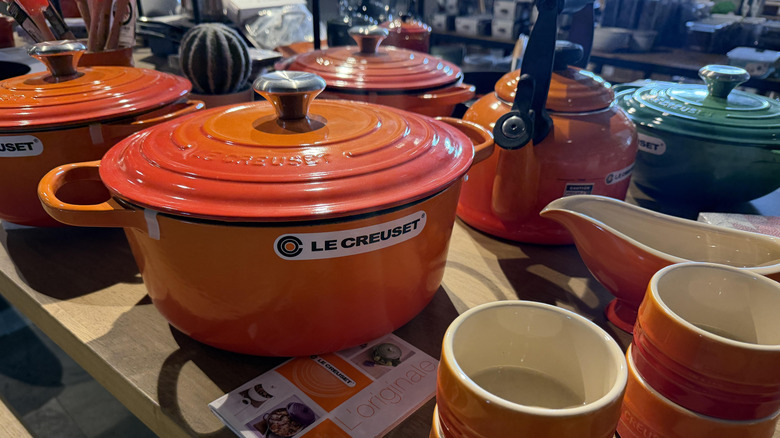
As a legacy brand operating for over a century, Le Creuset certainly knows the importance of keeping its standards high. Its products are the kinds of things people buy once or twice in their lives, after all — so they need to make sure each purchase is as good as the last. Why, then, do so many customers feel the brand's quality has been slipping? Long-time users of Le Creuset have voiced their frustration and upset at what seems to be a loss of the rigorous attention to detail and care that used to define the cookware brand, with complaints that the brand has lost its way, and that too many items are slipping through the net with defects.
Others feel Le Creuset now has a mass-produced feel, and new customers to the brand have been left surprised at its customer service, which has fallen short of their expectations. People have also felt Le Creuset's promises haven't been fulfilled. The brand was criticized by customers for an event in 2025 in which it offered gift boxes with a guaranteed $300 value, but after people stated they received damaged products or items that didn't seem to add up to the specific amount, it had to issue an apology. With so much choice available, it's no wonder people are thinking of switching to other brands.
Its lids can be defective
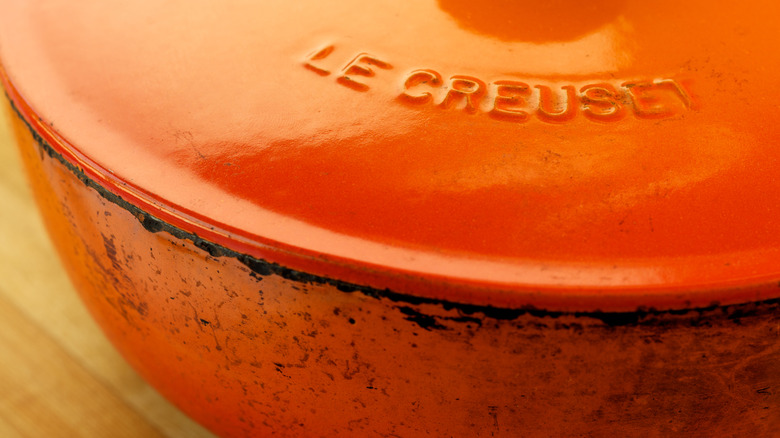
As the old saying goes, "there's a lid for every pot." When it comes to Le Creuset, though, the lids may let the pot down. Whether glass or cast iron, the lids for its Dutch ovens, casserole dishes, and braisers have been frequently criticized by customers for their potentially poor craftsmanship and erratic nature. On the cast iron front, the lids can sometimes not sit flush against the pot's rim, allowing steam to escape and preventing people from cooking properly with them. This can be due to the lid itself being misshapen, which you really wouldn't expect from such an expensive product.
The brand's glass lids can be even more problematic. Not only have customers stated repeatedly that they don't fit on the pots properly, but others have even had them explode in the oven. This is despite customers using them as per their instructions and not exceeding the maximum safe temperature. This is, of course, rather worrying, given the potential safety hazard it presents.
Le Creuset items can be packaged poorly
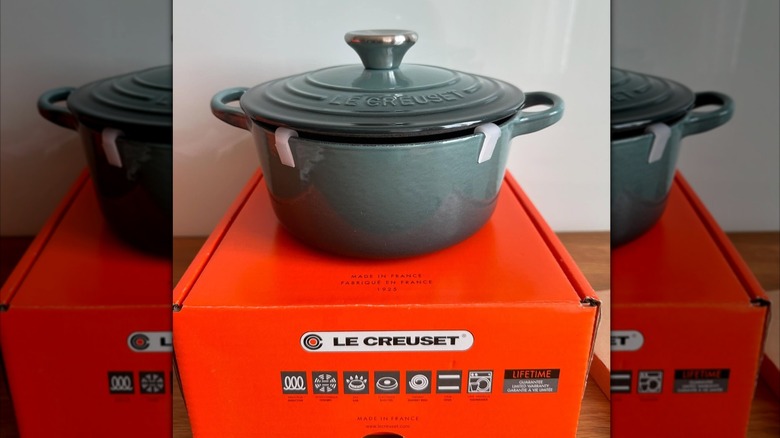
Imagine you've just spent hundreds of dollars on a new Le Creuset pot. You wait for it to arrive with anticipation and glee, and finally, the doorbell rings and the box is there in all its glory. Then, you open it, and you're greeted with a damaged pot that's been clattering against the cardboard in transit.
Sadly, this is an incredibly common occurrence for Le Creuset customers, who time and time again state the company packages its products very poorly. Despite the high price of its items, Le Creuset doesn't see fit to wrap them in bubble wrap or some other properly protective material. Instead, they arrive in relatively flimsy boxes or plastic wrap, which can lead to the pots and dishes inside being damaged before they're even used. Not only that, but customers have also questioned the logic of some of its packaging. The company has been criticized for sending out tiny replacement knobs in massive boxes, and for the highly impractical boxes themselves, which can be a nightmare to get into. The box may not be that important in the long run, but it's often a customer's primary introduction to a product — and when it falls short, it's not a great first impression.
The salt and pepper mills just aren't worth the money
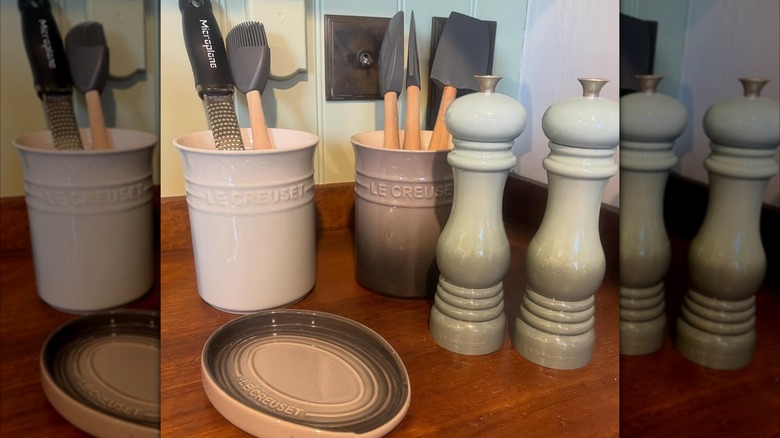
For people who want a Le Creuset item but can't afford its flagship Dutch ovens, its salt and pepper mills can feel like a good entry point. They're far from cheap — they can have a suggested retail price of between $79.99 and $100, depending on where you buy them from — but they're definitely more affordable than its pots and pans. For that price, though, you still expect excellence, and that's not what customers say they get. Le Creuset's salt and pepper mills are regarded as some of the worst items in its product line, and people are generally left underwhelmed by them.
Its salt and pepper mills suffer from a few key issues: First off, they're plastic, which immediately makes them feel slightly lower-quality than you'd expect for their cost. Their ability to actually grind salt and pepper is also apparently lacking. A common customer complaint is they release an inconsistent amount of each seasoning, and the grinder mechanism is poor quality. Throw in the fact they're hard to refill, and it makes you wonder why you'd ever buy them in the first place.
The stainless-steel products are subpar
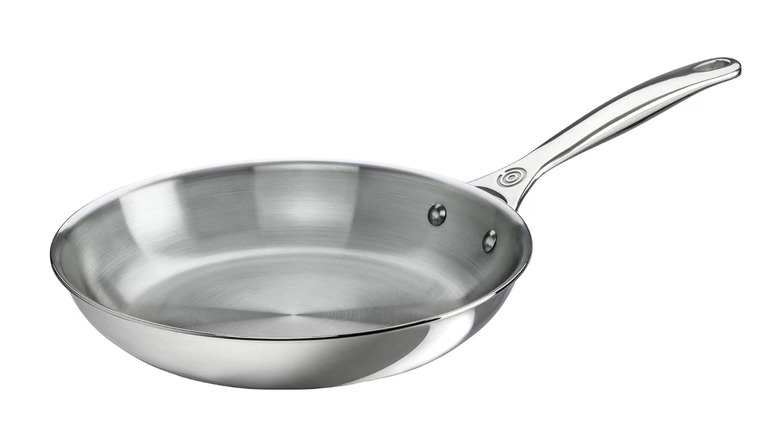
Le Creuset's product range is way more extensive than its iconic Dutch ovens and braisers, cookware that none other than Marilyn Monroe used to collect. It also has an impressive selection of stainless-steel pots and pans, which are marginally cheaper than its cast iron line, but which still set you back a pretty penny. Whereas most people think that the brand's Dutch ovens are worth the cost, though, its stainless-steel items have way more question marks over them. Many customers have stated that these pans just aren't as good as the ones other brands make, and that others — like All-Clad, Demeyere, or Made In — have the edge when it comes to this material.
Most people agree that, while Le Creuset's stainless-steel pans aren't terrible, they don't quite compete with brands that specialize solely in stainless steel. In comparison, Le Creuset's stainless-steel pans can feel a little flimsier, despite being just as expensive. Some customers have also reported that their Le Creuset pans have warped after just a few uses, which again speaks to their potentially more fragile nature. They may look good, but when you're spending hundreds of dollars, that's not quite enough.