

5 Benefits (And 5 Disadvantages) Of Using An Air Fryer
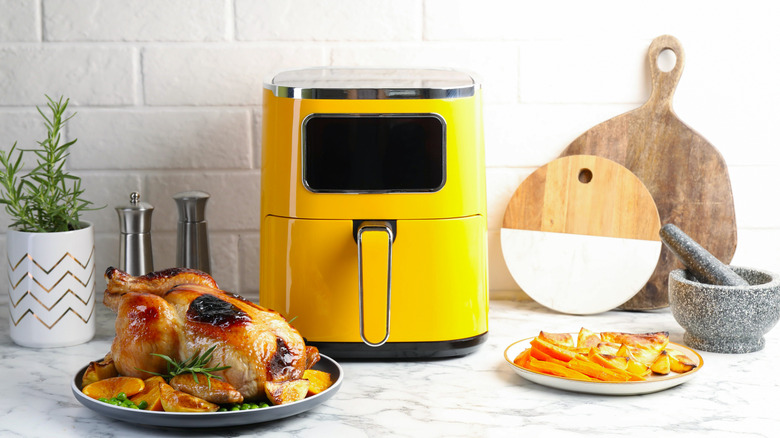
Air fryers are a godsend because they can make crispy food without all the added grease from deep frying. That explains why so many people rely on them — they're found in 60% of homes in America, according to Research and Markets, with roughly a third of Americans using one every week.
While it's evident that this small yet powerful appliance has a decent fan base, some folks still hesitate to buy one, usually because they don't know if it's worth it. If you're one of them and have been confused about whether you should get one or not, you've landed at the right place. We're here to clear the air and tell you all the benefits of an air fryer (which don't end at making healthier food, by the way).
That said, just like every other kitchen appliance, this one also has certain disadvantages that are worth knowing. We've covered those in this article too, so that you can weigh everything before buying one. In case you already have an air fryer, it's still worth keeping both its pros and cons in mind, so you can use it more efficiently and help it last longer.
Benefit: Makes healthier fried food
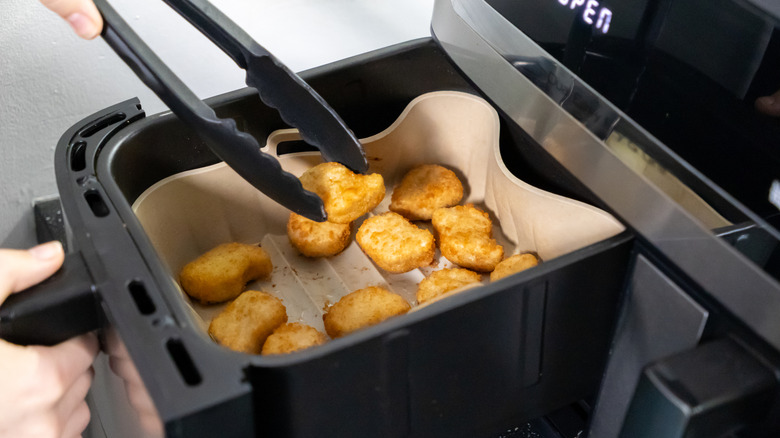
One of the biggest and most obvious advantages of an air fryer is that it makes healthier fried food. Air fryers cut oil use by around 70-90% and can still give your food a crispy, browned texture similar to what you'd get from deep frying. This is because the food cooked in your air fryer isn't technically fried — it's actually baked, in a way, from hot air moving around inside it. What this means is you can enjoy fries, onion rings, panko-coated popcorn chicken, or any other food item that's usually deep-fried, without all the excess grease.
Another great thing is that the amount of oil required can vary based on what you're cooking, and in some cases, you might not need any at all. For instance, many fresh foods just need a minimal amount, to help give them that quintessential, slightly crunchy texture. On the other hand, some fresh foods, especially meats with a decent amount of fat in them, usually do not need any oil. Similarly, you won't need any extra grease when you're heating up most kinds of frozen foods.
Disadvantage: Isn't ideal for frying foods with a wet batter
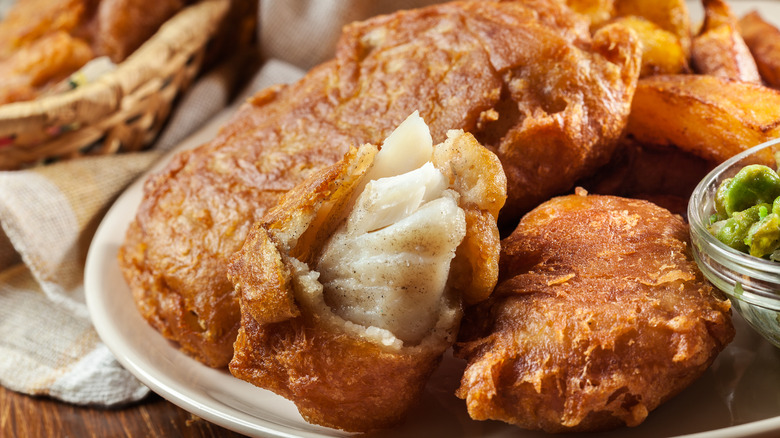
In one way, this appliance fails at being a replacement for deep frying, because an air fryer isn't good at cooking battered foods. If you try it, the batter will slip off during the process. If it manages to stay put to some degree, there are still chances of things going south, because in most cases, your food will end up with a patchy coating.
You might wonder why this happens, given that air fryers can go up to a similar temperature range to oil while deep frying. The difference is that oil helps to fix the coating in place, which is something an air fryer simply cannot do because of the way it works. Luckily, there are a few ways to work around this situation. You can coat the battered items generously with flour before placing them in the air fryer, or you can dip the foods in the batter and then freeze them for a few hours before cooking. Though these methods will work for most foods, results can vary based on the recipe, so keep that in mind.
Benefit: An air fryer is very versatile
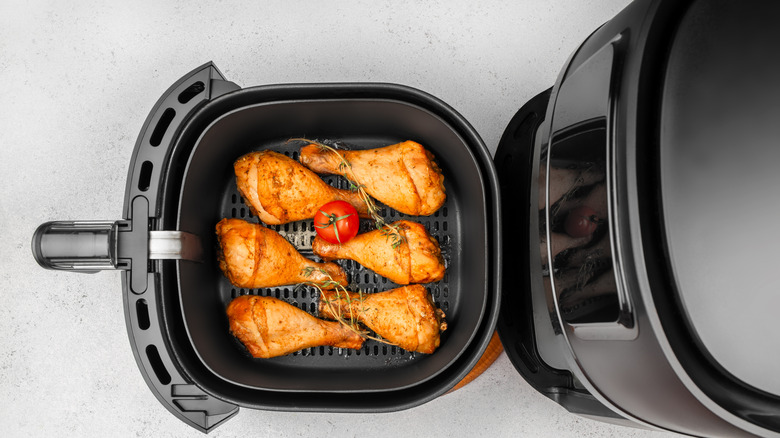
Don't crank up your air fryer only when you're looking to move away from deep frying, because it's a lot more versatile than that. For instance, you can easily make sweet potato pie in your air fryer, or for a big meal, you can even cook a whole rack of lamb in your air fryer. These options are just the tip of the iceberg — these appliances can be used to make a bunch of other foods, from meats to sweet treats.
It's also great for heating up leftovers, and can be used to easily cook vegetables, including starchy ones like potatoes. All of this is possible because air fryers work similarly to ovens. The main differences are that air fryers are smaller and the air flows a lot more rapidly in them, so you can use one to cook most foods that you'd normally make in an oven with ease. With that in mind, it's worth using yours more regularly, especially when you're cooking small portions.
Disadvantage: You still can't cook all types of foods in it
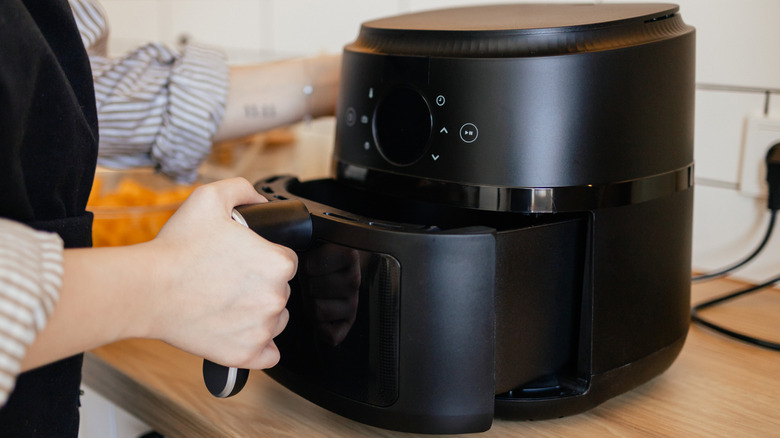
Though an air fryer is quite versatile, you unfortunately still can't cook everything in it. Even aside from items with a wet batter, there are many foods that should never go in your air fryer, including leafy greens, raw rice, popcorn, saucy foods, bacon, raw lentils, burgers, and certain baked goods. With each of these foods, there are specific reasons why they're a bad idea.
Air fryers don't mix well with liquids, and raw lentils and rice are simply not compatible with the appliance because it can't boil them. This also means that, for very saucy foods, the constant air circulation can make them bubble up excessively, creating a mess. The same is true for custards and cheesecakes.
For other foods, an air fryer is simply not good at cooking them evenly, like with leafy greens, which have trouble handling, the intense cooking mechanism. Meats can have trouble too — burgers won't sear as nicely in your air fryer, whereas bacon can be risky because of the fat, because it can get caught up in crevices (as can popcorn). When it comes to baked goods, you should avoid delicate items like soufflés and macarons, because the airflow can ruin their texture, while certain types of breads won't bake well in the air fryer, and might overcook on the outside but stay raw inside.
Benefit: An air fryer is faster and more convenient than other appliances
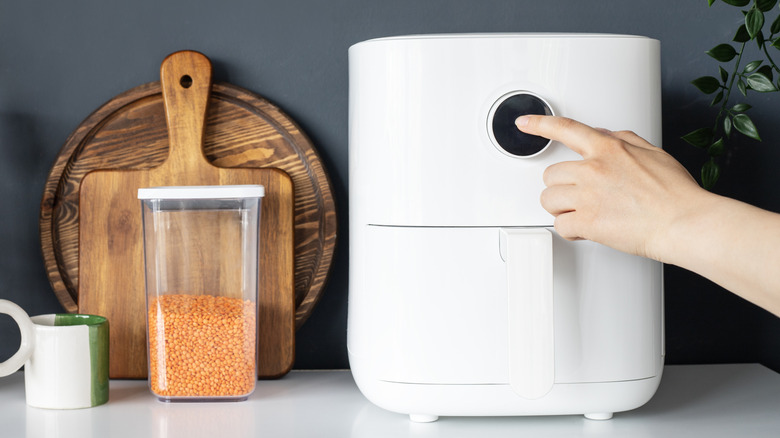
Apart from making healthier fried food, one of the most obvious perks of air fryers is their speed. Unlike most ovens that can take a long time to cook food (sometimes even hours at a time), this appliance can do it a lot faster. Moreover, you don't usually need to preheat an air fryer (and if you do, it's only for a couple of minutes), unlike regular ovens, so you can save a substantial amount of time there as well.
Air fryers are just as easy to use as ovens, and sometimes even easier — many air fryers have various cooking settings that older ovens don't, so all you need to do is press a button based on what you're making and let the appliance do its magic. This makes it a lot easier for everyone to use, including people who are absolutely new to cooking. Lastly, they occupy less space than a traditional oven, which also makes them a more convenient option for people without much kitchen space. It's worth remembering, however, that this can vary based on the size you're going for.
Disadvantage: It has limited capacity
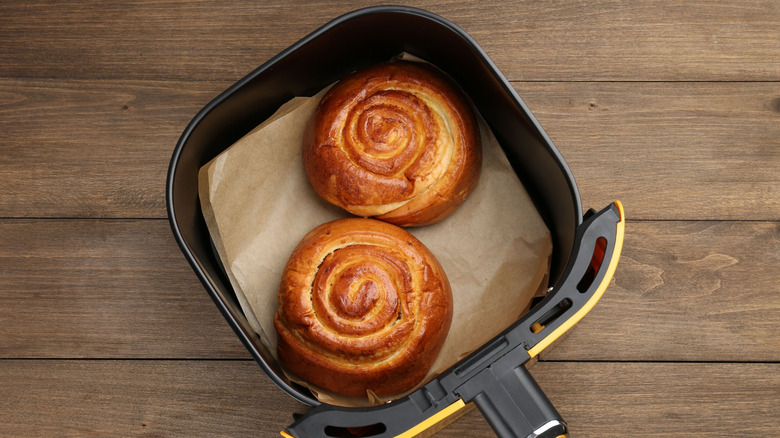
An air fryer's small size is just as much a drawback as it's a benefit, because it translates to a lower capacity than an oven. Hence, your air fryer might let you down if you need to make large portions, because you'd have to cook everything one at a time rather than all at once.
Even though you might be tempted to, you should avoid overcrowding your air fryer to tackle this problem. A crowded fryer means the food will have a poor finish and may cook unevenly, with some areas potentially failing to get hot enough to cook properly. You'll have to stick to batch cooking, and that means, counterintuitively, you might end up spending just as much time as cooking something in an oven. Luckily, there is one way around this situation — based on the number of people you'd regularly be cooking for, you can get a larger air fryer, but do keep in mind that it will occupy more space.
Benefit: It's not as messy as traditional deep frying
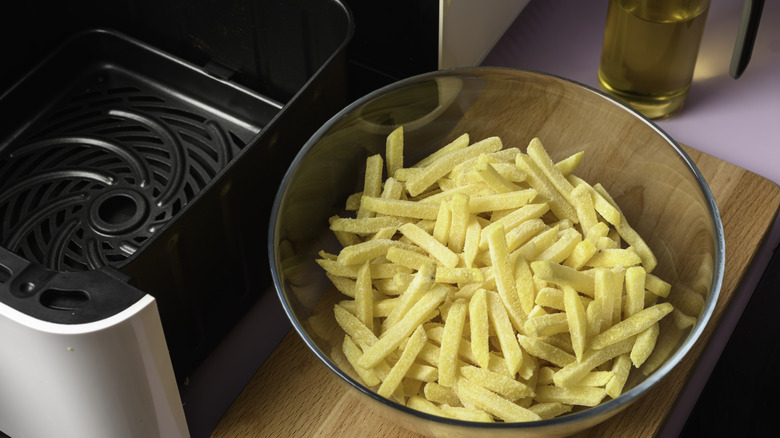
Let's face it — deep frying is messy, difficult, and time- and energy-consuming. You need to let oil heat up to a certain temperature to get the right texture, plus, it isn't the safest cooking method either, especially if you're new to it. Luckily, you won't have to worry about any of this when you're using an air fryer. As well as making everything much easier, air fryers are extra safe because their outer surface doesn't get too hot.
Another major advantage of air frying is that, unlike deep frying, you won't have to think about what to do with all the oil. Plus, deep frying tends to leave a smell — even more so if you're reusing the oil. Air frying won't do that either. Your kitchen will only smell like the actual food you're cooking.
Disadvantage: An air fryer can be a bit tedious to clean
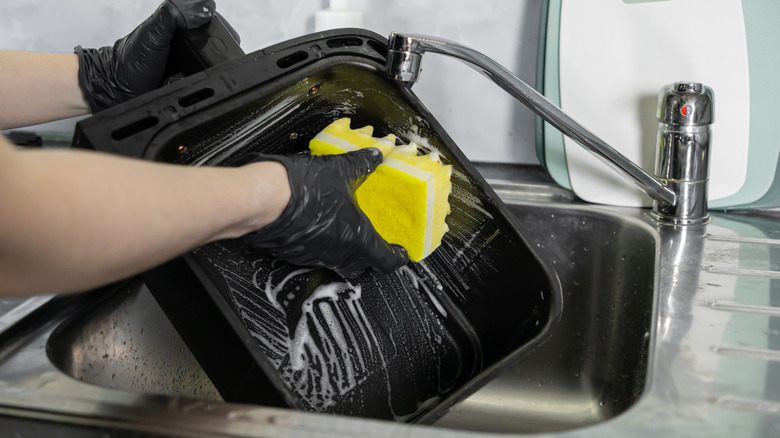
An air fryer won't create as much of a mess as deep frying, but that doesn't mean it won't get dirty at all. And many people might not realise that an air fryer needs to be cleaned between each use. If you don't clean it as often, grime and dirt can build up over time, eventually leading to the appliance not working as well as it should. The bigger problem here, even if you make it a point to clean it often, is that the process can be troublesome with many models.
To clean your fryer, you'll need to scrub the entire basket and the tray (or grates). You might be able to just wash these parts in the dishwasher, but that isn't necessarily the case with all air fryers. For many, you'll need to let them sit in water with liquid dish soap for some time, and then clean them up. Also, you will have to use gentle cleaning products rather than harsh ones.
It doesn't end there, either — even the heating and airflow units need to be meticulously cleaned every week. All this can be a lot of work, especially if you have a busy schedule.
Benefit: It's energy efficient
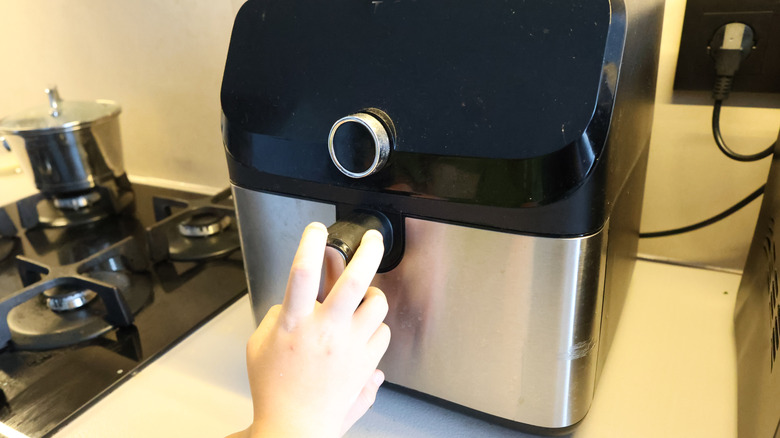
If you care about the energy efficiency of different electric appliances, you're going to be happy to know that air fryers don't use too much energy. They use far less than convection ovens, thanks to their size. The fact that they don't always need pre-heating, and get hot very quickly helps to make them even more efficient. All this boils down to one thing — they won't unnecessarily add to your electricity bill.
With all of that said, there's some nuance to consider, because the energy efficiency of an air fryer also depends on the model and how well you use it. For some people, a higher wattage may be a better option, while overfilling a fryer can cause it to use extra energy. Keeping the appliance clean is also an important way to keep it working efficiently. Lastly, if you need to preheat your air fryer before using it, remember that you don't need to do so for too long.
Disadvantage: Air fryer coatings can sometimes pose concerns
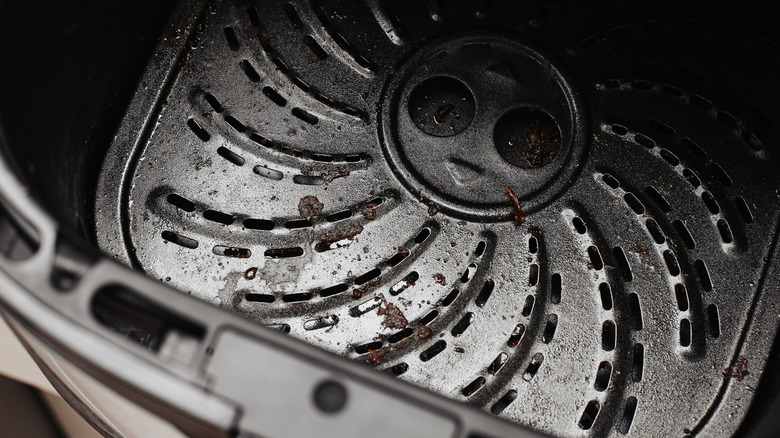
Air fryers tend to have a non-stick surface, and that's usually made with PTFE (often known under the brand name, Teflon). While many people have valid safety concerns about this substance, it's generally safe unless the appliance is constantly heated at higher temperatures than it should be — but it gets problematic here, because this can cause the release of toxic chemicals.
Another concern with non-stick layers is that they can break down over time. This happens faster in some models than others, and can also release toxins. If you're vigilant enough and notice the surface wearing down, or any obvious overheating, you can replace the basket. If that isn't possible, you may need to buy a new air fryer to avoid this problem. Of course, that comes with the problem that air fryers (and their parts) aren't exactly cheap, which makes it hard to win in this situation.