

5 Benefits (And 5 Disadvantages) Of Using An Air Fryer
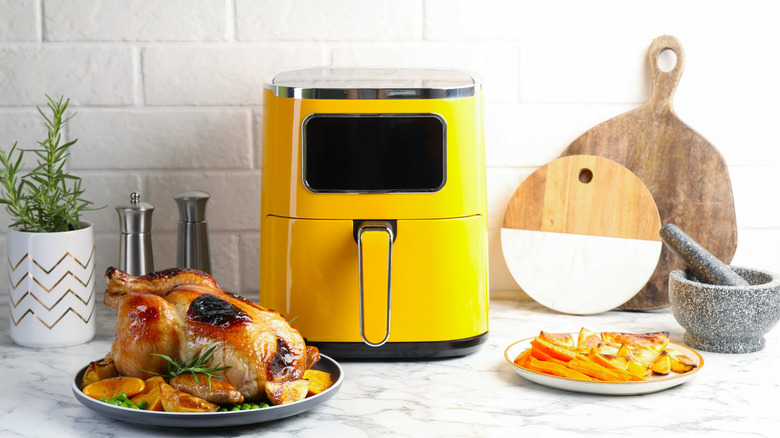
Air fryers are a godsend because they can make crispy food without all the added grease from deep frying. While it's evident that this small yet powerful appliance has a decent fan base, some folks still hesitate to buy one, usually because they don't know if it's worth it. If you're one of them and have been confused about whether you should get one or not, you've landed at the right place. We're here to clear the air and tell you all the benefits of an air fryer (which don't end at making healthier food, by the way).
That said, just like every other kitchen appliance, this one also has certain disadvantages that are worth knowing. We've covered those in this article too, so you can weigh everything before buying one. In case you already have an air fryer, it's still worth keeping both its pros and cons in mind, so you can use it more efficiently and help it last longer.
Benefit: Makes healthier fried food
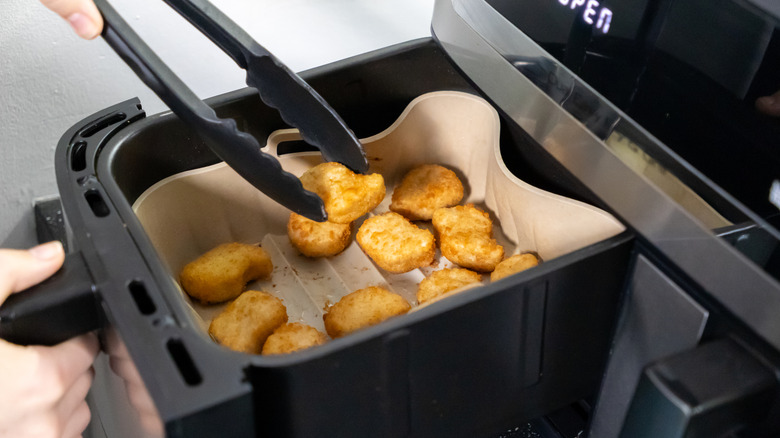
One of the biggest and most obvious advantages of an air fryer is that it makes healthier fried food. Air fryers cut oil use by around 70 to 80% and can still give your food a crispy, browned texture similar to what you'd get from deep frying. This is because the food cooked in your air fryer isn't technically fried — it's actually baked, in a way, from hot air moving around inside it. What this means is you can enjoy foods that are usually deep-fried, like onion rings or panko-coated popcorn chicken, without all the excess grease.
While a little oil is often helpful, air-fried foods usually go very light on it. For instance, many fresh foods need need only a minimal amount, to help give them that quintessential, slightly crunchy texture, from a 3 tablespoons for roasted vegetables to just 1 tablespoon for chicken skewers. There are even some foods that don't need oil at all, like frozen foods or fatty cuts of meat.
Disadvantage: Isn't ideal for frying foods with a wet batter
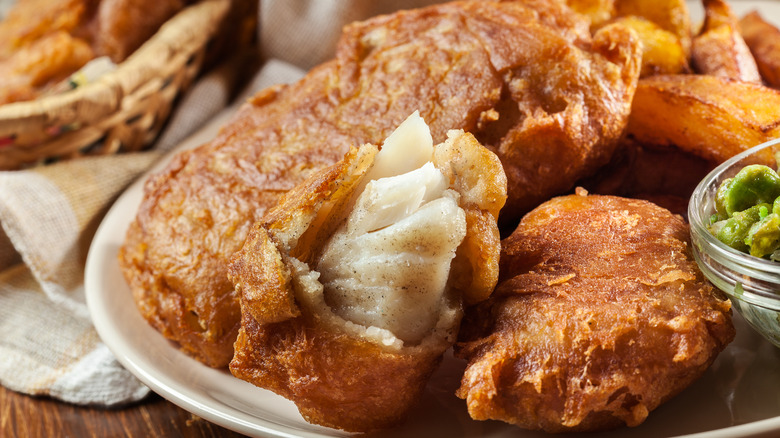
While an air fryer is intended to be a replacement for a deep fryer, there's one big way in which it fails at this — an air fryer isn't good at cooking battered foods. If you try it, the batter will slip off during the process, likely causing your food to end up with a patchy coating. While air fryers cook at similar temperatures to deep fryers, the big difference is that immersing food in hot oil helps to fix a crispy coating in place. Air fryers work differently, circulating hot air around food instead, which is more likely to blow any coating away.
The best way to work around this is not to use a wet batter, and luckily, there are ways to get a crispy coating. You can coat the battered items generously with flour before placing them in the air fryer, or you can dip the foods in the batter and then freeze them for a few hours before cooking. Though this will work for most foods, results can vary based on the recipe, so keep that in mind.
Benefit: An air fryer is very versatile
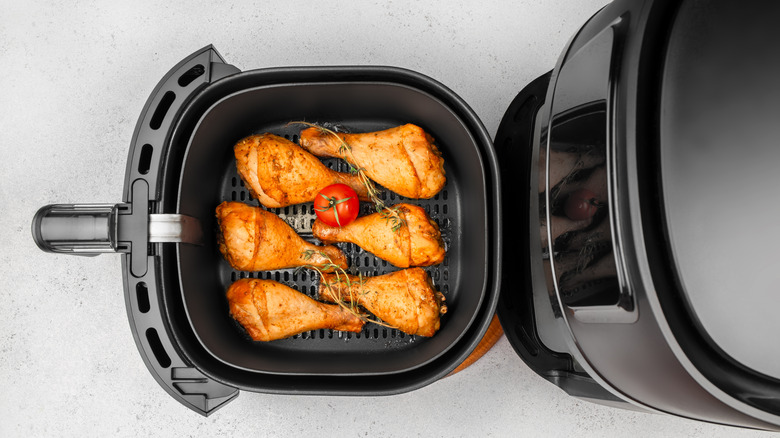
Air fryers can do a lot more than simply being an alternative to deep frying your foods; they can be used to cook everything from meats to sweet treats. For instance, you can easily make sweet potato pie in your air fryer. Vegetables are especially easy to air-fry, including starchy ones like potatoes.
The versatility of air fryers is because they work similarly to ovens. The difference is that air fryers are smaller and the air flows a lot more rapidly in them, so you can use one to cook most foods that you'd normally make in an oven with ease. While you can cook even large foods in these appliances, like air-frying an entire rack of lamb, they're well-suited to cooking small portions. This makes them great for quickly heating up leftovers.
Disadvantage: You still can't cook every type of food in it
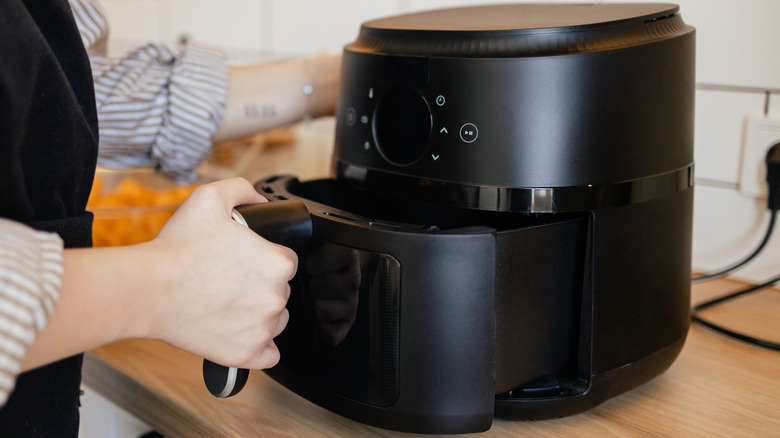
Though an air fryer is quite versatile, you unfortunately still can't cook everything in it. Aside from items with a wet batter, there are many foods that should never go in your air fryer, including leafy greens, raw rice, popcorn, saucy foods, bacon, raw lentils, burgers, and certain baked goods.
Air fryers don't mix well with liquids, and raw lentils and rice are simply not compatible with the appliance because it can't boil them. This also means that, for very saucy foods, the constant air circulation can make them bubble up excessively, creating a mess.
For other foods, an air fryer is simply not good at cooking them evenly, like with leafy greens. Air fryers work by blasting food with hot air, and some foods have trouble standing up to this. Meats can have trouble too — burgers won't sear as nicely in your air fryer, whereas bacon can be risky because of the fat, which can collect at the bottom and burn. Some baked goods can be difficult, too. Why air fryers can give a good texture to things like banana bread, which use a batter with plenty of moisture, you should be careful not to use too deep a pan, to prevent it from overcooking on the outside while staying raw inside. It's also best to avoid more delicate foods, like soufflés and macarons, which will easily be ruined.
Benefit: An air fryer can be faster and more convenient than other appliances
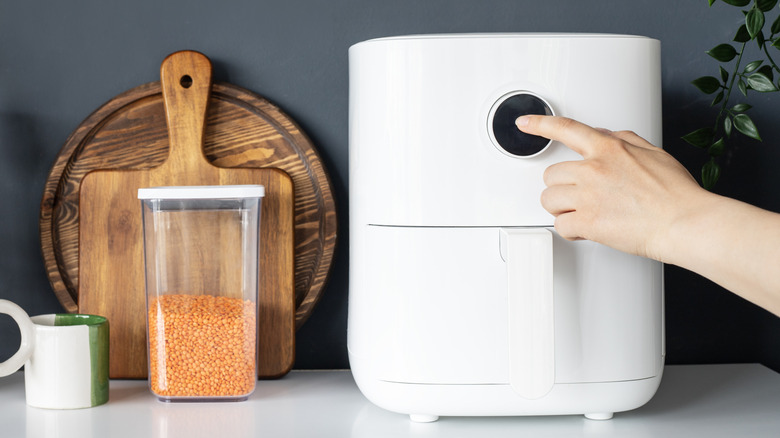
Apart from making healthier fried food, one of the most obvious perks of air fryers is their speed. Unlike most ovens that can take a long time to cook food (sometimes even hours at a time), this appliance can do it a lot faster. Moreover, you don't usually need to preheat an air fryer (and if you do, it's only for a couple of minutes), unlike regular ovens, so you can save a substantial amount of time there as well.
Air fryers are just as easy to use as ovens, and sometimes even easier, even for beginners — many air fryers have various cooking settings for specific foods that older ovens don't, so all you need to do is press a button based on what you're making and let the appliance do its magic.
Lastly, for people without much kitchen space, an air fryer is much smaller than a traditional oven. This makes it a convenient way to economize on space for people who might otherwise not be able to have an oven at all. It's worth remembering, however, that this can vary depending on the size you're going for.
Disadvantage: It has limited capacity
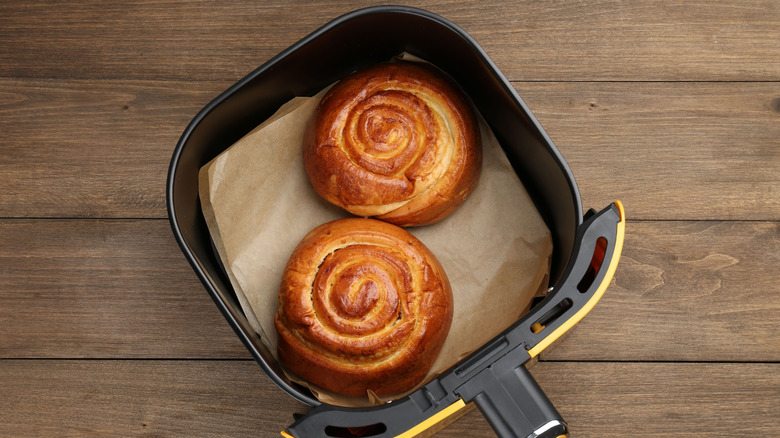
An air fryer's small size can be just as much a drawback as it's a benefit, because it translates to a lower capacity than an oven. This means that your air fryer might let you down if you need to serve a lot of people, because you'd have to cook everything one item at a time rather than all at once.
Even though you might be tempted to, you should avoid overcrowding your air fryer to tackle this problem. A crowded fryer means the food will have a poor finish and may cook unevenly, with some areas potentially failing to get hot enough to cook properly. You'll have to stick to batch cooking, and that means, counterintuitively, you might end up spending just as much time as cooking something in an oven. Luckily, there is one way around this situation — based on the number of people you'd regularly be cooking for, you can get a larger air fryer, but do keep in mind that it will occupy more space.
Benefit: It's not as messy as traditional deep frying
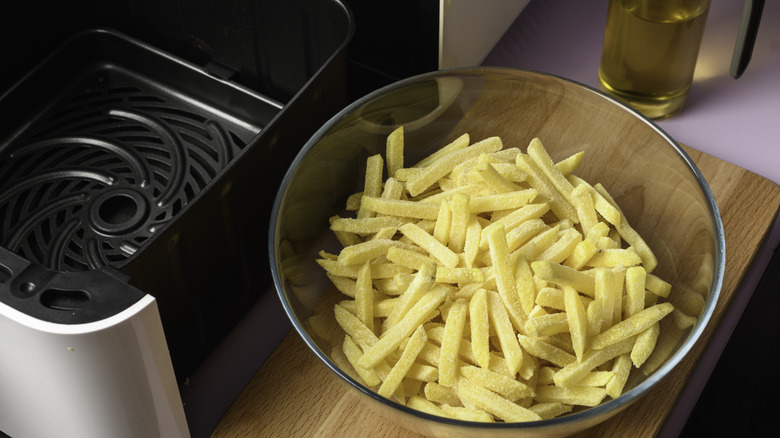
Let's face it — deep frying is messy, difficult, and time- and energy-consuming, involving heating a large amount of oil up to a specific temperature to get the right texture. Luckily, you won't have to worry about any of this when you're using an air fryer. Loading your food into the basket, closing the fryer, and pressing a couple of buttons is much easier than dropping food into dangerously hot oil, and then timing it, checking regularly for doneness, and then removing and draining it when it's finished.
Another major advantage of air frying is that, unlike deep frying, you won't have to think about what to do with all the used oil. Plus, deep frying tends to leave a smell — even more so if you're reusing the oil. Air frying won't do that either. Your kitchen will only smell like the actual food you're cooking.
Disadvantage: An air fryer can be a bit tedious to clean
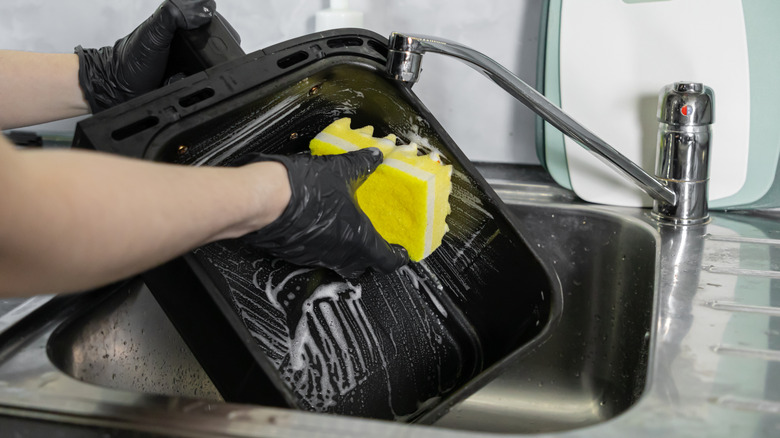
An air fryer won't create as much of a mess as deep frying, but that doesn't mean it won't get dirty at all. And many people might not realise that an air fryer needs to be cleaned between each use. If you don't clean it as often, grime and dirt can build up over time, eventually leading to the appliance not working as well as it should. The bigger problem here, though, is that the cleaning process can be troublesome with many models.
To clean your fryer, you'll need to scrub the entire basket and the tray (or grates). You might be able to just wash these parts in the dishwasher, but that isn't necessarily the case with all air fryers. For many, you'll need to let them sit in water with liquid dish soap for some time before scrubbing. Be sure to use gentle cleaning products rather than harsh ones like oven cleaner. The heating elements should also be carefully cleaned regularly, using a cloth damp with some dish soap, and a soft brush. You should also check the vents from time to time, for any built-up dust, and clean that out too. All this can be a lot of work, especially if you have a busy schedule.
Benefit: It's energy efficient
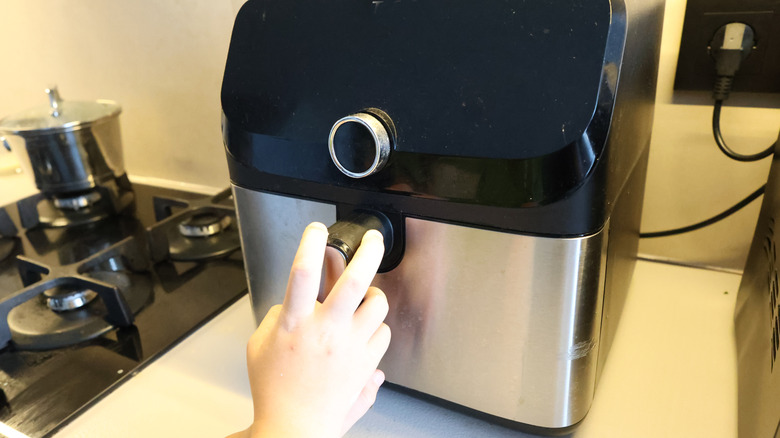
If you care about the energy efficiency of different electric appliances, you'll be happy to know that air fryers don't use too much energy. They use far less than convection ovens, thanks to their smaller size, and the fact that they don't always need preheating, and get hot very quickly helps to make them even more efficient. In fact, they're often considered the most environmentally conscious way of cooking.
With all of that said, there's some nuance to consider. For one thing, while some people may need a larger or higher-powered air fryer, these will naturally need more energy to run. Using an air fryer properly will help too, whereas overfilling the basket or failing to properly clean your air fryer can both impact its efficiency. Lastly, air fryers do sometimes need to be preheated for certain dishes, but if you find yourself needing to do this, remember that you don't need to spend too long doing so.
Disadvantage: Air fryer coatings can sometimes pose health concerns
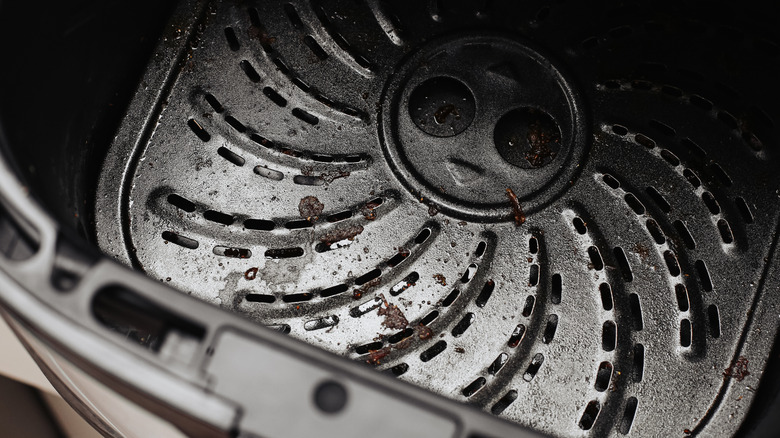
Air fryers tend to have a non-stick surface, and that's usually made with PTFE (often known under the brand name Teflon). While many people have valid safety concerns about this substance, it's generally considered safe. The problems arise if the appliance is regularly heated to higher temperatures than it should be, which can cause the release of toxic chemicals.
Even if used correctly, non-stick layers can still slowly break down and release over time, and how fast this happens depends on which model of air fryer you're using. The signs are similar to what you'd see in overheated non-stick cookware, like developing a dull appearance or brown color as the coating degrades at the molecular level. Check vigilantly while cleaning, and make sure to replace the basket when you need to. If that isn't possible, though, you may need to buy a new air fryer. Unfortunately, all of this comes with the problem that air fryers (and their parts) aren't exactly cheap, which makes it hard to win in this situation.