

4 Grocery Store Brands That Reportedly Work With Taylor Farms
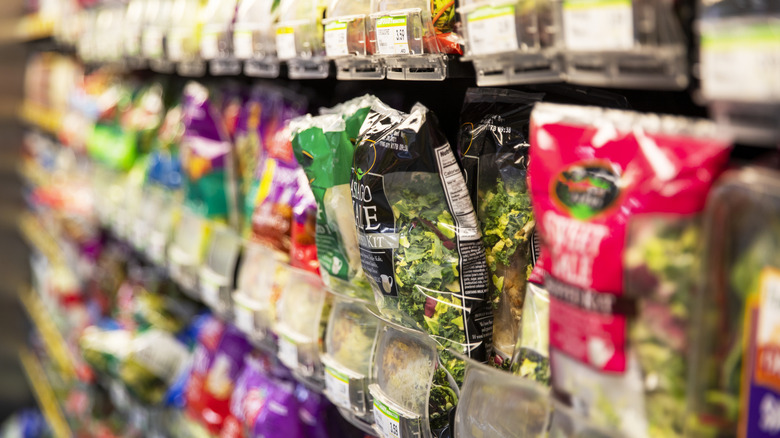
Cyclosporiasis outbreak linked to Taylor Farms has dominated the news for weeks, and it's not the first time cyclosporiasis has made headlines. In 1996, the cyclospora parasite was responsible for one of the biggest fruit and vegetable recalls in U.S. history, ultimately linked to raspberries from Guatemala. But this recall focuses on iceberg lettuce from a Mexican supplier to Taylor Farms, a produce giant that supplies to countless businesses — including some popular store brands.
The grocery chain-owned store brands that use Taylor Farms produce include several titans of the grocery industry. Walmart and Target are perhaps two of the biggest culprits, but Kroger is another massive grocer that sometimes brands Taylor Farms products as its own. Even Whole Foods is widely thought to utilize at least some produce from the embattled company.
It's important to note, however, that this does not mean all store-brand produce from these grocery chains is dangerous. Taylor Farms posted a list of recalled produce, which is exclusively assorted lettuce and bagged salad mixes. And since all affected products are well past their expiration dates, none should remain on shelves or in refrigerators even if the recall was somehow missed. That said, it's still helpful to know where this company's products can unexpectedly show up.
Whole Foods
As a store, Whole Foods is often associated with fresh, high-quality produce — a reputation it generally lives up to between top third-party brands and quality goods under the 365 store brand. Unfortunately, amid the outbreak news, Taylor Farms is widely thought to be a produce supplier for Whole Foods' 365 brand.
Information about the connection between these two companies is scant because, like many grocery stores, Whole Foods doesn't reveal much information about private label sourcing. But in 2016, before Whole Foods' acquisition by Amazon, Taylor Farms was a publicly declared produce partner for the grocery chain.
Between Taylor Farms' ubiquity as a behind-the-scenes supplier in the food industry, the continued presence of its branded products on Whole Foods shelves, and the fact that Amazon has not denied the 365 connection, it is likely that Taylor Farms remains in business with Whole Foods. The confusion highlights why one of the most important things to know about Whole Foods' store brand is that Whole Foods doesn't actually make all of its own products — though foodborne illness is not usually a consequence.
Walmart
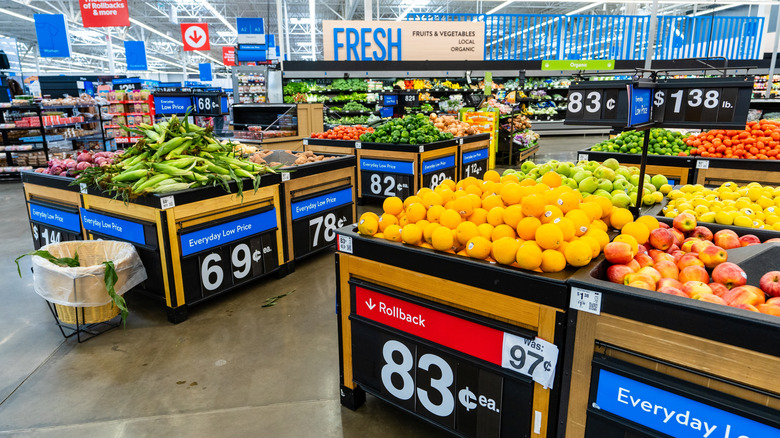
The biggest grocery chain in the U.S. probably won't surprise you. With over 4,600 stores nationwide (excluding Sam's Club), Walmart is the country's top grocery chain, according to estimated revenue data from Progressive Grocer, a food retail trade publication. It is also yet another store through which millions of Americans have eaten Taylor Farms produce, and might continue to do so.
Walmart's Marketside brand focuses on fresh foods that are often ready to eat, including a range of pre-cut produce and salad kits. For these products, Walmart is said to alternate its sourcing between Taylor Farms and Dole, another produce giant. And unlike other stores on this list, several of Walmart's lettuce-containing Marketside products were specifically recalled by name and UPC code.
Beyond this confirmation of several specific products, the depth of Walmart's partnership with Taylor Farms is not especially well known. But what is known is that early in the outbreak, several Walmart employees posted that Walmart stores had preemptively pulled all iceberg lettuce from shelves. That may have been an abundance of precaution, or it may suggest that Taylor Farms runs deep at America's biggest grocery store.
Kroger
In some areas of the country, it's easy to miss, but Kroger is actually a huge player in the grocery industry. There are over 1,200 stores operating under the company name, but Kroger owns more than a dozen smaller grocery stores too, like Fred Meyer and King Soopers, which bring the company's total retail locations to more than 2,700. And like many of its fellow grocery giants, Kroger also uses Taylor Farms produce.
While discussing the cyclosporiasis outbreak on Reddit, several store employees revealed that Taylor Farms is a major vegetable supplier for Kroger. Workers indicate that nearly all of the grocery chain's pre-packaged vegetables, including bagged salad mixes, are made with Taylor Farms produce.
If there was any lingering doubt, several Kroger employees have said that stores receive produce deliveries in boxes marked with Taylor Farms' name. It's unclear if other grocery stores owned by Kroger lean so heavily on Taylor Farms for produce, but given the need to streamline a large and complicated business, it seems reasonable.
Target
Amid significant financial losses, slumping foot traffic, and executive upheaval from a consumer boycott, Target is in need of a change. The big box store has not answered all the boycotters' calls to fully revive its former diversity, equity, and inclusion (DEI) posture, but there are major changes underway in Target's grocery department. One is greater product variety, especially from its popular store brand Good & Gather. And you've probably gathered where this is going.
At a minimum, Good & Gather's chopped salad kits are commonly said to use Taylor Farms produce. Like other large-store brands, the extent of Good & Gather's partnership with Taylor Farms is not fully known.
No Taylor Farms products specifically linked to the cyclospora recall are known to have been sold at Target. It does, however, carry several Taylor Farms-branded salad kits and bowls, so a deeper business relationship would not be unusual.