

5 Foods That Have More Fiber Than Black Beans
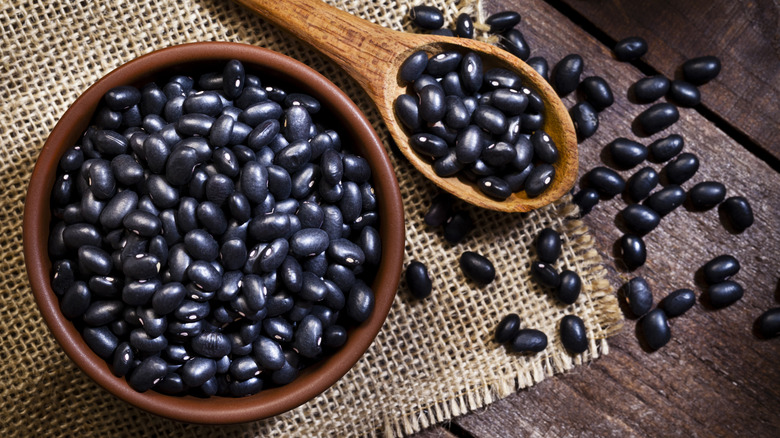
Based on decades of research, consuming plenty of dietary fiber every day supports overall health and can even reduce the risk of developing some diseases and cancers. You may have heard that incorporating legumes into your meals is one of the best ways to add more fiber to your diet. For instance, black beans have about 7.5 grams of fiber in just one-half a cup (per the USDA's FoodData Central database), which is a serving. Since the FDA recommends getting 28 grams of fiber every day, though, you might need to eat foods that contain even more to reach that target.
You could be surprised to learn that almonds, navy beans, certain grains like hulled barley, flaxseeds, and chia seeds have even more fiber than a serving of black beans. Along with adding some variety other than legumes to increase your fiber intake, these foods provide a range of other nutrients that support overall wellness. Let's take a look at how much fiber is in each of these foods, their other nutrients, and how to integrate them into your diet.
Almonds
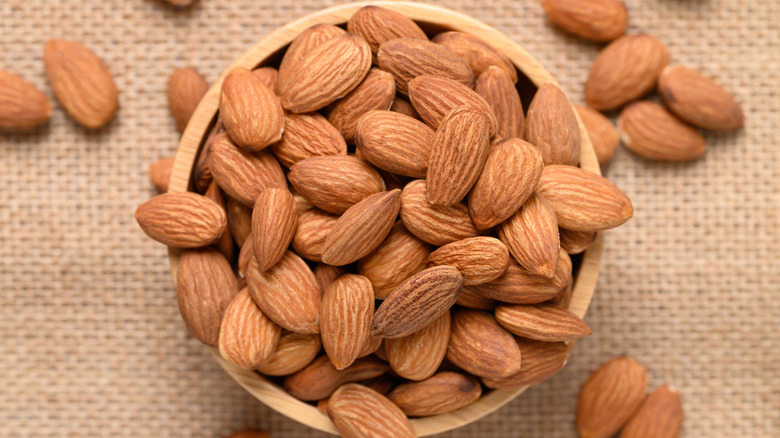
When it comes to choosing fiber-rich foods, nuts may be one of the most underrated options. The tree nut that contains the most fiber of them all is the almond, packing about 3.5 to 4 grams into every ounce (23 almonds), which is mostly insoluble fiber. Compared to a serving of black beans, just one-half a cup of whole almonds contains around 9 grams of fiber — an additional 1.5 grams. Every half-cup also provides an excellent source of protein (15 grams), magnesium (193 milligrams), vitamin E (18.5 milligrams), and calcium (192.5 milligrams). On top of that, they contain less saturated fat (about 2.5 grams) than any other tree nut and zero cholesterol.
Almonds have a slight buttery flavor, so it's easy to add them to a mix or charcuterie snack that you can munch on between meals (or while you're preparing meals). If you enjoy making your own breakfast or snack bars, these tree nuts are a fantastic addition, and they're good sprinkled into oatmeal and desserts, too. However, you don't have to stick to eating them in their natural form. Use a food processor to blend them into a butter or paste that you can use in smoothies, such as a maple almond banana smoothie, on toast or sandwiches, or in savory sauces, like Spanish romesco sauce to serve alongside meat, seafood, or vegetables.
Navy beans
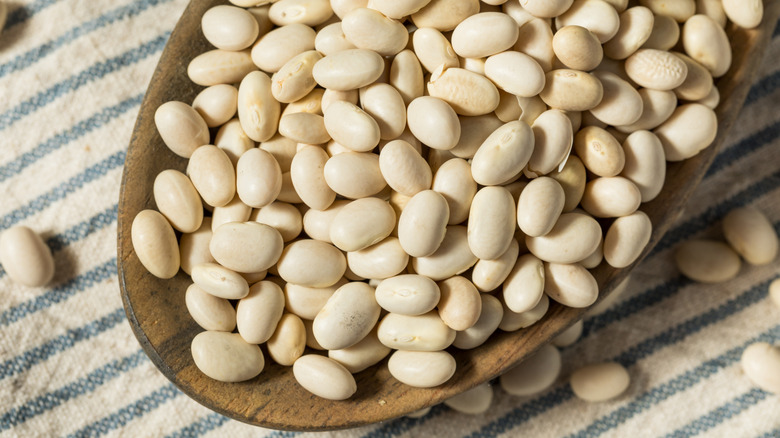
While black beans are one of the highest fiber-containing legume seeds you can get, they don't have the most. Navy beans, which got their name after they were adopted as a staple ration for the U.S. Navy, have 9.5 grams for every half a cup – an additional 2 grams over black beans. Of that fiber, about one-third is soluble, and the rest is insoluble. These white beans also have more than double the calcium (63 milligrams), as well as more iron, potassium, and vitamins B-6 and C in every serving.
Since navy beans have a creamy texture and mild, nutty flavor, they can be used in all kinds of recipes. You can certainly eat them alone as a side dish with your favorite meat or fish. In fact, they're typically used for baked beans, a popular barbecue accompaniment. Toss them into a salad with herbs and olive oil, or add them to your favorite chili, soup, or stew. On the other hand, you can mash them into potatoes, replace mayonnaise with them in egg salad, and use them instead of chickpeas to make hummus or other dips.
Keep in mind that, if you get dry navy beans rather than canned, you might want to soak your beans before using them. Doing so will break down the outer skin to make them cook quicker and more evenly, as well as easier to mash or purée later.
Hulled barley
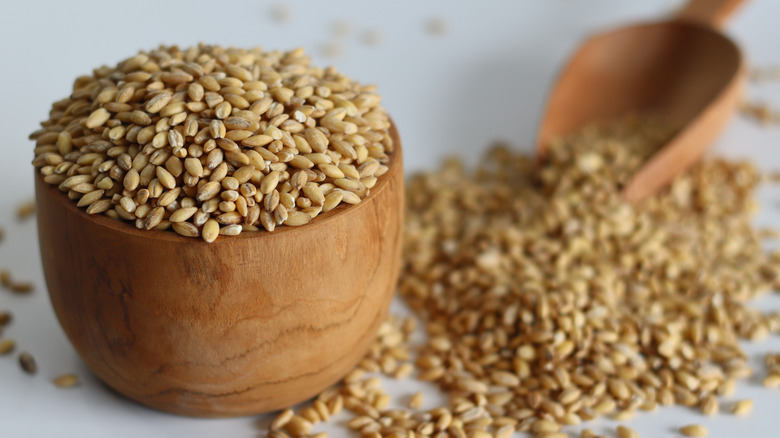
Whole grains have long been established as good sources of fiber, and some of them have even more than a serving of black beans. Hard white wheat, for instance, contains around 11.5 grams for every half a cup – 4 grams extra by comparison. Among all of the grains, though, hulled barley has the most at about 16 grams in one-half a cup – an extra 8.5 grams – and pearl barley (although not technically a whole grain) isn't too far behind with 15.6 grams.
The hulled type edges out the pearl type slightly because it's minimally processed and still has the hull or outer bran coating. Despite having a balance of soluble and insoluble fibers, soluble fiber — specifically beta-glucan — is the star here because it's known for lowering cholesterol and managing blood glucose and gut microbiota. With hulled barley, you also get more antioxidants, minerals, protein, and vitamins than both the pearl version and black beans. It has 30.5 milligrams of calcium, 122.5 milligrams of magnesium, 416 milligrams of potassium, and 11.5 grams of protein, just to name a few.
Some at-home cooks might find this whole grain intimidating to use for anything other than soup simply because they're unfamiliar with the proper way to cook tender, delicious barley. Generally, hulled barley can be prepared just like white rice, except that it needs more water and a longer cook time. You can, however, soak these whole grains to reduce the water and cooking time needed and to make them less chewy and easier to digest. Then, you can use this nutty-tasting grain in all kinds of recipes, like curry, jambalaya, risotto, stir-fried vegetables, and stuffed green peppers.
Flaxseeds
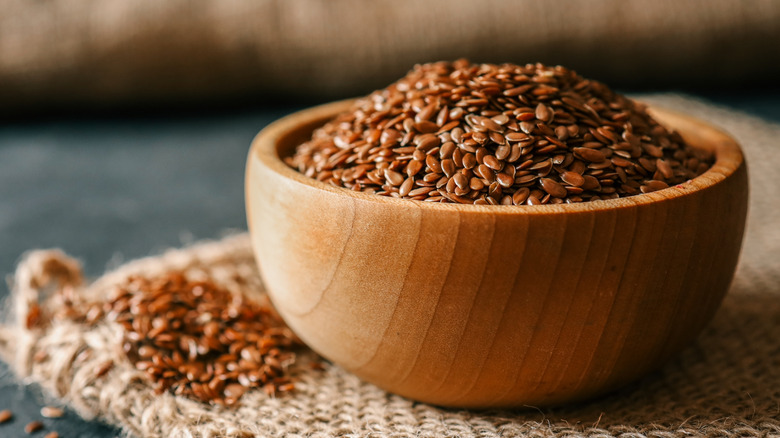
You might be surprised that certain seeds are considered fiber powerhouses. Among the numerous types that you can eat, flaxseeds contain one of the highest concentrations at about 5.5 grams in a 1-ounce serving. Compared to a half-cup serving of black beans, though, this superfood packs 23 grams of fiber – 15.5 grams more. This amount of fiber accounts for up to 40% of the seed's composition, and 75% of that is soluble (per a paper published in Molecules).
Each one-half cup of flaxseeds is also rich in other nutrients, such as 214 milligrams of calcium, 329.5 milligrams of magnesium, and 685 milligrams of potassium. On top of that, they have a staggering amount of omega-3 fatty acids and phenolic compounds called lignans that have anti-inflammatory and antioxidant properties. These nutrients and compounds contribute to their ability to significantly reduce blood pressure (improving heart health) and reduce the risk of cancers of the breast, colon, lung, prostate gland, and more. A half-cup provides nearly 15.5 grams of protein, too.
Although it's difficult for the body to break down flaxseeds when they're whole, it's easy to get flaxseeds in your diet without totally changing up your meals. Simply toss them into a coffee grinder or food processor, and add the mill or powder to various recipes. The mild, nutty flavor pairs well with cottage cheese, oatmeal, protein shakes, sauces, smoothies, soups, and yogurt. If you want to save yourself some trouble, you can purchase pre-ground flaxseed and even flour or meal to use in baked goods, such as bread, muffins, and pancakes.
Chia seeds
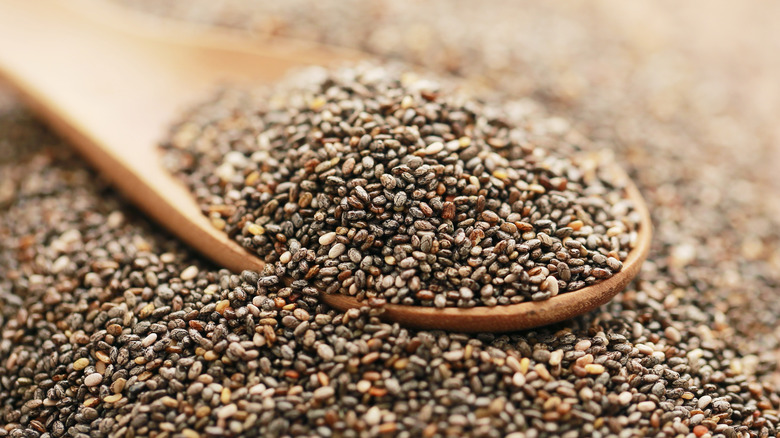
If you think flaxseeds have a shocking amount of fiber, chia seeds might completely blow your mind. These seeds are so fiber-dense that you get nearly 10 grams in just 1 ounce, which is considered a serving. That means you get 39 grams in half a cup – a whopping 31.5 grams more than the same amount of black beans. As opposed to flaxseeds, about 85% to 93% of this fiber content is insoluble (per a paper published in Nutrients), accounting for about 34.5% to 35.5% of the seed's composition (per a paper published in Food Science & Nutrition).
Fiber isn't the only superpower that chia seeds offer. They contain 380 milligrams of magnesium, 460 milligrams of potassium, and 716 milligrams of calcium in one-half cup. Also, they are a fantastic source of plant-based protein at about 18.5 grams and are rich in alpha-linolenic acid, which accounts for 60% to 75% of all the seed's omega-3 fatty acids — more than flaxseed. Alongside antioxidants and polyphenols, these components can help prevent breast, colon, liver, and pancreatic cancers and other diseases.
Dried chia seeds expand when they take on water, which only adds to the high fiber and protein content that makes you feel full faster. While that can make it challenging to eat a 1-ounce serving at once, it's better to eat them in moderate amounts throughout the day anyway, so that you don't bog down your digestive system. A sprinkle of seeds on your salad, smoothie, or yogurt is a good starting point before moving on to a heavier dish like carrot cake chia pudding with Greek yogurt frosting. Since they form a gel when wet, chia seeds are the key to thickening overnight oats and sauces.