

10 Ways You've Been Using Your Dutch Oven Wrong
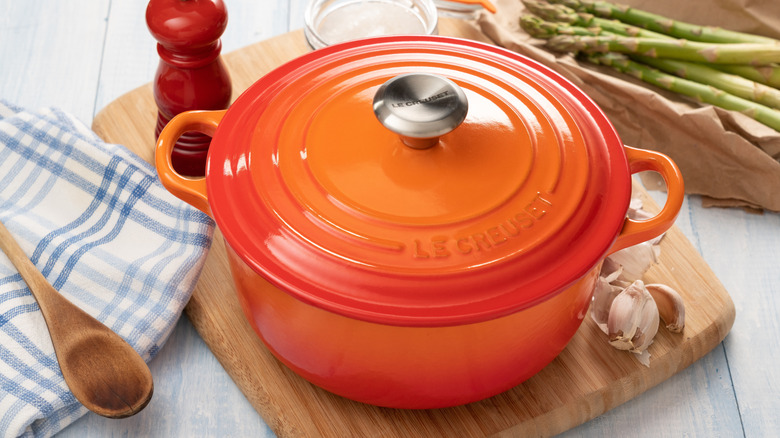
You'd probably be on the same page as us when we say that there's nothing quite like a good old Dutch oven. It's one of the most versatile pieces of cookware you could ever own (even though many people barely use it to its full potential), and, if we're being real, it also looks pretty fancy and aesthetic. Though the history of this equipment is a bit murky, as there's some debate about the exact origin of the Dutch oven and how it got its name, one thing has remained the same since the beginning — it's a staple for many home cooks for all the right reasons.
It's also easy and straightforward to use a Dutch oven ... or so most people believe. Sure, there's no rocket science involved in the process, but it's also true that if you treat your Dutch oven the same way as the other pots and pans in your kitchen, you'll end up damaging it. And honestly, no one would want that, because good-quality Dutch ovens are surely expensive — including the affordable variant at Costco that's stealing the spotlight. Having said that, even if you have so far been using this equipment the same way as run-of-the-mill pots and pans, there's no need to panic. You can easily turn that around by reading this story, as it will help you learn all the ways you've been using your Dutch oven wrong and what you should do instead.
1. Using it over high heat
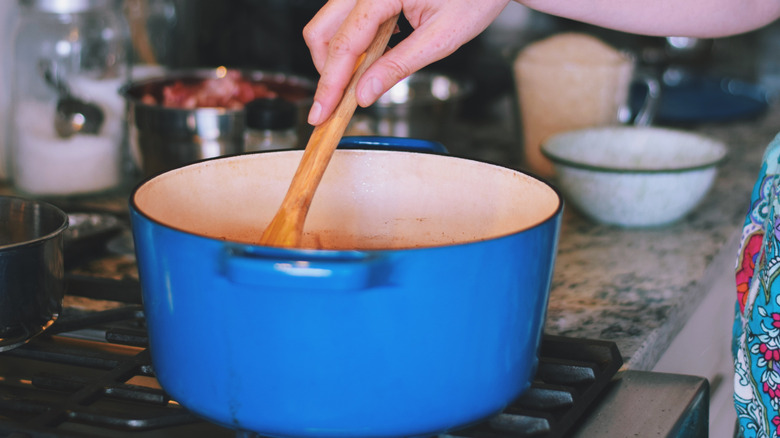
Most cookware made with stainless steel and cast iron can withstand very high temperatures. However, using your Dutch oven over high heat is a mistake you need to avoid at all costs because it can cause several issues.
Firstly, your food will mostly cling to the pot rather than cook or sear properly. Imagine how hard it will be to clean that! Moreover, all the effort you've put into prepping will be wasted, because the food can also burn by the time you manage to scrape the stuck bits off the pot's surface. Apart from this, if you have a Dutch oven with an enamel coating on the inside, it's even more crucial not to use it over extreme heat (not that it's okay to use a cast-iron Dutch oven that way). That's because the coating will start wearing down over time.
At this point, you're probably wondering why using your Dutch oven over high heat can lead to such terrible consequences when that clearly doesn't happen to other types of cookware. Well, the thing is, Dutch ovens are made in such a way that they can distribute and hold heat better than other types of pots and pans. So, when you expose them to high heat, they'll keep getting hotter — a lot more than they should. This is why it's always recommended to cook your food over low heat when using a Dutch oven. Medium heat is about as high as you should go.
2. Cleaning your Dutch oven with harsh products
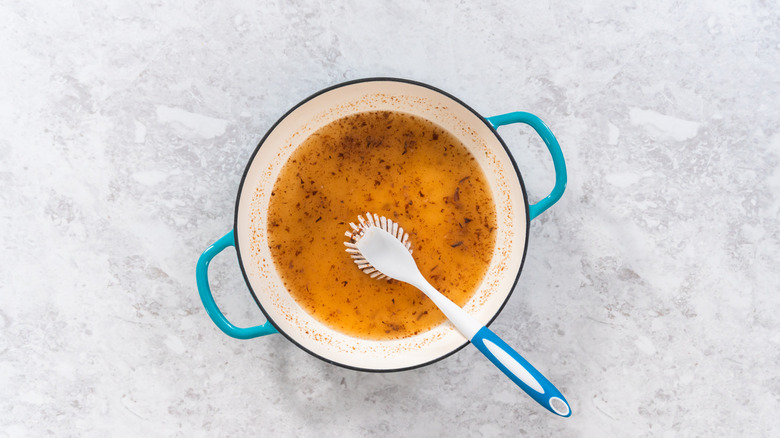
Even when you use your Dutch oven over low to medium heat, food can sometimes still stick to its surface. If that doesn't happen, there's always the possibility of stubborn stains inside your Dutch oven once you're done cooking. While you might want to use strong cleaners and scrubbers to get rid of those stains or burnt food, that wouldn't be the wisest thing to do. That's because these products will ruin your Dutch oven over time, so it isn't worth the risk.
The good news here is that there are plenty of other effective ways to get rid of burnt or stuck-on food and stains in your Dutch oven. If you're using a cast-iron Dutch oven, a simple way to clean burnt food from it (or stuck bits) is to add some kosher salt or sea salt to it. You'll need to let that sit for a while — at least a few minutes. After that, you can wipe it all off, preferably with a soft towel. If some burnt bits are still stuck to the surface, you can boil water in the pot with baking soda. That should loosen them. This method also works for enamel-coated Dutch ovens.
If your enamel-coated Dutch oven doesn't have any stubborn stains or food stuck in it, you can simply clean it like any other utensil, but with a soft towel or sponge and any type of mild dish soap. And irrespective of the type of Dutch oven you have, don't soak it in water for too long, as that can cause rusting (on the outside for enamel-coated ones).
3. Only using it to make soups, stews, and sauces
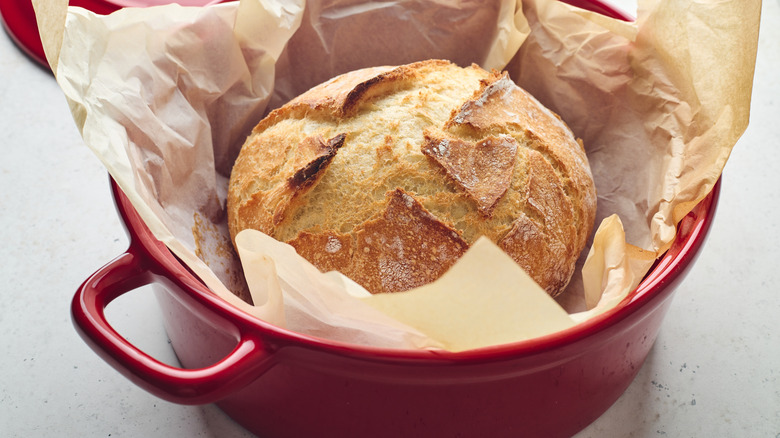
Your Dutch oven is probably your go-to when you want to make soups, stews, or delicious sauces, as it is deep and retains heat well. But the sad part is that many home cooks believe it can't be used for anything else. We're here to change that misconception, because this cookware is a lot more versatile than most people realize.
For instance, you might not know that a Dutch oven can be your best friend when it comes to easy bread baking. With that in mind, if you're an avid baker but haven't used it to bake bread, you need to turn that around. Baking bread in your Dutch oven is just the tip of the iceberg, though. Home bakers will also be happy to know that this versatile pot can be used to make all sorts of desserts, too, like cakes, brownies, crisps, and more.
Not a baker, but love cooking all things savory? Then use that Dutch oven to roast poultry and veggies, or to sear and braise meats. It's also great for deep frying food (as long as you're careful), and can be used as a steamer too, with a steamer tray. And, on days you're feeling a bit lazy, you can whip up easy one-pot meals and casseroles in this cookware. The possibilities are endless!
4. Preheating an enamel-coated Dutch oven while it's empty
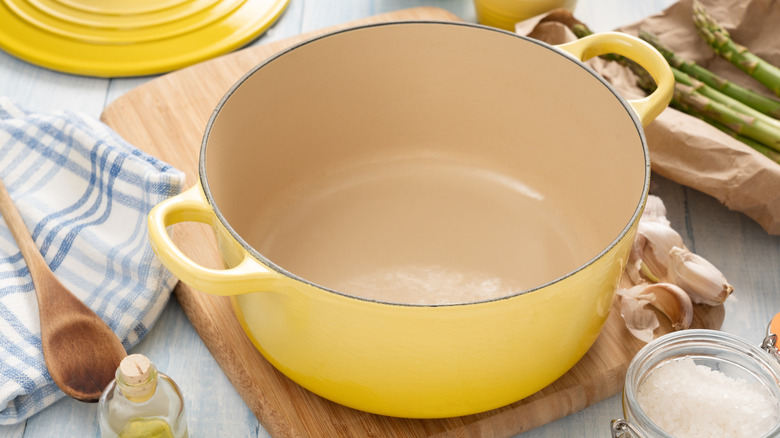
It's common practice to preheat empty stainless steel or cast-iron pots and pans before cooking. But when it comes to Dutch ovens with an enamel coating, it's best to avoid this, as the coating can break down under excessive heat.
As noted earlier, Dutch ovens aren't meant to be heated over intense heat. Plus, when you heat an empty one on the stovetop, there's nothing to absorb and disperse all that heat, and that's essentially what causes the damage. That doesn't mean you can't preheat the pot at all. There are a few ways to go about it to ensure the Dutch oven is hot enough before you begin cooking, without wearing down the enamel. The first and easiest way is to add some oil or any other fat to the pot, as that will regulate the heat properly. Once the oil/fat is hot enough, that's a sign that you can begin adding other ingredients to the Dutch oven. If you're making something that doesn't need oil or fat, just add liquid to the pot, like stock or good old water, as that will serve the same purpose.
There could also be times when you need the Dutch oven to be hot but also empty (many baking recipes require this). For that, you can actually put it right into your oven, but don't set the appliance at a very high temperature, as that too can sometimes damage the enamel.
5. Scraping it with metal spoons
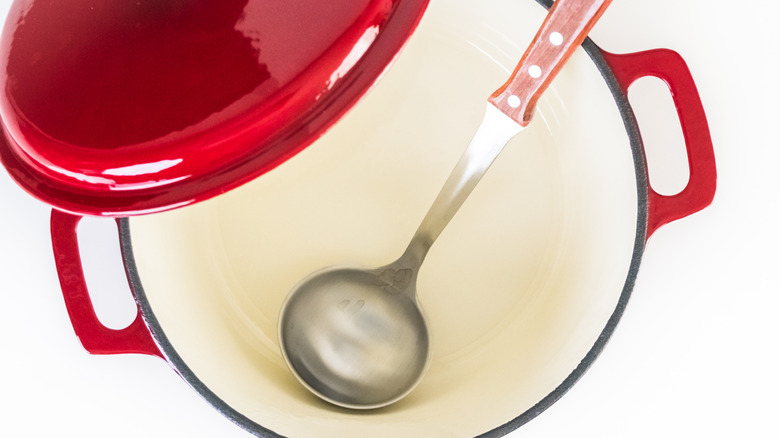
It might not seem like too big a deal to use a metal spoon to stir the food you're cooking in your enamel-coated Dutch oven. But when you do that, you can inadvertently damage the cookware.
The reason behind this is pretty simple and sort of obvious — metal spoons are quite sturdy, and if you accidentally scrape the pot too hard while stirring the food, the enamel can chip. Sure, this might not damage the Dutch oven right away, but if you keep using metal spoons, the coating will eventually start breaking down completely.
Given the consequences, it's best to stay away from metal spoons when using an enamel-coated Dutch oven. But if that's all you have, try to use smaller and lighter spoons with round edges, and be light-handed while stirring, so that you don't scrape the pot. And if you can, try switching to other options like nylon or silicone spoons and spatulas, as the chances of your pot getting damaged with them are very low. In fact, when you're making sauces and soups, we'd especially recommend using silicone spatulas, as they will help scrape everything out of the pot effortlessly. Wooden spoons are also a great choice because they don't heat up like metal ones.
6. Putting your Dutch oven in the microwave
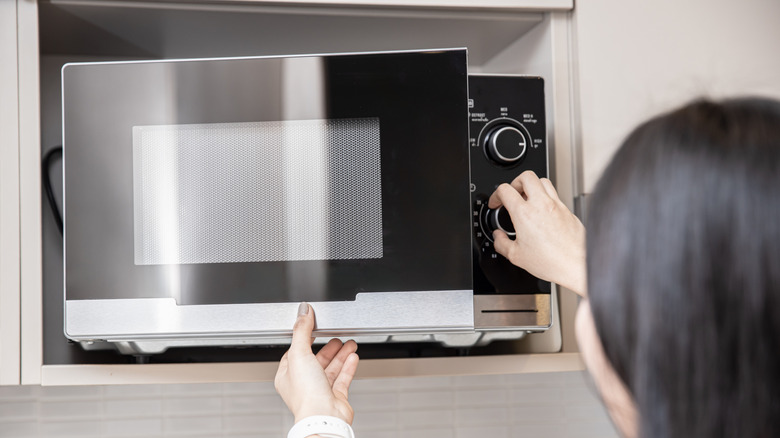
Besides being able to cook a lot of things, a Dutch oven is also pretty versatile because you can use it on the stovetop and in the oven. Considering that, some people think it can be used in the microwave too, especially when they've stored leftovers in the cookware and just want to heat them up quickly. While it may seem harmless, you absolutely should not microwave your Dutch oven, because it can actually be hazardous.
Microwaves aren't meant for metal utensils. And as you're already aware by now, Dutch ovens are made with metal. So, putting this cookware in the microwave defeats the whole purpose. This is because it's very likely that the food won't heat up as you'd want it to. Honestly, though, there's something much worse that can happen if you try to use your Dutch oven in the microwave.
As some of you might know, metal utensils can actually cause a spark in the microwave and lead to a fire. Of all things, this is something you definitely wouldn't have signed up for, and taking that into account, stick to the stovetop or oven when using your Dutch oven.
7. Not seasoning it
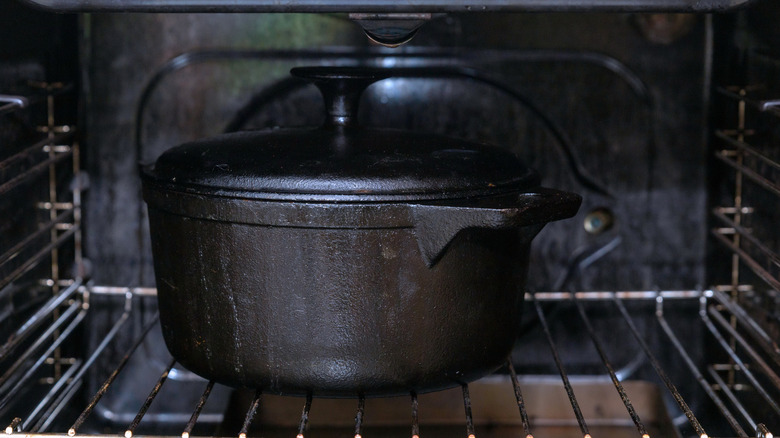
It isn't necessary to season an enameled Dutch oven. But certain Dutch ovens are made entirely with cast iron and don't have an enamel coating. These need to be seasoned even before you use them for the first time, for several reasons.
The purpose of seasoning is to make the base non-stick, so when you cook foods in your Dutch oven, they are less likely to stick to the pot. But that's not the only perk of seasoning this cookware! Since cast-iron Dutch ovens are made with, well, iron, they are also prone to rusting over time. Seasoning the pot also helps lower that risk.
As for how to actually season the Dutch oven, you'll need to start by washing it. As noted earlier, don't use any harsh products for that. Just some mild dish soap, water, and a sponge or brush. Once you're done washing the pot properly, dry it well, ensuring there's no water left behind, as that could hinder the seasoning process. After that, you'll need to rub the entire pot with vegetable oil (or any other oil with a high smoking point). Don't forget to rub the outside and the lid with oil as well. Once that's done, you can put it all in the oven for about an hour, at 350 F to 400 F, and that should do the trick. Be sure to let the cookware cool down completely before you start using it.
8. Putting a cold Dutch oven into a preheated oven
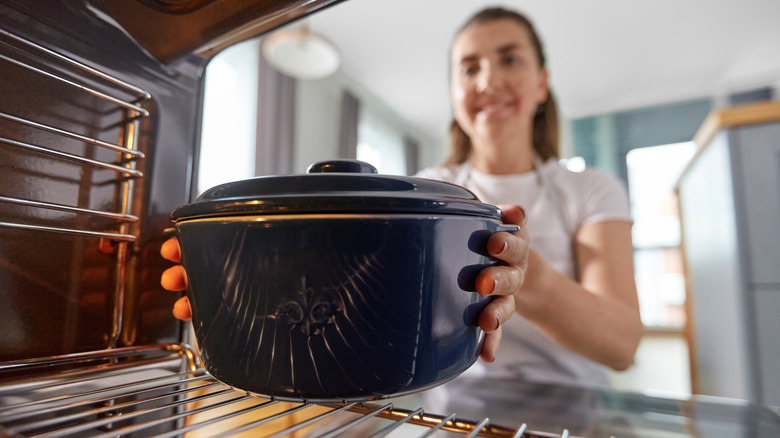
A Dutch oven can be used in the oven just as easily as on the stovetop. So, you can par-cook ingredients in it initially and finish the dish in the oven, or directly cook the entire dish in the oven. One thing you need to be careful about is not placing a cold (meaning room temperature) Dutch oven inside an oven that's already preheated. If you've been doing that, you've been using the cookware wrong and unintentionally damaging it.
It's easy to wonder why this is a problem, given that it's usually advised to preheat the oven before baking or cooking anything in it. Well, it again circles back to the enamel coating in the pot. Just like intensely high direct heat can make it chip and crack, so can extreme fluctuations between hot and cold conditions. We won't get too much into scientific details, but it's worth knowing that this phenomenon is called thermal shock.
If your oven is already preheated, you should place your Dutch oven inside only if you've already par-cooked something in it on the stovetop and the cookware is already hot. In case you're making something where there's no par-cooking involved and the Dutch oven needs to be put in the oven directly, don't preheat the appliance at all. Place the cookware inside the oven and switch it on after that.
9. Cooking acidic foods in it for too long
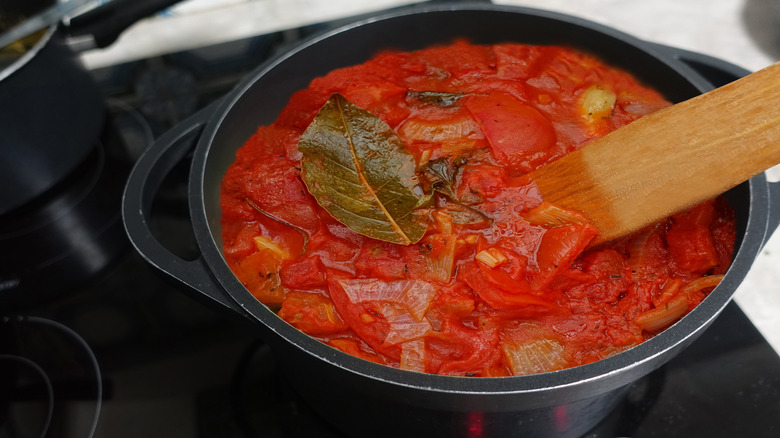
If your Dutch oven has an enamel coating, you don't really need to worry about cooking highly acidic foods in it. The worst that can happen in this case is that your pot may get some stubborn stains that will be difficult to get rid of over time. However, if your Dutch oven doesn't have that enamel layer, you need to be wary of cooking acidic food items in it, especially those that need to simmer for hours.
Let's take tomato sauce as an example. Even though a lot of folks try to cut short the simmering time (which is actually a common mistake many make with tomato sauce), this sauce needs to be simmered for at least half an hour to an hour to get the right texture and flavor. Unfortunately, while the sauce is simmering away, the seasoning in your Dutch oven can start wearing down because of the acid. Now that you're aware of what can happen, though your cast-iron Dutch oven may seem like the best choice to cook an acidic sauce, you're better off using something else in its place.
10. Overcrowding your Dutch oven
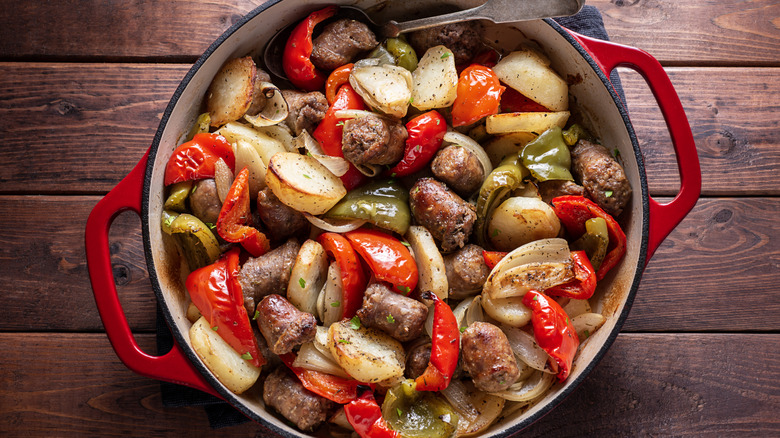
Many people tend to fill their Dutch oven to the brim. They also overcrowd the pot when searing certain foods. That isn't the smartest move, though, and for several reasons.
Sure, packing three-quarters of your Dutch oven when you're making a sauce or soup isn't necessarily going to cause any issues. But if you're searing something in the pot and end up packing it completely, you'll be disappointed for sure, as the food item is almost certainly not going to get that brown and crispy crust you were hoping for. That's because the food is more likely to steam in this case: Given that there isn't enough space for the moisture to escape, it keeps building up inside the pot.
So, as much as you'd want to drop all the meat, seafood, or poultry inside the Dutch oven to sear them quickly, you should instead keep another cast-iron pan on the side and sear half the ingredients in that. If you don't want to use any cookware other than the Dutch oven, consider cooking the food in a couple of batches, which will take extra time, but you'll at least get better results.