

10 Controversial Snacks Americans Used To Eat
You know how many snack foods there are out there? A lot. Seriously, a lot. According to Statista, the United States boasts the largest snack food market in the whole world, with more than $50 billion generated in sales in 2024. Year upon year, chips, ice cream, candy, and cookies remain ever-popular, and there have been countless different versions of all of them throughout the last century, to feed the mammoth appetite for more snacks.
As a consequence of this, it's probably no surprise that some snack food companies have taken things a little too far in their innovation, or else ended up putting out products that somehow ended up being a little more controversial than they probably hoped. In some cases, this has merely resulted in bad PR and the quiet removal of these contentious products from the market. In others, these snack foods have been outright dangerous, and sometimes, fatal. We wanted to dig into some of the strangest snack foods that have ever been released in America, and discuss why they're no longer around. You're in for a wild ride with this one.
1. Hippy Sippy
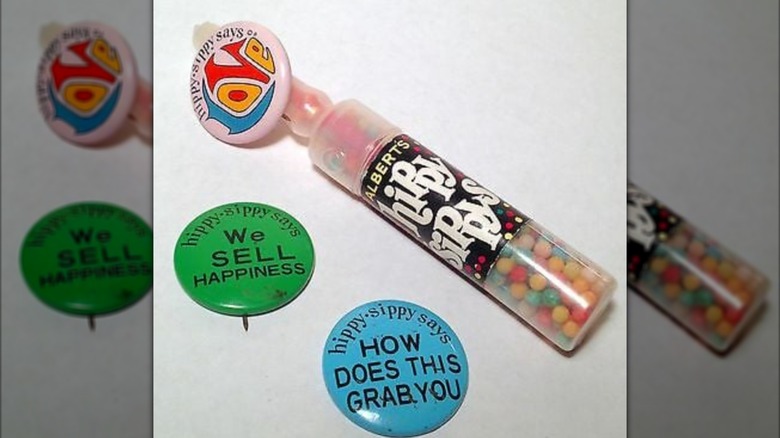
Sometimes, a snack food comes along that really makes you wonder what on earth everyone was thinking. Such is the case with Hippy Sippy, a candy from Japan that was imported to the U.S. in the late 1960s by R.J. Albert & Sons, and enjoyed a brief run of popularity before it was removed from the market for good. If you saw Hippy Sippy candy without its packaging, you'd be baffled as to why it was controversial: This snack consisted of little candy-coated chocolate balls in different colors, not that different from M&M's or a million other foods just like it. The problem was that the package it came in was shaped like a hypodermic syringe, and the candies were essentially meant to represent pills.
This, combined with the "hippy" name and some questionable slogans on the packaging, made people think that Hippy Sippy was promoting drug use. There was immediate outrage, and the controversy built quickly. It got to the point where the U.S. Food & Drug Administration (or FDA) had to step in and ban Hippy Sippy entirely. Now, it remains a relic of a different time.
2. WOW Chips
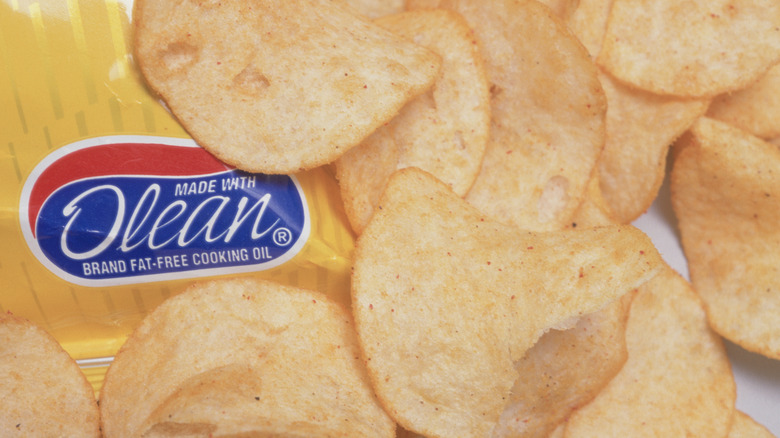
Few snacks have caused as much controversy as Lay's WOW Chips. The story of these ill-fated chips starts back in the 1990s, when Procter & Gamble, after decades of development, finally managed to get its new fat substitute Olestra, approved by the FDA. Olestra could be used to fry food in place of regular oil, but it wouldn't imbue the food with any of its fat. Consequently, food companies immediately seized on it as a way to create lighter snack foods. In 1998, Lay's began selling WOW Chips, a "healthier" version of its regular chips, made using Olean, the branded name for Olestra.
WOW Chips were a staple at potlucks in the '90s, but the problem with them was that Olestra came with some unintended side effects — and they weren't exactly minimal. Olestra prevented the body from absorbing essential vitamins, and caused serious gastrointestinal distress in many people, including cramping and diarrhea. WOW Chips became the subject of lawsuits and the punchline to a million jokes. In 2016, they were finally discontinued. It's pretty wild that they clung on that long. Incredibly, Olestra is still approved by the FDA, even though no one uses it anymore. Everyone's learned their lesson.
3. Nestlé Magic Balls
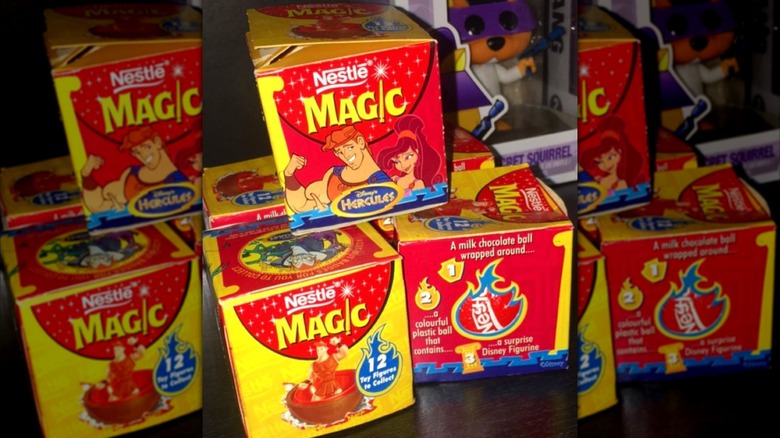
Unlike other parts of the world, America's always been a little lacking in snack foods that have toys inside them. The best example of this is that the Kinder Surprise egg is illegal in the U.S. because of the choking risk it represents. Despite this, back in the 1990s, Nestlé decided that it wanted to try and crack the American market with a product of its own that emulated Kinder's classic chocolate. Enter Nestlé Magic Balls, a snack that contained a miniature plastic figurine inside a chocolate shell.
It ended up being pulled from shelves, for exactly the same reason that the U.S. has never had Kinder Surprise eggs: It was deemed a choking hazard. Almost immediately after Magic Balls were released, they began to face sharp criticism from parents and consumer groups, who said that they were dangerous. Nestlé pushed back, saying that its product was totally harmless, but ultimately had to admit that people had indeed been complaining about them and their safety. Magic Balls were dropped from the market before being re-released as Wonder Balls, which were filled with candy instead of toys. However, the revamped version only lasted a couple of years before it fizzled out.
4. Celery Jell-O
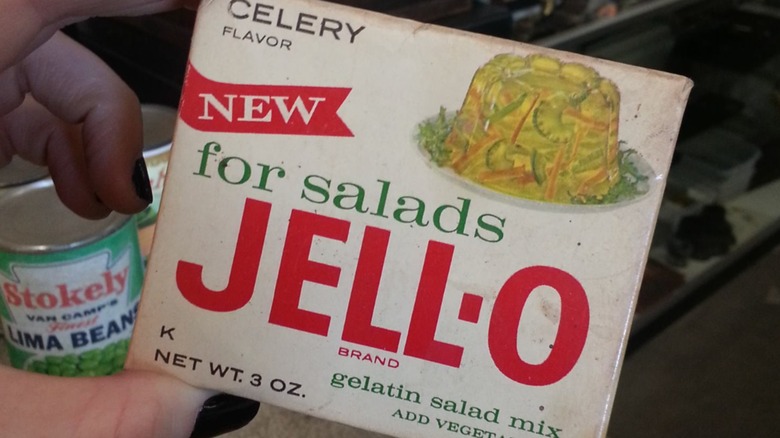
The mid-20th century was a weird time for food, and few things symbolize the strangeness of the culinary landscape of the time more than the Jell-O salad. This vintage salad could take many forms, but generally it consisted of a bunch of vegetables, chopped meats, or eggs bound together in Jell-O, which could then be sliced and portioned up. Naturally, using sweet Jell-O flavors might just get in the way of the savory flavors that dominated these salads (although sweet Jell-O salads were also popular). As a solution, the company came up with vegetable-flavored products, like Celery Jell-O.
Celery Jell-O was introduced at the same time as flavors like mixed vegetable, seasoned tomato, and Italian salad, but it didn't last long. After appearing in the 1960s, it quickly waned in popularity, and by the following decade, it had been removed from shelves for good. Perhaps the celery flavor was just a bit too much for home chefs who wanted to let their ingredients shine through. We certainly wouldn't be surprised if that was the case. Celery-flavored Jell-O? No thanks.
5. Candy cigarettes
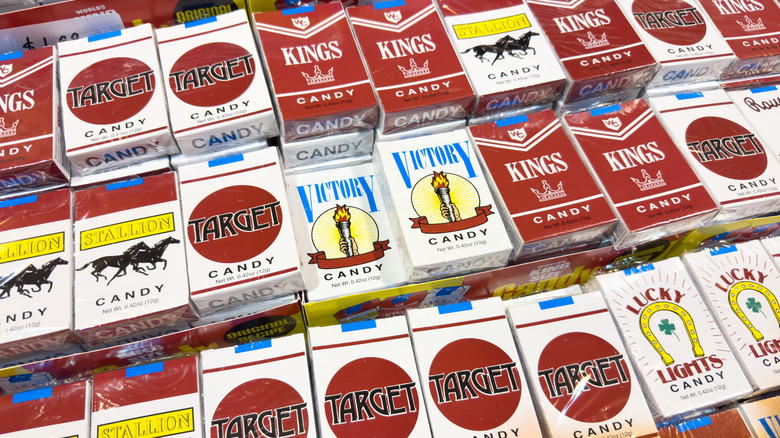
The fact that candy cigarettes were ever even an option feels quite strange by modern standards. The fact that they're still available, though, is downright baffling. This shady snack has gone down in history as one of the most contentious candies of all time, and incredibly, it's still in production to this day. Now, though, they're harder to find, and if you can track them down, they're more likely to be sold as "candy sticks."
Candy cigarettes first appeared in the late 19th century, when Milton S. Hershey came up with the idea of molding chocolate into cigarette shapes (amongst others). Just a few decades later, cigarette companies were getting in on the action and collaborating with candy makers on these novelty products. The problem, of course, was that these candy cigarettes were seen (and subsequently found) to promote smoking in children.
As everyone came to understand how harmful smoking truly is, the legacy of these candies became darker. States began to ban candy cigarettes, and throughout the latter half of the 20th century, they became much harder to find. Now, they stand as proof of how snacks can seem harmless, but can actually end up being more dangerous than you think.
6. Konjac fruit gummies
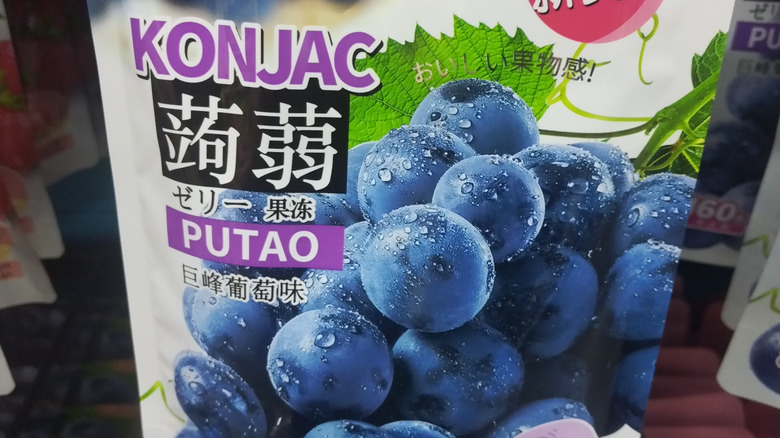
Konjac fruit gummies, or jellies, which have been sold under various brand names, had a burst of popularity in the early 2000s. However, their fall was as quick as their rise. These once-popular candies were originally imported from East Asia, and the konjac used to make them meant they were a novel addition to the candy market. The fact that they were sold in flavors like lychee also made them feel fresh and new to an American audience, and particularly to kids who were getting bored with the regular types of candy fruit snacks.
Unfortunately, though, gummies made from konjac soon revealed themselves to be incredibly dangerous. Konjac doesn't dissolve in the same way that gelatin does, and so it represents a much greater choking hazard than typical candy might. These candies were also produced in a ball shape, which added to their potential to cause choking. Sadly, konjac gummies were soon the cause of several deaths, and this led to the FDA hastily issuing warnings, recalling products, and ultimately banning imports.
7. Lazy Cakes
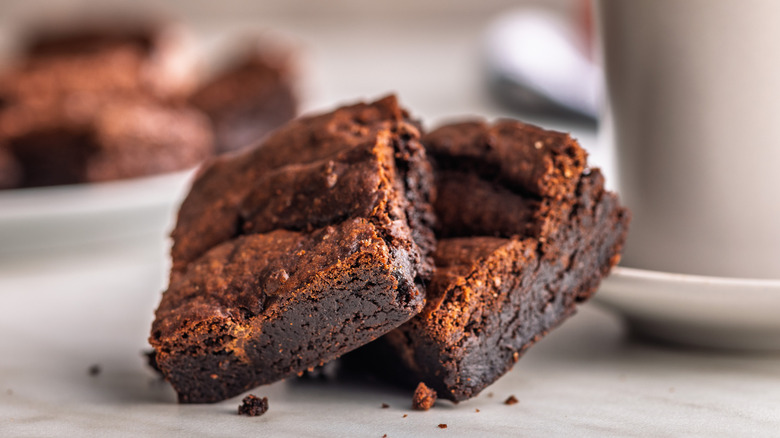
Foods and drinks that contain supplements are nothing new, and if anything, they're only getting more and more popular as time goes on. Back in 2011, though, one manufacturer created a product that wasn't quite clear about what its purpose was. Lazy Cakes were a type of brownie that quickly swept the nation, and very soon, they were being sold in two dozen states. These cakes weren't just lazy by name: Each individually wrapped brownie had eight milligrams of the hormone melatonin in it. They were intended to cause relaxation and to reduce stress, but they soon became controversial with the FDA, which considered them to be "adulterated," as melatonin had not been deemed a safe food additive.
The manufacturer of Lazy Cakes subsequently rebranded the brownies, calling them Lazy Larry. However, it wasn't quite enough to quell the media storm surrounding them. The issue seems to be that no one could agree on whether this food was a supplement or not (the FDA, for its part, said that it wasn't), and the rebrand was meant to position it as such. By then, though, its image had largely been tarnished. Lazy Larry disappeared and was never heard from again.
8. Ayds Reducing Plan Candy
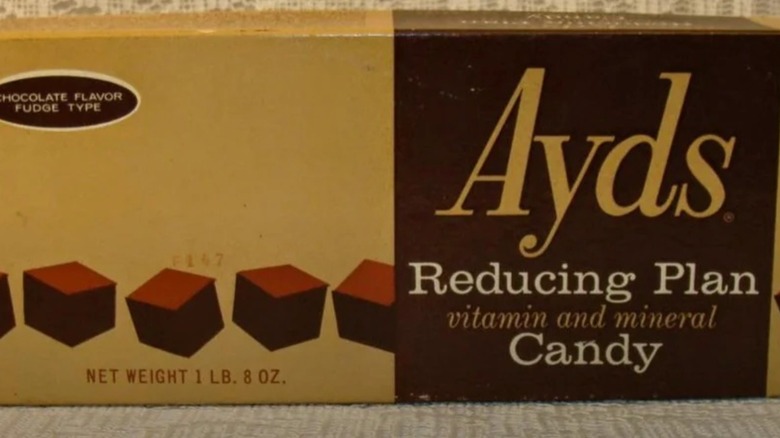
The story of Ayds Reducing Plan Candy started as fairly dark and got even darker as time went on. This snack was first released in the 1930s and was branded as an appetite suppressant. Over the next couple of decades, it gained considerable steam as a dietary supplement, and in the 1970s, it became the most popular it had ever been.
The 1980s, however, saw the beginning of the AIDS epidemic — and Ayds Reducing Plan Candy, with its almost identical-sounding name, naturally began to be viewed in a different light. Incredibly, the epidemic didn't initially harm the product. In 1985, Jeffrey Martin Inc., the manufacturer of Ayds, stated that the media coverage of the epidemic had caused a boost in the product's sales. Soon, however, it was inextricably associated with the epidemic and its consequences for good. Ayds changed its name in a bid to escape the controversy, but its new one (Diet Ayds) was not nearly different enough. Soon, Ayds Reducing Plan Candy disappeared for good, and is remembered as a questionable snack with a disastrous end.
9. Toxic Waste Nuclear Sludge
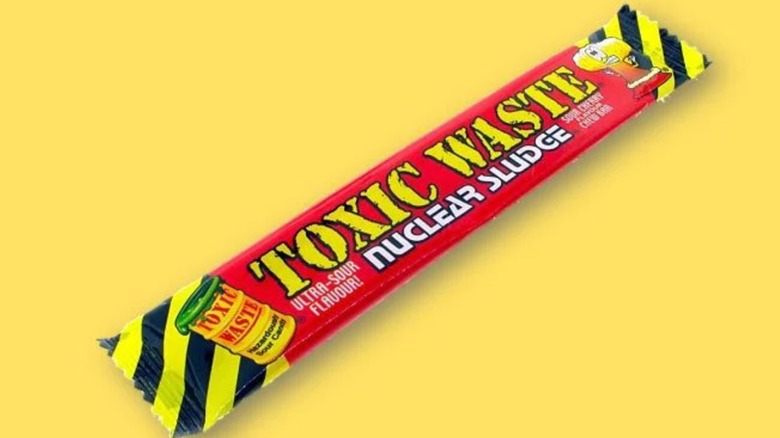
If you've ever tried any of the candies in the Toxic Waste product line, you'll know that they can be a lot. These lip-puckering snacks are not for the faint of heart, and the challenge that they create in eating them has only ever been to their benefit, with Toxic Waste producing a bunch of different candies for people to try and struggle through. The release of Nuclear Sludge in 2007, though, saw it bring a candy to the market that was as dangerous as its name suggested. Not because it was radioactive, mind you, but because it contained dangerously high levels of lead.
The high lead content of Toxic Waste Nuclear Sludge candy bars was discovered in early 2011, when the California Department of Public Health tested a batch of its cherry bars and found that they contained 0.24 parts per million of lead — more than double the 0.1 parts per million limit specified by the FDA. While nobody reported becoming sick from eating them, they were quickly pulled from the market. Nuclear Sludge faded away, and while you can still buy bars with its name today, they're a shadow of their former self.
10. Sugarless Haribo Gummy Bears
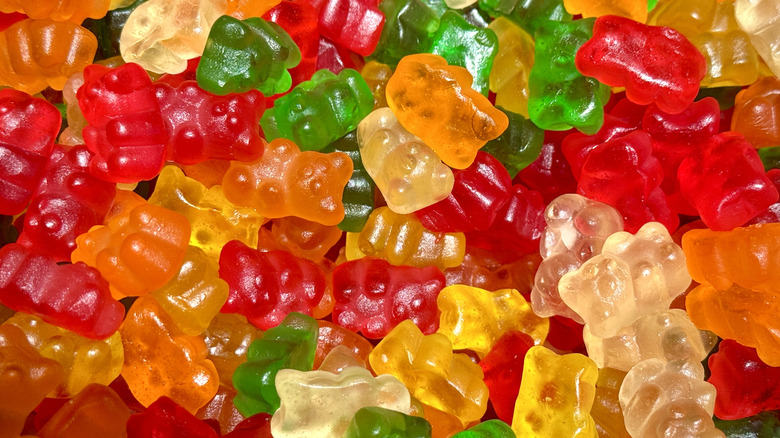
Few snacks have the legacy that Sugarless Haribo Gummy Bears have. When these gummy bears were first released, they promised all of that Haribo flavor without any of the blood sugar spikes, and people got on board very quickly. Sugarless Haribo Gummy Bears were sold in big, five-pound bags online, which meant that they were practically tailor-made for munching down in big old handfuls. The problem, though, was that the people who did just that immediately faced some unfortunate problems.
Like other sugar-free candies, these were soon found to have a laxative effect. In this case, an intense one, and people were very quick to recount their experiences with them through Amazon reviews that promptly went viral. This turned into a PR disaster for the company (which, in fairness, should perhaps have tested its product a little bit more rigorously before releasing it). Once word had fully spread that Sugarless Gummy Bears were some of the riskiest candies you could eat, Haribo pulled them from production, and they haven't been seen since. It's a shame when a product with good intentions turns out to be such a dud, but there we are.