
10 Best Tips For Navigating An All-You-Can-Eat Buffet
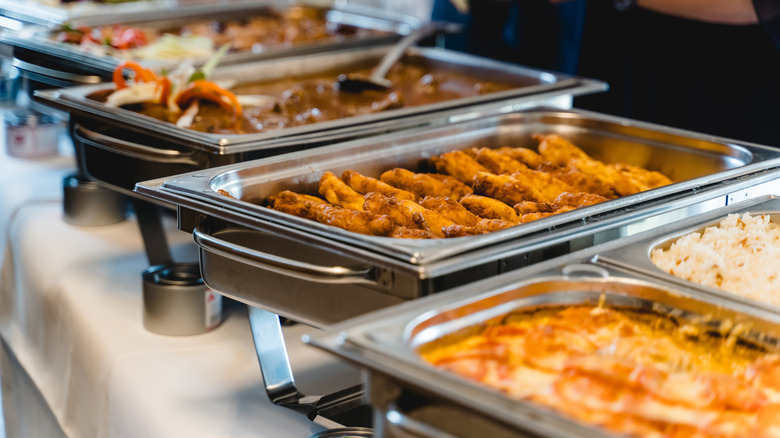
Surely everyone should be better at all-you-can-eat buffets by now, right? This restaurant style has been a fixture in the American culinary landscape since the 1940s, becoming particularly popular in the last four decades, and it's fair to say that most of us feel like we know the deal. We walk up with our plates, we load them up, and we return to our tables. Rinse and repeat. However, within that seemingly simple three-step plan are a load of potential pitfalls. Navigating all-you-can-eat (or AYCE) buffets can actually be a little more complicated than we might think, and a lot of us might be making a few mistakes without realizing it.
Many of these mistakes stem from the fact that every buffet is a little different from the last. While they all follow the same format, they all have their own individual quirks and floor plans, and if you don't have a grasp on the fundamentals, things can quickly descend into chaos. Buffets can also lull us into a false sense of security or tempt us with cleverly positioned food items, which can ultimately make our experience worse. Well, we've had enough of seeing this happen. We bring you our top tips for hitting up AYCE offerings, so you can get it right every time.
Before you grab a plate, take a lap
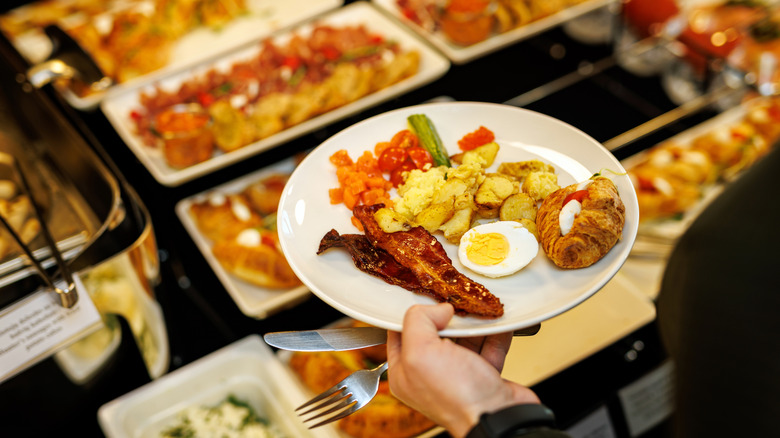
Buffets are overwhelming sensory experiences. You have the sights, the smells, and (if there are live stations) the sounds of countless different types of food being prepared, all waiting to be enjoyed. When you throw in the fact that you're probably hungry, it makes a lot of sense to want to dive in before you've even sat down. However, we suggest that you take things slowly, for your own benefit.
Before you pick up your first plate and start piling things onto it, check out the lay of the land: Take a walk around the whole buffet to check everything out. This is advice that buffet owners themselves wish their customers would take, as it allows them to see exactly what the restaurant has to offer. It also helps you avoid acting on impulse and potentially missing something you really want but hadn't seen yet, and you're now too full to eat. Once you're confident that you've checked out everything, you can then grab that plate and get scooping. You'll be amazed at how different your experience is for taking those two minutes at the start of your meal to assess everything.
Skip the carbs at first, and prioritize the pricey items
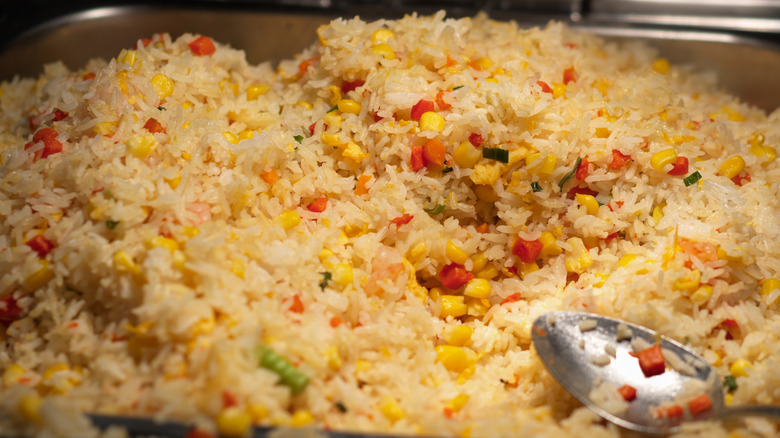
One thing that all-you-can-eat buffets don't want you to know is that they're all too aware that carbs are king. It's common for buffets to put rice, noodles, pasta, and potato dishes right up top in their floor plan, to entice people to start with those. This intentional move is a cost-saving one: Carbohydrates can be more immediately filling than other types of food, but are also much cheaper. By front-loading them, your appetite is sated more quickly, and you'll end up skipping the more expensive items you had your eye on. Meanwhile, for the restaurant, the overall cost per customer gets lower.
Well, call us old-fashioned, but we like to beat buffets at their own game. That's why we recommend minimizing your carbs (at least at the start of your meal), and making a beeline for the pricier items on display. If an all-you-can-eat buffet is offering flavor-packed prime rib and lobster tail, then why would you pay the premium for access to them, only to fill up on rice? Make sure you've got your money's worth before you switch to the carbs — we know they're delicious, but they can wait until you've had a few plates of the good stuff.
Remember to wait your turn

It's amazing how many people lose their sense of manners at a buffet — this could even apply to you, too. Queueing etiquette is as much of a thing at buffets as it is anywhere else in life, and all-you-can-eat establishments generally have a clear sense of flow. When you interrupt this by jumping the queue or shoving past people to get what you want, not only is it rude (they might have been waiting for the item that you just butted in for), but you also risk food spillages and more mess. None of this will endear you to your fellow diners, and you might ruin that nice shirt you were saving for the occasion.
So, just wait your turn, folks. Figure out the flow of the buffet you're in, and get in line for your food, instead of cutting in front. You'll have plenty of time to get what you're hungry for, and if it runs out before you get there, just go back on your next visit. If a section of a buffet is empty and there's no queue on either side, then it's obviously okay to just go straight to the dish you want, but if it's crowded, put the brakes on.
Take smaller spoonfuls than you think
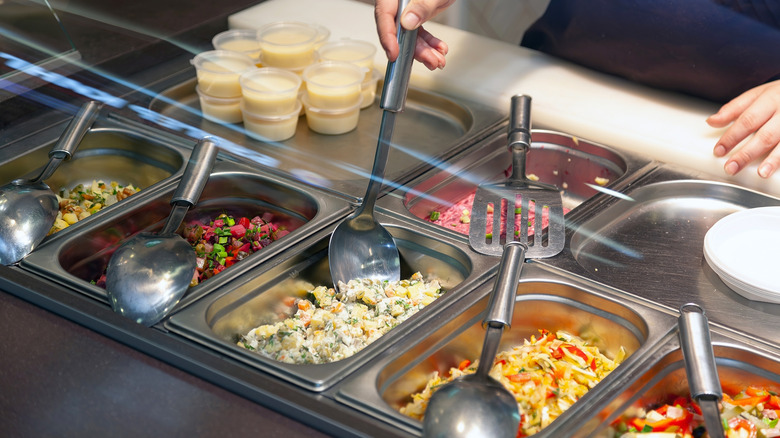
Okay, we don't wanna ruin anyone's fun with this one, but it has to be said: When you go to a buffet, you're probably taking too much food at a time. That's not to say that you shouldn't make the most of it by any means, but it's all too common for people to see something they like the look of, take a big spoonful, and move on. You do that four times, and guess what? Your plate's full — and there are still 50 items that you haven't tried, and probably never will, because you'll be too full.
The first all-you-can-eat buffet in America may have only cost a dollar, but nowadays, most of them charge far more than that. As a result, overloading your plate is not only a way to feel disappointed that you didn't get to sample everything, but also to feel that you haven't gotten your money's worth. The solution? Take smaller spoonfuls, especially at the start of the meal. You'll be able to fit more on each plate, you'll have more of an inclination to go back and try the rest, and you'll leave feeling that you got what you paid for. Win, win, and win.
If the tray is almost empty (or the food looks old), skip the dish
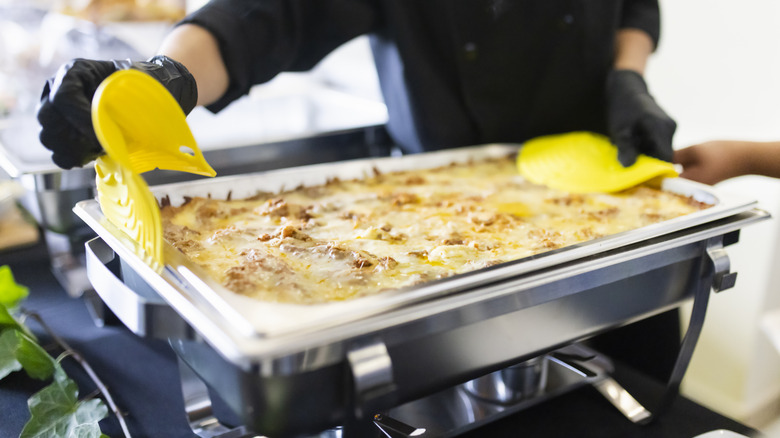
We want buffets to be a good time, but we also want them to be safe. Most all-you-can-eat establishments have a good handle on their hygiene and food safety, but one risk can emerge when they don't quite have a handle on their stock rotation. Sometimes, buffets can leave food out for longer than they should, allowing it to dry out or otherwise deteriorate. This can happen either through negligence or because the staff are waiting for people to finish the whole tray before they change it. Either way, if you suspect that the items you have your eye on are subject to this, you should avoid them.
Going for the dregs of old-looking food will not only leave you disappointed, but may also increase your risk of eating something that's past its prime and potentially contaminated. Skip it, and move on to another dish. If you really want to try it, give it a little bit of time, and hopefully it'll be replaced by a fresh batch that you can grab on your next trip up.
Keep an eye on hygiene
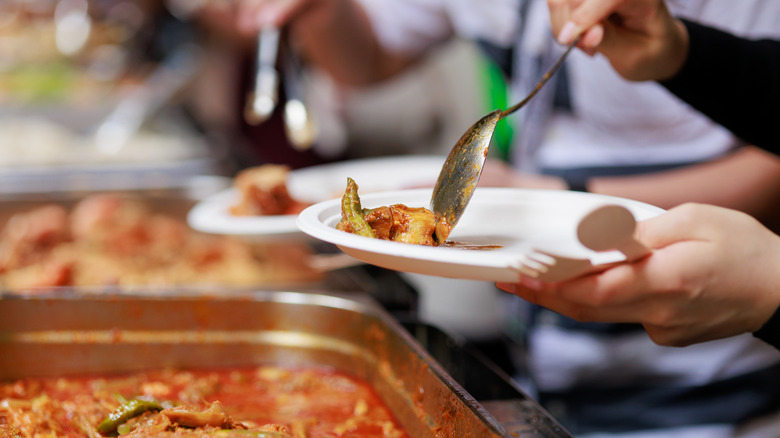
It's arguable that at an all-you-can-eat buffet, you should be way more vigilant about food safety than when dining anywhere else. Sure, you never quite know what hygiene standards the chefs are following in an à la carte restaurant, but at buffets, you also have to consider the cleanliness of the area you're getting the food from, and how the other customers are acting. That's why it's always useful to keep an eye on hygiene. This should start with the buffet itself: Are the trays covered, and kept hot (or cold) enough? Are the self-service areas or condiment stations clean? Is the general feel of the place up to scratch, or are the carpets and bathrooms dirty? If the answer to any of these is no, you should perhaps consider eating somewhere else.
While it's never especially pleasant to monitor your fellow diners, it's also important to spot any broken buffet hygiene rules when they occur. If you see someone eating in line, grabbing food with their hands, or sneezing or coughing on either the food or the serving utensils, you should steer well clear. You don't know whether that person is sick or not, and you probably don't want to risk it.
Don't ignore the live stations
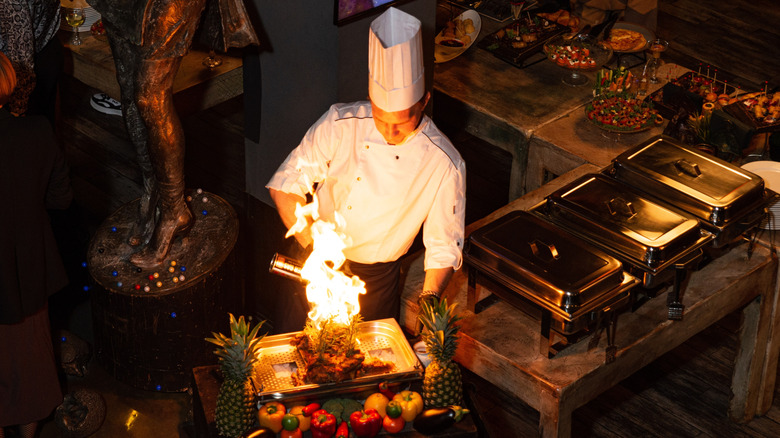
Live stations are a bonus at buffets. Caterers and buffet providers know it, and you should too. Carving, hibachi, or omelet stations at hotel breakfast buffets are a great way to grab something a little different (and, importantly, freshly cooked), and going for them can help you get your money's worth. Their mere presence can also be a sign that you're at a quality buffet, which is never a bad thing. However, it's something that a lot of people simply skip, mainly because the prospect of waiting in line to get a bespoke dish feels pretty unappealing when there's lots of other food for the taking. Well, skip them at your peril, people: These stations are the unsung heroes of the buffet world.
You'll be amazed at how different some of the food from these live stations can taste. Have you ever felt like all buffet food starts to taste the same? That's arguably because it often doesn't have that much flair or personality to it, as nice as it may look. Live stations, on the other hand, allow you to customize your order, have food made by pros right in front of you, and often feature items like prime rib or brisket, which are more expensive and luxurious than the other meats on offer. Just get in line — we promise you won't regret it.
Avoid taking more than you'll actually eat
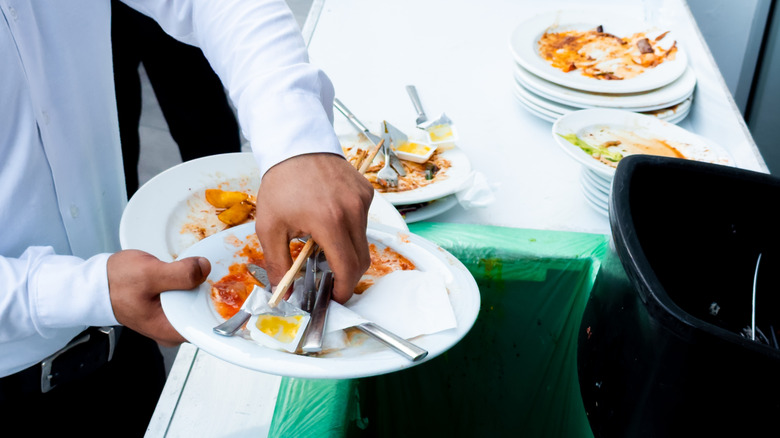
It probably comes as no surprise that buffets have to deal with a lot of wasted food left on people's plates. According to a study published in the journal Annals of Tourism Research Empirical Insights, plate waste at buffets is common in all-you-can-eat set-ups across the board, and much of it could be minimized without any damage to your eating experience. Nonetheless, we still take too much food, which some have linked to an embedded biological imperative to essentially make hay while the sun shines and stock up on food while we have the chance.
While that may be why we do it, it's important to remember that with every mouthful you don't eat, you're contributing to food being thrown out. Buffets can't repurpose used food in the way that restaurants sometimes can with unused items, and it ends up in the trash. So if you know that you're getting full and you suspect that you won't be able to eat another big plateful, just get a portion plate and handle that first. If you're still hungry afterward, it'll be right there, but don't contribute to waste when you don't need to in the first place.
Choose your drinks wisely
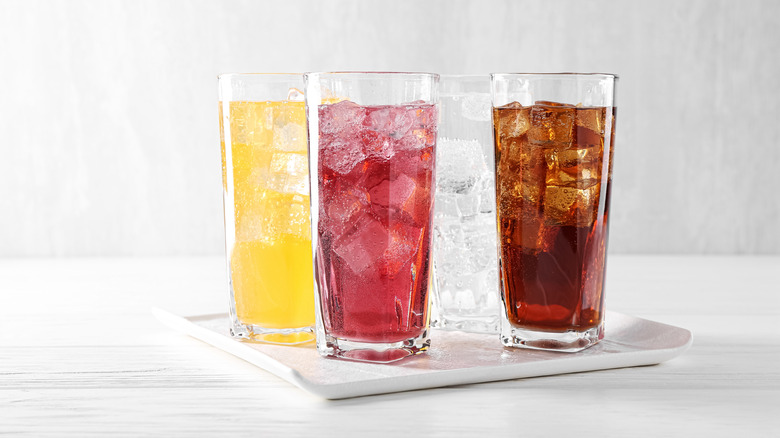
What you drink at a buffet can significantly affect the experience of your meal, and you need to think somewhat tactically. All-you-can-eat restaurants are not the kind of places where you want to be knocking back loads of sugary or carbonated drinks, as appealing as they may seem.
Sugar-filled drinks can contribute to a blood sugar spike and subsequent crash, and when paired with copious amounts of food (which can also raise blood sugar levels), it can be a recipe for disaster. Carbonated drinks can compound this, because they also make you gassier and more uncomfortable, limiting your enjoyment. Meanwhile, alcoholic drinks can increase acid production in your stomach, which may then lead to acid reflux or heartburn. That's really the last thing you want during or after a buffet.
Rather than have any of these unfortunate occurrences happen, we'd always recommend sticking to simpler drinks. Water or other non-carbonated, sugar-free drinks are your best friend if you're there to focus on the food. If you like a glass of wine with your meal, go for it, but just be aware of the effect it may have on your stomach.
Don't forget your dining manners — or to tip
Buffets often present a little bit of confusion as to how to act. Because you're serving yourself, it can feel as though the standard niceties and manners of eating in a restaurant don't apply, and that you can get away with being perhaps less courteous. It can also raise a question about tipping: After all, if no one's taken your order or brought you food, do you really need to leave the standard amount? The answer is yes, you should, and you should also remember your decorum.
Staff work as hard at buffets as they do in any other restaurant, but they're just making your experience pleasant in a different way. They might be bussing drinks out (and taking orders for them), clearing plates, ensuring that food is clean and tidy, cleaning tables, and generally creating a good environment for their customers. As such, they still deserve your respect, and for their work to be recognized in the same way that you would in another restaurant. Don't be tempted to tip less — give the same amount that you always would, unless the restaurant specifically says not to.