

The 4 Best And 4 Worst Fillings For Omelets
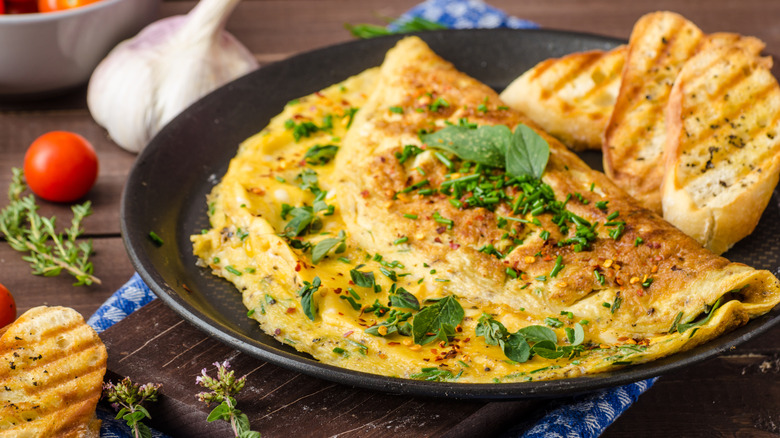
An easy task that any home cook can do? Make an omelet that doesn't look as good as one from a restaurant. Maybe the eggs tear when you try to fold the omelet over. Maybe the whole concoction ends up too runny. Even if whatever goes wrong still results in a tasty dish, many home chefs have wondered how they can make the perfect omelet every time. Technique comes with time and practice, but you can always control which ingredients you use. So we thought we'd ask a couple of omelet experts what they think the best and worst ingredients are.
Putting some combination of cheese, veggies, and meat between a few eggs is a breakfast joy that cuts across class and cultural lines. After all, what do greasy spoon diners, luxury cruise lines, and college dorm dining halls all have in common? They're all places you should be able to get a great build-your-own-omelet. Done well, an omelet can be a nutritious and filling way to start (or end) the day. Of course, we all make mistakes with omelets. Contrary to the implications of the build-your-own omelet bar, an egg base is not a complete blank canvas for any old filling. Here are the best and worst fillings for omelets.
Best: Fresh herbs
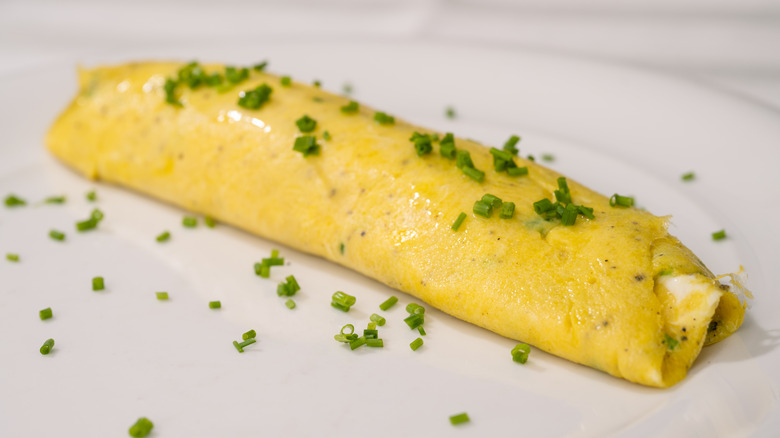
If you've ever had a classic French omelet, you know the power of fresh herbs. Now there's a dish that proves the adage "less is more," at least when it comes to ingredients. The French omelet is often thought of as the ultimate test of a chef's mastery of technique. It was even the first dish that Julia Child made on TV. This egg- and herb-forward concoction calls for few ingredients, and requires control of pan temperature, folding, flipping, and presentation. Chef Nelson Serrano-Bahri, Director of Innovation for the American Egg Board, told us that "when the technique is right, you get a silky interior, delicate flavor, and that elegant, simple finish." Serrano-Bahri also told us that chives, parsley, tarragon, and chervil (French parsley) are all good herbs to use for a French omelet.
It's also good to remember the power of fresh herbs in other styles of omelets that you might make. As Serrano-Bahri told us, herbs "make the egg 'brighter' without adding weight." An omelet is usually going to have a hearty base of egg and other cooked ingredients. Often, those are ingredients that amp up the savoriness, so a touch of herbs brings a welcome contrast, adding a freshness that prevents the dish from getting bogged down with umami.
Worst: Watery vegetables (added raw)
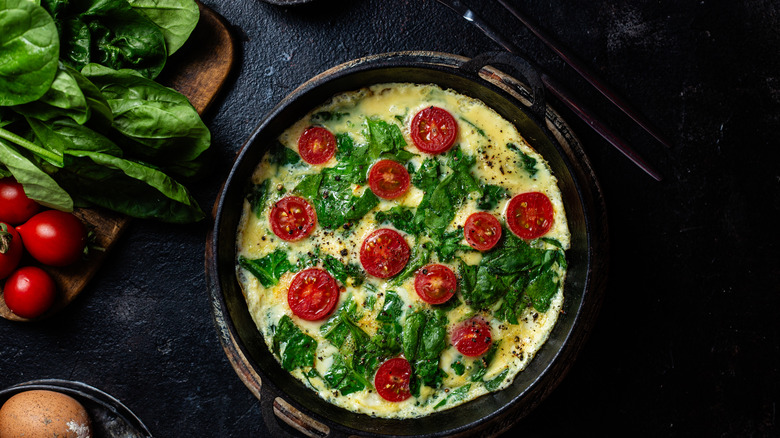
It's easy to forget, but food holds water. Meat, cheese, and vegetables all contain varying levels of moisture, and many types of vegetables can bring too much water to the omelet party. A good omelet should have structural integrity. Regardless of whether you want the egg fluffy and custard-like or thoroughly browned, the folded omelet should be able to contain any fillings you've added. In a perfect omelet, "the eggs must not be overcooked or too watered down, so that you still get a rich, yolk-forward flavor," said Sarah Beth Tanner, an "eggfluencer" at Pete & Gerry's Organics.
Nelson Serrano-Bahri mentioned tomatoes, mushrooms, and spinach as some of the worst veggies to add raw. If you must use watery ingredients, he advised us to cook those items "until they're concentrated and relatively dry." Then, drain and blot the ingredients. "Paper towel is a chef's best friend here," he added. Tanner agreed, saying that sautéeing or steaming these vegetables makes the moisture issue worse. There are plenty of ways to cook vegetables beyond steaming, after all. Tanner advised dry cooking methods like roasting or even air-frying to encourage water evaporation.
Best: Cheese
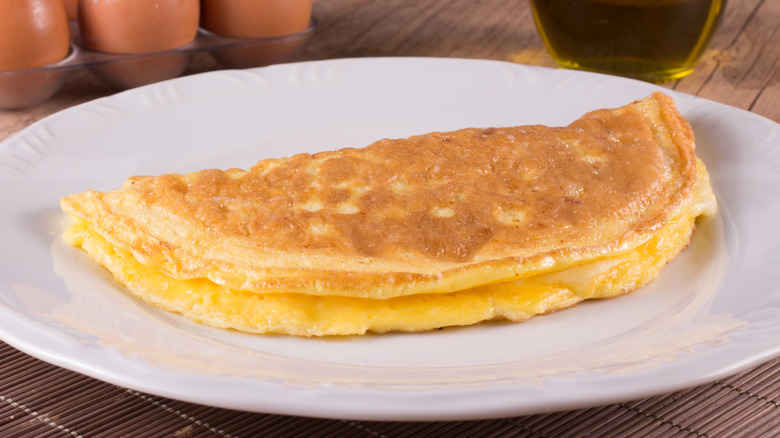
The French omelet proves that it's possible to make a good omelet without cheese, but come on. Do you really want to deny yourself the rich, creamy, salty, and melty wonders of cheese when making an omelet? Cheddar is classic, smoked Gouda brings real depth of flavor, and mozzarella gives amazing cheese pull. You can even get into softer cheeses like feta or goat cheese, though Nelson Serrano-Bahri cautioned against using too much of those. Still, the dairy options are almost limitless.
Both of the experts we spoke with liked cheese in their omelets, too. "Sorry, non-dairy folks," Sarah Beth Tanner told us. "Cheese is an absolute must for me." She shouted out Gorgonzola, smoked Gouda, and sharp Cheddar as good cheese choices. Serrano-Bahri shouted out the creaminess that cheese brings to an omelet. He also said he reaches for either aged Cheddar or Gruyére when he makes an omelet for himself. If you like a really creamy cheese in your omelet, check out our list of the best cheeses for melting.
Worst: Broccoli
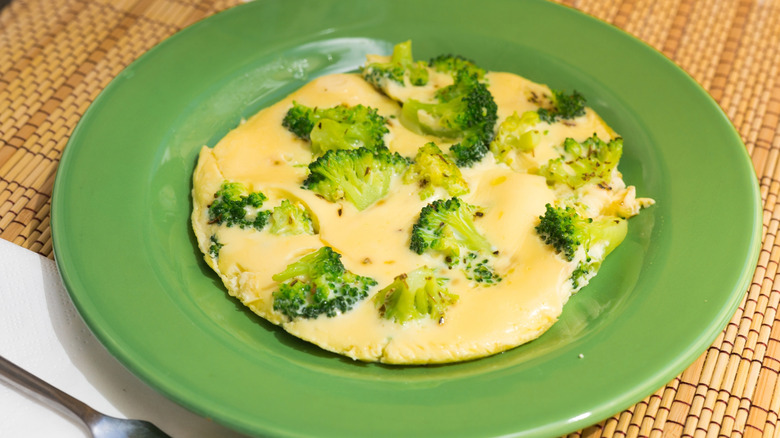
It's easy to see why the cruciferous vegetable might be popular in omelets. Broccoli is loaded with healthy stuff like vitamin C and antioxidants, and it adds a nice pop of color to the yellow egg. One of the experts we consulted pumped the brakes on broccoli, though. When we asked about overrated omelet fillings, Sarah Beth Tanner mentioned "mushrooms and broccoli — they're both (usually) too watery once cooked and bring too much moisture to the party." There's a lot of water hiding in those florets, ready to run all over your pan and prevent your eggs from achieving their best texture.
If you insist on broccoli in your omelet, take the extra step of preparing the vegetable beforehand. Roasting the florets is the best choice here. Make sure to season your broccoli with salt before roasting, too. This really helps draw out excess moisture when you're working with ingredients that contain a lot of water.
Best: Well-cooked mushrooms
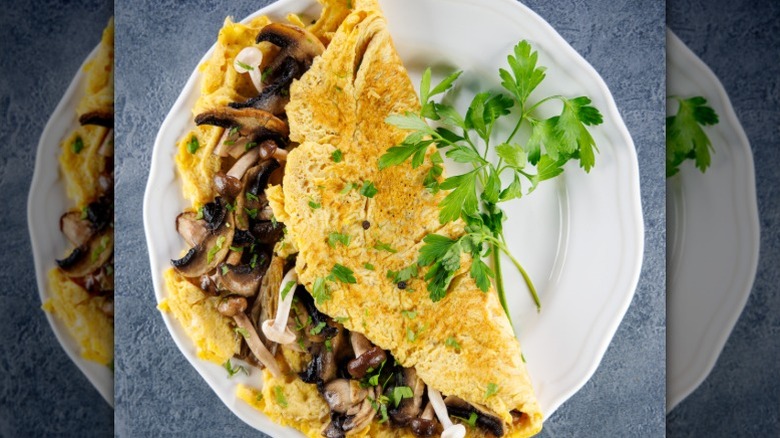
Savory, loaded with umami, and friendly to vegetarian diners? There's a lot to love about mushrooms in omelets. The catch, though, is that you need to take care with how you prepare them. Mushrooms have a high moisture content, which can be really detrimental to the final product if you're not on top of things. Both of our experts expressed appreciation for mushrooms, with some reservations. Sarah Beth Tanner even went so far as to call mushrooms overrated, even while praising the earthy umami of the ingredient. How best to prepare mushrooms, then?
Nelson Serrano-Bahri specified that these hearty little fungi should be "browned and dry, not steamed." He even said that mushrooms — "cooked until dry and savory" — had a place in an omelet he would make for himself. Serrano-Bahri fills that omelet out with either aged Cheddar or Gruyére, chives, and a small amount of finishing acid, like lemon juice or hot sauce. Sounds like a balanced breakfast to us.
Worst: Sun-dried tomatoes
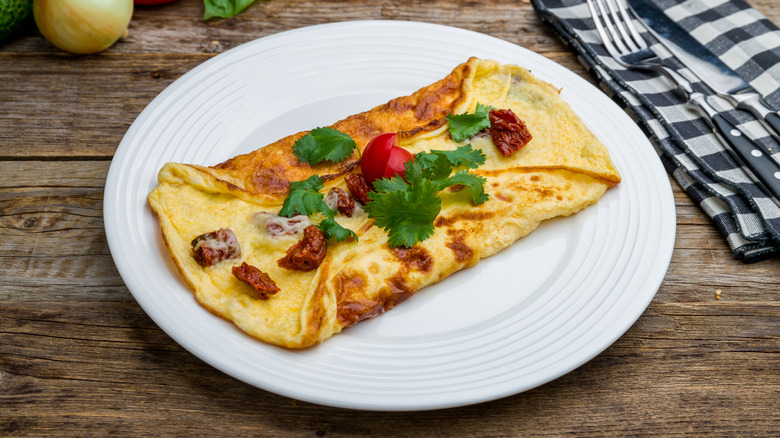
Potentially a controversial pick, since this ingredient brings a pop of color and a pleasant hint of acid to most dishes. One of our experts, though, argued that sun-dried tomatoes and omelets don't play well together. "I do not like sun-dried tomatoes in any application," said Sarah Beth Tanner, saying that they're too chewy when whole, too greasy when packed in oil, and too pungent when added to pesto. That's a pretty reasoned and thorough dismissal.
As Nelson Serrano-Bahri put it, "a good omelet is tender, cohesive, and custardy on the inside, never dry or rubbery..." While he didn't bring up sun-dried tomatoes himself, it's true that sun-dried tomatoes make all of those characteristics difficult to achieve. The chewiness of the tomato is at odds with the fluffy texture of scrambled eggs. The intensity of flavor can stand out too much against the egg, and a good omelet should taste like eggs first and foremost.
Best: Roasted butternut squash
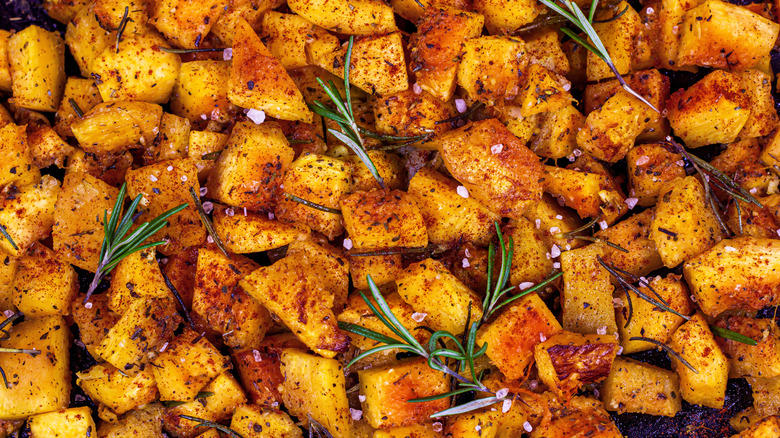
Maybe something of a surprise pick, but one of the experts we spoke with swears by it. A finely diced butternut squash, Sarah Beth Tanner said, is "heavenly — sweet but earthy and roasted perfectly so that it was soft but still a touch toothsome." When we asked what would go in an omelet that she was making for herself, Tanner first brought up high-quality eggs. Then she said roasted butternut squash.
That roasting step is essential. Butternut squash may not be a root vegetable, but it benefits from being treated like one. If you don't have fresh butternut squash on hand, but you do have a bag of frozen stuff in the fridge? Make sure you know how to roast frozen butternut squash for a crispy finish before you toss the veggie in your omelet.
Adding butternut squash to your breakfast has a whole host of benefits aside from taste. In addition to being loaded with vitamins A and C, and essential minerals like manganese and potassium, butternut squash is full of fiber. Getting enough fiber can help regulate blood sugar and reduce the risk for colon cancer. Since omelets are already heavy on the protein, especially if you add meat and cheese, some fiber brings necessary balance.
Worst: Too many ingredients
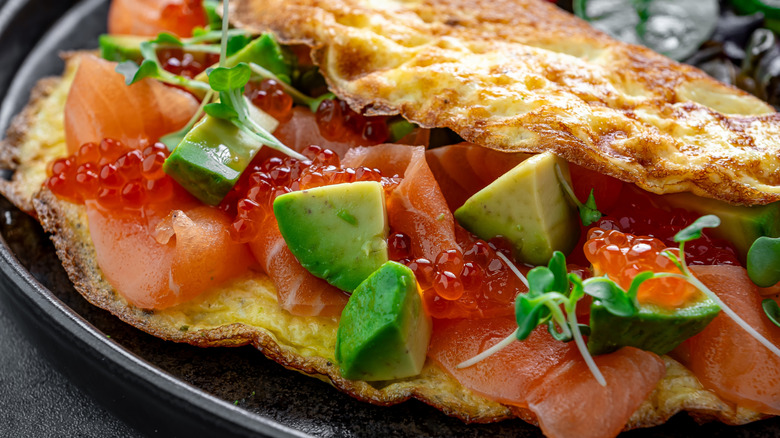
An omelet really shouldn't have more than four fillings. Even that might be too many. A good starting point is cheese, veggies, and meat. Don't eat meat? Try cheese and two veggies. That all said, much like fried rice, many people view omelets as a way to use up leftover veggies or meats that happen to be lounging around in the fridge. Got half an onion, some diced peppers, and a little ham that won't last another two days? Omelet time. This is a practical way to cut down on food waste, and can lead to some experimental ingredient combinations, putting a little adventure in your breakfast. Both of our experts, however, cautioned against going too overboard.
"I love a chance to clean out the fridge, but if you're going for 'best,' don't overload the filling," Sarah Beth Tanner said. She added that three fillings are ideal, with four being the absolute maximum. Cheese counts as a filling, and you shouldn't use more than one meat. Nelson Serrano-Bahri agreed, saying how heavy combinations of too many ingredients can "muddy" the flavor of an omelet. His preference? Simple combinations like ham and cheese or mushroom, Gruyére, and chives.
In addition to flattening the overall taste, too many ingredients can be hard on presentation. Folding isn't easy when the filling can't be contained. If the omelets you make at home aren't as photogenic as you'd like them to be, one easy fix is to consider using fewer ingredients.