

10 Cheap Kitchen Backsplash Ideas That Will Look Like You Splurged
We may receive a commission on purchases made from links.
It can feel disjointed to walk into a kitchen with a mismatched or poorly coordinated design. In fact, that's one of the signs your kitchen is in desperate need of remodeling. Renovations can get expensive depending on their extent, but not every part of a revamp has to cost an arm and a leg. For example, there are several affordable kitchen backsplashes you should know about, and you can make them look like you spent a fortune if you choose the right materials and colors.
From inexpensive tile and repurposed materials to peel-and-stick backsplash and contact paper, there are plenty of ways to install a flashy-looking backsplash without breaking the bank. You can even create a minimalist design with these options, covering only a portion of the space between your cabinets and countertop, to achieve even more cost savings while still having a dramatic effect.
Mosaic tile sheets

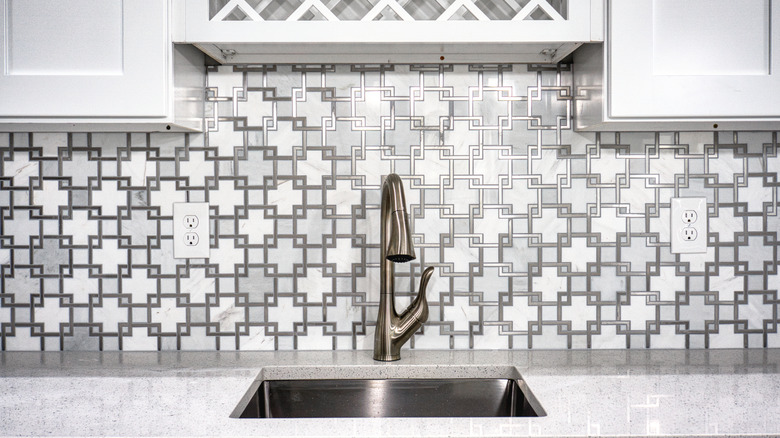
Mosaics have been around since about 3000 B.C., and they can have a dramatic impact when used as backsplash in your kitchen. Originally, each tiny piece of ceramic, glass, or stone was cut by hand and set in place with mortar. That practice is sometimes used today, but it can be pricey considering the amount of work involved. Fortunately, you can get the same dazzling effect with preconfigured sheets at a much lower cost.
Mosaic tile sheets usually measure 1 square foot each and feature a tile configuration attached to wire mesh. Ideal for do-it-yourself enthusiasts, the installation requires setting each sheet in place with mortar, filling in the spaces between with grout, and then cleaning and sealing that grout. This process saves the time of cutting and laying individual pieces. Just keep in mind that you should never choose white grout for kitchen tiles because it can be difficult to keep clean and bright.
Plus, mosaic tile sheets are available in an array of materials, colors, and patterns, including splurge-worthy designs that feature iridescent or metallic surfaces that catch the light and the eye. Many products are available for just $10 to $20 each.
Ceramic subway tile

Since the early 20th century, ceramic subway tile has been a popular backsplash option because it's easy to clean, reflects light, and resists stains. It's also durable, lasting for decades, and will never go out of style. Subway tile typically comes in pre-cut rectangles that are much bigger than tiny mosaic tile pieces, so it's easier and less time-consuming to install individually. For the most part, the width is twice the height — 3 inches tall by 6 inches wide, for instance — but that's not always the case.
One of the best things about subway tile is that you can opt for ones that have a frosted, pearlized, or shiny polished finish for a luxurious aesthetic. As a highly versatile option, a wide range of colors is available and may even vary slightly in shape. Perhaps the biggest appeal is that subway tile can be even cheaper than mosaic tile sheets covering the same amount of space. In some cases, you can fill a 1-square-foot area for less than $5.
Peel-and-stick backsplash
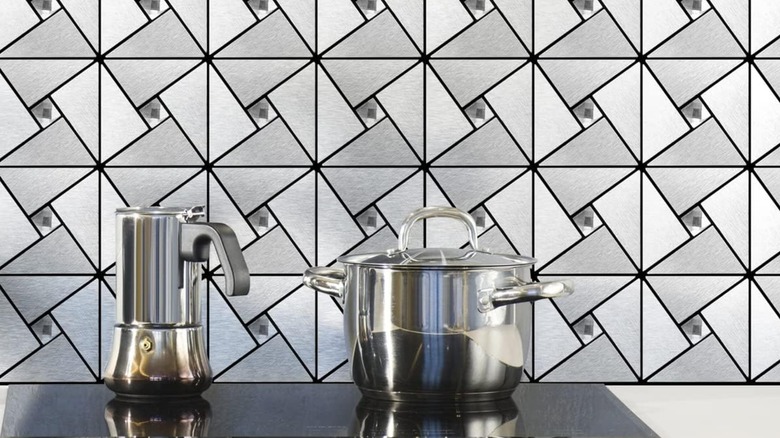
If you're looking for something that doesn't involve mortar and grout, consider a peel-and-stick backsplash. By the sound of it, it might not seem like this type of tiling really works, but high-quality products can be an easy-to-install alternative to traditional tiles. The process involves cleaning the surface, peeling and sticking the sheets to the wall (fitting them together like a puzzle), and pressing them with a roller to release any air bubbles.
Peel-and-stick tile is particularly ideal if you rent your home and want to spruce up your kitchen but aren't allowed to make permanent alterations. That's because, even though it can last up to 25 years, it's removable if you ever move or want to change your color or design. For long-lasting results, you can apply a silicone sealant along the edges. Also, make sure that the tile is heat-resistant if you plan to install it behind your stove.
Another major benefit of peel-and-stick backsplash is that it can look like various materials. From glass and metal to stone and vinyl, there are many designs that can make your kitchen backsplash look more expensive than it actually is, at around $10 to $15 per square foot. This metal tile design by Art3d, for example, is available on Amazon for $29.99 and includes nearly 10 square feet of sheets.
Decorative wallpaper
Believe it or not, wallpaper is one of those vintage kitchen decor trends from the 1970s that is making a comeback. What was once seen as a dated design choice is now a bold statement that makes your space feel completely personalized. From timeless, minimalist designs to intricate, colorful patterns, decorative wallpaper backsplashes can be a subtle backdrop or the centerpiece of your kitchen. You can even get textured patterns, such as wood and terrazzo (a composite of glass, granite, marble, and quartz) that give the illusion of the real thing without the higher price tag.
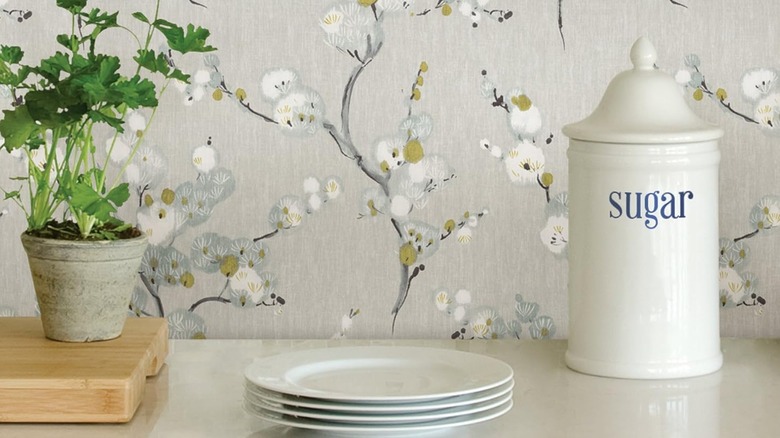
Another advantage of installing wallpaper is that you can put as much work into the job as you want since it's available in various forms of application — peel-and-stick, soak-and-hang, and water-activated paste. This gray-and-white floral branch design (pictured) by NuWallpaper is self-adhesive and can be used in your kitchen, provided it's kept at a safe distance from the stove or other heat sources. Typically available on Amazon for about $34, it can cover more than 30 square feet of wall space. However, there are many water-resistant options available, starting at $12 for about 30 square feet.
Contact paper
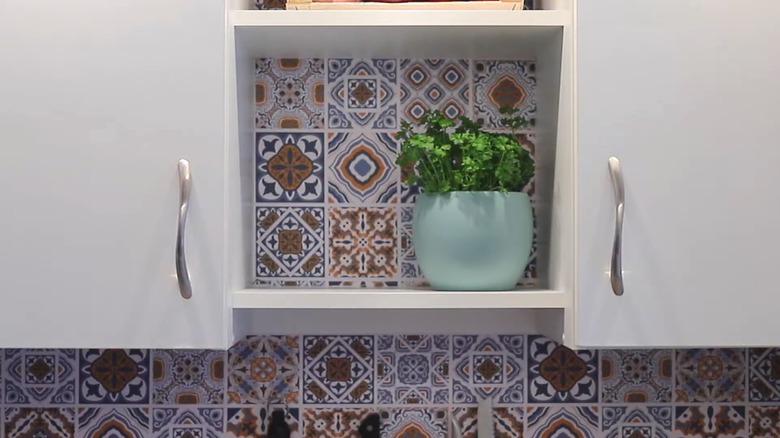
The most common use for contact paper is as a drawer and shelf liner, but it has so many other applications, including as temporary wallpaper. In fact, it's a lot like wallpaper: It's easy to stick to your walls and is an effective decorating idea above your cabinets. It's relatively protective, so it can be wiped clean if something splatters on it. Contact paper even comes in a variety of colors, patterns, and textures. To create a DIY pattern for your kitchen backsplash, combine two different-looking contact paper options, placing one over the other and cutting out the top layer.
The biggest difference is that contact paper is usually thinner and doesn't always have the strong holding power of traditional wallpaper. That's beneficial if you're looking for a short-term solution. In addition, it can sometimes be a little cheaper, with about 13.5 square feet of self-adhesive contact paper costing as little as $10.
Salvaged wood
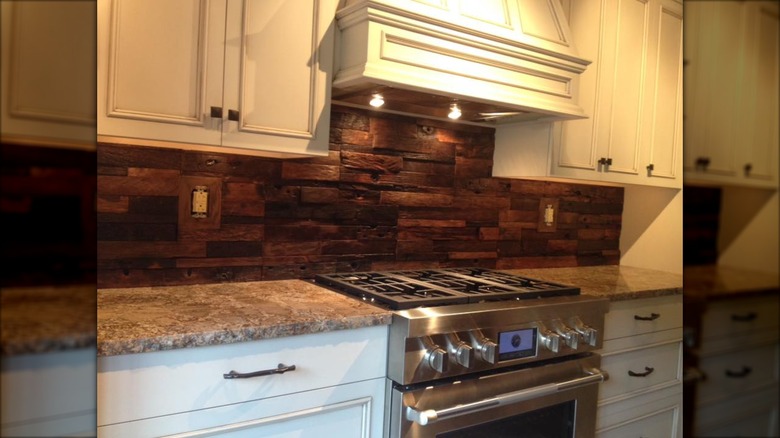
One of the best ways to save money on your kitchen backsplash is to avoid paying for the main materials altogether. That's possible when you repurpose and finish wood — think old boards from a fence, moulding from a remodel, or planks from an old barn or factory — although reclaimed wood is available already finished from some hardware suppliers. Unlike many store-bought materials, each piece of wood will provide character, texture, and warmth. Using reclaimed wood is also a sustainable option, reducing waste by giving new life to those materials.
On top of that, you don't have to stick to a simple horizontal or vertical pattern. You can arrange salvaged wood in herringbone and mosaic patterns, too. You can even add copper or metal inlays between the planks, create a distressed finish, or paint some or all of the pieces for a pop of color. If you think using wood for your entire backsplash is overwhelming, cover only part of the empty wall space between your cabinets instead to produce an accent or focal point. Then, you can balance it with materials that don't stand out quite as much throughout the rest of your kitchen.
Tile paint revamp
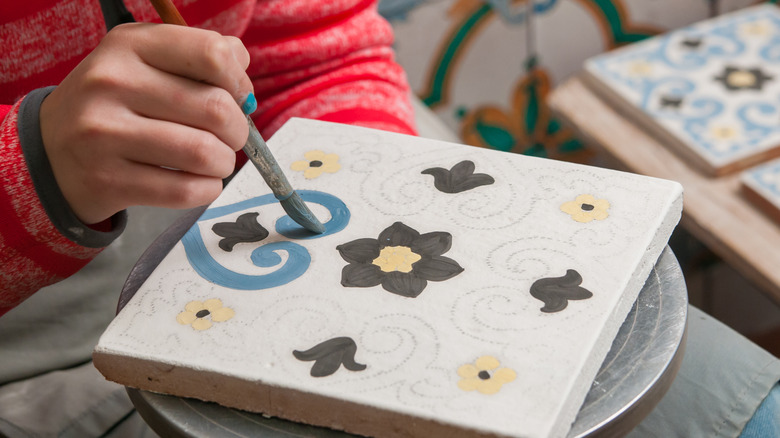
Tile backsplash can become dingy over time, but that doesn't mean the material can no longer do its job of protecting your walls. Rather than replace it, consider simply giving it a fresh coat of paint; this cost-effective solution can extend the life of your kitchen backsplash. There are a few things to keep in mind, though, before you begin such a DIY project.
You'll need to clean the tile and fix any damaged pieces first. Roughing up high-gloss tiles before you start can also help the paint adhere better, but it's not required. In either case, applying a primer will improve your results. As for the paint itself, epoxy is ideal because of its resistance to scratches and cleaning supplies. There are also water-resistant options specifically made to withstand the moisture and temperature conditions kitchens experience. You can also use an enamel- or silicone-based paint.
To enhance the splurge effect of your revamp, add a pattern to your tiles. You could draw and freehand paint your design with a brush or use stencils. Just don't forget to apply a sealant afterward to protect your work.
Peel-and-stick decal revamp
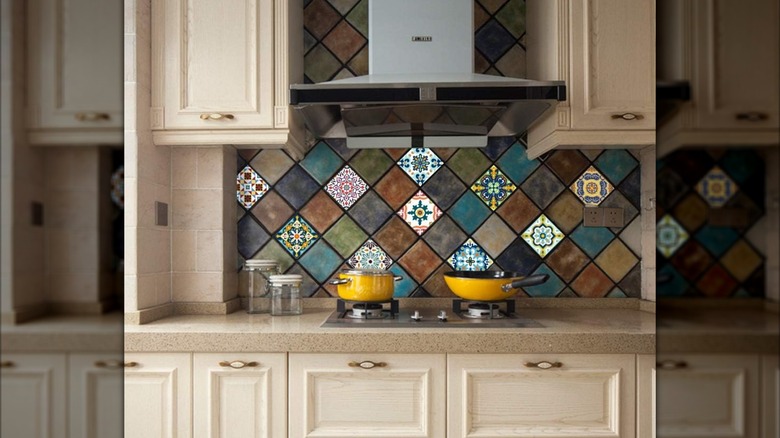
If painting a pattern on your existing kitchen tile sounds like a little more work than you've bargained for, peel-and-stick decals can do the trick nicely. Adding colorful Moroccan-style stickers by Jacklove can completely transform a white tile backsplash, and you get 25 pieces for about $13 on Amazon. On the other hand, these can breathe new life into a backsplash with a similar but muted color palette. If you want to add a reflective shine to your kitchen walls, consider acrylic mirror stickers. You can place these maze-like pieces on random tiles, or use them like a border across your entire kitchen.
Keep in mind that you'll still need to clean and repair your existing tile beforehand so the peel-and-stick decals will stick better. Also, it's important to choose waterproof or water-resistant stickers so they can withstand general kitchen conditions. If you don't, applying a sealant over your tile and decals can provide the protection they need to stay in place for a longer period of time. In either case, applying sealant will add a polished aesthetic that makes it look like you spent more than you actually did.
Table mats or runners
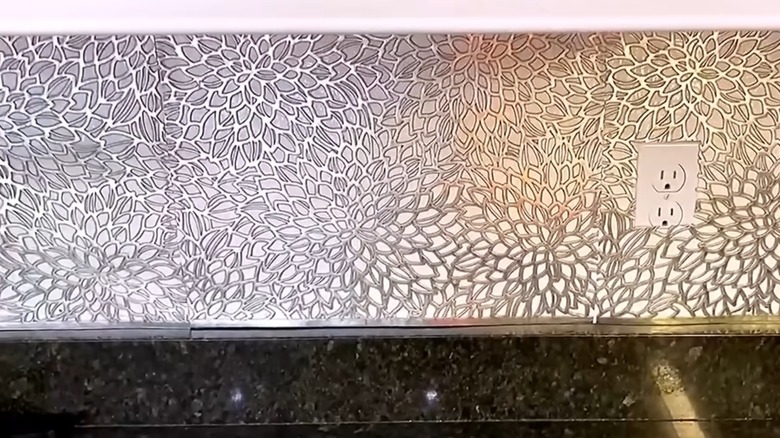
Thinking outside the box, it's possible to create a kitchen backsplash from decorative table mats. Rectangular placemats are the best option for this kind of project because they're likely the same shape as the space between your cabinets. A set of vinyl, metallic hollow-out mats, like the ones by AdasBridal on Amazon, will make it look like you spent more than just $18 to cover more than 8 square feet of wall space.
However, you may be able to find similar mats in a pattern you like for even less, or you could even use woven vinyl table mats. Another option is to use a table runner to avoid any noticeable lines where the mats would come together, and a vinyl tablecloth could work as well.
When using placemats to create a kitchen backsplash, start by attaching plastic to the empty wall, especially if you rent and will need to remove it later. Don't forget to cut holes in the mats for your receptacles, too. Then, use Mod Podge — an all-in-one sealer, glue, and finish — or something similar to attach them to the plastic and to cover them afterward. A 32-ounce container of this glossy non-toxic crafting product is usually priced at about $15.50 on Amazon, but you can also find it in a matte finish.
Clearance or leftover tile
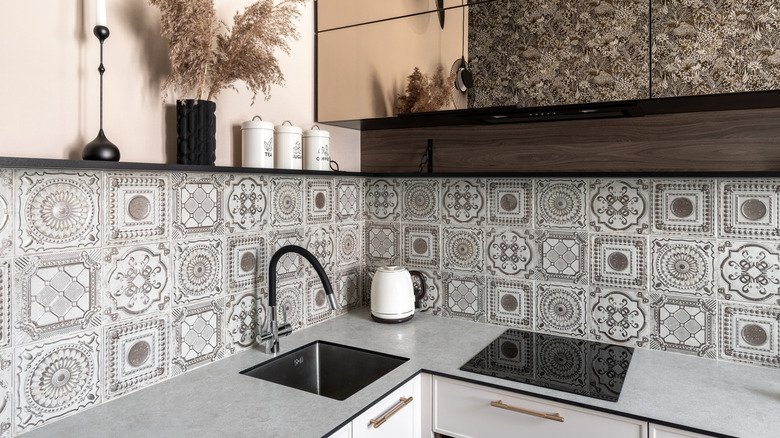
If you're set on an old-fashioned tile backsplash for your kitchen walls, you can still find them on sale or use leftover tiles. Some home improvement showrooms, such as Tile Bar and The Tile Shop, have clearance or markdown sections where you can purchase expensive and expensive-looking tile options (including ornate and patterned tiles) at significant discounts. In some cases, the prices are reduced 75%.
You don't have to buy new tiles, though. Many homeowners and companies have leftover materials from their own renovations and donate them to nonprofits like Habitat for Humanity ReStores. There, you're able to shop trendy options for your own kitchen backsplash project for a fraction of their price at retail. You can also peruse the Facebook Marketplace page for people trying to clear out their leftovers. Or, look for tiles that you like on Stone Trash, a platform vendors use to clear overstock — sometimes for as little as $1 per square foot. You might want to avoid white subway tile, though, because it's expected to be a kitchen trend that won't survive 2026.