

8 Secrets To Aldi's Supply Chain Success
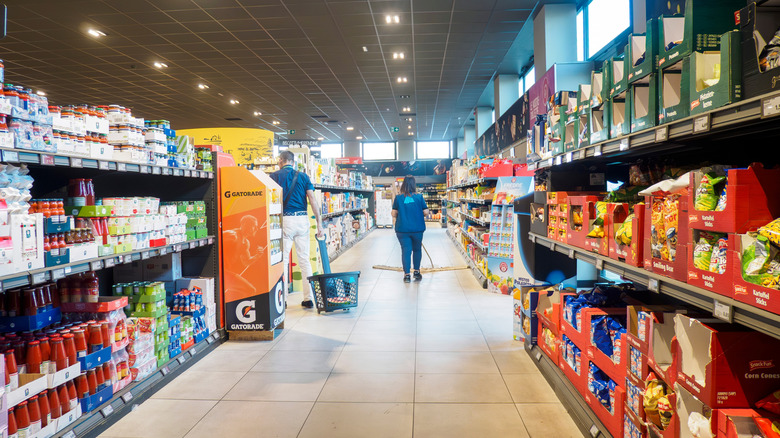
Aldi is the grocery store that's not like the other grocery stores. How do they do it? Well, the answers lie in the company's highly efficient and meticulously managed supply chain. If you're a beginner Aldi shopper, some features of the store might seem strange. Rest assured, just about every aspect of the store is carefully planned, all with the goal of keeping prices low. For instance, you need a collateral quarter if you want to use a shopping cart. You get your quarter back when you put your cart away, of course, but you can't unlock a cart without it. Your reward for coming prepared with pocket change is some of the most affordable groceries around. Yes, those two things are related.
Other elements set this magical place apart from the rest of the pack. From stocking a smaller inventory to letting its cashiers sit down, there's a supply chain-related reason why the store does things the way it does. We can teach you about all kinds of must-know Aldi secrets that'll turn you into an Aldi superfan in no time. The main draw, though? Rock-bottom prices. So again we ask: how does Aldi do it? Here are some secrets behind Aldi's supply chain.
No frills store design
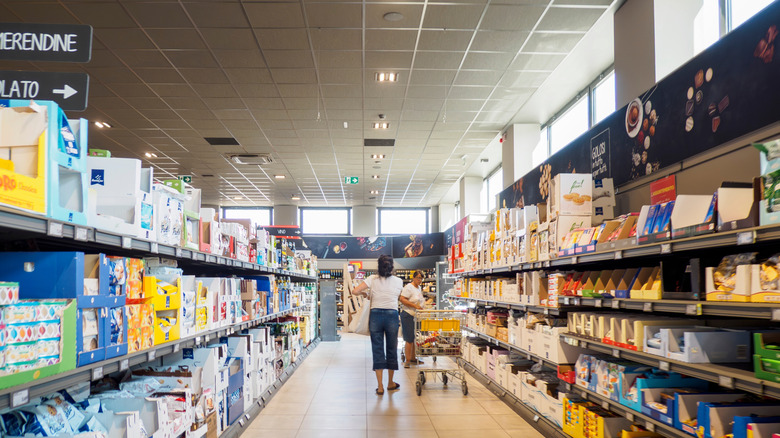
Most Aldi locations have the same layout. It's not hard to know where to find your desired items when the store map is consistent and simple. Of course, there are plenty of Aldi hidden gems on the shelves, but in general? You flow seamlessly through the aisles, and before you know it, your cart's full.
The chain also doesn't spend a lot of employee time on unboxing and arranging items. Here, you'll find boxes on top of pallets full of piles of items. You grab what's available more or less in the order it was put on the shelf. Squint, and it can sort of look like a really scaled-down Costco in here. Still, it's organized and easy to navigate.
Maybe the produce aisle's not getting featured in the New York Times style section, but aesthetic honorifics don't make the food taste better. Plus, the back-to-basics layout and shelving here mean Aldi is not quite as overstimulating as other stores. We'll take the simple, clean look and lower prices over an Instagram-ready display any day.
Seriously, there's a good reason for the cart quarter
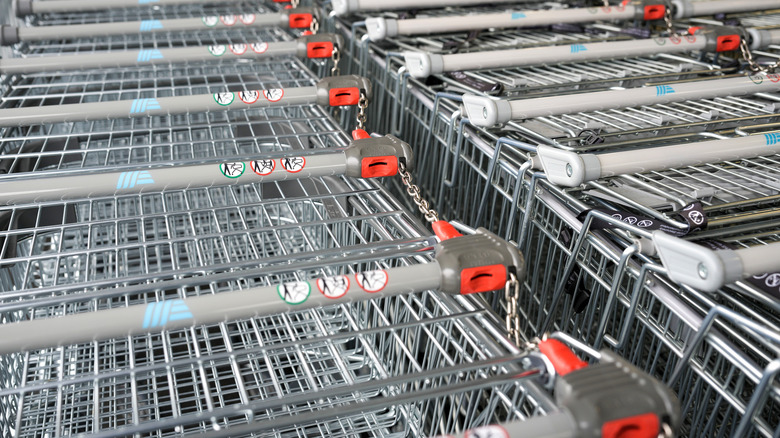
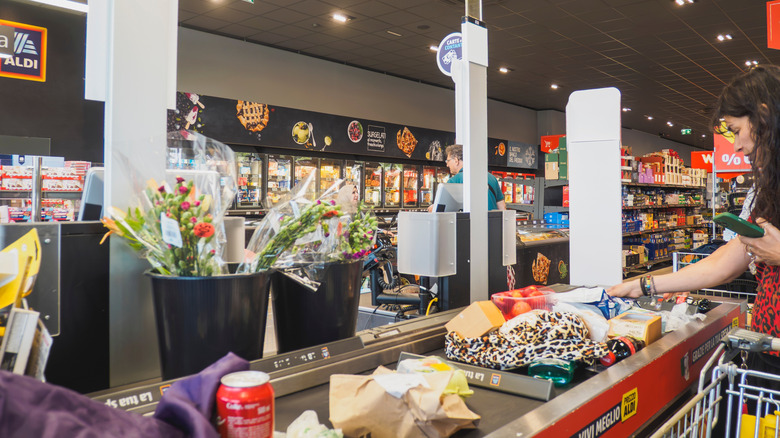
Aldi's cart-locking system is the solution to a number of potentially costly problems. For one, carts are harder to steal or otherwise leave floating in the parking lot. For another, this policy means that the store doesn't have to have employees on the clock whose only task is to wander around picking up wayward carts. At this supermarket, employee tasks are highly efficient and well-organized. If you've ever wondered why Aldi cashiers always sit down, well, it's because they can ring up items faster that way. So, of course, management doesn't want employees whiling away the hours chasing carts in the parking lot.
Requiring a deposit for shopping cart use is an unusual practice. We're not denying that. When you understand the reasoning, though, it's easy to understand it as a practice where everybody wins. The carts are, by company policy, always in a designated place. It saves the company money on employee and material costs. The cart policy also makes things a little smoother for customers. Provided you remember your quarter, of course.
Prioritizing local produce when possible
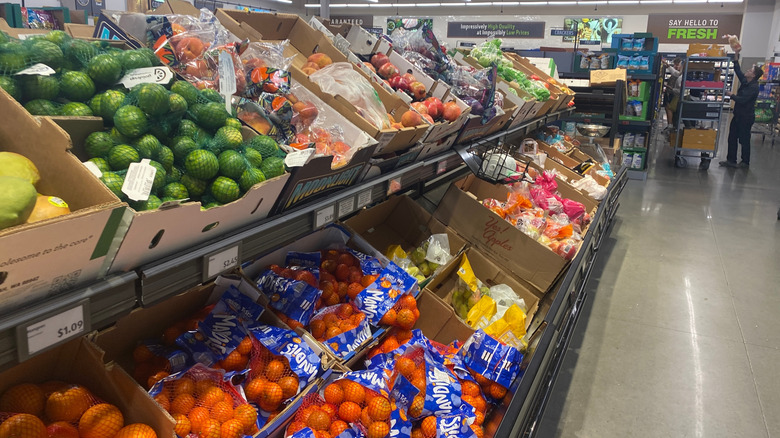
If you're a grocery store that wants to keep costs down and trim some excess on the logistical side, it makes sense that you'd want to get local produce whenever you could, right? Aldi does just that. Aldi works closely with suppliers to make sure that what's on store shelves is consistent and tasty. By asking upfront how, say, bananas or pineapples can be most responsibly sourced, Aldi and its suppliers can figure out win-win practices together. Partnering with local growers also helps the store's fresh inventory expand, even within the chain's self-imposed limited SKU policy. Then there's the simple fact that food traveling shorter distances from field to store means lower prices. Fresher food at a lower cost? Yes, that's what shoppers want.
Oh, and if you're wondering why Aldi's produce comes in packaging, when other stores sell loose avocados and tomatoes? Well, that also keeps prices down. Packaging makes items easier and faster to scan at checkout. Speed and efficiency are the name of the game for cashiers here, since Aldi has fewer staff working at any given time than other stores. Of course, Aldi also works to use as much reusable or compostable packaging as possible.
Private label items
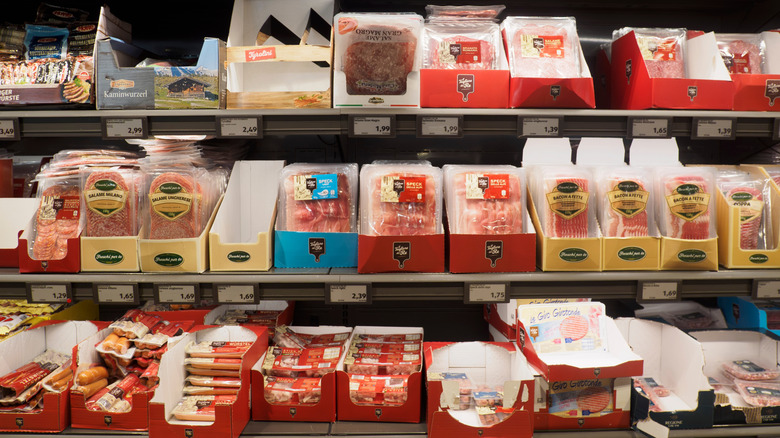
The sheer amount of reliable private-label items at Aldi is a major strength for the store. More than 90% of the items here are Aldi brand, and the chain is proud of that fact. If you see labels like Mama Cozzi's, Barissimo, or Kirkwood? Those are just a few of Aldi's private label brands, and that label means good, quality stuff. The private-label products here have won awards and gained a cult following amongst Aldi superfans. For example, stores regularly sell out of Mama Cozzi's pizzas on Fridays. Kirkwood breaded chicken breast fillets — aka "red bag chicken" — is another product that inspires fanaticism online.
Aldi's website claims that the grocery chain bargains hard with suppliers, then passes savings on to customers. Still, this system works in favor of suppliers, too. If you're the people behind Aldi-brand mustard, for instance, you usually don't have to compete with other brands. Not a bad deal, if you can get it. Of course, all of this hinges on Aldi's private-label items being quality products, too. The company samples somewhere around 35,000 products per year to ensure that only the best go on the shelves.
A concrete commitment to affordable yet high quality products
Aldi believes in offering good stuff for cheap. The store's customer base includes people with lower incomes, and the animating principle is that people deserve to eat well regardless of income. One way Aldi achieves this balance is by keeping the supply chain efficient. The store carries fewer SKUs (stock keeping units), or unique inventory items, than other supermarkets. This simplifies things at every level of the supply chain. Fewer SKUs also allow Aldi to take advantage of economies of scale, which in turn keeps prices lower.
Aldi also employs a "just in time" distribution model, meaning lower amounts of inventory are delivered at a time. This reduces waste and cuts down on overstock costs. If people buy close to exactly the amount of product the store orders? That sort of thing is win-win. The people get what they want, and the store doesn't have a bunch of costly waste stuffed in some warehouse. Or worse, landfills.
The chain can back up all this quality talk, too. Aldi's products consistently win awards. Two kinds of ravioli, a Prosecco, and non-GMO olive oil spray were among its Product Of The Year Award winners in 2024. In 2025? Dark chocolate-covered strawberries, Atomic spicy pickles, and cheddar cheese crisps were among the many Product Of The Year Award winners from Aldi's inventory. This grocer walks the walk when it comes to stocking the shelves with good stuff.
The magic of the Aldi Finds aisle
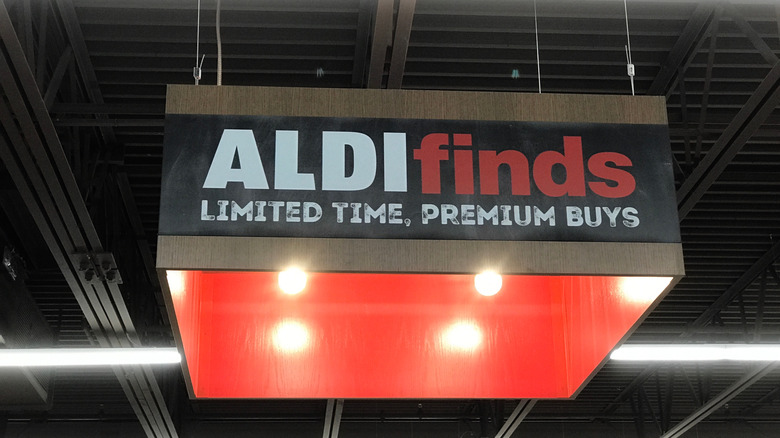
Aldi might have a more limited inventory than other chains, but that doesn't mean the store offers just the same old stuff all the time. The Aldi Finds aisle — colloquially known as the "Aisle of Shame" amongst Aldi superfans — is an absolute treasure chest. Here, you'll find a rotating inventory of food and non-food items like seasonal coffee or scented candles, household needs, and limited-edition potato chip flavors.
The non-food things are fun, and often even useful. You can update all of your grilling utensils when summer rolls around. The real treat, though, is in the specialty food items. Chips, dips, candies, or even international treats like spaetzle are just a few of the random goodies you can find in this spot. The grocer claims to use this aisle as a testing ground for new products, and that's true enough. In addition, though, it's a section of the store that shoppers can always get excited about. You have your staples, then you have the intriguing unknown. Just tread carefully, okay? As one Redditor puts it, this aisle is "Where all your Aldi savings go to die!"
Seasonal items you can set your calendar by

Everyone wants pumpkin-flavored coffee in October, gingerbread cookies in December, and new flavors of potato chips to take to the cookout in July. That's seasonal eating, right? Well, to be a little more specific, Aldi expects seasonal items to sell for three or four months. If you like that pumpkin coffee, you can bet on it being around in the fall, but not much longer. Yeah, we think a lot of seasonal Aldi items should be permanent, too. The world turns the way it turns, though.
It's not just holidays, either. All sorts of Aldi Finds treasures are seasonal. One Aldi employee explained that even though some "basic" items are stocked year-round, others are considered seasonal. "A lot of baking supplies (corn starch, melting chocolate, sprinkles, cookie mix) come in around November, and stay til April for the big baking holidays," they wrote on Reddit.
It makes sense that Aldi cares about product seasonality. Aldi commits to sustainability, and you can bet there are supply chain reasons for this. Seasonal eating is big in sustainability circles. If you're eating produce during the time of year that it grows, there is less strain on the environment. Seasonal eating also keeps prices lower, as out-of-season items cost more. The policies around seasonal items aren't necessarily based on growing and harvest seasons, but it's not far off. Yet another way that considering sustainability in business yields benefits.
Getting rid of plastic bags helps everyone
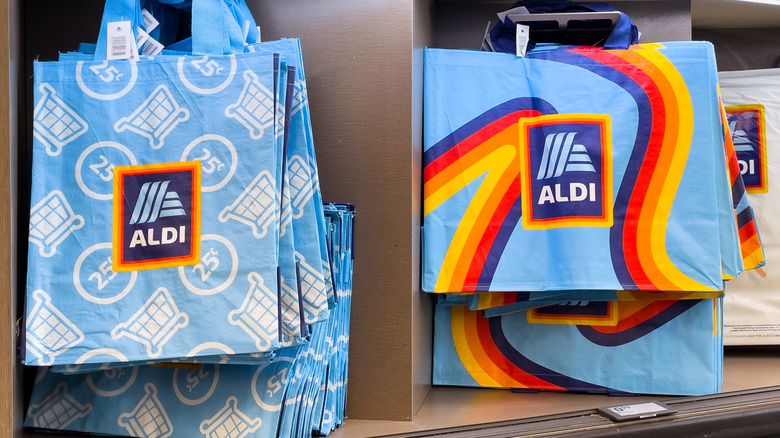
Like the cart deposit, this policy can sometimes be confusing, even alienating, to Aldi newcomers. Yes, it's true that Aldi does not provide free plastic bags for customers. It's also true that an Aldi employee will not bag your groceries for you. You have to either bring your own bags or pay for bags, which means that shopping here requires a little more forethought than elsewhere. Instead of thinking of this as an inconvenience, though, consider that this policy helps keep Aldi's prices low while also reducing the store's environmental impact. This practice means that, on the supply side, Aldi is not paying for plastic bags. By extension, neither are you. Aldi is not paying for an employee to stand at the end of the checkout to do a single task, either. Instead, you spend a few minutes bagging your own groceries, and as a result? Those groceries are cheaper.
Shunning single-use plastic grocery bags and making customers bag their own groceries is not some Recession-era austerity policy imposed upon workers and customers by an unfeeling C-suite exec. No, this is a solution that helps the company's logistics while also benefiting people on both sides of the cash register. It also helps the planet. Talk about a win-win.