

10 Mall Food Court Rules Everyone Should Follow
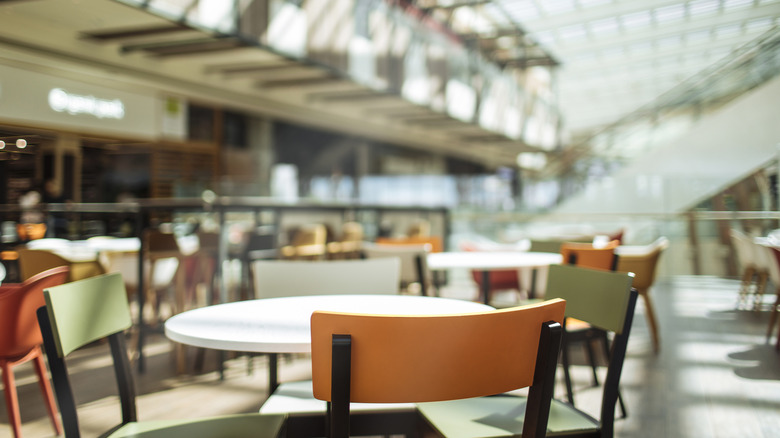
Ah, the mall food court. The sight of so many lunches between mammoth shopping trips, of awkward first dates between gawky teenagers, of once-beloved chains, and of people from all walks of life coming together in a shared space. The mall food court is one of those places that feels weirdly lawless: Unlike a restaurant, there's no sense of a dress code or any tableside service, and the seats themselves aren't owned or managed by the kiosks serving you food. This can cause confusion around what you can and can't do in a food court — and in a lot of cases, this can lead to a serious lack of etiquette towards fellow diners. Uneaten food left on tables, mess strewn everywhere, seats moved halfway across the hall, and "reserved" spaces (that aren't actually reserved) are both common and annoying.
That's why we decided that it was time to take a good, long look at how we behave in mall food courts, and to remind everyone of the rules that you should follow. They may not be widely publicized, but there are some definite dos and don'ts to bear in mind. Forget them, and you'll be the most annoying person in the food court.
1. Please, make sure you clean up after yourself
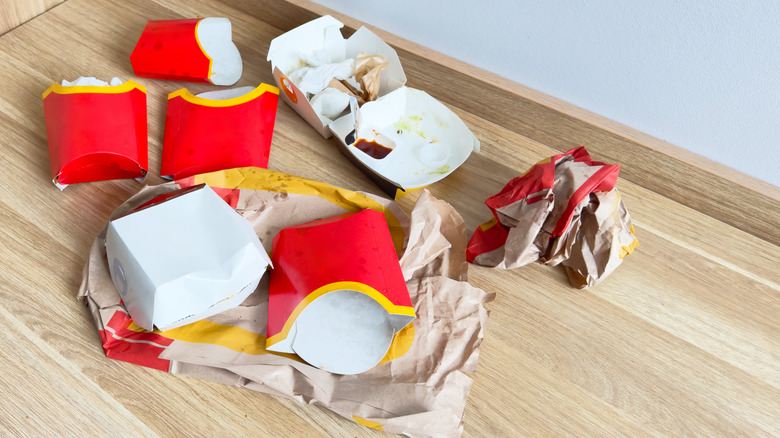
It's kinda wild that people still think that they don't have to clean up after themselves when they're in a food court, guys. You'd think people would know this one by now. Well, they don't, and unfortunately, messy tables are one of the biggest issues in mall food courts, and the biggest source of annoyance for patrons and staff alike. Although some street food markets and malls have specific instructions about the disposal of trash, people still feel at liberty to leave half-eaten food wrappers and scattered French fries everywhere — and someone then has to come and clean it all up.
Contrary to full-service restaurants, mall food courts are areas where you take your meals to your own table, and this comes with a certain amount of a do-it-yourself attitude. A helpful rule of thumb to remember is that if you can see trash cans, and your food containers are made from cardboard or plastic, then they probably need to be thrown away. If, however, you've been served food in non-disposable cookware, then it might be the case that it's going to be cleared up by someone else, or that you need to take it to a collection area.
2. If it's crowded, it's good practice to share your table

The thing about mall food courts is that they're communal spaces, where everyone rubs shoulders as they eat their chosen meal (or mourn those food court restaurants that have vanished). What they're not are private dining areas where you get to dictate who sits where. As a result, eating in them comes with a certain amount of accommodation for other diners, and this can occasionally extend to making room for them on your own table, particularly if you're occupying a larger one and there's nowhere else to sit. Despite this, plenty of people still have tales of being told that they can't sit at tables when they ask strangers to do so, only to be left without anywhere to eat their food.
Look, we get it: Sharing with a stranger can be awkward, especially when you're eating. However, if the food court is full and there's nowhere else for anyone to sit, it's good etiquette to let that person sit with you. You don't necessarily have to become best friends (unless you want to, of course!), and once your meal is done, you can go your separate ways.
3. Don't go for the same old food every single time
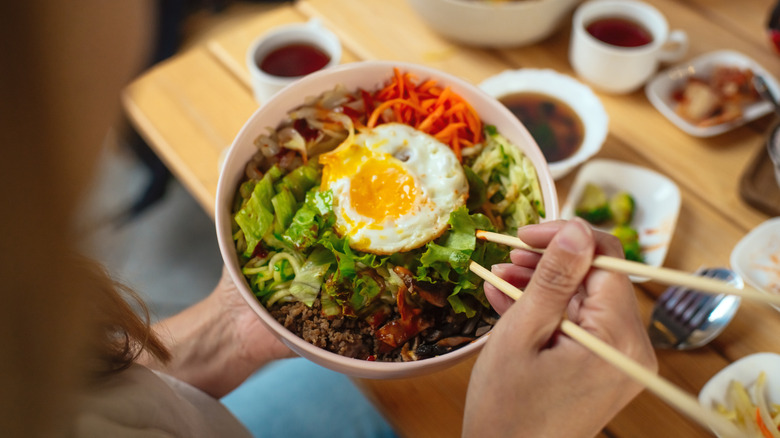
When you go to a food court, you can immediately be faced with a lot of choices — and this choice can be overwhelming. As a consequence, it's natural for a lot of people to stick to what they know and go for their old food court favorites. You walk up to the burger or taco stand, get your standard order, and sit there munching it, not having been enriched for the experience.
We personally think that this is something you should avoid, and instead, you should try and treat a mall food court visit as an opportunity to try something new. Modern-day food courts are full of exciting options, from Korean bibimbap to shawarma wraps. The whole set-up of food courts encourages this variety, and you're more likely to discover options that are a little left-field or innovative, especially those that might have more difficulty finding a home in a brick-and-mortar location. You may also find more independent or local outfits, at which you could combine eating new grub with a community spirit.
4. The staff aren't servers, so don't try to order from them
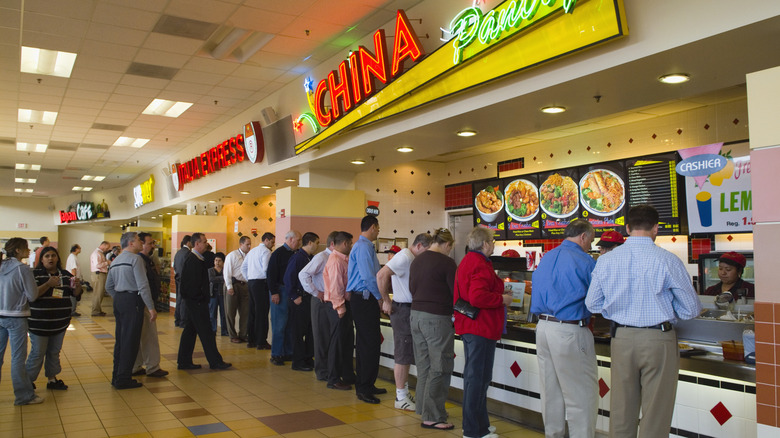
The staff at your local mall food court might be a little more difficult to find than in a restaurant — and there's a reason for that. Generally speaking, mall food courts don't have servers who come and take your order or clear up your plates. You may simply be handed your food at the counter to take it to your own table. Or, the food court may have runners that will bring your food to you but aren't employed to do anything more in-depth in terms of service, like taking your order or clearing your table.
This service style can largely be to the benefit of businesses that operate in mall food courts, as it allows them to cut down on server costs and keep things nimble. However, some customers may not know the difference between runners and servers, and may end up trying to flag down a runner to ask them questions or order additional dishes. Try to avoid being one of these people. It's not a runner's job to fulfill the responsibilities of a server, and the lack of service is the price you pay for not having to give a tip at the end of the meal.
5. Don't take too long to order — there are probably people behind you
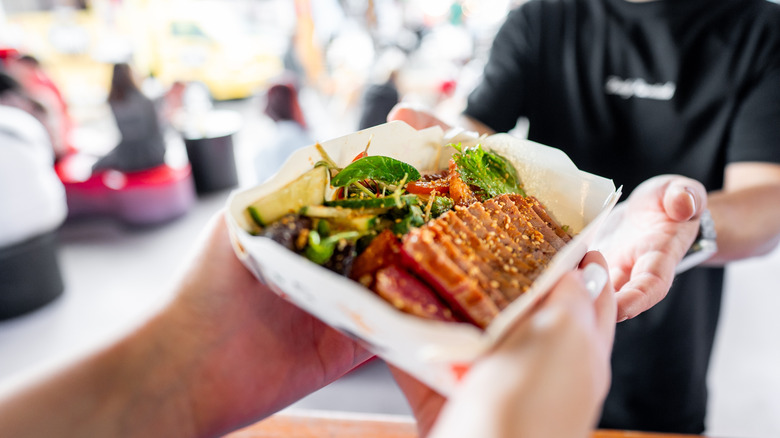
Mall food courts aren't really places that are designed for lingering, and that's as true when you're ordering your food as it is once you've eaten it. For some reason, though, people think that it's perfectly acceptable to get to the front of the queue at a food court kiosk and then spend five minutes deciding what they want to eat. This can be seriously frustrating for everyone else who just wants to grab their food and go, particularly because mall food court kiosk menus are often displayed prominently above the servers.
So, when you're ordering at a food court, it's good form to decide what you want before you get to the front. It's perfectly fine to stand to one side and check out the menu before stepping in line; in fact, it's a lot more polite to do so than to hold everything up. If you still haven't figured out what you want by the time you get to the front, step to the side and let the person behind you order first. It's better to figure out what you want ahead of time, too, so that you don't end up feeling rushed and panic-ordering those food court items you should really avoid.
6. Remember to return your tray
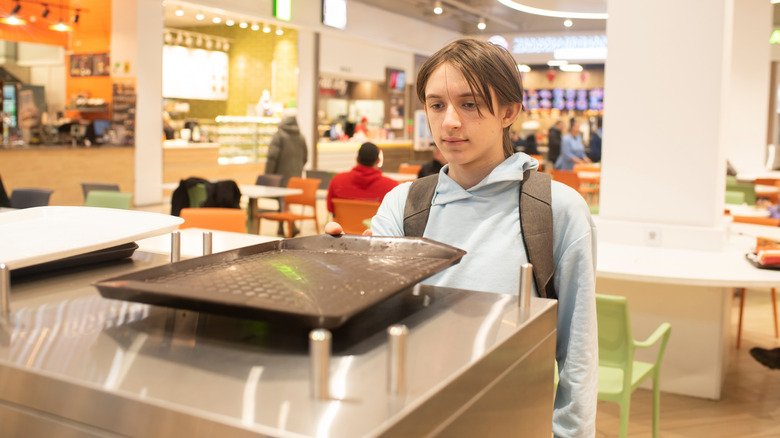
For some reason, we can often forget about trays in food courts. Even if we've taken all of our leftovers and food wrappers to the trash, it can still feel permissible to leave your tray on the table. Sometimes, this can also feel like it's the only thing you can do: Some food courts may not have obvious places where you can deposit your tray, and so the logical thing to do is to just hope that someone else comes along and cleans them up.
Well, doing this can create more problems than you might think. The first is clutter, with tables left untidy and littered with items that get in the way of your own food and belongings. The second is mess, with leftover food items and half-eaten meals scattered all over the place. The third, though, is contamination and hygiene: Food wrappers and leftovers are a potential feast for bacteria, and you have no idea whether the person who's just left has a cold or the flu, leaving you to potentially become sick when you dispose of their tray yourself. The solution to all of these problems is simple — you just need to dispose of your own tray. Find the place where it should be stacked and take it there, or hand it back to the kiosk from which you got it.
7. If you've rearranged the tables, make sure you put them back
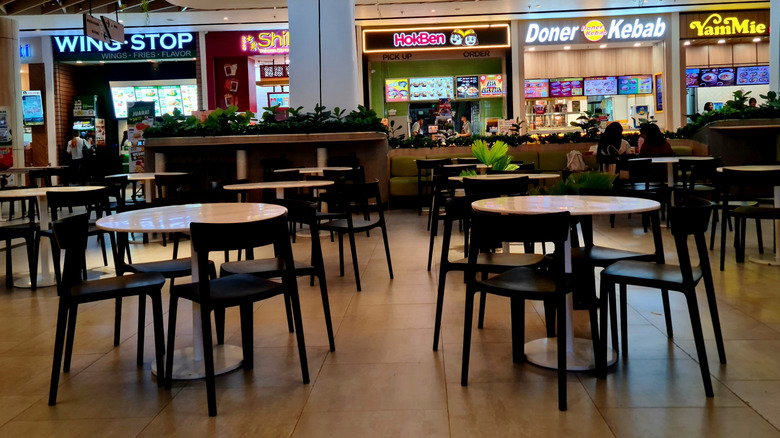
You know what's really annoying? Turning up at a food court, and being greeted with tables that aren't properly and logically spaced out, but which have been dragged to different corners by groups of people that were too numerous for a single table. Or, finding a table but no chairs, because some folks wanted to sit together but didn't have the courtesy to reset things once they'd finished. A lot of the time, you make this discovery while holding a tray of piping-hot food, which can make it impractical to rearrange things yourself. Plus, why should you have to in the first place?
There's a way to stop this happening, guys, and that's to put things back where you found them. If you rearrange tables and chairs, make sure that you're returning them to their rightful place. It's also worth considering whether you should be rearranging tables in the first place. Doing so can be a serious safety hazard and may potentially obstruct fire exits or escape routes, and it can also make it difficult for people with limited mobility to move around easily. Make sure to ask before you move anything, as there may actually be a good reason why you're not allowed to.
8. You can use food courts as a remote working space, but make sure you actually buy something

Mall food courts, like airports and train stations, are great places to get some work done in a pressure-free environment. Unlike coworking spaces or libraries, which require memberships or subscriptions, you can rock up to them, open your laptop, and get down to business. Some food courts have even caught onto the benefit of having freelancers populate their spaces and actively promote themselves as good options for remote workers, who perhaps fancy a little food while they write, Zoom, or compile spreadsheets.
However, it's a mistake to assume that you can just sit there for hours without buying anything. Mall food courts are for paying customers, and while you likely won't have anyone breathing down your neck telling you to move along if you haven't bought anything, it's bad form to take up a table from someone who's actually purchased some food. So, if you're going to work in a food court, ensure that you buy a bite to eat at some point. It'll make you feel way less guilty, and you'll be contributing to the economy of the space you're sitting in.
9. Remember, you don't necessarily get to hold tables
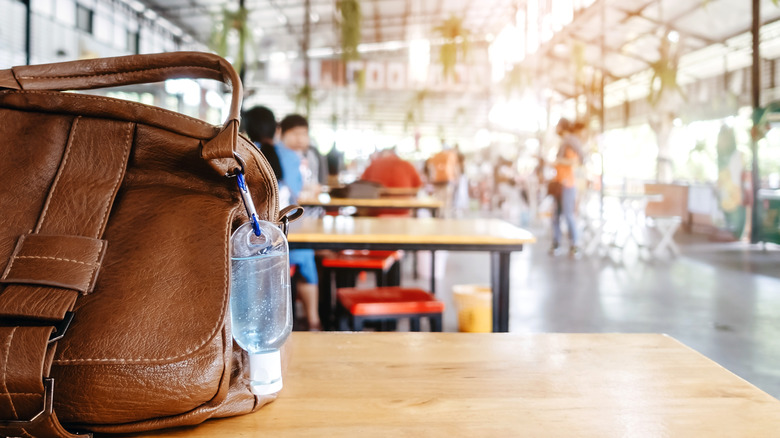
Because food courts don't have hosts or servers, it can kinda feel like anything goes when you're getting tables. To a large extent, that's true: You just pick one that's free, take your food there, and you're good to go. However, for some reason, people can act as though they have ownership of these tables, even if they haven't bought anything. It's not uncommon for people to "reserve" tables by placing a bag or a sweater on them, before walking off for an hour or so to do some shopping or talk to friends. Then, they get irritated when they find that their stuff's been moved, and the table's been taken by a paying customer.
Look, don't be that person, guys. That table's not yours to reserve, because it's not been given to anyone. Food court tables are a place for someone to sit once they've bought their food, not to nab way in advance. If you're with a group of family or friends and you're taking it in turns to go up and order one at a time, then it's likely fine to sit before you've ordered. However, if you're on your own, and you just want to keep a nice table aside for yourself, that could be considered bad form — especially if it's busy.
10. If you have kids, remember that the food court isn't a play area
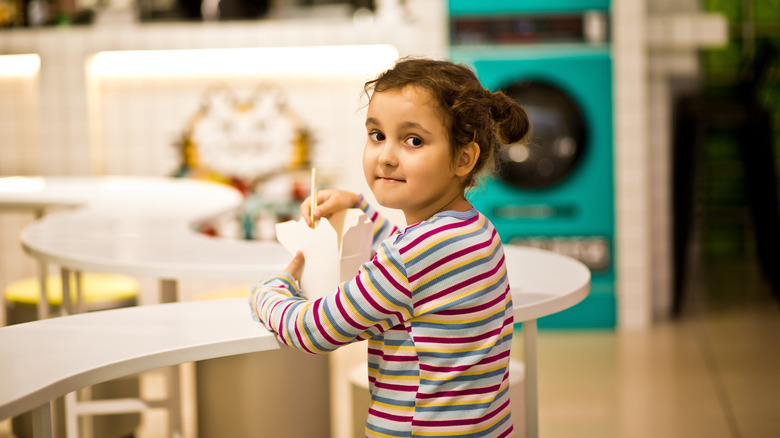
Okay, we understand this one. Finding dining options with kids can be tough, and so it's natural for families to gravitate towards food courts. They're open-plan, they have plenty of accessible options for kids, and they're not quite as stuffy as some restaurants, making them perfect for children to be able to express themselves a little more. However, some people use these facts as an excuse to let their kids run riot in the food court, assuming that because it's a public space, they're not beholden to any rules.
We don't think that's entirely fair. Just like in a restaurant, when you eat with kids in a food court, you should make sure they're not disrupting other customers unnecessarily. Doing this is not only annoying for folks who just want a quiet meal in peace, but it can also be a safety hazard, with running kids tripping over other people and themselves, and potentially becoming injured. If your kids do want to run around and play, then look for the dedicated play area that many food courts and shopping centers have. Just keep in mind that these play areas likely won't allow food inside, so be sure that your kids finish their food before they join in on the fun.