
The Best Ina Garten Tips To Declutter Your Kitchen

Kitchens collect clutter like few other rooms in your house, and if you're not careful, they can quickly become overwhelmed by objects and mess. This is, unfortunately, the opposite of what you need. A kitchen should be as serene as possible, but when you combine countless utensils and appliances, high traffic, and a healthy amount of stress when your dish is nearing completion, it's a room that you can come to dread being in. Now and then, it's essential to step back, take stock, and try to reset, so you can create a calm, functional space.
Few people know how to do that as well as Ina Garten. The Barefoot Contessa has made a name for herself by emanating serenity and quiet joy as she cooks, and doing so in a kitchen that feels stress-free and uncluttered. With decades of on-screen cooking experience under her belt, she knows exactly how to allow her food (often made with her favorite brands) to take center-stage, instead of her viewers being distracted by the space around her. How does she do it, and what tips has she shared along the way? Let's find out.
Display commonly-used items on shelves to combine style and storage
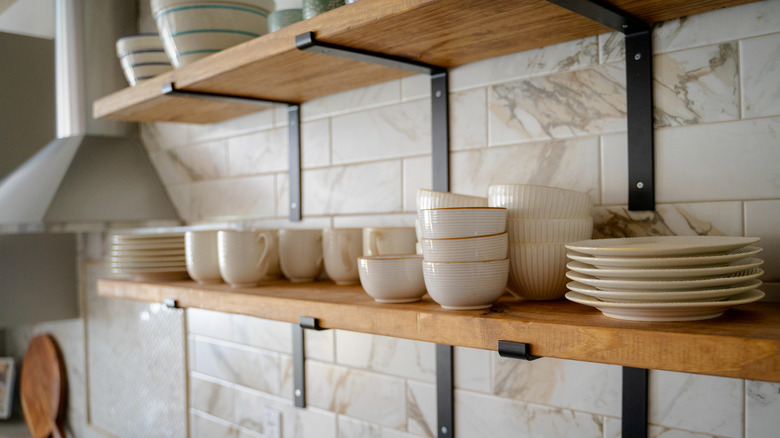
If you've ever watched an episode of "The Barefoot Contessa," you'll be well aware of how good Ina Garten's kitchen looks. Her spaces are designed tastefully, and they never feel anonymous: Instead, Garten injects her own personality into them, and also gives viewers a peek at her favorite dishes, jugs, and trays, often displayed on the shelves around her. As it turns out, this isn't just for aesthetics. Garten fills her open shelving with the items she most commonly uses, to both give the eye something to catch on to and to ensure that everything she needs is in easy reach and not getting lost in a cupboard somewhere. This, in turn, allows Garten's cupboards to feel more organized and less cluttered.
For Garten, placing her most-used items front and center in the kitchen makes it feel like a lively space. When you know that those dishes and serving platters are actually being used, it makes a kitchen feel more homely, as well as reducing clutter behind the scenes. Plus, it's a great excuse to show off all of your beloved crockery, which can often get shoved away.
Label, label, label
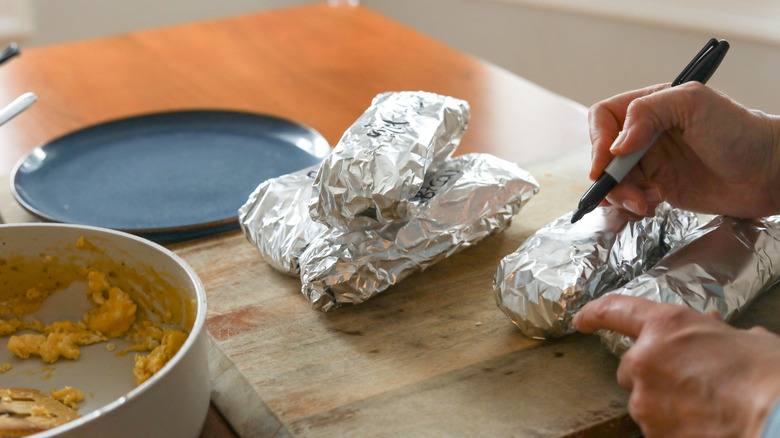
If you're anything like us, your freezer's likely full to the brim. Not just with your favorite freezer finds from stores like Costco, either: It's the perfect appliance for extending the life of raw meat and seafood, as well as for stashing away homemade soups and stews for another time. However, freezers can quickly become unruly, and it's all too easy to forget when you placed your food in it, which can lead to wastage or forgotten-about items that develop freezer burn.
That's why Ina Garten's such an advocate of labeling. In an interview with "The Design Time," Garten mentioned that she labels items that she places in her freezer, so she doesn't lose track of what's in there. She writes what the item is and when she puts it in the freezer, which not only allows her to check what each item is without unwrapping it (which can expose it to the cold air and speed up its deterioration), but also gives her an idea of when she needs to use it, to make sure it doesn't go bad or succumb to freezer burn. This isn't just an organizational tip that makes life easier: It may also save you money.
Grab a basket for your cutting boards and sheet pans
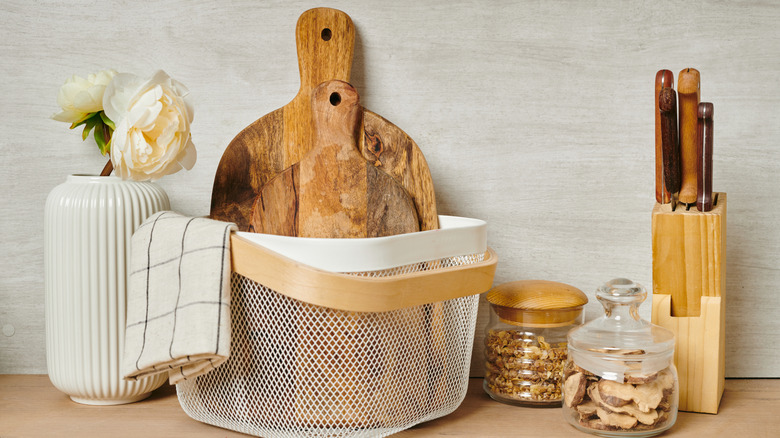
Kitchens are chock-full of differently-sized items, and cutting boards and sheet pans can be some of the most awkward to deal with. Their large, flat surfaces make them a nightmare to store in cupboards, where they can quickly become scratched or scuffed, and they can look pretty ugly when they're placed straight on the counter. Ina Garten's solution is to make a statement with them — or, rather, with their storage. Garten places her cutting boards, sheet pans, and baking racks in a large basket, which she puts on the end of her counter. She opts for an elegant but casual woven basket, which both looks good and is sturdy enough not to warp under the weight of the items.
This is obviously a stylish way to organize clunky items, but it's also a smart move to reduce clutter in cupboards. Sheet pans and cutting boards can often take up loads of space in units and drawers, and that's when they fit in them in the first place. By creating an additional space, Garten frees up storage space for other uses.
Don't be afraid to use counter space to store utensils
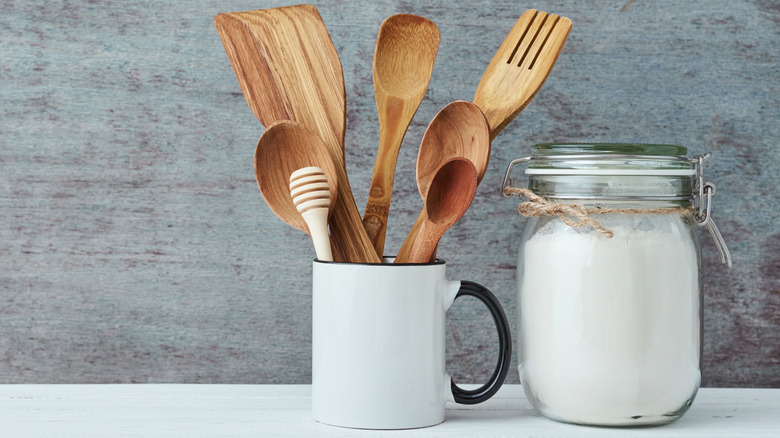
Kitchen counters can quickly become cluttered, and it's important to try and keep them as clear as possible. Having said this, they're also a space full of opportunity. By utilizing your counter space intelligently and placing much-used items on it, you can create space in your drawers and cupboards, while simultaneously making your kitchen more ergonomic.
Ina Garten knows this, and she likes to keep her counter spaces functional by placing utensils out on the counter. She divides them up into separate ceramic pots and organizes them by type. In one pot, she has her metal utensils, while in another, she collects all of her wooden spoons and spatulas. She then has a smaller pot for her serving spoons. By doing this, Garten ensures that she can reach for an item she needs at a moment's notice and doesn't have to root around in her drawer to find it. As a side note, this method also helps folks keep track of what utensils might be deteriorating and need replacing: If you're staring at a stained, split wooden spoon every day, instead of hiding it in a drawer to forget about, you're far more likely to buy a new one.
Determine what can be kept at room temperature, and take them out of the fridge
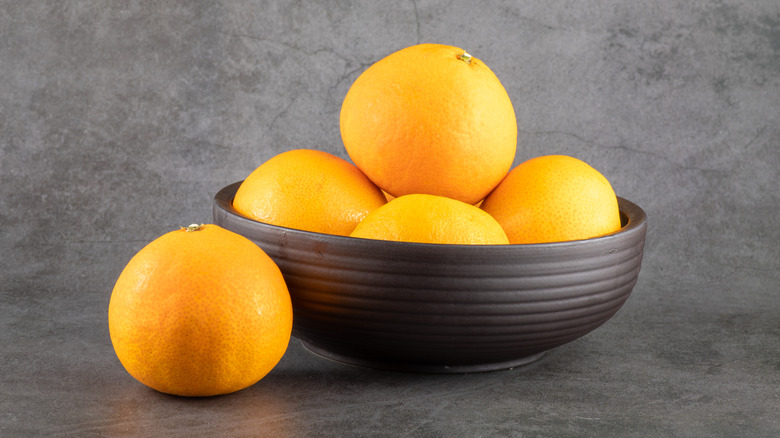
Fridge space is often at a premium, so it's important to think about what actually needs to go in there. For Ina Garten, it's something she's always mulling over — and something that she takes action on. Garten likes to place items that can be kept at room temperature on her counter, instead of in her fridge. Not only does this make them more accessible and create much-needed space in her refrigerator, but it also makes the food taste better. Items like eggs and citrus fruit shine much more brightly at room temperature than when chilled, and her dishes reap the reward.
Garten likes to display these items in an aesthetically pleasing way: She puts things like lemons, limes, and oranges in bowls in front of her butcher's block. By doing this, she not only makes them look good, but she also allows them to give her inspiration for her elegant dinner party dishes. If she's making a recipe that she thinks needs a different flavor, the sight of an orange can prompt her to throw in some juice or zest, making her cooking more spontaneous and exciting. We love an organizational tip that leads to better food.
Nest your mixing bowls (and keep them near your baking ingredients)
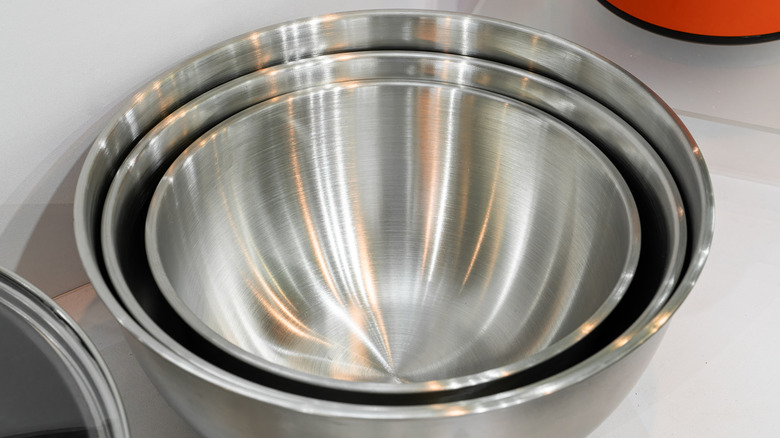
Nesting your mixing bowls can feel like a no-brainer, and yet, it's amazing how many people don't do it. Instead, folks shove their mixing bowls into different parts of their kitchen, totally separate from one another, and then wonder why they're running out of space. Well, not The Barefoot Contessa. Ina Garten stacks her bowls neatly, keeping them all in one place and perfectly organized.
Garten has a matching set of carefully chosen mixing bowls, but you can still do this if you have a more random assortment. It might look a bit more haphazard, but it'll be much more of a space saver than keeping them apart from each other. As for where she keeps her bowls, Garten keeps things logical here. She places her mixing bowls near her flour and sugar, to keep all of her baking goods and ingredients in one place. Then, when she comes to a baking recipe, she doesn't have to dart around from area to area in her kitchen. Oh, and she stores her flour and sugar in glass canisters, too, which makes them look way better (and stops a load of half-finished bags from cluttering up the place).
Group similar items in your pantry
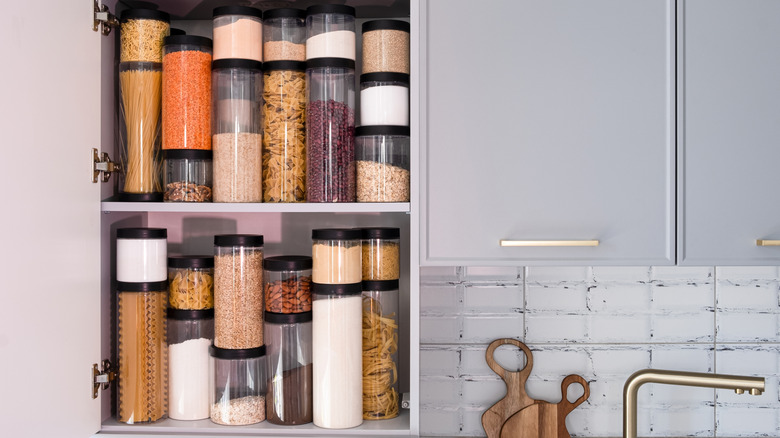
Pantries can be stressful, huh? If you're not careful, they can go from a carefully curated selection of goods to a chaotic space where you can't find anything you need. How does Ina Garten get around this? By applying some key organizational principles. She starts by ensuring that she's grouping similar items, with all of her oils and vinegars in one place, her pastas in another, and her sweet goods like honey and molasses in their own section. By keeping similar things together, Garten's able to quickly access what she needs when she's cooking foods like her ultimate roast chicken without having to root around, thereby creating less mess. Furthermore, this helps her keep track of stock, and know when she needs to replace something (which then allows her to avoid buying double of any one item).
Garten also does one key thing that helps her even more: She turns all of her labels to the front, and arranges her goods like she's in a grocery store. This doesn't just look good, but it also makes it easier to see exactly what she has and what she needs. This is especially useful with items like herbs and spices, which can sometimes look pretty similar. Plus, as with grouping her items, it helps her prevent buying something twice by accident.
Store everyday items opposite the dishwasher
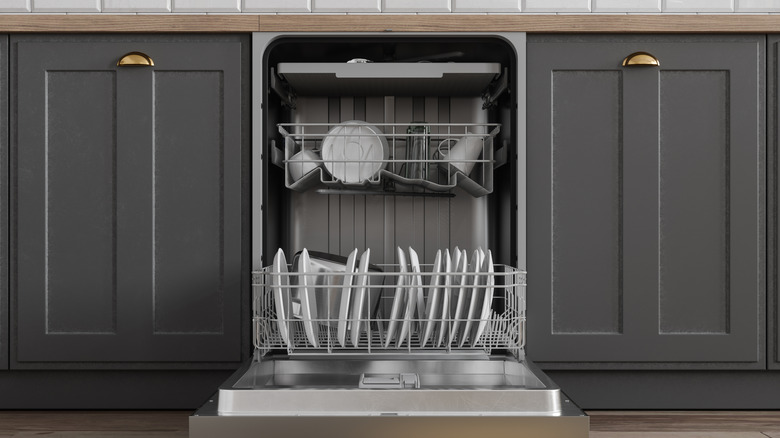
People don't think enough about the ergonomic nature of their kitchen. These spaces need to be as efficient as possible, but this can often be forgotten about when you're organizing them. As a result, you can end up storing items in a place where they're not best-suited. For Ina Garten, this is a particular problem when it comes to cups, glasses, and plates, which are frequently in and out of the dishwasher. If you store these items in a cupboard that's on the same side as the dishwasher, you've got to constantly walk around your appliance to put them away, which wastes time and defeats logic.
Instead, Garten always keeps her plates and glasses in cupboards opposite the dishwasher. Then, all she needs to do when she's unloading it is pivot to put them away, and then turn back to get the next item. It's a small tip, but it can help you "zone" your kitchen, which can, in turn, give it a sense of logic and keep it better organized.
Organize your fridge according to food groups
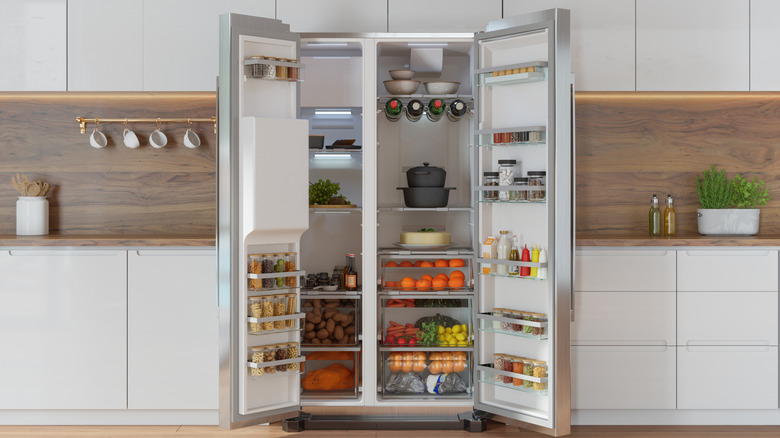
We can't tell you the number of times we've put something in the fridge, only to find it several weeks later, covered in mold and completely inedible. This usually happens because we've shoved it in the fridge without thinking about where it should go. If you load up your fridge in an illogical way, you increase the likelihood that you'll lose track of items, leading to repeated purchases, wasted food, and an overall sense of clutter.
So take a moment to do what Ina Garten does, and logically collect your food items. Garten likes to do this by food groups. She places her dairy items at the top of her fridge, next to her eggs. At the bottom of the fridge, in the clear drawer, is her vegetable space. Other groups can then take up the rest of the space.
Garten also knows the importance of organizing food in her fridge in a way that isn't just clear, but good-looking. She likes to keep all of her food labels facing forward, and arranges certain items, like asparagus, in jars or deli containers. This makes it look good, but it can also extend its lifespan and allow you to keep track of what you need to throw away or buy more of.
Avoid the temptation of fussy gadgets
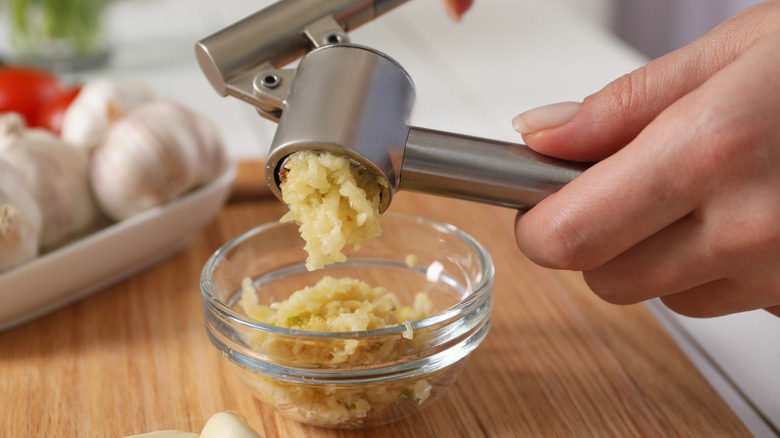
Look, we get it: We all want our kitchens to be as up-to-date as possible. In the pursuit of this, it's very appealing to drop more money than you should on the best kitchen gadgets that promise you an easier life while you're cooking. However, doing this is a one-way ticket to clutter, and something that Ina Garten recommends avoiding. In the "Ask Ina" section of her Barefoot Contessa website, Garten says that "the fewer fancy gadgets you have, the more organized your kitchen will be."
The gadgets that Garten has issues with might surprise you, too. You might expect her not to like higher-spec items like electric cocktail makers or ice makers, but she specifically names garlic presses as being overrated, for the sheer fact that you can do the same thing with a knife. All you have to do is press the flat side of your knife against the garlic, and it'll crush it up. A quick mince, and then it's ready to go. Take Garten's advice, and have a look around your kitchen to see if any gadgets just don't need to be there. If you can live without them, you can probably get rid of them.