

Retro Christmas Dishes We Rarely See On The Dinner Table Today
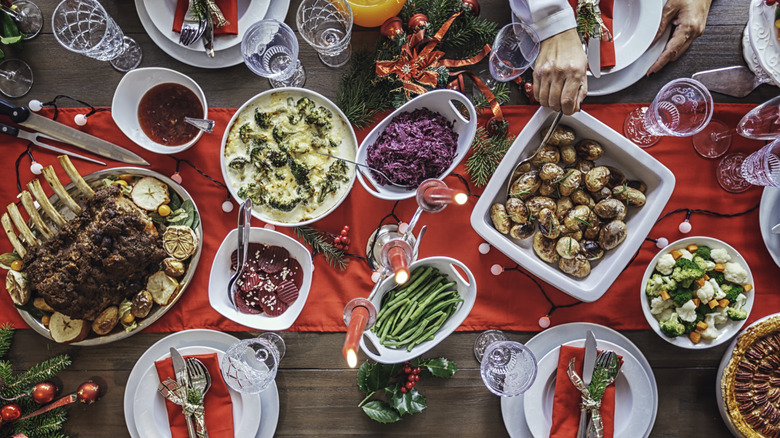
The holiday season is almost here, which means it's time for lovely presents, being around family, and of course, a delicious Christmas feast. Since the holiday is celebrated by people worldwide, everyone has their own traditions — like the tradition of eating KFC for Christmas in Japan. Even when it comes to Americans, every home makes a different set of dishes to celebrate the holiday. But some offerings like glazed ham, chicken, mashed potatoes, roasted veggies, and even turkey have managed to become a staple for most Christmas feasts. However, have you ever wondered if, back in the day, people ate these exact same dishes that we eat today? As it turns out, that isn't the case. Just as food habits have generally evolved over time, Christmas dishes have, too.
For instance, during colonial times, Christmas feasts were much simpler and relied heavily on available meats and seasonal produce. A couple of centuries later, during financially hard times like the Great Depression, people made Christmas meals with affordable ingredients. Later in the mid-20th century, when convenience food took over, that shift was reflected in holiday dishes, too. Over all this time, while some dishes managed to break through and remain a staple for the holiday to this day, others slowly faded into obscurity. This story takes a look at those retro dishes that are rarely seen these days. Join us on this nostalgic trip to see what Christmas dishes were all about in the past.
Oyster stuffing
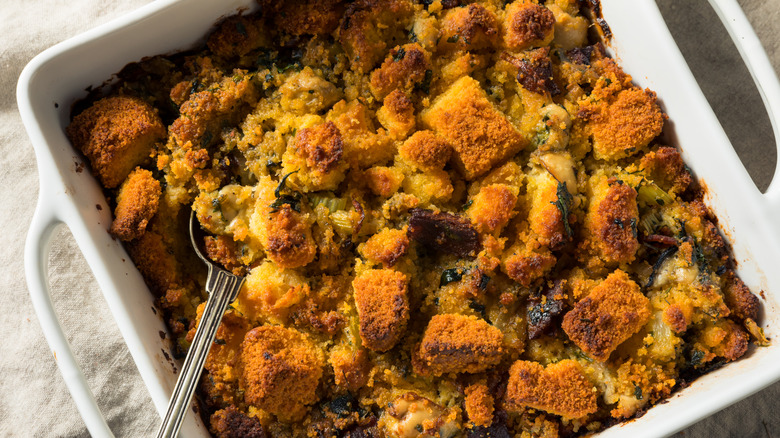
Oyster stuffing may sound odd today, as most of us would believe that adding seafood to stuffing and then pairing it with a bird is bound to taste awful. However, there was a time when people found the combination pretty great, which is possibly why oyster stuffing (or oyster dressing) was a hit. That said, some people would serve the dish as-is, because certain types of poultry were quite expensive and oysters were much cheaper back then.
This dish wasn't always a Christmas treat, but it turned into a special holiday feast dish for those who didn't live near the coasts, as oysters were more expensive for those in landlocked states. We don't know for sure, but this may be how the tradition of serving oyster stuffing on Christmas started. While this dish saw a massive peak for quite some time, and especially in the mid-late 1800s, it eventually fell out of favor as oyster prices increased. Today, you might not think of adding oysters to your stuffing because of how expensive they are.
Given that there isn't much that's off-putting about this dish, it's still worth a shot. If you'd like to save yourself from odd flavor combinations, just don't serve it alongside poultry. It's also pretty easy to make, which is another plus, as you only need to add shucked oysters to your usual stuffing recipe. A piece of advice: Instead of white bread, use potato bread if you want to elevate your holiday stuffing.
Cranberry jello salad
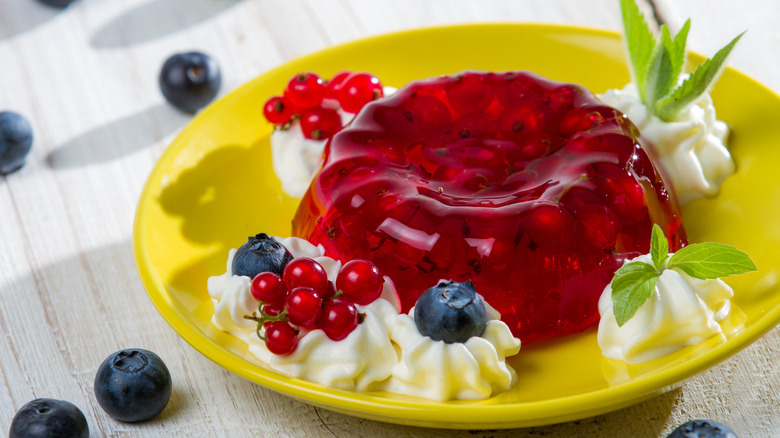
Also often called a cranberry jello mold, this side dish was commonly served on Christmas back in the day. Jello itself was all the rage once upon a time, and people used it every way they could. It isn't clear who exactly thought of this particular recipe, but it did appear in a lot of cookbooks, which was clearly how it became such a hit in so many American homes on Christmas.
The idea was as simple as any jello salad recipe. It started off with a cherry jello base, and that was supposed to be mixed with a basic cranberry sauce. Of course, using canned cranberry sauce was also an option. Then, some recipes suggested adding pecans, pineapples, and sometimes even other fruits to it, while others leaned savory and suggested mixing in celery and sour cream. Similarly, most recipes straight up suggested mixing everything together and setting the salad aside. But some recipes were slightly more intricate and required making different bases that were layered on top of each other.
Regardless of the endless variations that people came up with, this dish eventually fell out of style. This was bound to happen, as after a point, people stopped making jello salads altogether. But if you think the combination is worth trying out this Christmas, you could give this recipe a go. In case the flavor profile seems too one-note, you can also elevate canned cranberry sauce with spices to amp up the salad's flavor.
Mincemeat pies
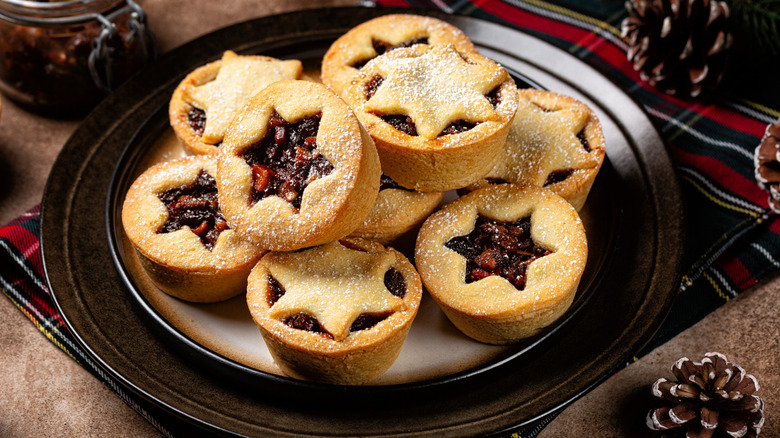
While you will definitely still find mincemeat pies in the United Kingdom, in America, their days of glory are pretty much over. In fact, many folks these days don't even know what they are, let alone knowing that they were once quite commonly a part of a Christmas feast. So, what exactly is mincemeat, and why is it called that? Here's a little history lesson.
Mincemeat pies arrived in the United States through English immigrants, as they were a part of their culture. Though the name may hint that this pie has meat in it, it doesn't. Well, at least the modern version doesn't have any animal product except suet, which is a type of animal fat. The original version of mincemeat pie did contain chunks of meat, though, hence the name. In America in particular, this Christmas treat saw a surge in the early to mid-1900s, as companies started selling pre-made mincemeat mix, which made making the pie less of a task. Though eventually, the dish did fall out of favor.
Today, you might still find mincemeat pies at some stores here and there. Besides that, not many people make it. But if you're one of those who is curious enough to see what the fuss was all about back in the day (and still is in the United Kingdom), you should make it at least once. Try our apple cinnamon mincemeat pie recipe for inspiration.
Pork crown roast
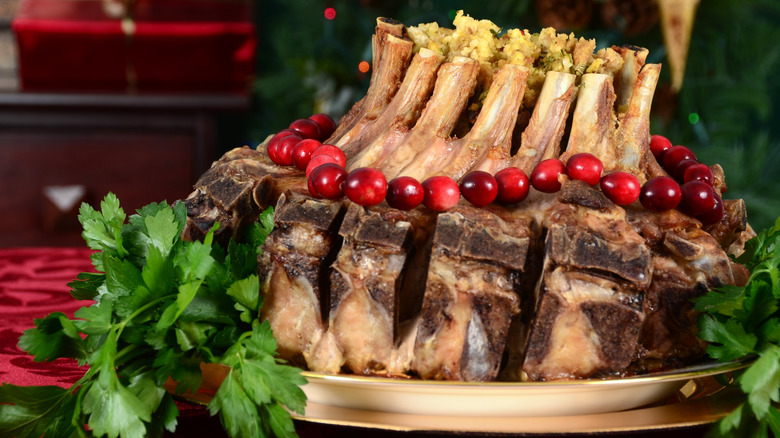
Add one more to the list of dishes that arrived in America through the United Kingdom: pork crown roast. But the original version was made with lamb and not pork. So how did it turn into a pork dish? Well, it isn't known who made the first version with pork or when it was made, but it somehow did come around, and then became pretty prevalent in America. Many particularly preferred serving pork crown roast on Christmas.
One reason why pork crown roast made the perfect dish for a holiday feast was how it looked. As the name suggests, it actually looked like a crown, as pork loin had to be tied together in a circular form. The pork loin was seasoned and roasted whole, and then it was carved right on the dinner table. While some placed stuffing in the center, others served the crown roast as-is.
It's sort of strange that this dish isn't as popular as it used to be. It's just seasoned and roasted pork loin, so it's bound to be delicious. But that doesn't mean it's not worth reviving, right? Plus, you might not have to do the tying work at all, as it's very likely that a butcher (at least a good one) will tie the loin for you.
Eggnog pie
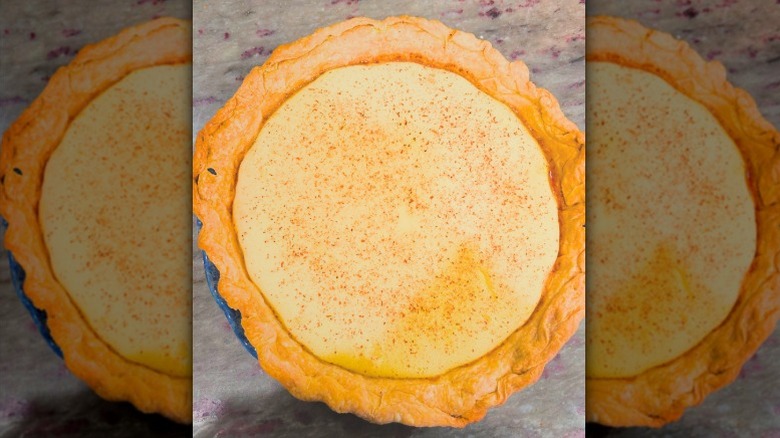
A lot of folks love sipping on eggnog during the festive season today. But this beloved holiday beverage's pie version is somehow rarely seen. Before we get into why this dish could have faded out of the limelight, let's first understand how it came to be.
The truth is, it isn't known clearly when the first eggnog pie was made. That said, many printed recipes for this holiday dessert appeared in the mid-1900s, especially the '40s. Interestingly, these recipes didn't suggest using actual eggnog in the pie filling, but instead were made with ingredients like gelatin, milk, sugar, salt, nutmeg, and either brandy or rum. Though there wasn't any eggnog in the pie's filling, it's easy to tell from the list of ingredients that the flavor was there. As far as why this pie was invented is concerned, it could have just been an experiment that went right. It goes without saying that, around the same time printed recipes were appearing everywhere, this pie was also a staple Christmas dessert.
This pie probably lost its charm simply because people preferred drinking eggnog in its original form rather than making a pie with it. However, given how easily it could be made, you should give it a shot. In addition, this could be an excellent way to use up your leftover eggnog. Despite the original printed recipes, you can actually mix the beverage with gelatin to make the pie's filling to give it an authentic flavor.
Plum pudding
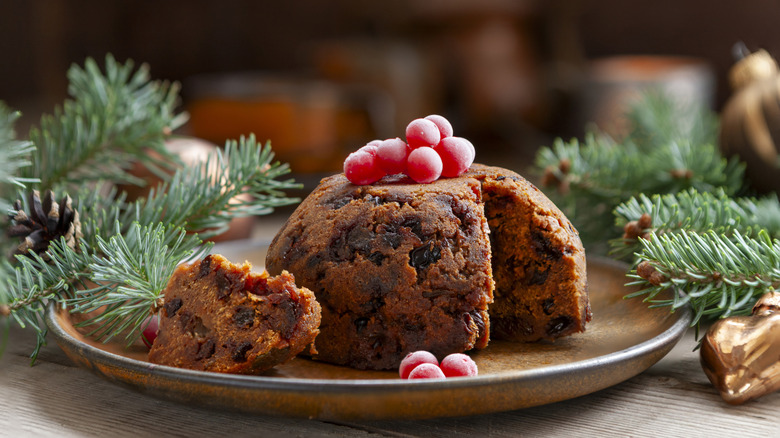
Have you ever seen a dome-shaped food item that's lit on fire on Christmas? That flaming dessert is a plum pudding, also called a Christmas pudding, a traditional dish that dates back to 14th-century Britain. In the United States, though? It was once commonly served on Christmas, but now, it isn't seen as much.
Although it isn't known how exactly this pudding landed in America, the most plausible explanation is that it was brought over by immigrants. Interestingly, the first version of this dessert had meat as one of the main ingredients. However, much later on (a few centuries), the recipe was refined, and the meatless version known today came along. As for the plum in the name? The dessert surprisingly has never had any fresh plums, though some recipes include dried fruit like prunes.
You may still find plum pudding at some specialty shops in the United States. But besides that, if you still want to enjoy this once-admired sweet treat, the only way to do so is to make it at home. For that, you'll need to combine dried and candied fruits together with brandy and wine, and let them rest in that for a while. Then, mix together sugar, eggs, flour, breadcrumbs, spices, and baking powder, add those fruits sitting in the alcohol, transfer everything to molds, and steam. Lastly, don't forget to top it with brandy and light it up while serving.
Christmas fruitcake
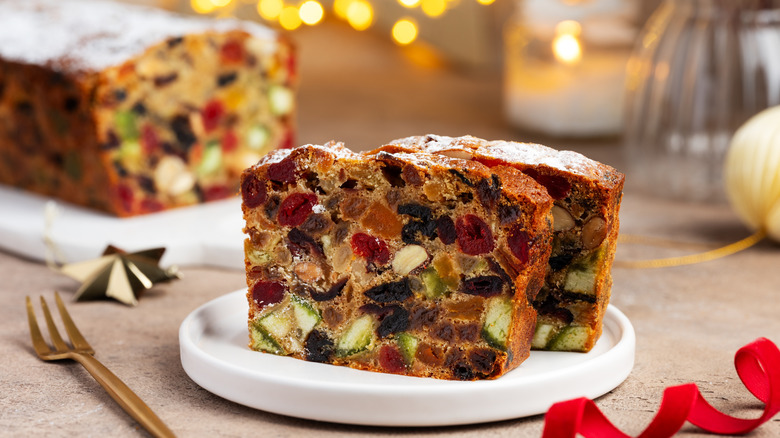
Christmas fruitcakes are infamous for being dry. While not everyone remembers this holiday dessert, older generations definitely have memories of eating fruitcake on Christmas — some of them loving it, and others loathing it for being too hard to swallow.
Despite such a bad reputation, Christmas fruitcakes did see their days of glory in the United States, especially during the Civil War. However, it's worth noting that their roots go back way earlier to the 13th century. And yes, this is also one of those Christmas traditions that was gifted to America by the English folks. Fruitcakes were made with ingredients like flour, butter, spices, eggs, leavening agents (earlier yeast, then baking powder or baking soda), and a combination of dried fruits. Considering the ingredients, if stored well, fruitcakes can actually keep for several months (if not years), which is a reason for their prevalence. However, they did see a decline by the mid-1900s for various reasons.
Fruitcake is too dry for some people's liking, and perhaps people just wanted to move over to other options. Besides that, they supposedly went out of style as a lot of companies started selling inexpensive, poor-quality fruitcakes, and that reputation stuck. Regardless, it's worth making if you want to relive the old days — or simply want to see why this Christmas dish is so hated. The good news is, there are many delicious ways to upgrade your fruitcake to make it tastier and less dry.
Potato candy
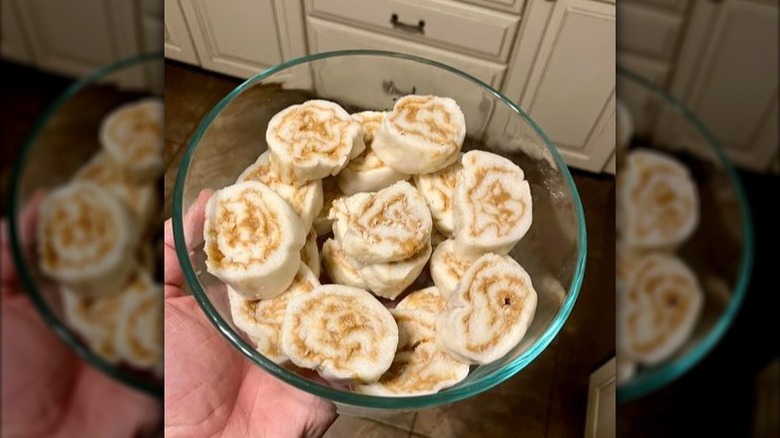
While a candy made with potatoes may sound outright bizarre today, it was once quite loved. This candy (not to be confused with Irish potato candy) was supposedly first made in the Southern United States. While some people in that region may still enjoy it during the holiday season, the appeal it once had is gone.
So what exactly is potato candy? The idea was to make a sweet treat with potatoes, which were easily available and affordable back in the day. Boiled and mashed potatoes were mixed with powdered sugar to form a dough, which was then rolled into a thin base. Most folks stuck to this simple version, though it's likely that people experimented with the recipe. That brings the next obvious question: Wouldn't this candy have tasted a bit too one-note? Well, a layer of peanut butter was usually spread out on the dough for added flavor, and then it was shaped into a log, after which pieces were cut out. This candy was highly appreciated during the Great Depression due to its affordability.
Even though this dish may be made by only some folks today, it's definitely worth trying out, especially if you've never had it before. It likely tastes pretty great, given the simple set of ingredients that are bound to work well together. You can also experiment with the original recipe and swap peanut butter with any other nut butter or spread of your choice.