

Common Mistakes Customers Make At Mexican Restaurants, According To Chefs
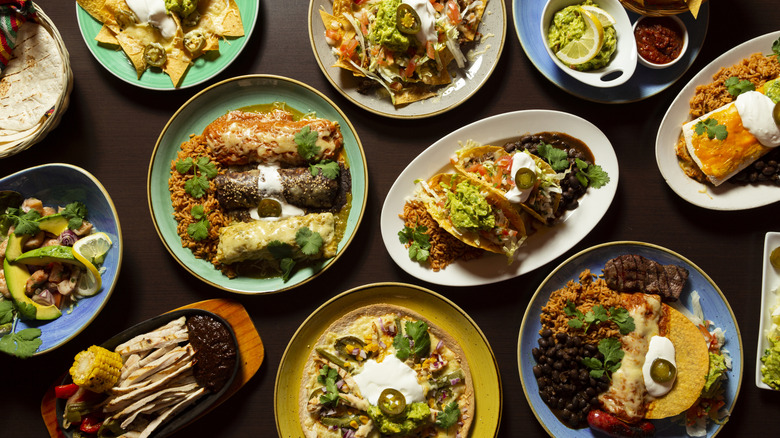
The smell of pork al pastor rotating on a spit. The sizzle of tortillas on a hot flat top. The emotional trumpets and guitars of ranchero music piping through speakers. Your server brings you chips and salsa with your drinks. Is there any dining experience as sensuous as a Mexican restaurant? Is there anywhere more festive than a cantina, any embrace as warm as that of a taqueria or tamalero? The average American might actually answer yes to those questions, and we're betting that's because the average American is making a few mistakes on Taco Tuesday.
For one thing, there's far more to Mexican cuisine than tacos. There's more to it than the Mexican chains taking over the U.S., too. To learn more about the complex and delicious culinary traditions of our neighbors to the south, we talked to two chefs. Bib Gourmand-winning Chef Alfredo Villanueva is the man behind Villa Torél in Valle de Guadalupe, Baja California, and Chef Erasmo Casiano is a 2024 James Beard semifinalist and the owner of Xiquita Restaurante y Bar in Denver, CO. As an important disclaimer before we start, though, this is not a chronicle of things you should never order at a Mexican restaurant. Instead, this is an enthusiastic encouragement to expand your horizons.
Only ordering tacos and margaritas
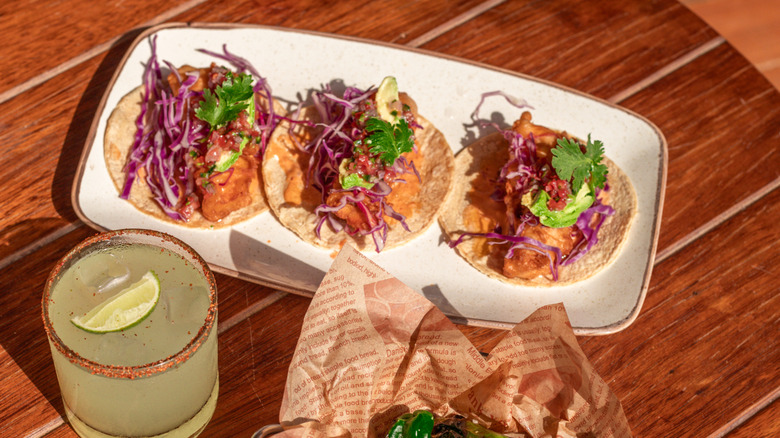
To be perfectly clear, tacos are a perfect food. They're handheld, usually made with a few simple ingredients, and can often be eaten in two bites. Marvelous, no notes. And they're so varied that we can think of many unique tacos you need to try. Similarly, a margarita fits the Platonic ideal of a cocktail: Three ingredients, complex flavor, complements a taco. If your only experience with Mexican cuisine is this one food and one drink, well, we can't say we blame you. Still, if that's your only experience with Mexican cuisine, allow us to hand you a bowl of pozole and gently inform you that your culinary world is small. Don't worry, this article is here to help expand it!
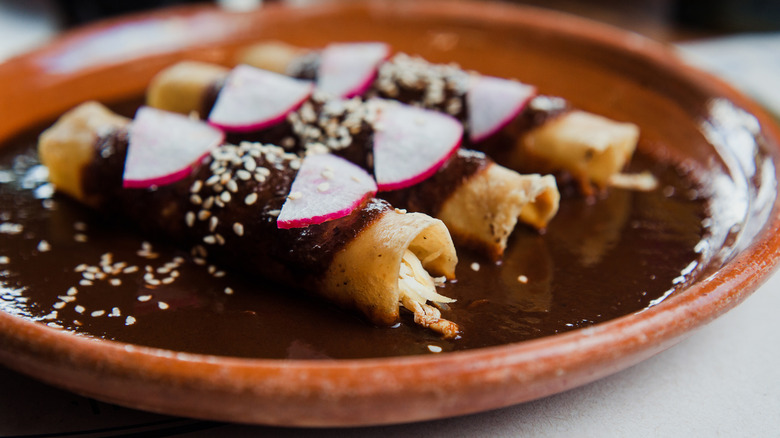
For instance, Erasmo Casiano waxes poetic about mole. Much more than a savory sauce that vaguely tastes like chocolate, mole has significant meaning in Mexican culture. "You know that your family's mole is what your ancestors enjoyed in the previous century," he explained. "Folks should also know that there is a mole for everyone."
Alfredo Villanueva stresses that he wishes diners would explore menus further. "Sometimes the mistake diners make is seeking what they already know," he says, "instead of discovering what the restaurant wants to share." It's never a bad idea to ask what a place's speciality is, then try it, even if it's a dish that's wholly unfamiliar to you. Villanueva also notes that it's a mistake to think of tacos only as fast food.
Assuming dietary restrictions can't be accommodated
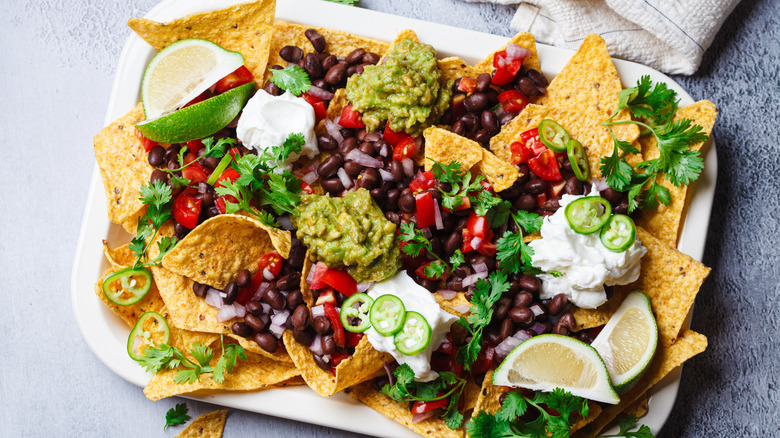
Gluten-free? Vegetarian? Vegan? Mexican cuisine can easily adapt to different dietary restrictions. If you've only experienced Mexican food through Taco Bell, you might have an outsized impression of the importance of ground beef, cheese, and flour tortillas. In reality, Mexican cuisine is heavily plant-based. The most common tortilla is made from corn masa, for one thing. There's also the ubiquity of rice and beans, two humble but versatile crops. Still don't believe us? Well, even Taco Bell has a wealth of vegan options, and that chain had to get inspiration from somewhere. Not that we expect Taco Bell to start nixtamalizing dried corn any time soon.
Mexican cuisine carries over more Mayan and Aztec culinary traditions than you might realize. Three Sisters farming — the Indigenous American practice of having corn, beans, and squash in the same plot — is still a big part of life in many areas of Mexico. "These ingredients are the foundation of Mexican food," Erasmo Casiano says. Asking Alfredo Villanueva about accommodating veganism, he has plenty of history to teach us. "Our ancestral cuisine already was [plant-based]," he says. "Corn, beans, squash, chiles, herbs, fruits, our foundation is plant-based." Worried about your tortillas and gluten? Freshly made corn tortillas are naturally gluten-free. Next time that one friend balks at a taqueria trip because of their diet, tell them that they should look more closely at Mexican food.
Not understanding regional specialities
Too many people in the U.S. don't have a grasp on how big and diverse Mexico is. Just like you wouldn't order barbecue in Vermont or scallops in Nebraska, regionality is important in Mexican cuisine. It doesn't hurt to ask what the restaurant's specialty is. "Diners can ask about a dish's origin, its cultural significance in Mexico, and how the dish was prepared," says Erasmo Casiano. "I always love talking about where I draw inspiration from, and what this dish means to me, in hopes of deepening diners' appreciation of Mexican food." If the chef and kitchen team are largely from Michoacán, for example, you probably want to order some pork. If you're at a restaurant that specializes in food from Baja California or Yucatán, that's a good time to try some fish.
Unsurprisingly, many foods that Americans commonly associate with Mexico come from states in the north. Burritos were invented in Chihuahua, for instance, and carne asada is common in the north. Still, don't assume border food is the be-all and end-all. "Mexico is not defined by one cuisine," says Alfredo Villanueva, "it holds many, all alive and in constant dialogue." Even something like mole can carry clear regional markers, he explains. Keep the dialogue open when you're at a restaurant, and you can learn fascinating things about your meal's ties to culture and geography.
Thinking spice is a competition
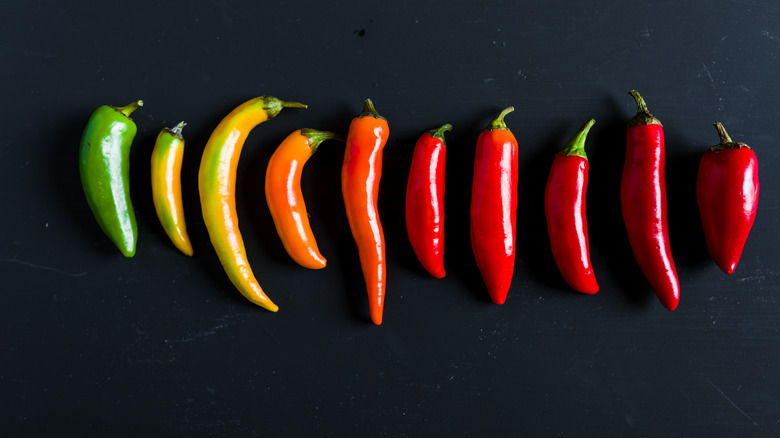
Hot sauce and spice hold an interesting place in American cuisine. Plenty of people from the U.S. will douse their chicken in buffalo sauce or dump Cholula on their eggs, but many other people avoid spicy food entirely. This confused relationship often results in American diners walking into Mexican restaurants and thinking their ability to handle heat is a badge of honor. Or worse, thinking that their inability to handle spice means Mexican restaurants are off-limits to them. Hey, a show like "Hot Ones" gets popular for a reason. Mexican cuisine, however, views spice very differently.
According to Alfredo Villanueva, being able to crunch on a Carolina Reaper or freebase capsaicin is not exactly the most sophisticated approach to spiciness. "Heat is a note, not a challenge," he explains. "A good salsa doesn't try to burn, it supports." It's also worth considering what different salsas are for. A homemade salsa and a bottled hot sauce can both be delicious, but they serve different purposes. Salsa brings more depth of flavor, like acidity, earthiness, or umami. Many ingredients and hands-on cooking processes go into that bowl of salsa your server drops off at the table the moment you sit down. It's practically a dish unto itself. A bottled hot sauce, on the other hand, should enhance the flavor of whatever you're eating.
Being afraid of raw seafood
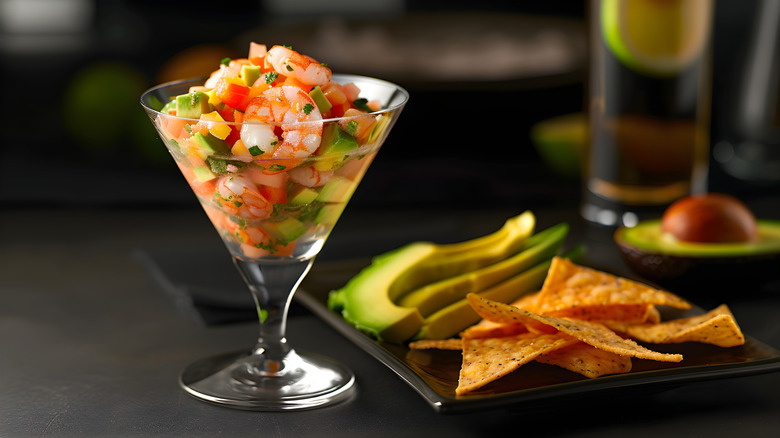
Ceviche. Aguachiles. Barely-seared fish in broth. While Japan gets a lot of attention for sushi, Mexico is a major player in the raw seafood game. Now, before we go any further, we should acknowledge how important proximity to water is for fresh seafood. The farther fish and crustaceans have to travel to your plate, the less flavorful those dishes are. Maybe you don't want to try the pulpo in Michigan, or the ceviche in Montana. Or maybe you do! For our money, though, we think ceviche tastes better at the restaurant, and fish tastes better the closer you are to the source.
Luckily, Mexico has miles and miles of coast, and centuries of seafood tradition. The perfect bite of shrimp and avocado with lime on a tostada is worth seeking out. If you really don't get down with raw fish, there's always something like tikin xic. That's a whitefish dish, usually branzino or snapper, that gets covered in earthy achiote paste and baked. The point is, check out the seafood scene within your town's Mexican restaurants. Is anyone doing tostadas topped with octopus? Visit them. "We don't try to hide the flavor of the ocean," Alfredo Villanueva says. "We amplify it."
Ignoring the dessert menu

Flan is popular for a reason. Conchas are eye-catching. A good paleta, with sliced fruit frozen inside? That's what you eat to have a perfect summer day. Yet both of the chefs we talked to had exciting recommendations beyond our favorites. Erasmo Casiano raved about nicuatole, a gelatin dessert made from nixtamal ground corn that comes from Oaxaca. It's not unlike flan, but nicuatole is only thickened with ground maize. "It showcases how creative Mexican cooking is," Casiano says. "It's a perfect gluten free, and often dairy free dessert." Sounds delicious, whether or not you have any dietary restrictions. Who knew corn could be a dessert?
Alfredo Villanueva mentions a love for almond cake, but what catches our attention is the way he speaks about desserts with such emotion. Villanueva recommends "deep, honest chocolate," saying, "we love desserts that carry memory, not excess." When the chef is describing the sweet course in such dreamy, poetic terms? Yeah, that kinda makes us want to sprint to the nearest panaderia for some sweet treats.
Eating somewhere that doesn't serve fresh tortillas
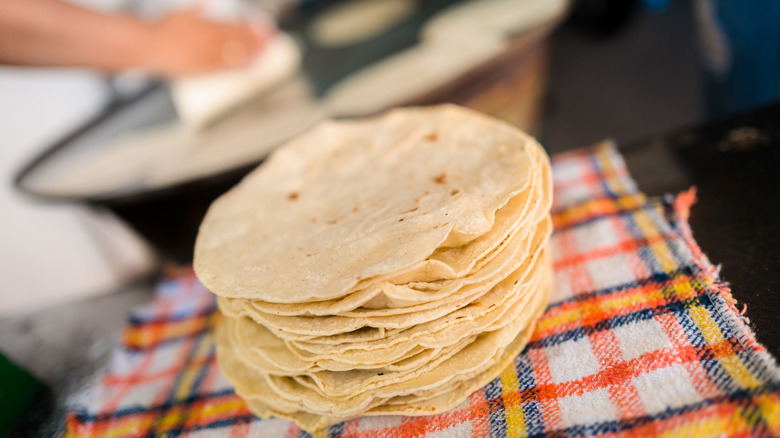
Let's not mince words: Good tortillas are the foundation of good Mexican cuisine. Actually, it's deeper than that. "A fresh tortilla is the soul of the Mexican table," Alfredo Villanueva tells us. Yeah, this is a different item than what comes out of the Mission bag you picked up at Kroger. This is a spiritual experience, from crop to plate. The nixtamalization of maize (the distinctive Mexican way to prepare corn) is a practice that began around 1200 BCE in Mesoamerica, or what is now Mexico and Central America. That's a good long while before Chipotle was offering to wrap your burrito twice because it got too stuffed.
If the restaurant you're patronizing hasn't ditched the store bag for the tortilla press, you're missing a key component of the Mexican dining experience. Understanding tortillas is crucial to understanding the rest of your plate. "Nixtamalization is a sacred process," Erasmo Casiano says, "that has been the backbone of nourishing Mexican people for generations." Doesn't seem like something you want to cheapen, does it?
Ignoring drink pairings
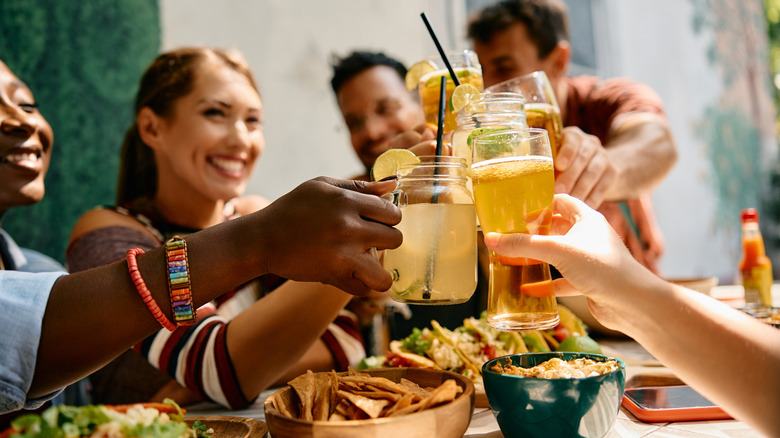
If you're someone who enjoys wine, you're probably at least a little aware of how well different varietals pair with food. Red wine with steak, white with fish, at the most basic level. Mexican cuisine has its own set of drink pairings that enhance specific dishes. "People often assume everything should go with red wine," Alfredo Villanueva says, "but Mexican cuisine is bright, acidic, and mineral. Whites, orange wines, craft beer, or a well-selected mezcal elevate it beautifully." It's absolutely worth asking the server next time you go out. If there's a wine or beer that can make your enchiladas with salsa verde taste even better, you don't want to miss out.
Sometimes, a Mexican restaurant will design its tequila cocktail menu around food pairings. Before you head there, it doesn't hurt to brush up on how to drink mezcal. Or maybe tonight's the night you try an orange wine. Whatever you end up going with, we hope your experience with the drink menu doesn't start and end with the house margarita.
Assuming Mexican cuisine isn't fine dining
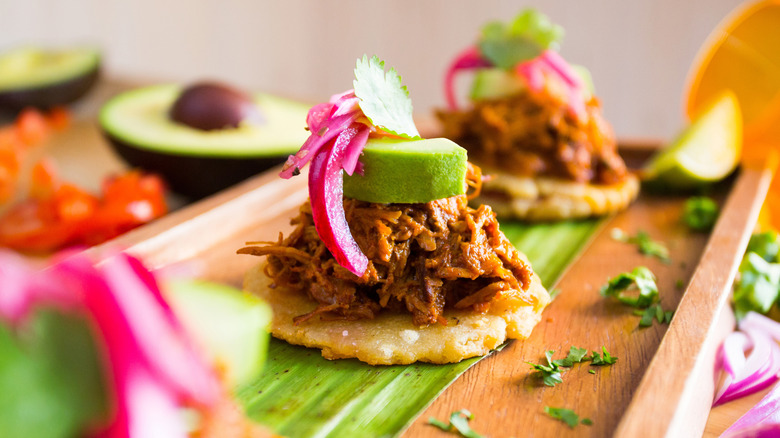
Few things in life are better than a hearty burrito, or tamales bought from a street vendor after a long bike ride, or late-night tacos after a night out with friends. Yes, Mexico is a premier destination for street food. We know all about that — we've got a list of 14 Oaxacan street foods you must try right here. There's more to be enjoyed, though, often while sitting at a restaurant. "Fine dining isn't about luxury," Alfredo Villanueva tells us, "it's about awareness." As he explains, fine dining is "valid when [it can] express truth." That's a sentiment worth keeping in mind wherever you are, but especially the next time you sit down with some cochinita pibil that's been cooking for hours.
There truly is a lifetime's worth of meals to explore, all under the umbrella of "Mexican." To experience its delights is to be let into a spiritual process. This is food that is connected to the land and to tradition. That's worth honoring. It's also food that's constantly being tweaked and innovated upon. "America has barely scratched the surface in understanding how beautiful our food can be," Erasmo Casiano tells us. If you've never been to a nice, sit-down-and-stay-awhile Mexican restaurant? Dear reader, do we have a suggestion for your next date night.