

Everything Old-School Refrigerators Did Better And Worse Than Modern Ones
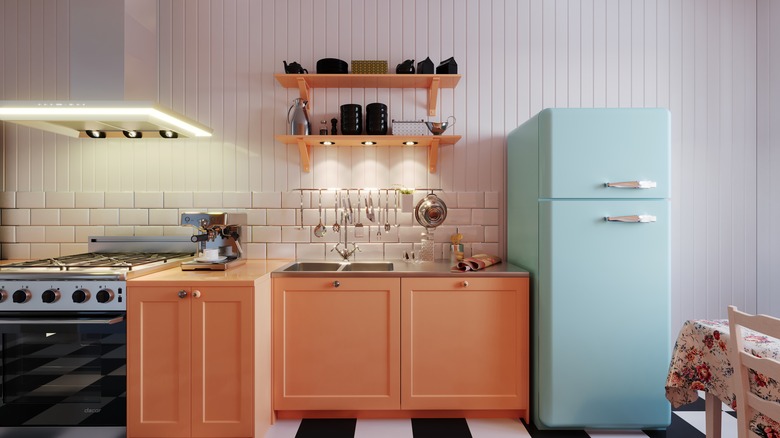
As important as refrigerators are in our daily lives, it's easy to forget that these appliances are a relatively new invention. These cooling wonders started showing up in kitchens in the mid-19th century, and since then, refrigerators have seen plenty of design changes and technical advancements. Many of those changes have been positive, but we can't shake the feeling that fridges used to be better, somehow. Now, this isn't going to be some Grandpa Simpson yelling at a cloud rant. It's more investigatory than that. We're not here to do some sort of takedown of French door refrigerators. We do, however, want to know why some fridges won't hold magnets anymore.
So is it true that refrigerators used to be better? The answer is an indecisive "sort of." Progress isn't always linear. Just because potlucks were different in the '90s doesn't necessarily mean potlucks are better or worse in 2025, right? Refrigerators are a little like that. Here are some ways refrigerators used to be better, and some ways they used to be worse.
Better: Old refrigerators held magnets

Besides housing your food, your fridge is best used as a household bulletin board. Appointment reminders, precocious children's art, holiday cards — no self-respecting fridge is complete without these things, right? Contemporary refrigerators, though, are usually made from stainless steel. That's a material that is incredibly durable and looks nice in a kitchen, but doesn't always hold magnets. So maybe your kitchen looks sleek and cool and straight out of a magazine photo spread, but it doesn't look personalized or lived in. That's a significant trade-off for many people.
Now, we should be clear: There isn't some industry-wide blanket ban on magnets thanks to a shadowy cabal of killjoys. It's not like the ability to decorate your fridge has been completely done away with. Many refrigerators you can buy today will hold magnets, and fridges have varying degrees of how well one will stick, but the lack of magnetism is partially by manufacturer design. There are some industry people who think that fridge magnets are lowbrow. It's something to keep in mind while appliance shopping. If you want your kitchen to have flair, make sure to tell the salesperson at your local retailer.
Worse: The doors on older fridges carried a risk of accidental death

Have you ever been sitting around the house on a hot day, feeling like the heat was so bad that you wanted to crawl into your refrigerator? Well, until the latter half of the 20th century, climbing inside a fridge meant risking entrapment and death. Old school fridge doors would latch, then not open from the inside. Even worse, the doors were so heavy that it was hard to hear anyone trapped inside calling for help. We don't want to spend too much time thinking about freezing and suffocating to death amongst leftover foods from the '50s that nobody misses, so how did regulators and lawmakers solve that problem?
In 1951, California passed a law that restricted where refrigerators could be disposed of — specifically, the appliances and their doors like sealed coffins could no longer be left where children could access them. At the federal level, Congress passed the Refrigerator Safety Act in 1956. That legislation helped accidental fridge deaths for children aged zero to nine fall by half. One of the mandates was that fridges be easy to open from the inside. Decades later, the standard chill chest has a magnetized door, not a latching one. That capability seems obvious now, but can't you just picture the inventor of the fridge, palm to face, asking, "Why didn't I think of that?" Maybe new fridges won't hold magnets on the outside, but thank goodness for magnetized doors.
Better: Old school refrigerators couldn't be hacked

Since iPhones revolutionized the marketplace in the early aughts, companies have been in an arms race to make more and more appliances smart. Internet connectivity is exciting, and anything to make our lives in the kitchen easier is intriguing. As it turns out, LG had smart fridges on the market as early as 2000, and in 2025, the technology has only grown in complexity. Finally, we can converse with our refrigerators! Don't get too excited yet, though.
Anyone who turned off the Disney Channel original movie "Smart House" before the titular smart house turned evil is thrilled, but everyone who finished that movie knows that some risk comes with smart tech. One of those risks is that your fridge is vulnerable to hackers. Appliances usually last longer than software security updates, after all. Your fridge can expose private data and personal information, send unwanted emails, and spread malware to other devices. Refrigerators should hold your leftover spam dinner, not send you spam emails.
Unfortunately, any smart appliance can be hacked. When you buy a smart fridge, you're putting a microphone, camera, and internet connectivity in your kitchen. Do you want some stranger on the internet watching you roast a chicken?
Worse: Old fridges couldn't remind you when food is nearing expiration

Since the rise of smartphones, the push towards smart appliances has been steady. It's easy to see that rosy, high-tech vision of the future. No more wondering how to check if eggs are bad, because your chill chest can do it for you! No more accidentally leaving the fridge door open for hours, because an app on your phone sends you a notification! Smart fridges can do all sorts of helpful things. Convenience isn't the only benefit. There's also advanced cooling technology to consider — many newer fridges are built with energy efficiency in mind. Sometimes, upgrading your fridge means lowering your energy bills and reducing your environmental impact. Hey, that's a positive for you and the planet at the same time.
Of course, technology always comes with a trade-off. Software doesn't last as long as hardware, and some smart fridges made in 2018-2020 have already been rendered obsolete by 2025. Your food still stays cool, but the tech features don't last. That said, even if a future that looks like "The Jetsons" is still pure fantasy? 21st-century developments in energy efficiency and cooling technology might be enough to make a new fridge worth it.
Better: Older fridges were more durable
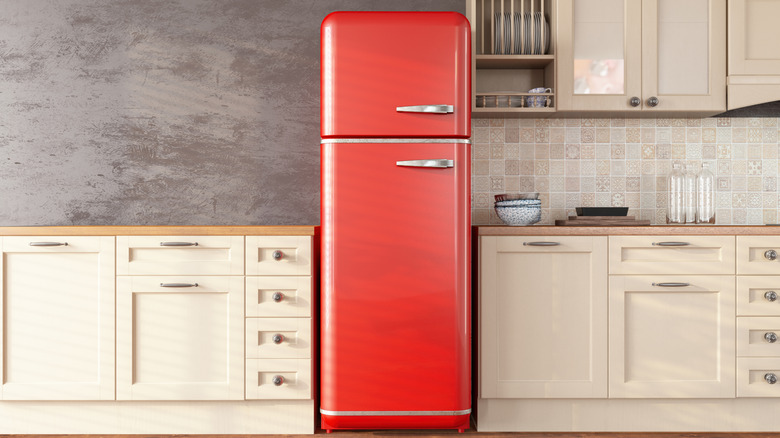
The refrigerator as we know it today — the vapor compression refrigerator — was basically perfected in 1927. Advancements in fridge technology have been about making more and more complex systems around that basic concept, but an unfortunate trade-off of home appliances getting more complex is that newer appliances don't quite last as long as their old counterparts. Various things can break down, and sometimes, repairs can rival the cost of a new appliance altogether. Sure, there are a lot of good things about how appliance technology has advanced. Improved safety features, like magnetized doors, have been necessary upgrades, and some bells and whistles, like interior lights or exterior touchscreen monitors, can be useful. It all makes the fridge more complex, though.
The decision to repair or replace a broken fridge is a fraught one. It's rarely a bad idea to try to repair, rather than heading straight to Lowe's. In a survey of members who had purchased a new fridge between 2012 and 2022, Consumer Reports found that 62% of repairs worked on the first attempt. Still, newer fridges are not designed to last as long as older ones, and that's just the world we have to live in. If you must replace your fridge, make sure to avoid the most overpriced appliance brands.
Worse: Old fridges were cooled with poison gas
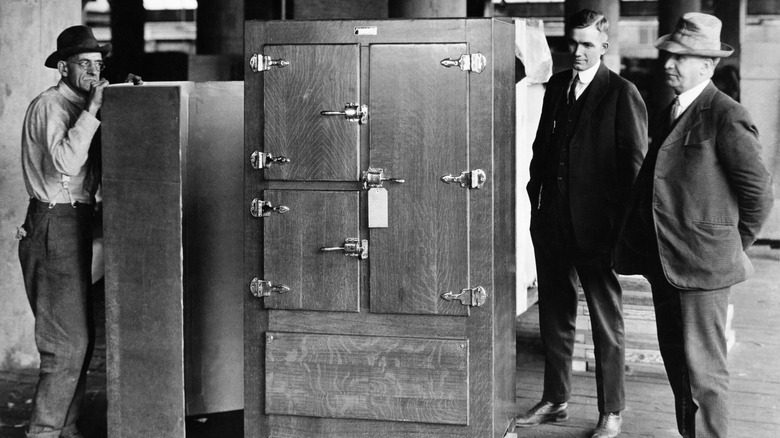
Refrigerators used to be cooled with ammonia. If alarm bells are going off in your head right now, the answer is yes: Ammonia is highly poisonous. Now, it's not like ammonia was just ambiently wafting into the kitchen every time you opened the door. More like, pipes would degrade and erode, slowly leaking the gas. That, or a clumsy repairman could make a mistake, and the whole house suddenly smelled like cat pee. The problem of ammonia-cooled fridges was so great that even Albert Einstein tried to design a safer appliance.
Someone beat ol' wild-haired Al to the punch, though. Ammonia was later replaced by chlorofluorocarbons, also known as CFCs. Problem solved? Not so fast. CFCs have another name: Freon. You might recognize that as an ozone-destroying chemical that was banned in 1987. The problem remains far from solved. Today's chill chests use hydrofluorocarbons, which also have a high environmental impact. Maybe we should've given Einstein a little more lab time. Surely we can all agree that environmentally-friendly refrigerators carry as much importance as general relativity.
Better: Older refrigerators had lower failure rates

Contemporary refrigerators are bad enough that a class-action lawsuit was brought against LG and Kenmore in 2024. It alleged that although LG claimed the fridge's compressor would last for 20 years, the actual lifespan was shorter than a decade, claiming that the problem was not a manufacturing blip, but a nationwide issue. Aside from that, there's the problem of trendy bottom-freezer refrigerators. These guys might look sleek, but that sleek design is ripe for all sorts of problems. The compressor is closer to the freezer and therefore working harder, the drain system is more prone to clogs, and the basic principle of heat rising means that the freezer is working harder by not being above the fridge.
That's one way of looking at the problems of contemporary fridges. A more optimistic way of looking at the issue is acknowledging the complexity of these amazing machines. We're a long way from a big block of ice slowly melting in a wooden box. The fridges of today can have custom cooling settings for multiple zones within the fridge, keeping food in more optimal conditions and saving energy. The insides of these machines are packed with sensors and switches that simply weren't around 50 years ago. Of course, different parts come from different places, and more components have to fit together just right. There's a cost to all of it, and that cost is a higher potential for failure.
Worse: Older refrigerators used a lot more energy
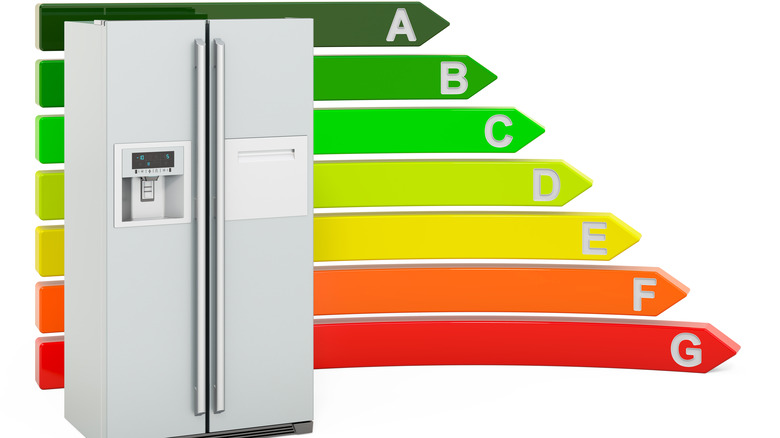
Simply put, the first refrigerators were not built with energy efficiency or sustainability in mind, and refrigerators manufactured before 2001 can use twice as much energy as newer models. Maybe they were built to last, but cooling technology really has gotten that much better in the 21st century. Hey, if anyone ever tries to tell you that technological development has stalled out? Tell them about refrigerators.
Even if a fridge is somehow older than your parents, but still running fine? It's not as energy efficient as it used to be. Thanks to wear and tear, something as simple as a faulty freezer seal could send your energy costs skyrocketing. You also have to consider common refrigerator mistakes, like how overfilling the chill chest can block air vents and force the appliance to work harder. The bottom line is, you probably can't trust the wattage rating on that old clunker in the garage. Electrical appliances just lose efficiency as they age. Older refrigerators use a lot of energy, and they only hoover up more and more as they continue to age.