

10 Retro Grocery Items People Are Buying Again Thanks To Inflation
We don't need to tell you that times are tough. The last few years have seen some of the most difficult economic circumstances for consumers in recent memory, and the vast majority of us have felt it in our weekly grocery shop, which seems to be getting more expensive with each passing week. A perfect storm of supply chain disruptions caused by the COVID-19 pandemic, climate change, the Russian invasion of Ukraine, bird flu impacting the price of eggs, and tariffs has resulted in things getting continuously more expensive, with no relief in sight just yet.
Is it any wonder, therefore, that people are changing up their shopping habits and reaching for retro goods that don't break the bank? We don't think so. The rising cost of groceries can be directly linked to an increase in demand for nostalgic food items like boxed dinners, baking mixes, and powdered eggs. People are also more willing to buy foods that may require a little bit more effort or have a different flavor than they're normally used to, such as dried beans and organ meat. We're just praying that the price rises don't start to affect these items, folks, so we can carry on making those forgotten retro dishes.
1. Dried beans
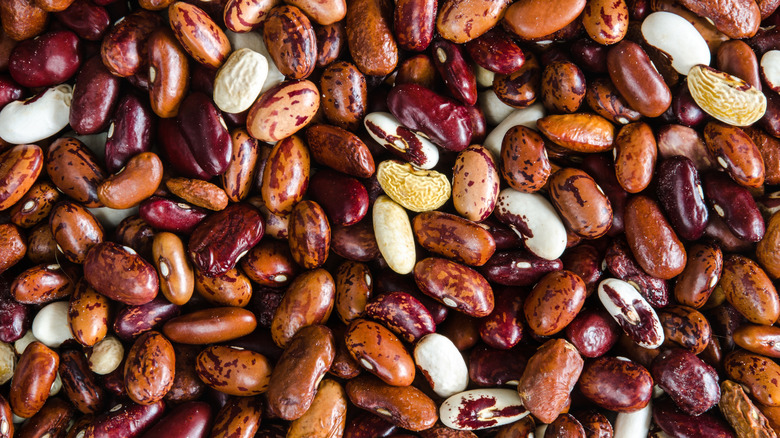
Beans are an essential pantry staple for most of us, but even the humble canned bean hasn't been insulated from price rises in recent years. The price of canned goods was significantly threatened by tariff action in 2025, and consumers had to start thinking a little more smartly about where they were getting their beans, and in what form. It's little wonder, then, that a lot of Americans started switching towards using dried beans instead, as well as other pulses like dried lentils. On average, dried beans are approximately half the price of the canned version, and although they do need more preparation, it usually doesn't take more than soaking them in water and cooking your beans the right way.
This increased demand has been reflected in the growing size of the dry beans market, which has been boosted even further by more and more people adopting plant-based diets. Experts have estimated that the dry beans market size will reach over $10 billion by 2033, up from just under $7.25 billion in 2024. If you haven't made the switch to dried beans yet, or if you're not buying beans at all, we'd recommend you get on board: They're a great source of plant protein that you can enjoy without breaking the bank.
2. Canned meat
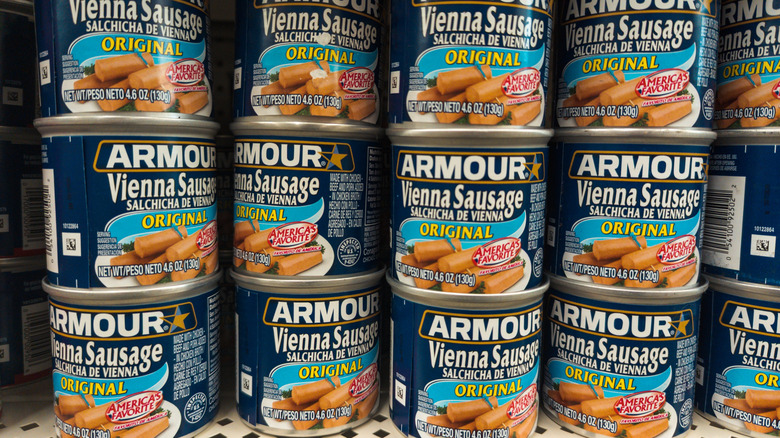
It feels like canned meat's back in fashion in a big way, and it's not just SPAM that's seeing all the love. SPAM underwent a cultural resurgence a few years ago, and it's remained popular to this day, but other canned meats like Vienna sausages and other mysterious potted meats are also seeing renewed appeal. The reason is simple: Price. Canned meats offer an easy, affordable alternative to fresh meat, and they're guaranteed to last way longer than the fresh cuts you'd buy from your local supermarket. In an environment where beef prices are spiraling out of control, they represent a valuable proposition to customers.
It's no surprise, therefore, that the canned meat market is poised to rise significantly in value in the next few years. The market size is projected to grow by well over $4 billion between 2024 and 2028, and plant-based canned meat producers are also getting in on the action. It is worth remembering, however, that canned meat comes with a few considerations that regular meat doesn't. This form of meat is usually heavily processed and can be very high in sodium and added fats, so it's important to balance your consumption of it with other, lighter protein sources.
3. Shelf-stable milk
Shelf-stable milk has been back in action, and it shows. This alternative to fresh milk is known for its cost efficiency, and while it's typically been seen as a somewhat unappealing alternative to fresh milk, more and more people are cottoning on to its affordability and longer lifespan. As a result, shelf-stable milk is likely to see a steady increase in sales over the next few years, and you may well be seeing new and improved varieties on your shelves.
To be honest, we can see why. One of the main advantages of shelf-stable milk is that you don't need to refrigerate each carton before you open it, making it an alternative that's both kinder to the environment and excellent for stocking up on when you're buying. It's still got an image problem, but folks are quickly realizing that shelf-stable milk tastes just like the fresh cartons that sit in the refrigerator section. Shelf-stable milk may not necessarily always be cheaper than fresh milk on a purely weight basis, but it's a worthwhile buy when it's on sale.
4. Organ meat
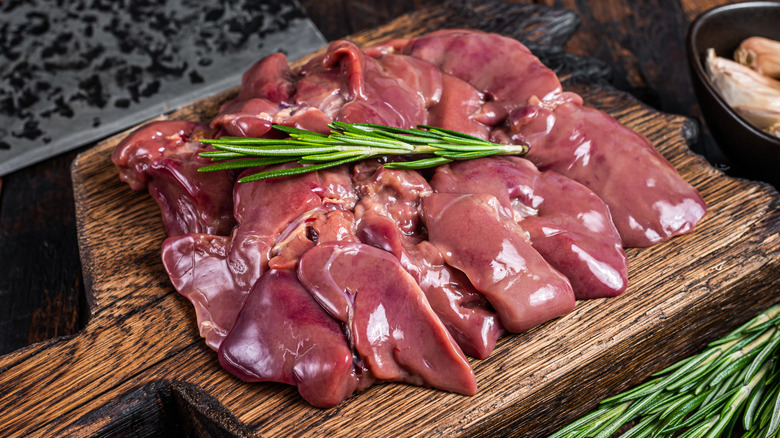
Okay, let's face it: For the majority of people, organ meat isn't as appealing as other kinds. However, there's a good reason why it used to be such a go-to for cash-strapped families throughout history, and particularly through periods of economic hardship like the Great Depression. Offal and organ meat are typically a budget-friendly option that's a flavorful alternative to more mainstream cuts, and they can be used in many of the same ways. It's little wonder that the market for it is growing in the United States, during a time when consumers are having to make more conscious decisions about meat and protein purchases.
Although it can have a stronger taste than other meats, even a beginner can prepare organ meat easily. Try soaking it in milk or brine for a few hours, to mellow out the flavor, or grind it up. Do this, and you'll get a great cut of meat that's a good choice not just on a budget level, but on a sustainability one, too. Buying organ meat helps to reduce overall food waste, as these are the cuts that are more likely to go unpurchased and thrown out. Don't forget, too, that organ meat is high in iron, zinc, vitamins, and, of course, protein.
5. Canned soup
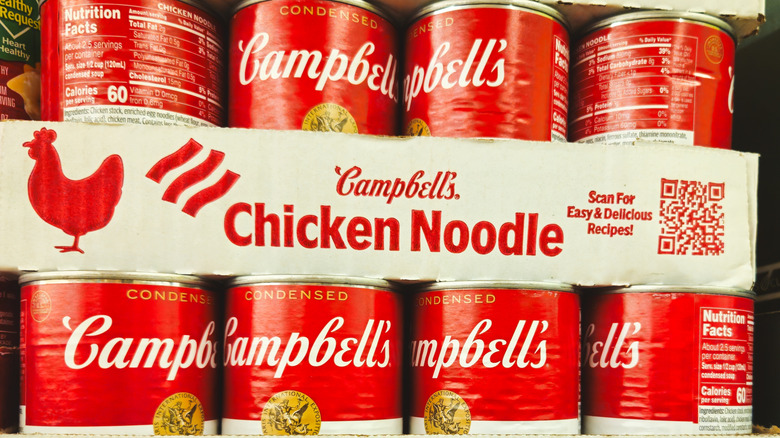
Looks like canned soup is back on the menu, people. In some ways, it never really left — canned soup has remained a popular pantry staple for decades now — but there's no denying that the last few years have seen a surge in its popularity, and 2025 has been a big year for soup companies. Campbell's reported, in June 2025, that it had smashed its sales targets for its third quarter, citing the uncertain economic climate as a big reason for its increased profit. "Consumers continue to cook at home and focus their spending on products that help them stretch their food budgets," said Mick Beekhuizen, Campbell's CEO (via Reuters).
That's one of the things that canned soup does best. A shelf-stable item, it's both an ingredient and a meal in itself. Therefore, it stops folks from having to buy loads of different additions to add into one meal when they could just use a can of soup. It also means you don't need to purchase countless ingredients to make your own broth. You can simply reach into your pantry, months after buying your soup, and pour it into your pot. Plus, soup brands like Campbell's feel comforting and nostalgic, which is a real bonus during times when everything else is feeling a little uneasy.
6. Boxed dinners
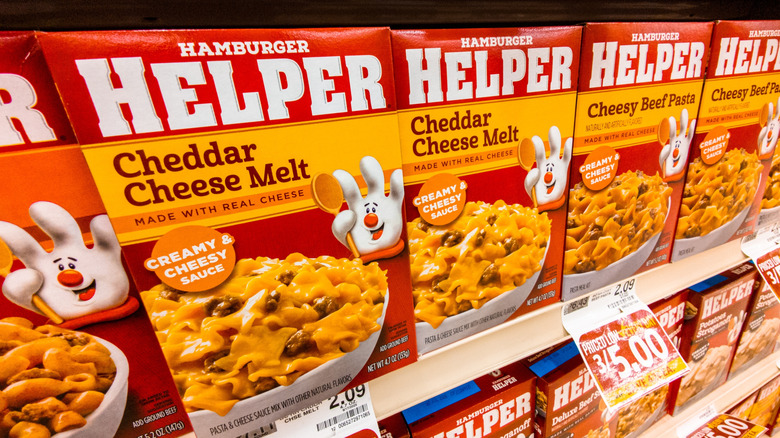
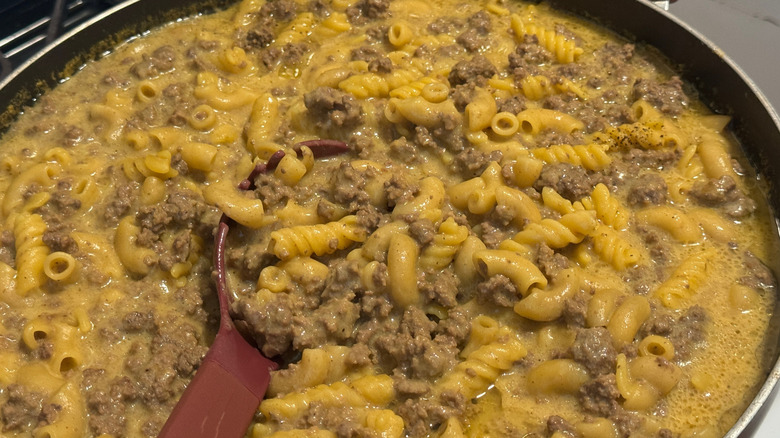
You might think that when times are tough, people would pull back on buying convenience goods like boxed dinners. However, the opposite has been happening. Folks have actually been purchasing more boxes of Hamburger Helper and mac and cheese than in recent years, with boxed meals seeing a significant spike in sales. Speaking to TMJ4, Abby Hall, an associate professor of economics at the University of Tampa, explained, "When we look at the data for hamburger helpers specifically, we see that from June to August of this year, sales have increased about 14.5%, which is a big jump in a relatively short period of time."
In times like these, boxed dinners are seen as a simple way to get a meal on the table without having to purchase loads of fresh ingredients. They're easy to stock up on, quick to cook, and are perceived as affordable. They also carry a certain retro appeal and a comfort that reminds us of our childhoods. Importantly, though, they are also more processed options than other dinner choices, and it's a good idea to keep in mind that while they may be cheaper, they can also be less nutritionally dense.
7. Canned fish
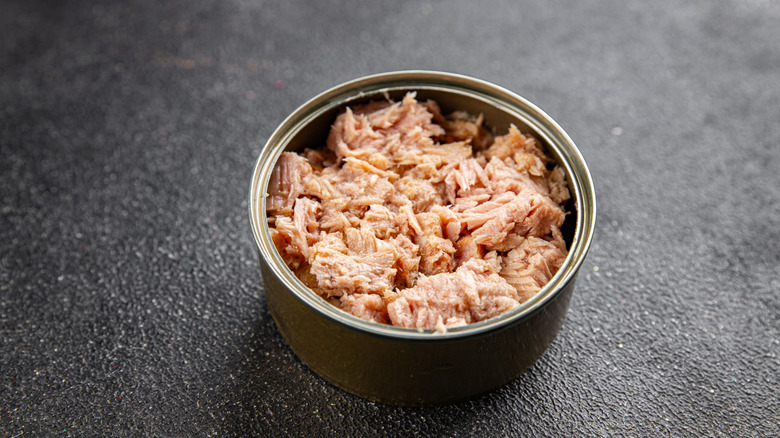
Is it any surprise that canned fish is back in fashion in our cash-strapped times? Probably not. Like canned meat, canned fish has been shifting more units in recent years, with some people saying that the increase in sales is a recession indicator. In comparison with fresh fish, canned staples like tuna and salmon are way cheaper, and have a shelf-life of years as opposed to days. It's also a great choice of protein that, for the most part, avoids the excessive processing that canned meat goes through, and is therefore usually more nutritious.
The resurgence in canned fish has also led folks to begin embracing other forms that they might not normally purchase. Canned sardines and anchovies have been seen as more appealing in recent times, and people have been realizing that using them can give a flavorsome boost to certain dishes. Folks have also begun to be more innovative with how they serve canned fish, with so-called "seacuterie" boards becoming more popular on social media and food blogs. If you've only ever stuck to tuna, it's time to try all of those different canned fish varieties you've been missing: Blame it on the economy.
8. Canned and jarred vegetables
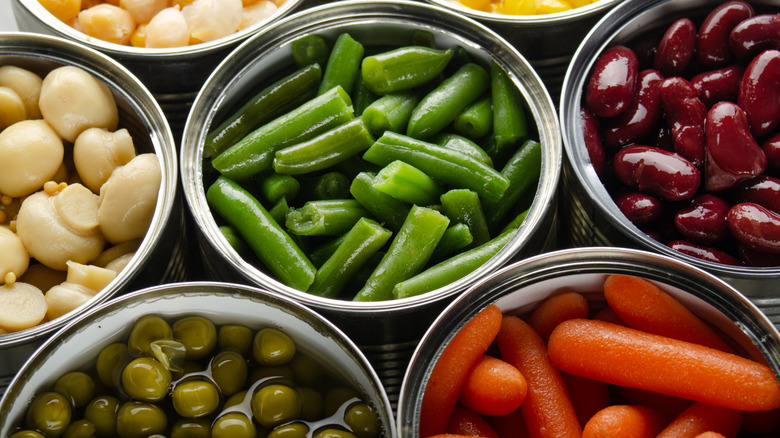
Canned and jarred vegetables have been having a moment in recent months, and that can be chalked up to two things: Price increases and Donald Trump. The latter, of course, is the source of the tariff announcements that plagued 2025, which plunged consumers into a state of uncertainty about the price of their goods. The former, however, relates to the price of fresh vegetables, which throughout 2025 have seen significant price spikes, leaving people unable to justify buying the same amount of them.
As a result, people turned to canned goods, and specifically canned vegetables, which saw a significant increase in purchases in the days following the tariff announcements. As fresh vegetable prices have remained high, the appeal of canned vegetables has remained. We get it, folks: Canned vegetables can last for years, and if you're throwing them into a casserole or a stir-fry, you may not even notice the difference from the fresh kind. Plus, when they don't have added salt, they can rival fresh vegetables on the nutrition front. They may not have the same fresh taste, but when money's tight, it can be worth sacrificing on that just a little.
9. Powdered eggs
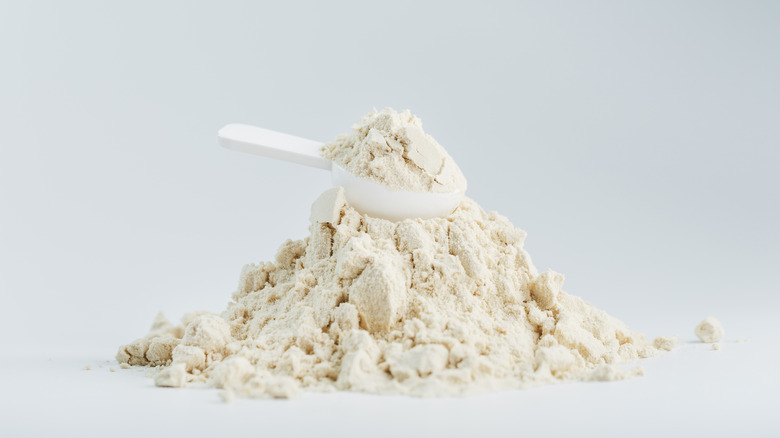
The price of eggs has been one of the biggest talking points in the food world — and the news — during 2025. During the first few months of the year, egg prices went through the roof, setting new records thanks to a combination of bird flu-related shortages and inflation. Although the price eased off in the following months, it's no surprise that people started to think about how they could still buy eggs without them costing the earth. As a result, powdered eggs came back into the conversation as a so-called "inflation-proof" food that people can lean on in times of strife.
Powdered eggs can be used in many ways that regular eggs can. While you probably wouldn't want to fry them up, they can be used in baking recipes and as binders pretty seamlessly. Importantly, a canister of powdered eggs may be slightly more expensive than purchasing a carton, but that's because you're getting more for your money. Not only will powdered eggs last longer purely because of how much you're buying, but some brands boast a ten-year shelf-life. As such, they're essentially an investment that can beat future price rises.
10. Baking mixes
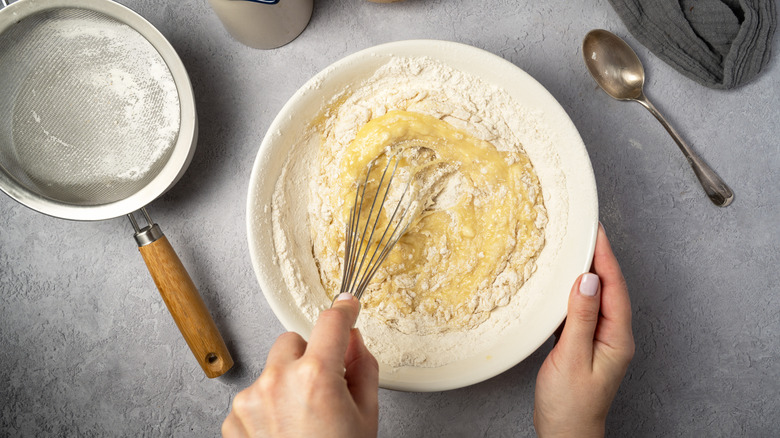
Baking mixes have been on a roll since the COVID-19 pandemic, and it looks as though they're not easing off any time soon. Boxed mixes (particularly private-label branded ones) saw a significant increase in sales during 2022, beating the assumption that when people were finally done with their lockdown sourdough and cakes, they'd stop baking for good. As time has gone on, the cake mix market has remained robust, and it's only predicted to grow even bigger, with market analysts stating that the affordability of these mixes is a big part of their appeal.
The persistent rise of baking mixes in the last few years can also be linked to a broader reframing of how we spend our money. Instead of going out and purchasing an expensive batch of cupcakes, people are realizing that it's way cheaper to make them at home. Plus, they don't have to fork out on a load of different ingredients: They get every one they need in the same box, and all they have to do is add some milk and eggs.