

10 Myths About Peanuts, Debunked
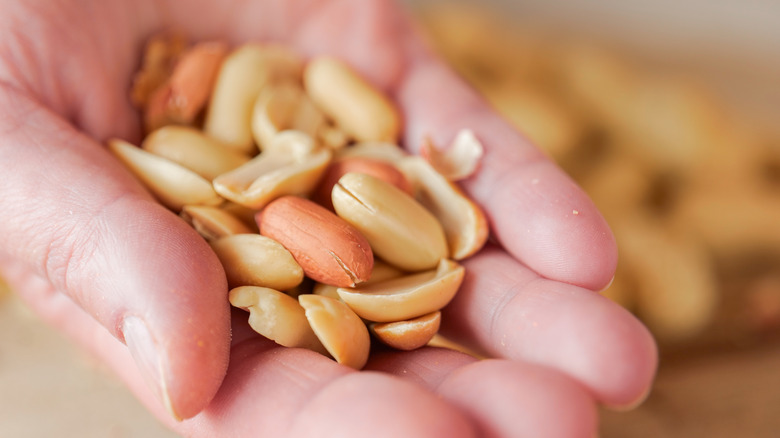
What's so mysterious about peanuts? On the surface, not that much. Peanuts are one of the most common foods in the United States, and they're used as an ingredient in more foods than we can name, both in their original form and tucked into peanut butter cookies. With countless nuts consumed each day and billions of pounds of them harvested every year, it feels like we know everything there is to know about these little pockets of energy. However, that's far from the case. Peanuts are a food that's subject to a huge number of myths, and a surprising number of people buy into certain mistruths about them that give them a reputation they may not deserve.
No matter what peanut variety you're dealing with, the myths are all the same, and they usually center around this nut's ability to cause ill health. Because of the serious nature of peanut allergies, it's no surprise that the dangers of peanuts have been somewhat inflated — the truth is actually a little different. There's also the nutritional nature of the nut to deal with, and how it can impact your long-term health as well as your short-term outlook. That's all before you consider what a peanut actually is — and the answer may surprise you.
Myth: Peanuts are nuts
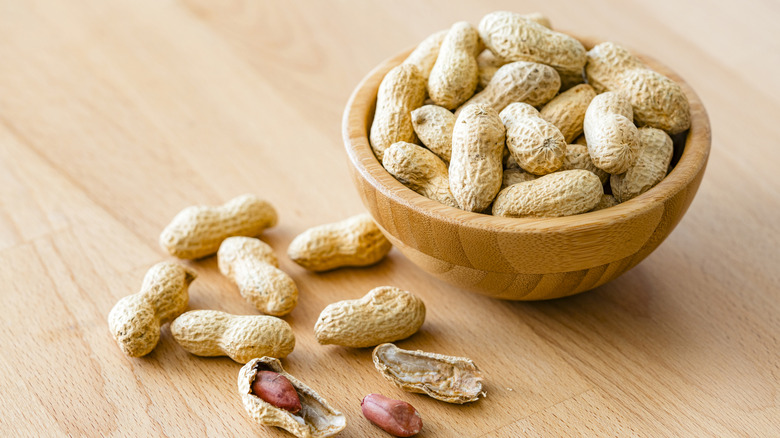
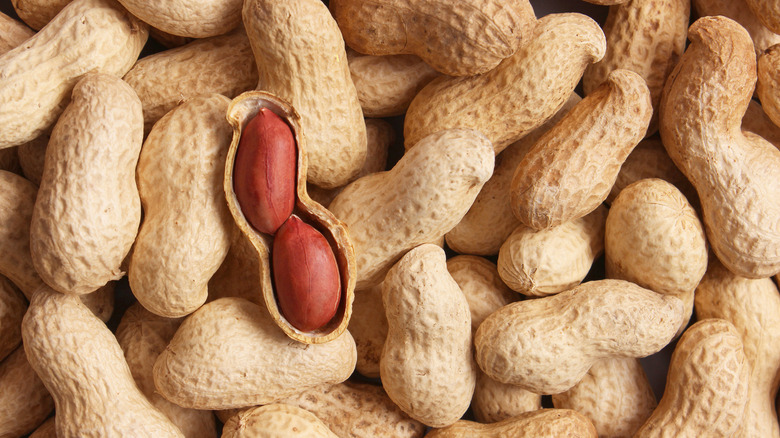
Okay, so here's the thing: Peanuts are not nuts. Wait, what? Yep. We're telling the truth, guys. Well, at least when it comes to its botanical nature. It may shock you to find out that peanuts aren't actually considered nuts at all in the botanical world, but are instead classified as legumes (just like peas and beans, which are essentially edible seeds). This is because peanuts, like these aforementioned foods, grow in a pod and have two seeds per pod. This is in contrast to true nuts like hazelnuts and walnuts, which grow in a hard shell with just one seed per fruit.
Kinda wild, right? Peanuts are far from alone in this misclassification: Other well-known nuts like cashews and pecans are, in fact, legumes, and Brazil nuts grow in clusters that prevent them from being classified as true nuts. Having said this, it's important to note that peanuts do differ significantly from other legumes in terms of their flavor, culinary use, and nutritional profile. As such, although they may not technically be nuts, we use them just like you would other nuts — after all, you wouldn't want to serve them like you would peas.
Myth: Peanuts are worse for you than other nuts
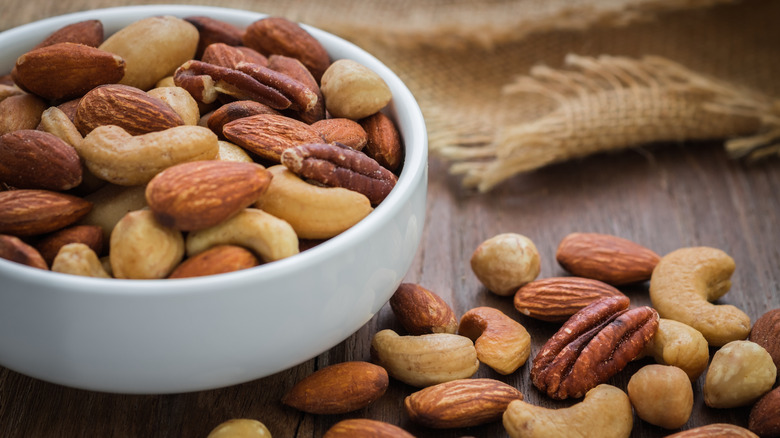
Over the years, the humble peanut has had to put up with a lot of criticism. That criticism is mainly aimed at its nutritional profile. The perception has evolved that peanuts aren't as good for you as other nuts, and that they're somehow fattier, lower in protein, or not as good a source of vitamins and minerals as their counterparts. We would argue that this perception has evolved due to the versatility of peanuts and their use in endless snacks, or their ability to be roasted and heavily salted, which makes them less wholesome. It's also stemmed from their inclusion in unhealthy store-bought peanut butter brands.
However, it's just not true that peanuts are somehow less nutritious than other nuts. In fact, they're pretty healthy when eaten whole and without any processing. Peanuts are a great source of monounsaturated fats and protein, and of copper, biotin, manganese, and vitamin E. They're also an excellent source of fiber. However, as with all nuts, it's important to consume peanuts in moderation and balance them with other sources of protein, fiber, and healthy fats.
Myth: Highly refined peanut oil is dangerous to those with a peanut allergy
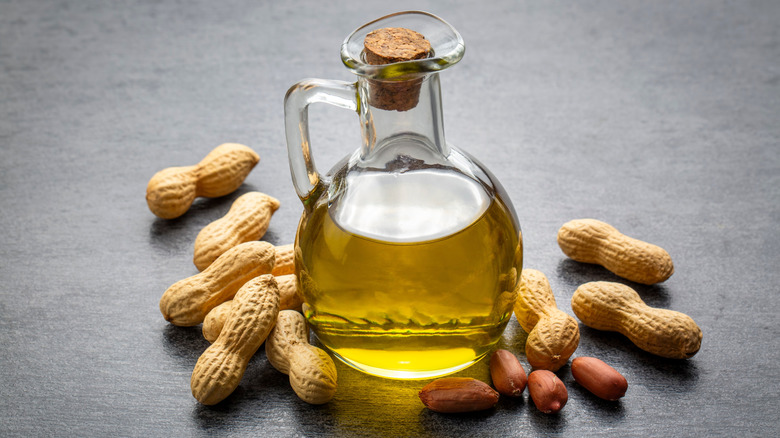
It is, of course, vital for people with peanut allergies to avoid foods with peanuts in them, and for food companies and restaurants to be crystal clear about when any of their products or foods contain peanuts. However, it's technically a myth to assume that every single peanut product is potentially harmful for people with peanut allergies. One product that stands apart from the others in its ability to trigger an allergic response is highly refined peanut oil, which studies have observed poses no harm to people with peanut allergies. In a study published in the BMJ, which had 60 participants with an allergy consuming highly refined peanut oil, no allergic response was noted.
This is because highly refined peanut oil (which is, incidentally, excellent for making crispy French fries) goes through rigorous processing, and this processing removes the peanut proteins from its formula. These proteins are what trigger an allergic response, and they're present in virtually every other food made with peanuts. Other peanut oils that haven't been highly refined still pose a risk factor, however. It's also important to note that while the potential for highly refined peanut oil to cause an allergic response has been tested extensively, it can still be used in tandem with other peanut products, so you should continue to approach it with caution. You should only consume it if you feel totally comfortable doing so, and you should also seek the advice of your doctor before trying to.
Myth: Giving your child peanuts too early can raise the risk of allergies
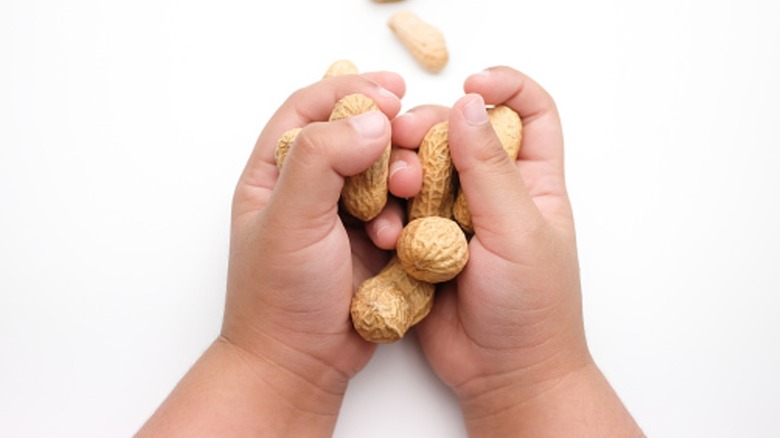
Establishing whether your child has a peanut allergy, and doing what you can to avoid triggering any potential allergy or contributing to its development, is important for every parent to consider. As a result of this, common advice emerged that dictated that you should avoid giving your children peanuts too early, in case of any response or allergy development. Parents were advised to avoid giving their children peanuts until they were three years old, and that guideline has stuck to this day.
However, recent research and evidence have changed the opinion of medical professionals and bodies. Professionals are now increasingly advising that early introduction may be preferable to avoidance. The American Academy of Pediatrics states that the "mechanism of sensitization" for peanuts is thought to be similar to other allergens, and points out that introducing them to children earlier may help to prevent food allergies, while also noting that there's still a lot to learn. This advice is echoed by research published in The Journal of Allergy and Clinical Immunology, which proposed that there was a window of opportunity between four and six months to introduce peanut products to babies. This window of opportunity could help reduce the risk of allergy development, both in individual cases and more widely. Having said this, peanuts still pose a significant choking hazard for little ones, and you should always follow the advice of your pediatrician on your baby's diet.
Myth: Peanuts grown in the United States are at high risk of aflatoxin
Peanuts used to only be a cause for concern for individuals with peanut allergies, but fears have popped up for the rest of us — and they come in the form of aflatoxin. This natural byproduct of mold can prompt illness if consumed, and despite there never being a human illness outbreak of aflatoxin in the United States, it hasn't stopped people from getting pretty scared about it getting into their peanuts. Aflatoxin can thrive in damaged peanuts, and therefore, it's commonly assumed that it could sneak its way into your bar snacks or your peanut butter.
The good news, though, is that it's very unlikely to be a cause for concern. The peanut industry in the U.S. is heavily regulated and monitored, and aflatoxin is one of the biggest things that food manufacturers watch out for. Peanuts are typically rigorously tested, and products grown and produced in the U.S. therefore pose very little risk to consumers. Having said this, that may not be the case for peanuts and peanut products that come from other parts of the world — countries in Africa and Asia have experienced aflatoxin illness outbreaks.
Myth: Peanuts are now genetically modified
GMO produce created through genetic engineering has been sold since 1994 in the United States, and since then, the debate about whether or not you should consume GMO foods has been at a fever-pitch. Consumers are also increasingly feeling as though every type of food out there has been modified in some way, including peanuts. Well, that's actually not the case. In fact, peanuts are one of the few foods that have been untouched by genetic modification, despite media buzz and erroneous claims leading people to believe that they're subject to alteration.
The reason for this is because of its potentially allergenic nature. Like other common foods that cause allergies, peanuts are not genetically modified because of fears that doing so will lead to even more allergies developing, and therefore, more life-threatening allergic responses. Other foods like milk and eggs are also not subject to genetic modification, for the same reason.
Myth: Eating peanuts on a plane is highly risky, in case someone has an allergy on board

If you've ever wondered why the airline that you're flying with would be so foolish as to serve peanuts on board, when there could potentially be people on board with allergies, this one's for you. For years now, the perception has persisted that airlines shouldn't serve peanuts on board, or else people shouldn't bring their own nuts onto the flight. The thought behind this goes that if there are people with allergies on board, they may be more susceptible to a response, due to nut particles getting into the HVAC system and blowing them through the cabin. Should they experience a reaction on board, they'll face significant obstacles in accessing fast and appropriate medication and emergency services.
While the latter may be true, the thought that nut particles may cause an allergic response is false. Research published in BMJ Journals has pointed out that not only is there no evidence that this can happen, but also that you're up to 100 times more likely to experience an allergic response on the ground than in the air. Having said this, there are certain things both individuals and airlines can do to make flights safer for people with peanut allergies. Avoiding cross-contamination as much as possible and wiping down seats and service areas is one of them, and customers may still want to be cautious about bringing nuts on board, in case of any inadvertent contact. In the case that a passenger possesses an uncommonly severe allergy, flight attendants may ask over the loudspeaker that you refrain from eating certain foods, so be sure to pay attention to announcements.
Myth: If you have a peanut allergy, you'll also have an allergy to other nuts or beans
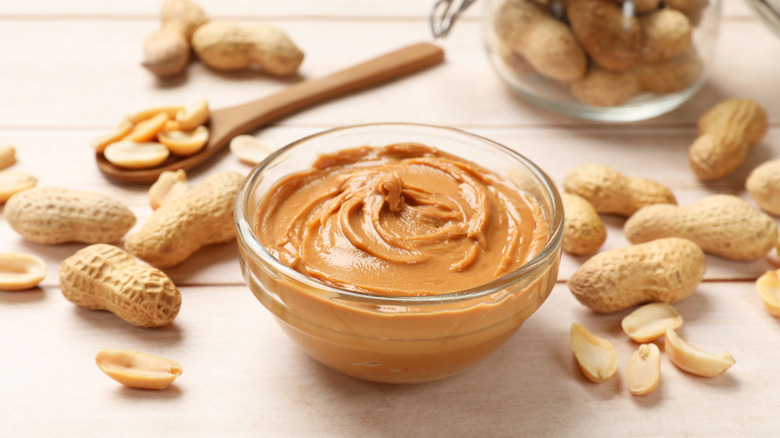
If you have one allergy, you're more likely to have others – and it makes sense to assume that they'd be similar to each other. When it comes to peanut allergies, therefore, it can be logical to think that those who have them may also have an allergy to protein-rich tree nuts like almonds, walnuts, or pistachios. Furthermore, given that peanuts are botanically legumes, it's not a stretch to worry about whether a peanut allergy could also come hand in hand with a bean or lentil allergy.
However, that's not strictly the case. If you have a peanut allergy, it can be entirely possible to eat beans, peas, and lentils without any allergic response, and you may also be fine with eating tree nuts. That being said, it's also entirely possible to experience lupin or tree nut allergies if you're allergic to peanuts, so you shouldn't assume that you or your loved ones are totally okay to eat them. Allergy testing is your best friend here: Before you start introducing new foods into your diet (or the diet of your kids), you should check as to whether there will be any adverse response. If you do find that there's no allergy to beans or tree nuts, then incorporating them into a varied diet can help prevent any future allergy development.
Myth: The peanut industry uses an excessive amount of water, and significantly harms the environment
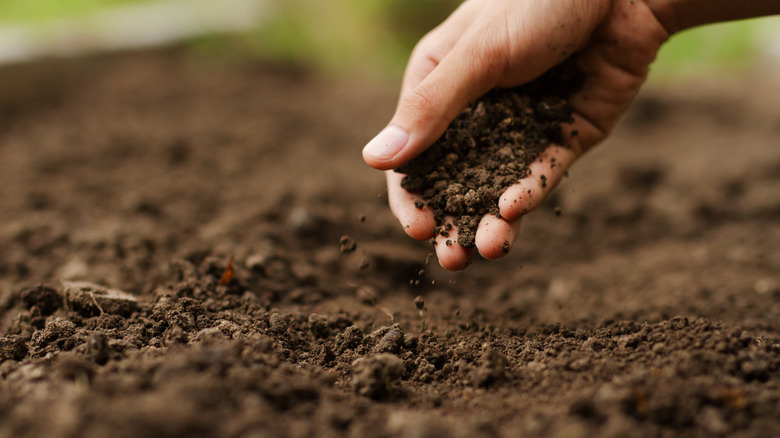
Peanuts are bad for the environment, right? That's a thought that's sprung up in recent years, and on the surface, we can understand why people feel that way. The United States produces billions of pounds of peanuts yearly (although it's not the country that grows the most peanuts in the world), and all of those nuts need water to grow. Therefore, it's not a huge stretch to assume that the peanut industry uses excessive amounts of water. However, although growing peanuts does take some water, it's actually probably a lot less than you might think. Peanuts are a deep-rooting crop, meaning that they require way fewer gallons per ounce than other crops and produce, as the plant can access moisture from deep in the soil.
This was evidenced in an extensive analysis of data found in a study by UNESCO, conducted by the National Peanut Board, which examined how much water peanuts actually use in comparison to other nuts. It found that peanuts require only about 5% of the water that almonds do, and significantly less than both pistachios and shelled walnuts. Per ounce, peanuts need 4.7 gallons of water, while shelled almonds need over 80 gallons for the same weight. Additionally, every part of a peanut can be reused or utilized, beyond the edible seed itself. As nuts go, they're a pretty safe bet on an environmental level.
Myth: Peanut allergies affect a high proportion of the population
Peanuts have gained a perception of being one of the most dangerous foods that can cause an allergic response, and there's certainly no denying that to people with peanut allergies, they can be incredibly risky. However, it's also true that with this has come a certain amount of over-reporting in the news of peanut allergies and responses, relative to other allergies. This has also meant that people have assumed that peanut allergies are very common, and affect a wide swath of people.
The truth is that studies have indicated that around 2% of adults have what is deemed a "convincing" peanut allergy, with a slightly higher percentage (3%) self-reporting that they have one. Other studies have pointed out that the prevalence of peanut allergies amongst children is slightly higher, with 2.2% of kids experiencing them. While these percentages are by no means inconsequential, they also mean that about 98 out of 100 people will have no response to peanuts at all, and most of the reactions of those who do have peanut allergies will be fairly mild.