

Whatever Happened To This 1970s Restaurant Chain Made Famous By Its Mason Jars?
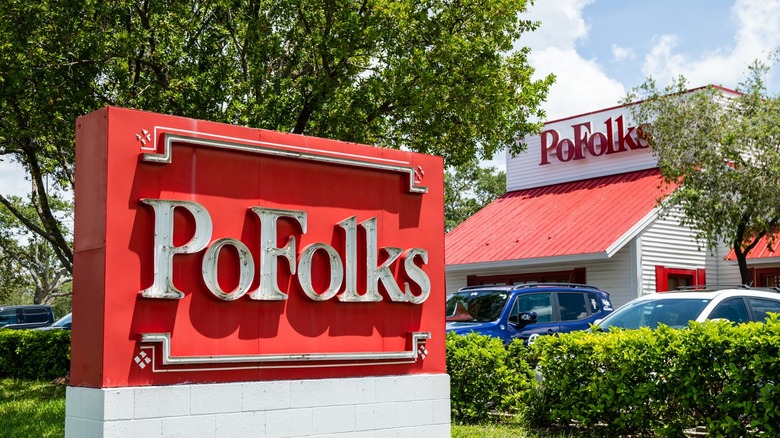
With a name like Po Folks, we probably don't have to tell you that this is a story about a restaurant with a lot of pride in real country cooking. In its heyday, to dine at Po Folks was to eat good helpings of "kuntry-fried" steak dinners while knocking back mason jars full of sweet tea. "We use mason jars in the kitchen, just like you," Po Folks seemed to say with its dishware.
Who doesn't love country cooking? The United States of America will always be able to hang its hat on its culinary accomplishments, the majority of which came from poor people trying to make the best of what they had. Black Americans in the South invented soul food, and their white counterparts had country cooking. Po Folks was a restaurant chain that flourished in the 1970s and '80s while serving the latter. Well, we shouldn't use the past tense. The chain might not have the 100-plus locations it boasted in its heyday, but there are still five Po Folks locations hanging around. Let's explore what made Po Folks so popular, and what caused its downfall.
The name was more than just branding
To understand the cultural moment that produced Po Folks, you have to go back further than the 1970s. With folksy misspelled words — host stands have signs reading "wait rite cheer fer the seater," the seafood section of the menu is entitled "from the ol' fishin' hole" — the restaurant has always been recalling an idyllic, rural past. The dishes and decor appeal most strongly to a post-Great Depression generation. Maybe newfangled establishments like McDonald's won't serve you chicken gizzards and turnip greens, but Po Folks makes them just like grandma used to. That's the sales pitch, anyway. As restaurant themes go, it's not hard to see the appeal. Sort of like Cracker Barrel, but with no general store.
Some might accuse the chain of profiting off of the image of poverty. A 1985 headline from The Orlando Sentinel said Po Folks was "dishing up the profit" and "making down-home uptown." Admittedly, there is an inherent tension to being a restaurant chain and billing yourself as a humble, down-home spot. The restaurant industry is volatile, with thin profit margins. To be a chain suggests that, on some level, a place is no longer "po." For fans, though, Po Folks' branding is more of a signal of acceptance.
Down home cooking was at the heart of it all
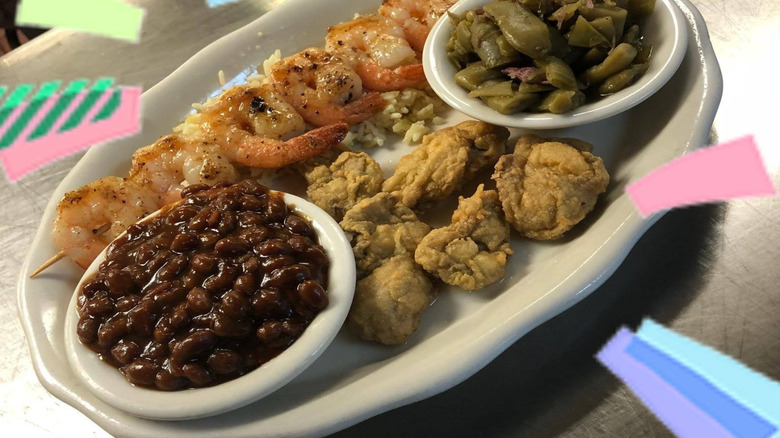
You'll never get anywhere in the South if your cooking isn't good. Plain and simple. Calling appetizers "appetizements," featuring grilled liver and onions on the menu, deep-frying anything that can be battered, while offering sides of turnip greens — Po Folks could play up the "kuntry" kitsch in its branding, but the restaurant would not have succeeded without good food. The audience for classic Southern comfort foods is one with discerning taste buds. During the glory years of the 1970s and '80s, the chain did country cooking right.
The folks who ate at Po Folks during those magic decades are all too happy wax nostalgic about the food. In a thread on the r/nostalgia Reddit, the top comment we saw about the chain was a person pining for the chicken and dumplings. Another commenter got wistful about having their first country fried steak at Po Folks. The restaurant had a natural inclination towards specific, regional dishes that might not otherwise show up on menus. One favorite was "chicken lizards," which featured livers and gizzards, fried to perfection. That's probably not a dish that'd trend on TikTok or Instagram, but then again, maybe it should.
Mason jars were a signal to customers
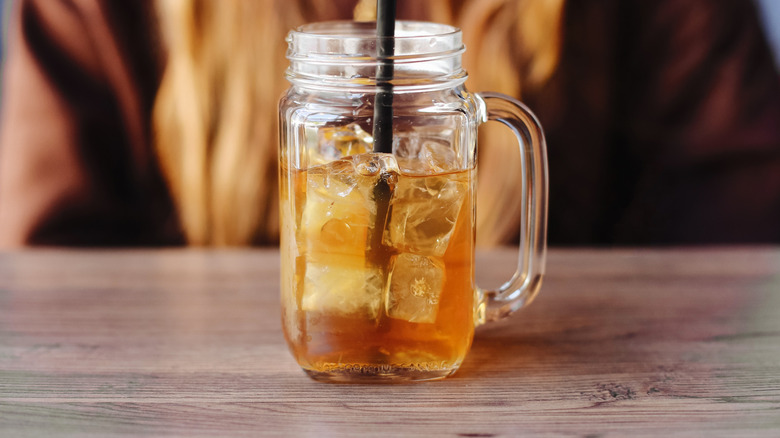
One piece of flair in particular stands out with Po Folks: the drinks served in mason jars. Nothing says "Grandma's front porch" like drinking out of a mason jar. Serving drinks this lent Po Folks' more country credibility than a thousand misspelled signs ever could. Sadly, the Po Folks experience in 2025 doesn't include it. Plain, unadorned drinking glasses await customers today.
During the golden age of the chain, Mason jars sent a clear message to customers that Po Folks understood where they were coming from. If it was primarily catering to a post-Great Depression clientele, mason jars were an inspired choice. The container gained popularity thanks to Victory Gardens, the home gardens people planted thanks to war rationing during World War II. Whether being used for homemade jams and preserves, drinking glasses, or simply holding leftovers, mason jars have long had great utility as a multi-use container. You can even use mason jars in cooking. Po Folks making use of mason jars was a way of signaling shared salt-of-the-earth values.
The owner sold Po Folks in 1982
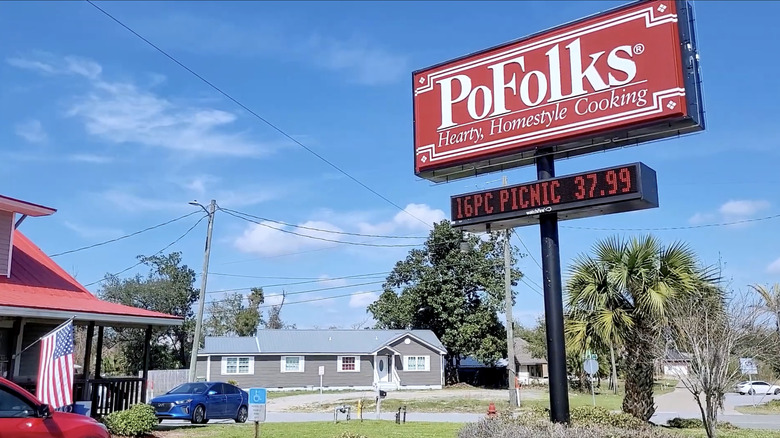
Over time, more and more Po Folks franchises started popping up, and the chain boasted more than 100 locations at the height of its popularity. The restaurant was sold to Krystal in 1982, and expansion continues going. The slider chain was in a boom period itself, having created a company division known as DavCo Foods for the purpose of operating franchises. DavCo was even the exclusive operator of Wendy's franchises in Washington, D.C. and Baltimore in the late 1970s, since Krystal did not have stores in those markets. If Kystal/DavCo was doing well enough to run competitors' locations, surely the company would also be able to run Po Folks successfully, right?
Unfortunately, that dream dissolved faster than sugar in hot tea. Krystal and DavCo could not handle the addition of another restaurant chain. Any success that Po Folks saw in the 1980s would prove to be short-lived. It's not usually a good sign when the owner cashes out. Faceless but well-monied restaurant groups often dilute the original appeal of a place, and new owners are inevitably not as passionate about the vision.
Celebrities supported Po Folks
Po Folks was named after a song by country singer Bill Anderson. Now, did Po Folks bother to ask Anderson about using the name? Well, no. Was Anderson chill about it? Also no. Initially, Anderson sued the restaurant. Eventually, Po Folks and Bill changed their tune, and started getting along. Anderson became a spokesperson, hawking Mix N' Match Combos for $4.99 while playing guitar on his porch in one TV ad. It doesn't get much more folksy than a country singer talking about fried food while playing guitar on a porch.
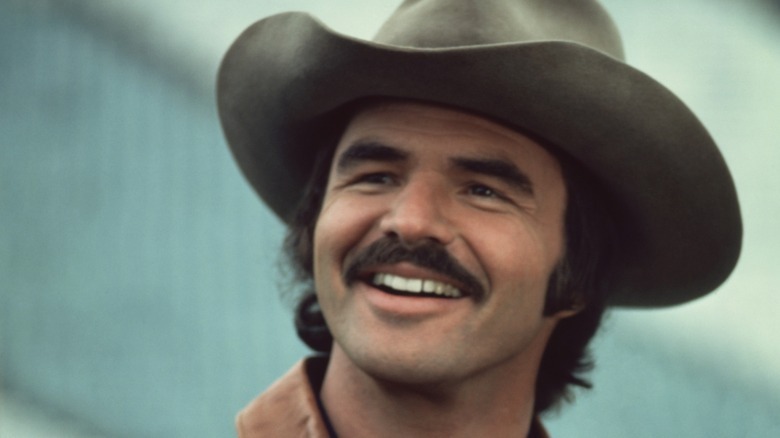
Additionally, DavCo turned Po Folks into a publicly traded company in 1983. Singer Conway Twitty franchised a Po Folks with Bill Anderson in 1983. Actor Burt Reynolds invested heavily in Po Folks in the 1980s. The actor and his business partner, record producer and music publisher Buddy Killen, invested in more than 30 locations of Po Folks. Unfortunately, the celebrity action was not enough to save Po Folks. All of those locations that Reynolds put money into went out of business, and the ill-advised investment ultimately cost the "Boogie Nights" star $20 million. In a darkly ironic turn, the restaurant named Po Folks brought one of the most successful actors of his generation close to bankruptcy.
Po Folks filed for bankruptcy in 1988

Despite being a hit in the 1970s and starting the '80s with some promise, Po Folks eventually started to decline. Selling the franchise to Krystal, the fast food joint primarily known as White Castle's competitor, did not provide the shot in the arm Po Folks needed. Having superstars like Conway Twitty and Burt Reynolds invest in franchises didn't cut it either. In retrospect, maybe what Po' Folks needed was slower growth. It seems like the chain got too big for its britches, to use the parlance of Po Folks. The company filed for bankruptcy in 1988, and many franchises closed.
Some locations around the Atlanta area rebranded as Folks, and lasted until the COVID-19 pandemic. Franchisees Richard J. Pratt and Richard W. King had roughly a dozen restaurants in the Atlanta metro area, and they were doing well enough to keep going despite the parent company going under. Good for them, and lucky for anyone in Atlanta who loves fried clams. Of course, many restaurants couldn't survive the COVID-19 pandemic and its lockdowns, and Folks was one of the unlucky ones.
The food quality went down
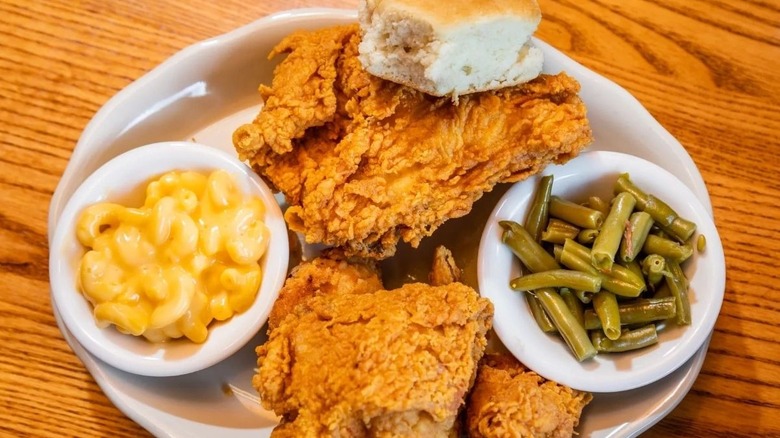
Once a restaurant over-franchises, a loss of food quality is inevitable. Buddy Killen, Burt Reynolds' business partner in more than 30 Po Folks locations, freely admitted that the food quality diminished in their locations. Could it be that the intangibles that make country cooking great can't be replicated in something as standardized as a chain restaurant? Maybe, but former Po Folks fans all seem to agree that replacing mason jars with regular cups definitely changed the vibe in the place, for the worse. Imagine a chicken-free Buffalo Wild Wings, or Sports Illustrated with no pictures. A certain essential element was lost when the mason jars went away.
A reviewer at the Greensboro News & Record called the quality of the food "inconsistent" in 1990. One formerly avid Po' Folks fan wrote for food blog The Taste Bud that the last time he visited Po Folks, his wife found a hair in her salad. That's not all: the writer himself found a fried shrimp folded within his mashed potatoes. Hair in food is not great, but accidents happen. A fried shrimp in the mashed potatoes raises a multitude of questions that we have to imagine many folks aren't interested in answering.
Five Po Folks remain today
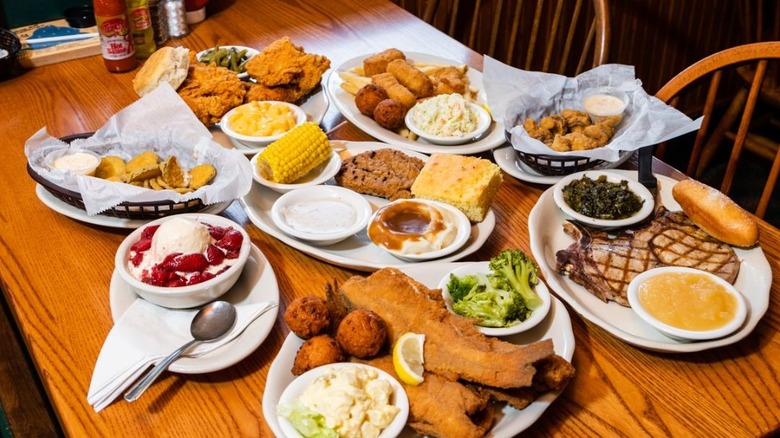
Bankruptcy is not necessarily a death knell in the United States. Po Folks continues to this day, there are just a lot fewer locations. To experience Po' Folks in 2025, from "waiting rite cheer fer the seater" all the way to a "dee-ssert" of a Po sundae, you have to go to the Florida panhandle. One commenter on Reddit was surprised to see the restaurant show up on r/nostalgia, given that they'd been going to a Folks in Georgia and a Po Folks in Florida for years. One corner of the country getting to enjoy the down-home stylings of this throwback chain is certainly better than nothing.
Hey, some classic seafood chains are making comebacks. Is Po' Folks due for a comeback? It's hard to tell. People seem to have fond memories of the place, but aren't necessarily banging at the gates for a 21st century proliferation of Po Folks. Then again, maybe we're missing something. Maybe some more Americans need to take a trip to the panhandle and see what chicken "lizards" are all about.