
Old School Chips You'll Never Find In Stores Anymore
We may receive a commission on purchases made from links.
The potato chip's origins are hotly contested – but what can't be denied is that they're a global phenomenon. The worldwide market surpassed $60 billion in 2025 and is expected to exceed $112 billion by 2034 (via Fortune Business Insights). Whether chips were invented by a vengeful chef at Moon's Lake House in 1853, an English doctor in 1817, or another snack folk hero, people love crispy fried potatoes.
Over the years, countless brands have tried their hand at potato chips. Some endured and thrived, with names like Lay's, Pringles, Utz, Wise, and Cape Cod ubiquitous on store shelves. But many more have gone by the wayside — even after decades of success in some cases.
Although we can't bring these brands back, we can honor and celebrate them. With that in mind, here are some old-school chips you'll (likely) never find in stores again, along with some fascinating tidbits about their history, what made them special, and why they ended up in the compost pile.
Troyer Farms
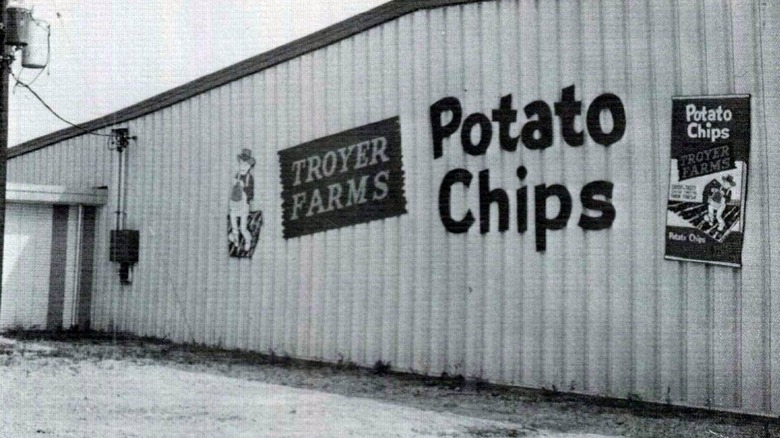
Although it never reached the national zeitgeist, Troyer Farms was a beloved regional brand. Born of a Pennsylvania family potato farm founded in the late 1930s, the Troyers originally sold potatoes to other snack food companies before starting their own chip brand in 1967.
Troyer Farms quickly became known for premium potato chips, which included crinkle-cut, BBQ, and salt and vinegar chips that occasionally "made your whole face pucker," as one Facebook user recalled. Troyer Potato Products Inc. eventually employed roughly 325 people, buying snack food manufacturers in Ohio and Indiana to grow its reach.
Unfortunately, the purchase of Troyer Farms by fellow Pennsylvania company Bickel's Snack Foods Inc. in late 2008 was the death knell for Troyer potato chips. Bickel's suddenly shuttered the brand and closed the Waterford, PA, factory in spring 2011. Shearer's Foods eventually bought the plant in 2016 and expanded it for other snack food production. Meanwhile, the Troyer family still operates the potato farm, and in 2024 it launched Folkland Foods, a company that produces organic french fries.
O'Gradys
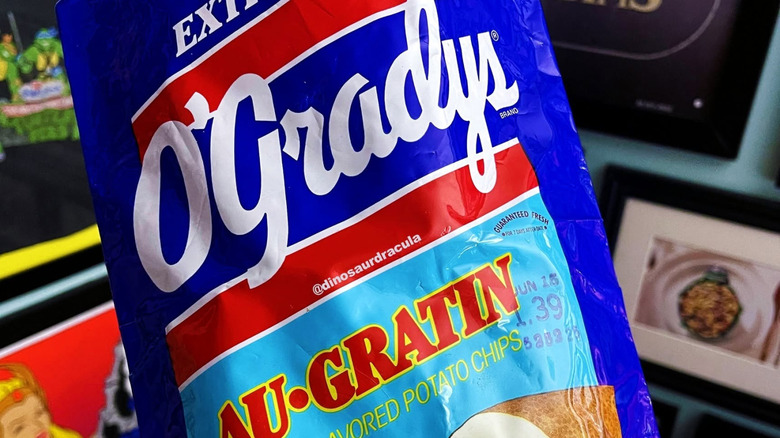
Of all the discontinued potato chip brands, O'Grady's might have the most passionate fans — particularly for its legendary cheesy Au Gratin flavor. "They were magnificent!", said one user on a Reddit thread about the bygone chips. Another commenter remembered, "I RAVAGED so many bags of those!"
Introduced in 1984, apart from the Au Gratin twist, O'Gradys was essentially an enhanced version of Ruffles. The chips had similar ridges but used a thicker cut, with video and print spots emphasizing this gave them more potato taste and a better crunch. A $25 million ad budget the first year alone used the tagline "The More Potato Chip."
Clearly, people loved them — but by 1989, O'Gradys was gone. As the story goes, O'Gradys was shelved because, rather than taking sales from rival companies, it hurt sales of Frito-Lay's other, higher-profit chip brands. Frito-Lay ended up folding the Au Gratin flavor into the Ruffles brand, which is periodically rereleased as Ruffles Cheddar and Sour Cream.
Bell Brand
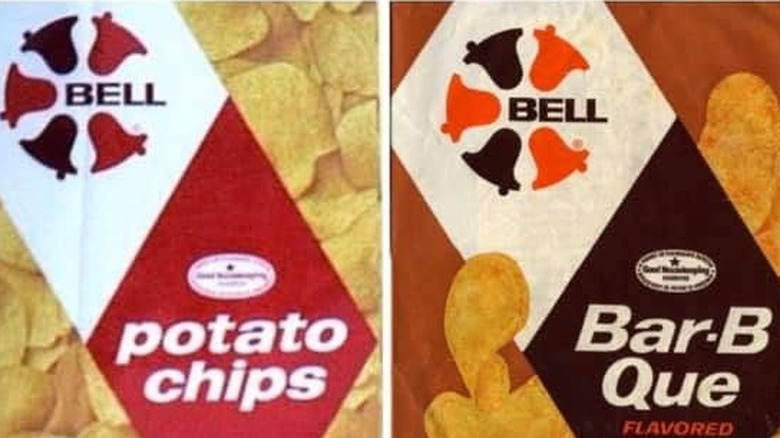
Even generational chip brands can go under without warning. Such is the case of Bell Brand, a SoCal company founded in the early 1920s by Ukrainian immigrant Max I. Ginsberg. It was originally the Los Angeles Saratoga Chip Pretzel Company with a mission bell logo. When Cyril Nigg took over in 1945, he changed the name to match the image.
While Bell Brand produced a full snack food lineup, the chips are most remembered. The "If it's Bell — it's swell!" tagline trademarked in 1950 became a staple of company advertising. A Facebook user rattled off another jingle: "Bell Brand potato chips, crispy as can be...Bell Brand potato chips, salted to a T." They even cameoed in the classic 1955 film "The Seven Year Itch."
Yet the chips didn't reach the 21st century. Bell Brand ended up with G.F. Industries, which began shopping it in January 1995 due to declining sales. After just six months on the block, it shut the brand down.
Keebler O'Boisies
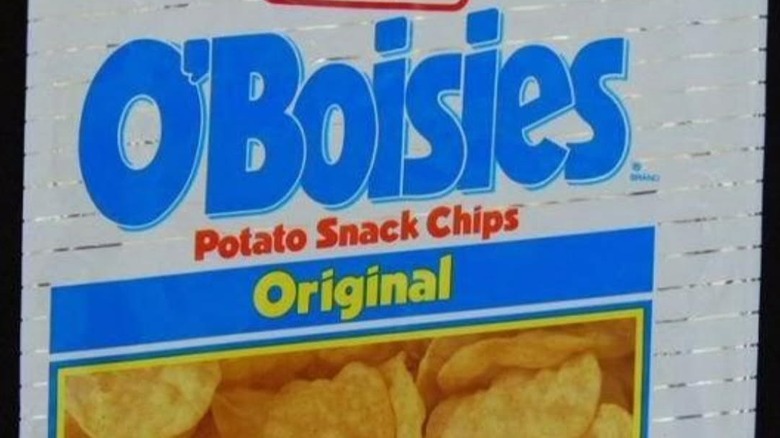
The Keebler Company is well known for cookies and other sweet treats, but Gen Zers may not realize the elves made several attempts to crack the chip code. O'Boisies, which came along in 1988, are perhaps the best known. Retro Ramblings went as far as to declare them "the finest potato chips ever made."
Technically a manufactured snack chip like Pringles, O'Boises were unlike any other chip on the market. By using technology from former USDA employee Miles Willard, Keebler produced chips that were thick but had an airy, bubbled texture and a loud crunch people loved. Those who ate them recalled O'Boises weren't as oily as regular potato chips and didn't break as easily. As the commercials declared: "O'Boises are O'boisterous!"
Yet it couldn't last. In response to financial struggles and stiff competition, Keebler exited the salty snack space in the mid-1990s, taking O'Boisies with them. Apart from a brief revival attempt in 2009 by Inventure Foods, which acquired the rights to the brand name, it appears O'Boises have been permanently put out to pasture.
Frito-Lay WOW
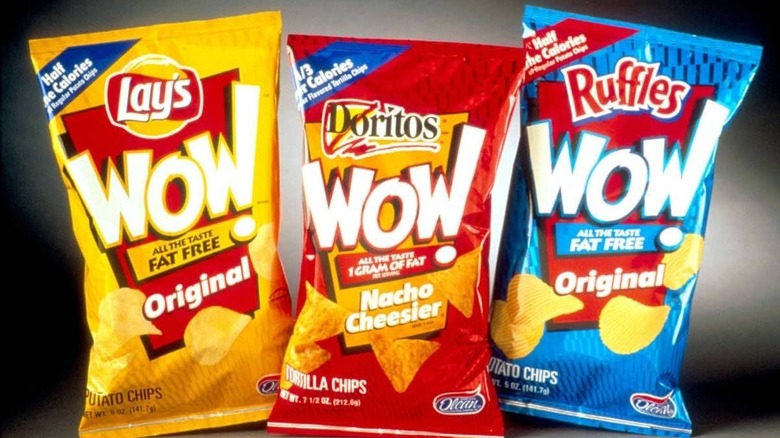
Even when you're using one of the best-selling, most trusted chip brands in world history, nothing is guaranteed. Such was the case with WOW chips, which were introduced in 1998 to capitalize on the low-fat craze. Marketed under Lay's Ruffles, Doritos, and Tostitos brands, they were trumpeted as the first fat-free chips.
Initial market testing was positive, and first-year Lay's WOW sales hit $400 million. By 2000, though, the numbers were cut in half. As it turned out, the use of olestra as a fat substitute was causing frequent and severe gastrointestinal distress. Reports raged, if you'll pardon the pun, of stomach cramps, diarrhea, and even straight-up bowel leakage. In other words, the FDA warning label was fully justified.
Although Lay's tried rebranding the chips as Lay's Light, the embarrassing stigma remained. In 2010, when Time named olestra one of the 50 worst inventions, Lay's WOW was its case study. By 2016, one of America's most controversial snacks was mercifully gone for good.
Granite State Potato Chips
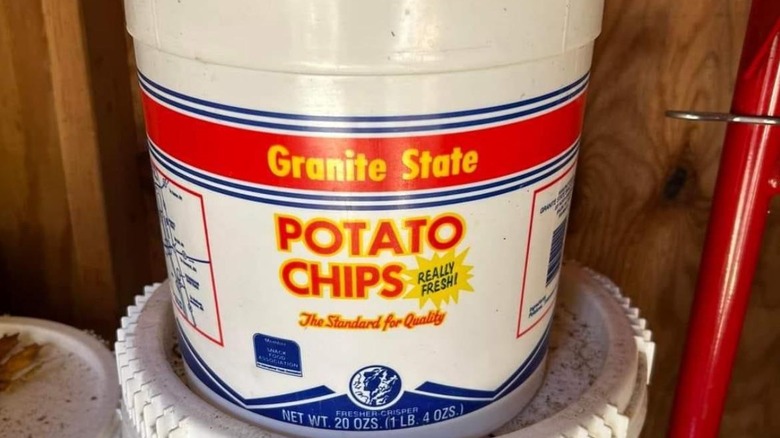
Granite State Potato Chip Company is greatly missed by many New Hampshirites. Founded in 1907 in Salem, NH, it may have been the first chip brand ever, though this is difficult to verify. Founders William Croft and Thomas Devine initially sold chips right out of the factory, but after Croft bought out Devine in 1917, he began distributing them to stores.
From the large quantity packaged in reusable buckets to the simple logo, this was a true old-school brand. Even into the 21st century, you could buy a fresh bucket directly from the factory. As one Facebook commenter recounted, "They would sometimes fill our bucket with a big scooper if there were some left in the shoot."
Granite State Potato Chips hung on through four generations of Crofts, confined largely to the Northeast. After a century, the company closed in 2007, pushed out by an inability to buy storefront space like the big names. A Dunkin' now stands where the factory once was.
Hostess chips
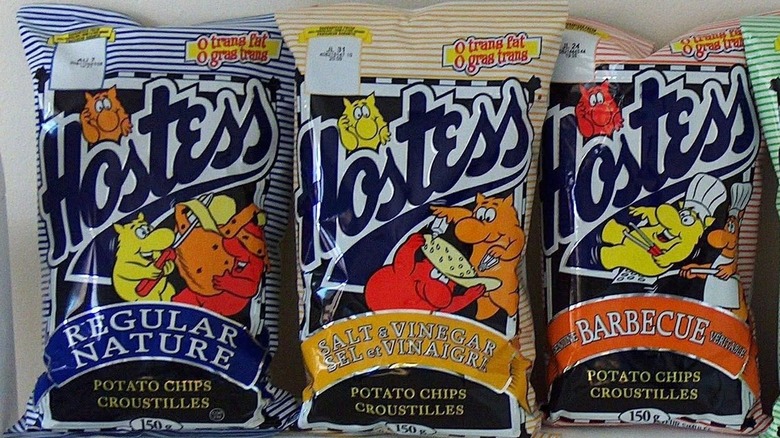
When Americans hear "Hostess" they think of Twinkies, but for decades it was Canada's most popular potato chip brand. Founded in 1935, it began with Edward Snyder cooking chips at his mother's house. By the late '50s the chips dominated the Canadian snack market under General Foods.
Part of the reason people loved Hostess is that it wasn't afraid to try new things. It introduced the now hallowed ketchup-flavored chips in the 1970s and even experimented with fruit-flavored chips. Come the 1980s, Hostess unleashed the Munchies, a trio of cartoon character mascots that quickly caught on.
Unfortunately, placating America's biggest chip brand proved its undoing. The Hostess Frito-Lay Company was formed in 1988 to bring certain Frito-Lay snacks to Canada. Pepsico Foods (Frito-Lay's parent company) proceeded to buy out Hostess from General Foods in 1992, then effectively killed the brand in 1996, slapping Lay's on all the chip offerings. Frito-Lay did introduce Munchies chips in 2024 based on the former mascots, but it just doesn't hit the same.
Laura Scudder's
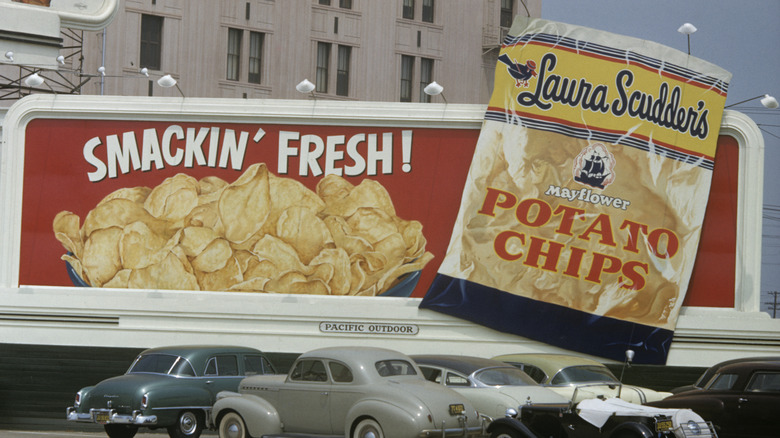
Another pioneer of the potato chip market is also sadly gone. Laura C. Scudder was a real person, and she founded her eponymous brand in 1926 when women-owned food businesses were practically non-existent. Furthermore, she was a snack food innovator. Laura Scudder's was the first brand to package chips in wax paper bags, which kept them shelf-stable longer and turned chips into the convenience food they are now. It's also considered the first company to add a freshness date and to use twin packs in larger containers.
These breakthroughs, along with having the self-professed "noisiest chips in the world," helped make Laura Scudder the West Coast's potato chip queen for decades. The company had annual sales of $125 million when Borden Inc. bought it in 1986. But a quick, sharp decline followed as Borden mismanaged the brand and sent it under. There were attempts to bring the potato chips back, but currently, dip mixes and seasonings are the only things sold under the Laura Scudder's name.
Planters Potato Chips
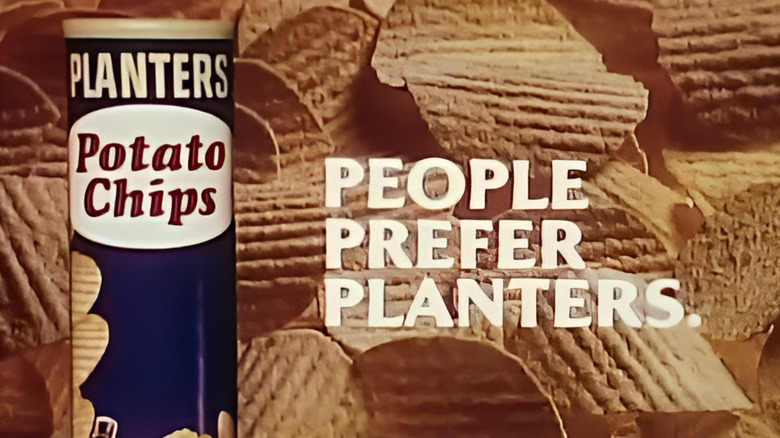
Keebler isn't the only massive snack food brand that tried its hand at potato chips — Planters, of bagged nut fame, also gave it a go. According to its official history, the processed nut maestro sold potato chips in the 1970s and 1980s, using tennis ball-like canisters similar to those associated with Pringles. However, Planters were real potato chips; in ads, the company noted that it took over four pounds of potatoes to make each container.
Interestingly, it appears Planters chips may have been around much longer than officially claimed. A recent eBay search uncovered an unused Planters potato chip cellophane bag from 1947. We also found a Planter's chip commercial on YouTube that's purportedly from the 1960s. Regardless, you won't find the chips today, as Planters phased them out by the 1990s.
Husman's
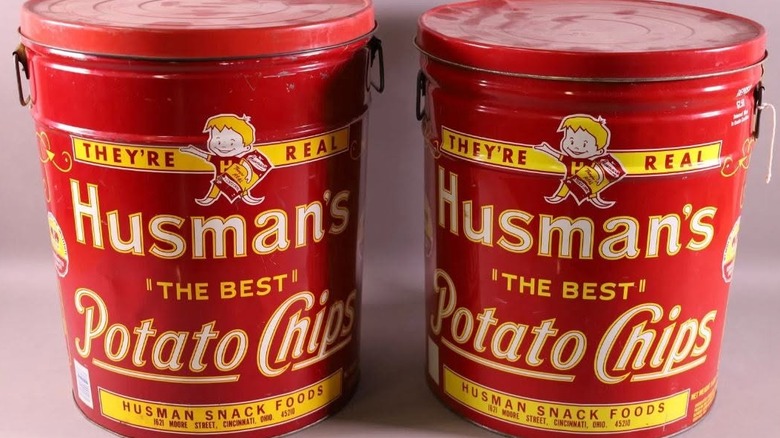
Here's another story of homemade potato chips that become widely cherished. Harry Husman founded his namesake chip company in 1919 to feed Cincinnati's snack demand. In the beginning, he literally needed a rope and pulley to get potatoes to his second-floor kitchen. Of course, the technology evolved, and Husman's Snack Food Co. expanded to other goodies like popcorn and pretzels.
But the chips remained the staple of Ohio and Western Pennsylvania, ranging from Original Flavor to the well-regarded Sweet 'n Sassy. As its classic ads sang, "When the chips are down, be sure they're Husman's!" The brand was sold to Pinnacle Foods Group in 2009, and a decade later, Utz purchased Husman's during its centennial celebration.
As it turned out, Utz only bought Husman's to get rid of it, doing so in 2021 ostensibly to make room for its Zapp's brand. Fans were livid, with one Facebook user saying, "Of course a Pennsylvania company would buy them and then discontinue a century's old staple in Cincinnati."
Daddy Crisp
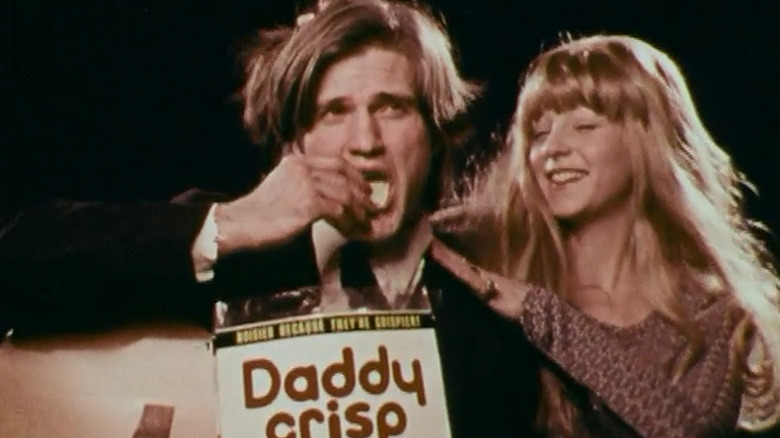
Admittedly, not a ton is known about Daddy Crisp. We know they were made in the 1960s and '70s, had a warehouse in Forest Park just outside Atlanta, and made a big deal about freshness. Daddy Crisp packaging proclaimed its chips 100% natural with no preservatives long before such a status was en vogue.
That's one reason to remember Daddy Crisp fondly. Another is the bonkers commercial preserved on YouTube. A young Dennis Leary look-alike with an acoustic guitar silently eats chips while a woman fawns over him, uttering lines such as, "Are those chips named Daddy Crisp after you? Or are you named Daddy Crisp after those noisy chips?" Then comes the tagline: "Love Your Daddy."
If that doesn't encapsulate the '60s and '70s, what does? Maybe it's just as well Daddy Crisp didn't make it to the '80s — we can only imagine what commercials they would have thought up.
Chipos
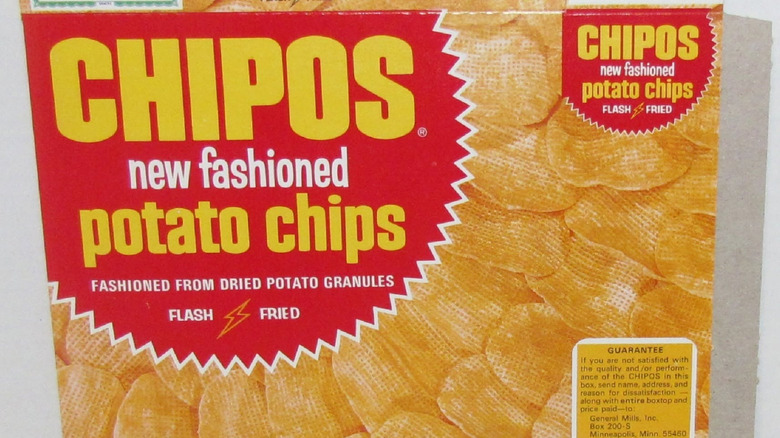
General Mills made multiple attempts in the late 1960s to break onto the chip scene. Along with Joey Chips, a unique corn-potato hybrid, the breakfast magnate also introduced Chipos, which were lattice-cut and flash-fried. This was advertised as producing a chip with less grease and more potato taste.
However, Chipos soon found itself in legal hot oil. Weaver Potato Chip Company and the Potato Chip Institute co-filed a lawsuit in 1969 claiming General Mills couldn't legally call Chipos "potato chips." Why? Because they were made with dehydrated potatoes and rice flour rather than whole potatoes. This was a precursor to the nearly identical Pringles lawsuit a few years later — and the outcome was the same, with a 1971 ruling against Chipos upheld on appeal.
Unlike Pringles, Chipos hadn't built the brand recognition to survive such a blow. Sales declined and General Mills eventually gave up on Chipos. They still have loyalists, though, with one Reddit user remembering, "These were my fave chips when they existed."
Red Dot
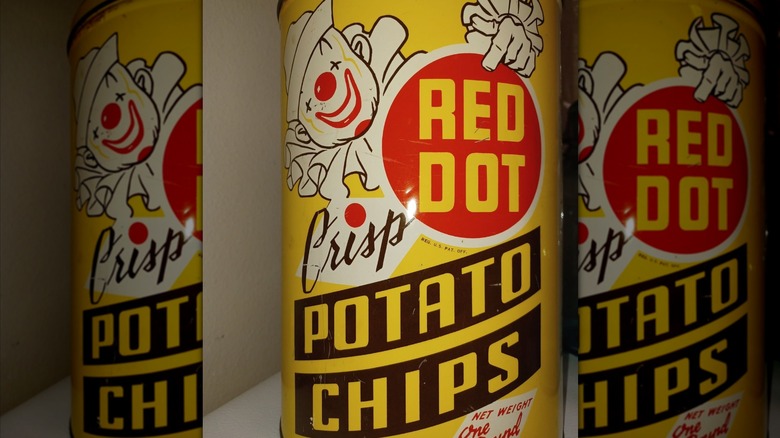
The Midwest has a rich chip history, and Red Dot played a huge part. Founded in 1938 and based in Madison, Wisconsin, Red Dot was once the Midwest's largest snack food provider. In the mid-20th century, it was considered one of the country's "Big Four" regional chip makers, joining Lay's, Morton, and Blue Bell.
Red Dot partnered with the University of Madison-Wisconsin to develop potatoes, resulting in what HNGnews.com called, "the best tasting potato chips ever made." There was also the bright yellow packaging with mascot Ta-To the clown and the use of storage tins for freshness.
So, what happened? Two words: corporate consolidation. Red Dot merged with Lay's in 1961, followed almost immediately by the merger that created Frito-Lay. Not surprisingly, Red Dot didn't receive much attention under the new banner. Even sadder, founder Fred Meyer died by suicide just four days after the merger. A 1970 sale to H.H. Evon Company couldn't save Red Dot, and the brand was abandoned in 1973.
If you or anyone you know is having suicidal thoughts, please call the National Suicide Prevention Lifeline by dialing 988 or by calling 1-800-273-TALK (8255).
Eggo
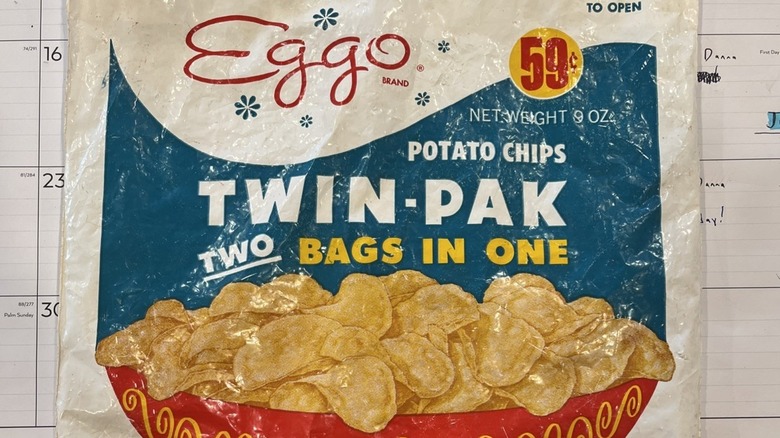
Yes, we're talking about the same Eggo that remains the leading frozen waffle brand by a country mile. Before inventing this modern breakfast classic, Eggo founder Frank Dorsa and his brothers had a much more diverse food portfolio. This included potato chips once Eggo Food Products bought the San Jose-based Garden City Potato Chip Factory in 1938.
Like everything else, Dorsa threw himself into chips headfirst, patenting an automatic potato peeler to speed up production. Even after perfecting the frozen waffle recipe and manufacturing process, Eggo remained committed to chips under Dorsa's leadership. A 1953 Eggo advertising postcard simultaneously promoted waffles and chips, and the Dorsa brothers reportedly gave bags of chips to trick-or-treaters.
But in 1966, the Dorsas cashed out, selling Eggo to Fearn Foods. It was in turn acquired a few years later by Kellogg's, which phased out the brand's other products to focus on Eggo's famous waffles. The rest is history, with Eggo chips confined to the trash bin.
Delta Gold
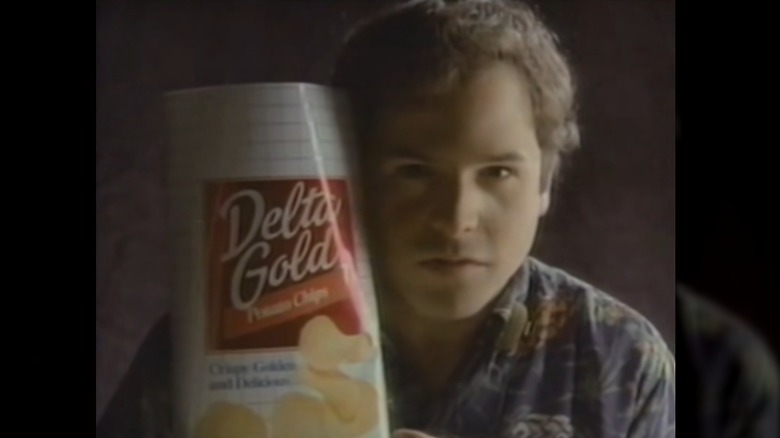
O'Gradys wasn't the only short-lived premium chip brand Frito-Lay spawned in the 1980s. Shortly after its sibling — either 1985 or 1986 depending on who you believe — Delta Gold arrived at the potato chip party. These chips were touted as being blemish-free with a more consistent shape, color, and texture than ordinary chips.
As the tagline said, "You can see how good they taste." And perhaps the most fun part of the Delta Gold story is who delivered that tagline, as early television commercials featured none other than a pre-Seinfeld Jason Alexander. Watching the old TV ad, you can see the beginnings of George Costanza in Alexander's mannerisms and rapid-fire delivery. As one Facebook commenter observed, "He was always Costanza, wasn't he?"
It appears Delta Gold was dropped by the early 1990s for the same reason as O'Gradys was nixed — it was cannibalizing sales of Frito-Lay brands rather than competitors. At least we'll always have that commercial.
Eagle Snacks
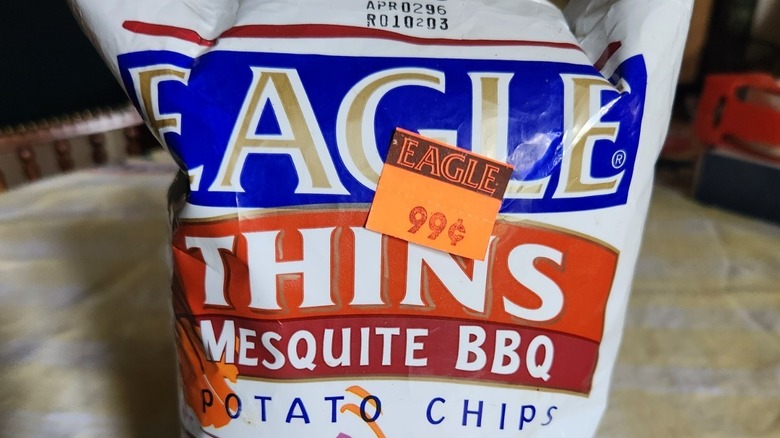
Beer and chips go perfectly together, so it's no surprise that Anheuser-Busch was once a major player in both scenes. But the snack food brand it founded in 1979 was more than a vanity project. At its peak, Eagle Snacks was the number-two snack company in the United States.
By all accounts, Eagle potato chips were excellent. One Reddit user declared Eagle Snacks had "The best barbecue potato chips. Still to this day." Not surprisingly, given its parent company, Eagle Snacks sometimes handed out goodies at games, and it gave the reigning giant Frito-Lay a legitimate scare.
Yet in early 1996, it was over. The division never turned a profit, and despite passionate support from August A. Busch III, corporate bean-counters lost interest. The brand was sold to Proctor and Gamble, which never used it, and most of the plants ended up with Frito-Lay. Reserve Brands tried to revive Eagle Snacks in 2008 but failed, and the trademark has bounced around since then but remains grounded.
Jane Parker
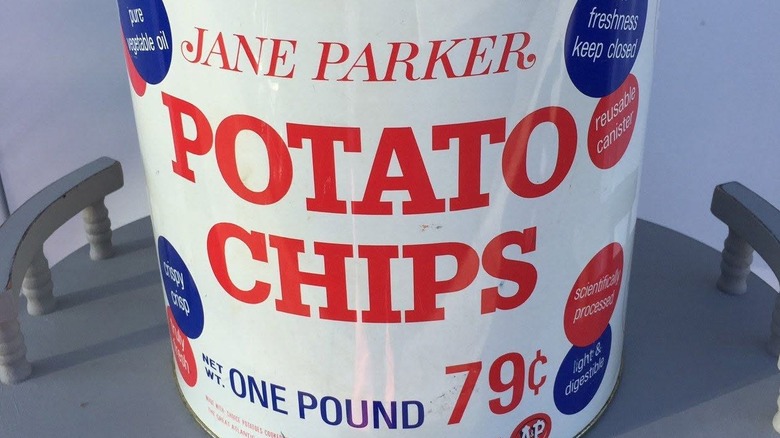
Potato chips from a fruitcake brand? Yes! Starting in the 1930s, Jane Parker was a house brand of the A&P supermarket chain, which had about 16,000 locations at its peak. Although fruitcakes were the main draw, the name was attached to other foods, including potato chips.
Serious effort was put into them, too. A 1949 ad claimed they were "The Only Nationally Advertised Potato Chips" — which makes sense, given this was before Frito-Lay. Another ad from 1951 declared Jane Parker's snack "The Chip with the Real Taste Thrill." They remained relevant into the 1970s, as the New York Times cited them when comparing chip costs.
However, the decline of A&P had already begun. When combined with the emergence of other national chip brands, it was a one-two punch for Jane Parker chips. A&P muddled along before multiple bankruptcies forced its permanent closure in 2015. Alex and Chris Ronacher bought the rights to Jane Parker baked goods in 2017, but the chips appear to be defunct.