

Keurig Coffee Lukewarm? Here's What It Means And How To Fix It
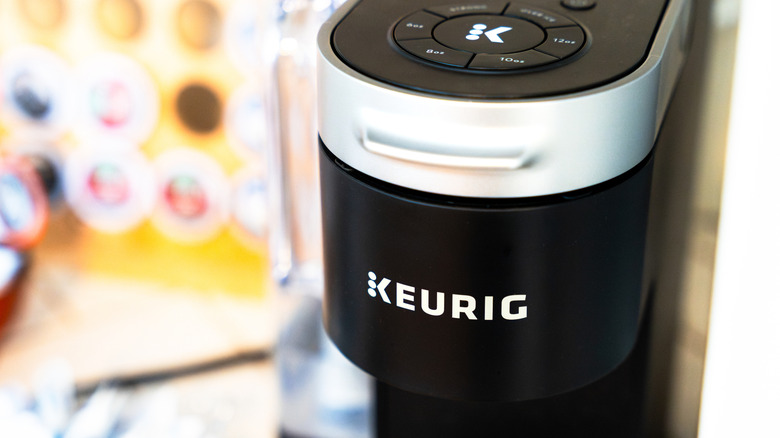
Love them or hate them, Keurig machines are a popular way to make coffee. Coffee enthusiasts might have their issues with them, but for the casual drinker, it's hard to beat the convenience of a hot cup at the press of a button. You may, however, encounter a less-than-warm cup of coffee, which usually comes down to one of two types of problems: Either user errors like incorrect modes and power sources, or machine issues such as mineral buildup and dirty needles.
Most Keurigs have a high-altitude mode that brews at cooler temperatures to offset the lower boiling point of water at elevations above 3,000 feet — below that, and your coffee will just be too cold. In most machines, this is activated before each cup by holding the brew button for a few seconds; don't do that. Others have temperature controls that can be adjusted downward. And one model, the K-Supreme Plus Smart, has a high-altitude mode in the settings menu which should be turned off.
Another potential problem is voltage. If a Keurig isn't getting enough power, it can malfunction in several ways, including lukewarm coffee. Incorrect power loads are a common reason why kitchen appliances should never be plugged into a power strip, including electric kettles, air fryers, and anything that generates heat. To make sure your Keurig generates enough heat, only ever plug it directly into a grounded outlet. With user error eliminated, the troubleshooting continues to machine problems.
Machines require maintenance
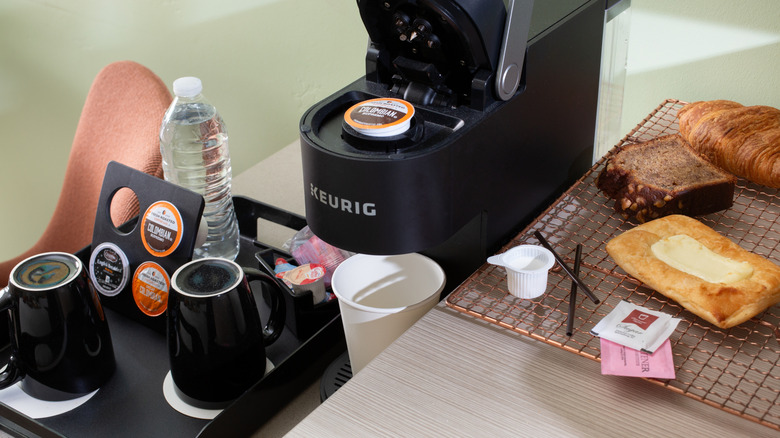
No machine, used enough, will work like new forever. But before lukewarm coffee makes you throw your Keurig away, simple maintenance will likely solve the problem. All automatic coffee makers face the buildup of calcium and other minerals that clog internal components and may cause cold coffee. The removal process is known as descaling, and a Keurig coffee maker should be descaled every three months, more often if it's heavily used.
Consult your owner's manual for how to activate your machine's descaling process. It varies between different models but is often a combination of button presses and calls for a bottle of Keurig Descaling Solution. Or, potentially more conveniently, you can clean a Keurig machine with Alka-Seltzer tablets.
Another maintenance problem, unfortunately, is one of the most common customer complaints about Keurigs: clogged needles. The entrance needle that pierces the pod from the top — and the two exit needles that pierce it from the bottom — are both prone to becoming clogged with coffee grounds. Cleaning them both is a process that the company says takes about 10 minutes. But if you don't do it that frequently (or at all), this may be your problem. A little bit of upkeep is all that stands between you and warm coffee again.