

How Often Should You Descale Your Keurig Coffee Maker?

If you rely on your Keurig coffee maker to kickstart your morning, regular maintenance is the secret to keeping those K-Cups tasting fresh. Over time, calcium and mineral deposits naturally build up inside the machine's heating element. This "scale" can slow down your brew time, stress the internal components, and ultimately alter the flavor of your morning cup.
To prevent this, Keurig recommends making descaling a core part of your quarterly maintenance routine. If your brewer sees average use, you should descale it every three months with a solution to keep the internal plumbing pristine (Keurig recommends its official descaling solution). However, your specific cleaning schedule depends entirely on how often you brew and how you store your machine.
For heavy coffee-drinking households that brew more than eight K-Cup pods daily, you will need to increase your routine to descale every six to eight weeks instead. Frequency also matters if your machine sits idle. Keurig advises completing a full descaling cycle both before and after storing a brewer for more than a month. This rule is especially crucial for vacation homes or college dorm rooms that sit empty between semesters. If you accidentally leave a used pod inside the machine during that time, a deep clean is non-negotiable. It is crucial to avoid this common Keurig mistake or you'll end up with a moldy machine that ruins your unit.
How to quickly descale and deep clean your machine
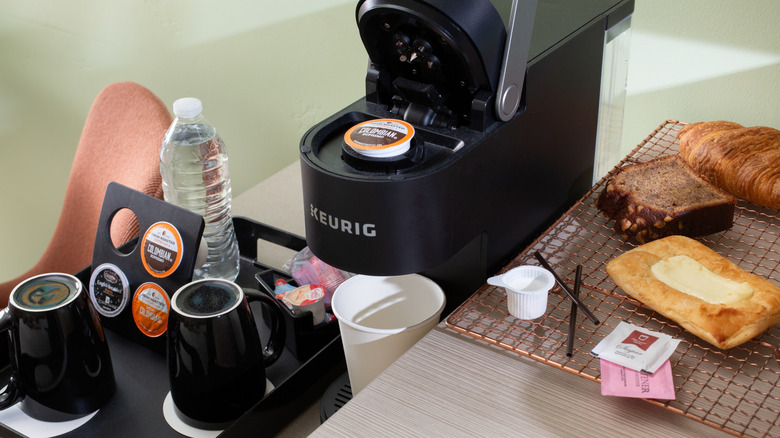
Descaling your Keurig is a straightforward afternoon project, though you should always check the instructions for your specific model first. To start, empty the water reservoir and remove the water filter cartridge if your model uses one. Pour the entire bottle of your descaling solution into the reservoir and fill the rest with water.
Afterward, let the coffee maker sit turned on for 30 minutes to allow the solution to break down the mineral buildup. Then, run consecutive rinsing cycles (without inserting a K-Cup) into a large mug until the machine signals it is empty. To finish, rinse the water reservoir thoroughly, refill it with fresh water, and run several more cycles to eliminate any leftover chemical aftertaste. If you ever need to clean a traditional drip machine in a pinch, you can even learn how Alka-Seltzer makes cleaning your coffee machine a breeze.
Keep in mind that descaling only clears out the internal lines; it doesn't clean the external areas where coffee grime actually collects. If your Keurig is still dispensing less coffee than usual after a fresh descale, the culprit may be a clog in the exit needle where the pod gets punctured. Knowing how to clean the needle in your Keurig coffee maker is a separate but essential maintenance task. Taking a few minutes to clear out trapped coffee grounds from the entrance and exit needles with a paperclip, combined with your regular three-month descaling schedule, will keep your machine running like new.