

13 Store-Bought American Lagers, Ranked Worst To Best
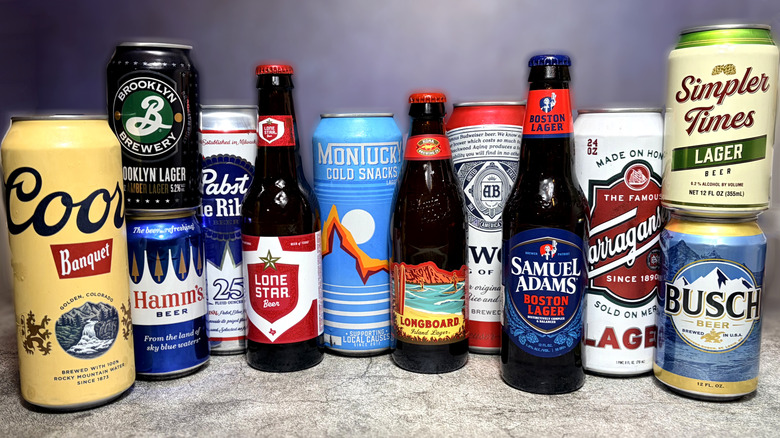
While the lager style of beer originated in Europe, it's now made across the globe in a seemingly infinite variety of styles. North America has truly embraced lager, with some of the world's most popular brands including lagers from Mexico, Canada, and of course, the United States. American lager has now become its own category, and from sea to shining sea you'll find massive macrobreweries as well as craft producers churning out their own signature versions of this crisp, refreshing family of beers.
What makes a lager a lager? It's the yeast that differentiates this type of beer from ale. Lager yeast ferments at cooler temperatures than ale yeast, and that cold, slow, methodical process results in a clean, easy-drinking, crowd-pleasing brew. The many American lagers on sale take that flavor profile as far as it can go, minimizing bitterness and strong flavors in favor of crispness and simplicity. That description might make you assume that all American lagers are the same, but there's a surprising amount of variety within this regional style, even among the world-famous mass-produced options.
13. Simpler Times Lager
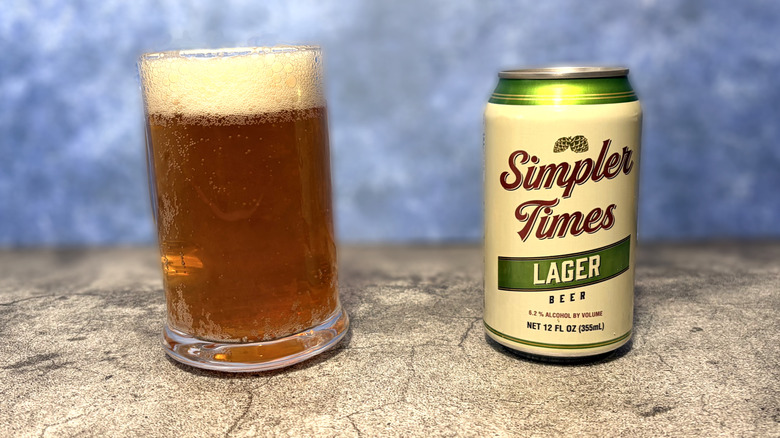
Simpler Times, the house lager of Trader Joe's, is cheap and strong. If those are your primary criteria when shopping for a beer — in other words, you're all about getting the best buzz for your buck — this might be worth a shot. Other than that, this is the last American lager I'd recommend reaching for. Drinking this feels like multiple different styles are fighting to take over, and the result is an unbalanced, jumbled mess.
With its ABV (alcohol by volume) at over 6%, Simpler Times is a full point above the second-highest lager in this ranking. Extra alcohol means extra body and a more viscous mouthfeel, which pushes this beer out of the typical American lager style, which I expect to be light, crisp, and refreshing. While the grainy, grassy aromas are pleasant enough, there's a syrupy, malty sweetness to the palate that's way too intense, followed by an onslaught of bitterness that shows up on the finish and tries to duke it out with the malt. From the color and the hops, I'm guessing that Simpler Times is modeled after a Vienna lager, which is darker and more bitter than the pilsner style that most American lagers are based on. Even judging it by those standards, though, the alcohol here is jarringly out of balance and it's just plain unpleasant to drink.
12. Busch Beer
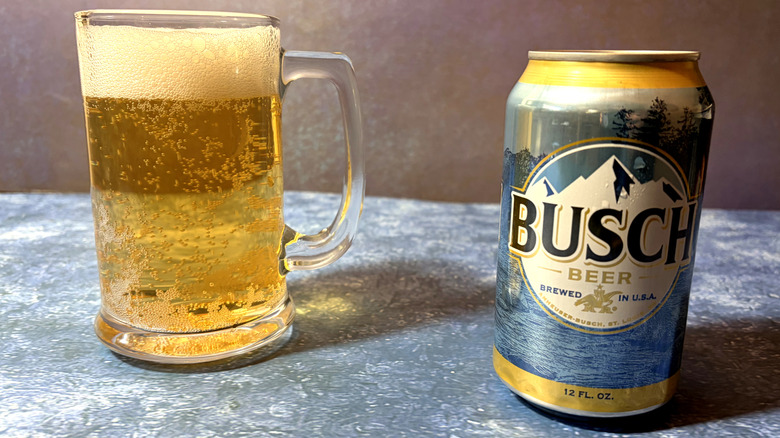
An American lager shouldn't bowl you over with flavor. There's a limit, though, to how subtle the taste of a beer can be before it stops registering to your senses as beer. Busch, one of a multitude of beers owned by global megacorporation Anheuser-Busch InBev, may not have fully crossed that line, but it's right up against the edge. There's truly nothing to this lager. The best thing about it is that it's carbonated, but there's so little going on that if I closed my eyes I could probably be convinced that it's sparkling water.
Busch beer is an adjunct lager, like many of the beers on this list, meaning it uses fermentation sources other than malt. With American adjunct lagers specifically, including this one, those additions are typically rice and corn. This tends to create beer with a lighter profile, both in flavor and texture. That's certainly the case with Busch. This beer is so light in flavor, though, that its reported level of just five IBUs (International Bitterness Units), which is an extremely low number, juts out because it has nothing to balance. This ends up tasting like stale hop water.
11. Budweiser
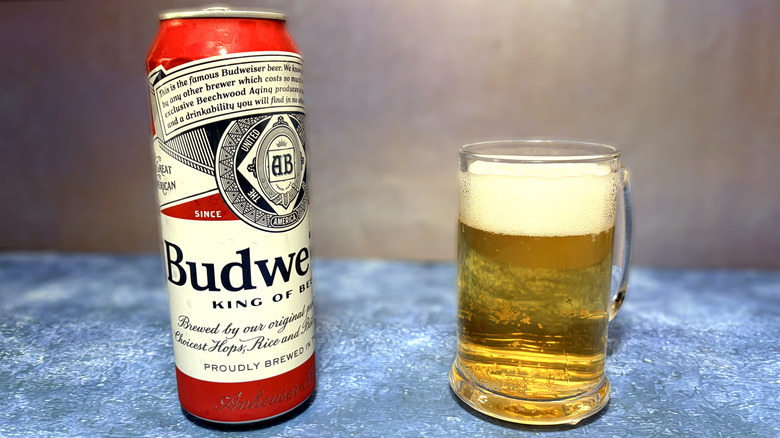
This Bud may be for you, but sadly it's not for me. I've tried Budweiser's flagship lager before and didn't recommend it, but I'm always willing to give anything a second chance. Revisiting this iconic American beer, though, I had the exact same experience. Just going by stats, on paper, this is a textbook example of the American adjunct lager style, with 5% abv and a fairly low IBU level of 15. It's straw gold, its aromas and flavors are light and mild, and lively bubbles are present. That's all right in line with the style guidelines.
It's the actual experience of drinking Budweiser that pushes it toward the low end of this ranking. There's a particular syrupy, mouth-coating sensation that I find in this and a few other adjunct lagers that's unpleasant in both taste and texture. That, combined with a bitter finish that turns sour, makes this a tough beer for me to enjoy. Perhaps it's my American aversion to monarchy that drives me to want to unseat the king of beers. I know it's a classic, but it's one of the last lagers I'd want to drink.
10. Coors Banquet
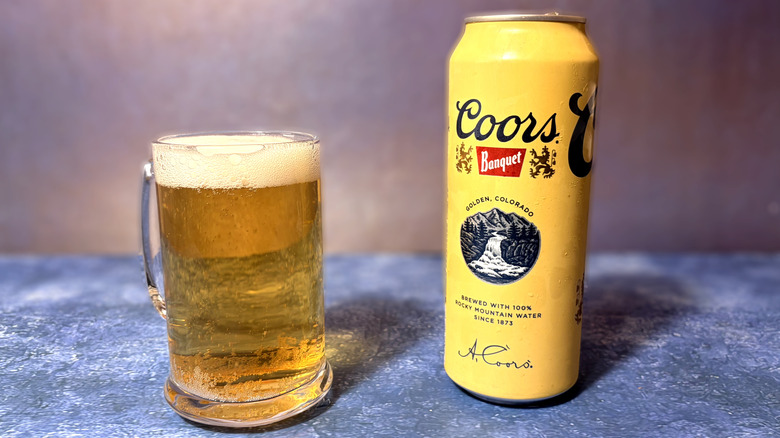
Coors Banquet is not a terrible beer, but as I drink it, I struggle to find anything to write down about it. This is an adjunct lager brewed with corn syrup in addition to malted barley, which I tend to find more appealing than rice for whatever reason (although your mileage may vary). While that puts it a notch above Bud in the rankings, it's still not a beer that I'd go out of my way to buy.
The best thing about Coors Banquet is its clean, refreshing finish, with its strong carbonation giving a brisk, peppy mouthfeel. The problem is, like Busch, this beer's flavor is so muted it's almost nonexistent. At least it's inoffensive, and refreshing enough that it goes down easy. It'd be fine on a hot day, and I wouldn't turn it away. I only wish it were a little less boring and had its own unique character.
9. Miller High Life
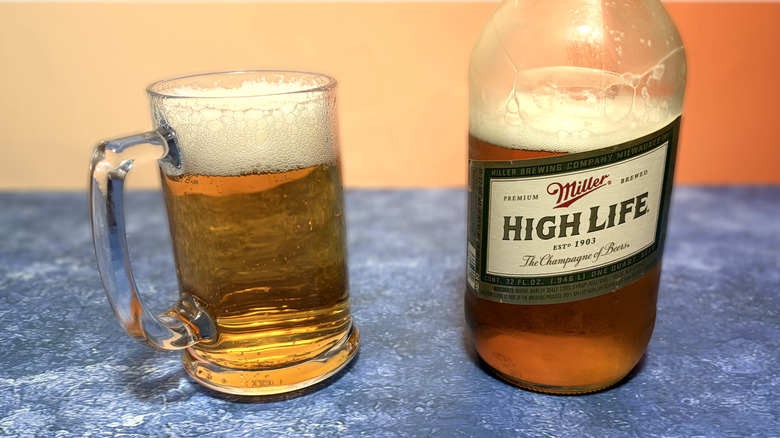
Miller High Life and Coors Banquet are perhaps the two most similar beers on this roaster, so it makes sense that they're snuggled up right next to each other in the rankings. They both use corn syrup as their adjunct brewing ingredient (but not the high fructose variety, as both brands are eager to point out). The maltiness in Miller High Life is more pronounced, which I enjoy, as it gives this beer a flavor to latch onto that, while mild, I don't have to search for.
There's a faint whiff and taste of hops that becomes almost smoky when paired with the malt, but it's subtle and fades quickly. Bitterness is almost imperceptible in this lager, which is perfectly fine when it comes to this style, and makes Miller High Life a good choice for people looking for the polar opposite of an IPA. That said, with such low hop presence and high malt flavor, this beer does come off as unbalanced and somewhat one-note.
8. Samuel Adams Boston Lager
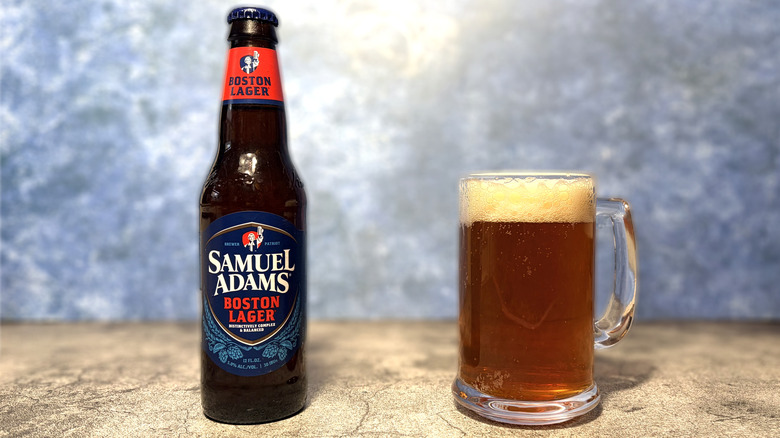
Of the three beers in this ranking that are Vienna lager-adjacent, Samuel Adams' flagship Boston Lager is right in the middle. It's a far more successful iteration of the style than Simpler Times, but there's one brand it doesn't outshine (more on that further up the list). Though I used to drink this beer constantly, the last time I did was my first experience with the new Boston Lager formula which was introduced in 2023. This time, I knew what to expect, so I wasn't taken aback by how much it differed from the beer I remembered. Still, I wasn't crazy about it.
The nose and the palate of this brew seem at odds with one another. Aromatically, this amber beer has a malt-forward, yeasty, almost honeyed character. The flavor profile, on the other hand, is aggressively hop-driven — it's listed at 30 IBUs — and gives Boston Lager an identity crisis. This lager style can achieve balance, as another beer on this list proves. With Sam Adams, though, it comes off as disjointed.
7. Kona Brewing Co. Longboard Island Lager
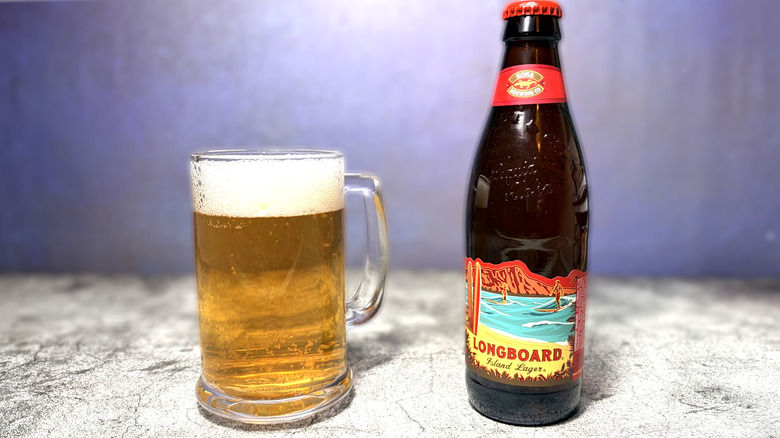
The story of Kona Brewing Company is an intriguing tale of corporate acquisitions and sales and lawsuits. Long story short, there are two versions of this company: One is locally owned and brews in Kona, Hawai'i, and the other is part of the AB InBev empire and mass-produces its beers on the mainland. While the beers are nearly identical on the surface, by all accounts, the Kona-brewed beers are a completely different animal to their continental counterparts. I haven't had the pleasure of trying the brand's Longboard Island Lager in its home state, but the mainland version is a fine, purely middle-of-the-pack American lager.
With 18 IBUs, Longboard is at the top edge of the spectrum when it comes to American lager bitterness. If there was more dimension, that level of hoppiness could work, but the maltiness, body, and carbonation are all slightly too weak to stand up to it. This results in a thin, watery mouthfeel that ends on a harsh note that veers into metallic territory. It's not undrinkable, by any means, but it's not a memorable beer.
6. Lone Star Original Beer
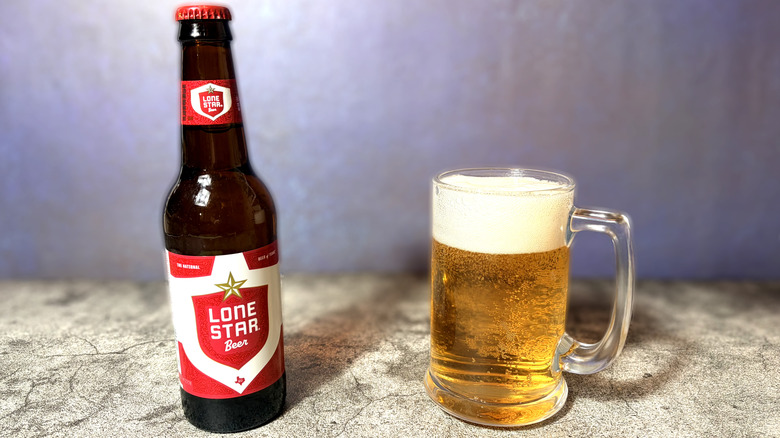
Colloquially called "the national beer of Texas," Lone Star beer has been around for a long time, though it's gone through many changes over the last century and a half. The beer as we know it today came about post-Prohibition, and is now part of the Pabst beer empire, though it's still produced in Texas — first San Antonio, then Fort Worth, and as of 2025, Houston. An adjunct American lager made with corn extract, it has a typically classic flavor profile with lightly sweet grain aromas and a malty palate, with a subtle bitterness that fades quickly into a clean finish.
There's a fruity component to this beer that sets it apart from many of the others here. The finish is almost like biting into a fresh, tart apple and it becomes citrusy as it lingers. I enjoy the interesting flavors that Lone Star expresses, but they don't quite coalesce for me. The mouthfeel is a tad too viscous for the mellow carbonation level, leaving me wishing for a crisper, lighter texture. Still, there's a lot to like about this lager.
5. Narragansett Lager
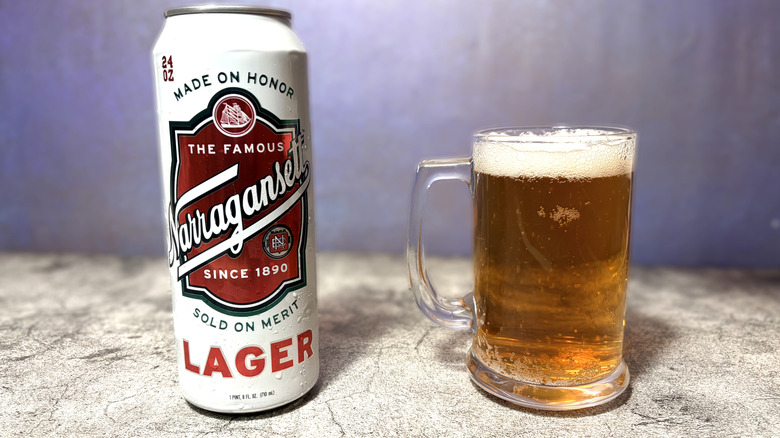
For a basic American adjunct lager, Narragansett has a lot of charm and a wild history. Through Prohibition, relocation, demolition, and recent rebirth (not to mention a cameo in the movie "Jaws"), this beer — familiarly dubbed 'Gansett — is now back where it belongs as a friendly, easy-drinking New England staple. This is the brand's flagship lager, and while it's now brewed under contract in New York, the Narragansett brewpub in the beer's original home state of Rhode Island produces the brand's seasonal and experimental offerings. It's the classic lager, though, that's Narragansett's claim to fame.
Everything about a 'Gansett is solid. The nose hints at a subtle pale maltiness, the carbonation is lively but not intense, and a bitter snap cuts through the malty sweetness and then disappears into a refreshing, thirst-quenching finish. There's enough flavor to keep it from being boring, enough liveliness to keep it from feeling flat, and no odd textures or strange flavors. This is a well-balanced American lager that certainly does the job an American lager is supposed to do, and does it well. You might not think twice about this beer after drinking it, but you don't need to think twice about cracking open a can, either.
4. Pabst Blue Ribbon Beer
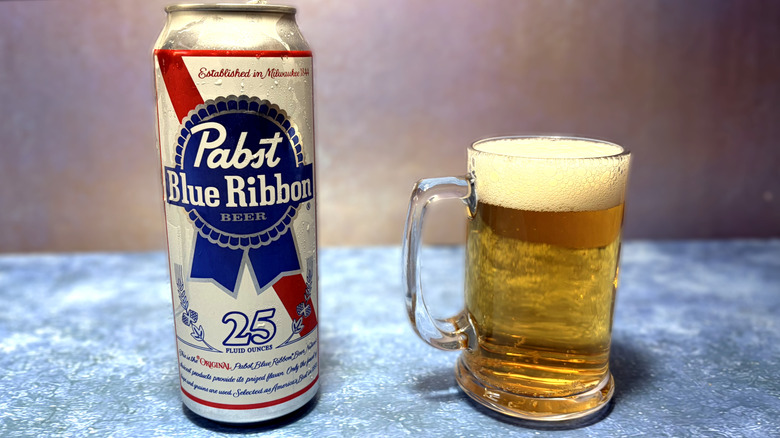
I'm a longtime fan of PBR, which has historically been my favorite beer to get at sports bars while watching my teams crash and burn (I usually root for underdogs and it doesn't often go well). Pabst Blue Ribbon has been there for me through crushing overtime losses, infuriatingly foolish draft picks, and even the rare upset victory. That is to say, I have an emotional attachment to this beer, which may influence its fairly high ranking, but I also find it to be a truly enjoyable macrobrewed lager.
Toasty sweet cereal grain dominates the aromatic profile, and though it's mellow, your nose doesn't have to search for it. That grainy, malty flavor provides a solid backbone, holding up fresh, crisp, bright flavors tinged with a faint hoppy bitterness. There's vibrance and balance to a PBR. This is a confident beer. It knows what it is and what it's for, and doesn't try to be anything else. While I don't reach for this beer daily, I look forward to leaning on Pabst as my emotional support lager during every future sporting event, doomed or otherwise.
3. Montucky Cold Snacks
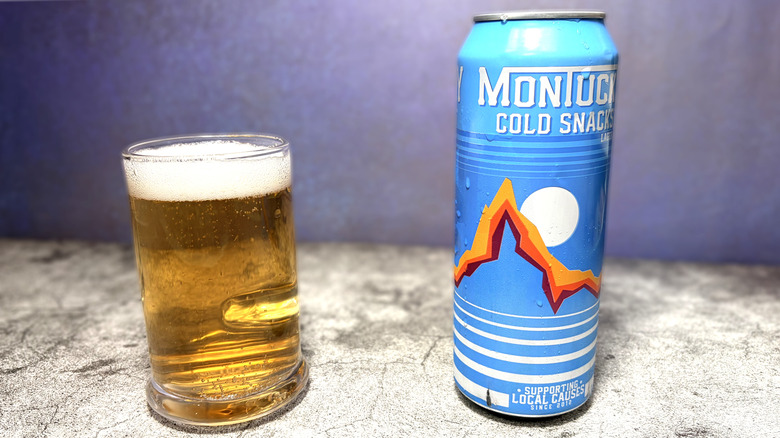
I'd never tried Montucky Cold Snacks until recently, and initially, I was unimpressed. Sure, it's light and refreshing and crisp, but is there anything to it? The more I tasted it, though, the more it lingered in my mind, and I found myself craving it. Whether at the end of a long workday, just getting home from the gym, or after a long hike, nothing sounds better to me now than an ice cold Montucky. When I drink one of these in a situation like that, I feel like I'm in a beer commercial, and I mean that in a positive way.
Montucky Cold Snacks has the lowest ABV of all the lagers on this list, at just over 4%, and one of the lowest bitterness levels. Because everything structural, flavor-wise, and aromatic is in perfect balance, the lightness, ease, and simplicity of this beer gives off an aura of harmony rather than flatness or boredom. This is the epitome of a crushable American lager. I'm not going to want one of these every time I'm in the mood for a beer, but in the right situations, it's the perfect option.
2. Brooklyn Brewery Brooklyn Lager
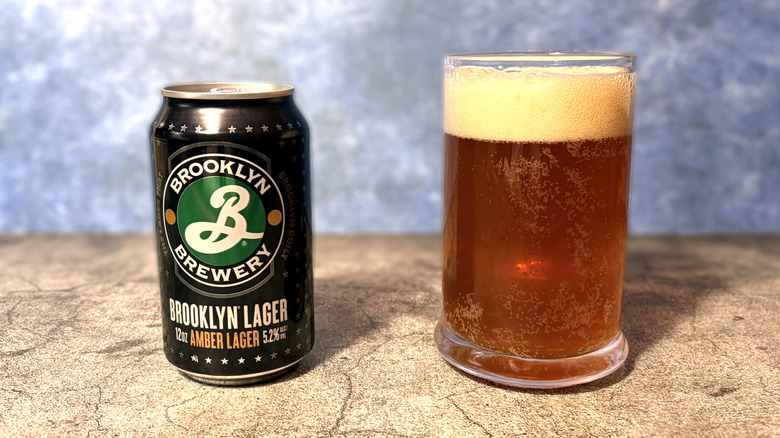
Of the Vienna-style lagers, there's one clear winner, and it's Brooklyn Lager from Brooklyn Brewery based in — you guessed it — Brooklyn, New York (although, like most of these beers, much of it is brewed in facilities located elsewhere). This lager boasts the most intense aromas and strongest flavors of any lager in this ranking, together with the highest bitterness, clocking in at 33 IBUs. While it's a bit like comparing apples and oranges to put this beer up against the pale malt and adjunct lager styles, which aren't meant to have this much flavor, judging this beer purely on its own merits earns it a solid second-place finish.
Brooklyn Lager achieves a malt-hop balance that I found elusive in Sam Adams, which seemed to pit the two flavors against each other. Here, they work in tandem, with a beer that starts out roasted, fruity, and sweet before the assertive carbonation and integrated dry-hopped bitterness take those flavors on a ride. There's a lot of complexity to appreciate here, but it's also very drinkable. For lager fans looking for something with more depth and punch, Brooklyn is the way to go.
1. Hamm's Beer
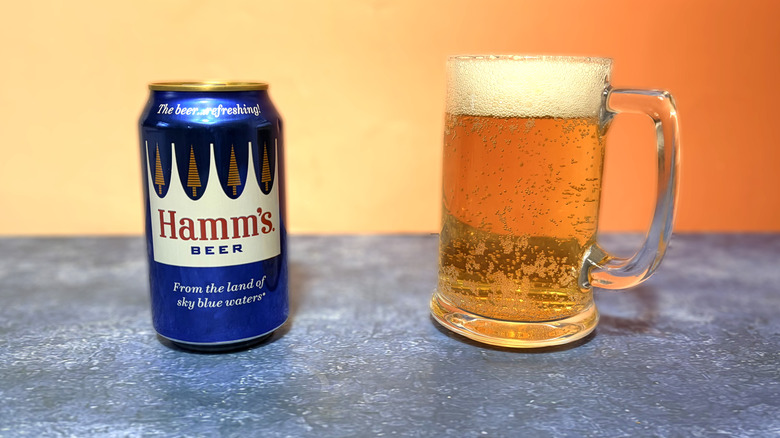
If aliens landed on Earth and wanted to have the quintessential American lager experience, I wouldn't think twice before giving them a Hamm's. Yes, it's a bummer that this brand is owned by Molson Coors and is no longer brewed in its birthplace of St. Paul, Minnesota, "the land of sky blue waters." Such is the way of the modern beer world, however, and despite all of these caveats, which are sure to give craft beer purists pause, this beer hits in a way that none of the other American lagers in this tasting quite do. This beer is an old-school favorite from the 1970s for good reason.
Hamm's checks every box when it comes to this style. It's light, mild, crisp, and refreshing. Every sip is impeccably balanced. There's enough pale malt presence and body to give it a textured mouthfeel, but it's not so dense that it comes off as syrupy or sweet. Hamm's is crushable, but you're not drinking it quickly just to get rid of it. Crushing it is a legitimately enjoyable experience. When I found myself looking at all of the beers in this lineup side by side, Hamm's was the one I reached for again first.
Methodology
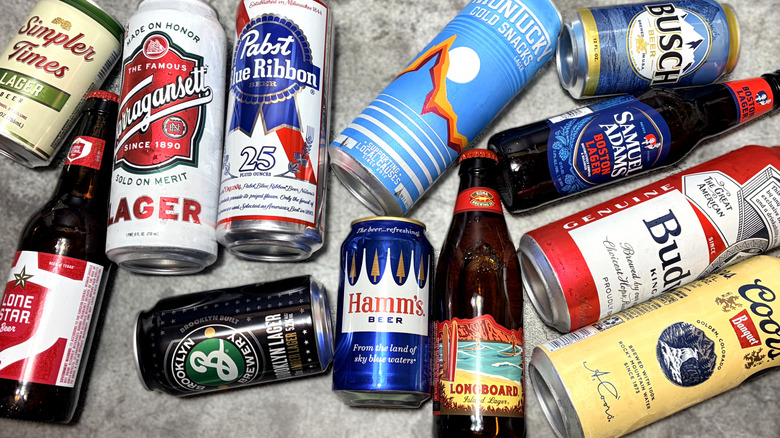
I'm a certified beer server through the Cicerone Certification Program and a sommelier with decades of experience as a bartender and bar manager. For this ranking, I attempted to include as many American lagers as I could that are widely available near me in northern California, as well as across the country. To further narrow down the selections, I omitted any light, low-calorie, gluten-free, or alcohol-free beers.
I kept each beer in my beverage cooler, at a maximum of 41 degrees Fahrenheit, opened right out of the fridge, and poured into a room temperature glass beer mug. I noted down each beer's appearance, aromas, flavors, and palate structure using my standard beer tasting grid. Comparing each lager to the guidelines laid out by the Beer Judge Certification Program and Brewers Association, I judged each beer based on how well it represents the American lager style: A mild, neutral flavor with low or no hoppiness, light bodied, well carbonated, balanced, crisp, and clean with no off-flavors. Keeping in mind what people find unappealing about American beers, I ranked them all accordingly.