

12 Store-Bought Mexican Lagers, Ranked
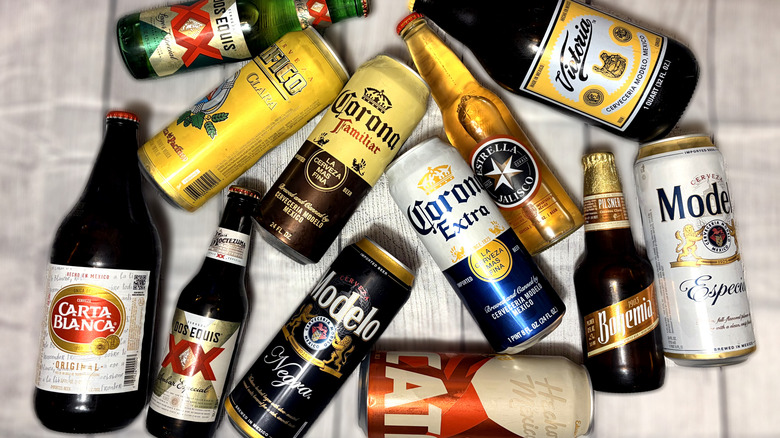
Mexico is a powerhouse in the global beer industry. The fourth largest producer by volume, the country is number one when it comes to exports. That's largely due to the friendly style of its most popular major brands: The Mexican lager. Crisp, mild, refreshing, low in alcohol, and easy to drink, this is the kind of beer that goes with any occasion and can please just about every palate. While most brands stick with pale pilsner-type beers, some brew variations that emulate amber or dark styles like the Vienna lager or German dunkel.
Mexican lagers of all kinds have become so popular that breweries all over the world are producing their own versions — you'll find Mexican-style lagers from just about everywhere these days, made by craft brewers as well as large industrial macro-breweries. The explosion of this style's popularity led me to wonder which of the classic Mexican lagers, actually produced in Mexico, is actually the best? Putting my cicerone and sommelier skills to the test, I tasted 12 of the country's most popular exports side-by-side to determine which cervezas deserve a spot in your cooler.
12. Victoria
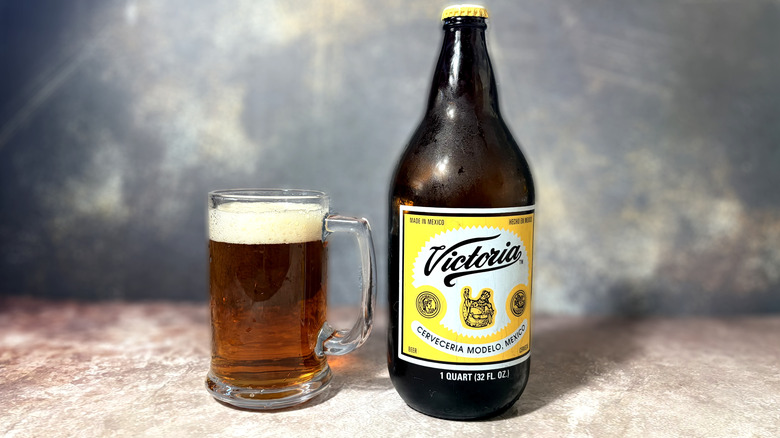
Victoria is regarded as the first Mexican lager, originally brewed in 1865 in Toluca. It's made in the style of a Vienna lager, which is amber in color and typically boasts roasted and sweet malty flavors. This beer definitely has that profile, so I can't fault it for being true to its blueprint, but of all that I tasted, this beer was the most unbalanced. The mellow toast, honey, and caramel aromas were pleasant enough, especially for someone like myself, who's a big fan of darker, maltier brews. It was the palate that dropped this beer at the bottom of the pack.
The Victoria I tried was from a 32-oz glass bottle. As with all of the beers tasted here, I poured this into a 12-oz room temperature glass, tasted, and took down my notes immediately. Perhaps the flavor and structure of this beer fare better out of a smaller bottle or a can, but for me, there was almost no carbonation present, which gave this beer a rather watery mouthfeel. A coppery metallic flavor showed up on the finish, along with a lingering sensation that reminded me of a peaty Scotch whisky, which made me reticent to take another sip. A Mexican lager of any shade should be crisp, thirst-quenching, and easy-drinking; Victoria, unfortunately, was none of those things.
11. Carta Blanca
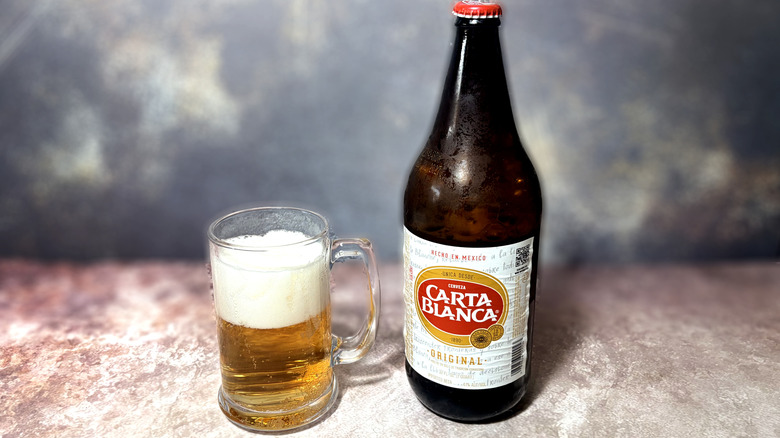
Carta Blanca was another Mexican lager that I poured out of a 32-oz bottle, and while it showed up to the party with a bit more verve than the Victoria, its carbonation dissipated shockingly quickly. As I drank this beer, I was reminded of some of the cask ales I've had in Britain, which get their carbonation through a natural fermentation process rather than being artificially injected with carbon dioxide. Those ales tend to have a much softer, smoother texture than those made with forced carbonation, but they still have some liveliness to them. This Carta Blanca, on the other hand, just seemed tired.
I have nothing bad to say about this beer's flavors and aromas, which were simple and pleasant enough, mainly lying in the corn husk and cereal grain realm. There was a subtle hit of citrus on the finish that I quite enjoyed, but would have liked much more if the beer had more carbonation to really make that crisp flavor pop. There's some good stuff going on that you can pick out in a glass of Carta Blanca, but it just doesn't come together.
10. Dos Equis Lager Especial
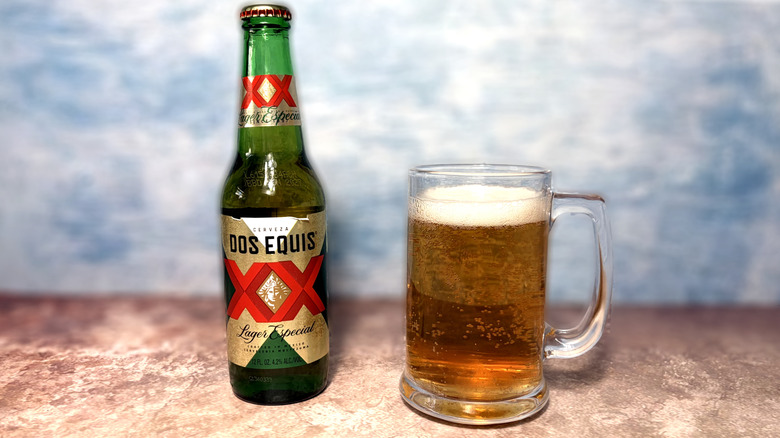
I've had a lot of Dos Equis Lager Especial in my life, but it's been a while since I've revisited this beer. I couldn't really remember anything about it. That makes a lot of sense now that I've tasted it again, because it's supremely unmemorable. After pouring it from a 12-oz bottle, I stuck my nose in the glass and left it there for a full minute, and could still barely detect a single specific aroma. Tasting it, there was a very light touch of sweet malt that came through, but that was about it.
A pale Mexican lager is not meant to be complex or particularly flavorful, but I do expect it to give me something. When I closed my eyes and took a sip of this Dos Equis, I could almost convince myself I was drinking soda water. What saved this beer from a lower ranking was its carbonation, which was pleasantly strong, giving it a crisp and refreshing mouthfeel. This is arguably the most crushable beer in the lineup, but it's also one of the most boring. If you're feeling creative, you could add some fun flavoring enhancements to this beer to make it more interesting, but personally, I'd rather just go with a more flavorful beer.
9. Tecate Original
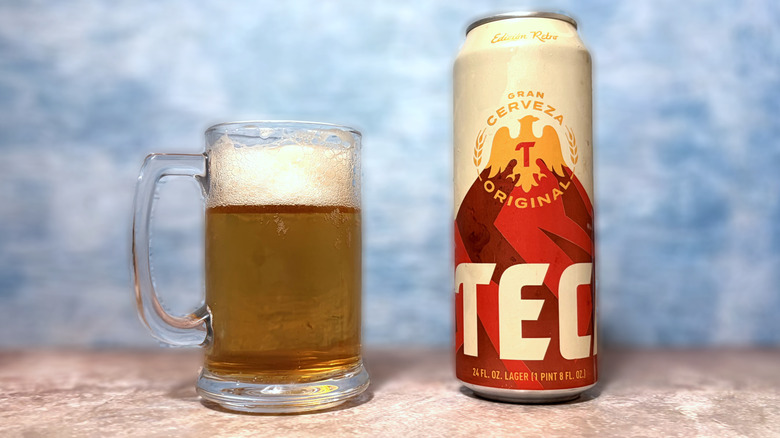
Tecate was my beer of choice for much of the early 2000s, mainly because it was cheap, easy to find, easy to drink, and the cans were perfect for sipping while sitting around a pool or taking to the beach. Revisiting this beer, which I poured from a 24-oz can, was a fascinating personal experience for me in terms of memory and palate evolution. I had absolutely no idea how incredibly sweet this beer is, despite having had it regularly over a period of years, but tasting it now, it was nearly overwhelming.
Structure-wise, the carbonation here was almost strong enough to balance out that molasses-like maltiness, but it finished just shy of the crispness level I was hoping for. There was no inkling of any bitterness, which is totally fine for this style, but in this case I felt it could use a bit of hoppy oomph to balance the sweetness a little. I'll still hold a soft place in my heart for Tecate Original, which kept me lightly and affordably buzzed during my broke college years, but I don't think I'll be stocking my fridge with it anytime soon.
8. Corona Extra
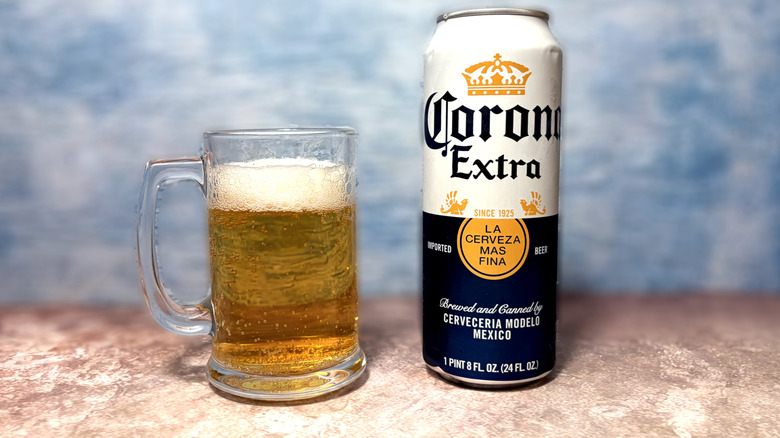
I've never been a particular fan of Corona Extra. In my experience, as with most beers that come in clear or green bottles, Corona tends to lean towards skunkiness, which is a common beer flaw caused by exposure to sunlight, resulting in an off-flavor and aroma. This may have been my first time drinking this beer out of a can, as far as I can remember, and I have to say it was a much more enjoyable experience.
Mellow and pleasant aromas of sweet grain and corn tortilla wafted out of the glass as I poured it from a 24-oz can. It smelled very clean, with no skunk odors to be found. Corona Extra is a simple porch-pounder — light in body, lightly sweet, and barely bitter. It had just a little bit more going on than the Dos Equis Lager Especial, but I'd put them in a similar column. If you're looking for a beer you don't have to think about at all, Corona Extra will do the trick. I'd recommend you reach for a can instead of a bottle.
7. Dos Equis Ambar Especial
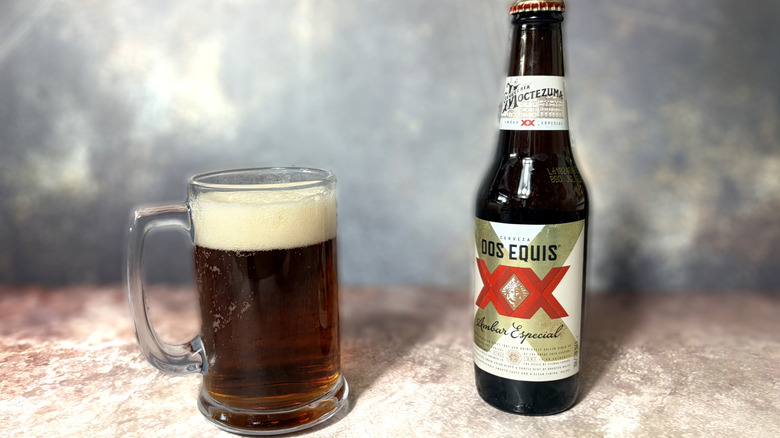
Dos Equis Ambar Especial is another Vienna-style lager, similar to Victoria. The use of roasted malts gives it its signature amber color and deeper, sweeter flavors than the Dos Equis pale lager. While I found that beer fairly flavorless, the Ambar had a lot more going on, although that was admittedly a very low bar to clear. I poured this from a 12-oz bottle. The aromas were much easier to pick up on than the pale lager, with whiffs of caramel and bread crust that were subdued but inviting.
The palate ended up being quite a bit drier than I expected from the nose, with strong carbonation and a lightly bitter finish working together to balance out the malty sweetness. The flavors were fairly muted, and the mouthfeel was rather thin, making this beer refreshing and easy to drink, but there wasn't much dimension to it. There was nothing offensive about it, but nothing too thrilling, either. Still, it's an enjoyable brew.
6. Corona Familiar
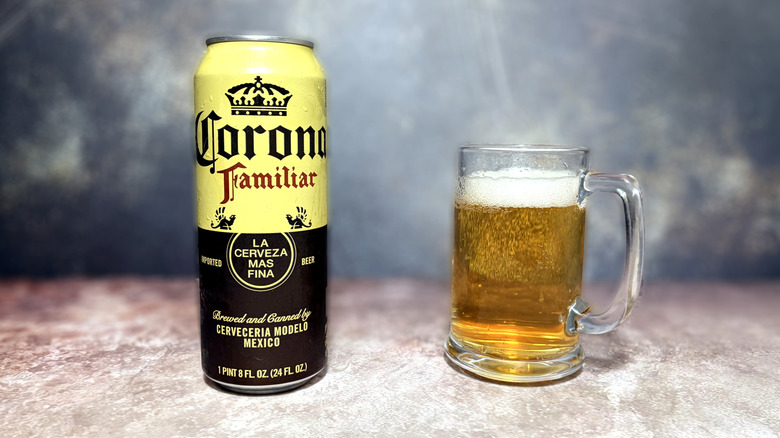
Corona Familiar is like Corona Extra's sibling who's a little bit more serious and grounded. The beers are very similar, but every element is turned up just a scootch higher in this version. There's an urban legend that says the two beers are exactly the same, and any differences come from the bottle — Extra is in clear glass, while Familiar comes in a dark bottle. This is patently untrue, as I tried both from 24-oz cans and there are notable differences (not to mention, the listed alcohol and IBU content is not the same for both beers).
If you enjoy the style of Corona Extra but maybe want something with a bit more to it, Corona Familiar might be the Mexican lager for you. It was just a bit more intense, with more body and a richer mouthfeel, and the grainy flavor was a touch stronger. Like the Extra from the same size can, Corona Familiar finished crisp and clean, and no hint of skunk or any other faulty note. It's not the most exciting beer on this list, but it is definitely the superior Corona.
5. Estrella Jalisco
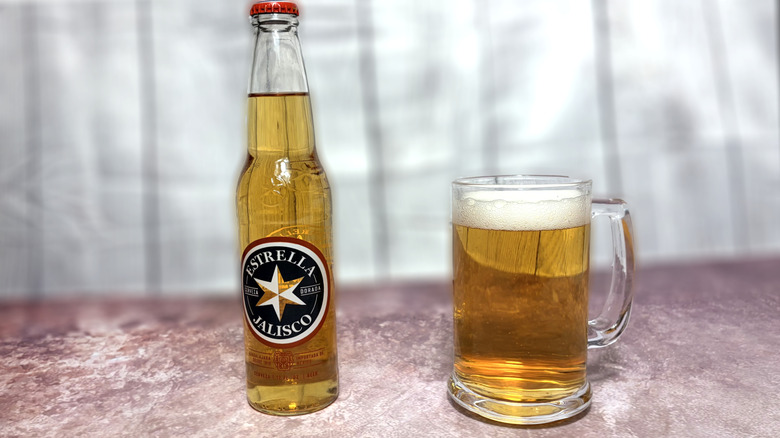
Estrella Jalisco has only been imported to the United States since 2016, so it doesn't quite have the juggernaut status of your Coronas or your Modelos. When it comes to quality, though, it definitely deserves a bigger fanbase. For a pale lager, this beer had a surprising amount of depth and body, but didn't feel overworked or heavy. There was a bit of yeastiness on the nose that I didn't find in any of the other beers of this style, which brought to mind Champagne in a fleeting but welcome way, along with a grassy aroma that gave it a fresh character right off the bat.
On the palate, this beer presented a few issues. Poured from a 12-oz bottle, its foam receded quickly, and the beer seemed to lack carbonation. This led to a syrupy sensation that was smooth but flat, and a little too round. I wanted a crisper finish, which more intense carbonation could have helped with. Even with these minor speed bumps, Estrella Jalisco was enjoyable enough that I wouldn't hesitate to reach for it again.
4. Modelo Especial
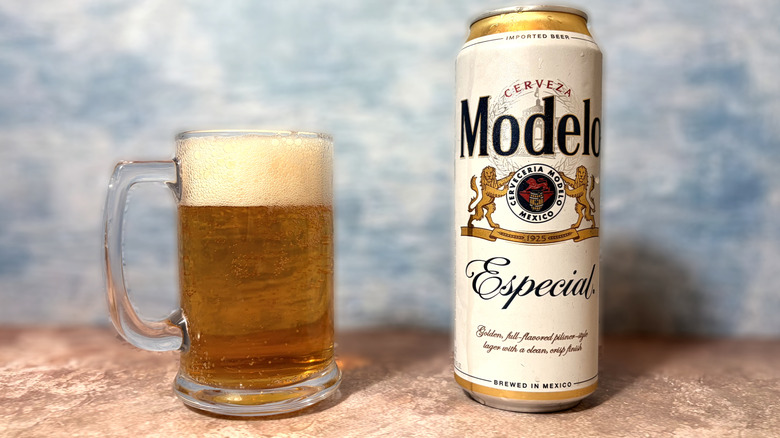
For a basic pale Mexican lager, Modelo Especial delivers exactly what it needs to and a little bit more. It's hard to describe exactly what made this better than the other versions of this particular style on this list, but it had a cohesiveness that most of the others lacked, along with an intriguing interplay of elements that made my palate crave another sip. While there are plenty of pale Mexican lagers that taste fine and are easy to drink, Modelo Especial takes it a notch further.
This lager had a stronger bitter component than most of the others, which isn't a hallmark of the style, but with this particular brew it worked. Modelo Especial has managed to create a beer that was crisp and fresh, yet with depth of flavor, with grassy high notes and malty low notes that see-sawed along my palate with every sip. Some Mexican lager fans might bump against the bitterness, which isn't everyone's cup of tea and seemed to build with every sip, but I found it to be mellow enough that it added a welcome dimension without compromising the beer's core style.
3. Pacifico Clara
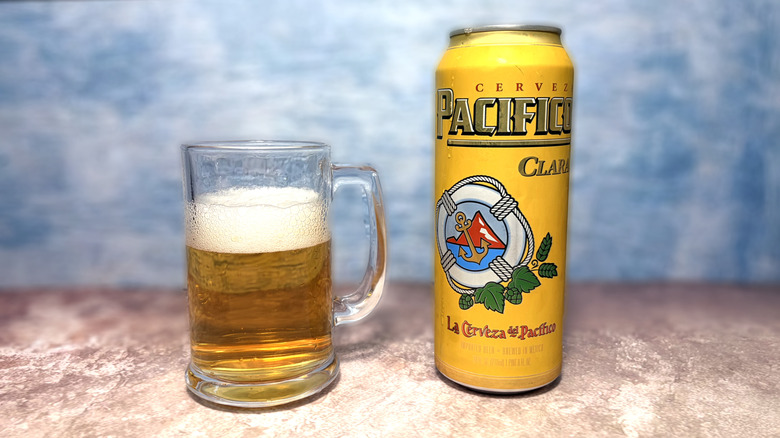
There's a taqueria in my neighborhood that I've been going to for decades. I don't get beer there often, because I'm usually getting food to go, but on the rare occasions that I dine in, I'll get a couple of tacos and a bottle of Pacifico. Ground beef, pollo, carne asada, carnitas, fish — whichever tacos you order, Pacifico Clara is always the right accompaniment. It's hard to pinpoint exactly why. It's light but not too light, fizzy but not too fizzy. It's got a little bit of everything, but it's not too anything.
I poured Pacifico Clara from a 24-oz can, which was a new experience for me, as I'm used to drinking it out of 12-oz bottles. It had a bright fruitiness that I'd never noticed before, which I could only describe as a combination of fresh corn kernels and underripe strawberry with a hint of tart citrus. The foam crown seemed to last forever, adding a nice dimension to each sip, and the crisp lemony finish balanced the beer without the need for any hoppy bitterness. Of all the light and crisp Mexican lagers, Pacifico stood out thanks to its bright and lively character. There were two other beers I tried that edged it out with more flavor and dimension, but this is the go-to on a hot day with a plate of tacos. As a bonus, once you finish the can, you have a handy makeshift taco holder.
2. Modelo Negra
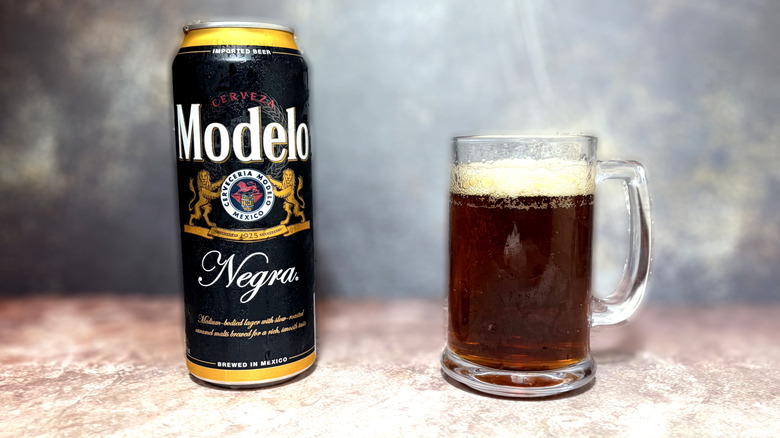
I'm a long-time fan of Modelo Negra, and it's hard for me to relegate it to second place. Choices must be made, however, and I told myself I wouldn't let my personal biases affect these rankings, so here we are. This beer is awesome, and if you're looking for a dark Mexican lager, it's hands-down the one you should grab.
I poured Modelo Negra from a 24-oz can. Deep amber in color, almost mahogany, with honey and molasses on the nose, burnt caramel and toasted bread on the palate, slightly sweet but with balancing bitterness and carbonation — this was a textbook example of a dark lager. As I sipped it, the flavors and structural elements built upon themselves to make every experience new and exponentially more exciting. The only thing keeping this beer out of first place was a thick, syrupy sensation that lingered after each sip. I have no problem with that when it's called for in a richer style of beer, but it seems out of place in a Mexican lager. A little bit more carbonation could help. Regardless, this beer is pretty close to perfect.
1. Bohemia
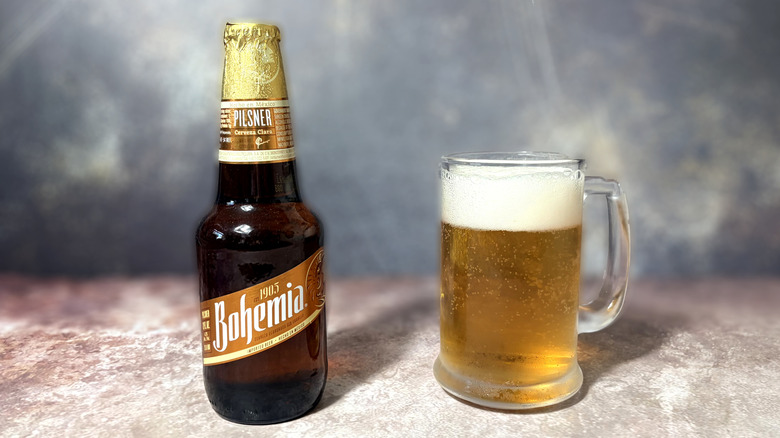
Bohemia, which is based on a Czech-style pilsner, took me completely by surprise. After tasting all of the other pale lagers, I kept coming back to this one, and it won the head-to-head match every single time. The biggest difference was the notable presence of hops in this beer, which was faint or absent in all of the others. I'm not a hop-head, and Mexican pale lagers aren't required to exhibit any hoppiness, but once I noticed it in the Bohemia, it made the other beers feel one-dimensional. If you're used to drinking hop-heavy IPAs, this lager's bitterness will obviously not hit on the same level, but it's the perfect subtle amount for this style.
I poured Bohemia from a 12-oz bottle. It was one of the only beers that showed lacing on the glass, likely due to its higher hop content, and its head stayed thick and foamy for a surprisingly long time. The aromatics here were bright and sweet, with a background of light cereal grain and a hint of grassiness. Each sip started with a bright, fruity note, mainly citrus and apple, before moving on to a malty mid-palate that made this lager feel more hefty and substantive than most of its counterparts. It was still light and easily drinkable, though, thanks to its robust carbonation and slightly bitter, herbal, and floral hop finish. Bohemia manages to elevate the Mexican lager style without losing its essence, providing a beautifully balanced and satisfying experience.
Methodology
As a bartender and beverage manager, I've tasted more than my fair share of beer over the years. Like everyone, I have my own preferences and particular palate, but for this exercise I put my subjectivity aside as much as possible to rank these lagers without bias. I'm also a sommelier with a first-level cicerone certification, and I put my knowledge and tasting skills to use when assessing this lineup.
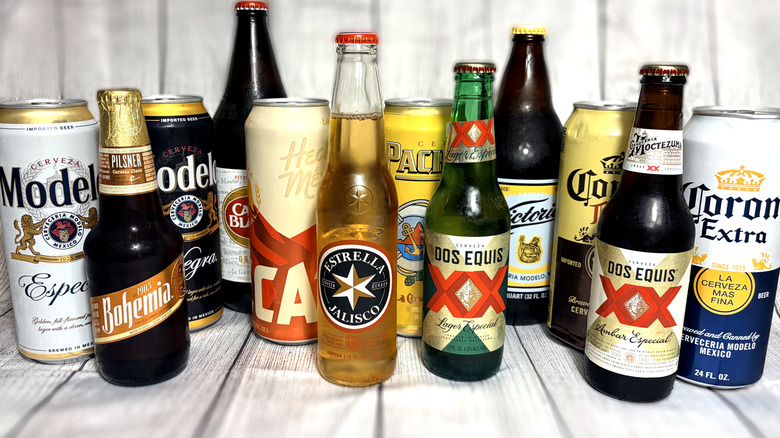
To select these Mexican lagers, I shopped around my local beverage stores to find out which brands were the most popular and widely available, and purchased them in whichever format was most convenient — single can, large-format bottle, or six-pack of 12-oz bottles. I kept each beer refrigerated in my beverage cooler at 41 degrees Fahrenheit, right up until opening it. Then I went through a classic tasting grid for each beer, assessing it visually (color, clarity, and foam), aromatically, and structurally (body, bitterness, sweetness, and carbonation), and noted down its flavors and balance. I also looked at official beer style guidelines from the Brewers Association and the Beer Judge Certification Program to see how well each beer exemplified its style.