
11 Old-School Beers That Defined The '70s
We may receive a commission on purchases made from links.
Beer is one of the oldest beverages known to humanity. The earliest definitive proof of its production dates back 6,000 years, during the very first writing cultures. But archaeological evidence suggests that even prehistoric humans enjoyed a fermented, beer-like beverage thousands of years before that. It's been a long journey from ancient clay pots in Chinese caves to a 12-pack of cold cans at 7-Eleven.
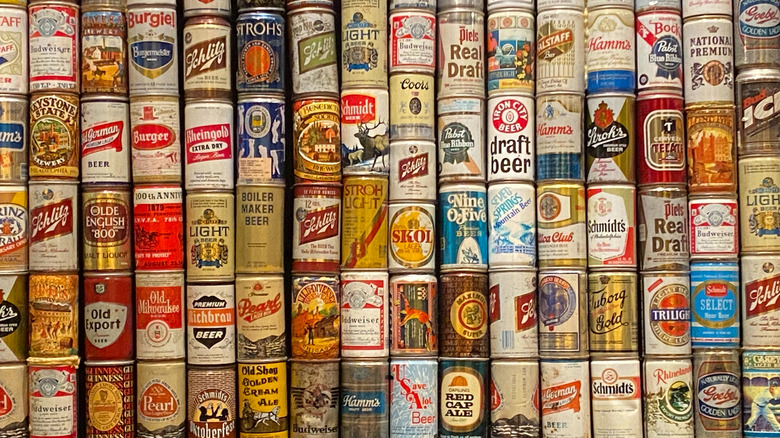
But for beer as we know it today, the 1970s were one of the most historically important decades. With bottles and cans already established, beer had become an ingrained part of the American experience. But brewery closures and consolidations throughout the decade began to replace the local patchwork landscape with now-familiar mass market beers, both of which came to define the era.
Prominent '70s beers, of course, include some major national brands that are still around today, in part because they bought out smaller, struggling brands at this pivotal time. But acquisitions were no guarantee of long-term success, as one prominent brewer that relied on this strategy was itself acquired by a rival decades later. Some of these beers were discontinued by consolidation; a few were revived, and one purchased recipe single-handedly changed beer forever.
Stroh's

Stroh's was a popular Detroit-based beer for generations of Midwestern drinkers. But by 1978, it grew to become one of America's top 10 beers, thanks in part to its humorous advertising campaigns. But business mistakes in the 1980s, chief among them a failure to market a successful light beer, led to Stroh's selling all of its remaining breweries and beer brands to Pabst in 1999. While Pabst did revive the original brand in 2022, its Midwest-only availability is a shadow of what this beer once was.
Miller Lite
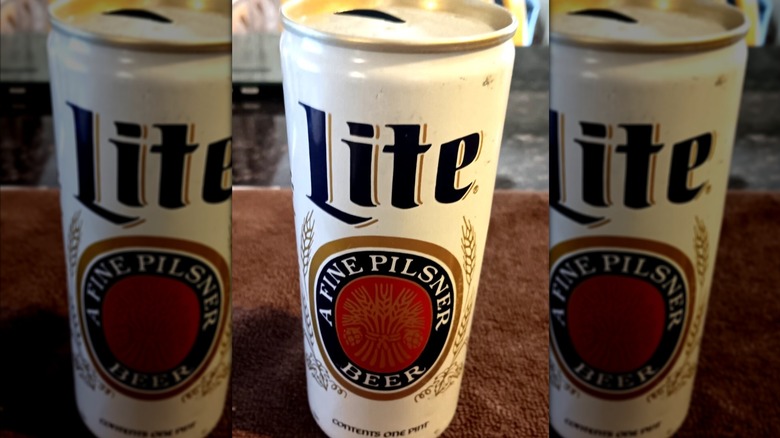
Today, Miller Light is just another light beer, but in 1975, it was the world's first commercially successful mass-market light beer. Based on an earlier recipe Miller purchased from a small brewery, within two years of its launch, Miller Lite alone accounted for 10% of domestic beer sales. This rapid consumer adoption permanently changed the global beer industry, and in America, light beer now accounts for nearly half of all beer sales.
Falls City
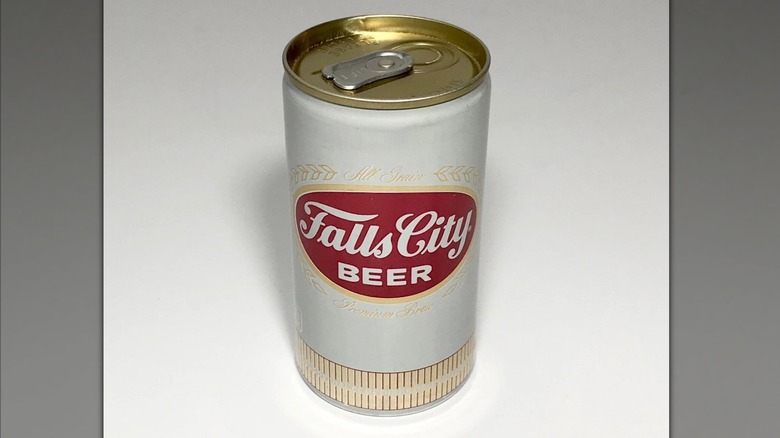
Falls City was once an icon of Louisville and well-known in the greater Kentucky area. The Falls City Brewery brewed several beers, including its eponymous lager, but by the 1970s, TV ads from giant beer companies like Anheuser-Busch strained the entire regional industry. Eventually, Falls City was Louisville's last brewery within city limits, and after the failure of a gimmicky new product (more on that later), it closed in 1978. The brand was locally revived in 2010, but by a different company with a different formula.
Billy Beer
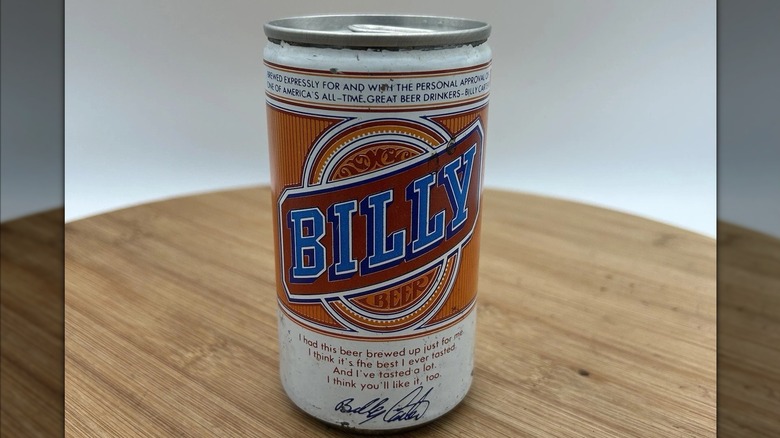
Billy Beer got its name from Billy Carter, the folksy, beer-drinking, and somewhat buffoonish older brother of the young and exciting new President, Jimmy Carter. Billy authorized the use of his name and likeness for the struggling Falls City Brewery, and the beer launched in November 1977. However, between its middling taste and President Carter's declining popularity, Billy Beer did not last very long. It may still be a cultural touchstone, but this is one of many discontinued beers we're definitely not getting back.
Budweiser
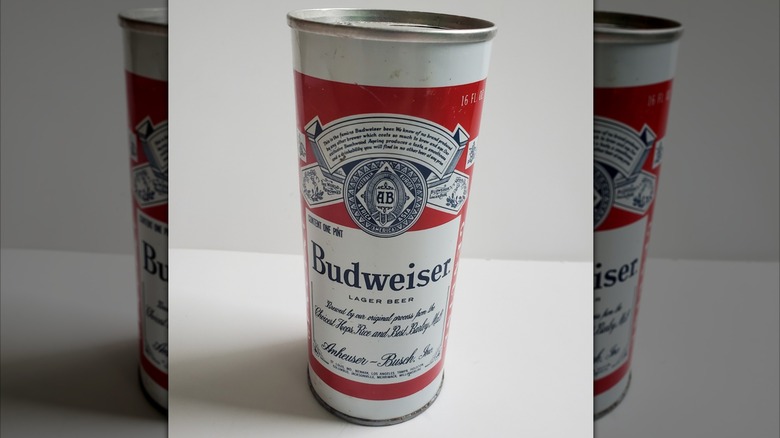
It may seem like a cop out to include perhaps the world's most recognizable beer in a rundown of iconic '70s beers, but Budweiser was an inescapable fact of the era. It was a best-seller for the entire decade, including being the most popular beer of 1977. And it was also during these years that Budweiser began to develop an ongoing reputation for catchy TV ads, including its famous 1971 "Here Comes the King" jingle, which is still occasionally used.
National Bohemian Beer
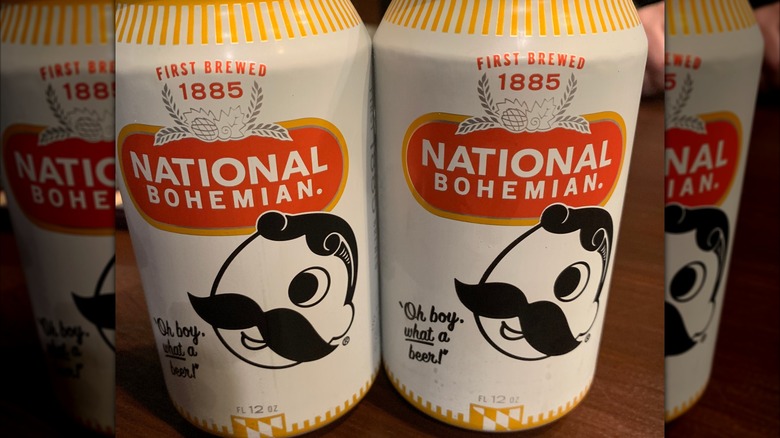
National Bohemian, affectionately nicknamed Natty Boh, was founded in the city of Baltimore in 1885. It became a regional icon thanks in part to its large brewery in the city providing good jobs and its sponsorship of the Baltimore Orioles. But that prominent plant closed in 1978, ending Natty Boh's nearly century of production in the city. After a series of corporate buyouts, Natty Boh is now owned by San Antonio-based Pabst and brewed in Ohio and Georgia, but it's so iconic that many in Baltimore still consider it a local beer.
Schlitz
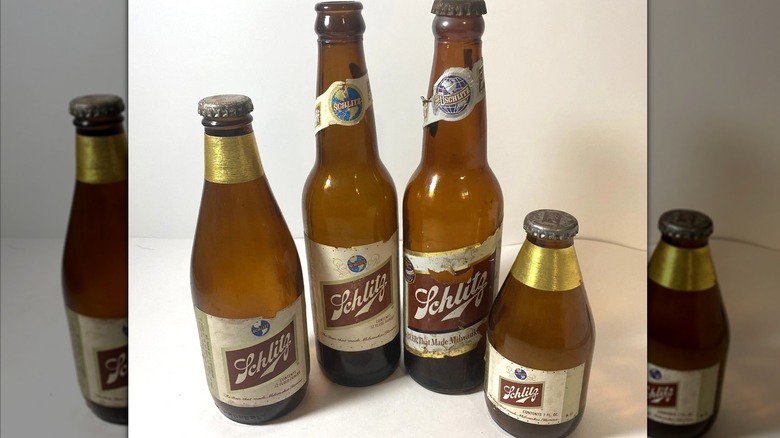
It's not very well-known today, but Schlitz was once one of the nation's most popular beers. In 1962, it played a pivotal role in the history of canned beer as the first nationwide brewer to include an attached pull tab for opening cans, instead of requiring a can opener. Throughout the 1970s, it battled Budweiser for the title of America's top-selling beer, but declining sales and an ill-fated recipe change led to the company's demise in 1982. Schlitz was eventually revived by Pabst in 2008, but will be discontinued again after June 2026.
Goebel
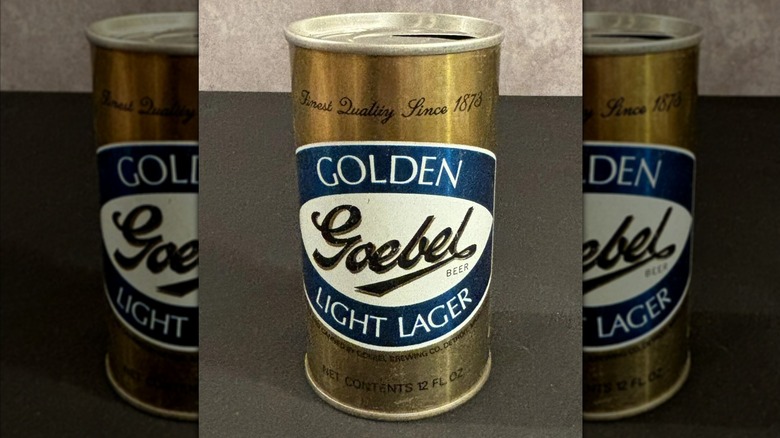
Goebel was a well-known cheap beer in the 1970s, but that reputation was relatively new at the time. Founded in Detroit in 1873, it was originally sold as a higher-end product until the company was bought by Stroh's in 1964, which did not want to compete with its core brand. The impressive footprint of its new parent company brought budget Goebel to new markets, but the brand's market share slowly faded until it was discontinued by Pabst in 2005.
Pabst Blue Ribbon
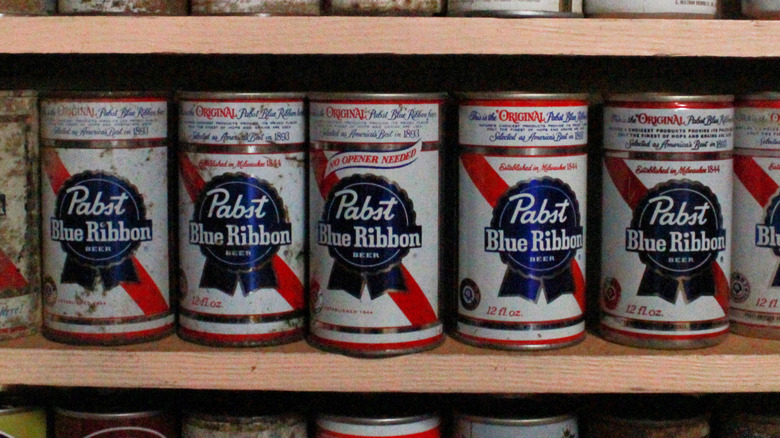
Despite its modern presence, Pabst Blue Ribbon's best sales year was actually back in 1975, with around 10 million barrels that year. Its market share gradually faded in the following decades, until a resurgence in popularity beginning in the 2000s helped give PBR a new lease on life. One of the things you might not know about Pabst Blue Ribbon also helps: The company outsources all actual brewing to Anheuser-Busch InBev (as of 2025), reducing Pabst's overhead as the brand tries to climb back to its 1970s heyday.
Rheingold
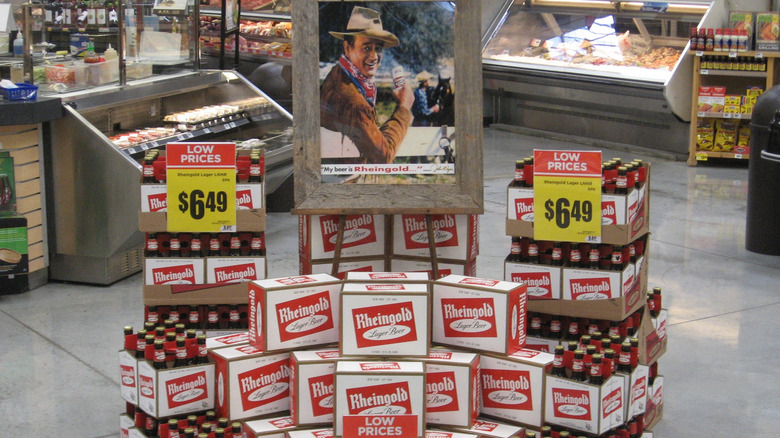
Its prominent Brooklyn brewery made Rheingold strongly associated with New York City's working class since the 1800s. By the 1960s, it became the beer sponsor of the New York Mets, including the team's 1969 World Series win. But it achieved immortality with a prominent appearance in 1972's "The Godfather," where a yellow Rheingold delivery truck is in the background as Sonny Corleone publicly assaults his brother-in-law. It's a pivotal scene for the iconic movie's plot, but it wasn't enough to save the company, which closed in 1978.
Hamm's
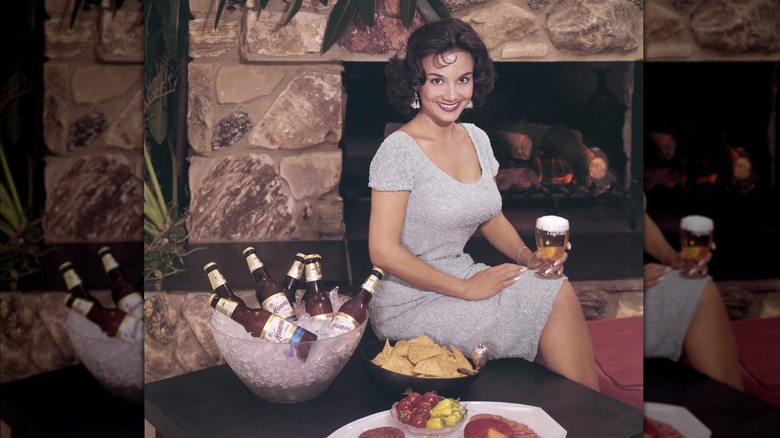
Founded in 1864, Hamm's was a popular, family-owned Minnesota beer until 1968, when the Hamm family sold the company to Stroh's. As a Stroh's brand, Hamm's continued to be a common budget beer in the Midwest, particularly remembered for its "Land of sky blue waters" jingle, but it never achieved national distribution. Hamm's was eventually acquired by Molson Coors, which still sells it in Midwestern markets, where you might find that it's one of the best cheap beers that still hits the spot.