

This Grocery Store Chain Opened In The '60s And Is Still Popular Today
We may receive a commission on purchases made from links.
In the 1960s, Joe Coulombe ran a small chain of struggling convenience stores called Pronto Markets in and around Los Angeles. When he got wind that 7-Eleven had plans to move to the area, he knew he needed to change his strategy. During this time, a greater number of Americans were going to college thanks to increased government spending on education. Coulombe watched this growth of educated Americans, along with lower costs for international travel opening up the world to more Americans, and saw an untapped market. So in 1967, to appeal to this burgeoning class of "overeducated and underpaid people" (as Coulombe told the Los Angeles Times), he converted a Pronto Market in Pasadena into a tiki-themed grocery store called Trader Joe's, stocked with affordable goods from around the world.
Shopping at T.J.'s back then would have been a very different experience. On Facebook, people posted memories of the early days of the store when it had a meat counter. "My Dad was a butcher there," wrote one commenter. A few remembered the meat counter and the friendly butchers working behind making sandwiches. T.J.'s developed a local loyal following, but wasn't a national grocery force, yet.
From the start, Trader Joe's was a place to find obscure imports like dried seaweed at low prices. Trader Joe's role in popularizing brie in the U.S. shows the grocer's uniqueness. Most supermarkets had only cheddar and Swiss because of regulations by the dairy industry. Coulombe saw that brie was unregulated since it came from abroad, and that he could sell it for less than Velveeta. The first store-brand item came in 1972, when T.J.'s began selling a newly popular food called granola. Shoppers began to come for what they couldn't find elsewhere.
TJ's current popularity
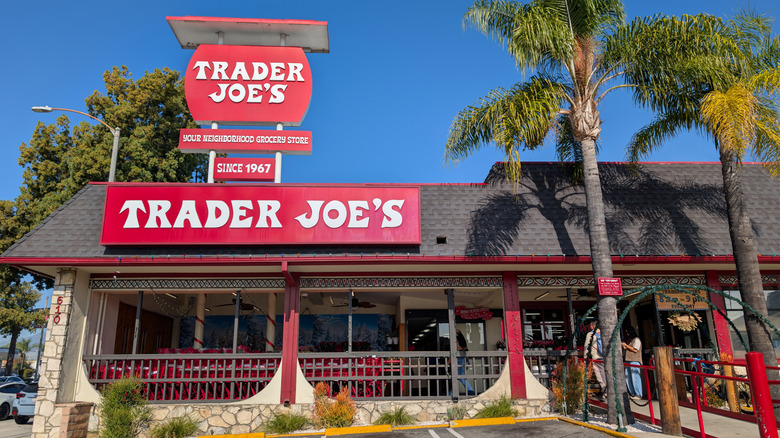
When Theo Albrecht, a member of the German family that owns Aldi, purchased the small chain in 1979, Coulombe stayed on to manage the company as it grew. Trader Joe's has over 650 locations in the U.S. Calling Trader Joe's following a cult is understating its popularity. A simple mini tote bag from the chain has drawn long lines and absurd markups from resellers on eBay. Alaskans, who have no T.J.'s in their state, are known to fly home with suitcases full of Trader Joe's products. As it approaches 60 years in business and the price of food in the U.S. has skyrocketed, shoppers still know the store as the place to go to get healthy and delicious steals. How did Trader Joe's go from a fledgling store with a cult status to the giant it is today?
Julie Averbach, author of "The Art of Trader Joe's," spoke with CNBC about the branding that made the store so successful. Averbach identified three core techniques that grew the chain's following. First is the use of private label products as "affordable luxuries" instead of cheaper alternatives. Second is the enjoyable experience of the store. The space is designed to feel welcoming and encouraging of browsing the wide array of food. (Plus, to add to Averbach's point, many know Trader Joe's for its happy employees, a priority of Joe Coulombe's from the start when he ensured that they were paid a median family income.) Third is the packaging. Treats are sold in boxes that feel giftable, and flavors from around the world are presented front and center. These techniques, with low prices, have made the store the second most known store in the U.S. (according to YouGov), right behind none other than 7-Eleven.