

8 Le Creuset Facts Every Shopper Should Know

Everyone knows the colors of Le Creuset, from the rich spectrum of blues to an array of bold reds and oranges, but the brand offers more than just an aesthetic piece for your kitchen. Le Creuset's enameled-cast cookware dates back to 1925, and since its origin, this French company has expanded its range to include different materials, uses, and accessories. While Dutch ovens are still a big sell, you can buy cast iron pans, teapots, and even salt and pepper shakers for a uniform look. It's clear these items and colors never go out of style. While we can argue about which signature color fits your kitchen's vibe, there is more to know before purchasing your first (or 10th) Le Creuset item.
Sometimes the most useful details are the easiest to overlook. Can that baking dish be used on the stovetop? What does the brand's lifetime warranty actually mean? And are all Le Creuset items made in France? Whether you're shopping for a gift or adding to your cookware collection, here are eight Le Creuset facts every shopper should know.
Le Creuset's colorful history started in France
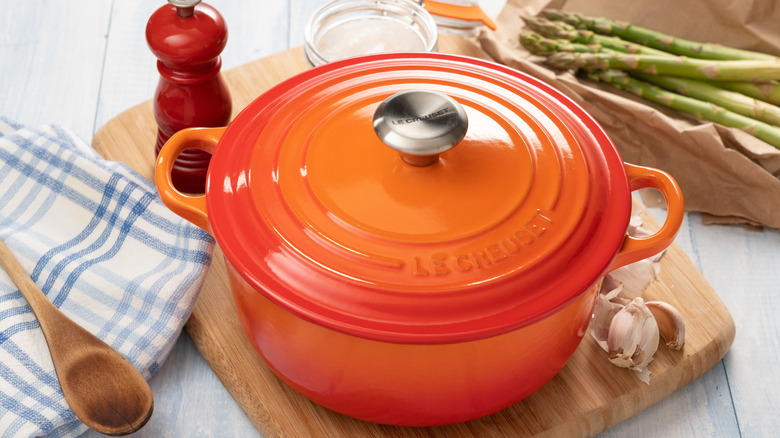
From the name alone, most people know Le Creuset is a French brand, but the term actually means "the crucible" or "the cauldron." The meaning connects to not only how these products are made, but also their overall function when it comes to cooking delicious food.
Founded in northern France in 1925 by two Belgian industrialists, casting specialist Armand Desaegherr and enamel specialist Octave Aubecq had no idea what type of lasting impression they would make in the cookware world. Using their combined knowledge, they were the first to enamel cookware in the way they did, using bright colors to offer a more refined aesthetic. They wanted to create a quality product that not only worked well and lasted over time, but looked good in the kitchen, too.
Their original product was the Cocotte in Volcanique, which paved the way for the brand's iconic Round Dutch Oven. Unlike other Dutch Ovens of the time, this French version had a sleek design from handle to pot, along with a color gradient that stood out from the rest. From this one item, the brand created a variety of products, featuring special editions and new colors for the next 100 years and beyond.
Le Creuset takes color very seriously
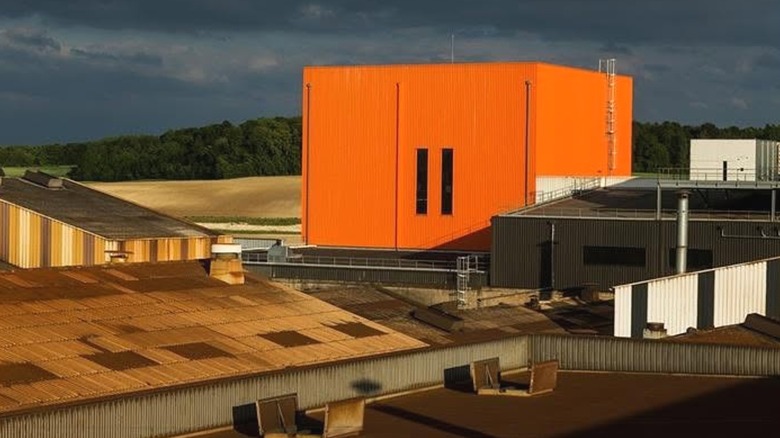
Even if you know nothing about Le Creuset, you've likely seen the brand's iconic bright orange color, Flame. This was the first color the brand created, which was inspired by the orange glow of the molten iron used to make the products. The factory in Fresnoy-le-Grand, France, is painted Flame, too!
While the company has created over 200 colors since the early days of Flame, there are over 60 offerings that you can purchase today — over 33 of which are available in the US. For its 100th anniversary, Le Creuset reimagined the original Flame, creating Flamme Dorée, which translates to 'Golden Flame.'
What's great about Le Creuset is that the company rarely retires colors. The brand knows that customers get attached and plan entire kitchen designs around the cast iron rainbow. To help you find your signature shade, the company offers color palette recommendations via guides and even a color quiz for added fun.
Every piece is different
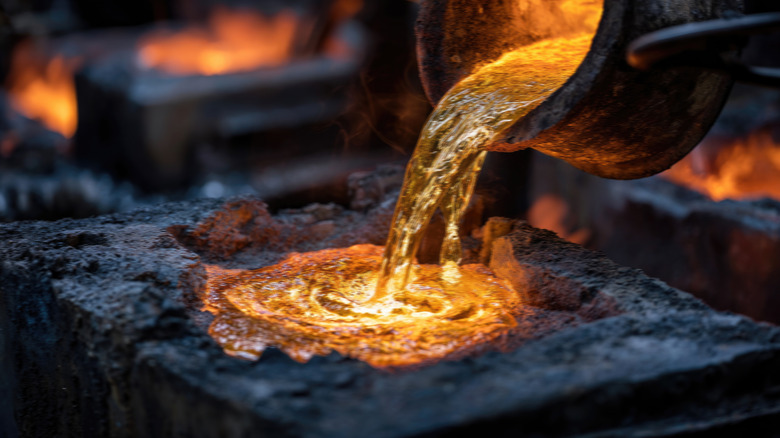
While there are a lot of mass-produced items in today's cookware market, Le Creuset is holding its own when it comes to quality and craftsmanship. Each individual piece is cast from a single-use sand mold, which means every item Le Creuset makes will be a touch different from the rest. The pieces are also inspected by an artisan who knows the product and the legacy well, ensuring everything that comes out of the factory is as close to perfect as possible. Products that aren't up to par are thrown back into the fire and cast again.
The pieces are cleaned, then smoothed — some by hand, some by machine. The entire process can take up to 10 hours with 12 different steps. Three of those hours are dedicated to the color and enameling. On top of the time, there are also the people involved. This isn't some machined assembly line. With all steps considered, it can take up to 15 people to complete the final product. When Le Creuset talks about quality and craftsmanship, they mean it.
The knobs are just as important as the cookware
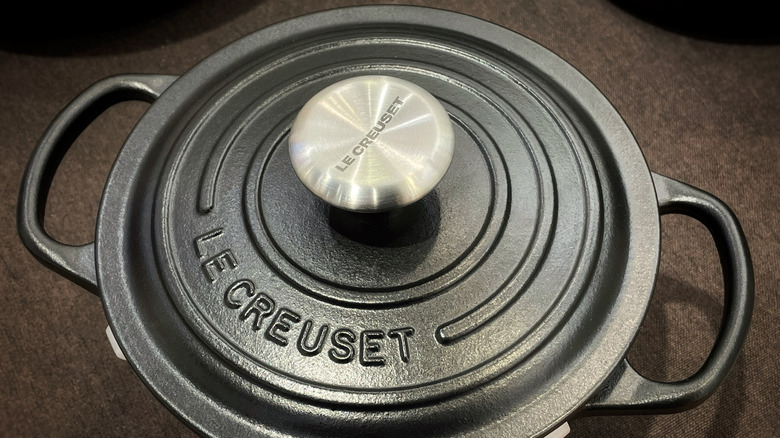
The majority of people looking for a Le Creuset piece to add to their cookware collection are focused on the colors, but there is another important aspect of these iconic items that is often overlooked. Did you know the knobs are just as important as the cookware? While the knobs are also part of the aesthetic, they are an essential part of the cooking process — and it all connects to heat.
The original Phenolic Knob features a classic black coloring and was built to withstand 390 degrees Fahrenheit. But like Le Creuset's product catalog, the knobs evolved and changed over the years, offering choice and range with colors and temperatures.
Today, you can purchase a range of knobs that not only match your style but are safer at higher temperatures. The new knobs are able to withstand up to 500 degrees Fahrenheit, which supports a range of dishes and cooking needs. You can try the Signature Crucible Knobs, which come in brushed and polished stainless steel in a circular design, or stick with a classic Signature Stainless Steel Knob that features the brand's name in offerings such as gold, chrome, and even iridescent. With that said, it's important to know what you intend to cook before purchasing your next piece. Read all of the directions — for your recipes and the cookware.
Not all Le Creuset items are made in France
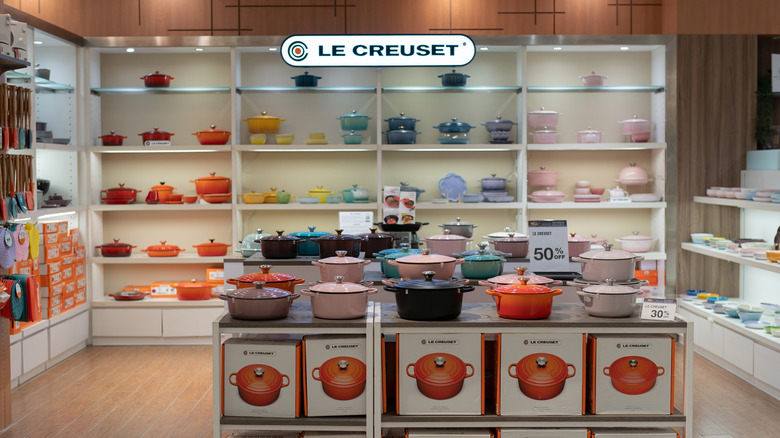
The Le Creuset brand was born in France, and many of the pieces the company sells are still made there today at the original foundry. For example, all enameled cast iron pieces are made in France and nowhere else, but there are a few other products that have different origins.
Outside of France, there are two other locations where you'll find Le Creuset factories. The brand's stainless steel cookware pieces are made in Portugal, crafted by European artisans focused on versatile cookware that looks good, too. However, its toughened nonstick pro cookware is made in China while still upholding the brand's legacy of perfection.
But you don't have to worry about where the products are produced. Every factory reflects the same high quality and is overseen by the leaders of the company. No item gets shipped off without meticulous assessment and approval.
You don't need to season your enameled cast iron pan
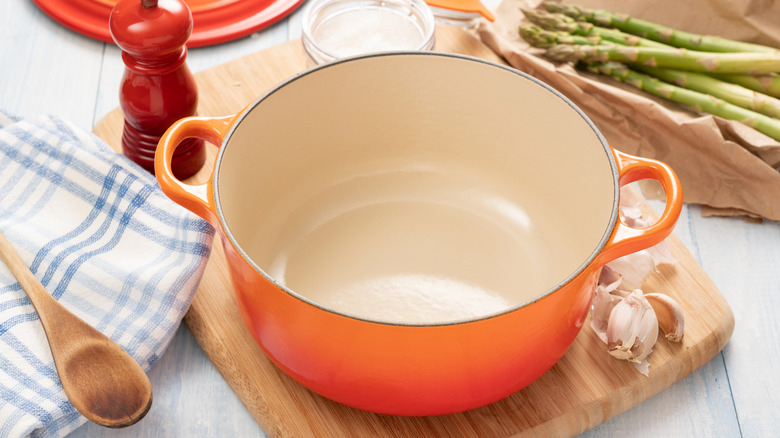
When most people hear "cast iron" in the kitchen, they immediately think about the rules of cast iron cookware, cleaning, and seasoning the pan. But with Le Creuset, that last step is not always necessary. None of the brand's enameled items need seasoning. They are ready to use from the moment you purchase them.
However, just because the enameled items don't require seasoning does not mean they're "nonstick." These cookware pieces are sold as "minimal stick," so be aware of what you're cooking and how. Unlike other materials, these pieces are dishwasher safe, so cleanup is just as easy as prep.
While your enameled cast iron pans don't need to be seasoned, the regular cast iron pans do. This is why it's always important to read the directions with each purchase and speak with customer support if you're ever unsure.
The lifetime warranty has limits
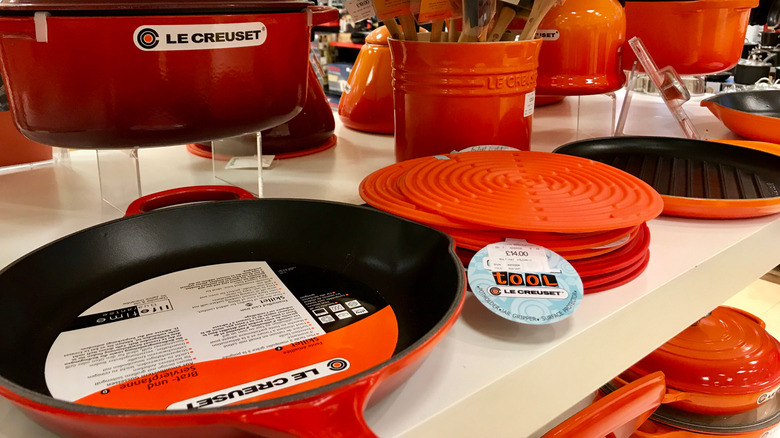
Not every Le Creuset product has a lifetime warranty, and the ones that do may have some exceptions. The enameled cast-iron, the toughened non-stick PRO, the tri-ply stainless steel, and the metal bakeware items all have a lifetime limited warranty, but what does that term actually mean?
The lifetime limited warranty covers defects in materials and workmanship under normal household use. If you overheat the products, abuse them, neglect them, or ignore instructions, the warranty is immediately void. Items such as the stoneware collection have a 10-year limited warranty, kettles and stockpots have a 5-year limited warranty, and accessories and utensils have a blanket limited warranty. It's also important to note that second-hand buyers negate the warranty altogether.
Another important part of the lifetime warranty is the replacement policy. If your item is defective and the company replaces it, the replacement does not guarantee the same color or model. The replacement depends on stock and colors/styles available. Some aspects of Le Creuset's warranty process have fostered customer complaints, so be sure to read through the guides before purchasing.
Outlet stores sell second quality items
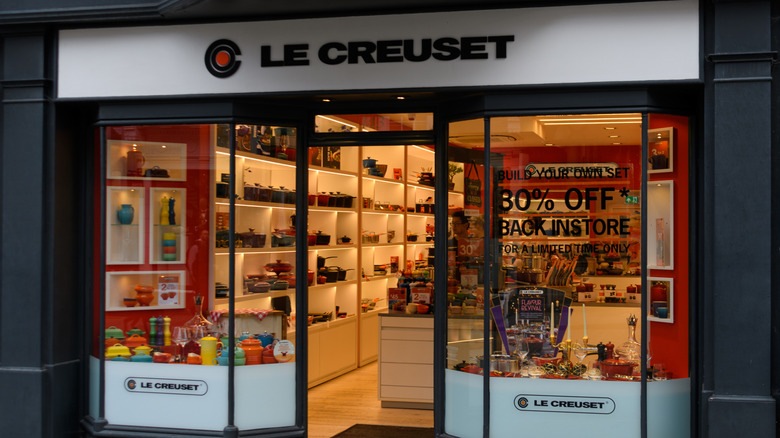
Le Creuset is an investment, especially when it comes to the price tag. While the quality is stellar, the cost matches the blood, sweat, and tears that go into each item. With that said, it's easy to see why many turn to the outlets to find their first Le Creuset cookware piece.
Many don't know that the outlets sell second-quality items, but that doesn't mean these items aren't true Le Creuset pieces or are unusable. The company has a "no flaw" policy, which means if there is any aspect of the cast iron, coloring, or enamel that isn't perfect, it isn't sold as a first-quality piece. Seconds are completely usable. They will simply have small flaws in coloring, shape, or even texture.
However, you can still find first-quality items at outlet stores, so shopping around is always a good thing. You can also find these items at stores such as Marshalls and TJ Maxx. Don't forget to check out your local thrift stores, too. Le Creuset is made to last. A used pot can be just as good as new!