

Dutch Oven Vs French Oven: What's The Difference?
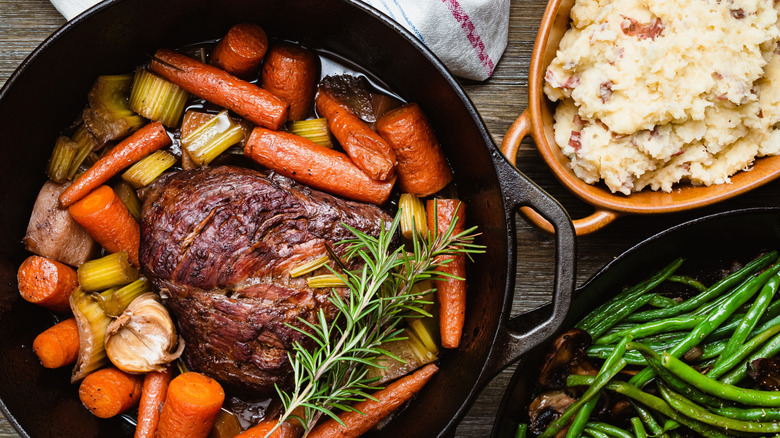
If you have a compact kitchen with little extra storage for pots and pans, investing in quality cookware that performs several functions is an incredible idea to save space. While a Dutch oven may be heavy, this classic pot can be used in multifaceted ways, making it a fantastic all-rounder. These versatile vessels are often confused with French ovens because they share similar characteristics, but there are some key differences that set them apart.
The best Dutch ovens can last for a lifetime with proper care. Made of cast iron and complete with a tight-fitting lid that traps steam inside, they are extremely hardwearing and can be used to sear meats, roast a chicken, or make a slow-simmered ragù. Early versions of these pots had three legs so they could be set over coals on a campfire or in the fireplace. How did the Dutch oven get its name? It was actually a British industrialist who visited Holland and saw similar pots being made using a technique called sand-casting. He eventually returned home to make his own version, which made its way over to the States via European immigrants who settled down in the area.
Classic Dutch ovens need to be seasoned to make them non-stick (this is when cooking oils are baked into the surface, which polymerize and harden). Failing to season the surface correctly is one of the mistakes that cooks often make with a Dutch oven. This is also where a French oven prevails.
The features of French ovens
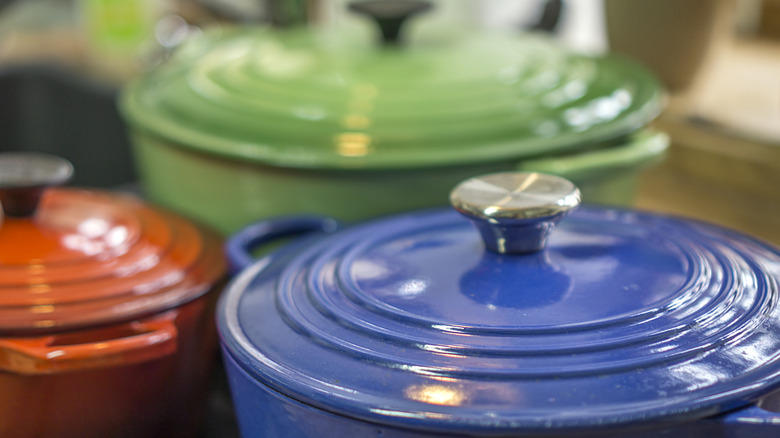
French ovens are a variety of Dutch oven. They, too, are heavy, made of cast iron, and come with a lid. They can also be used directly on the stovetop or placed in the oven. However, the primary difference is that they are coated in enamel, which makes them easier to care for than their cast-iron counterparts. They don't impart flavors into foods nor require seasoning, and they can be washed up in the sink just like other cookware. Better yet, the enamel coating can be colored to produce pots of various different hues that match the vibe of a kitchen.
French cookware brand Le Creuset is best known for its colorful variety of enameled cast iron. These classy cookware items were named as French ovens to differentiate them from the Dutch versions used in the U.S. That said, the term Dutch oven is often used interchangeably to describe both types of cooking pot. The bottom line? You may call the enameled cast iron pot in your cupboard a Dutch oven, but more specifically, it's a type of French oven. Luckily, you can use either a Dutch or French oven to simmer soups, braise pot roasts, or deep fry chicken. Just be aware that the enamel on French ovens is more prone to chipping and becoming damaged than a true cast iron Dutch oven.