
13 Canned Pinto Beans, Ranked Worst To Best
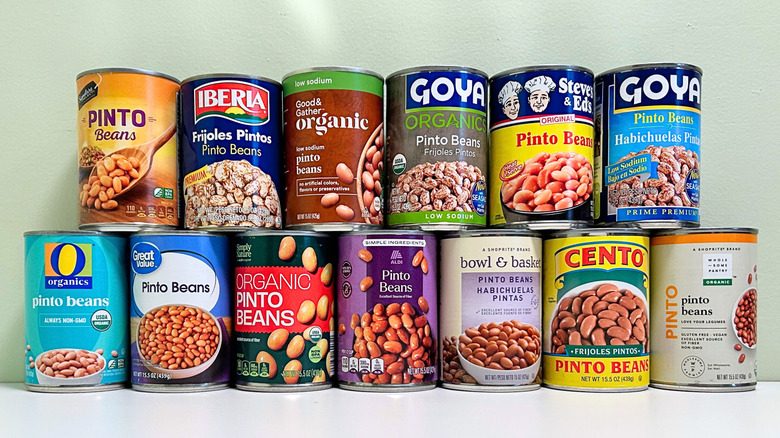
Beans are a versatile food packed full of nutrients like fiber and protein, which is why I frequently incorporate them into my weekly menus. Among the beans I always have on hand are canned pinto beans. They're an essential ingredient in my homemade refried beans, and you can turn them into an easy dish of Mexican-style pinto beans. Of course, to enjoy these simple, underrated beans to their fullest, you need to start with the best possible base. But first, you need to know which canned pinto beans are going to offer the best experience, and which are going to be a complete waste of your hard-earned money.
Typically, the best way to do this is to try every individual can of pinto beans side-by-side, to see how they stack up. But there's no need to undertake this tedious task yourself because I was given the opportunity to do it for you. After purchasing 13 types of canned pinto beans from my local grocery stores, I judged them based on their taste and texture using my extensive food industry background and other relevant experiences. Then, I reported my findings back here by ranking them from worst to best. You can learn more about my methodology at the end of this article. Now, let's find out which pinto beans belong on your next grocery list.
13. Iberia
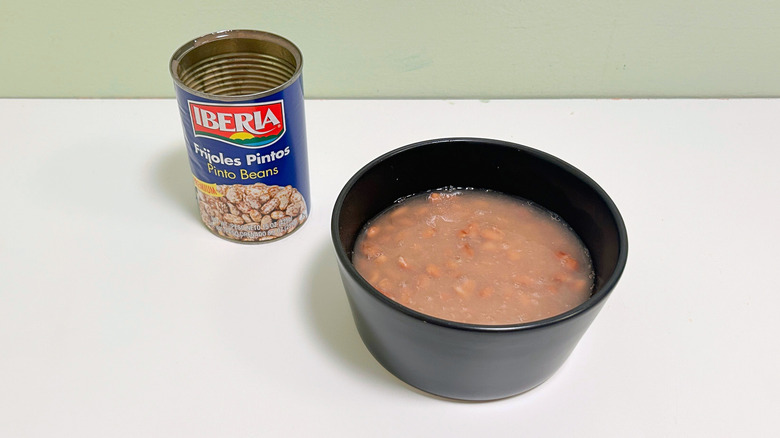
A ½ cup of these beans has 130 milligrams of sodium, 6 grams of protein, and 6 grams of fiber. Like all the other options on this list, these beans are naturally gluten-free, vegan, and generally allergen-friendly. But these were one of the oddest pinto beans on this list, and I wasn't sure what to make of them.
My main issue was that these were packed with so much liquid that they seemed more like soup than pinto beans. It was so drastic, in fact, that I stopped to double-check the can to make sure I hadn't accidentally bought some variation of bean soup. Thanks to all of this excess liquid, the beans themselves turned out to be very mushy, but somehow the skins largely stayed intact. The result was a bowl of little mush-filled packets floating in an extra runny sauce, and it was about as delicious as it sounds. There also wasn't a whole lot of flavor, with a mild earthiness accented by faint saltiness as the only things that came through. Don't waste your money on these. I know I certainly wouldn't.
12. Cento
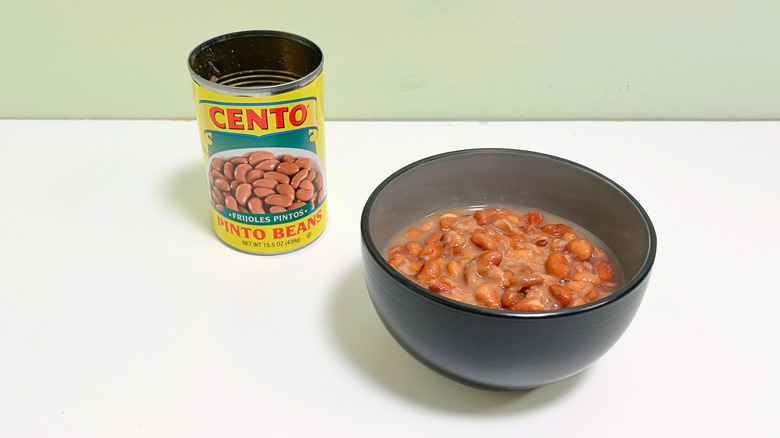
Every ½-cup serving of Cento Pinto Beans will provide you with 350 milligrams of sodium, 6 grams of protein, and 5 grams of fiber. But that would be if you ate them, which is something I don't really recommend.
Cento Pinto Beans were an option that went to the extreme in every aspect, and not in a good way. The texture was terrible. I basically ended up with a bowl of mush, and the only way I can think to accurately describe the mouthfeel is soggy — although that isn't exactly right. The flavor profile was largely dirt, with a hint of salt, and an oddly watery sauce. I honestly have nothing nice to say about these pinto beans.
You couldn't pay me to buy or eat these again. If the flavor profile had been better, I'd say the texture was good for refried beans. But the taste would ruin that dish, too, so my recommendation is to steer clear of these entirely.
11. Good and Gather Low Sodium Organic
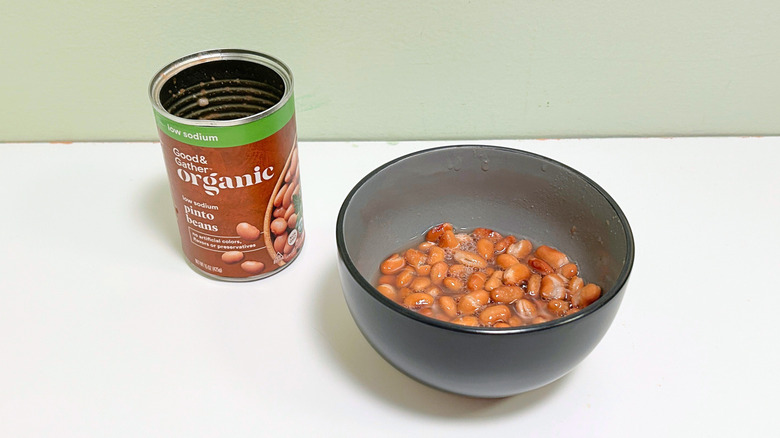
Good and Gather Low Sodium Organic Pinto Beans looked like they were going to be a decent choice when I dumped them into my pot. While they did stay together, with only limited skin bursting, the liquid they were cooked in didn't absorb any flavor, nor did it really thicken. Instead, it looked mostly like beans sitting in water, which isn't particularly appetizing. While I can appreciate the low-sodium aspect for those who have to watch their salt intake, the lack made these beans very lackluster — they mostly tasted like dirt with the faintest savoriness.
These beans contain no preservatives, with the only ingredients listed on the can being prepared organic pinto beans, water, and sea salt. A ½-cup serving contains 120 milligrams of sodium, 7 grams of protein, and 5 grams of fiber. I'd like to note that, despite these being labeled as "low sodium," they actually contain more sodium than some of the standard label products. This just goes to show how important it is to look at labels if you have dietary restrictions. I wouldn't spend my hard-earned money on these pinto beans again, and definitely wouldn't eat them if someone else offered.
10. Simply Nature Organic
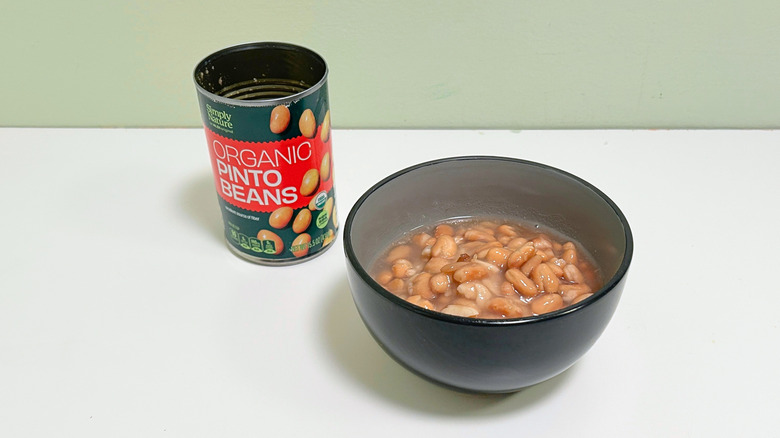
Simply Nature Organic Pinto Beans are certified USDA Organic and Non-GMO Project verified, and a ½-cup serving will net you 9 grams of fiber, 7 grams of protein, and 85 milligrams of sodium. That's one of the lowest sodium contents on this list, making it one of the best choices for anyone needing to watch their salt intake. Or it would be if it had been better.
These pinto beans turned out mushy when cooked exactly the same way as every other option. While not quite as squishy as the Cento Pinto Beans, the texture was still bad enough to make me grimace. Being so soft, most of the beans were split open, yet they still didn't manage to create a good sauce. The flavor was predominantly earthy, with a faint savoriness and mild notes of dirt. Overall, I wasn't impressed. I definitely wouldn't buy these again because I don't think they're worth my hard-earned money (or yours).
9. Goya Organics Low Sodium
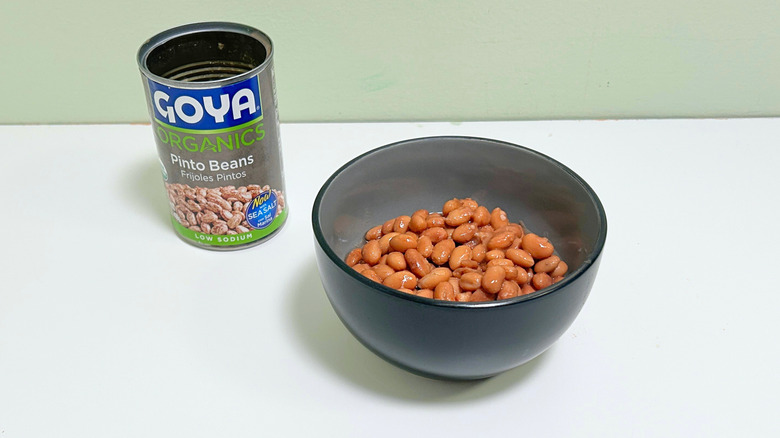
Despite being labeled "low sodium," these Goya Organics Pinto Beans have more salt than some other options on this list, sitting at a content of 135 milligrams per ½-cup serving. Each of those servings also provides 7 grams of protein and 5 grams of fiber. Unfortunately, the "low sodium" label should have actually been "low flavor" instead.
Thankfully, these didn't taste like dirt (unlike the Good and Gather option), but what they did taste like was ... nothing. I suppose there were the faintest salty hints, but that sodium may as well have been accenting air. Texturally, these turned out a bit drier than I would have preferred. Around 10% to 20% of the beans ended up with burst skin, but it wasn't enough to become a major issue. Overall, these weren't nauseating, but they were so plain I wouldn't have been able to tell you I was eating beans. I wouldn't buy these again, nor could you tempt me to eat them again.
8. Great Value
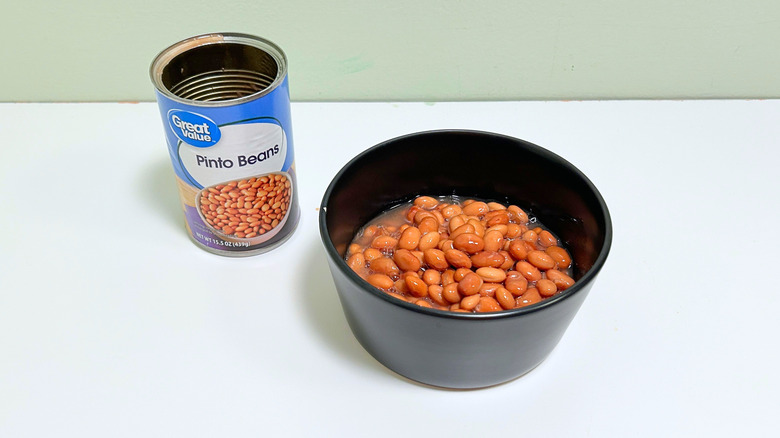
Great Value Pinto Beans ended up being a strong middle-of-the-road option. On the one hand, they were texturally perfect. There was a limited amount of broken skin, and most of the beans remained firm while also having a buttery interior texture. On the other hand, the flavor profile was surprisingly bland, which may have been the case because the beans didn't really make any of their own sauce. There was a slight thickening of the juices the beans came packaged in, but barely enough to change color. The beans had moderate savoriness, paired with faint earthy notes, but no salty tones came through, which I found surprising considering the amount of sodium in these.
Per ½-cup serving, you'll receive 130 milligrams of sodium, 6 grams of protein, and 6 grams of fiber. Although I didn't end up being a big fan of these, they don't have a terrible base flavor. If you're at Walmart and need to keep your grocery bill low, these might be good with appropriate seasoning. For example, a homemade smoky taco seasoning would bring salty and smoky tones that complement the natural savoriness of the beans.
7. Bowl and Basket
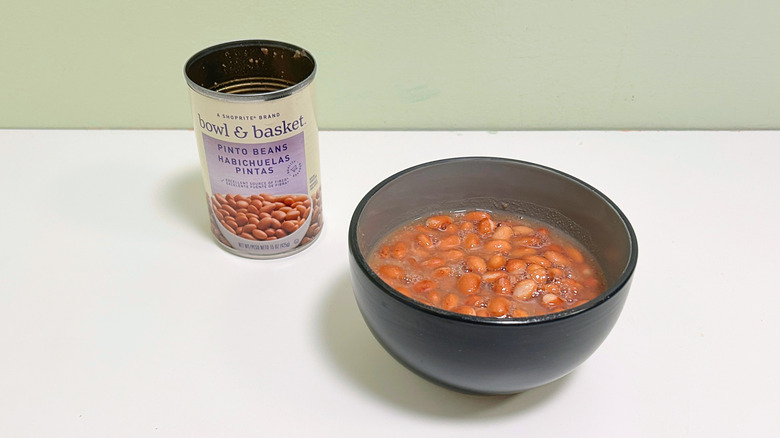
Bowl and Basket Pinto Beans contain 140 calories per ½-cup serving, which is slightly more than the generally standard 110 calories of most other brands. Each serving also provides 300 milligrams of sodium, 9 grams of protein, and 6 grams of fiber. I have a love-hate relationship with Shoprite's private label brand, which has been pretty well documented in my past articles. While there are some amazing frozen Bowl and Basket snacks I highly recommend you try, the brand also makes the absolute worst store-bought French dressing I've ever had. As for their pinto beans, well, they were nearly indistinguishable from the Great Value option, which made them hard to rank.
These beans were perfect texturally, but also bland, with a flavor profile predominantly earthy, with faint savory tones. The sauce thickened slightly, but not enough. Ultimately, I decided these had a flavor profile barely a hair more robust than Great Value, and so they pulled ahead one spot. I wouldn't buy these again because there are an abundance of better options available, and the pennies you save aren't worth the decrease in quality. But I might eat them if offered since they weren't awful.
6. Aldi
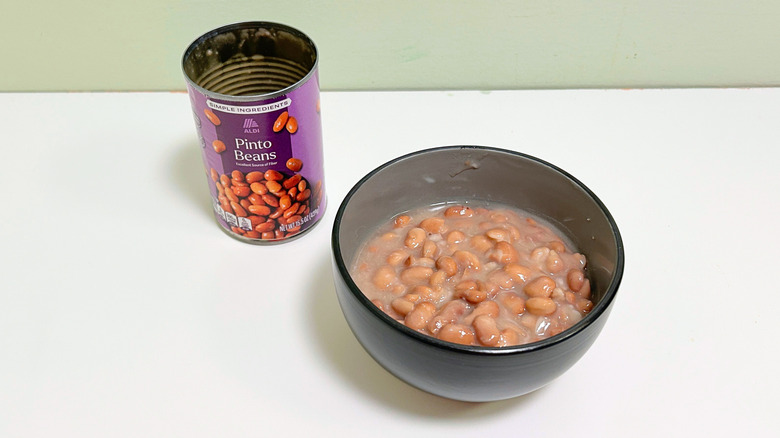
Aldi Pinto Beans are another option with no preservatives, instead listing only pinto beans, water, and salt on the label. Each ½-cup serving provides 300 milligrams of sodium, 6 grams of protein, and 6 grams of fiber. And while they aren't exactly a bad option, they're truly mediocre. Fresh out of the can, these were a bit watery, and so I worried I'd have the water-and-beans issue I had with the Good and Gather beans, but these pinto beans created a nice medium-thick sauce while they cooked on my stovetop.
The flavor profile was also intensely savory, with moderate earthy notes and a subtle saltiness. Unfortunately, the salt carried a metallic taste with it that was light enough it didn't ruin the eating experience, but still strong enough that I had to knock it down a few spots in this ranking. Then there was the fact that at least a quarter of these beans burst out of their skins during cooking. Burst skins aren't a dealbreaker when I'm enjoying beans for myself, but it did go against the perfect product I was looking for in this ranking. Skip this in lieu of better canned pinto beans. I know I will.
5. Signature Select
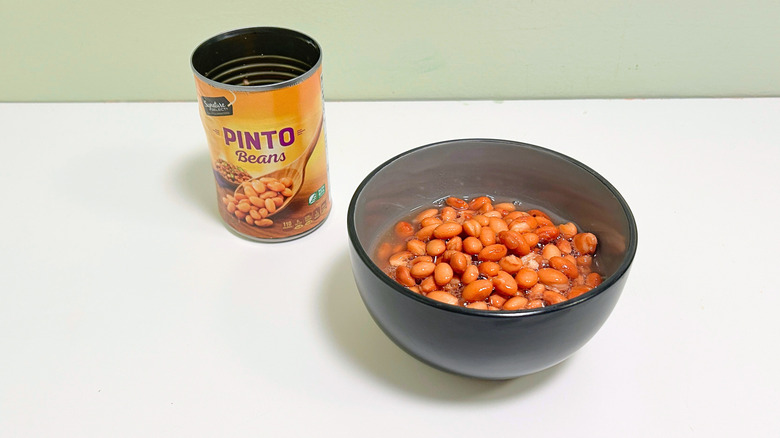
Signature Select Pinto Beans are brought to us courtesy of Acme Markets. The private label can be very hit or miss (like most of them), and makes the worst frozen tater tots I've ever eaten — but it's also my favorite aluminum foil brand. These pinto beans fall solidly somewhere in the middle of those two extremes, as the perfect example of something edible but not amazing.
There was some minor bursting of the skin, but not enough to make a major impact in the overall feel or aesthetic of these beans. The liquid didn't really turn into a nice sauce, but it definitely appeared to try. Texturally, the beans were firm with soft centers, which is exactly what I wanted to see. As far as flavor went, these had a moderate savoriness paired with mild earthy and salty undertones. I was thankful there was no distinct dirt taste mixed in, like some of the lower quality options. A ½-cup serving of these canned pinto beans provides 410 milligrams of sodium, 7 grams of protein, and 5 grams of fiber. I wouldn't buy these again. However, I'd definitely consider eating them if someone offered them to me.
4. O Organics
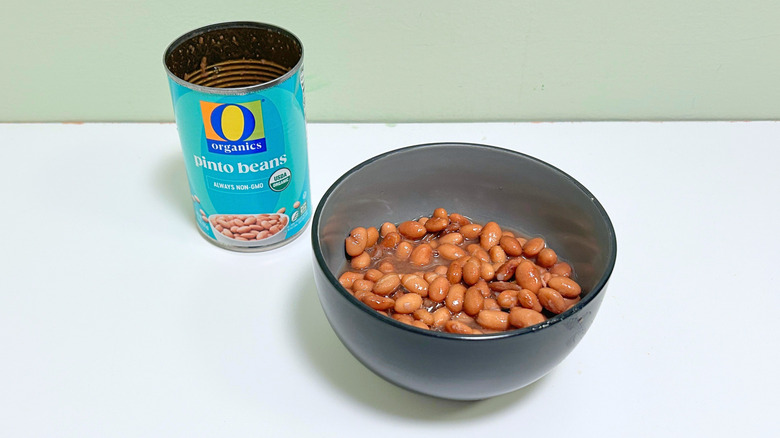
When I was conducting my taste test, this was the first option to combine the perfect bean texture with a decent sauce. The beans themselves had limited broken skin, with a buttery interior, while the sauce was moderately thick and full of the beans' flavor. The natural savory and earthy tones of the beans came through strongly, but I would have liked some accentuation from more salty notes. Without those salty notes, the beans fell a little flat. While this is easily fixed during cooking, my ranking includes looking at each option as it comes out of the can, so I had to knock it down a spot.
I like that the ingredients list for these contains only beans, water, and salt. For every ½ cup of these USDA Certified organic beans you eat, you'll receive 95 milligrams of sodium, 7 grams of protein, and 9 grams of fiber. Since this contains only 4% of your daily sodium intake, it might be a good choice for those needing to limit their salt. While I wouldn't buy these again, because there are options I preferred significantly more, I would definitely eat them without hesitation if they were seasoned properly.
3. Goya
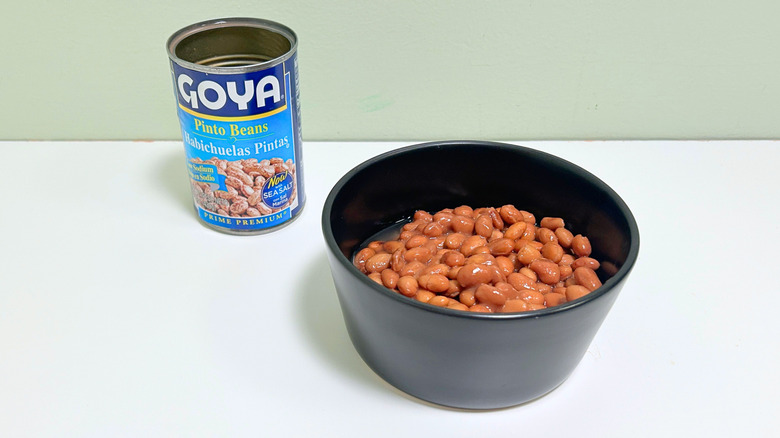
With only 80 calories per serving, these Goya Pinto Beans have slightly fewer calories per ½-cup serving than the 110 standard of most other options on this list. Additionally, each serving has 360 milligrams of sodium, 6 grams of protein, and 8 grams of dietary fiber. Before this taste test, Goya was actually my go-to brand for several types of beans, pintos included. But as sometimes happens during these taste tests, it turned out there were options I liked more.
Texturally, these pinto beans were appropriately soft yet had only a few skins bursting open. The flavor was overall mild, with a subtle blend of earthy and savory notes accented by mild salty undertones. I would have liked a little more substance to the flavor profile, and these didn't make much of a sauce on their own. Instead, the liquid they were cooked in from the can largely stayed clear, which was a letdown. I would definitely eat this again, although it's unlikely I'd purchase it in the future, only because there are several options I prefer.
2. Steve's and Ed's
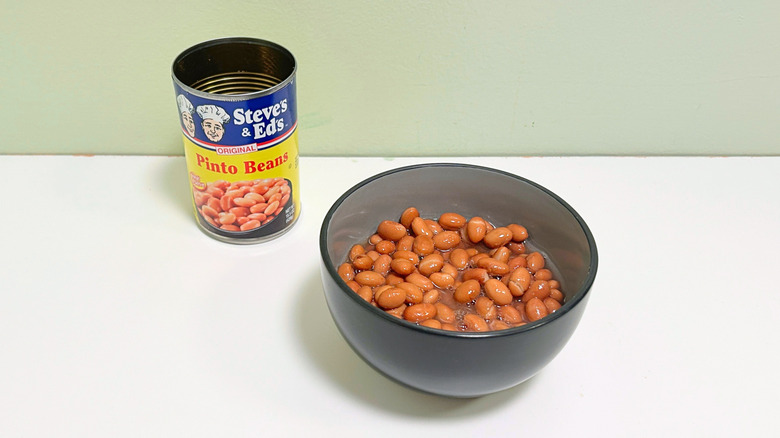
Steve's and Ed's Original Pinto Beans have 140 calories per serving, which is slightly more than the 110 of most other brands. Each ½-cup serving also contains 300 milligrams of sodium, 9 grams of protein, and 6 grams of fiber. But I believe the slightly higher calories and higher-than-average sodium content are a good trade-off for better flavor, if your diet doesn't restrict you from those things.
These beans smelled amazing while cooking — the smell of my food is so important to me, so I considered this a huge boon. It was an intensely savory scent with moderate earthy notes that filled my kitchen unlike any other bean on this list. The scent was largely indicative of the taste, which had the same robust savoriness and earthiness, but with mild salty undertones that pulled this together nicely. The beans remained largely intact, and the texture was the mildly firm butteriness I was looking for. My single complaint is that the "sauce" I was looking for never really came together. Still, this wasn't enough to ruin the dish for me by any means. I would definitely eat these again, and can see myself buying them if my top choice isn't available. If this is the highest canned pinto beans available to you, your eating experience isn't going to suffer because of it.
1. Wholesome Pantry Organic
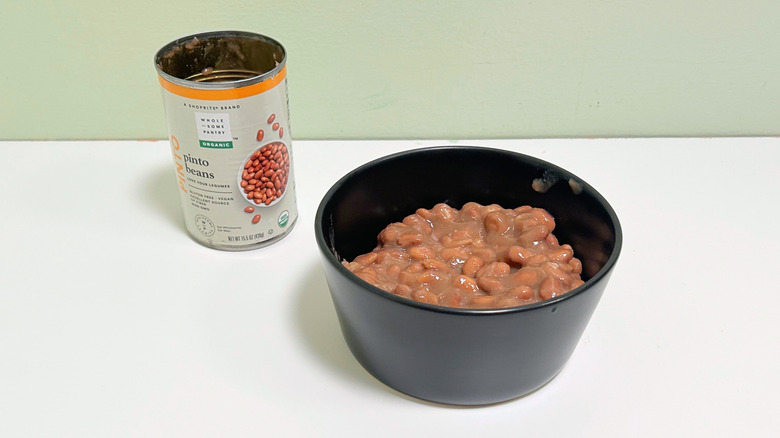
Wholesome Pantry Organic Pinto Beans have an appropriately "wholesome" ingredients list that includes only organic pinto beans, water, and sea salt. A ½-cup serving of these simple canned pinto beans grants 130 milligrams of sodium, 6 grams of protein, and 5 grams of dietary fiber. This brand is one of Shoprite's private labels, and I was honestly shocked at how well it performed.
These beans remained almost entirely intact during cooking and developed the perfect buttery texture I was looking for. A robust savoriness was nicely balanced here, with moderate earthy notes and salty undertones, which really helped bring the other flavors to the forefront. Best of all, these beans created a thick sauce of their own during cooking, which is one thing most of the pinto beans on this list failed on.
Hands down, these will be my new go-to pinto beans moving forward, as they embody everything I was looking for. I highly recommend grabbing yourself a can the next time you want a warm bowl of filling beans. Once you do, you'll see exactly why Wholesome Pantry earned the title of top canned pinto beans.
How I chose the best canned pinto beans
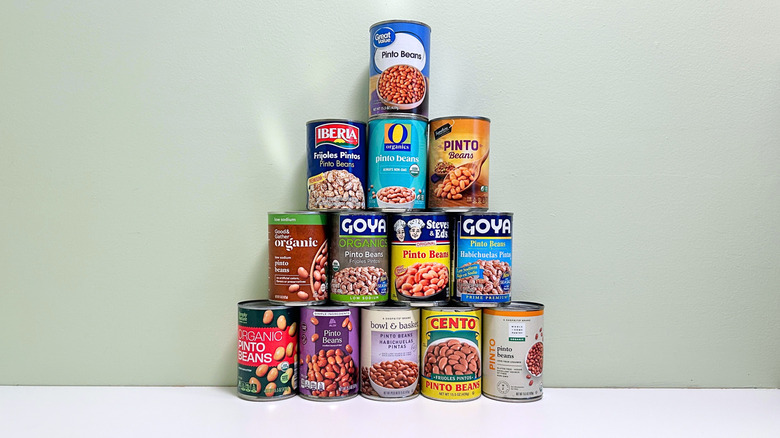
I chose canned pinto beans for inclusion in this ranking, based on their availability to me near Vineland, New Jersey, and only included plain pinto beans of organic or standard variety. I left out anything with extra seasoning, so as to keep the ranking as fair as possible, cooking the beans on the stovetop exactly as they were, with no seasonings or other additions. To judge each can of pinto beans, I considered taste and texture. I was looking for tender, almost buttery beans that fully expanded without bursting out of their skins. For the taste, I was looking for beans that were savory and earthy, with subtle salty notes. Although I mentioned nutritional information in the sections above, this wasn't a ranking factor — instead, it's there so people with dietary needs or preferences can make the most informed purchasing decisions.
To make my judgments, I relied primarily on a food industry background of more than 15 years, during which time I used pintos (and other beans) extensively in various dishes. Prior consumership of canned pinto beans and previous work for Daily Meal also contributed, including similar bean-based articles like my ranking of canned kidney beans and my article of common ways you're ruining canned baked beans. Although personal preference played a role in this ranking, I aimed to be as unbiased about product quality as possible.