
10 Southern Grocery Store Chains, Ranked From Worst To Best
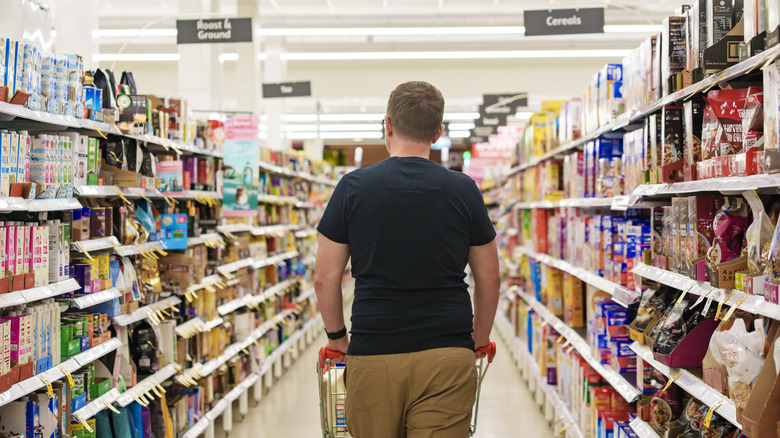
The Southern United States is renowned for its food. Classic dishes invented in the South make up some of the most iconic examples of American cuisine, which are closely linked to the many cultures that have helped form the region's distinct identity. Known for taking good food very seriously, the South is consequently home to a wide assortment of local grocery chains, many of which do not exist outside of the region. These supermarket fixtures have all been around for decades, each bringing its individual approach to the customer experience.
Over the years, with some of these chains changing with corporate acquisitions and others keeping a vested interest in all things local, customer opinions have begun to vary. Some of these Southern grocery chains have succeeded in gaining and maintaining a loyal following, while others have begun to lose their popularity. Taking into consideration quality, variety, pricing, consistency, and customers' own testimonies on their experiences in each of these stores, we've compiled a list of 10 Southern grocery store chains, ranked from worst to best.
Winn-Dixie
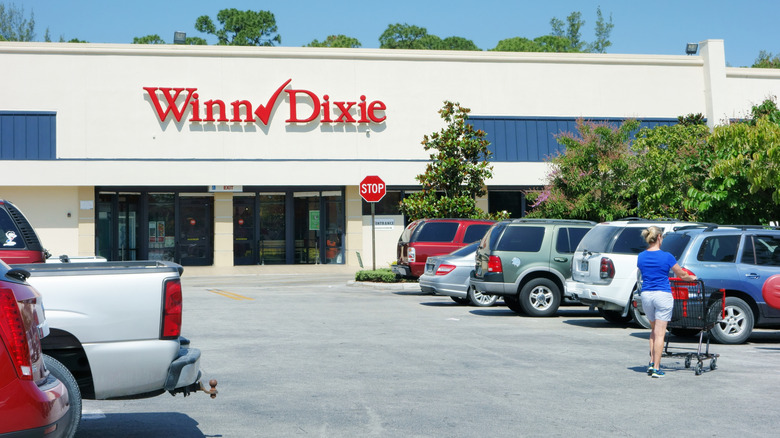
Dating back to 1925, Winn-Dixie started out in Florida, and its expansion into a grocery chain made it a neighborhood fixture in states across the South. But after filing for bankruptcy in the 2000s, the chain has consistently struggled. It opted to scale back operations in the South, and today its remaining locations are predominantly in Florida, with a few in neighboring Georgia. Though Winn-Dixies were once the go-to grocer in many Southern towns, they fell victim to competitors, losing their clientele gradually to Walmart, which appealed to consumers with its competitive pricing. But price was not the only factor. Winn Dixie stores across the South did not evolve with the times, and consequently have not been able to keep up with a modernizing grocery industry. Many locations remained stuck as small-town stores with limited selections, which stopped appealing to customers who became increasingly more accustomed to the greater variety and convenience of larger competitors.
When Aldi acquired many Winn-Dixie locations in 2023, shoppers noted that the store's quality seemed to have diminished further, and that the chain had lost some of its small-town soul in the process. "A lot of things have gone downhill at my WD since [Aldi] bought it. The sales aren't nearly as good now either," one Redditor said. Another Reddit comment lamented, "I have a WD within 2 miles of me and I have consistently experienced bad everything. Service, quality, overall atmosphere. I walked out last time. Never been back. It's unfortunate."
Food Lion
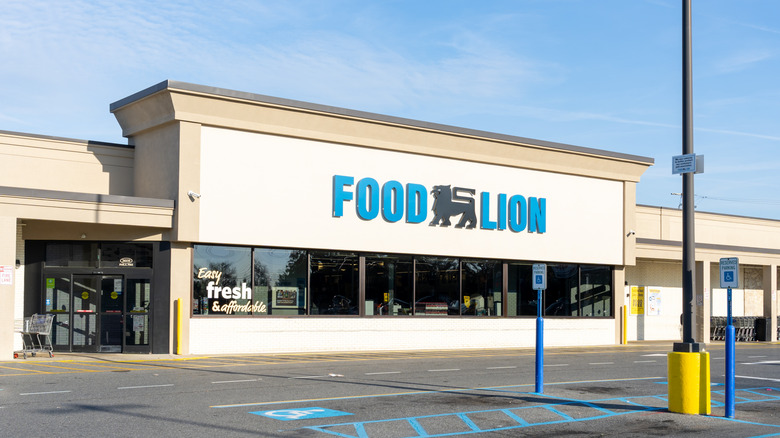
Originally called Food Town, this grocery chain got its start as a single store in Salisbury, North Carolina in 1957. Standing out with its emphasis on low prices, Food Town quickly expanded in the following decades and officially became Food Lion in the 1980s. Though it is mostly spread across the South, the grocery chain now exists in 10 states. It was on track to keep growing, until a major scandal in the 1990s. This centered around the results of undercover journalism at various Food Lion locations in the Carolinas. The journalists claimed that the chain lacked proper sanitation protocols in the meat department. They found employees tampering with spoiled meat, including dousing it in bleach, as part of an effort to repackage it to sell to customers.
Food Lion disputed these allegations, but the damage to the chain's reputation, exacerbated by subsequent legal battles, was already done. Since then, customers have noted that the chain has worked on improving its reputation, but many still don't especially trust it for fresh meat or seafood. Nevertheless, shoppers are aware of the fact that Food Lion prices are still generally on the low side. Many shoppers therefore consider Food Lion a reliable source for shelf stable items, which are not at risk of spoiling and are typically guaranteed to be offered at a better price. As one Redditor summarized, "Anything that comes in a box or a can, you'll save money buying it at Food Lion ..."
Ingles Markets
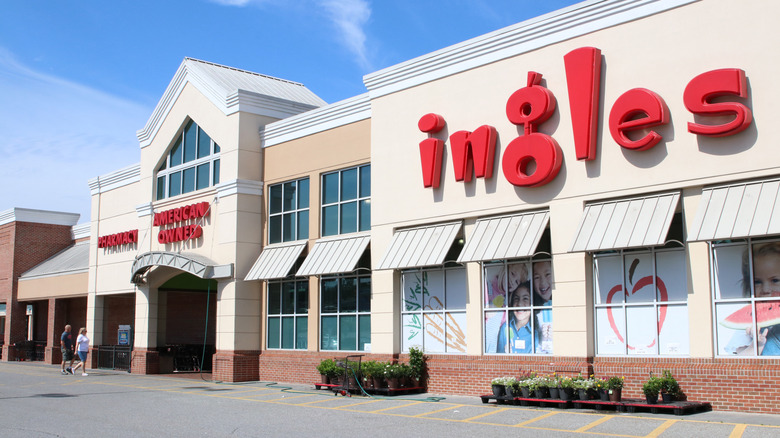
First opened in Asheville, North Carolina, in 1963, Ingles Markets' objective was to serve smaller communities in the Carolinas that had limited access to larger, less central supermarkets. Now spread across the South, Ingles have become fixtures because they operate as a convenient stop that tends to be more accessible than other grocery chains. But customers are often disappointed by Ingles' products and prices. As one Redditor explained, "The Ingles in my area is a lot more expensive for nearly everything. The produce is bad, the meat prices are comical ... Oddly enough they always have the cheapest deals on cheeses though and that's really the only reason I stop there occasionally." Other shoppers agree that it's mostly a supermarket for one-item emergency stops.
Furthermore, the grocery chain's acquisitions of unused real estate have left many customers skeptical of Ingles' ethics. Those who live in Ingles' territory claim it has been known to buy out competitive grocery stores and leave the properties idle, something which obliges more shoppers to turn to the local Ingles and eliminates access to grocery sources that might have been preferable. Ethics aside, customers have voiced that they generally really only go to Ingles if they have to, or if there really aren't any accessible alternatives. Another Reddit comment summarized the reason Ingles maintains a clientele despite not being a preferred shopping stop: "It's convenient one stop shopping and the quality is far superior to Food Lion, more convenient than [Aldi] and Trader Joe's, cheaper than Whole Foods and Publix."
Randalls
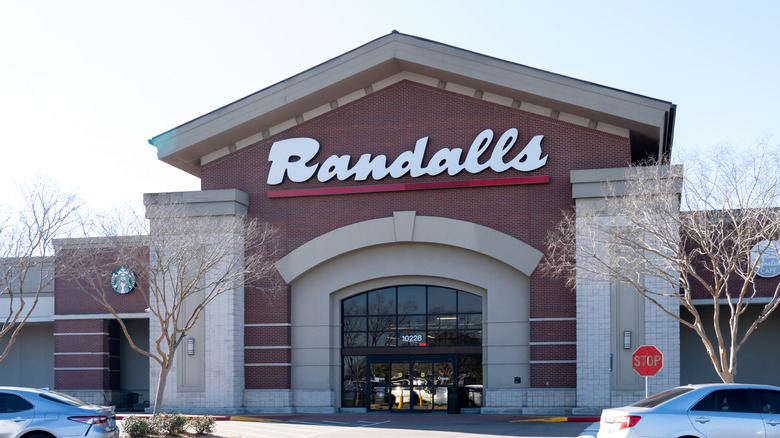
First gaining traction in the 1960s, when three Texas grocers came together to combine their innovative ideas, Randalls was a popular choice for consumers as a discount supermarket. One of the more localized grocery chains in the South, Randalls operates exclusively in the state of Texas, across 25 locations between Austin and Houston. Today, the chain operates as an offshoot of Albertsons, Safeway's parent company, and the change in ownership is what may have marked the beginning of Randalls' decline in popularity. Customers lament the quality decline, blaming the corporate takeover for tarnishing the store they once knew and loved.
The chain now has a shaky reputation, with prices too high to justify the lack of quality — customers have often found products on shelves that are far past their expiration date. After gaining its bad rap among locals, it is precisely Randalls' lack of popularity which has become its appeal. Many shoppers end up there as a convenience stop, since there are rarely any crowds, in order to avoid the bustle of other more popular and well-regarded grocery stores in the area. Randalls is also not necessarily a place where people stop for food purchases, either. As one Redditor described: "It's like your own personal grocery store for when you need a few random things like creamer, aspirin, and a birthday card. Park up front and out in 5 mins."
Piggly Wiggly
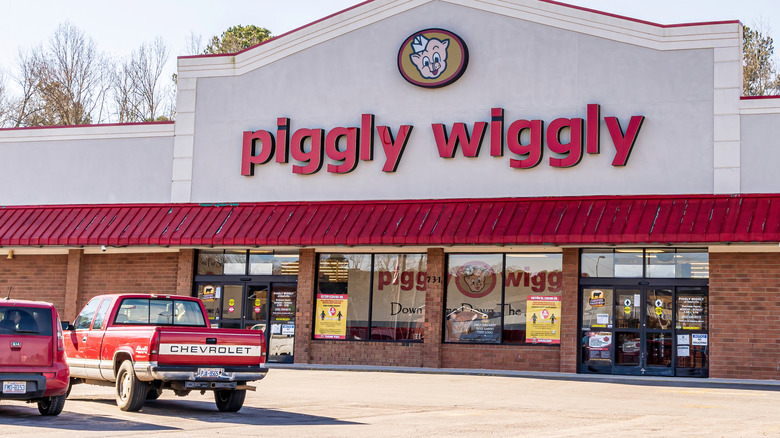
This Southern staple started out in Memphis, Tennessee in 1916. The catchy name was beckoning customers to try a revolutionary new form of grocery shopping, which would forever change how consumers shopped: self-service shopping. Prior to this, the norm was to arrive with a list for a clerk, who would select the necessary items from shelves behind a counter or hidden away in a storage room. Piggly Wiggly's design not only encouraged shoppers to select their groceries for themselves, but also changed the grocery store general layout into what we know today. Open aisles and shopping baskets might seem like a no-brainer these days, but these were an innovative approach for the time.
Over a century later, Piggly Wiggly locations have gone from grocery stores to supermarkets. The chain has branched towards the Midwest and Northeast, but remains predominantly concentrated in the South. These stores are still centrally located neighborhood fixtures, and today, many still attract customers for their convenience and emphasis on local products and classic Southern items. But many Piggly Wiggly patrons are unimpressed with overall selections. Convenience is what attracts patrons, but because locations function as a franchise, standards can vary widely. Prices and product quality also tend to fluctuate. Customers have often been disappointed to find these stores charging higher prices than other grocery conglomerates for the same foods. This is an unfortunate reality for individual owners who cannot buy their products in the same bulk quantities to ensure competitive prices.
Rouses
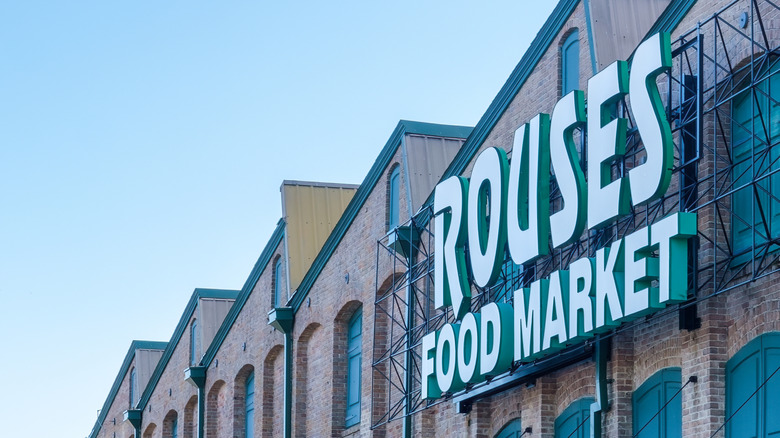
As a chain based in Louisiana, Rouses is another very regional Southern grocery spot. Most of its locations are still in the state, with a few that have expanded into Mississippi and Alabama. A family business dating back to 1923 that gradually evolved into an expanding Southern chain, Rouses has garnered a reputation for keeping things local. The chain appeals to its regulars with an emphasis on Louisiana specialties, carrying essentials for the Cajun and Creole flavors of classic Louisiana foods — such as spices that are difficult to find elsewhere, and French bread for a proper po'boy sandwich. Regulars enjoy Rouses' meat counter and fresh seafood as well, which sets it apart from other bigger grocery chains.
But Rouses does not please consumers on all fronts. According to one Redditor: "The variety is terrible on the grocery side ... The meat department and bakery is wonderful and that's usually what we go there for." For those who might not be seeking out specific products or fresh meat, Rouses can be a bit disappointing. Another Reddit comment summed up the strange appeal of Rouses: "[I] get excited when [I] go in there, but they don't really have anything I want."
Lowes Foods
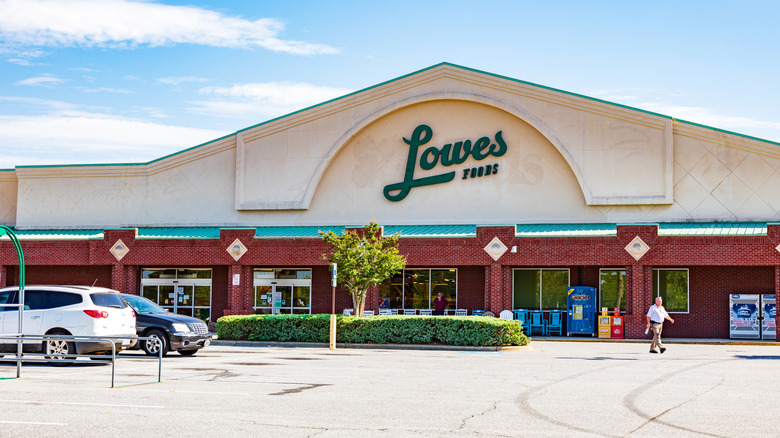
Originating in North Wilkesboro, North Carolina, in 1954, Lowes Foods has spread across the Carolinas and into Georgia to provide a unique grocery experience. Part of its claim to fame is its emphasis on specialty sections. These include the SausageWorks, different from the traditional deli counter, where shoppers can customize blends for fresh sausages or select from an extensive menu of specialty flavors. The Pick & Prep section is another unique feature that involves employees preparing selected fresh fruits and vegetables for customers while they shop, so that they have less prep time to worry about at home. Another unusual highlight for many shoppers is the Beer Den, a bar area inside the store that offers a wide selection of local beers on tap.
Customers tend to agree that Lowes has a generally higher standard for product quality, and enjoy its baked goods and fresh meats, which can stand out from other grocery store bakeries and delis. But Lowes being a premium grocer is both its strength and its downfall. Some shoppers have successfully navigated around the higher prices by keeping up with sales, which tends to make shopping there a bit more budget friendly. As one Reddit comment said: "You definitely have to shop smart in there ... Pay attention to sale prices and you can't go wrong. If you just walk in assuming you're getting the best deals, you will be shocked."
Publix
Publix opened its first store in Florida, starting in Winter Haven, in 1930, and quickly became another popular Southern grocery chain. Today, Publix locations are spread across the South, and the chain has gained a following in the region. Publix stores are generally conveniently located, and have a reputation for warm ambiance and friendly employees, all of which contribute to a welcoming customer experience. With an extensive selection of produce, as well as a pharmacy, it is a convenient one-stop shop in the South. A loyalty to this grocery chain has kept many shoppers as regulars at Publix despite an inflation in prices in recent years. While customers have lamented the uptick in pricing, there is still a cult following for Publix cakes, PubSubs made to order — notably the legendary chicken tender sub – and the frequent BOGO sales throughout the store. Furthermore, Publix boasts the best Southern grocery store sushi and the best grocery chain fried chicken.
Since elevated prices has turned some customers away, many shoppers have nevertheless opted to choose competitors over Publix, for the better sales and lower baseline pricing. While many shoppers still prefer Publix for the relative consistency of its quality products, price is still many cstomers' make or break factor. One Redditor explained a comparison: "[Harris Teeter] has great specials... Where I live, HT and Publix are across the street from each other and 9 times out of 10 I find myself at HT."
Harris Teeter
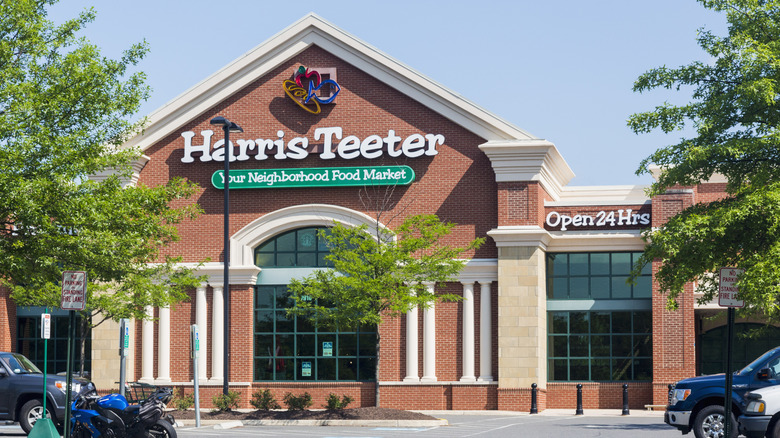
Originally two separate, independent North Carolina grocery stores, Harris Teeter became the result of dual forces in 1960, and has been a Southern grocery staple ever since. Still largely concentrated in the Carolinas, store locations have expanded into other Southern states, as well as a few locations in the Mid-Atlantic. With a long-standing presence in the region, Harris Teeter locations evoke a sense of tradition for many regulars, who have loyally shopped there for decades. The stores have always been in touch with a sense of community — formerly offering free sugar cookies at the entrance, emphasizing Very Important Customers (VICs), and making a point of including a wide selection of local products.
Today, Harris Teeters are still a popular stop for grocery runs and generally maintain a high standard of product quality and variety that ensures shoppers find everything they're looking for at one stop. Regulars attest that the Teeter is a preferred stop for produce and fresh meat, both of which the chain has a wide variety of. The main complaint from Harris Teeter shoppers is that it tends to be on the expensive side, but they admit that this is remedied with a decent amount of sales. One Redditor shared their strategy for getting decent groceries at a more budget-friendly rate: "You can get better quality for the same price at HT if you buy on sale. I almost exclusively buy 'discounted' items at HT and it comes out about the same as when I was shopping at Food Lion ..."
H-E-B
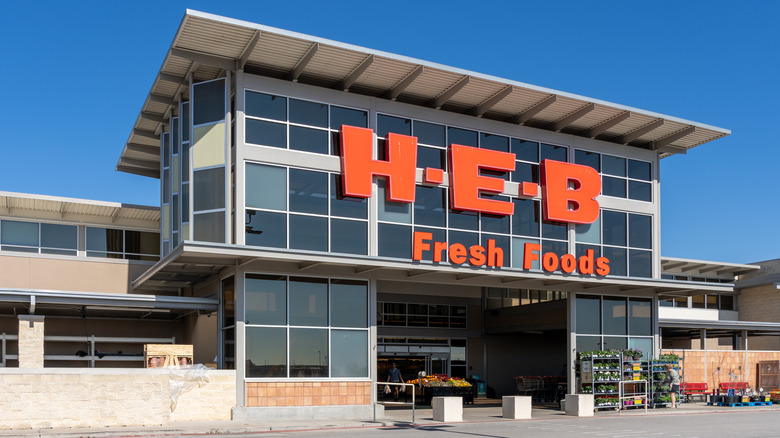
With origins in Kerrville, Texas, dating back to 1905, H-E-B is the Southern grocer that has been around the longest, though it took many years to become a chain. Proudly Texas-based, H-E-B has a fiercely loyal following and rave customer testimonies. It keeps shoppers satisfied with consistent quality standards. Many of its store-brand products are deemed to be of superior quality to other more recognized brands. As one Facebook commenter said, "I've lived in TX for over 20 years now and, if I moved, HEB would be the one thing I'd really miss. There are certain products that I will only use their brand of. Way better than the big brands."
H-E-B is also a highly affordable grocery source. Rather than taking advantage of its popularity to inflate prices, H-E-B maintains the standards of a premium grocery store with prices that are, contrastingly, comparable to Walmart, and in many cases even lower. Furthermore, shoppers appreciate that H-E-B pays attention to its surrounding communities, and that it makes an extra effort to ensure its customers have access to everything they could possibly need. This goes as far as altering what gets kept on store shelves, depending on the demographics surrounding each store location. In simple terms, one Redditor explained: "For such a big company, they make good effort to match what they can to each store's clientele." With all these factors combined, H-E-B has garnered a cult following and set a precedent for other grocery chains to aspire to.
Methodology
To compile our list of Southern grocery store chains, we scoured customer reviews and statistical rankings. For each of the stores that made it onto our list, we considered multiple factors, including grocery chains' product quality, consistency, and variety. We compared these with shoppers' opinions on pricing, accessibility, and the overall customer experience. Ultimately, it is the shoppers who know best, as they have first-hand experience roaming these grocery aisles to check off the items on their grocery lists. This is why we pulled from direct customer insight to determine the best Southern grocery chains from the worst.
In narrowing down the poorly reviewed stores, we targeted the Southern grocery chains that had repeated issues of food safety, inconsistencies in quality, and generally dissatisfied shoppers. In determining the best Southern chains, we highlighted the grocery stores which had dependable quality and made an extra effort to provide for customer needs, thereby maintaining a loyal customer base.