

15 International Milk Chocolate Bars Worth Trying In 2026
We may receive a commission on purchases made from links.
Milk chocolate bars exist on a wide spectrum. There are good ones, there are great ones, and there are milk chocolate bars you should skip entirely. Then, there are milk chocolate bars that are totally extraordinary, and which have garnered a legion of fans in countries across the world, without ever becoming widely known in markets like the United States (or elsewhere). While it's easy to lump them all in together and assume they taste the same, every manufacturer does it slightly differently, and some international chocolate makers create bars with a balance of creaminess, saltiness, and rich cocoa notes that truly reinvent the form.
However, with so many milk chocolate bars around the globe, where do you start? You start right here. We decided it was time to shine a light on some of the best international milk chocolate bars worth sampling this year by looking at notable brands in countries across Europe, Asia, Africa, and Oceania. Using a mixture of customer and professional reviews to verify quality, we selected these chocolate bars based on a combination of flavor, individuality, and acclaim in their native countries. Here are the ones to seek out.
Whittaker's Creamy Milk (New Zealand)
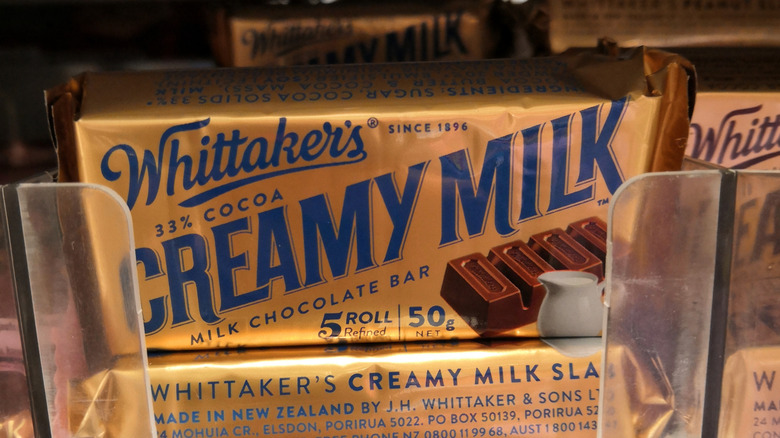
Whittaker's chocolate has a long history in New Zealand. Established in 1896 in Christchurch, it took approximately 100 years before arguably its most iconic products were released; its 250-gram blocks of chocolate debuted in the 1990s and became some of the country's most beloved confectionery items. Of all the products it makes, though, Whittaker's Creamy Milk stands out as a fan favorite. Made with an impressive 33% cocoa, it's a smooth, rich chocolate that exudes quality, and which, importantly, actually tastes like chocolate, not just a composite of flavorings and ingredients.
The affection for Whittaker's Creamy Milk amongst both New Zealanders and international customers who have managed to try it is clear. One U.S.-based customer said on Reddit that "Creamy Milk is the best milk chocolate I've ever had. It's truly creamy. Fantastic texture and taste." Its simplicity is key to its success: There's no adulteration with mix-ins or ambitions to try and do something different. Instead, it just does what it does very well. The same goes for the rest of Whittaker's products, too; this family-owned business is doing something right.
Marabou Mjölkchoklad (Sweden)
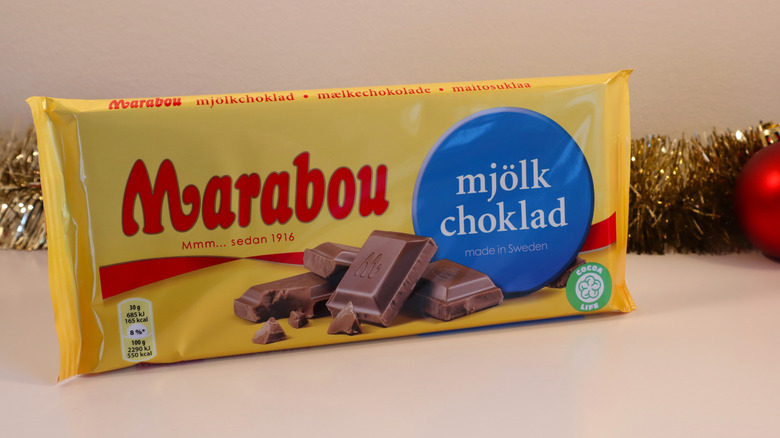
Like many great milk chocolates, Marabou Mjölkchoklad stems from decades upon decades of experience and craft. Marabou was founded in Sweden in 1916 as an offshoot of Norwegian brand Freia, but it took a couple of years for the subsidiary to get off the ground, due to the First World War and the cocoa shortages it caused. Once it did, though, it took off with its Swedish customers — and mjölkchoklad, or milk chocolate, was the first of its products to hit shelves.
Over a century later, people still love it. Marabou Mjölkchoklad wins standout reviews from customers, who say it's one of the (if not the) best milk chocolate bars out there. It's got a deep creaminess, and while some might say it's a little light on cocoa, with at least 30% cocoa solids in each bar, it outpaces a lot of other options on the market. It also has a velvety, smooth texture and an all-around feel of quality and competence.
Cadbury Dairy Milk (U.K. version)
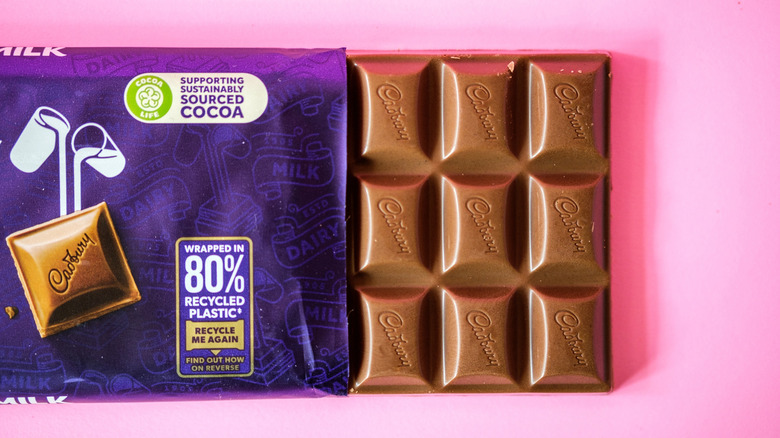
To say Cadbury Dairy Milk is a British institution is an understatement. Other competitors may try to better it, but it remains one of the best British chocolate bars, and one of the United Kingdom's most iconic milk chocolate products to this day. Starting life in 1824, Cadbury has been making and selling chocolate products for more than 200 years. That said, one of the many interesting facts about Cadbury's is that it took more than 70 years for it to start making chocolate bars, and Dairy Milk was first created in 1905. Cut to 121 years later, and it's as popular as ever, thanks to its creaminess, melt-in-your-mouth texture, and perfectly balanced cocoa notes.
The Cadbury brand is so strong that it's managed to escape the British Isles and make it over to the United States — but bear in mind the U.S. version of the product isn't the same. U.S. Dairy Milk is made by Hershey, and while there's a similar ingredient profile, its recipe is ever so slightly different. Reviewers have noted the U.S. version has a crumblier and less creamy texture than its U.K. counterpart, and overall, the original product wins out. Luckily, U.K.-made Dairy Milk is exported far and wide, so it's not too difficult to track it down.
Freia Melkesjokolade (Norway)
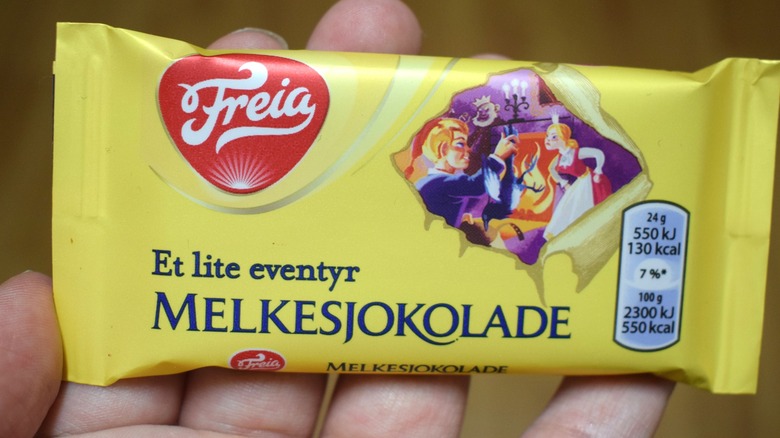
Like many European chocolate brands, Norway's Freia has a lengthy history, starting way back in 1899. Nearly 130 years later, it's still going strong and is now one of the country's most well-known food brands – and its Melkesjokolade, or milk chocolate, is the jewel in its crown. Freia Melkesjokolade is arguably the quintessential Norwegian chocolate product; it's renowned for its slightly elevated cocoa levels, giving it more complexity than comparative milk chocolates out there. "It is the best chocolate in the world," says one particularly enthusiastic customer on Amazon, who also says it beats out Cadbury's and Marabou's milk chocolates, thanks to its relative lack of overt sweetness.
Freija also wields its milk chocolate in interesting ways, with some twists on its texture that enhance the eating experience without taking it into weird territory. One example of this is its Boble Melkesjokolade, an aerated version of Melkesjokolade that's similar to the British Aero or Nestlé's short-lived Choco'Lite, a forgotten sweet snack from the 1970s available in the U.S. Freia knows how to keep things fun, while still retaining the classic flavor everyone knows and loves.
Haigh's Milk Chocolate (Australia)
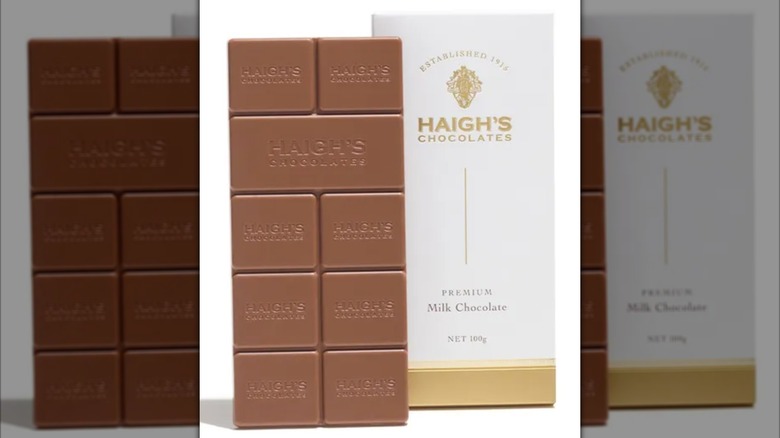
When a Redditor claims a chocolate to be "close to the best milk chocolate I've had across the world," you know it has to be good. That's what's been claimed about Haigh's Milk Chocolate, a bar made by Adelaide-based producer Haigh's, which has been operating and making delicious sweet treats for Australians since 1915. Haigh's Milk Chocolate is far from the cheapest option out there, but that's kind of the point. When you buy a bar of it, you're paying for a quality experience — and while some people say it's overpriced, there are plenty of others who state it's the best around.
Haigh's Milk Chocolate shines due to its surprisingly diverse flavor profile. Yes, it has all of the smoothness and creaminess you'd expect from milk chocolate, but it also has a salty, almost savory note to it, despite having no salt in its recipe. You can likely chalk this up to the quality and complexity of the cocoa beans used, which again speaks to the premium nature of this product. Haigh's milk chocolate also shines in its other products, but if you want a bar of bliss, its Premium Milk Chocolate Bar is the way to go.
Ritter Sport Alpine Milk Chocolate (Germany)
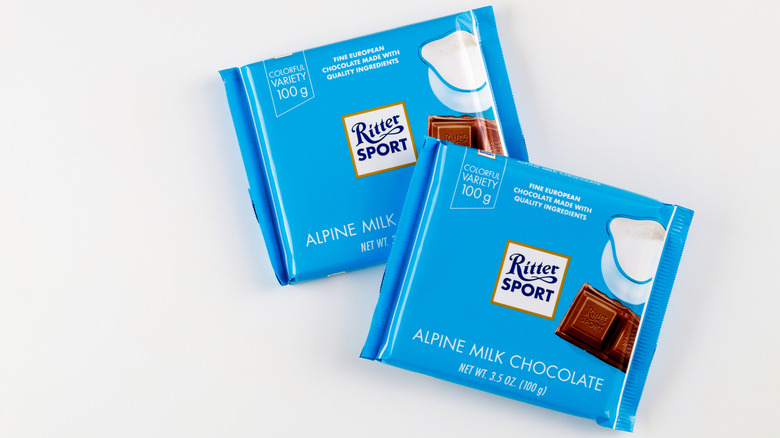
Ritter Sport's chocolate bars are memorable, and that's before you even taste them. The German chocolate producer is known for its square products, as well as its incredibly varied product line (which includes coconut, marzipan, strawberry yogurt, and butter biscuit flavors). Established in 1912, Ritter Sport has had roughly 115 years to perfect its craft, and that all comes together in its Alpine Milk Chocolate, arguably its crowning achievement.
Widely regarded by reviewers and customers as one of the best milk chocolates made by a bigger brand, Ritter Sport Alpine Milk Chocolate gets a twist of flavor from hazelnut paste, giving it a nutty quality that doesn't override the central notes, but instead makes them richer and fuller. This milk chocolate is definitely on the sweeter side, but that doesn't mean it's cloying. Instead, it has a creaminess and a maturity to it that speaks to the years of craft that have gone into Ritter Sport's output. The only problem is it can be trickier to find — but if you ever see those square bars, make sure you snap them up before it's too late. As a bonus, Ritter Sport makes dairy-free chocolate that actually doesn't have any milk in it, something you need to be careful of when buying other dairy-free versions.
Lotte Ghana Milk Chocolate (South Korea/Japan)
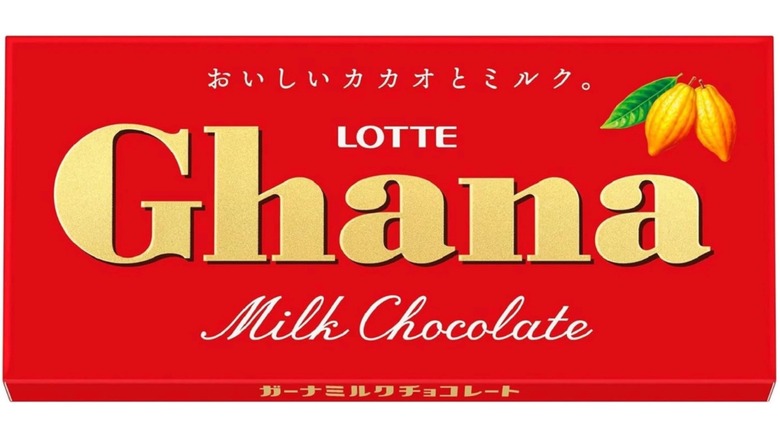
Despite its name, Lotte Ghana isn't a Ghanaian brand (although the chocolate is largely made with beans sourced from the African country). Instead, it's one of the most famous chocolate products in Japan, where the Lotte brand was born, and South Korea, where it's widely sold. Lotte Ghana Milk Chocolate is arguably its most prominent product, and it's been sold in the countries for well over 50 years. With that kind of lineage, you'd imagine it's doing something right on the flavor front.
Well, it is. With a melting texture, quality flavor, and a serious smoothness, Lotte Ghana Milk Chocolate covers the main bases people want from a dairy-based chocolate product. However, where it feels distinct from others is in its comparative lack of sweetness. Lotte Ghana Milk Chocolate doesn't attack you with a sugary taste; instead, it allows the chocolate to come through. We like that kind of confidence.
Paradai Phuket Milk (Thailand)
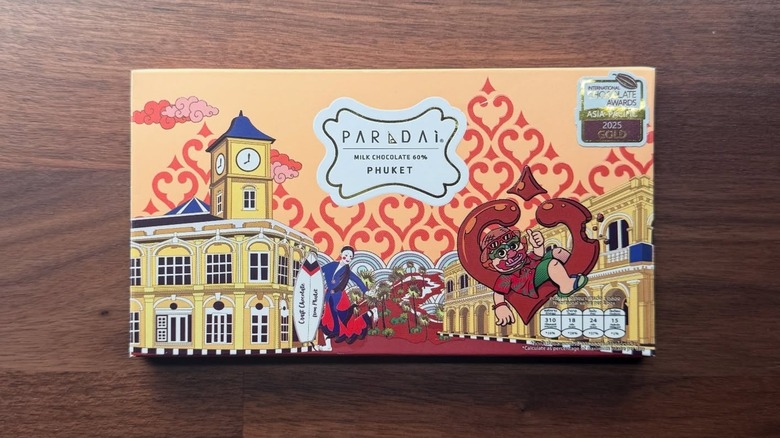
Thailand isn't as well-known for its chocolate output as other places in the world, and more broadly, the country tends to lean towards fruity flavors with its desserts (like the famous mango sticky rice) rather than chocolatey ones. That could all change soon, though, thanks to Paradai. A craft chocolate brand located in Phuket, Paradai is a relative newcomer to the scene — but it's clearly doing something right. Creating its chocolate bars by hand, it endeavors to source its products from local suppliers, and it's known for creating products that combine classic chocolate flavors with Thai twists, like confections with notes of tom yum and tom kha soup.
Its Phuket Milk, however, might just be its greatest offering. Paradai Phuket Milk has an ultra-high 60% cocoa level, giving it a ton of complexity and earthiness, but not at the expense of sweetness. It's renowned not just locally, but internationally: In the 2025 Asia-Pacific Bean-to-Bar and Craft Chocolatier Competition, Paradai Phuket Milk took home the Gold award in the plain/origin milk bar category. It was one of several awards for the burgeoning chocolate maker, which is poised to make a splash on the world stage.
Côte d'Or Lait (Belgium)
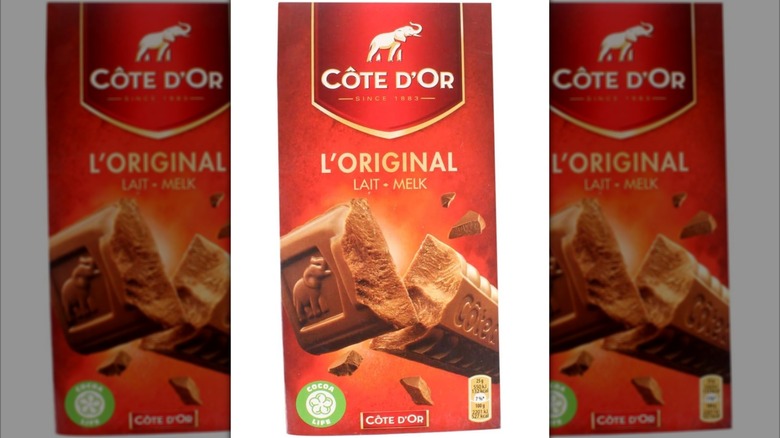
It's hard to discuss good international milk chocolate bars without including a Belgian product. The country is celebrated for its ultra-smooth, ultra-rich, ultra-sweet chocolate, which it's been perfecting for hundreds of years – and plenty of them are milk-based, making picking a winner pretty difficult. Côte d'Or Lait, however, might have the edge on all of them, at least as far as widely available options go. Named after the colonial name for the coast of Ghana, where it sources its cocoa beans from, this chocolate brand has been around since 1883, and its milk chocolate is one of its most prominent products.
You only have to take a glance at a couple of reviews for Côte d'Or Lait to see how much people adore it. This chocolate routinely gets called the best there is, and although you might be able to find a more unique product in an artisanal chocolatier located in the backstreets of Bruges, if you're content to shop in mainstream supermarkets, it's hard to find something better. With an elegant smoothness and a deeply creamy note, it's a bar that can cost a pretty penny if you're not in Belgium itself. It's worth trying at least once, though.
'57 Chocolate (Ghana)
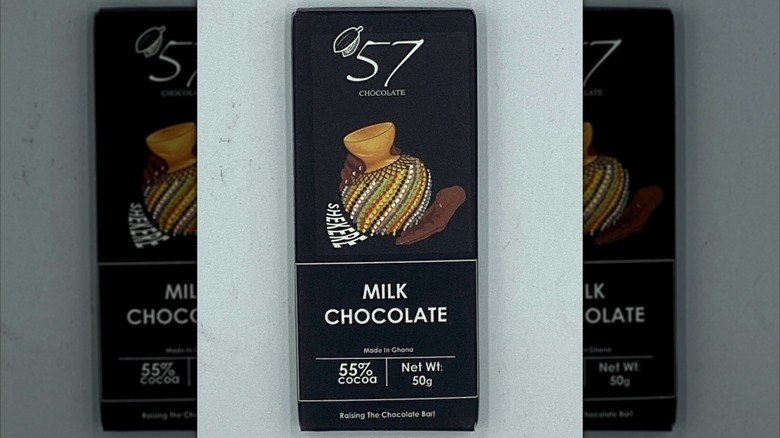
'57 Chocolate is a brand steeped in history — and also, in a sense, brings chocolate back to one of its homes. This Ghanaian brand was founded in 2016 by sisters Kimberley and Priscilla Addison, following a visit to a Swiss chocolate factory, during which they reasoned that if Swiss chocolate was made with beans from Ghana, then it only made sense to create their own version using native resources. The name of the handmade, bean-to-bar chocolate brand references 1957, the year of the Ghana Independence Act, when the country ceased being a British colony.
'57 Chocolate has a range of signature flavors, but its 55% milk chocolate stands out as an option that combines classic flavor with deep, luxurious notes. Delivering malt and caramel notes amongst the smooth, creamy chocolate, the bar (like all of the brand's other options) is made without any artificial flavors, colors, or preservatives. Alongside bars of its milk chocolate, you can also sample it in '57 Chocolate's Adinkra Collection, adorned with symbols created by the Ashanti cultural group, which speak to both the chocolate's homegrown nature and the rich history of the country.
SilverQueen (Indonesia)
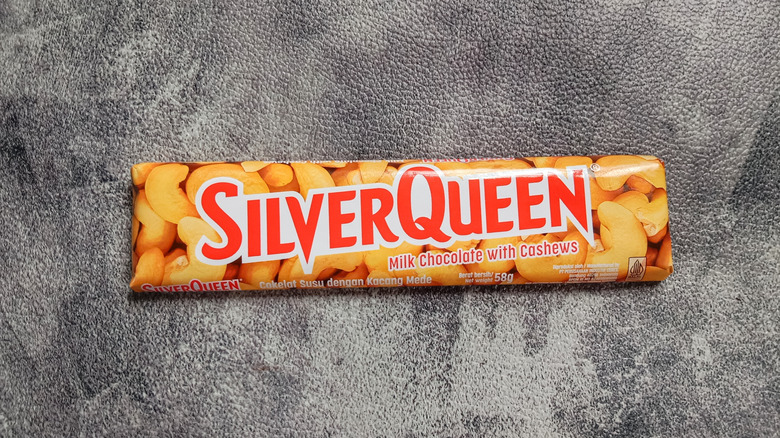
While milk chocolate is delicious on its own, it also lends itself well to mix-ins that enhance its flavor and texture, making what can be a basic sweet treat all the more delicious. A good example of this can be found in Indonesia. SilverQueen is one of the country's most beloved chocolate brands, and was dubbed the official snack of Indonesia in 1955 by then-president Sukarno. SilverQueen's most recognizable and widespread bar, consisting of milk chocolate mixed with cashews, came about as a way to make the chocolate retain its shape in Indonesia's notably humid climate.
It was a move that paid off. Nowadays, the chocolate and cashew combination is as popular as ever, with people comparing SilverQueen favorably to European brands and some saying it beats the likes of Cadbury and Nestlé in terms of flavor. It's got a sweet note to it that's undercut by the nutty cashews, and an easy meltability. Above all, though, it's got a crunch a lot of milk chocolates lack — and that makes it stand out.
Royce' (Japan)
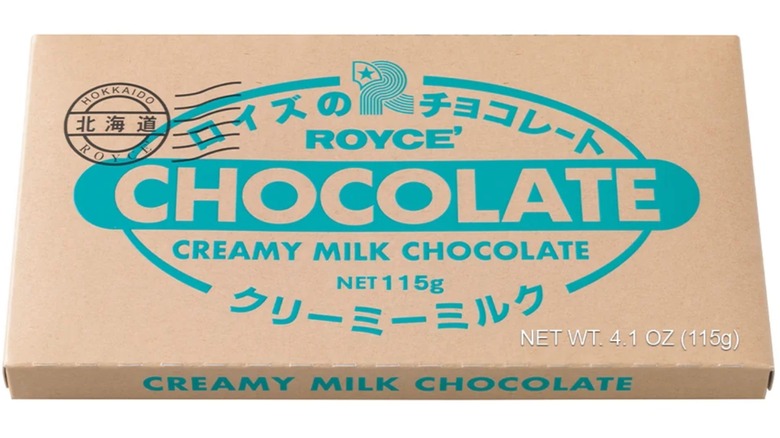
If you get a chance to try Royce' chocolate, you should take it. This Japanese chocolate hails from the northern island of Hokkaido, and since 1983 it's been creating world-class confectionery that emphasizes quality, craftsmanship, and luxury. Although Royce' may not have the ubiquity that bigger Japanese chocolate brands may have (some people have reported it can be difficult to find in certain parts of Japan, even in Tokyo), it's worth trying — and its milk chocolate options are pretty exceptional.
Royce' sells several types of milk chocolate bars, including a standard milk chocolate and a Creamy Milk version. Both are praised highly by customers, who highlight their smoothness and rich nature. Its Creamy Milk bar wins particular praise for actually tasting like it has fresh cream in it, which is virtually unheard of for a packaged product — and it speaks to the quality of the ingredients the brand is using. Royce' can be pricey if you're trying to purchase it outside Japan (and it's not the cheapest in the country itself), but for connoisseurs, it's a must-try.
Omnom (Iceland)
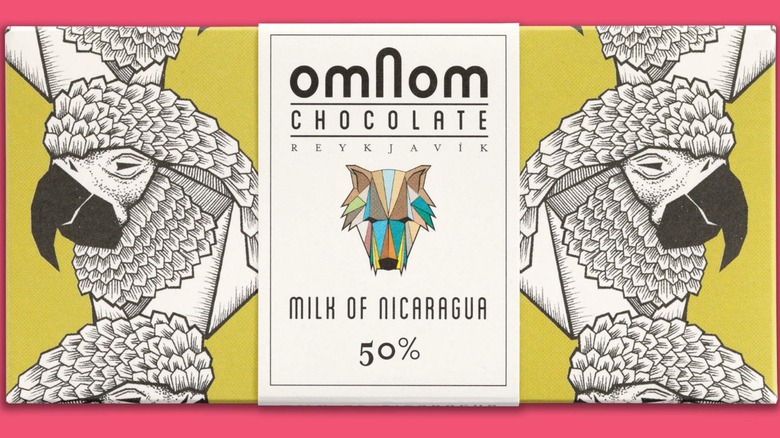
Iceland's chocolate industry may not be enormous, but it punches above its weight in terms of flavor. Omnom is an example of this. The bean-to-bar chocolate brand was founded in Reyjavík in 2013 and works with organic, sustainable, and single-origin ingredients to create high-quality chocolate bars with love and care. While Omnom declared bankruptcy in 2025, the brand has continued under the ownership of Goá, with the founders hopeful about its future.
Omnom makes several milk chocolate bars, all of them with a high cocoa percentage, giving them a mature, full flavor. Both its 45% Milk of Madagascar and 50% Milk of Nicaragua bars deliver the creaminess you'd expect from milk chocolate, but with an undercurrent of caramel and complexity — and the former has a clear tang to it that gives it some extra depth. Omnom also wins points for its designs: Rather than shape the bars into snappable squares, it leads with a geometric design.
Amedei Toscano Latte (Italy)
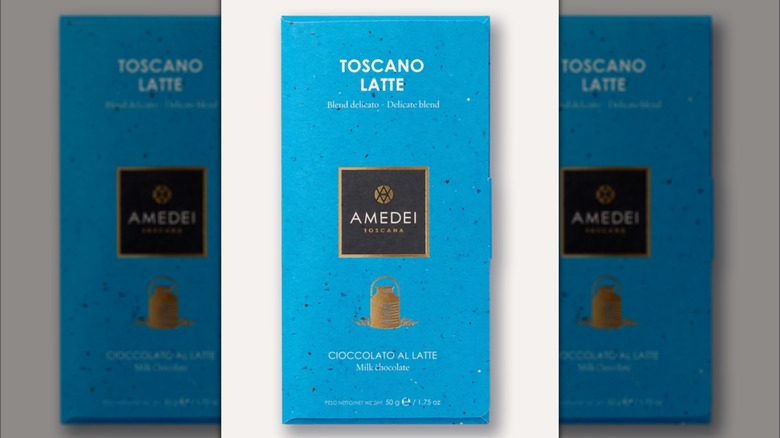
When it comes to milk chocolate, Amedei knows what it's doing. The Italian chocolatier is known for producing high-quality, rigorously sourced chocolate with decades of experience in its craft, which shows in the rapturous praise its products receive. Just this year, Amedei was honored at the Premio Tavoletta d'Oro, or Italy's Golden Tablet Awards, with several of its products taking home gold and silver medals.
Its Toscano Latte was one of them. Made with whole milk sourced from Brittany in France, this 32% milk chocolate bar has a balanced flavor and a subtlety that slowly unfolds throughout the eating experience. It's not overly sweet (but nor is it lacking), and it has a slightly bitter quality that rounds everything out. Most importantly, you can taste the quality of the ingredients in every bite. You'll have to pay for the privilege of trying it, but wouldn't you rather do that than pay less for a worse experience?
Cacaosuyo Piura Milk (Peru)
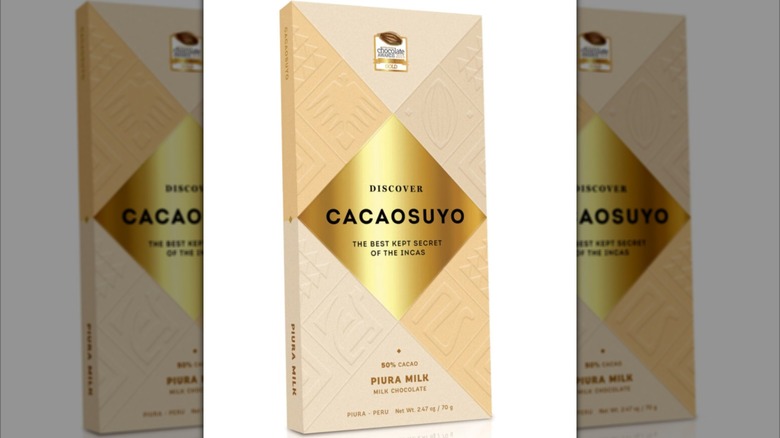
Sometimes, when eating milk chocolate, a good version will suffice. Other times, though, you want the best. That's what you'll get with Cacaosuyo Piura Milk. Cacaosuyo was founded in 2013, and by 2015, its Piura Milk bar was taking home the Overall Best Milk Chocolate prize at the 2015 World Final of the International Chocolate Awards. In the 2021-22 awards, it was once again named the best in the world.
Why is it so good? It's all in the craft. Cacaosuyo Piura Milk is created with criollo cacao beans, a rare version of cacao renowned for its lighter color and delicate flavor. In this milk chocolate bar, the beans' nuances shine through beautifully, and there's a wild amount of complexity and interplay in each bite, with caramel, raisins, butterscotch, honey, and vanilla notes all shining through — along with a beautiful creaminess and a slight tanginess from the milk. This is chocolate like no other.